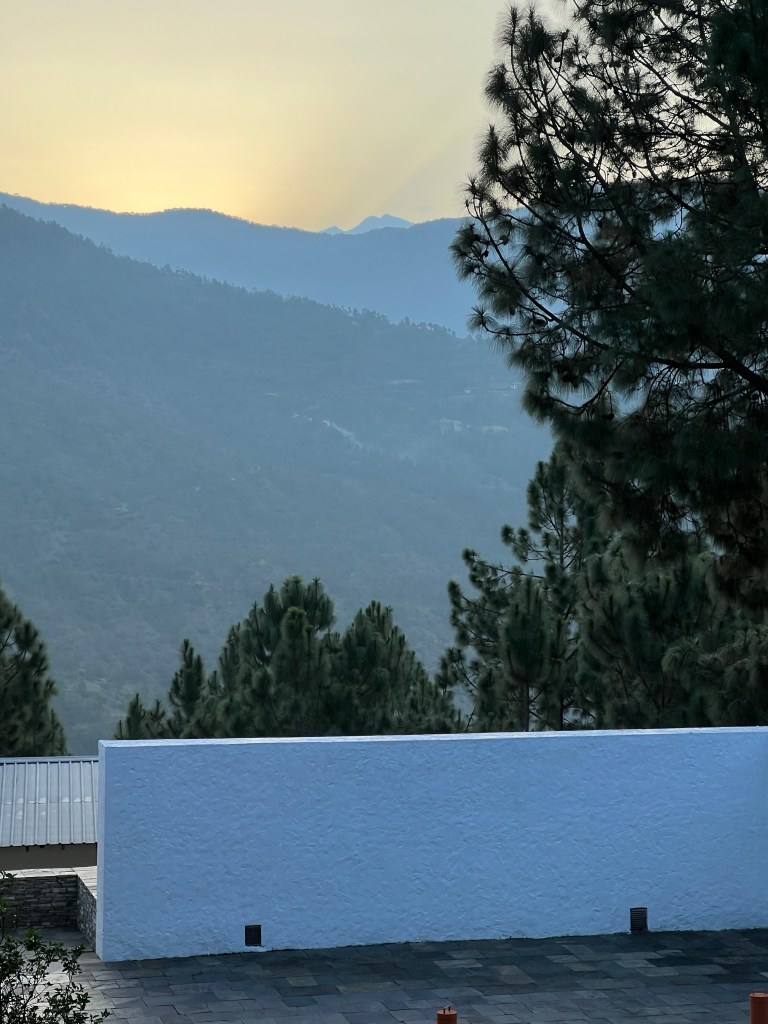
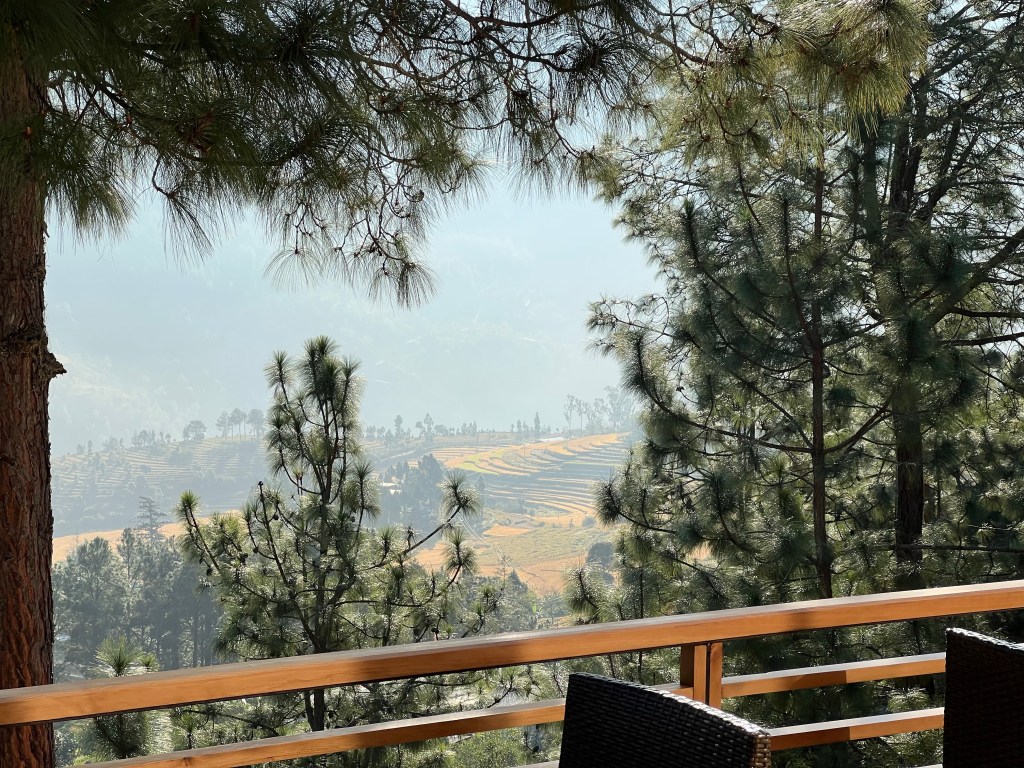
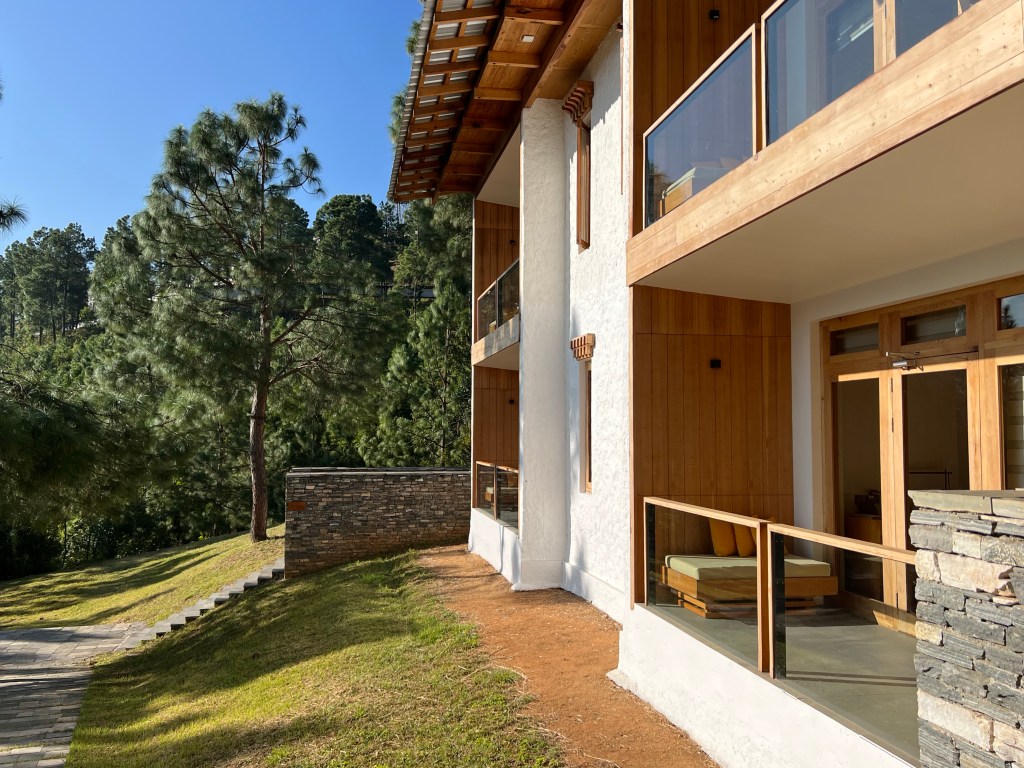
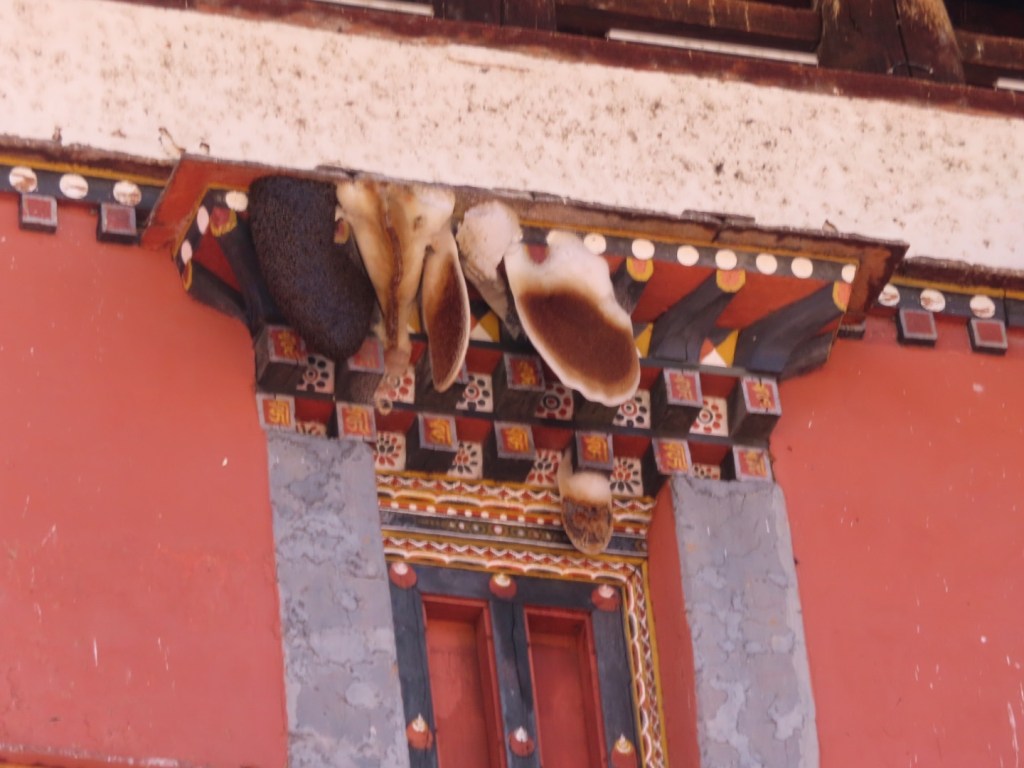
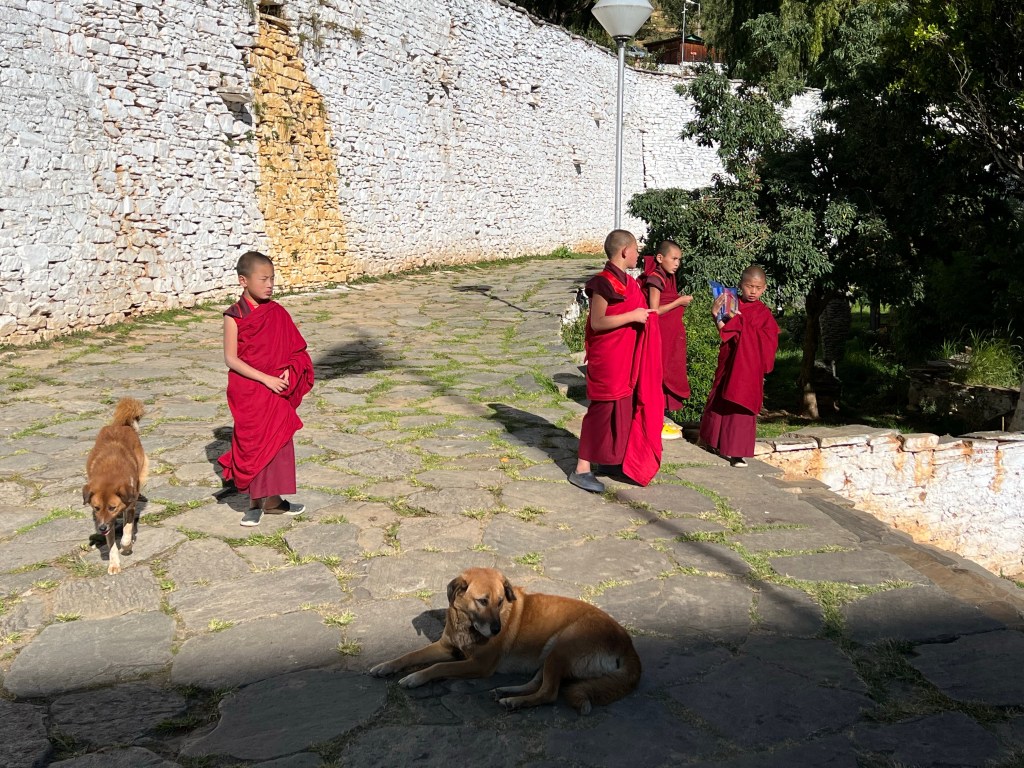
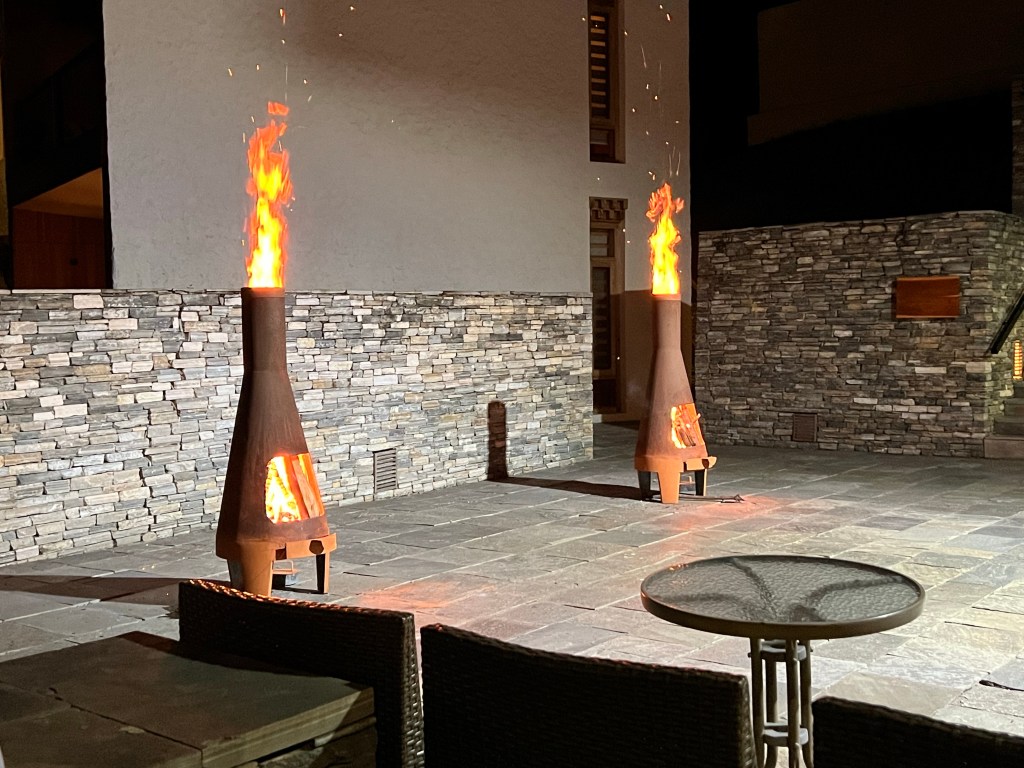
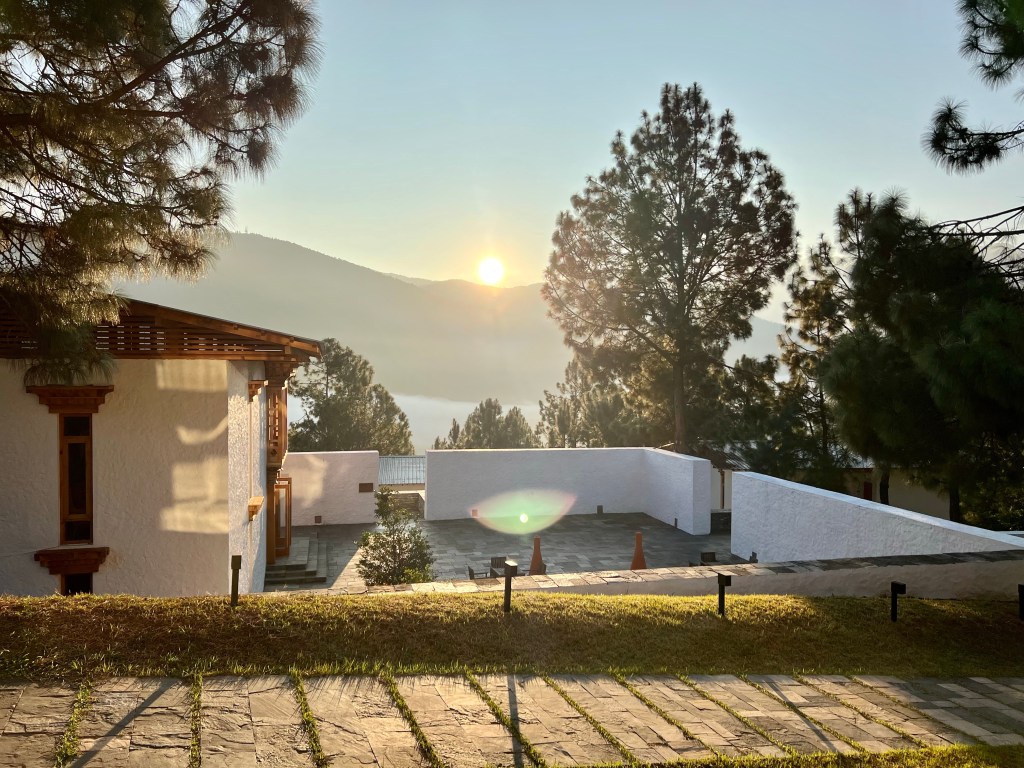
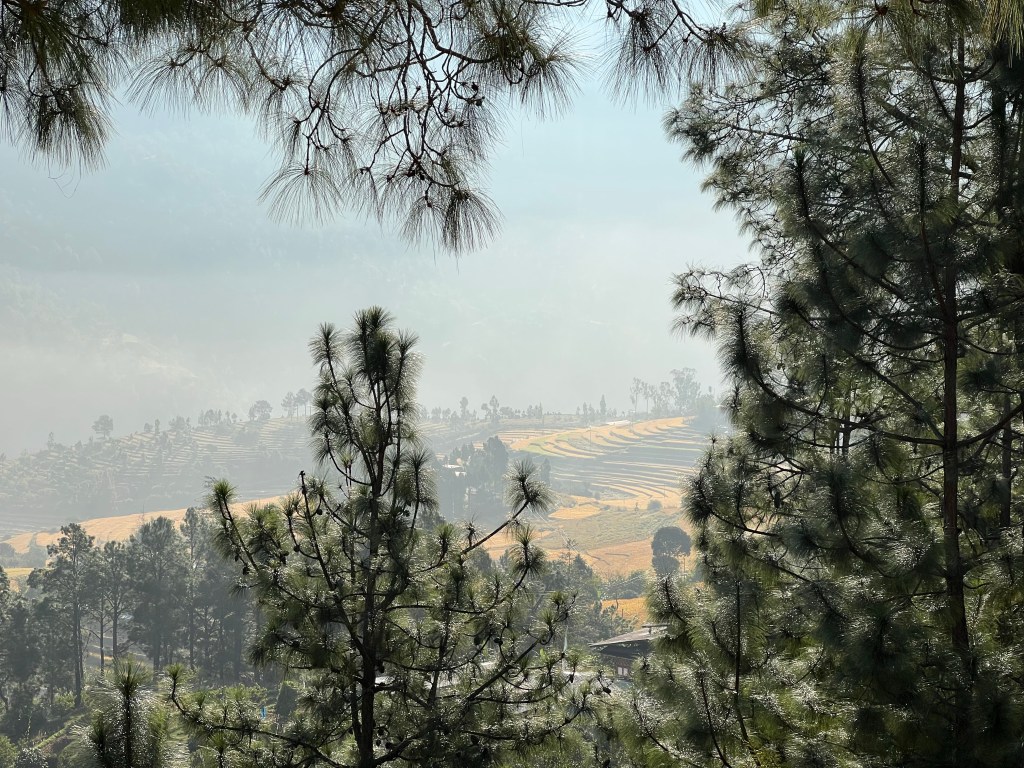
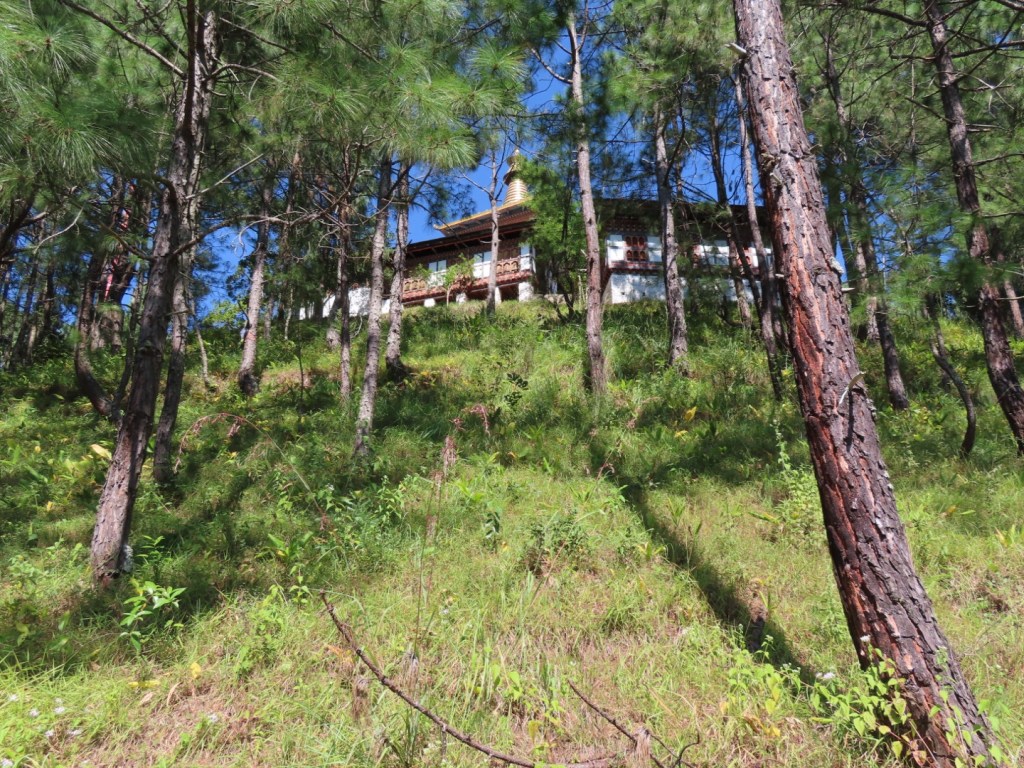
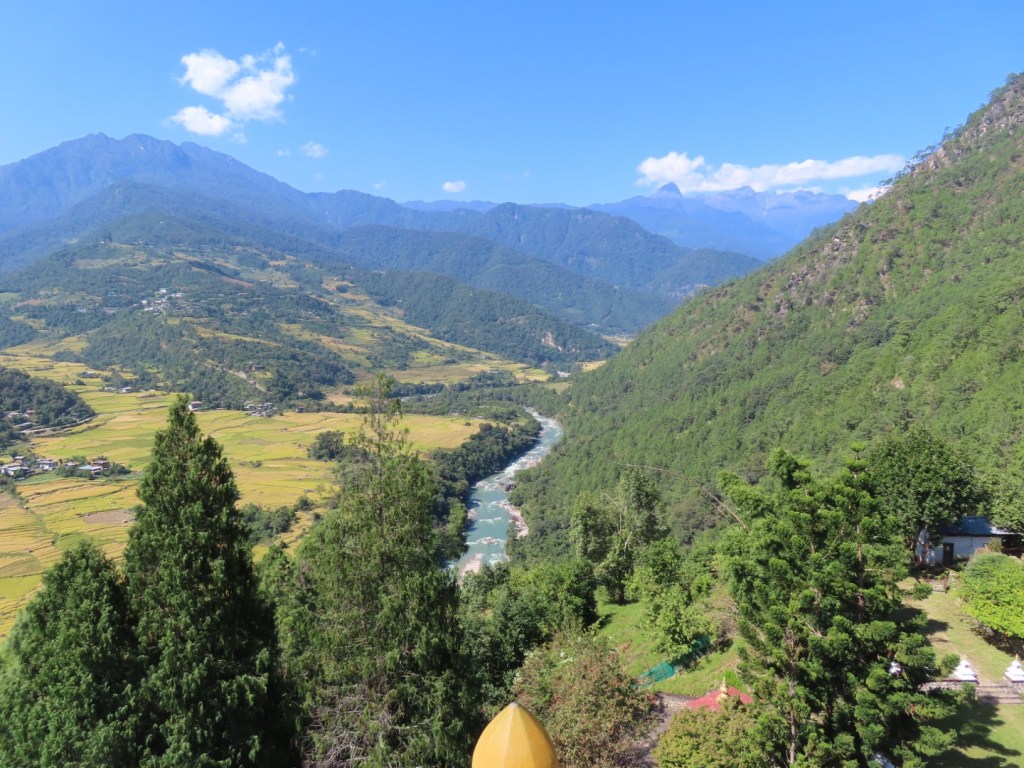
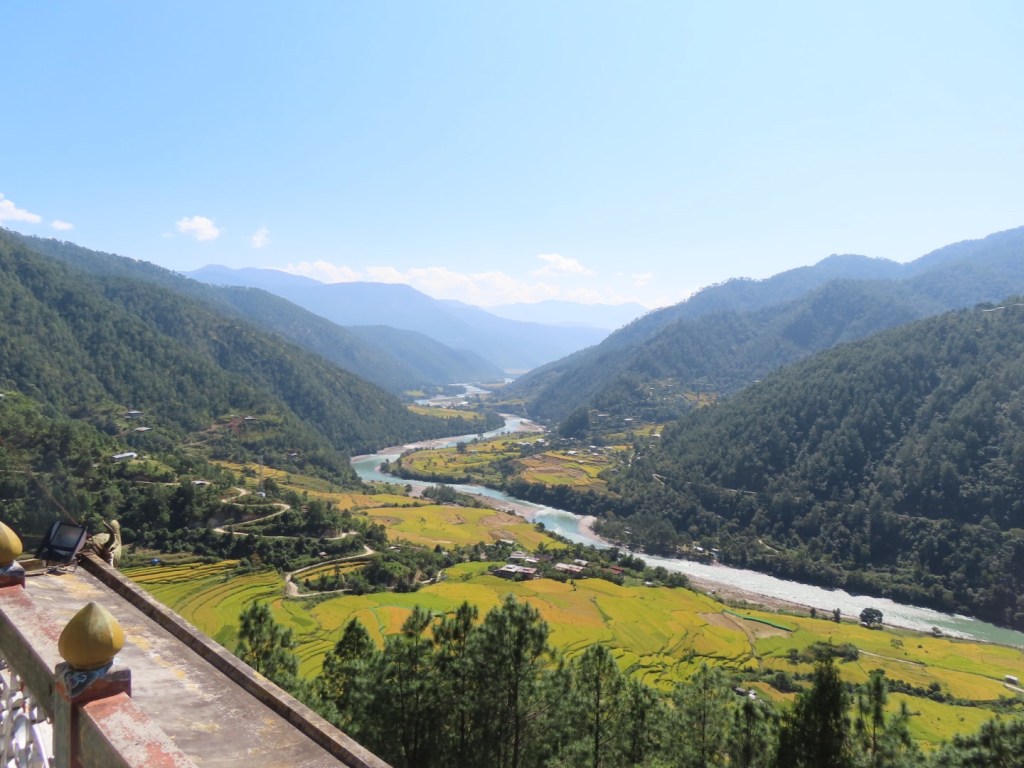
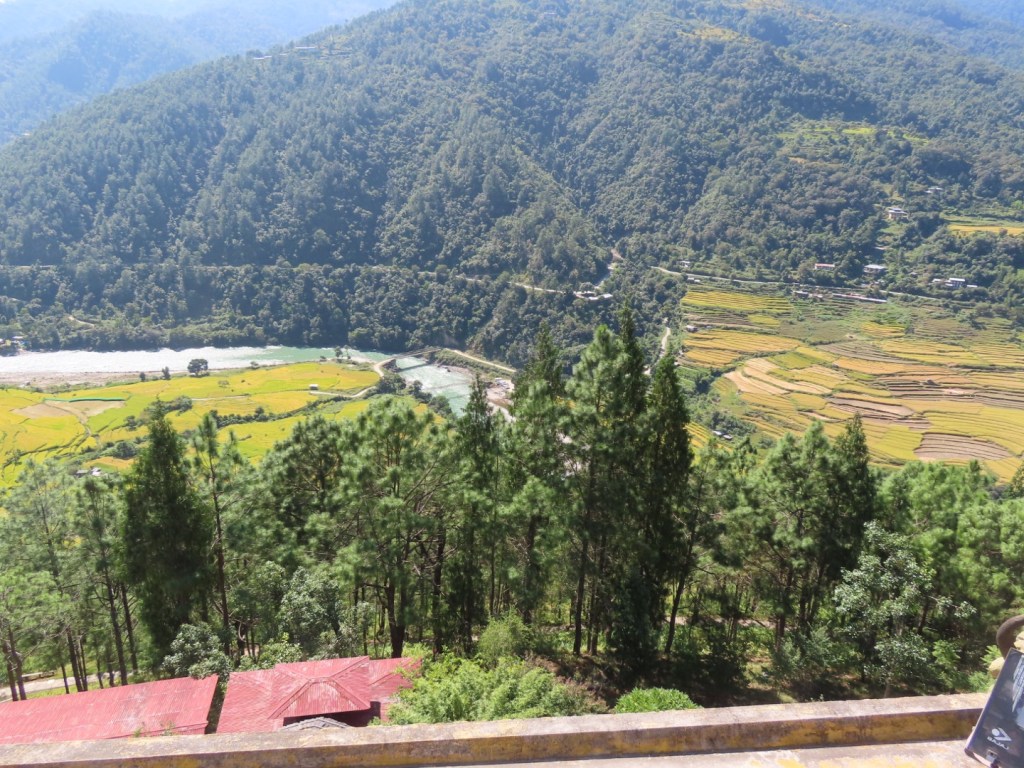
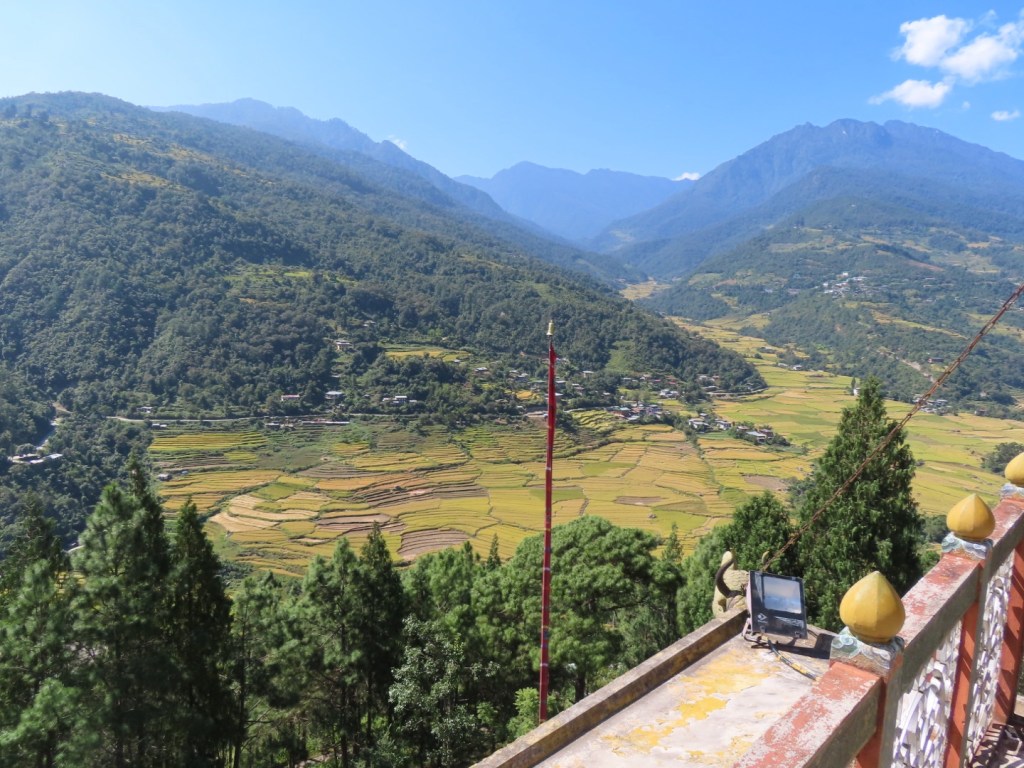
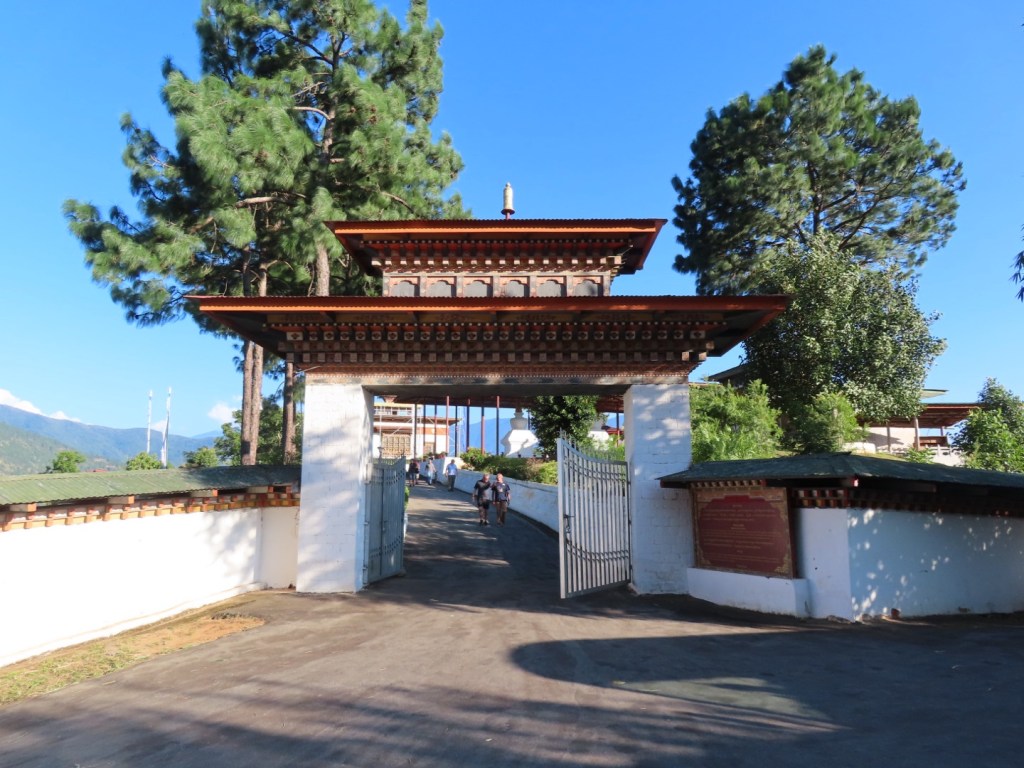
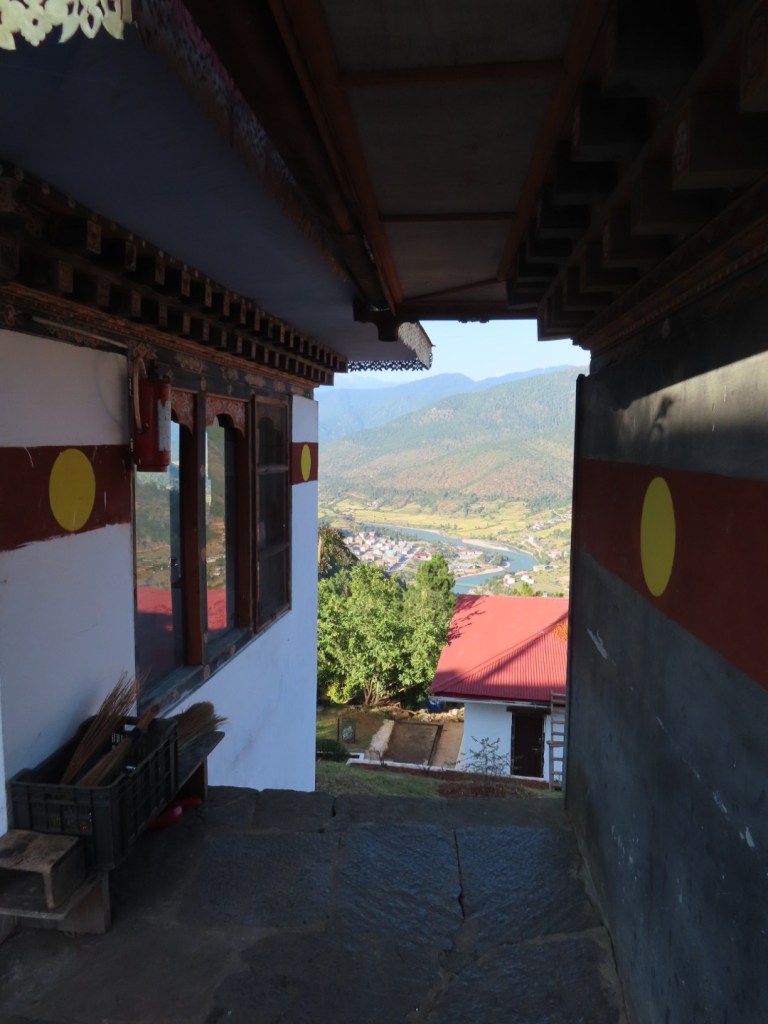
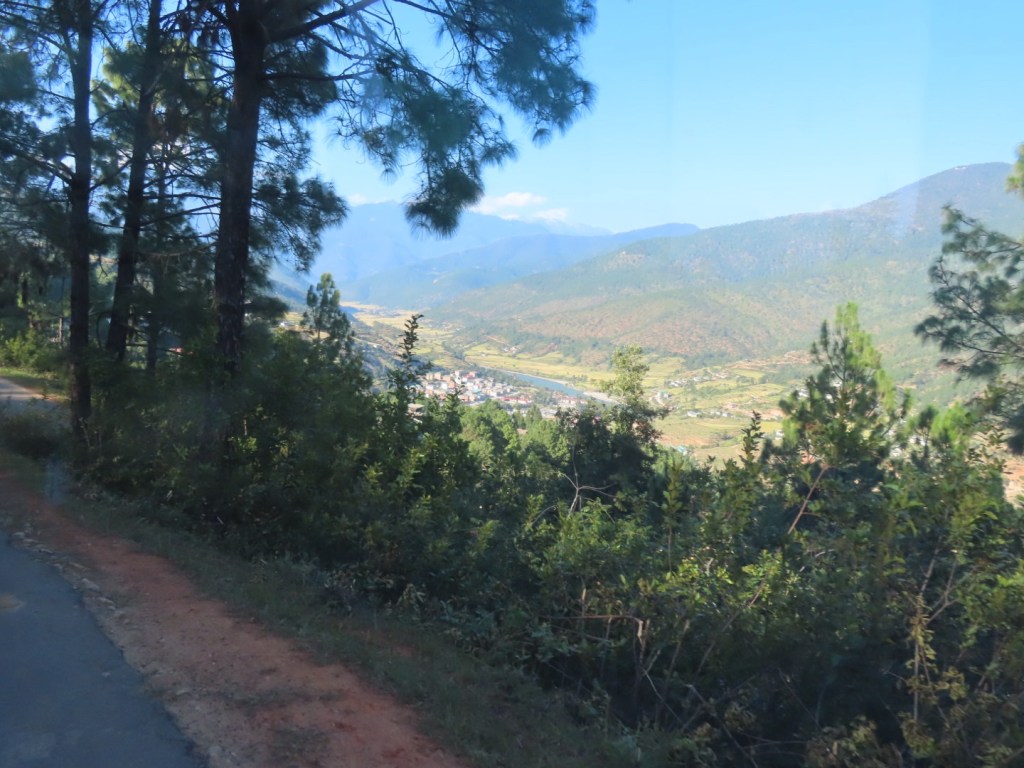
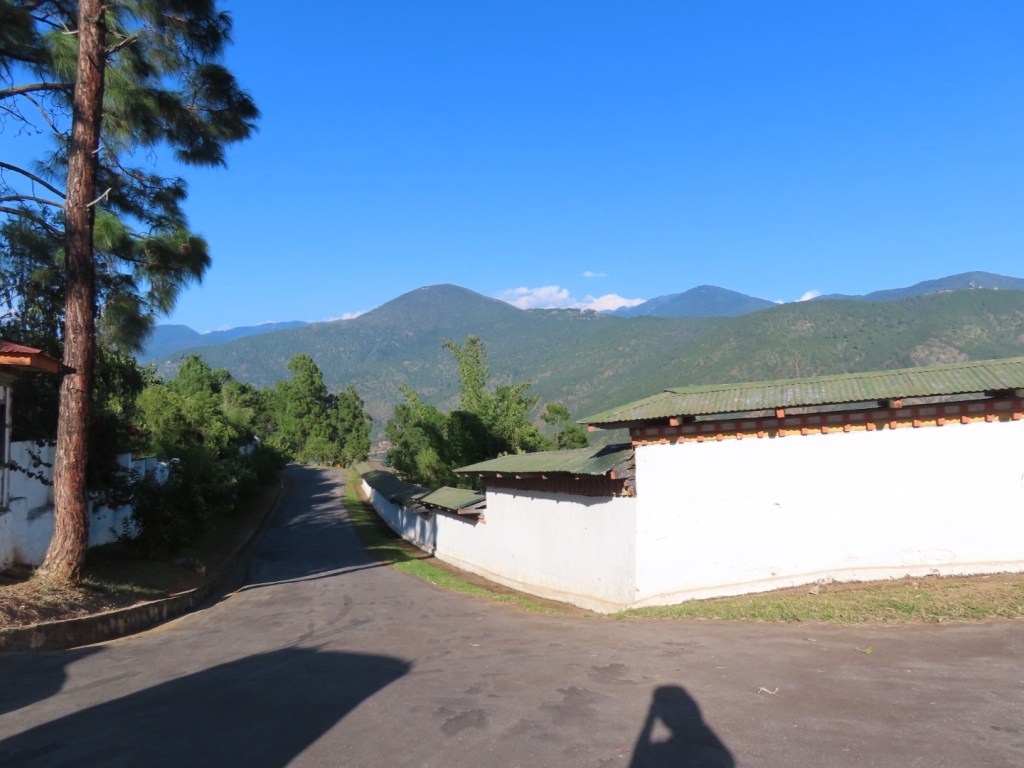
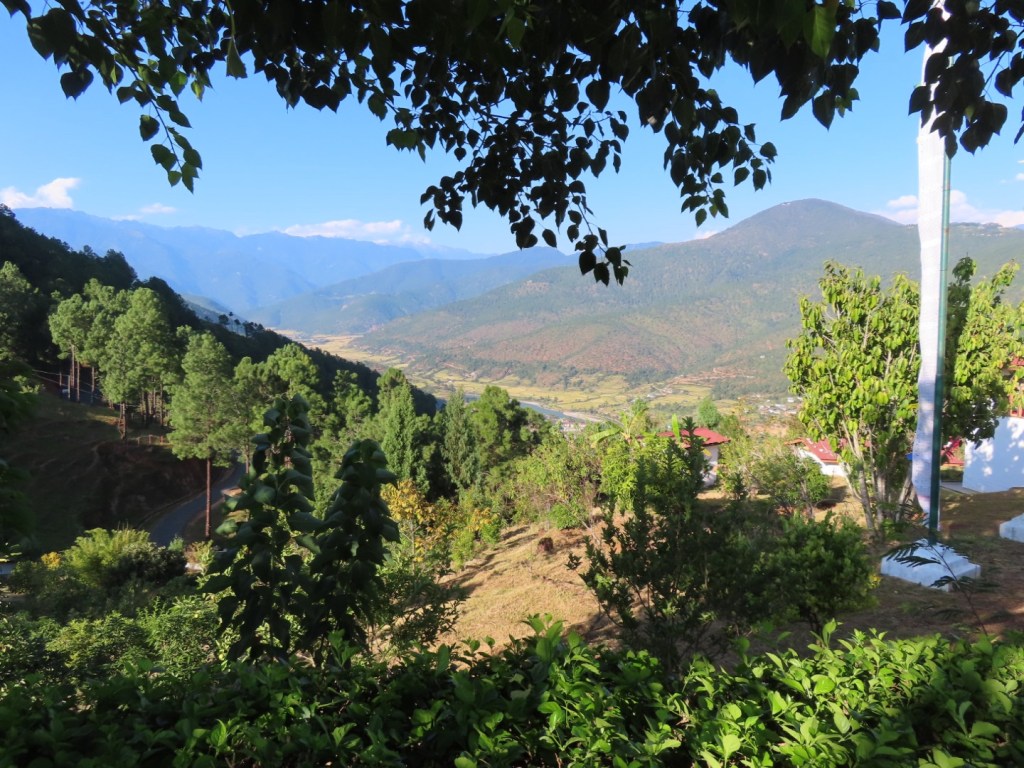
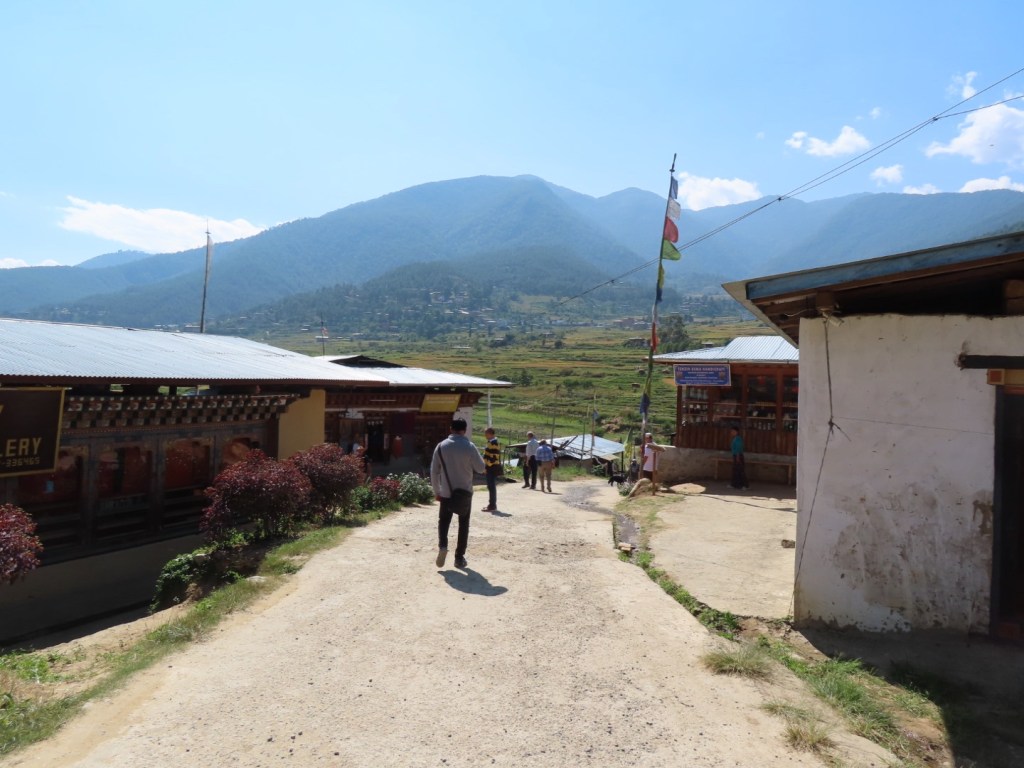
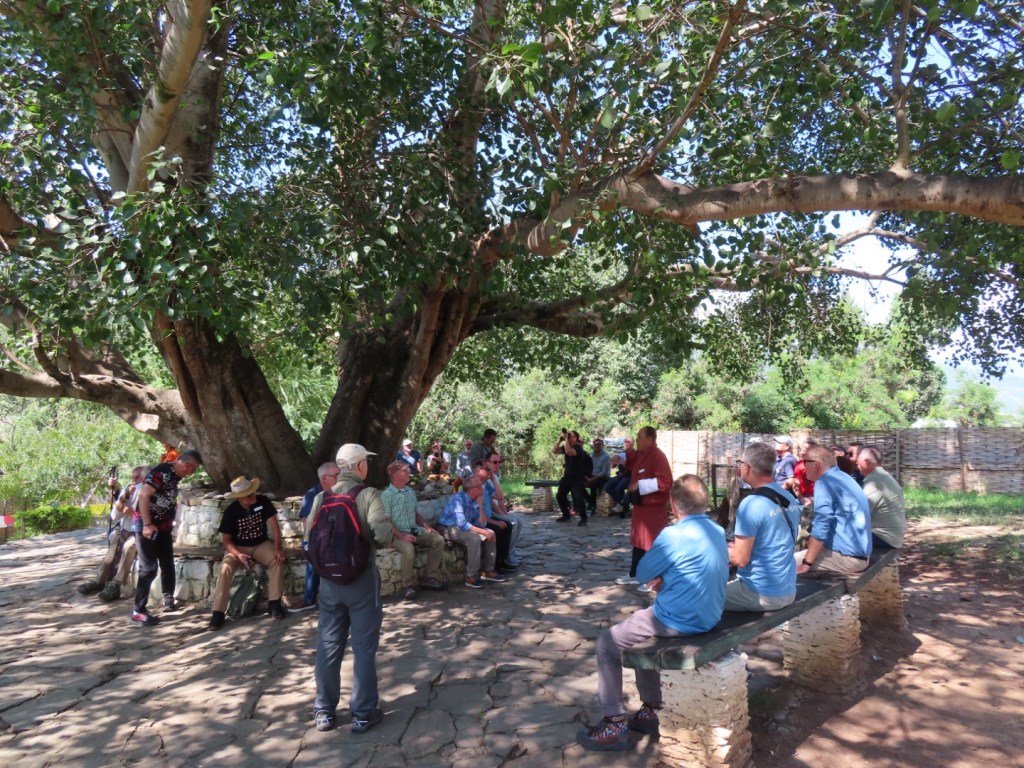
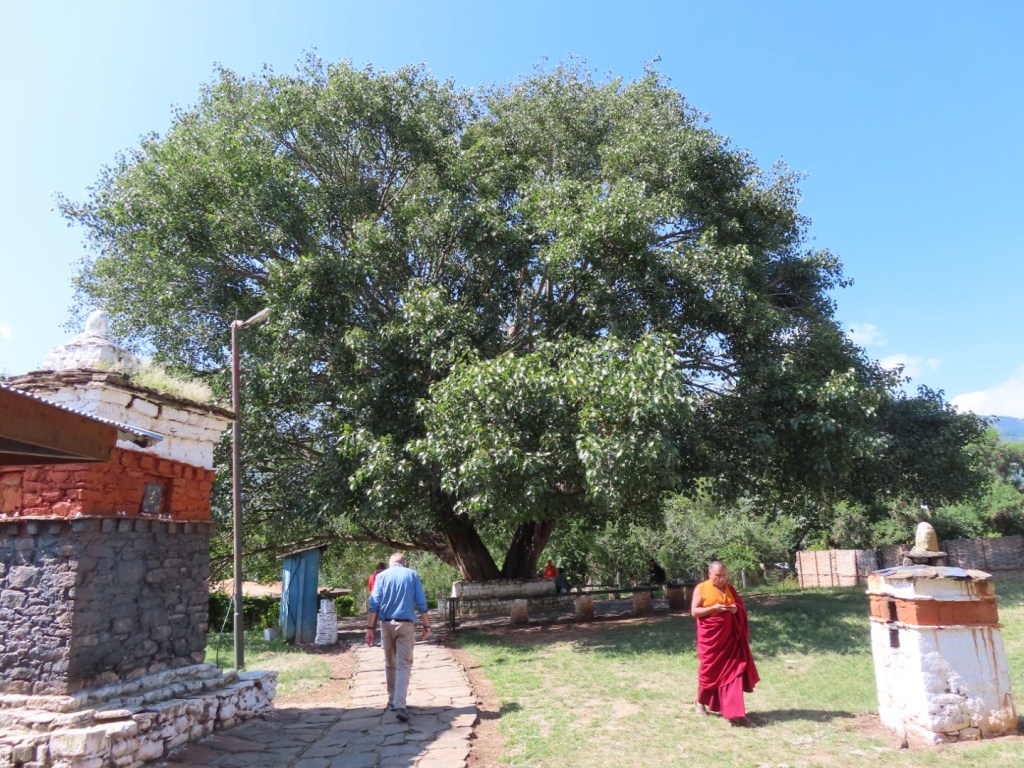
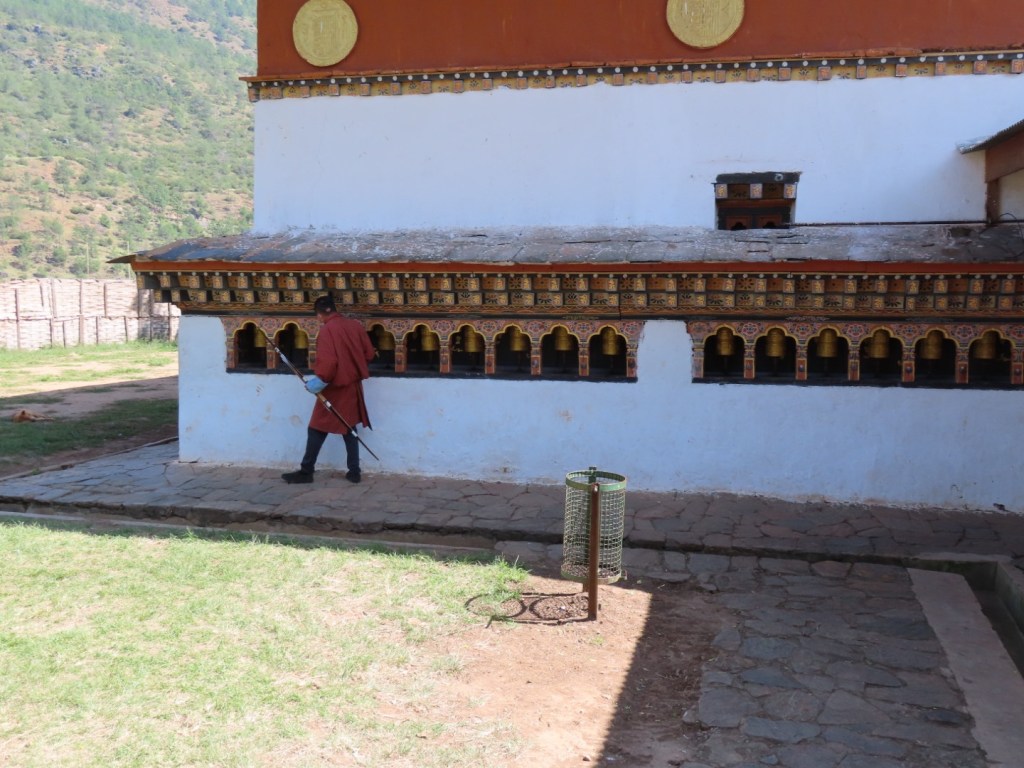
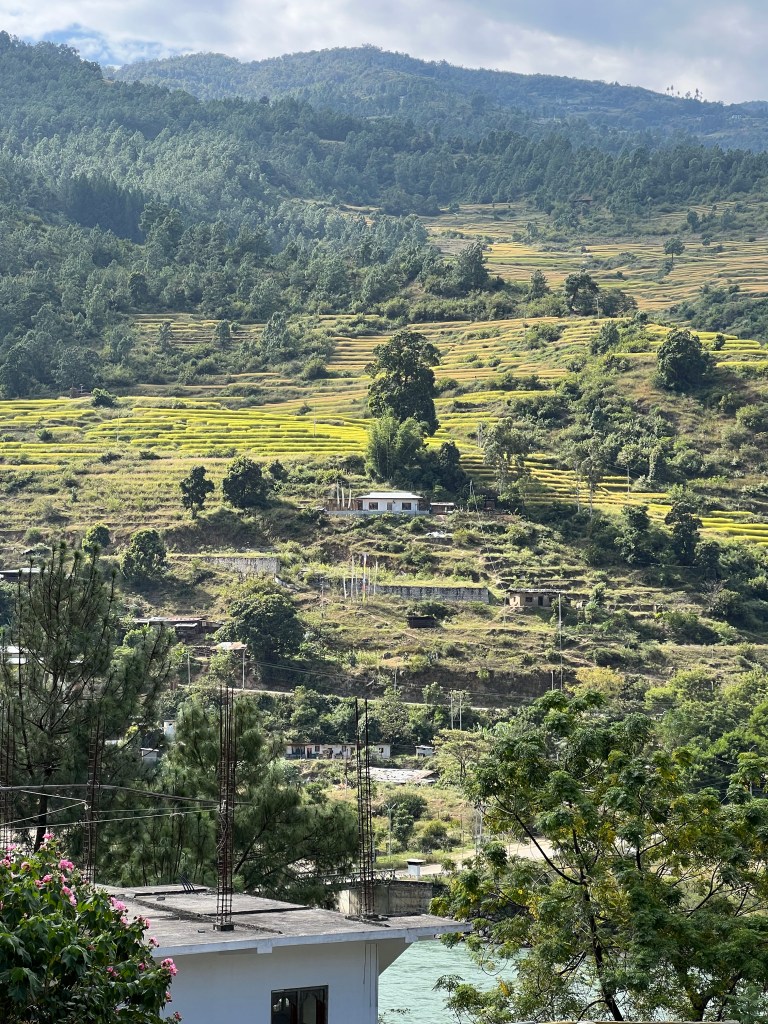
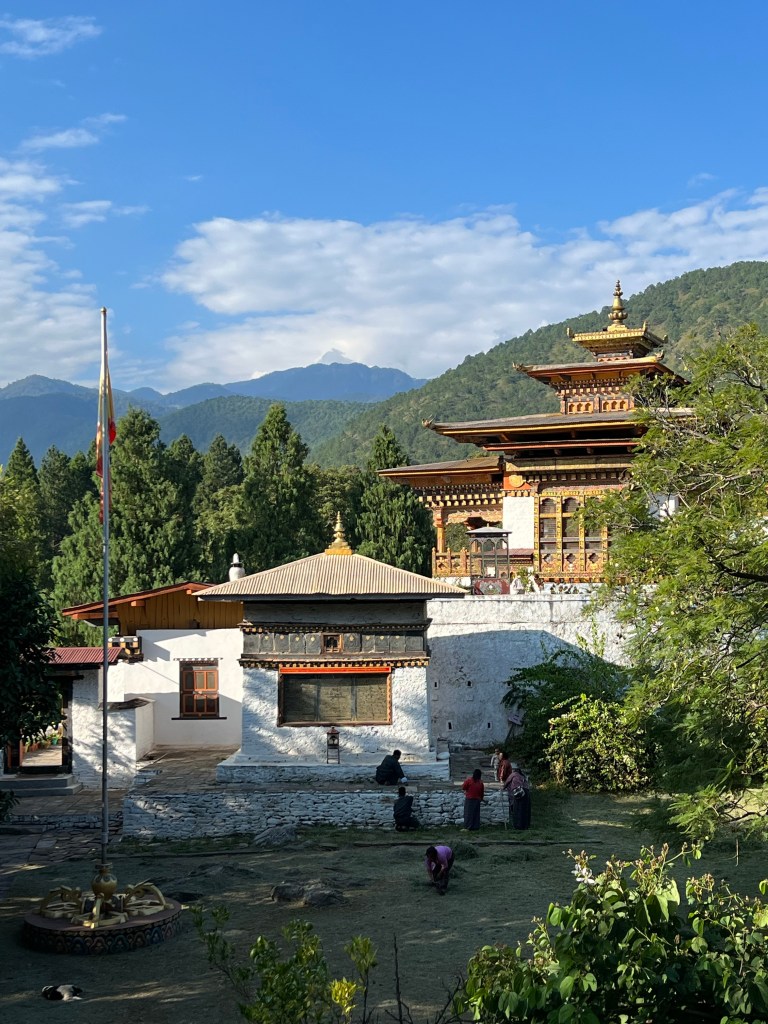
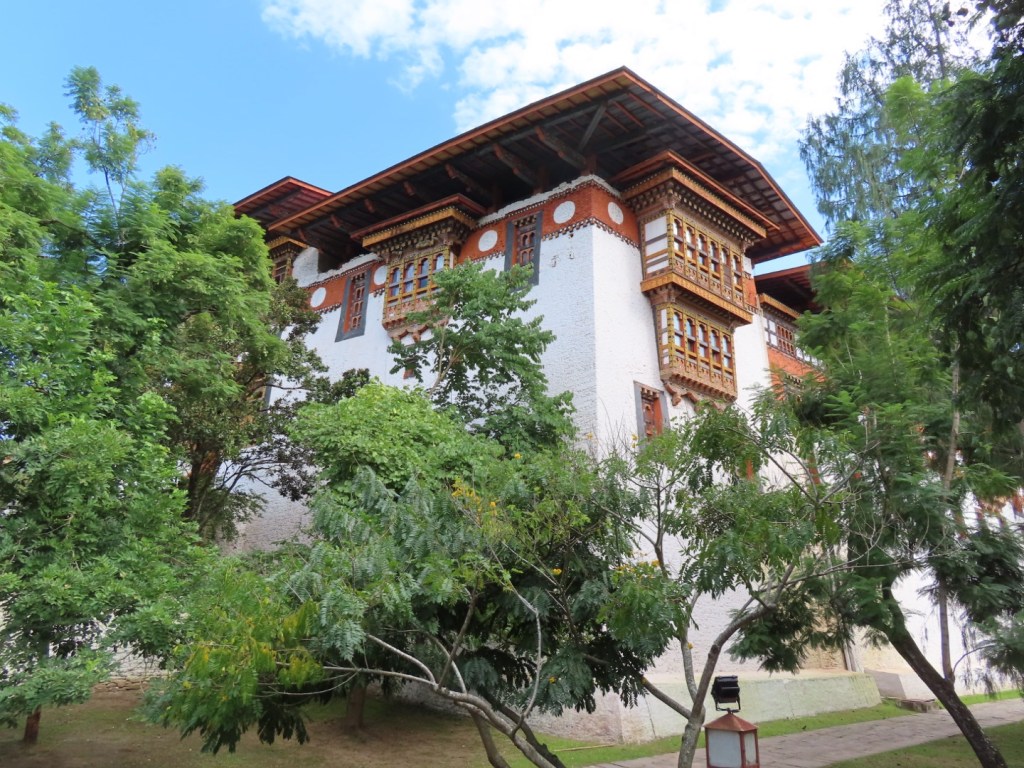
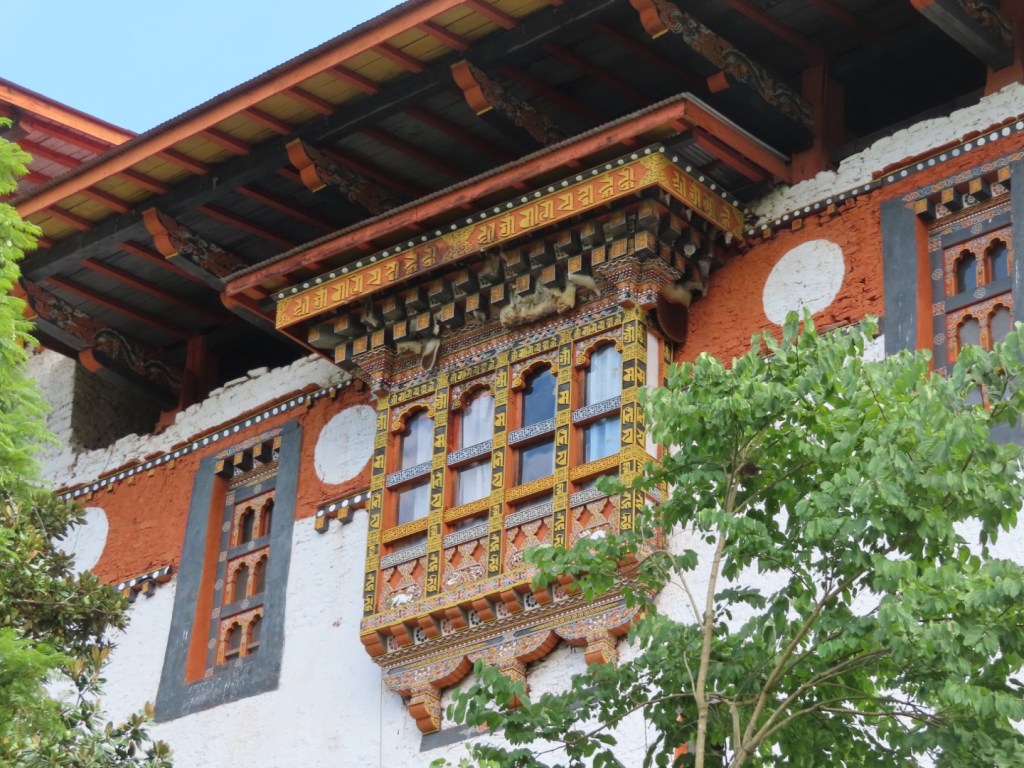
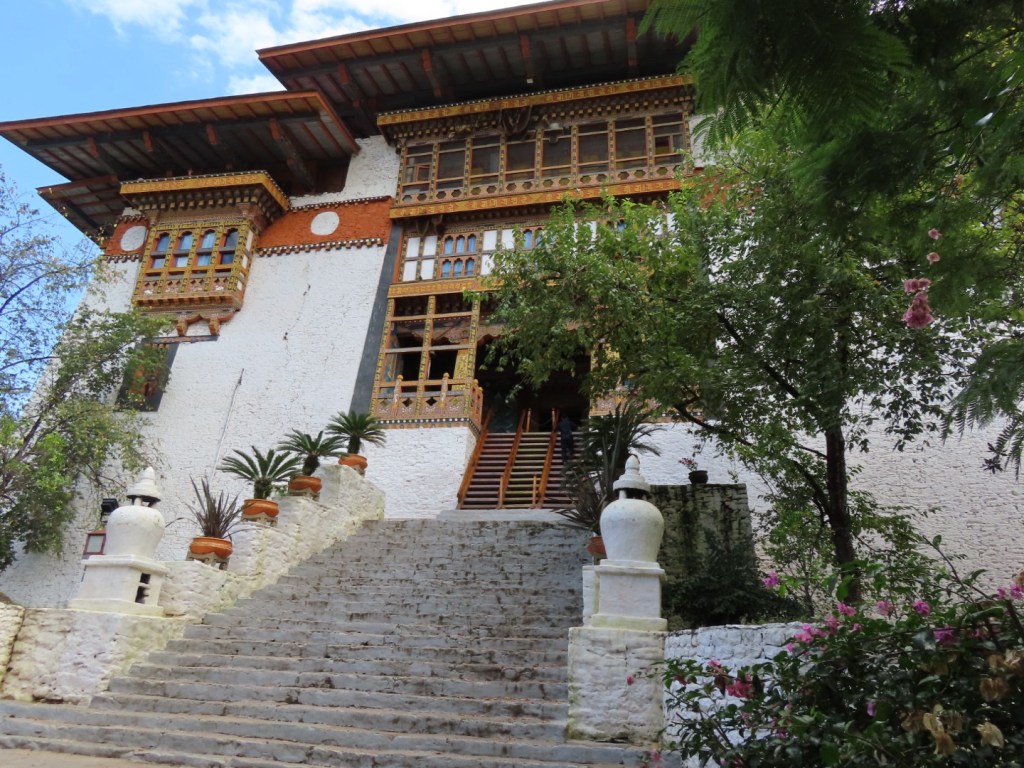
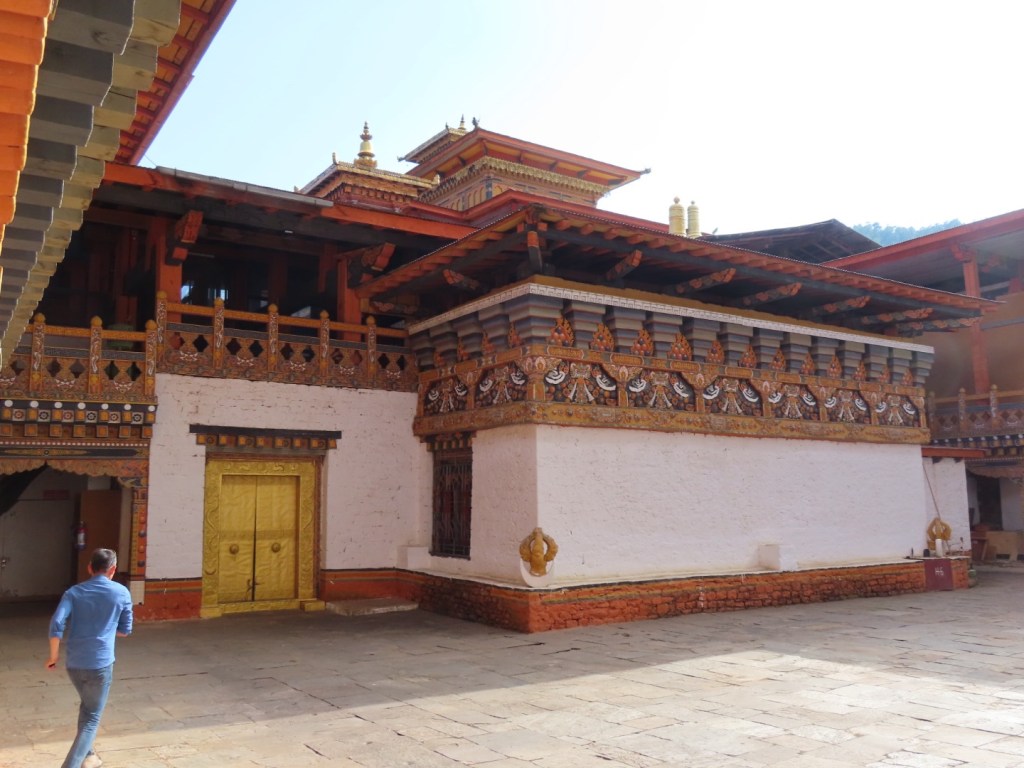
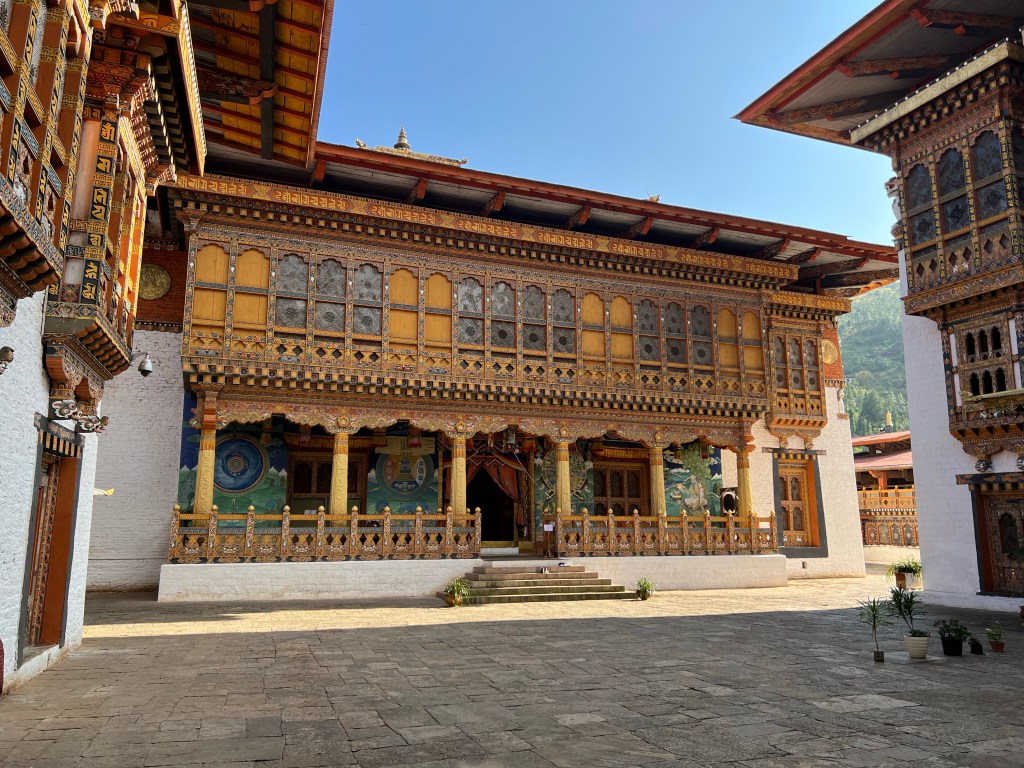
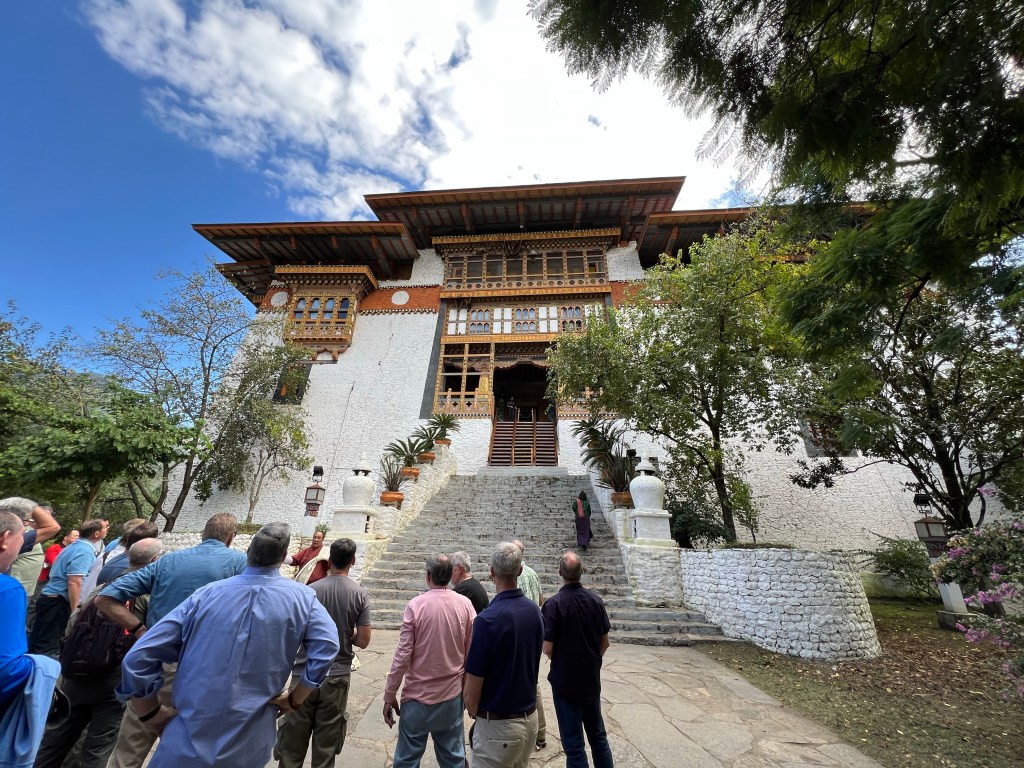
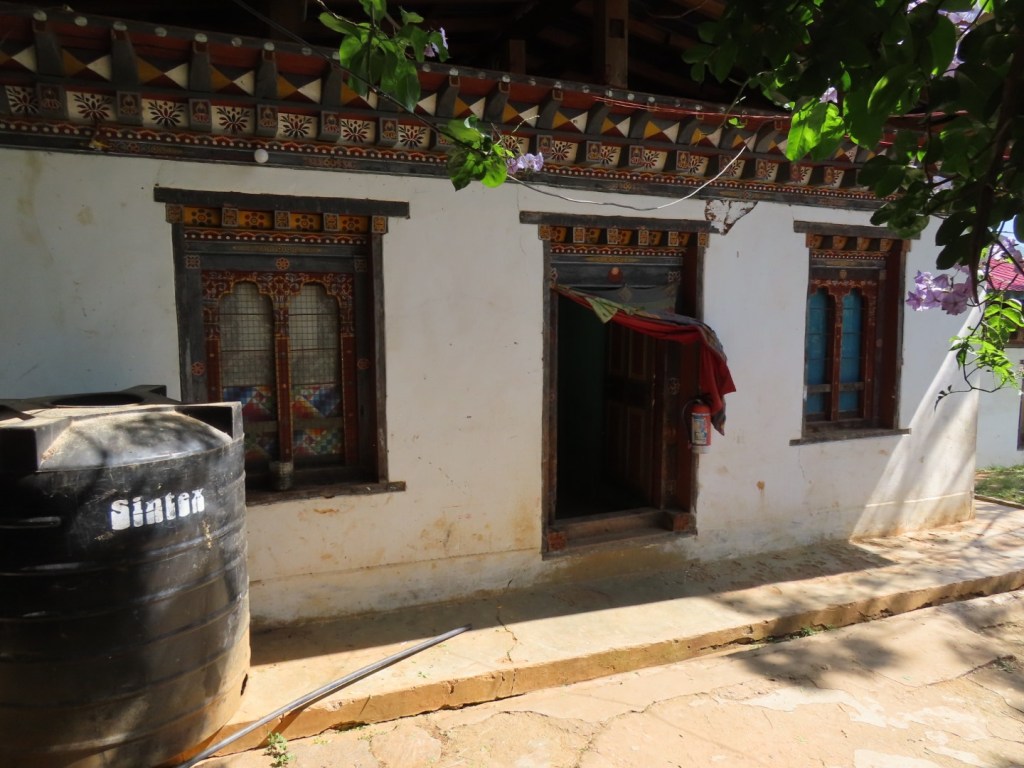
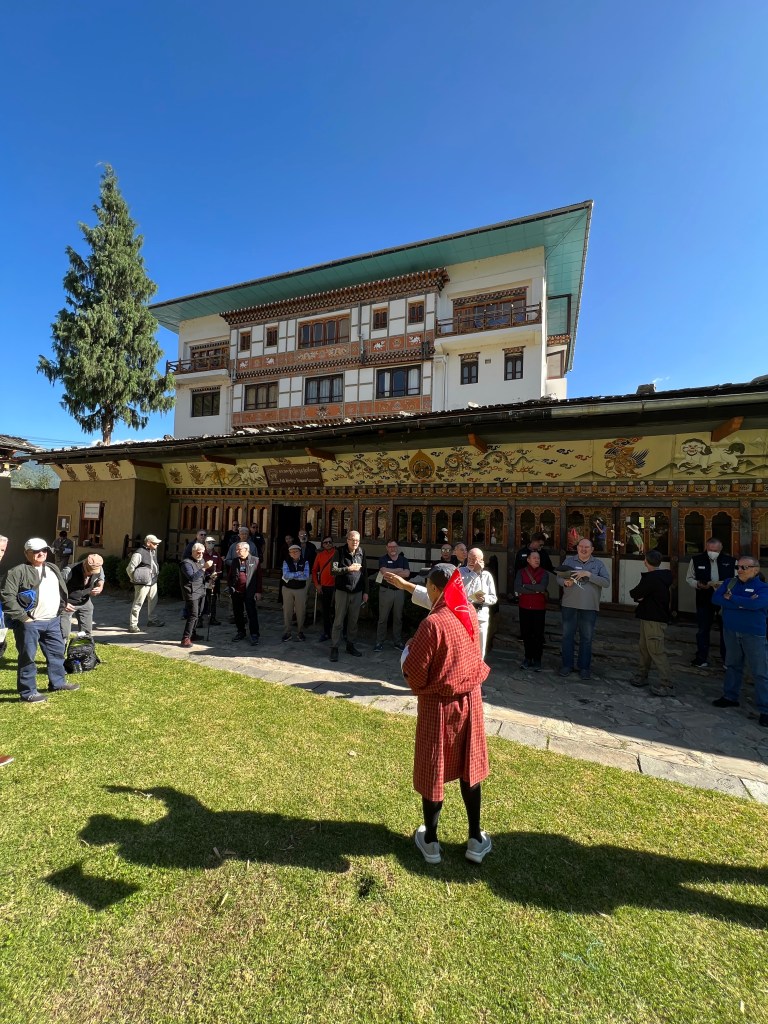
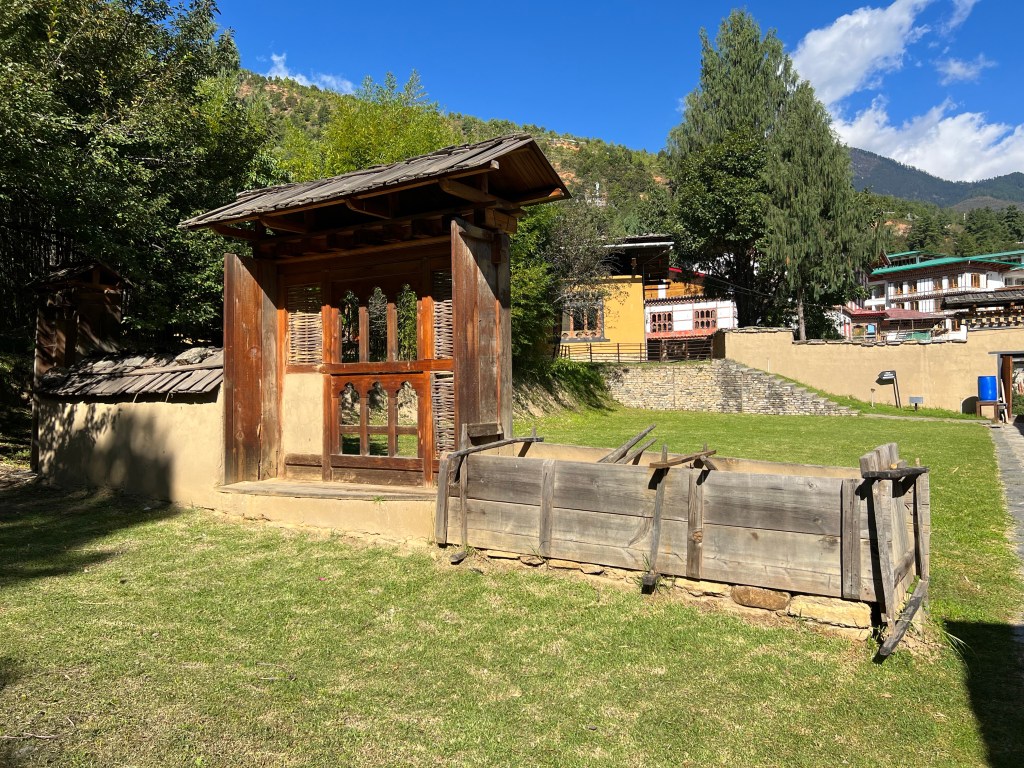
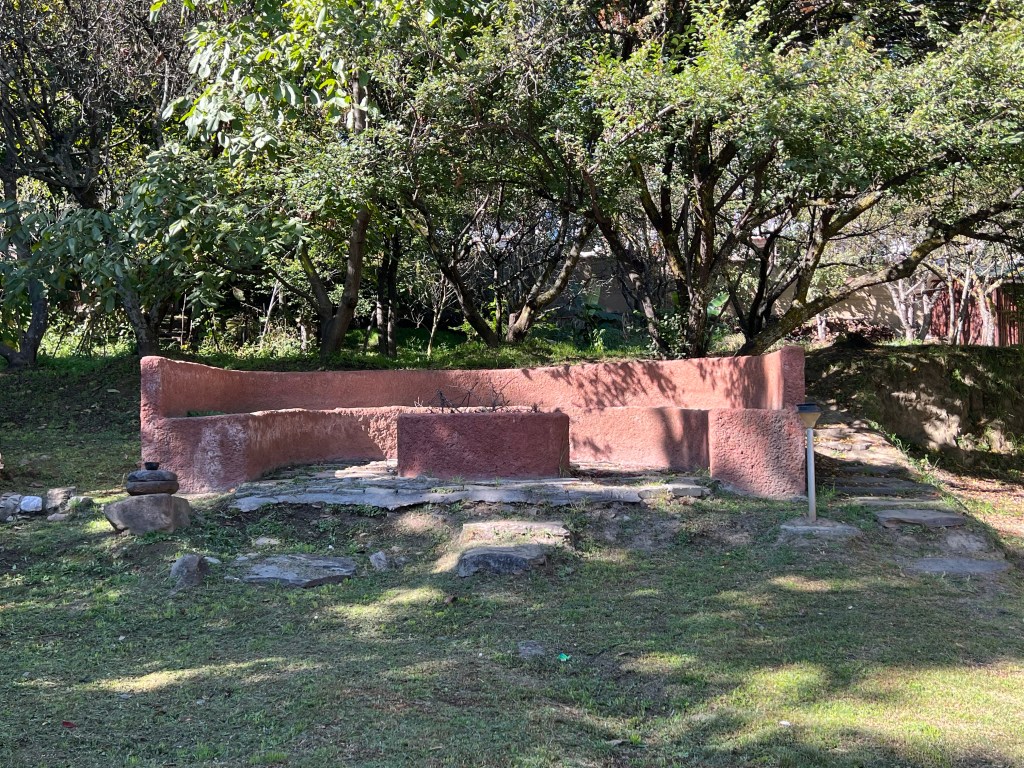
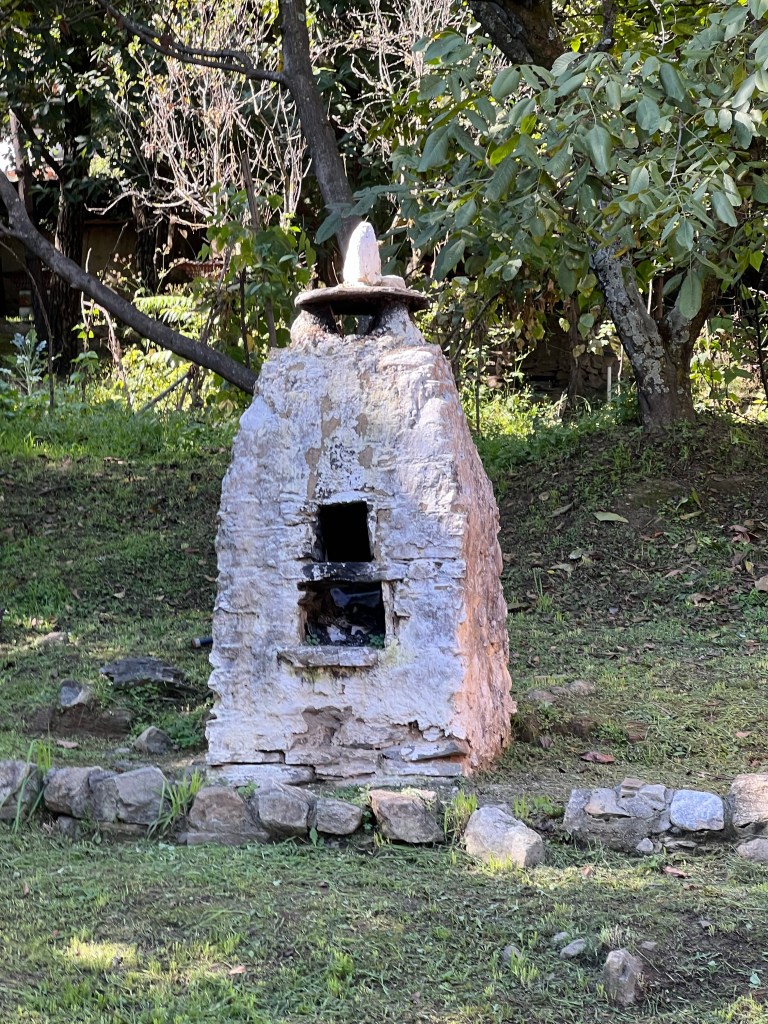
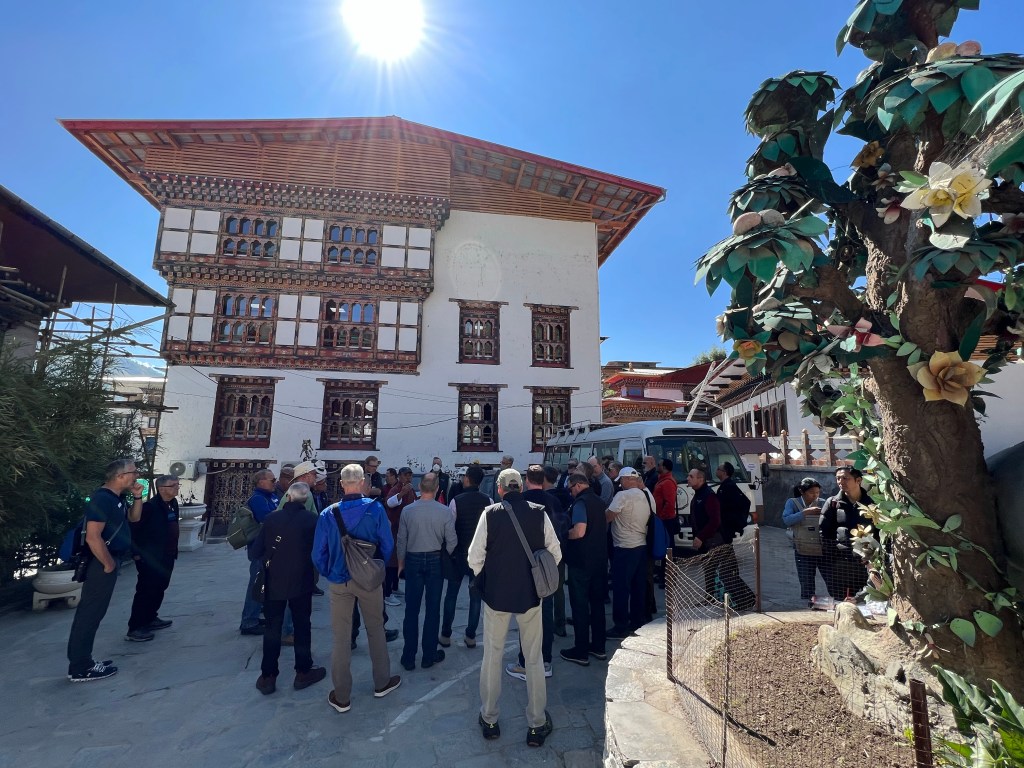
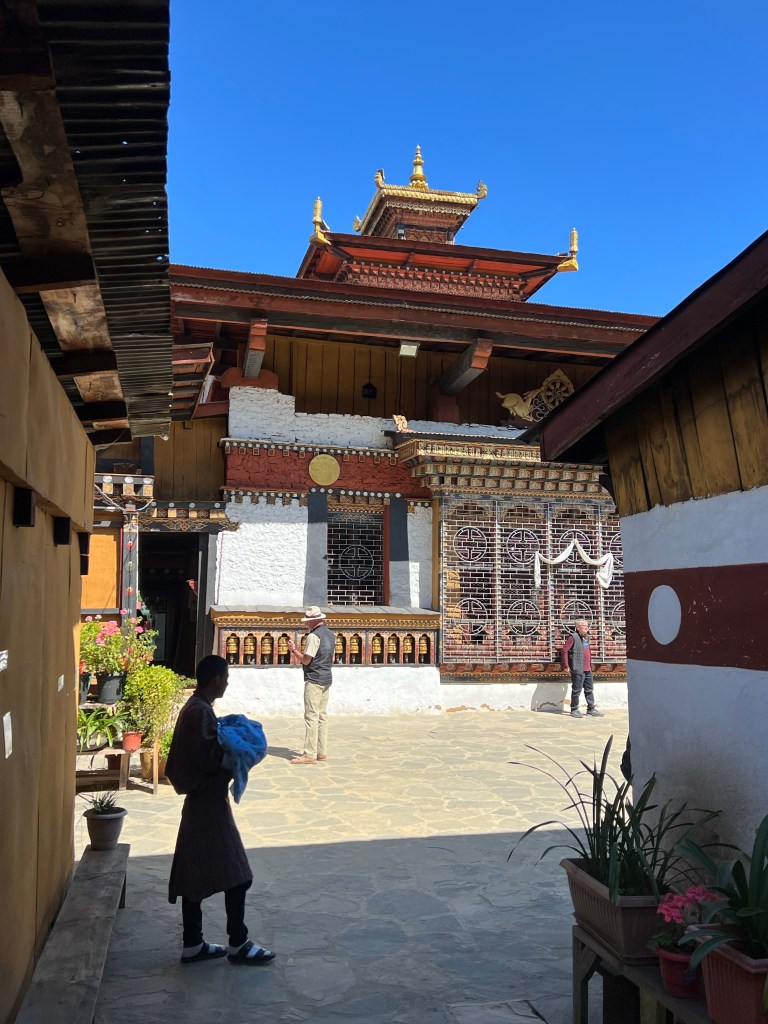
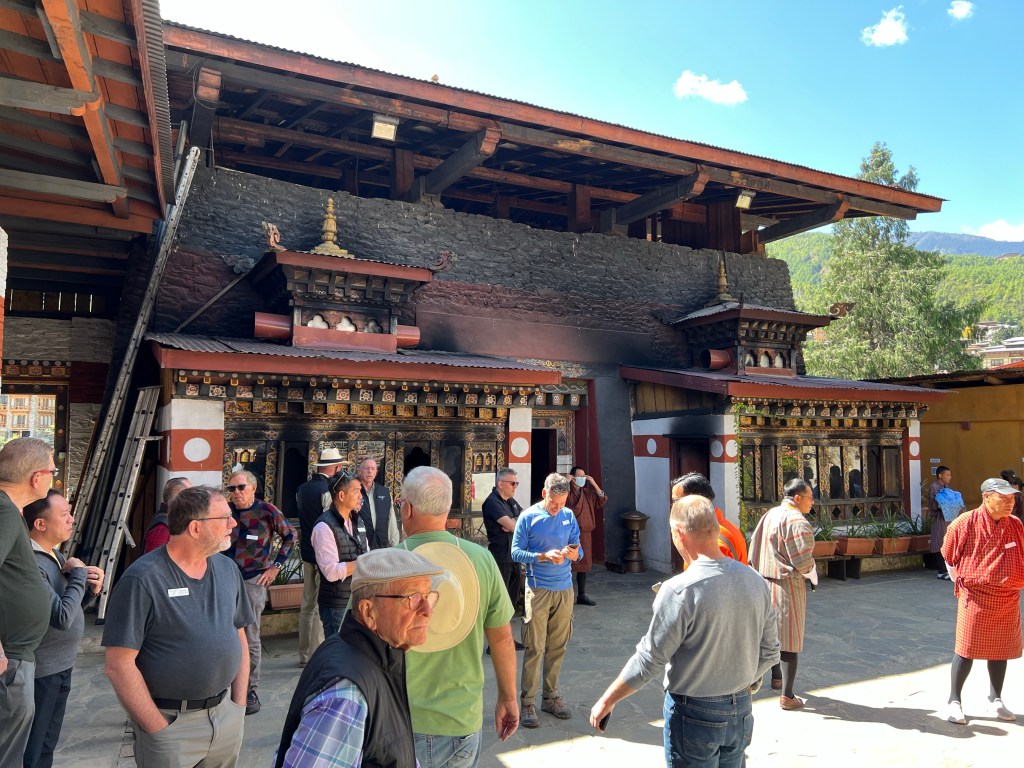
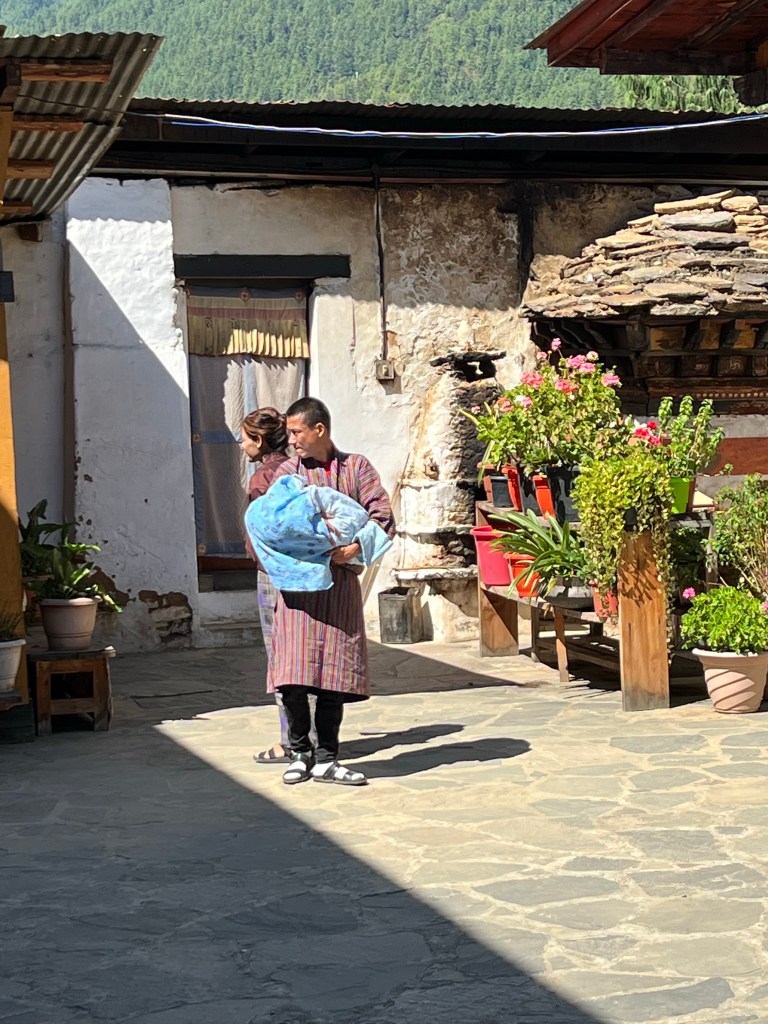
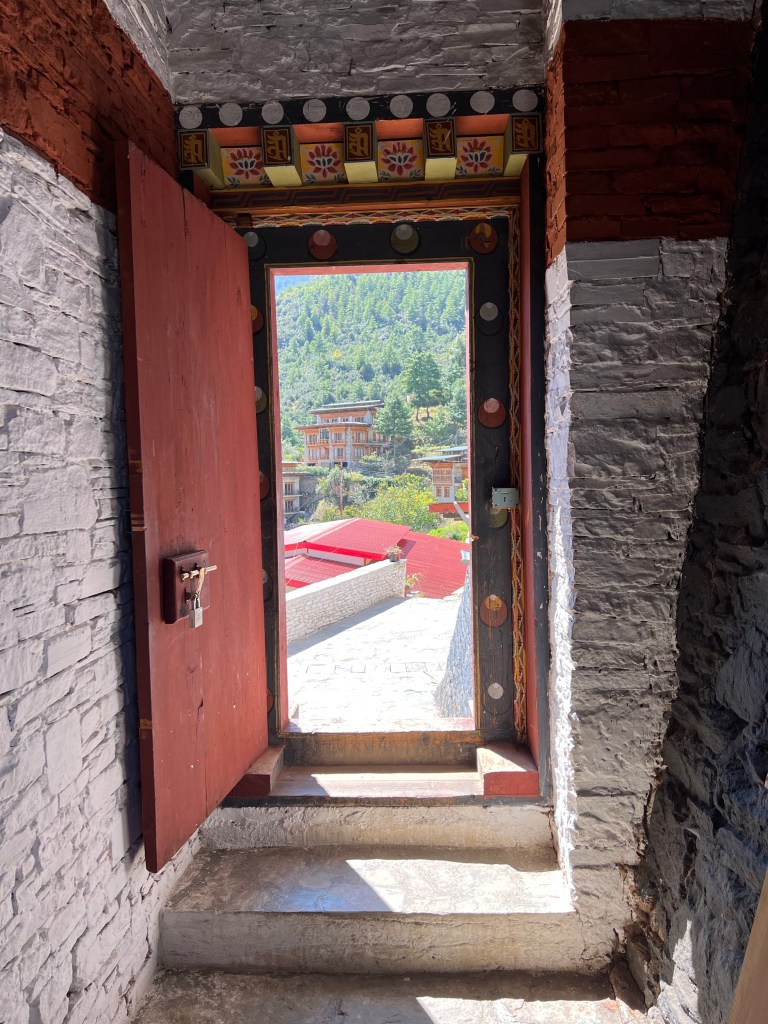
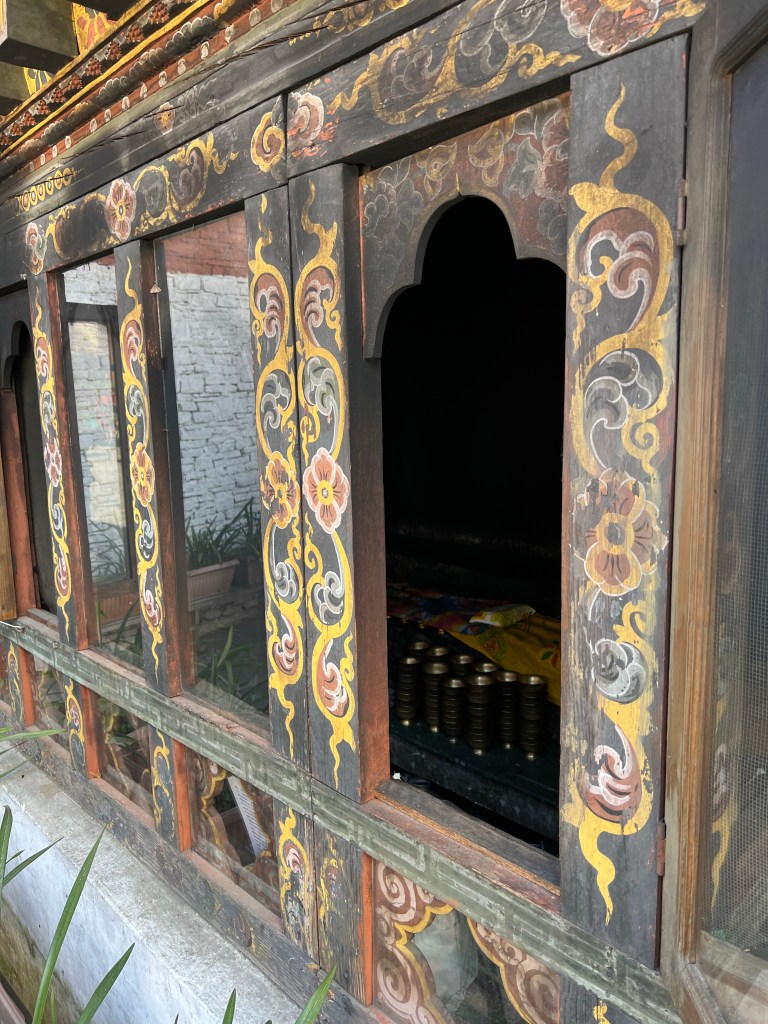
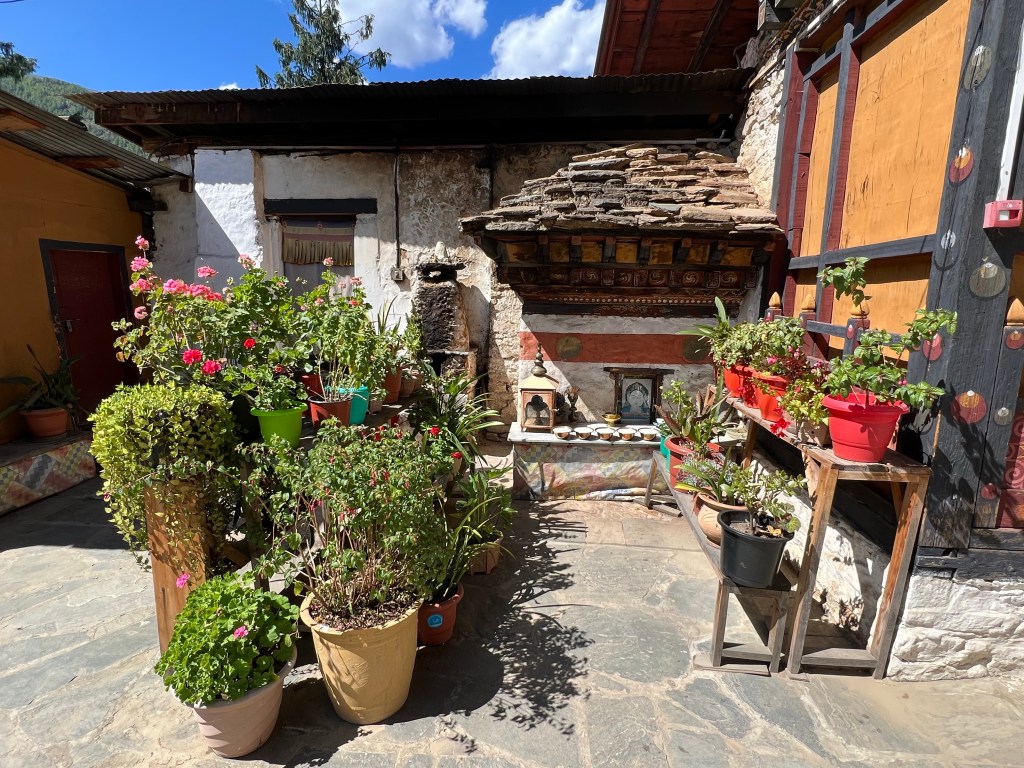
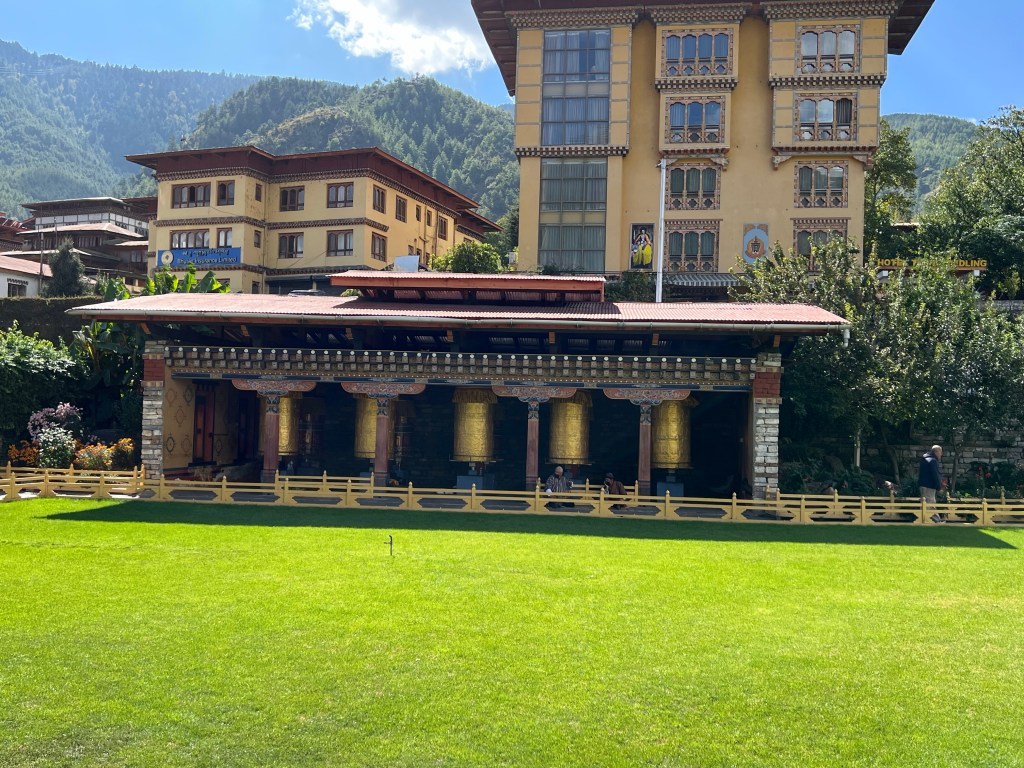
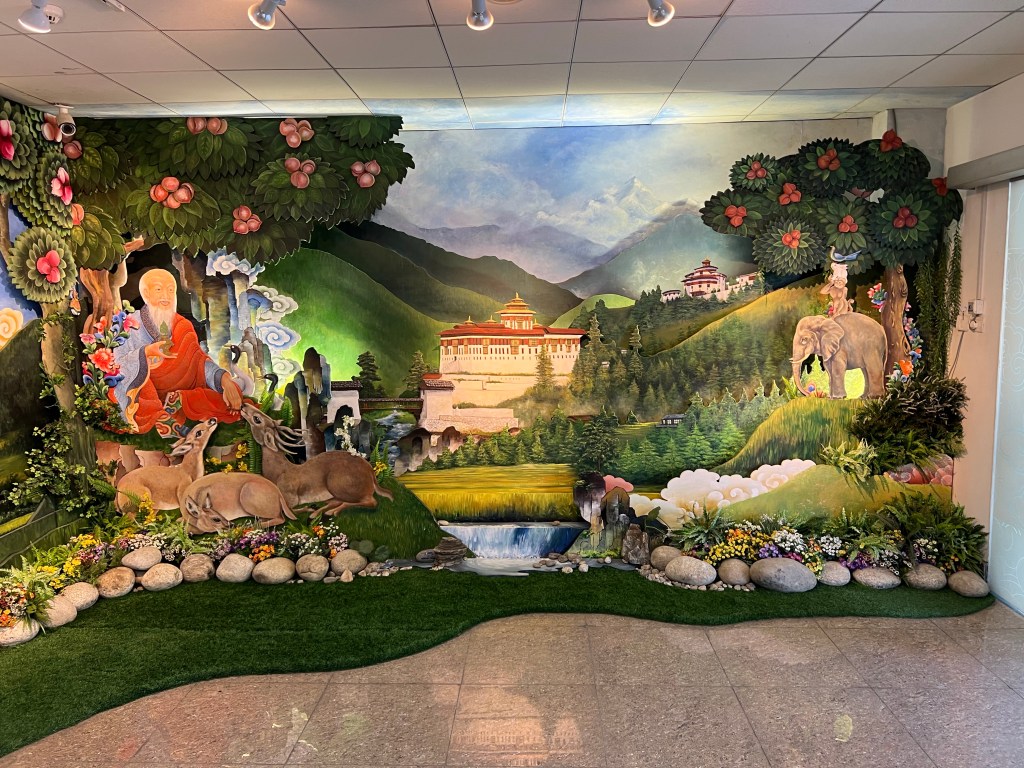
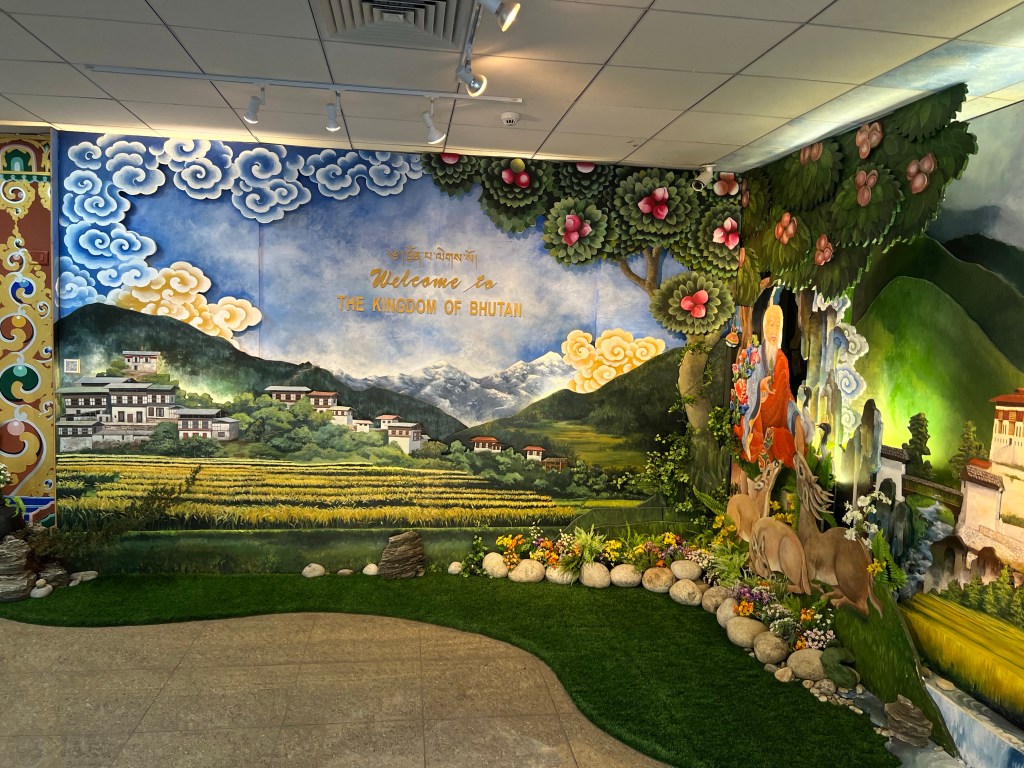
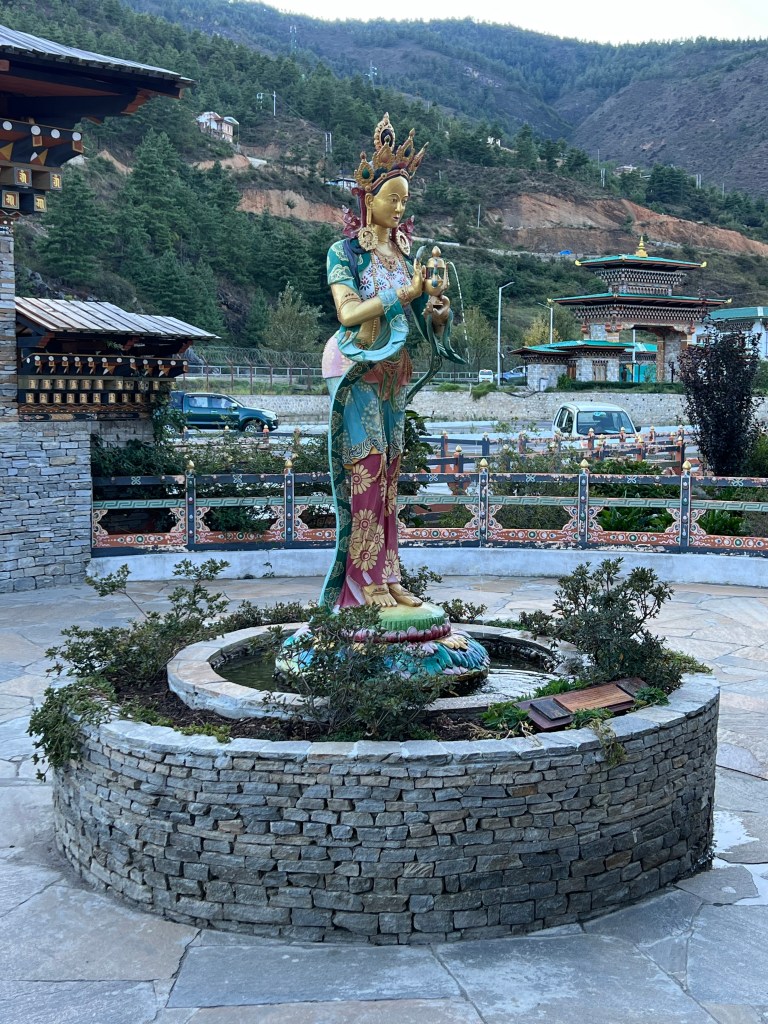
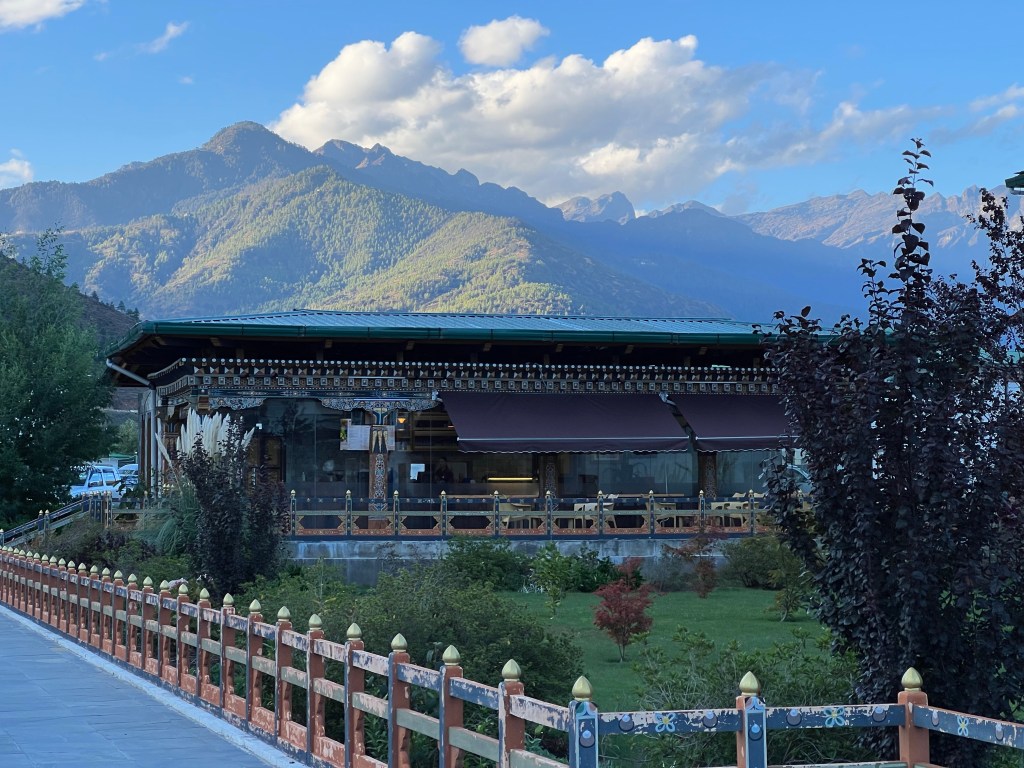
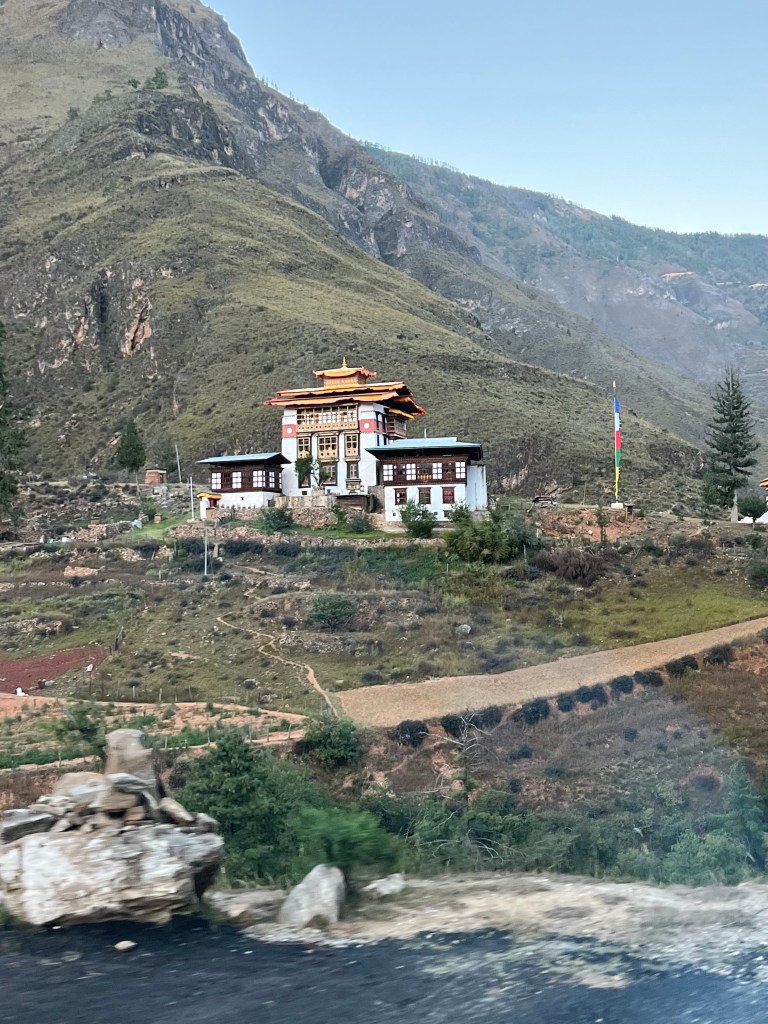
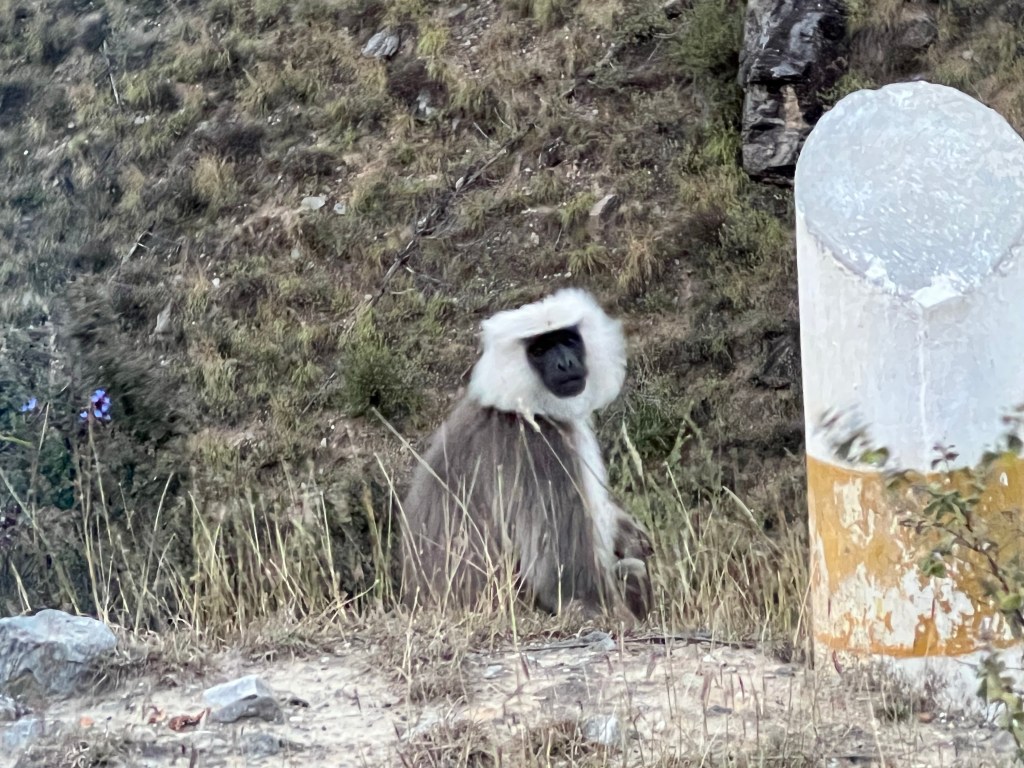
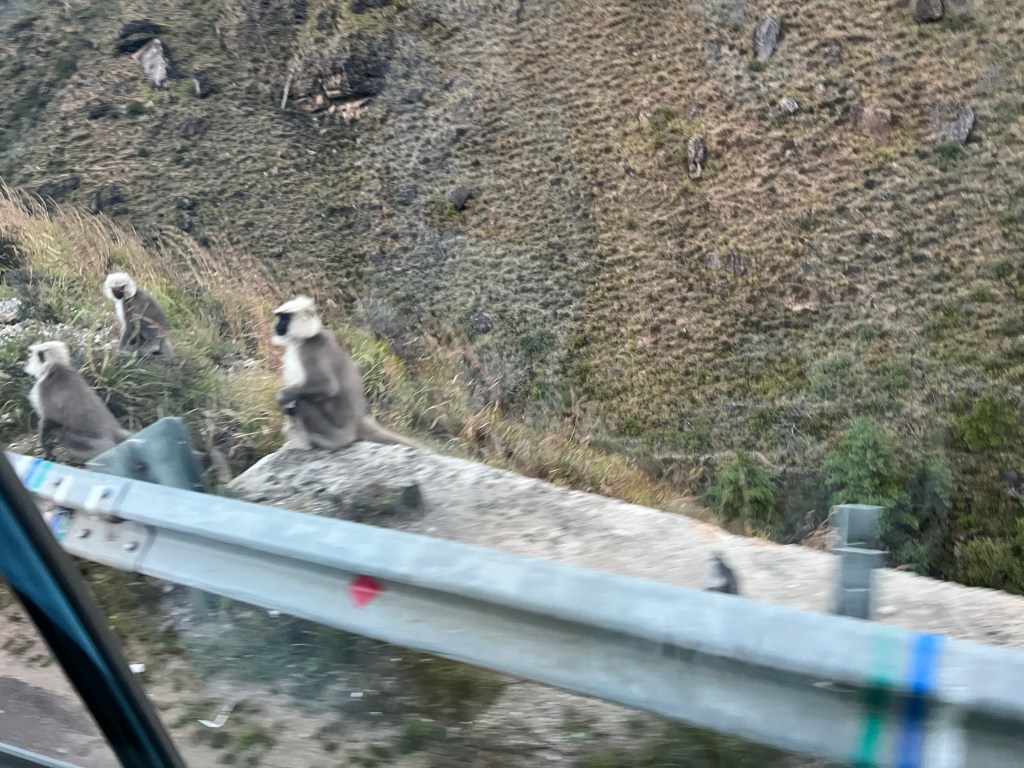
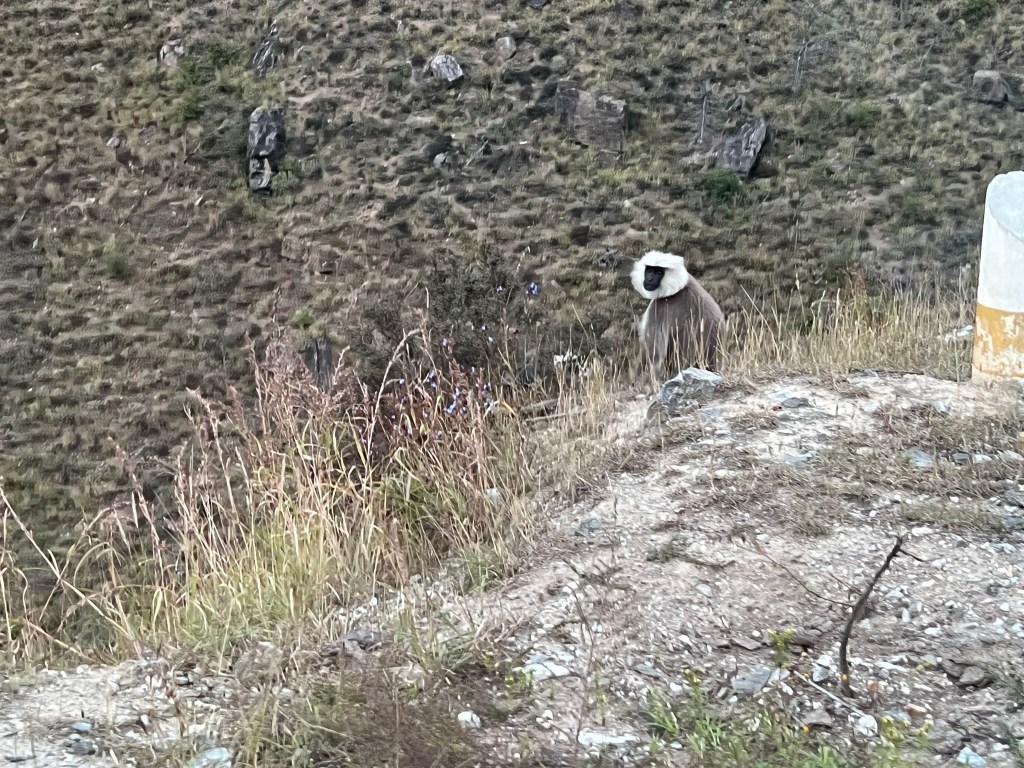
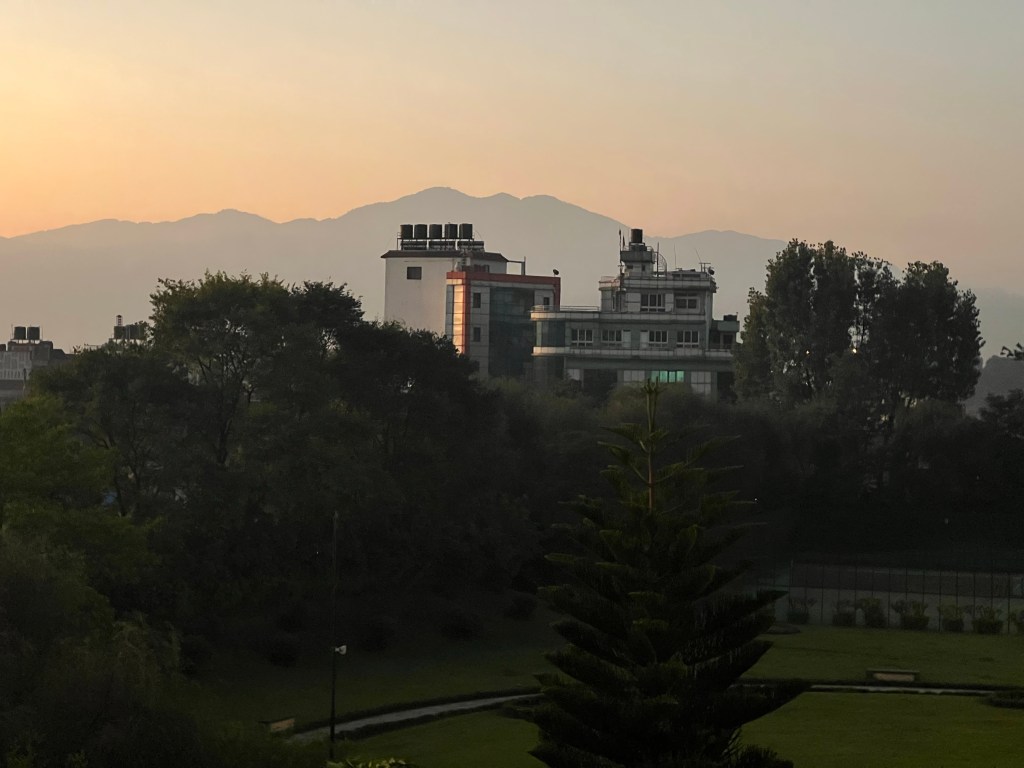
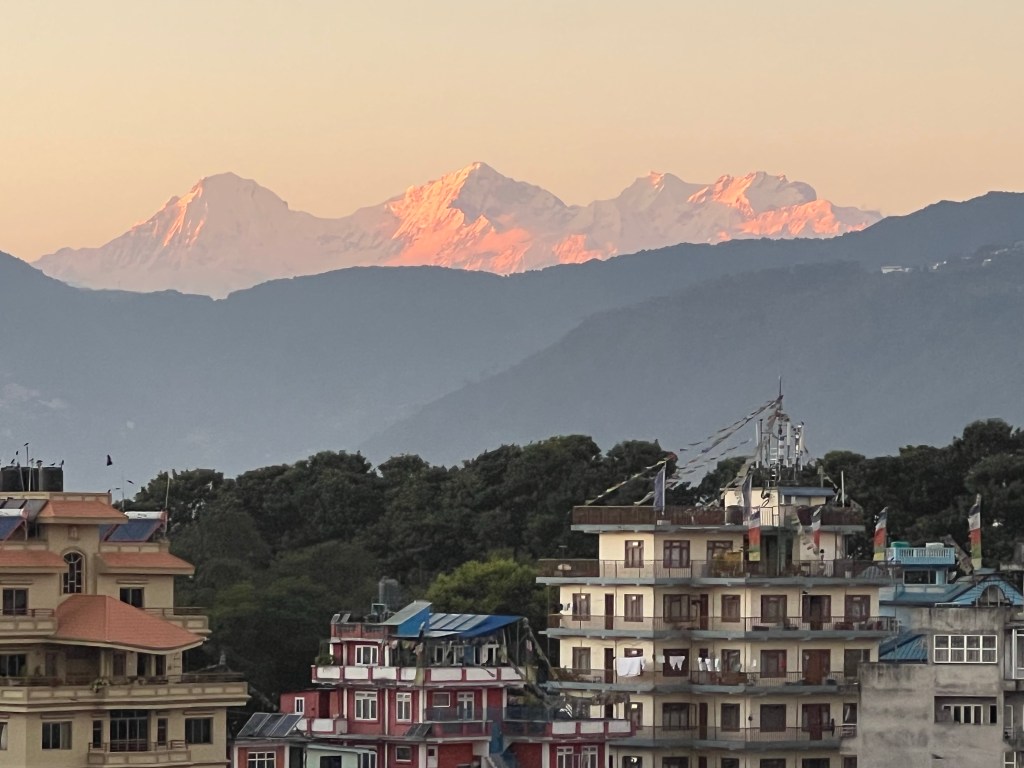
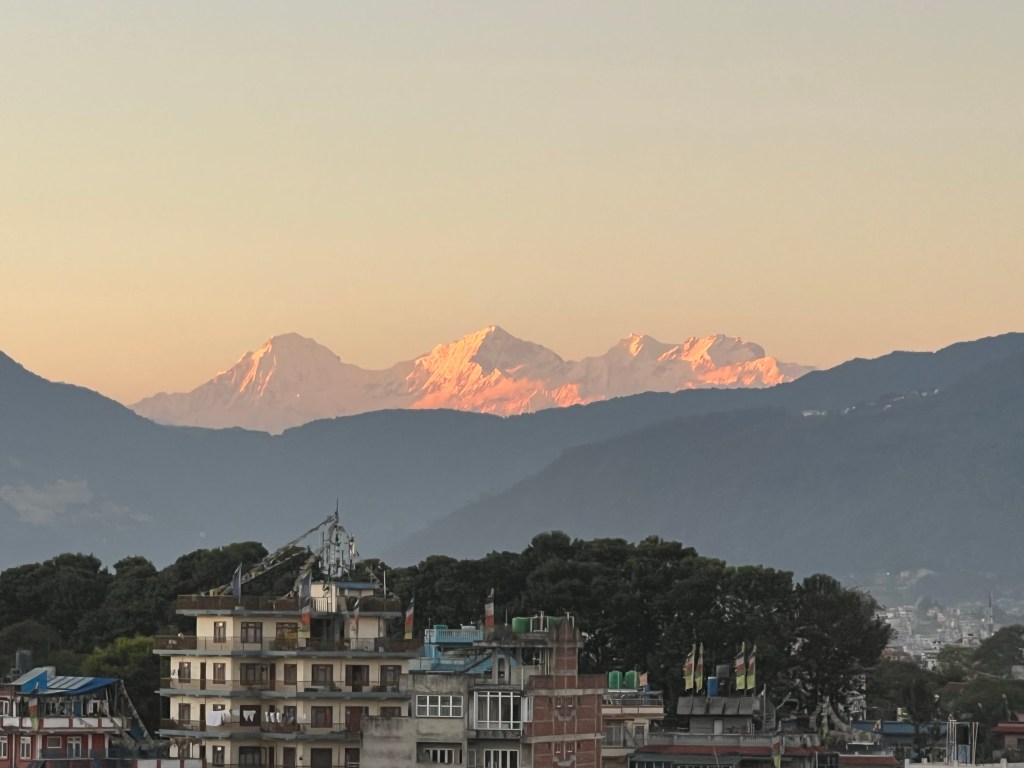
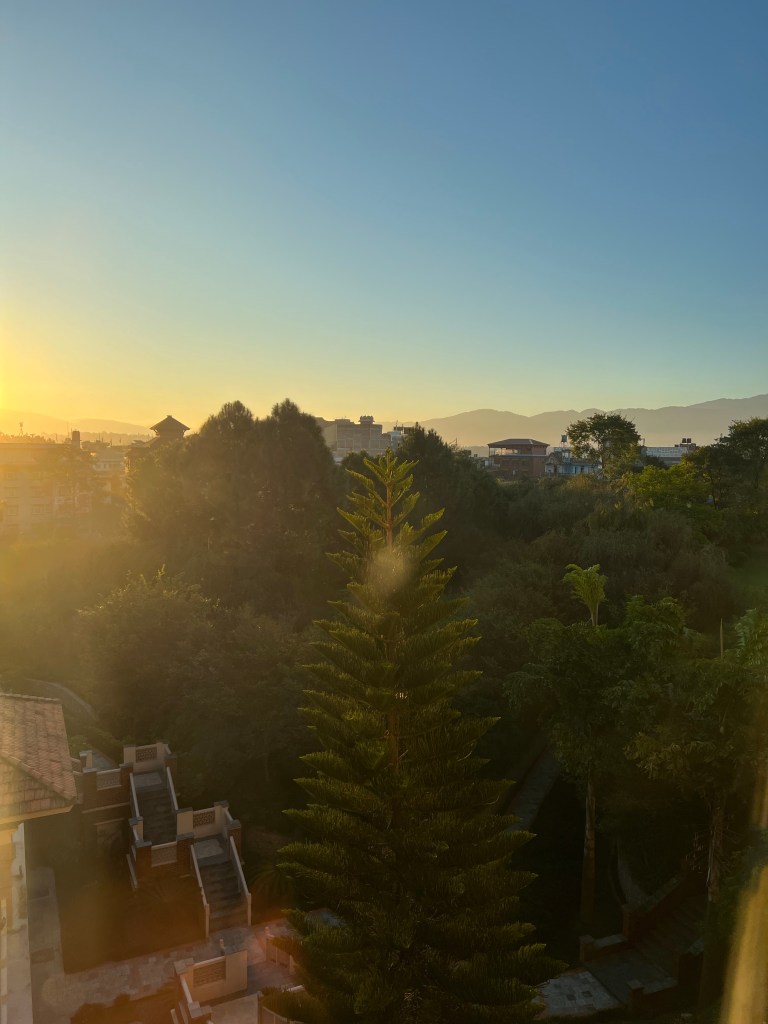
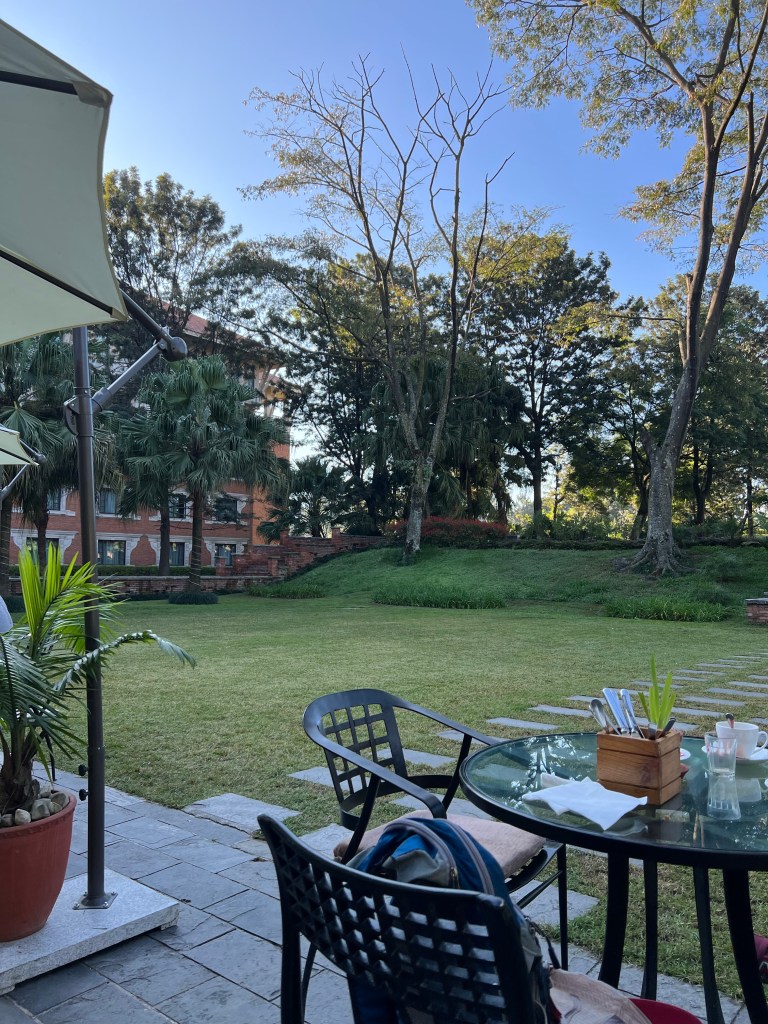
Another beautiful morning. Our hotel was just below the college/nunnery that we visited yesterday.
We head back through the Dochula Pass on our return to Paro (home of the International Airport).
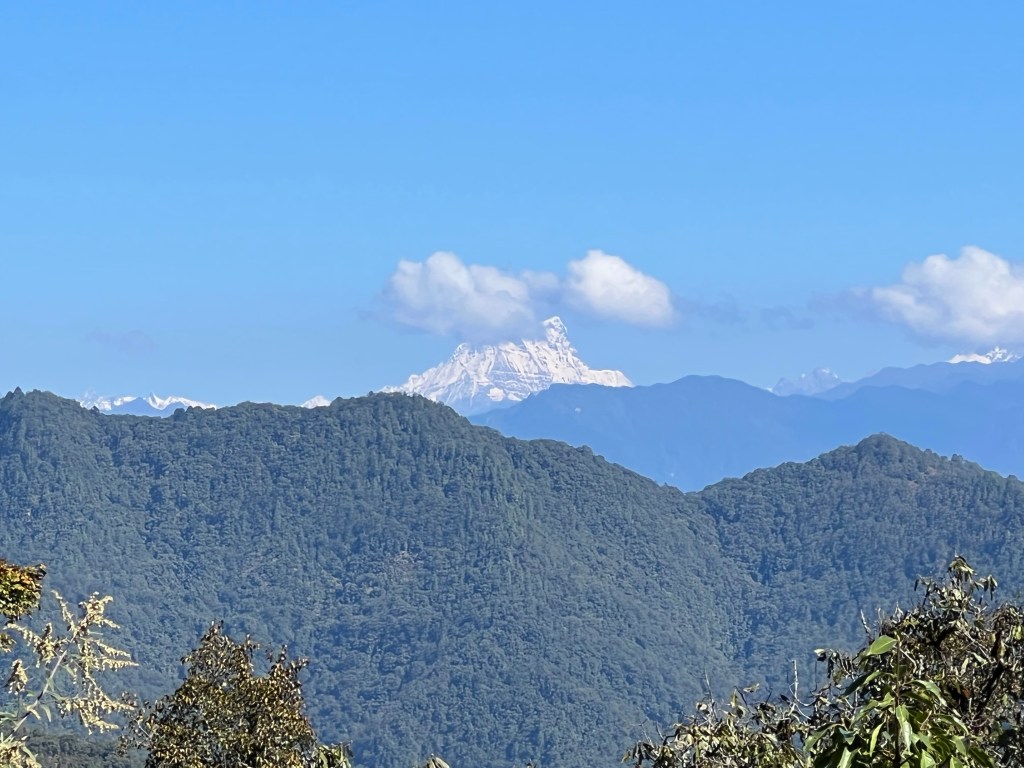
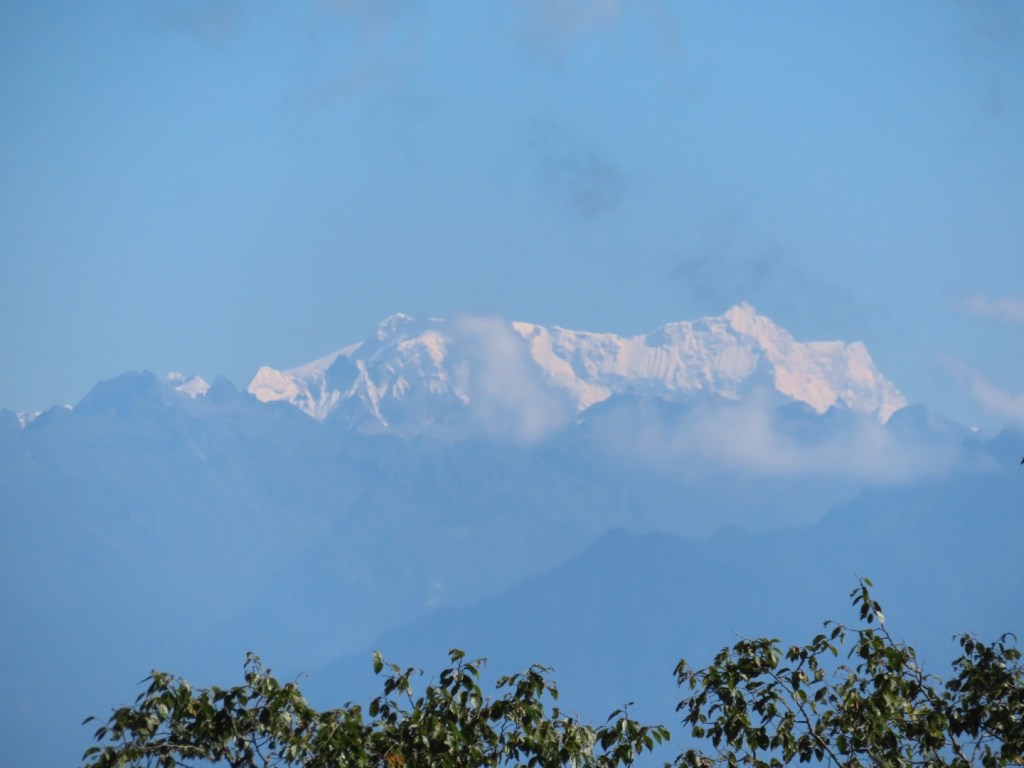
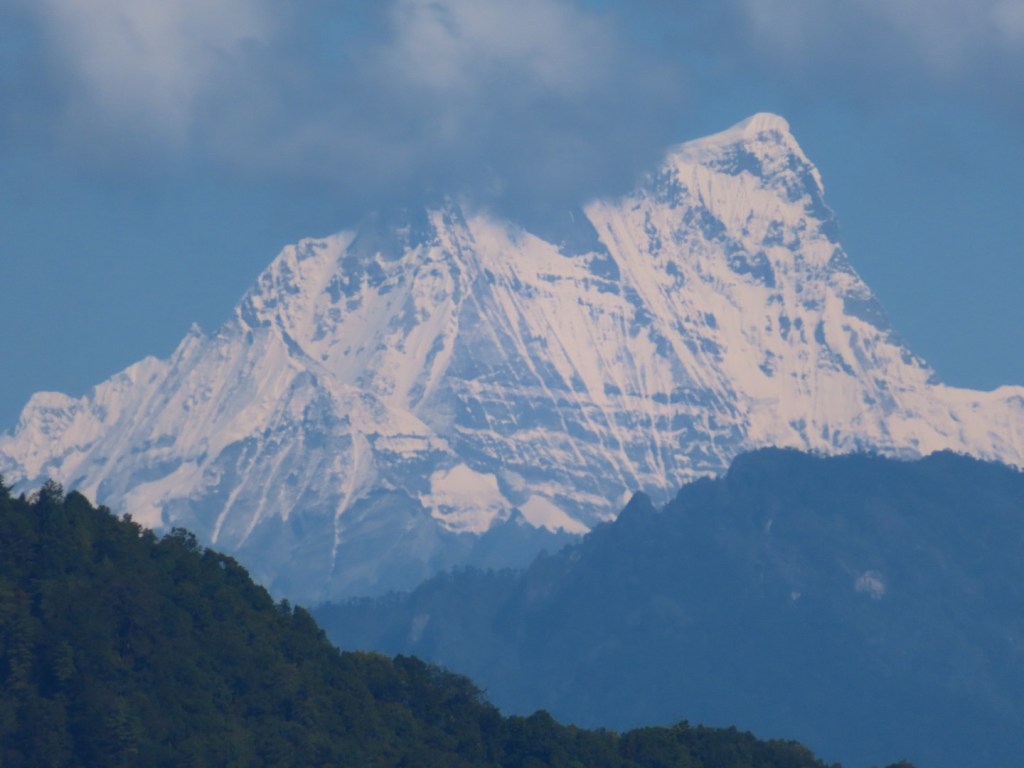
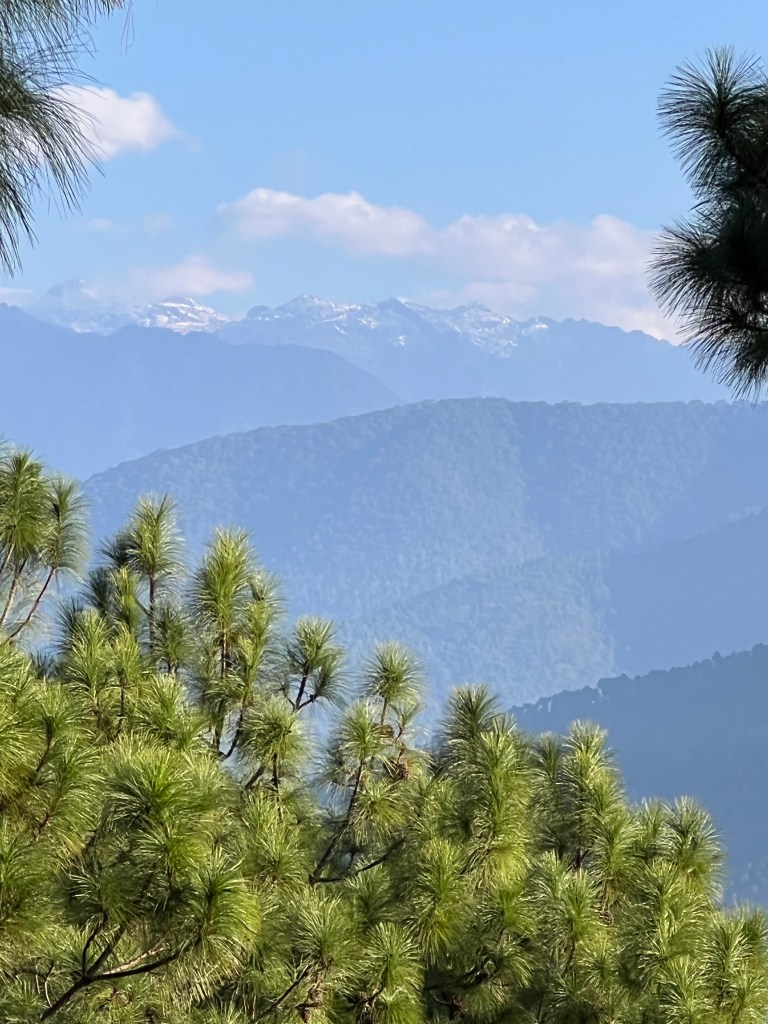
Photo stop – Masagang (7194m), third highest mountain in Bhutan.
Rest stop at Dochula Pass.
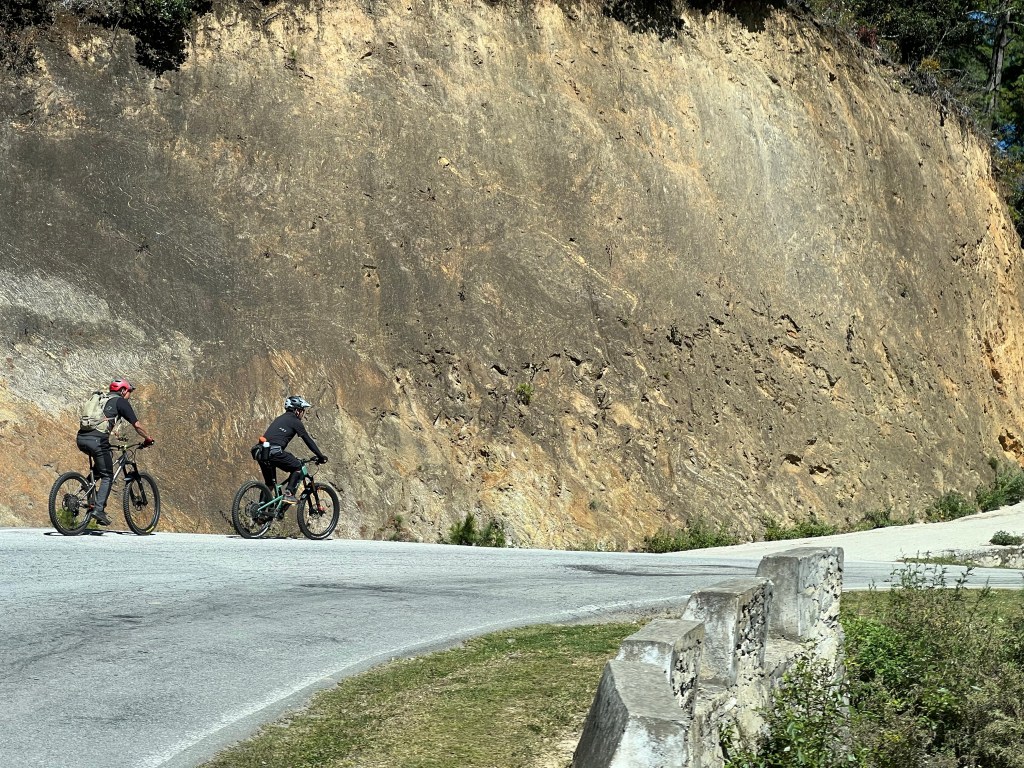
Bicyclists headed up to the pass.
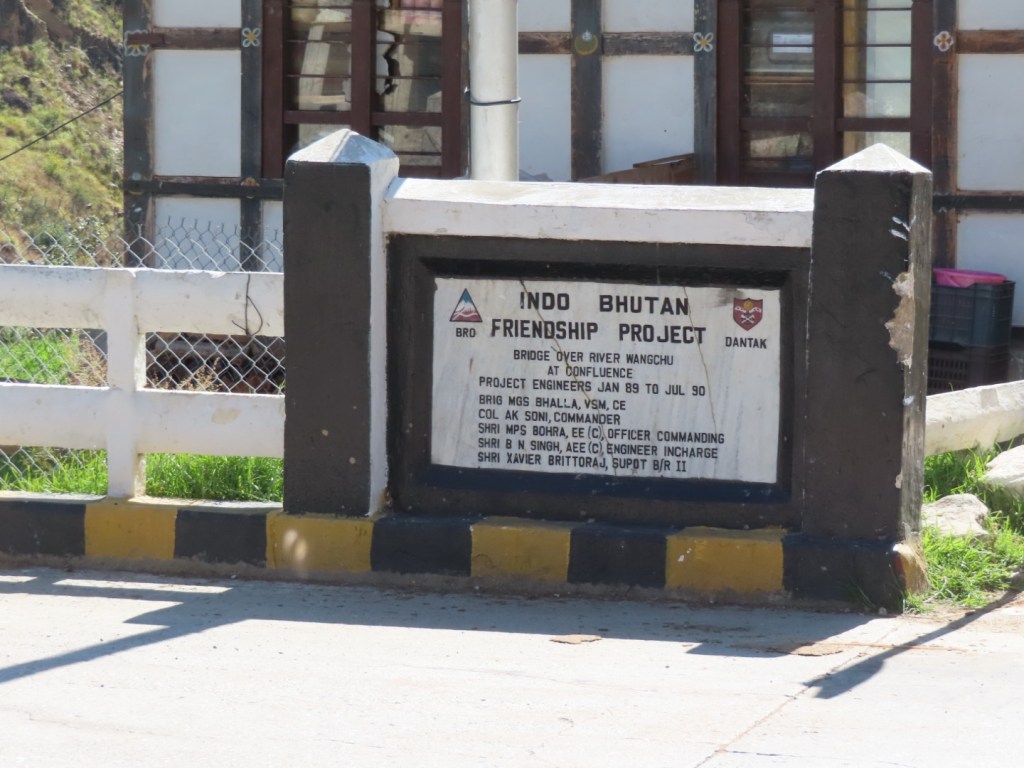
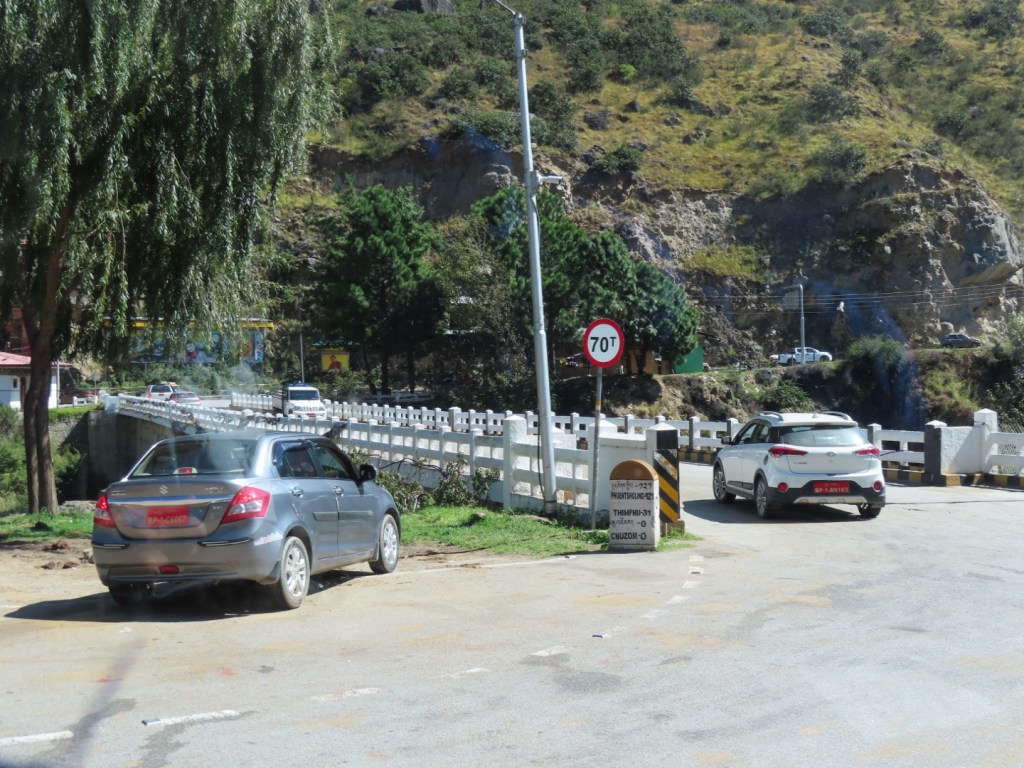
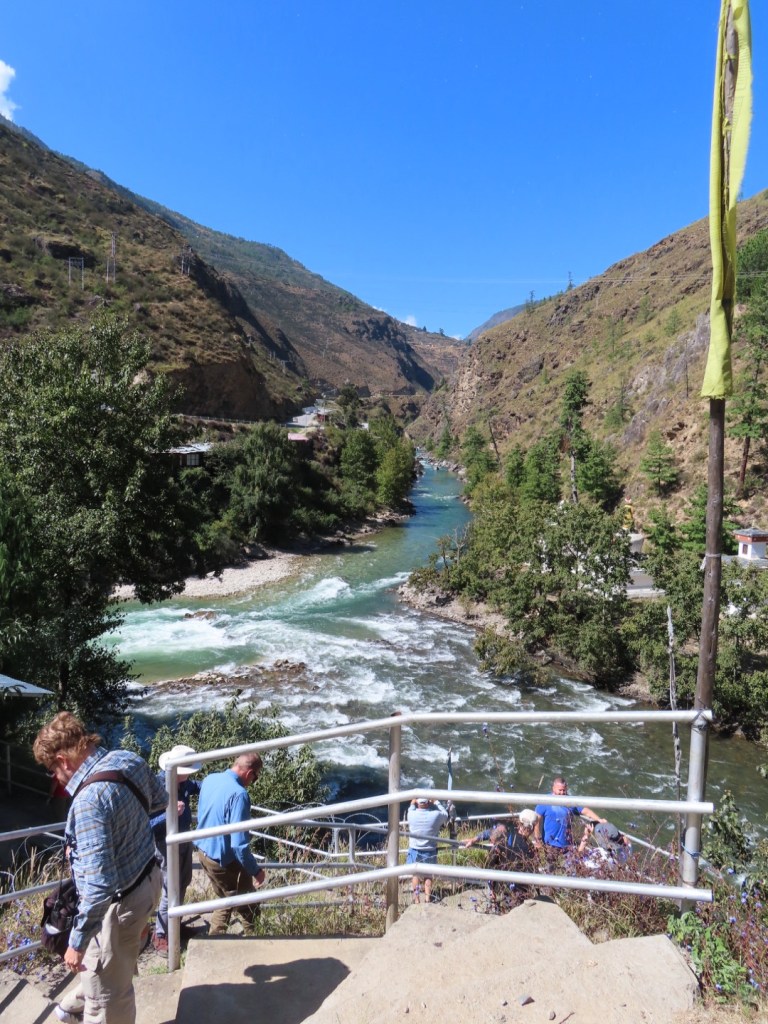
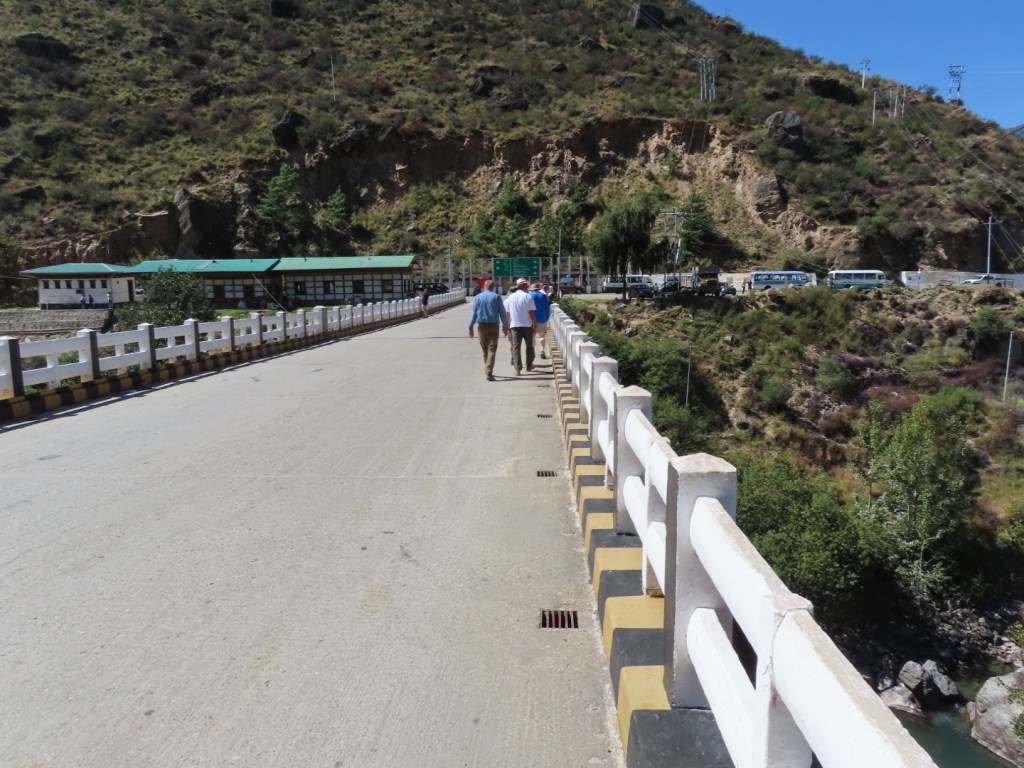
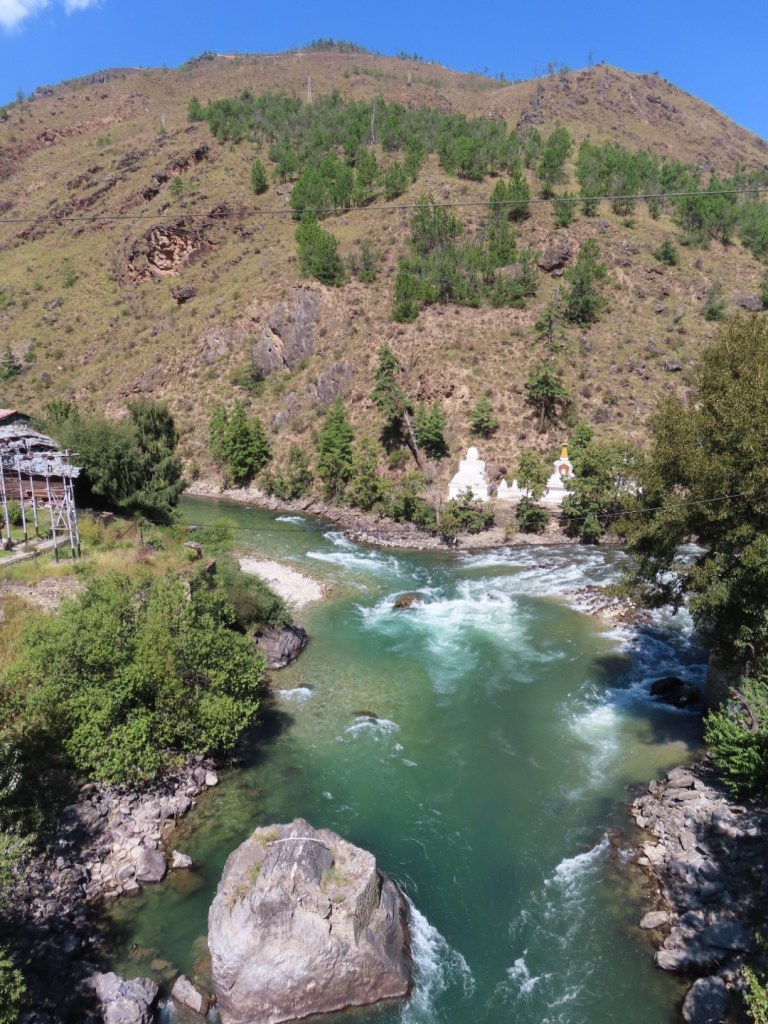
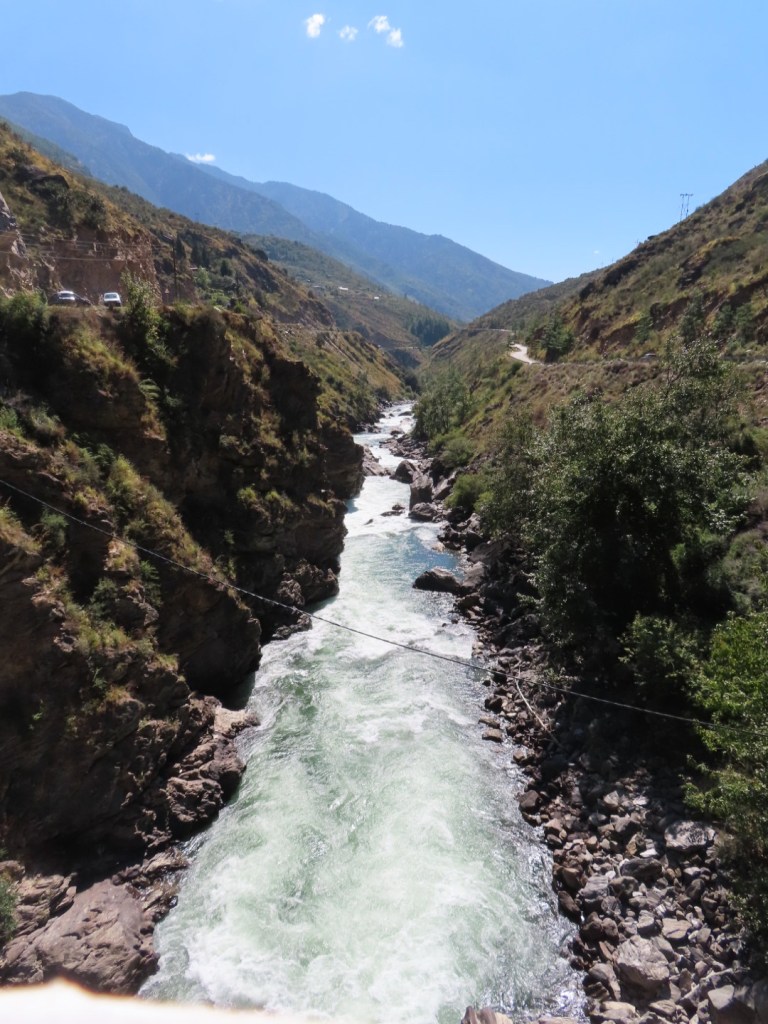
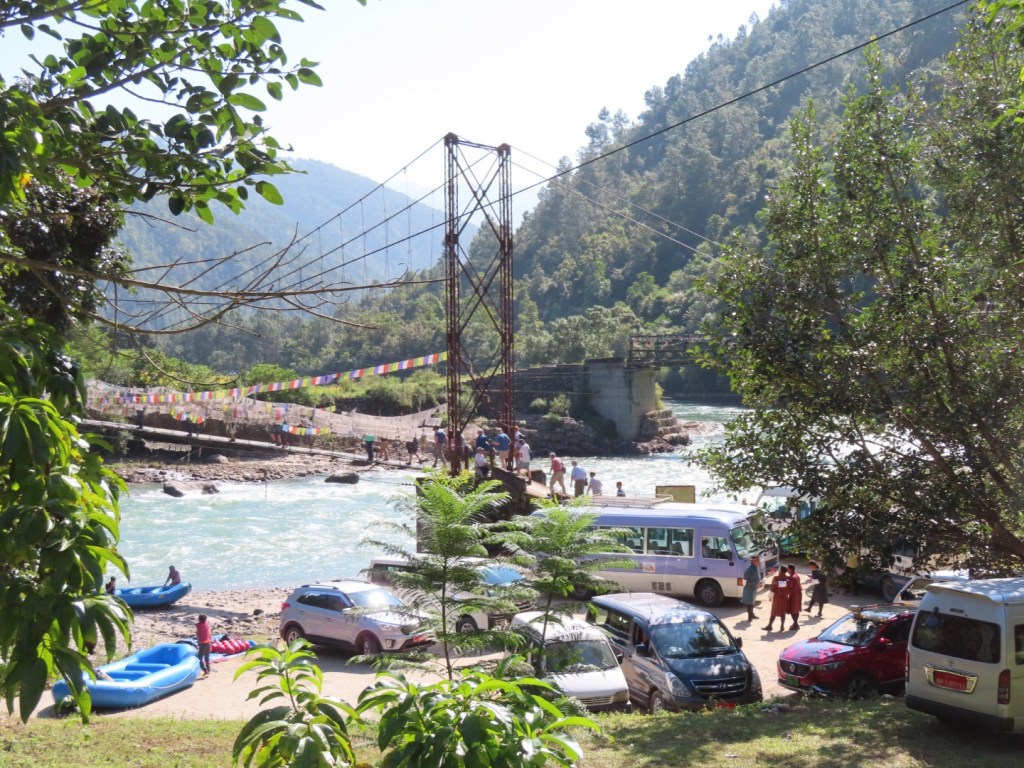
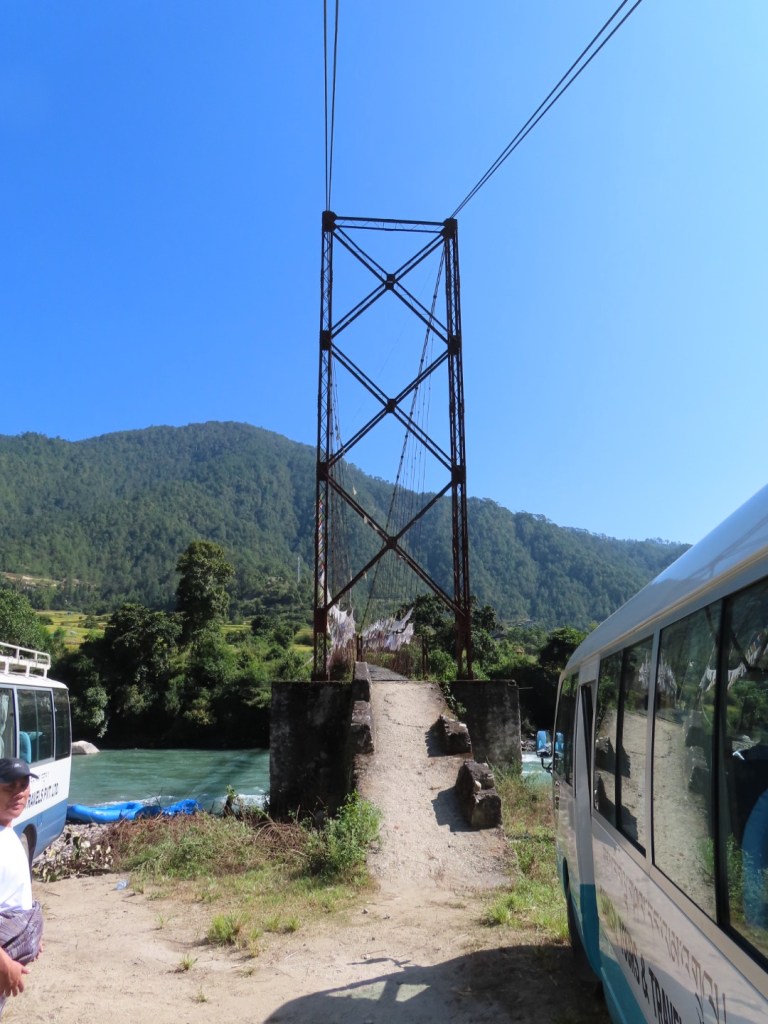
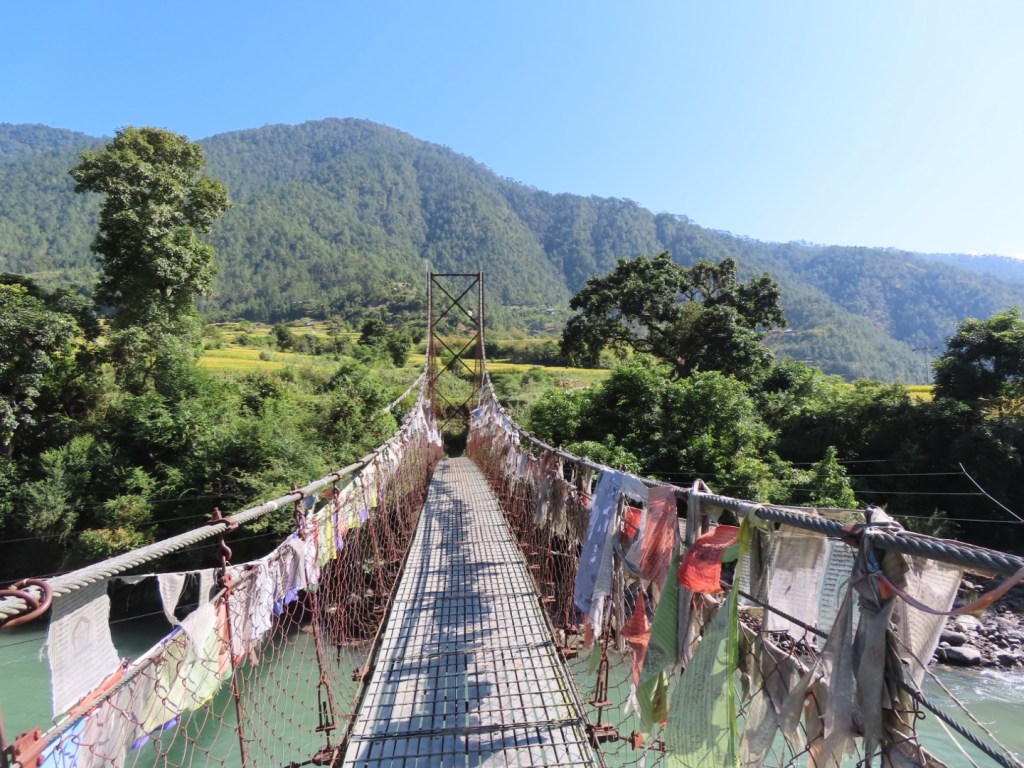
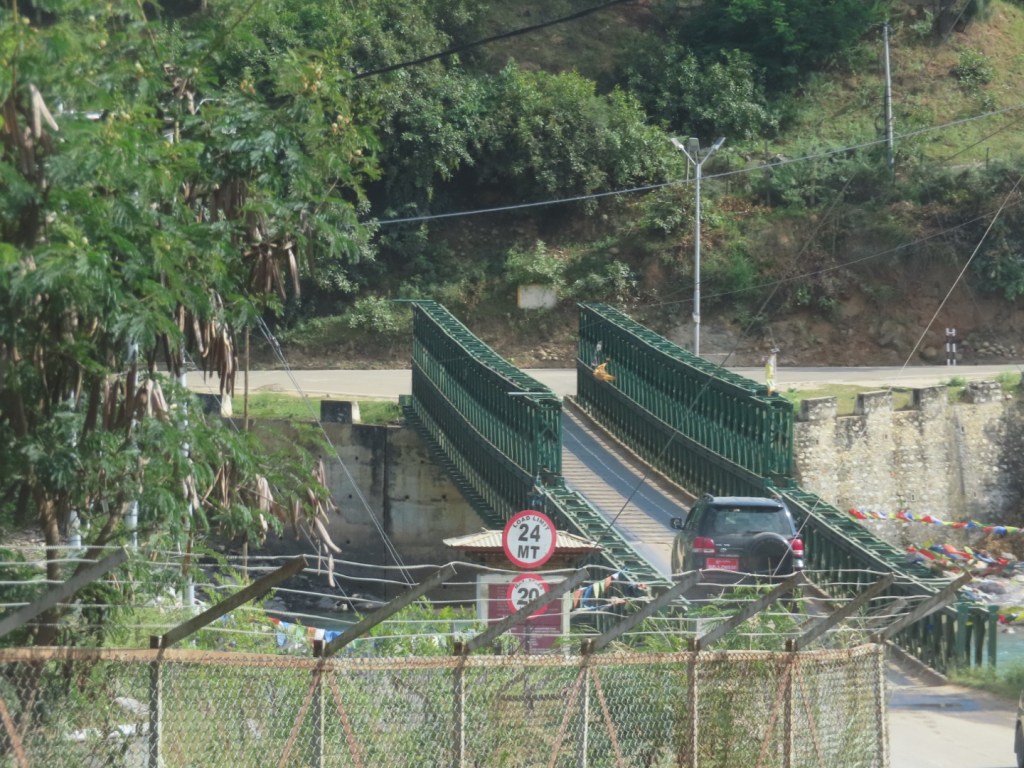
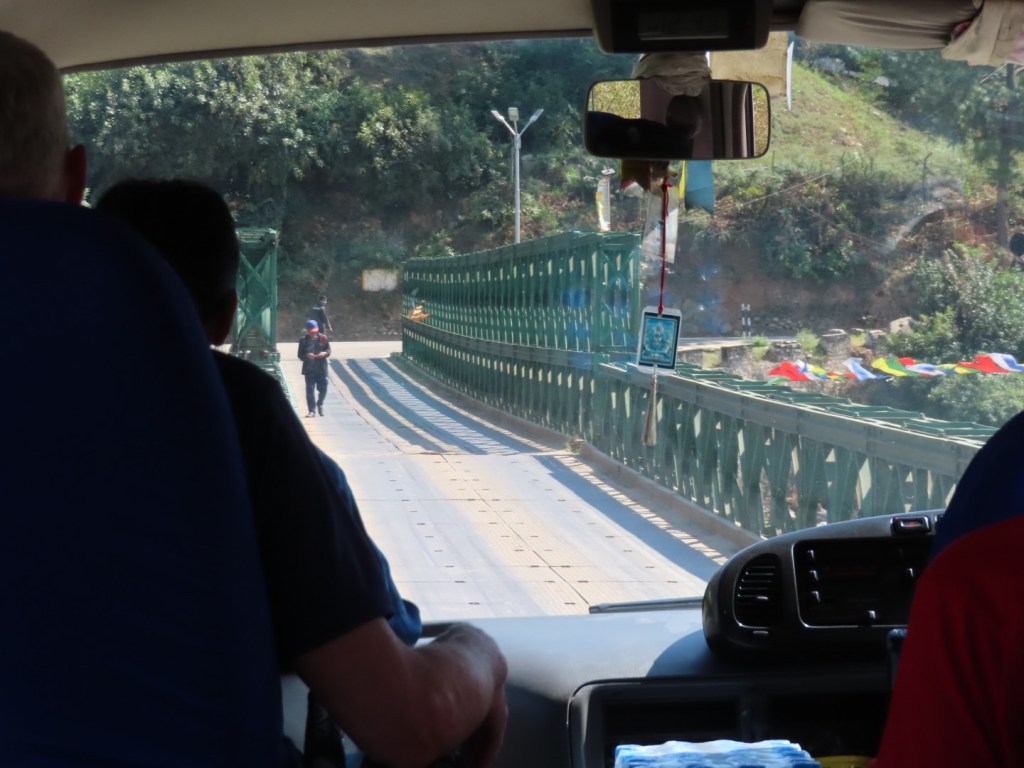
Rest stop at Indo-Bhutan Friendship Bridge.
We stopped for lunch in Paro
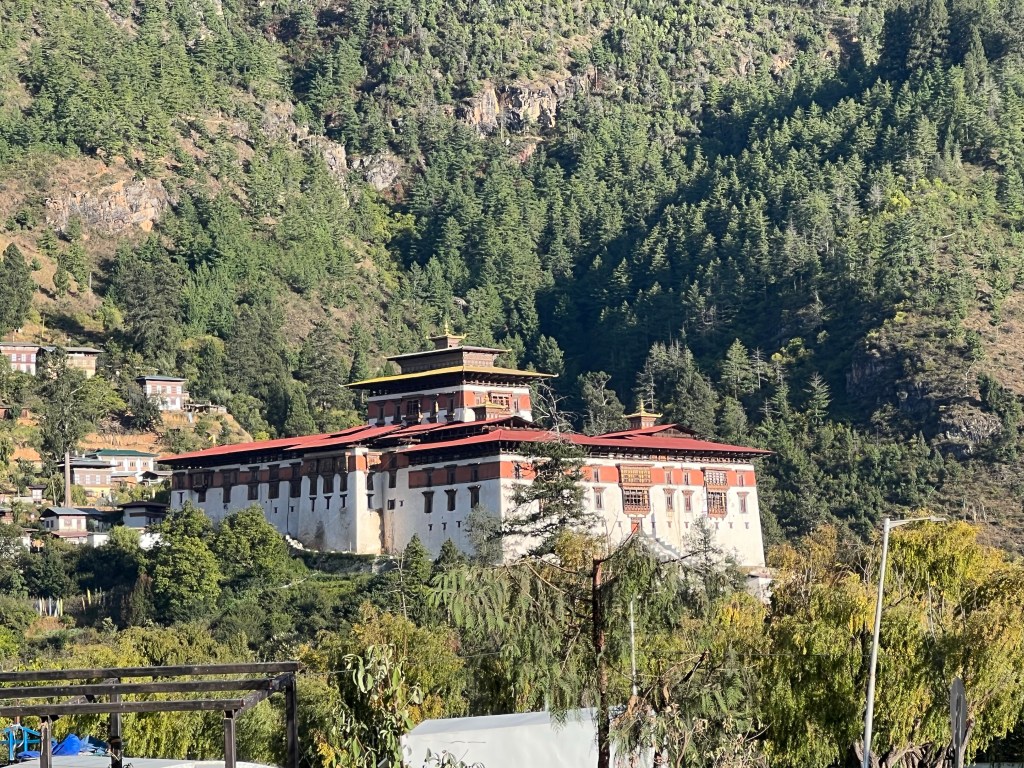
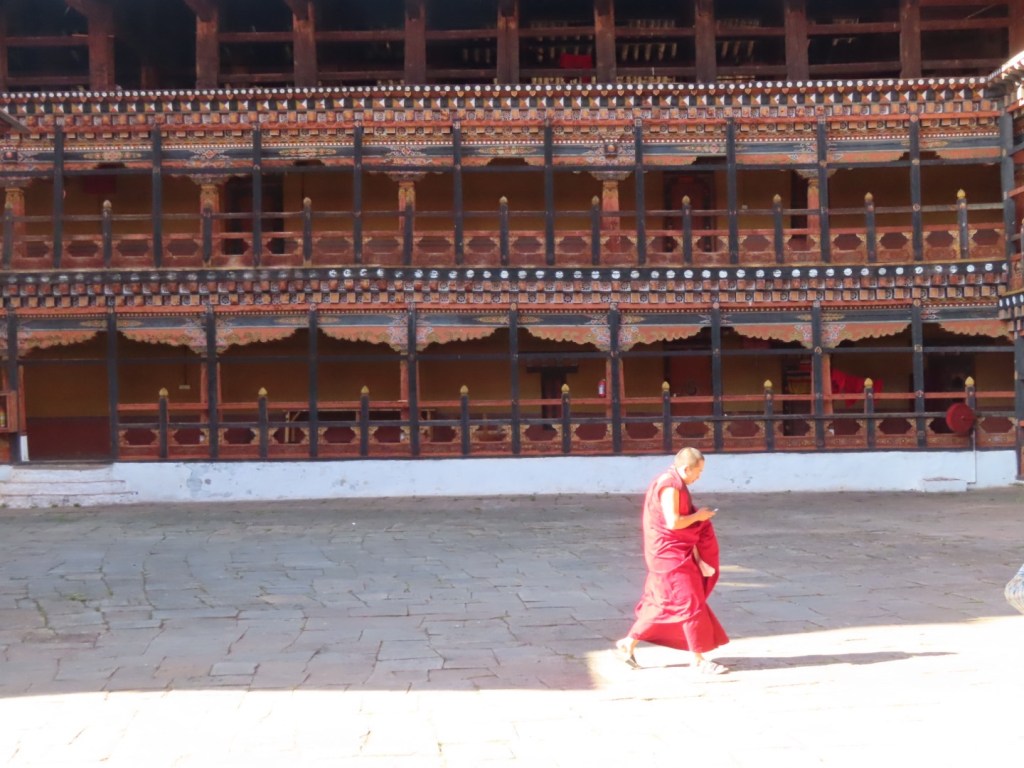
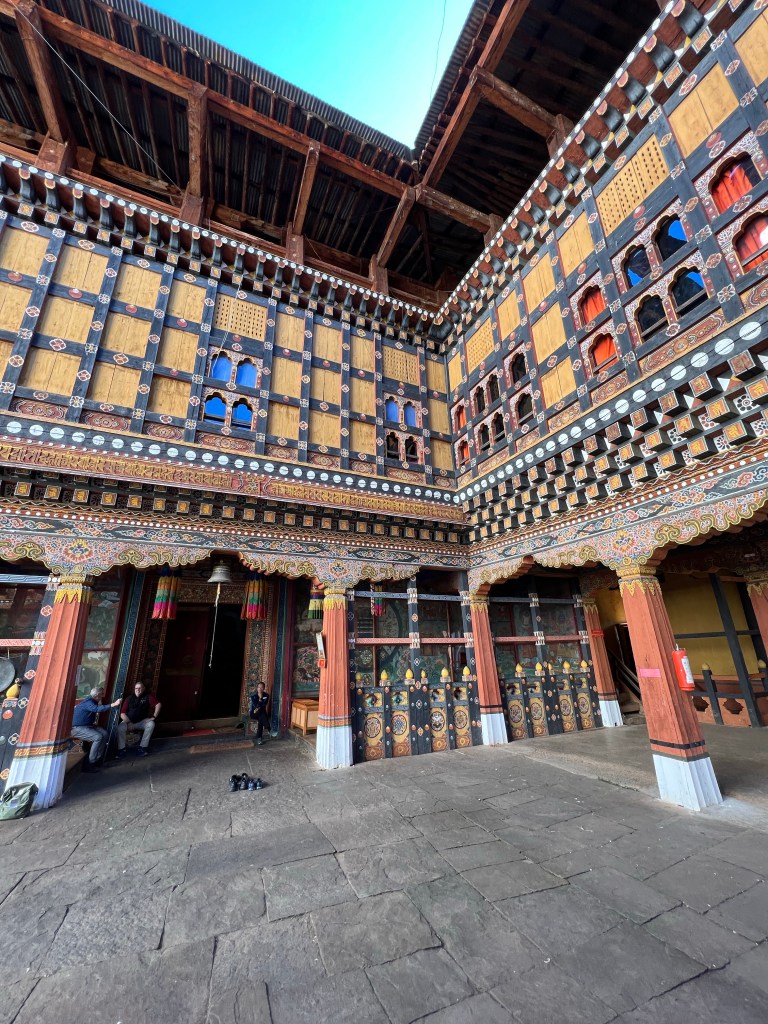
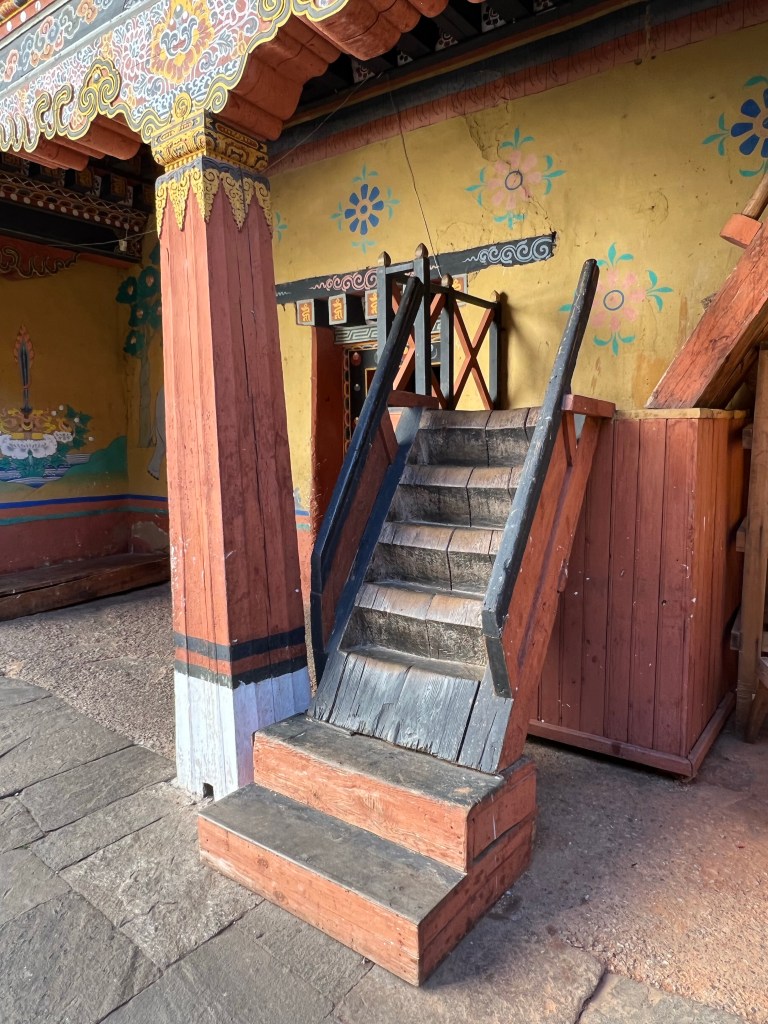
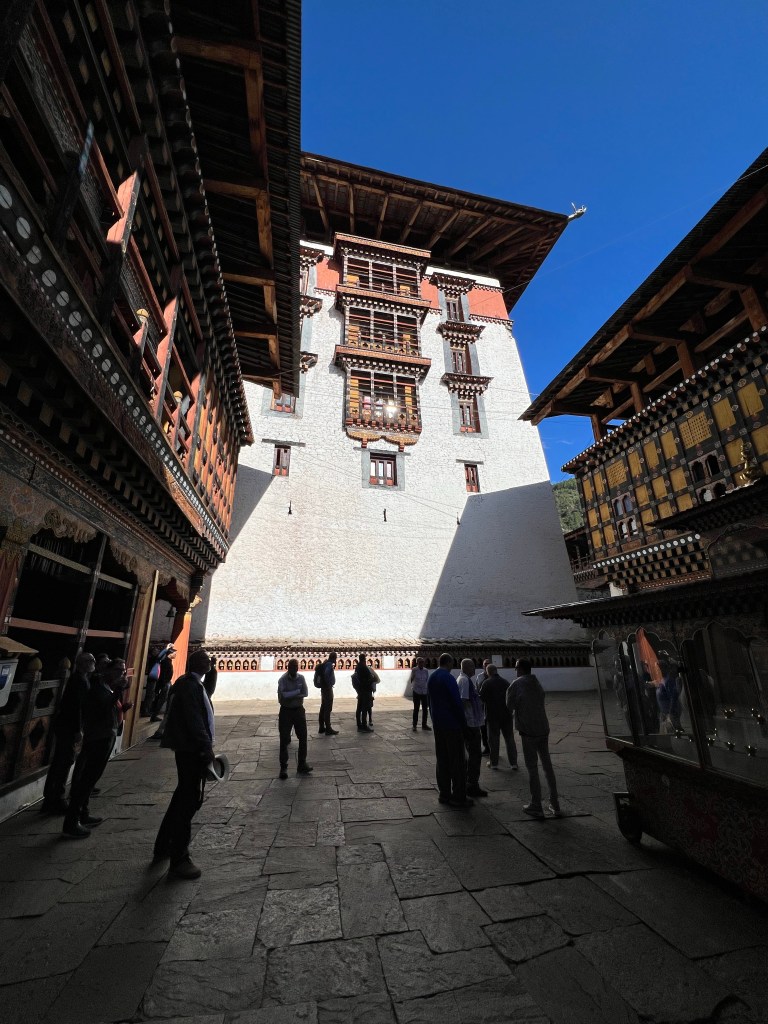
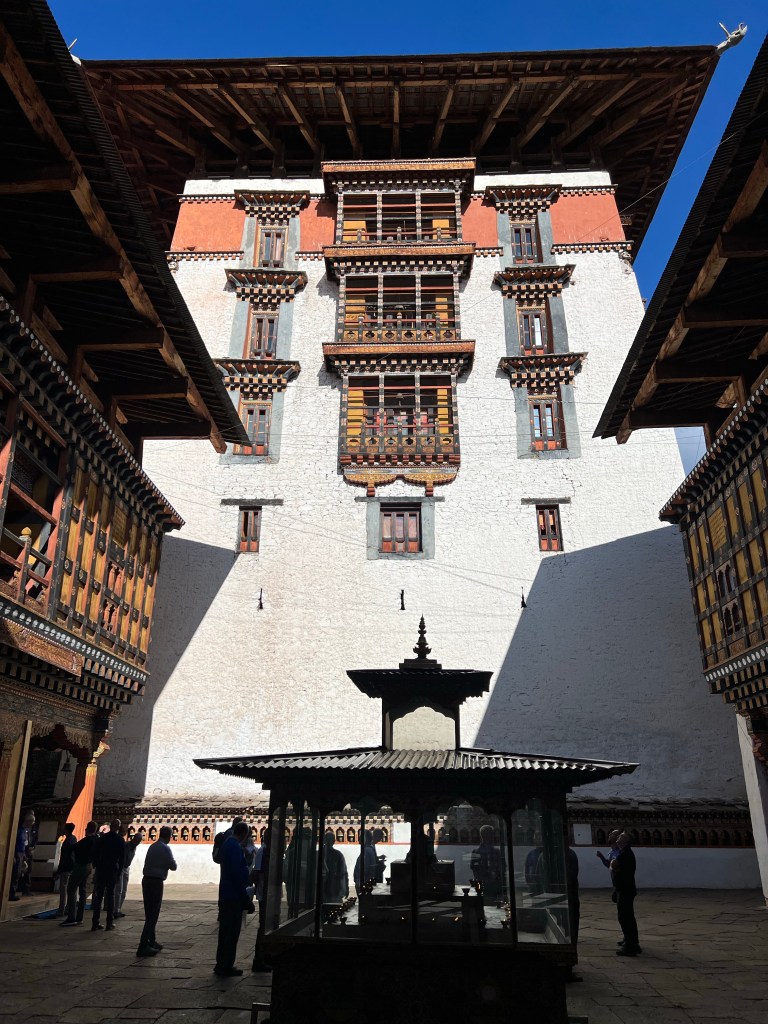
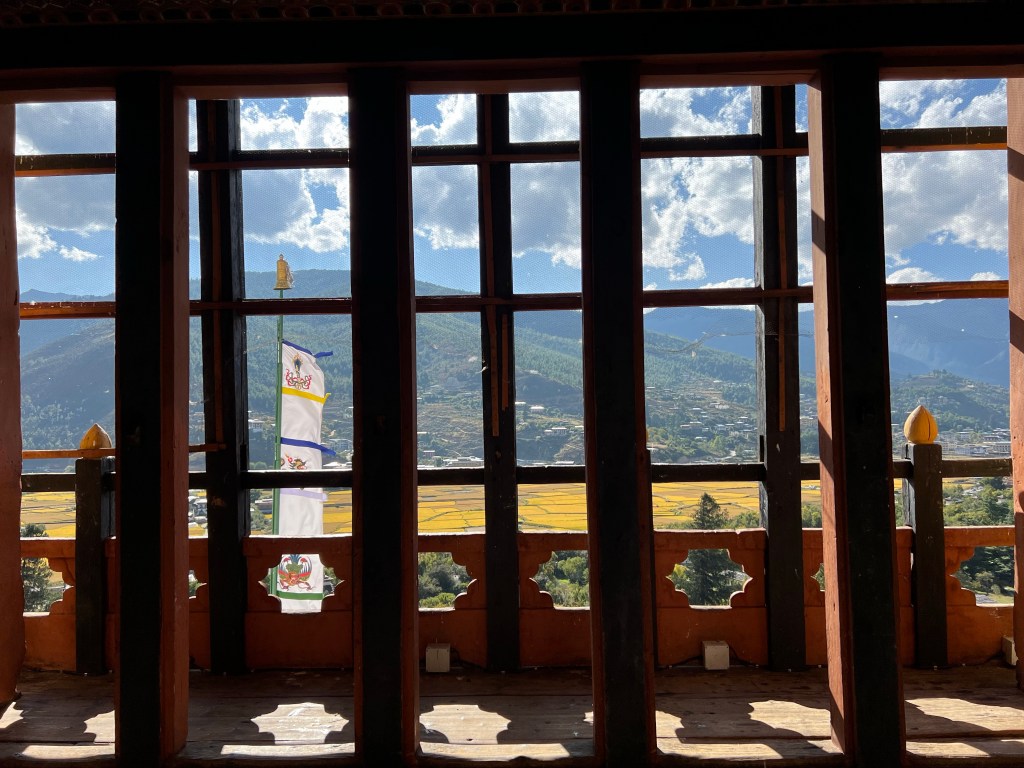
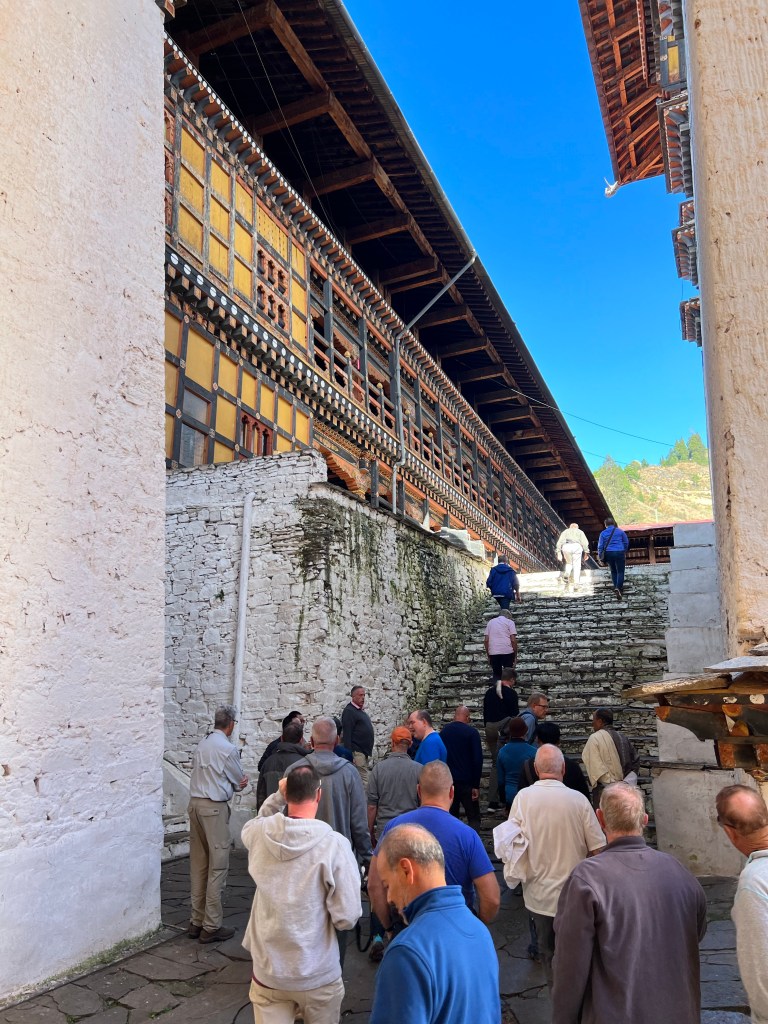
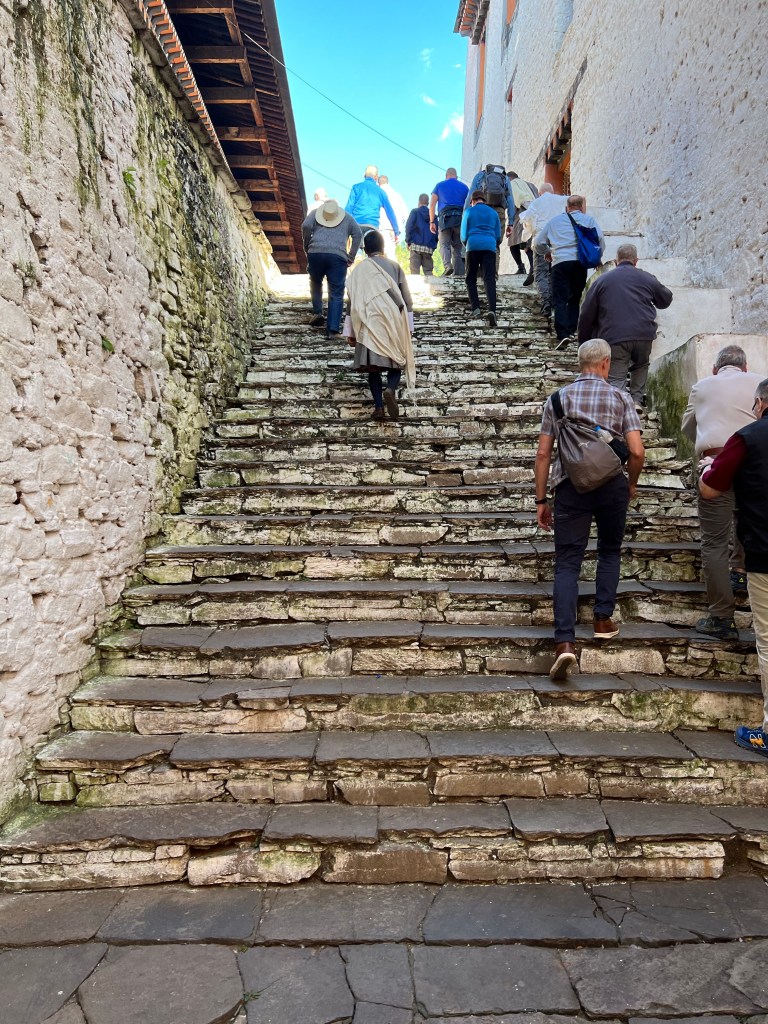
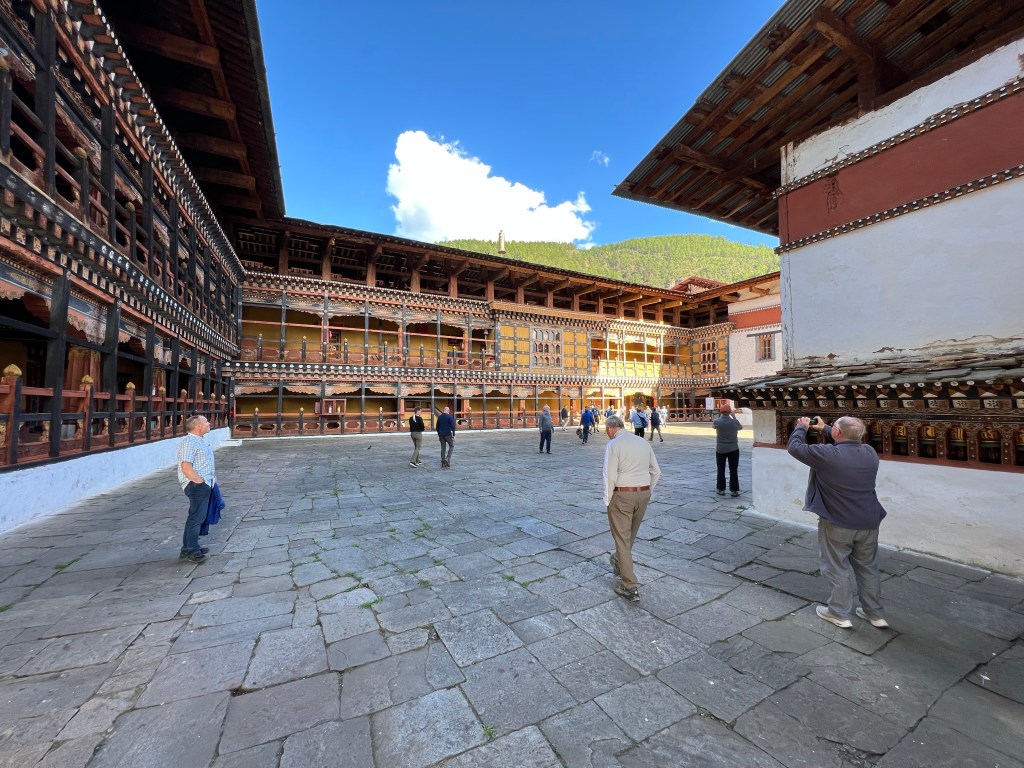
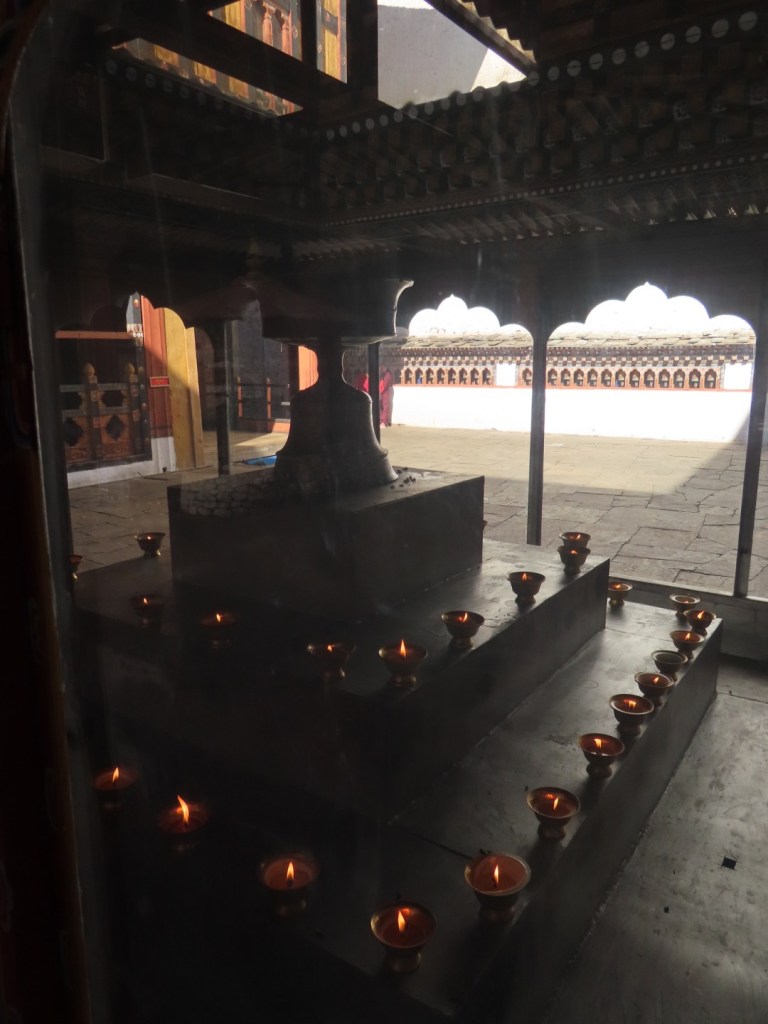
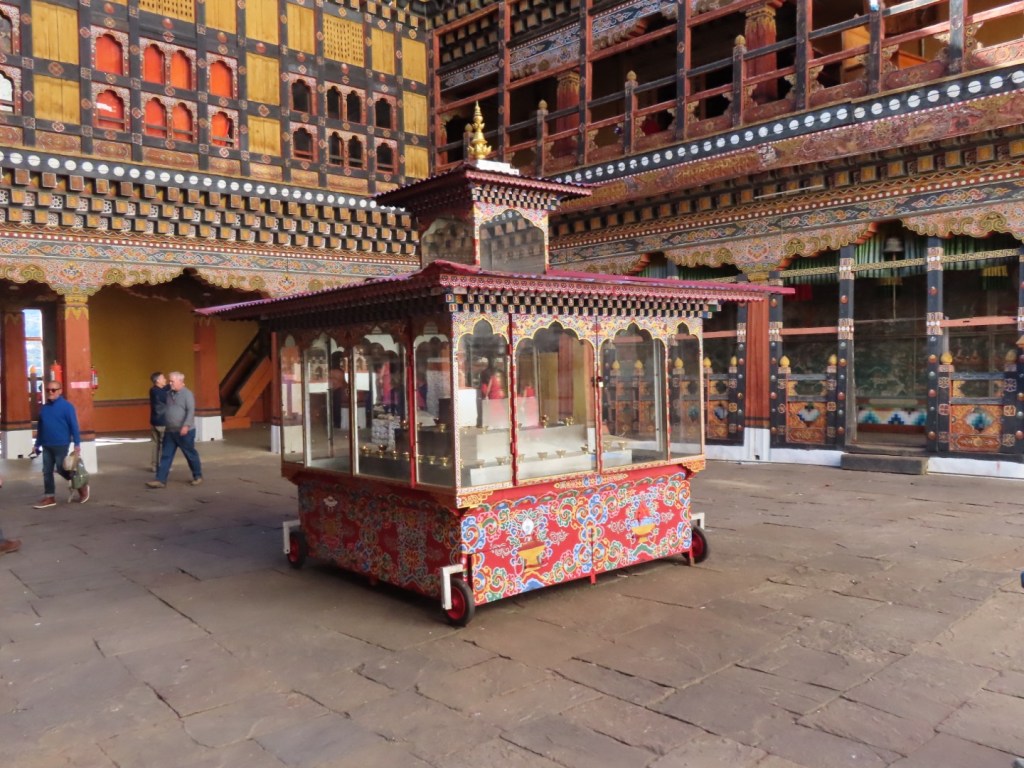
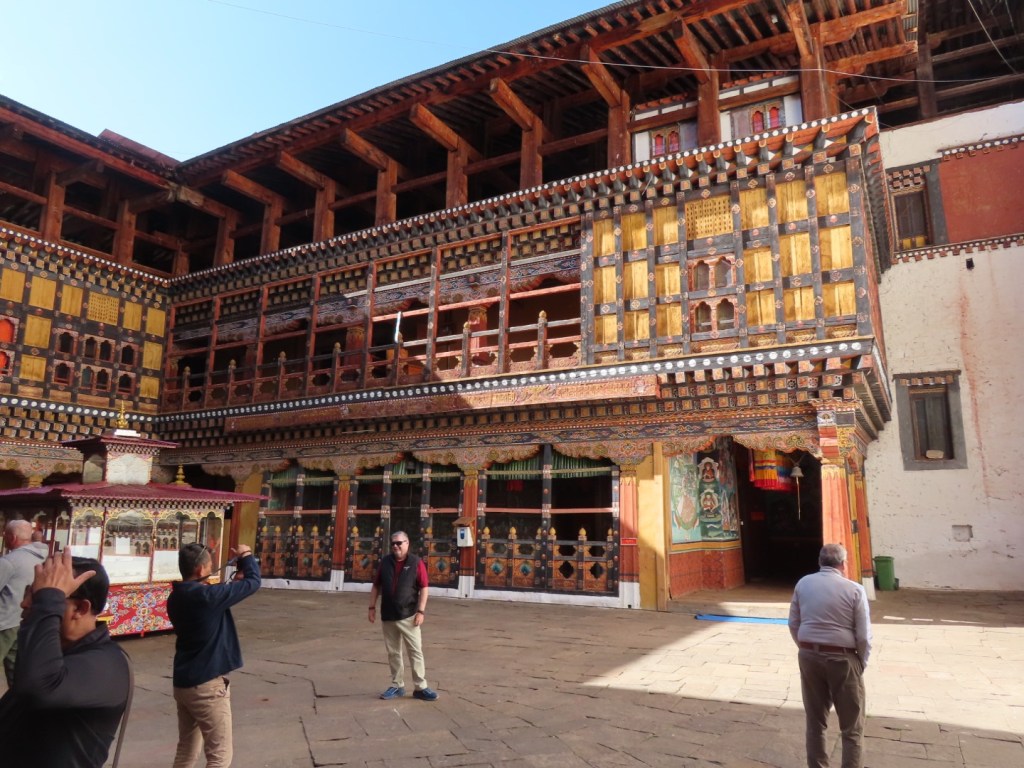
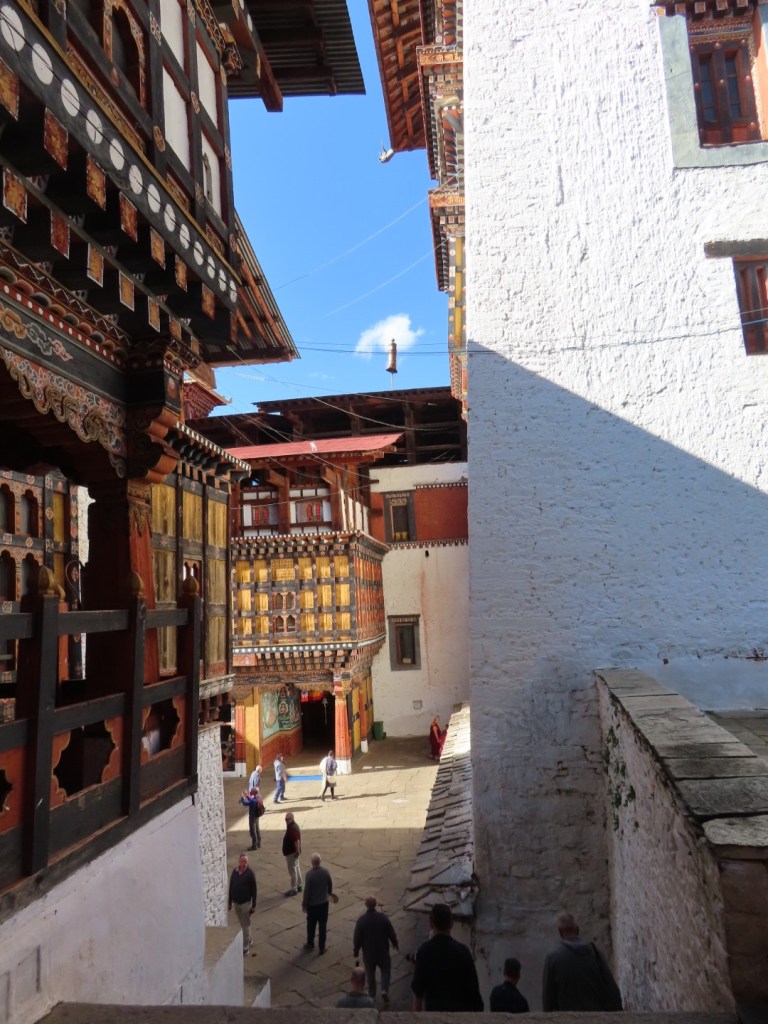
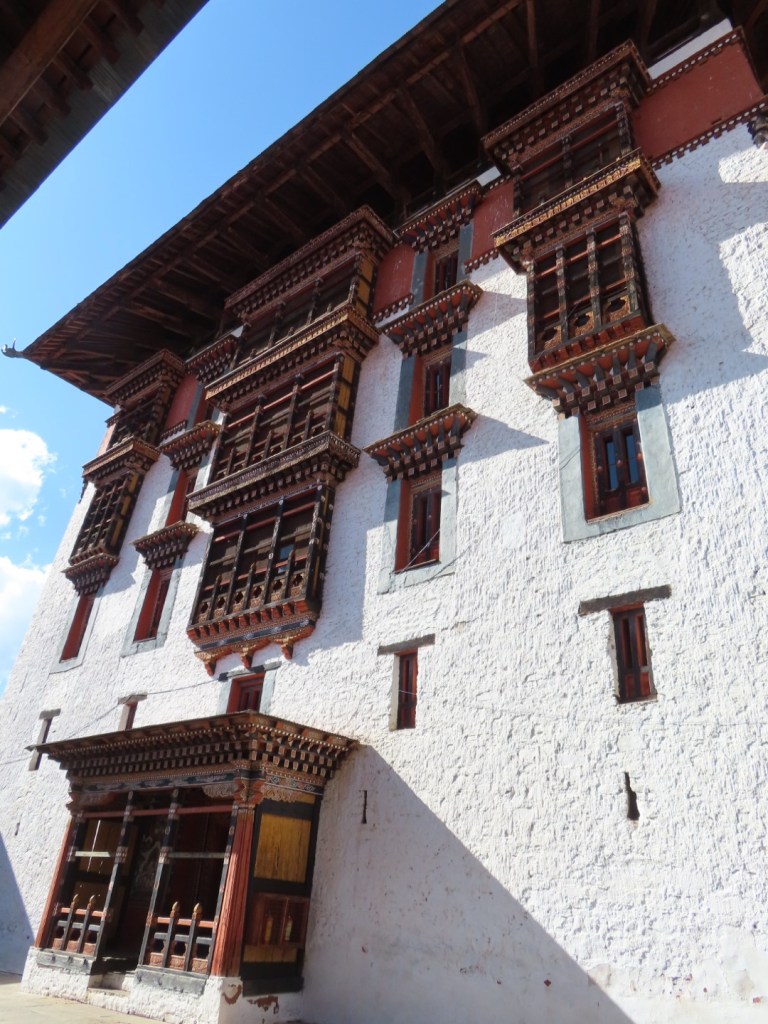
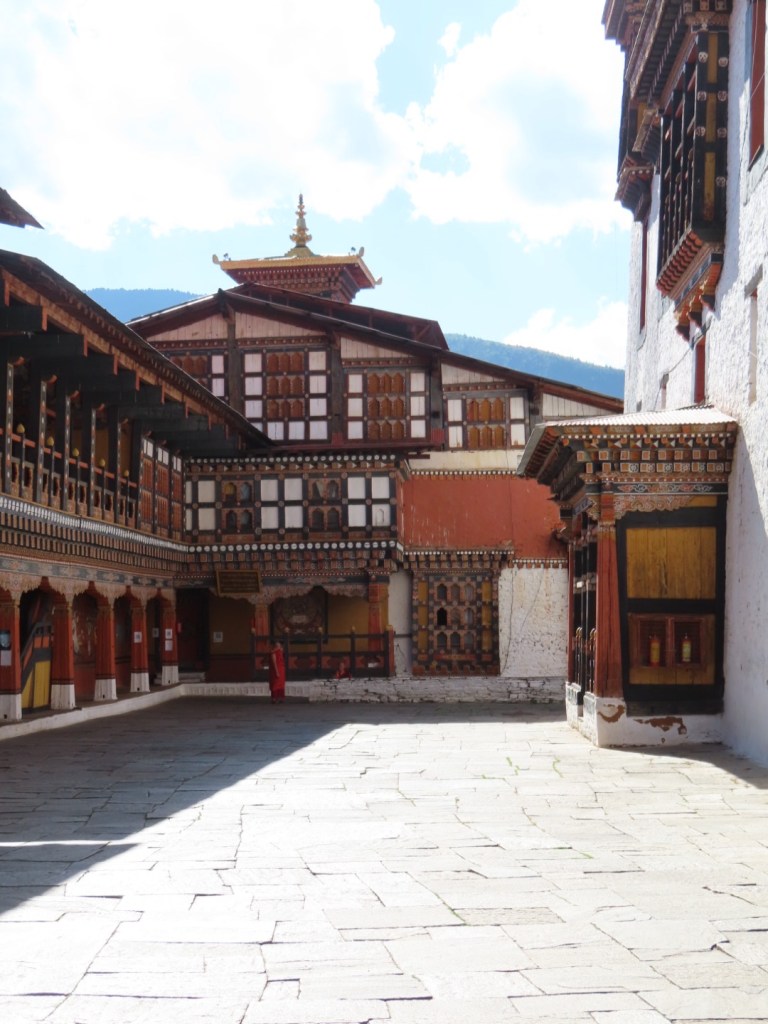
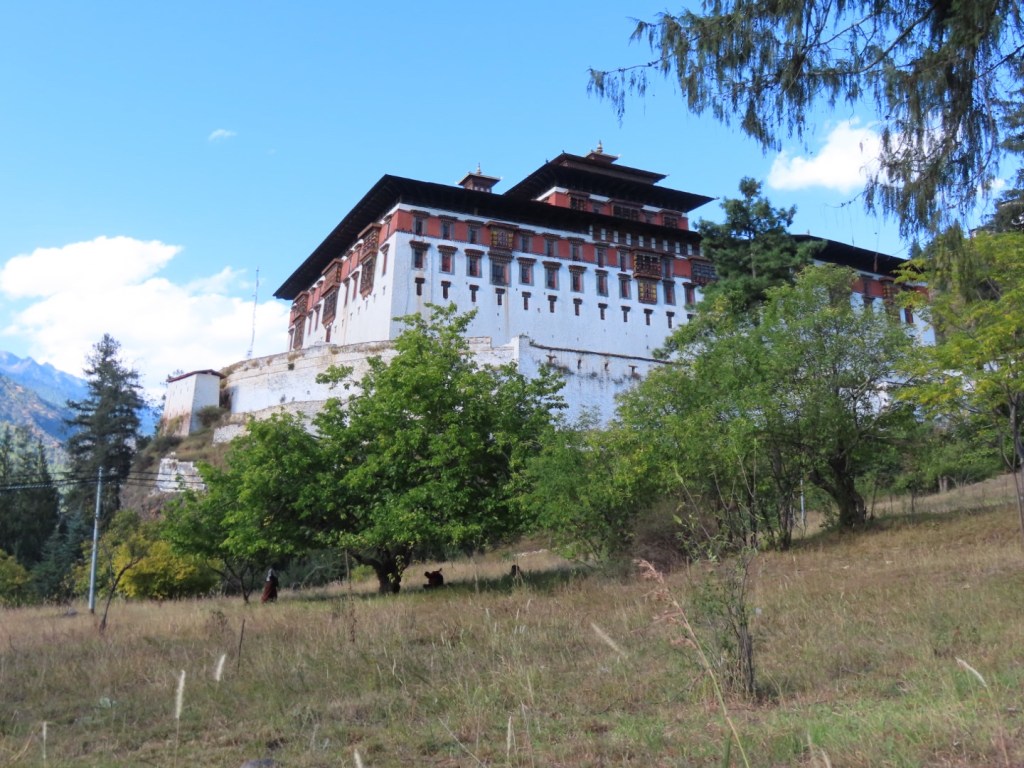
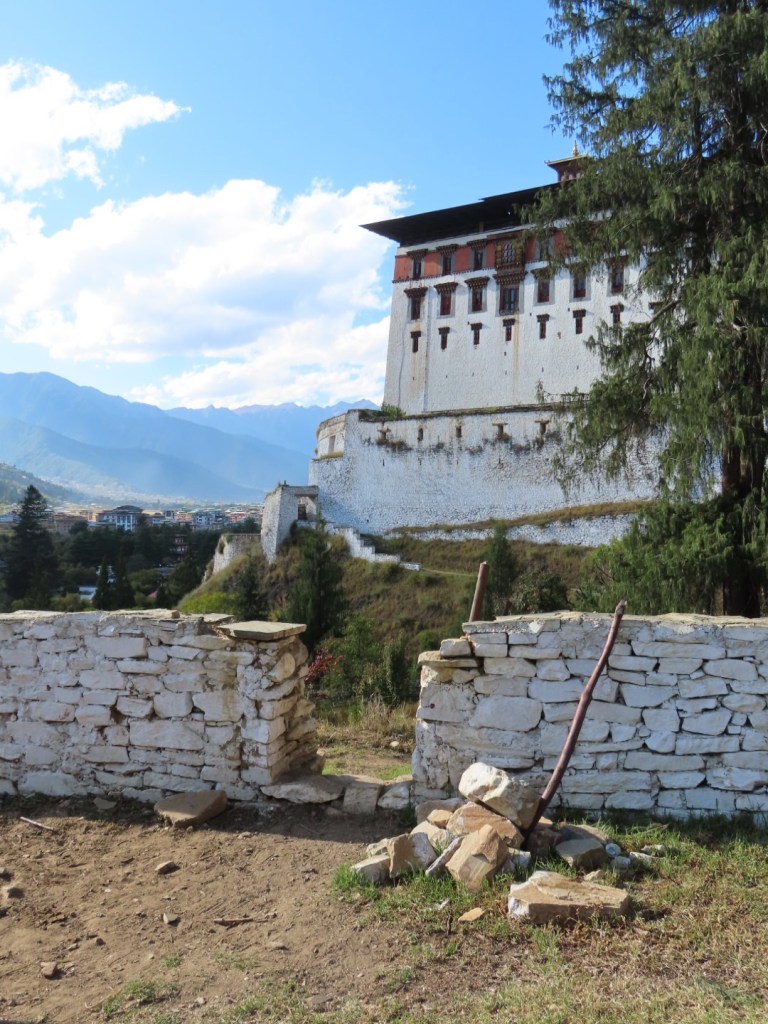
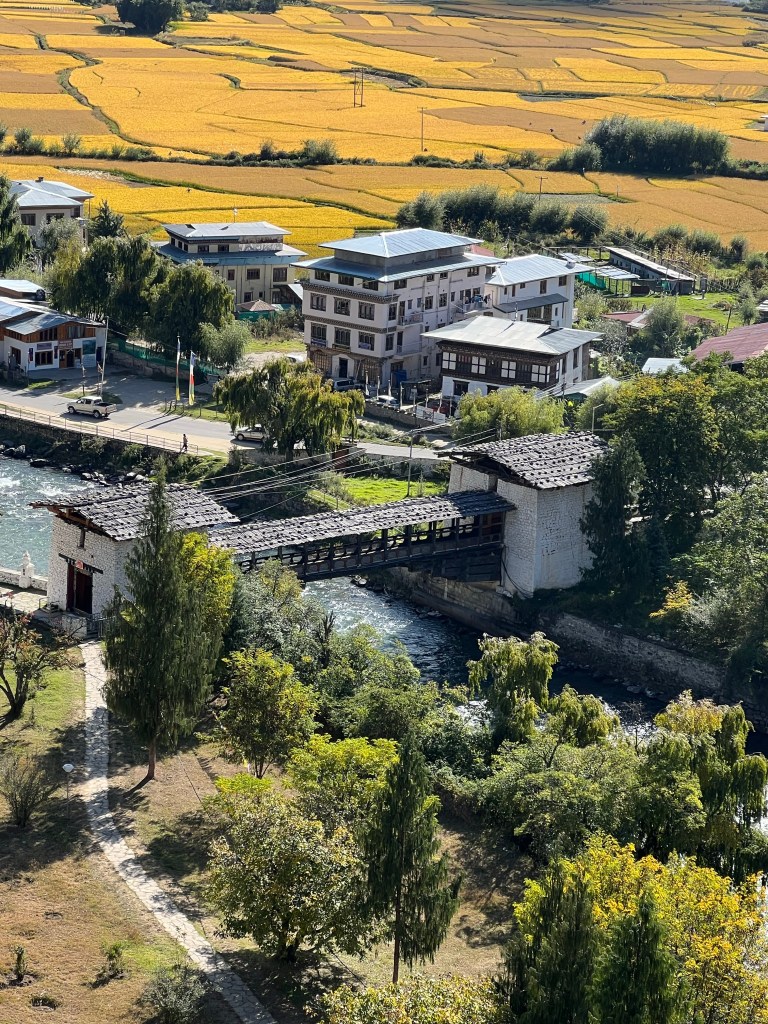
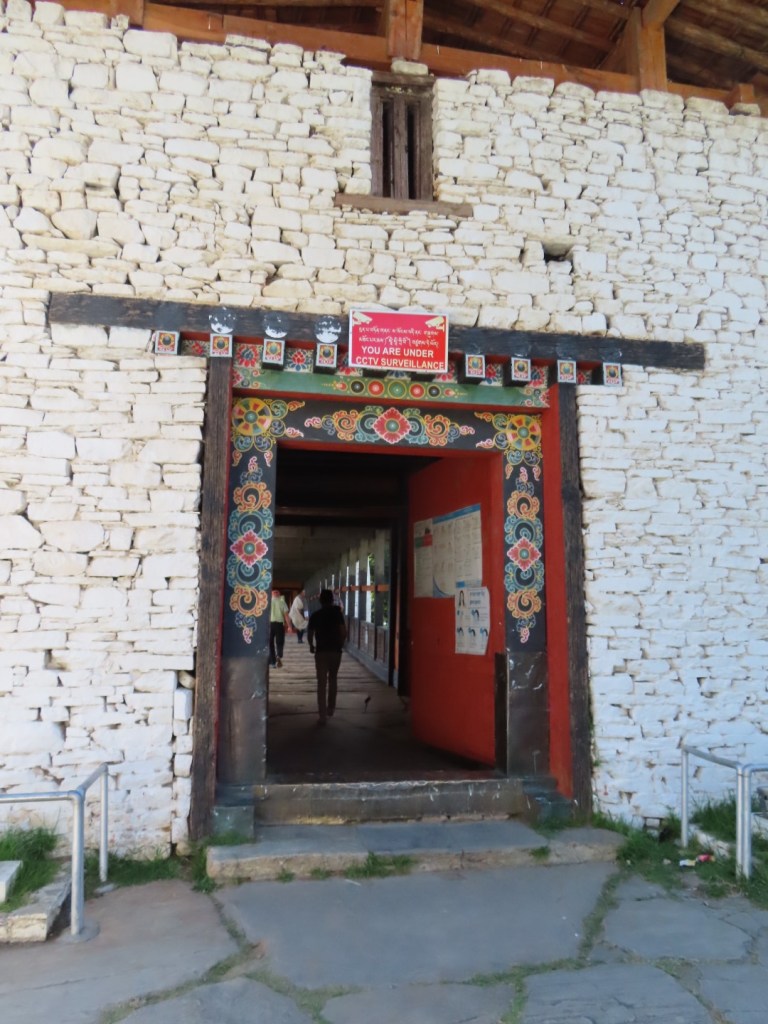
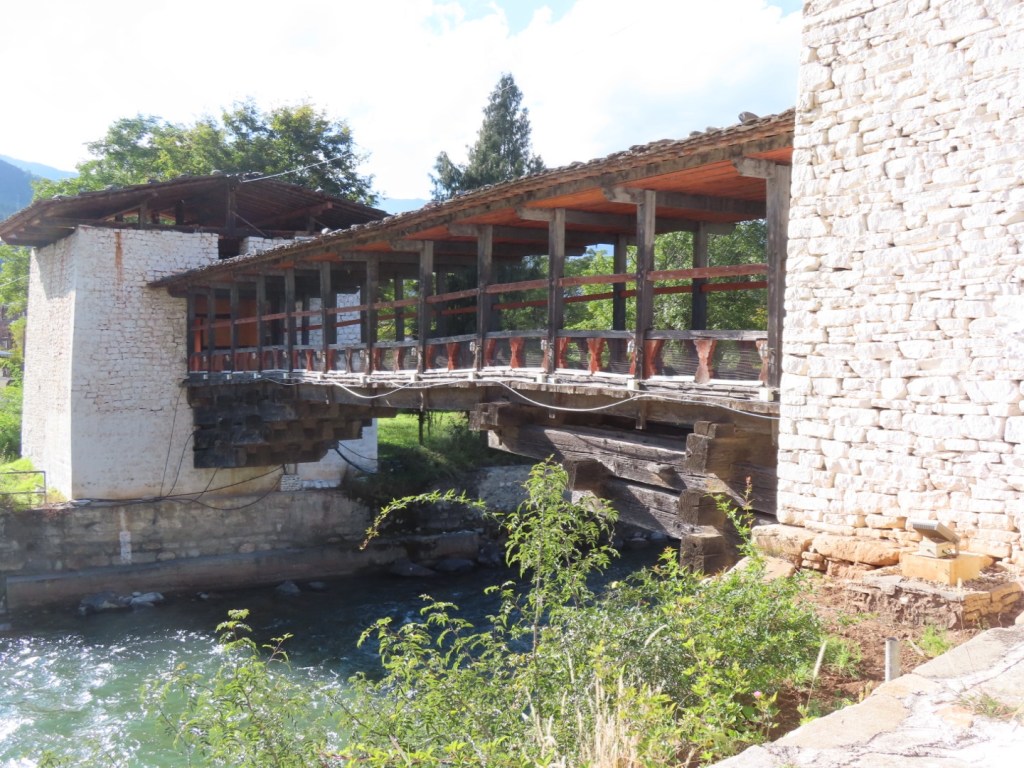
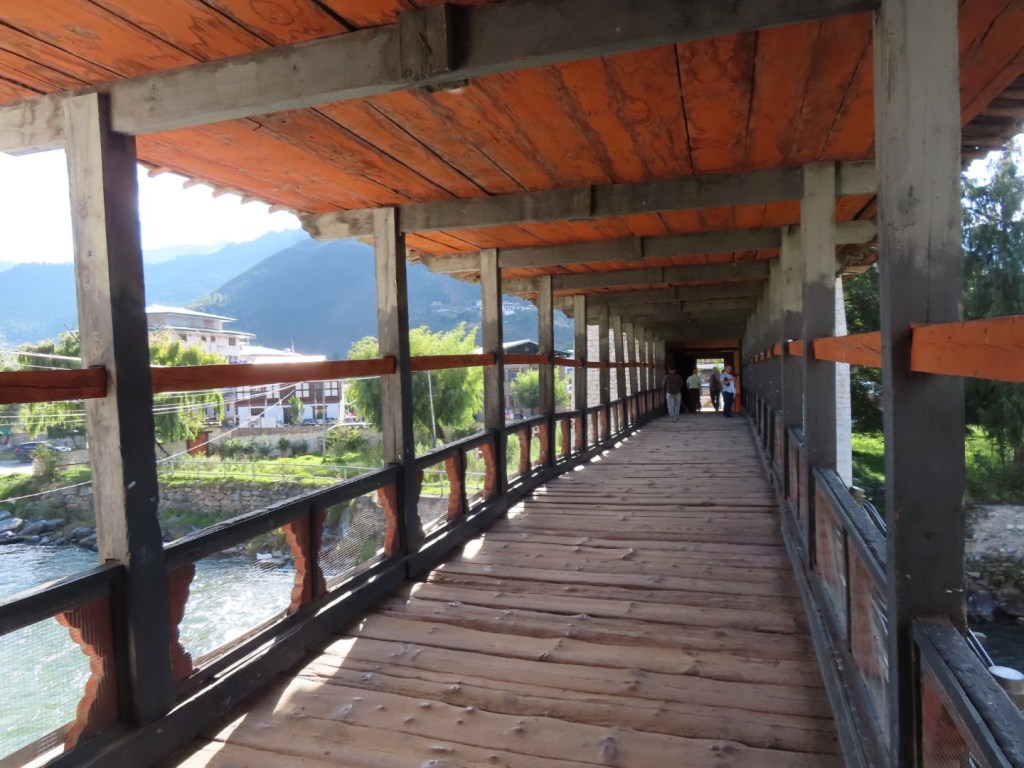
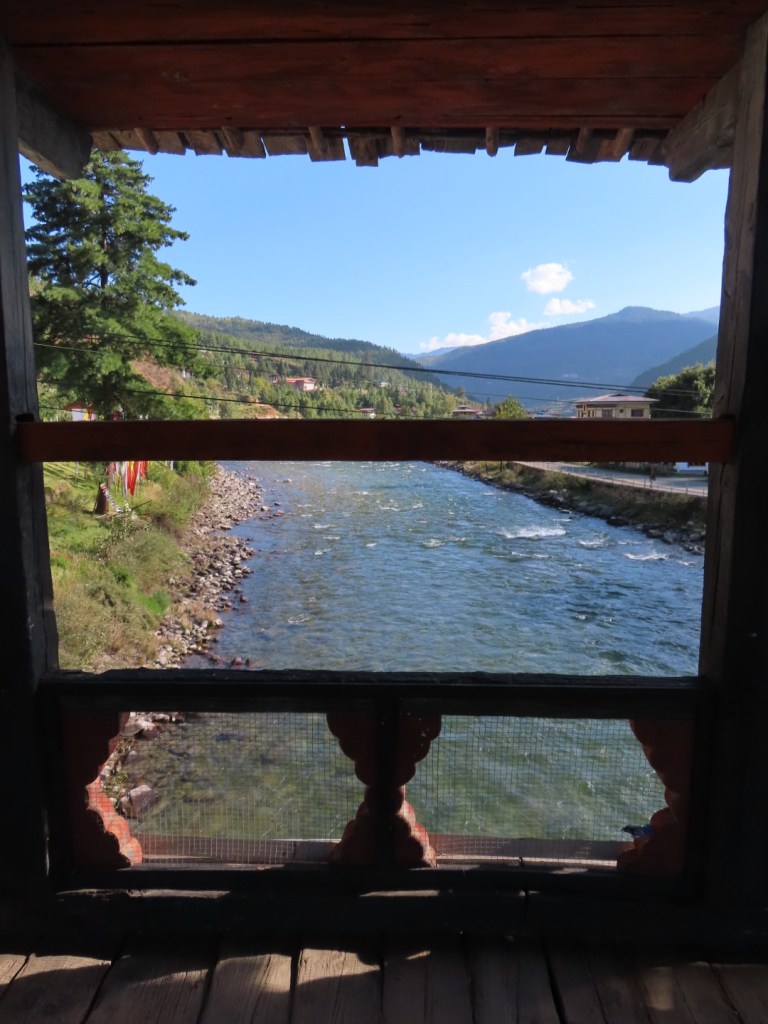
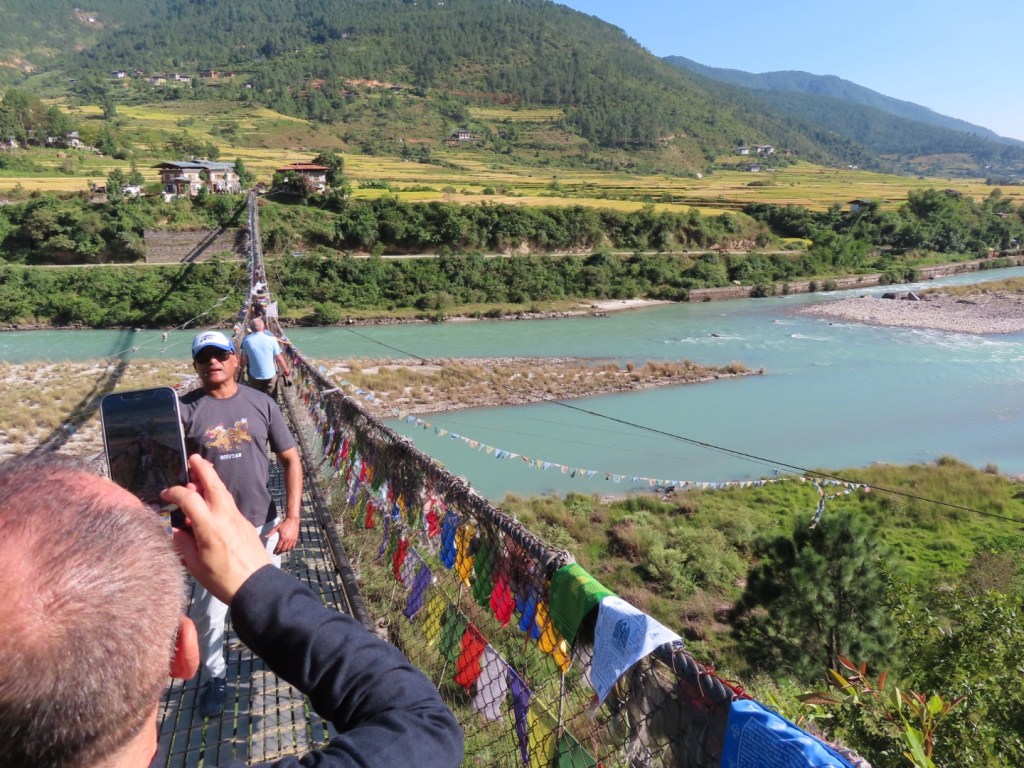
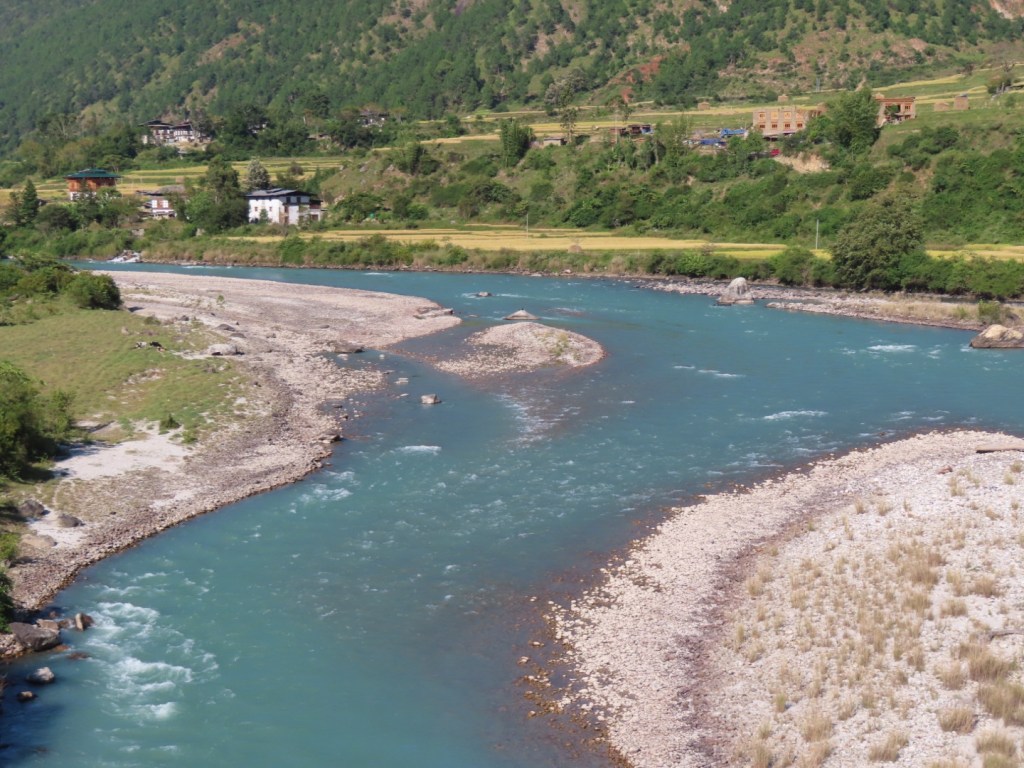
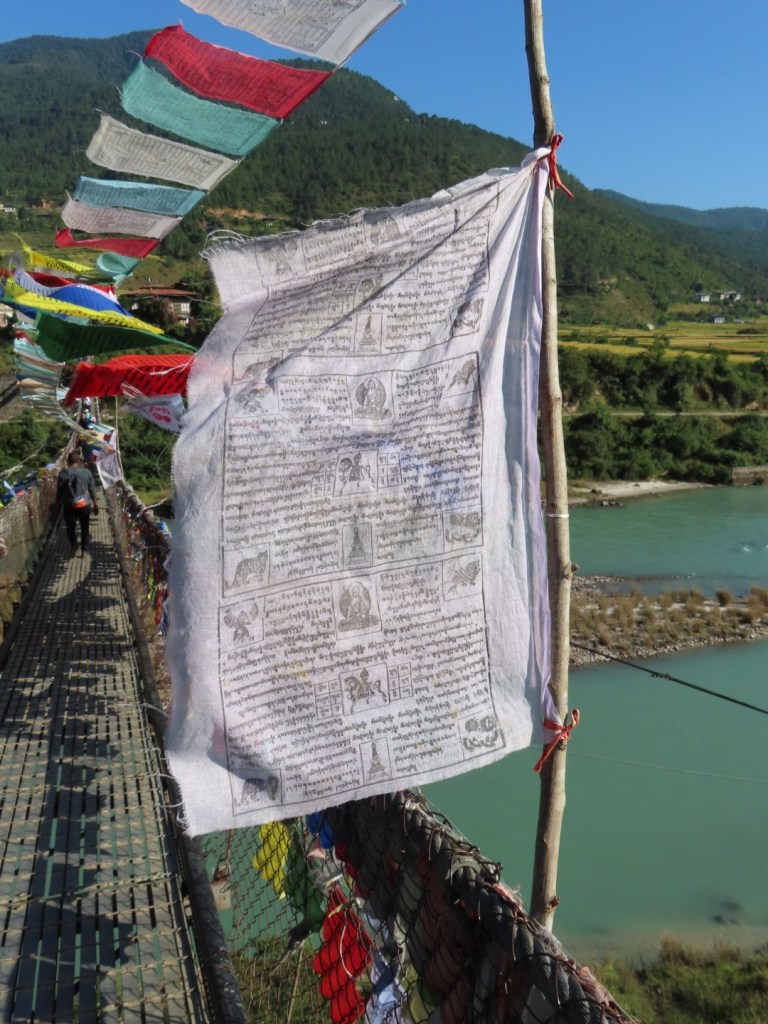
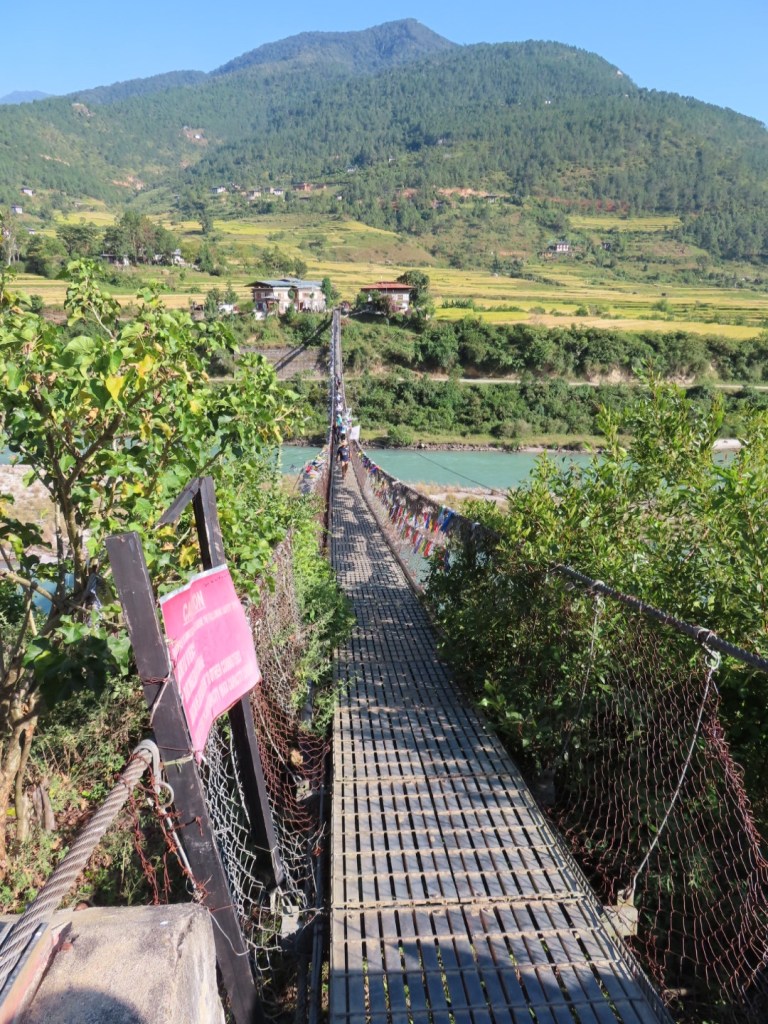
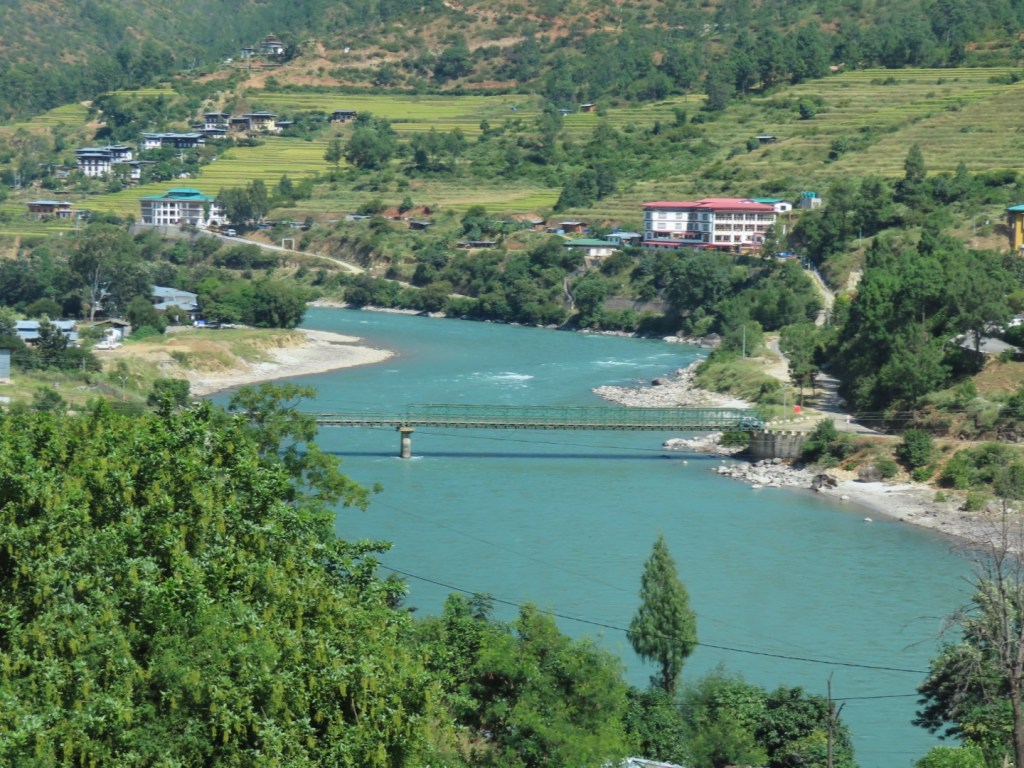
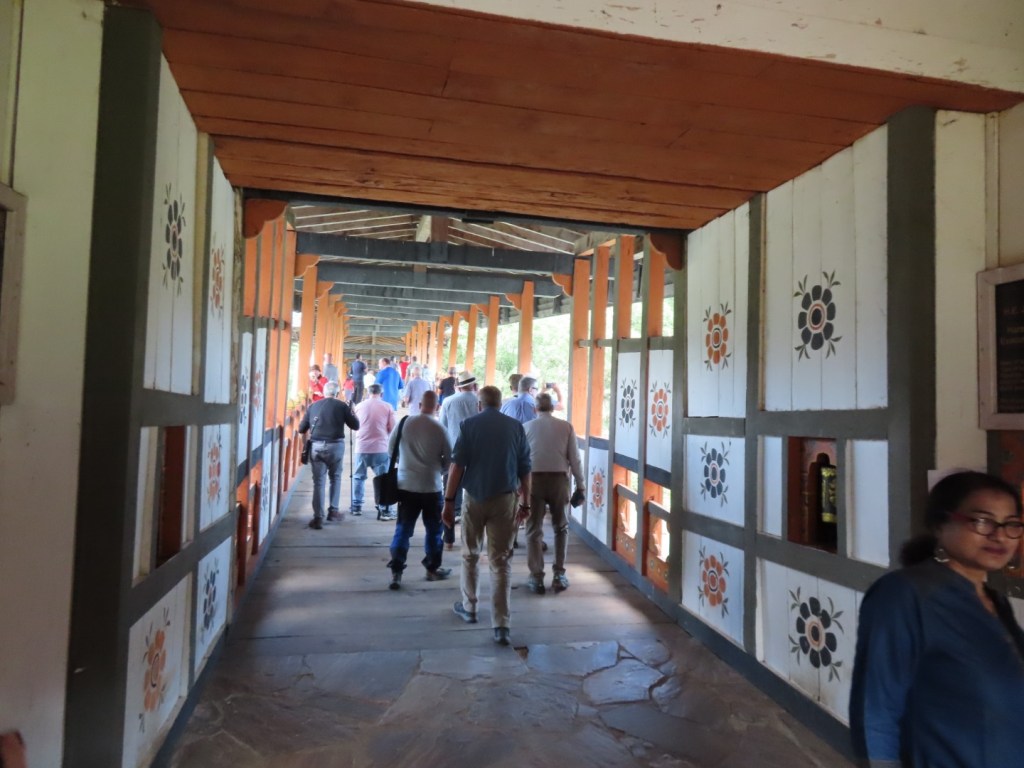
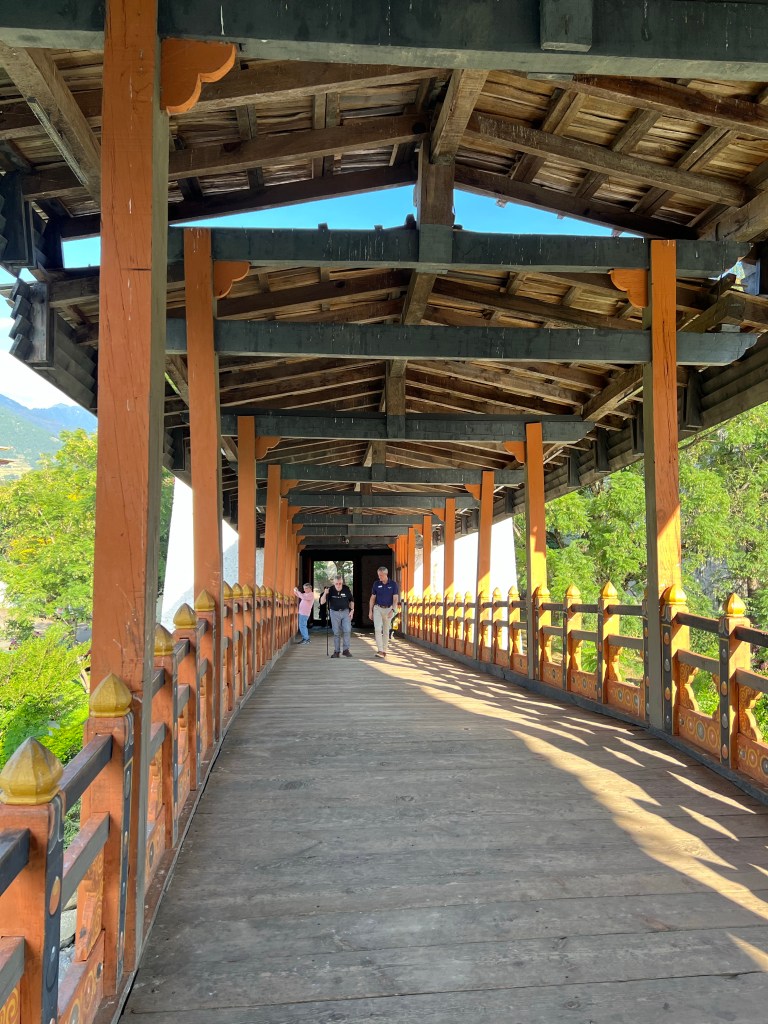
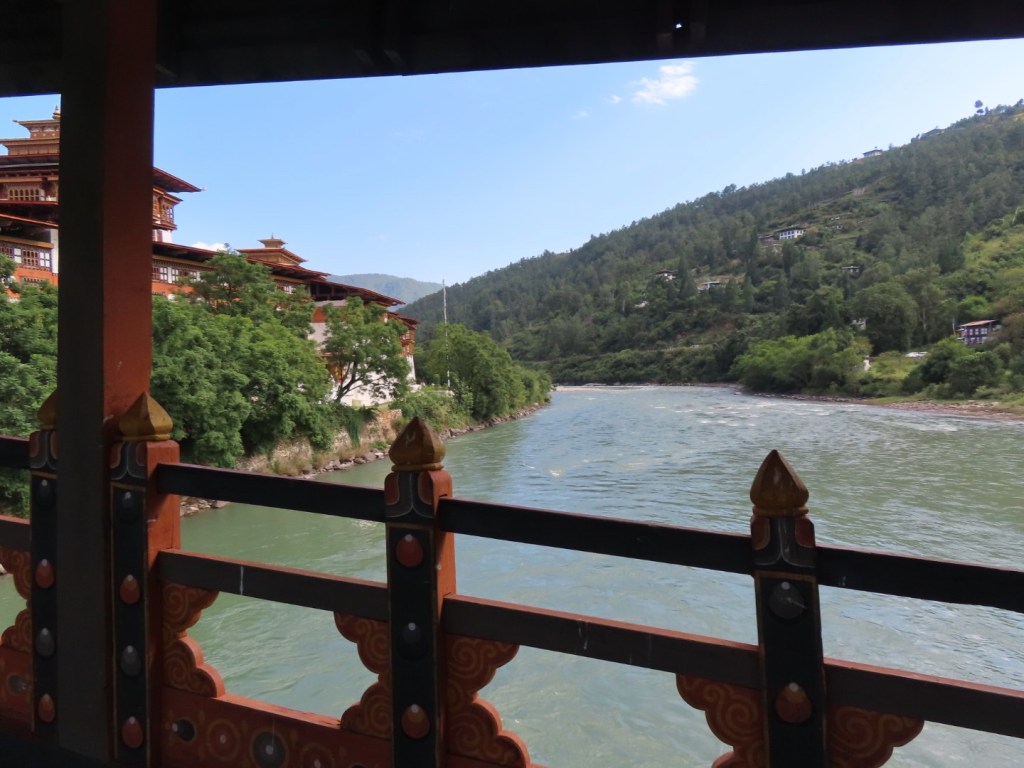
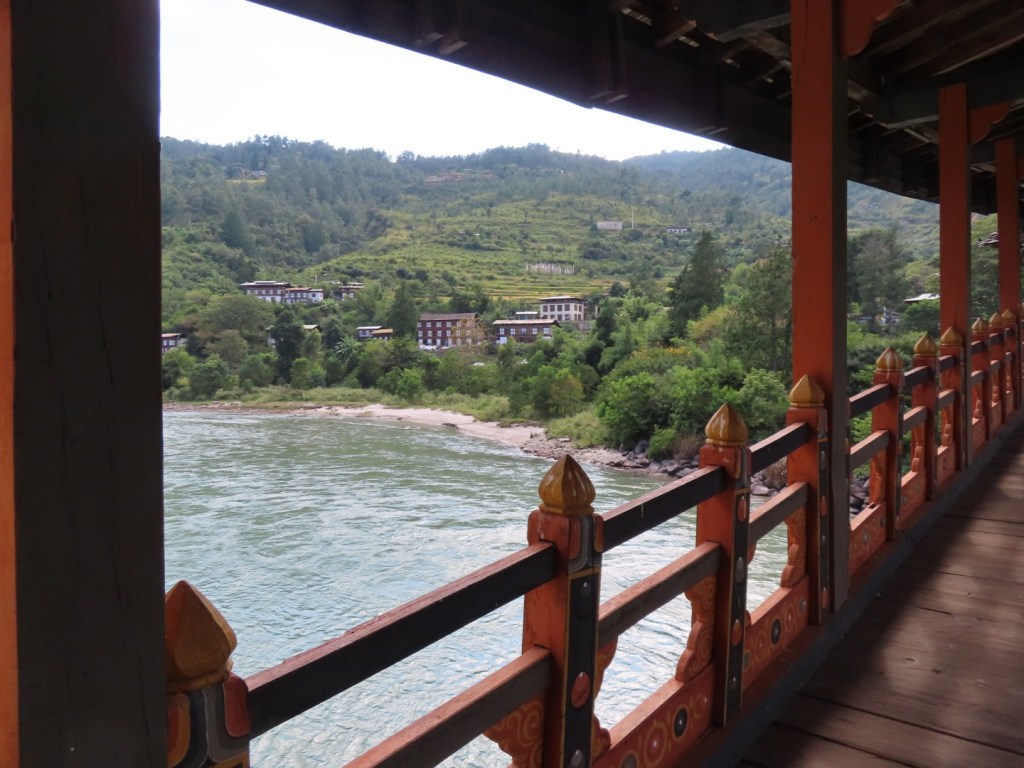
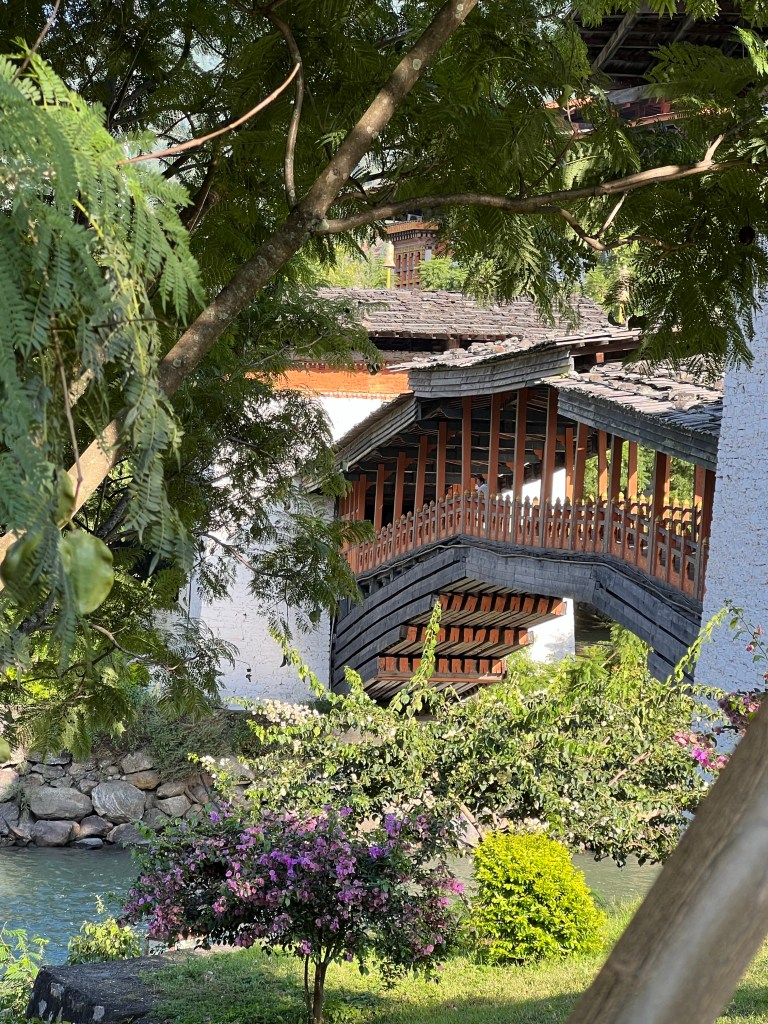
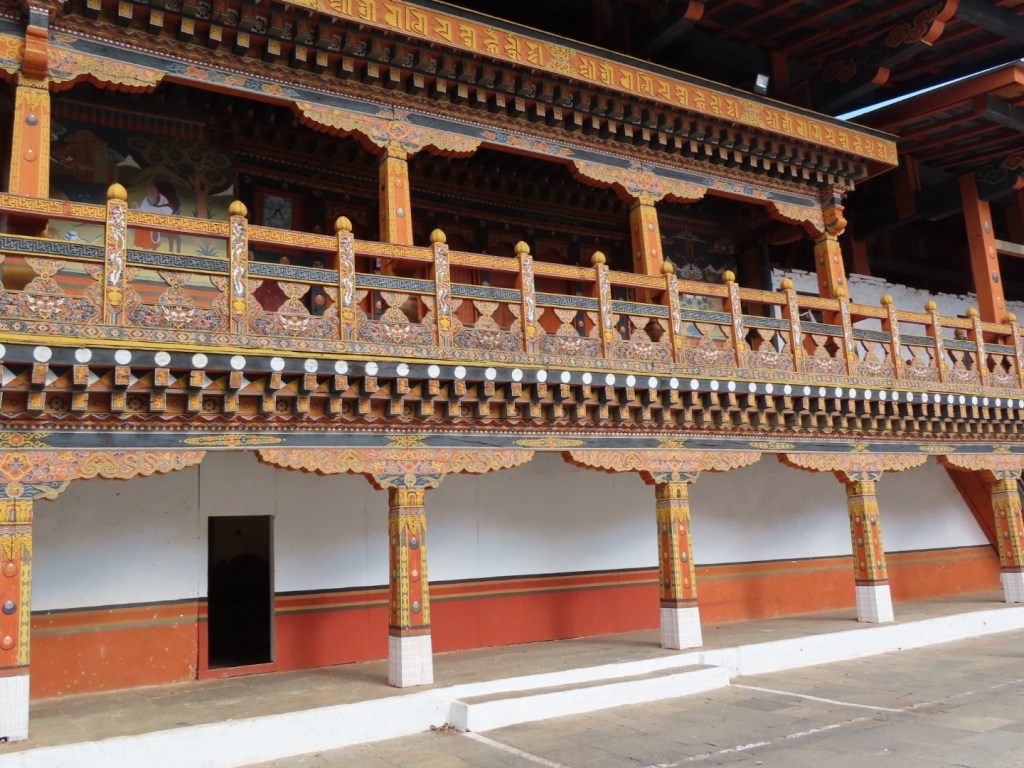
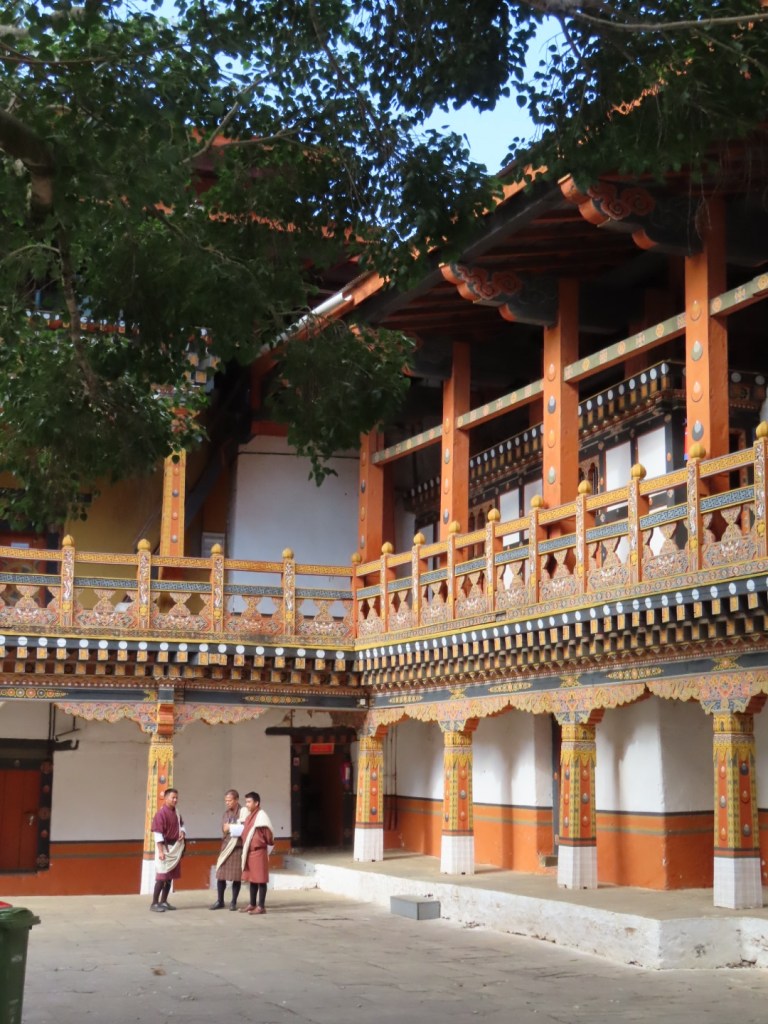
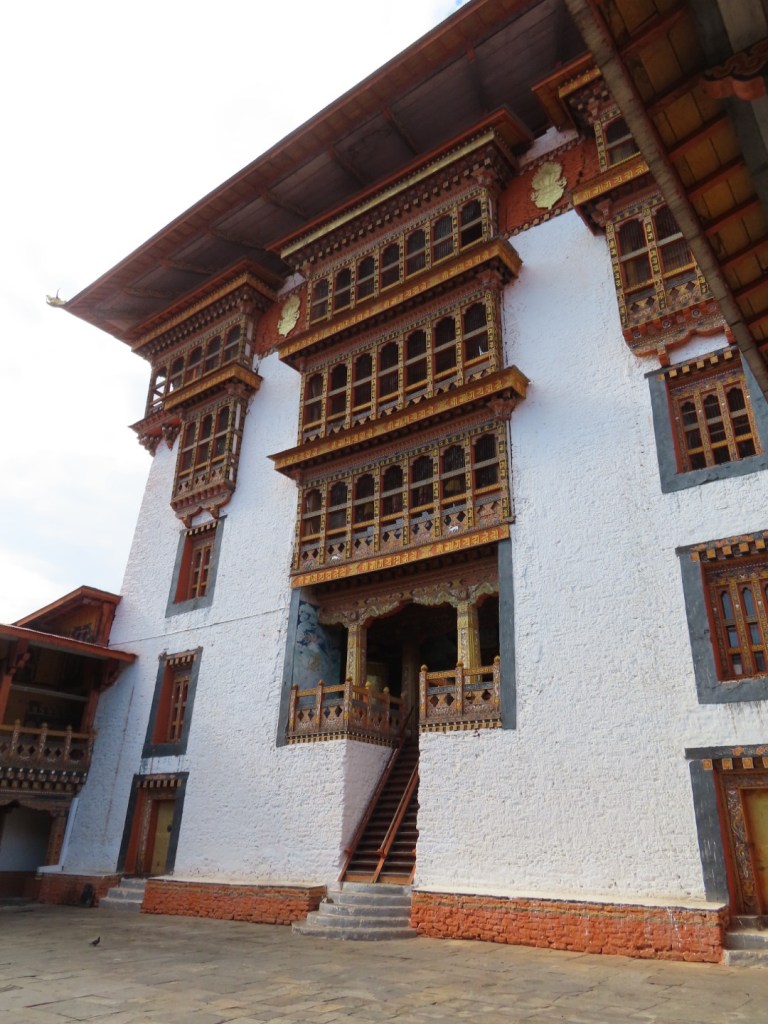
After lunch we visited Paro Dzong Rinpung Dzong, the “fortress of the heap of Jewels”, built in 1646. Our visit ended with us crossing the cantilever bridge.
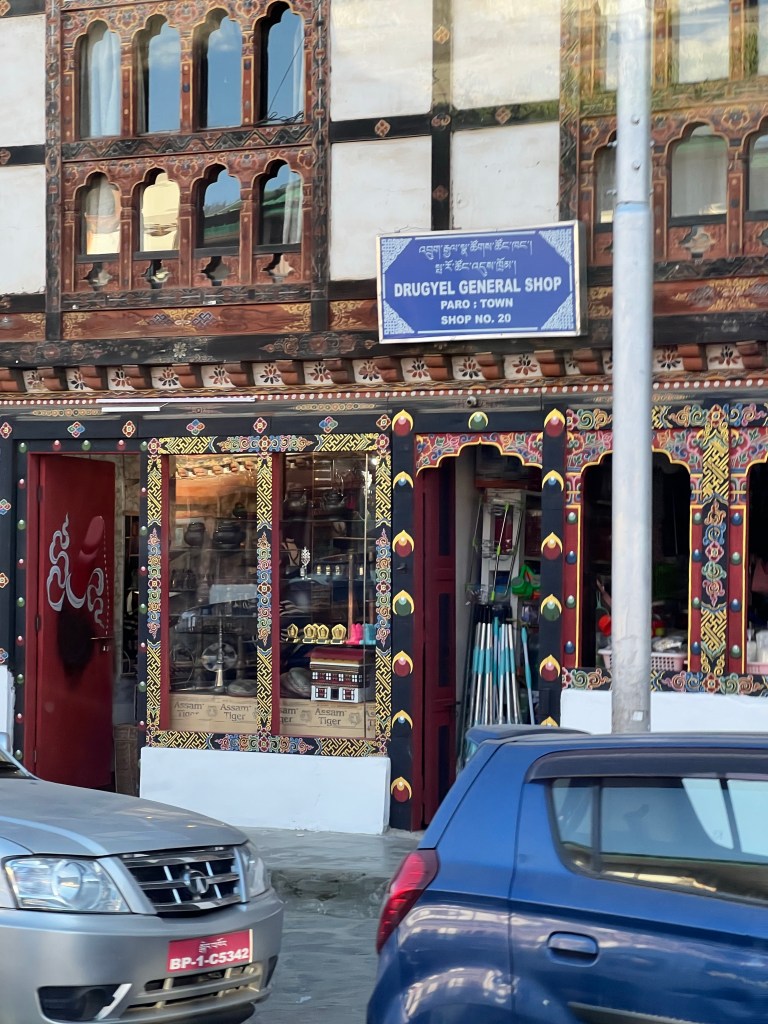
There was time for shopping in Paro before heading to the hotel.
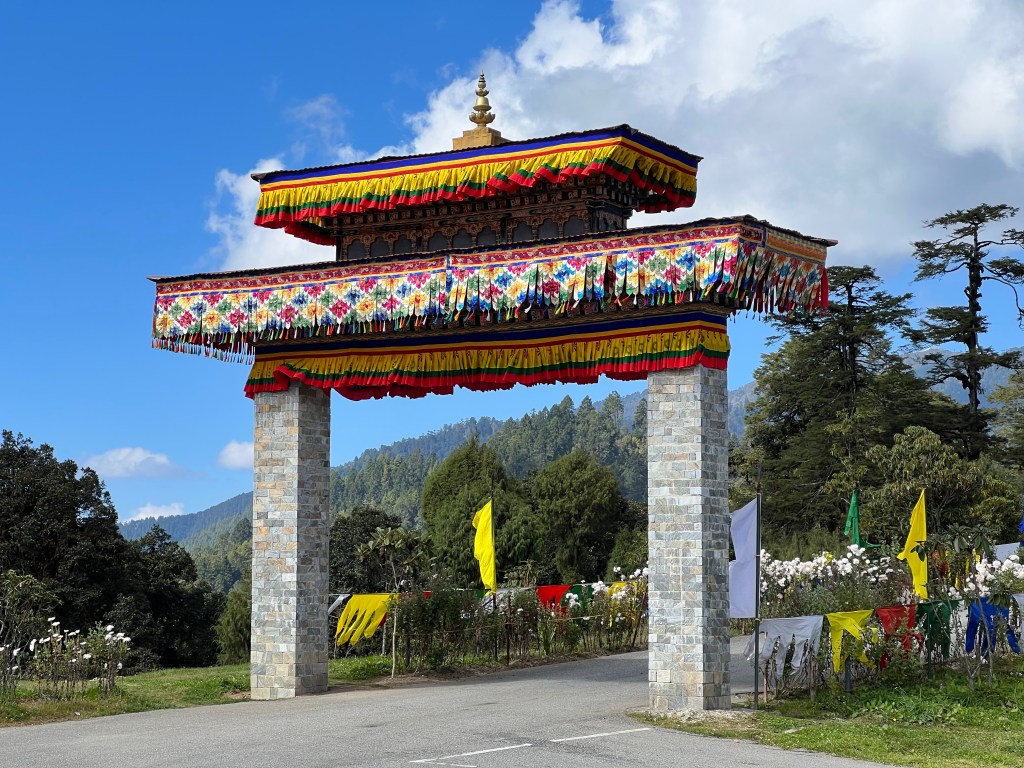
The road to Punakha takes us over the Dochula Pass (3100m/10170ft).
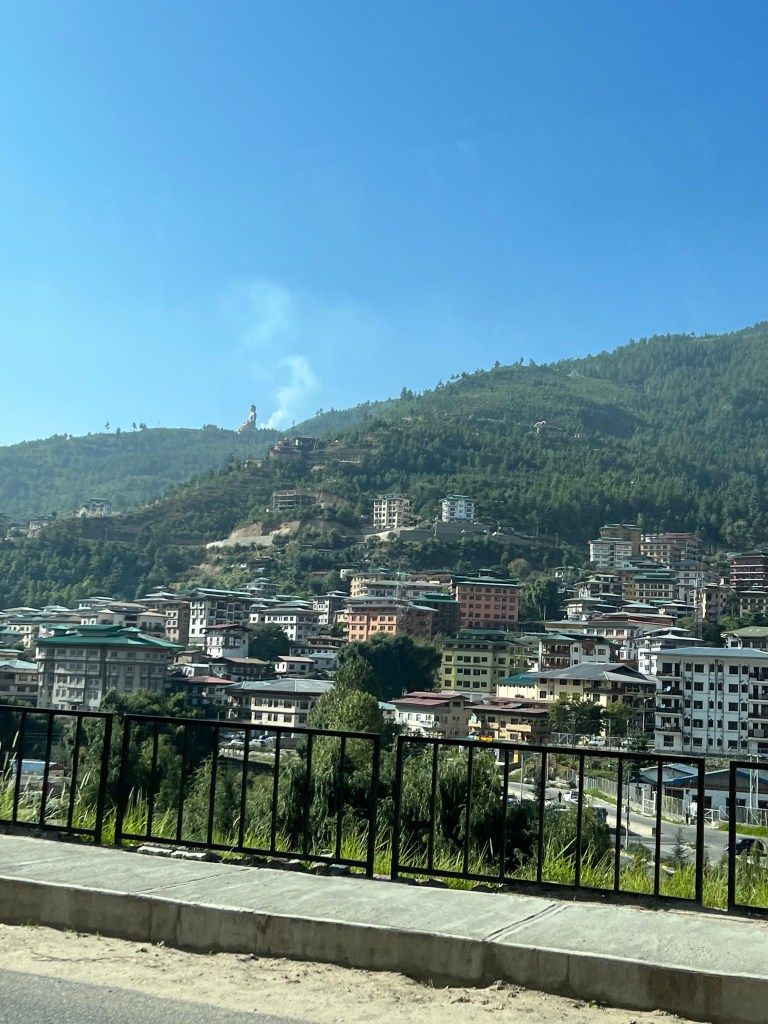
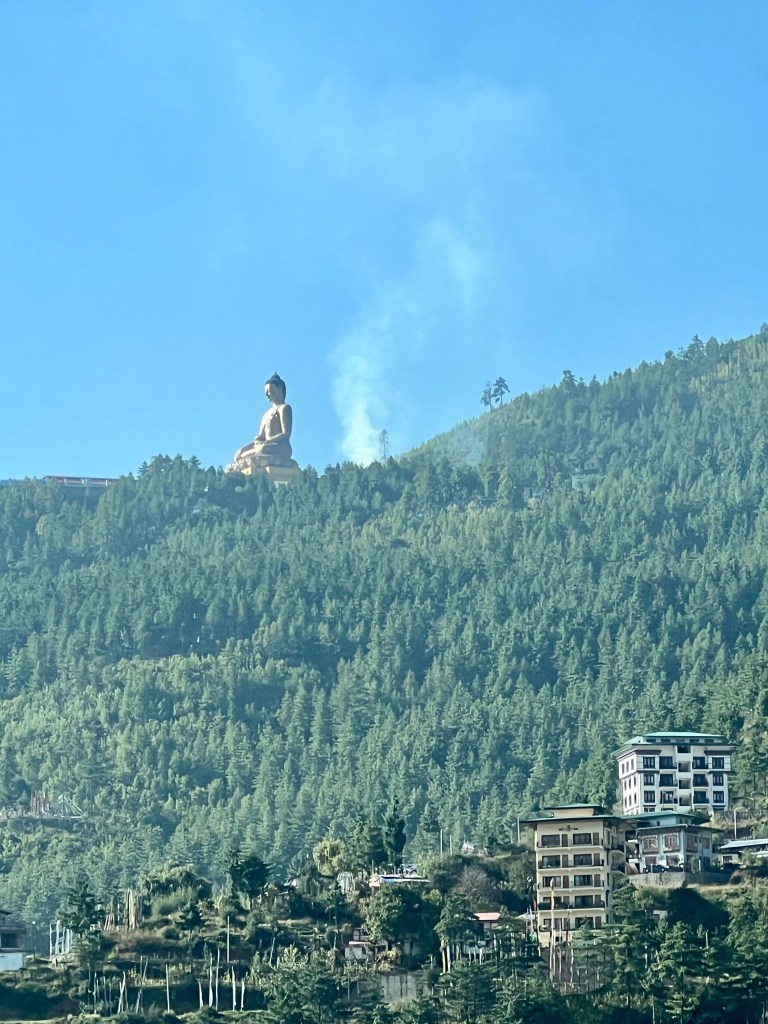
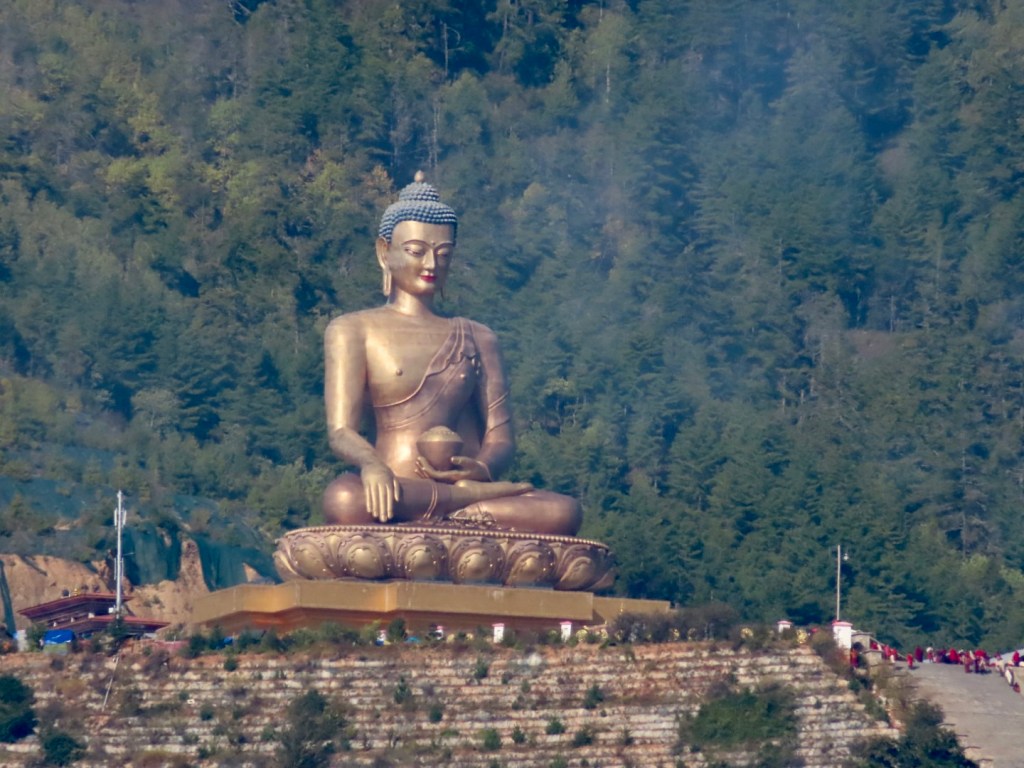
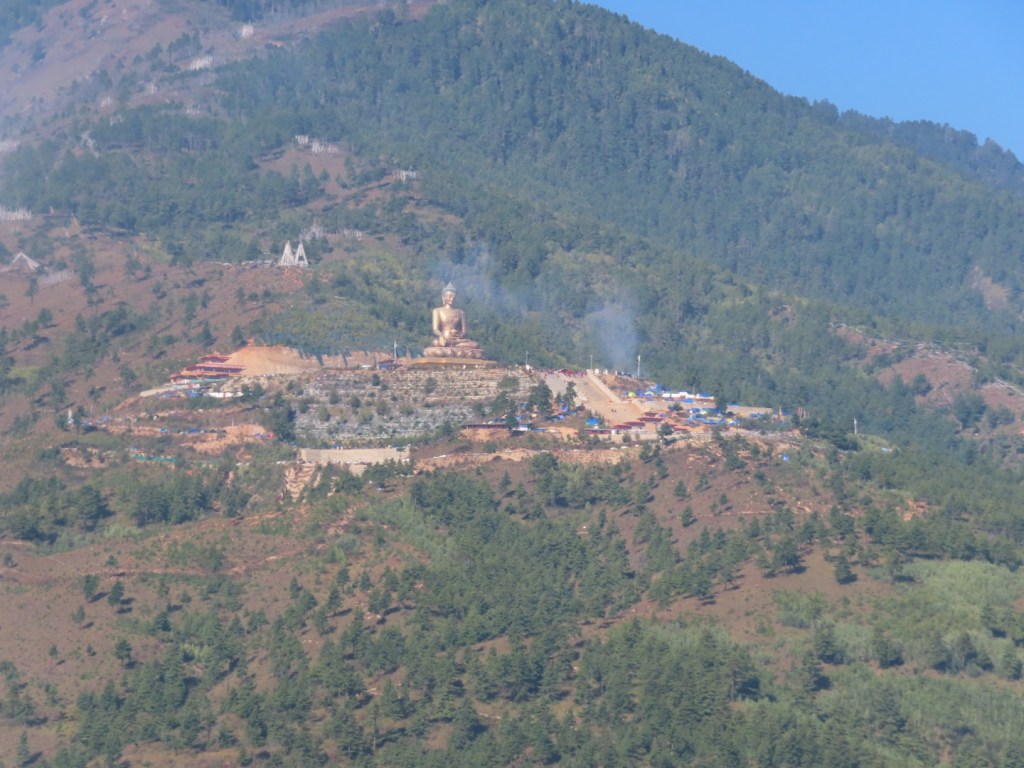
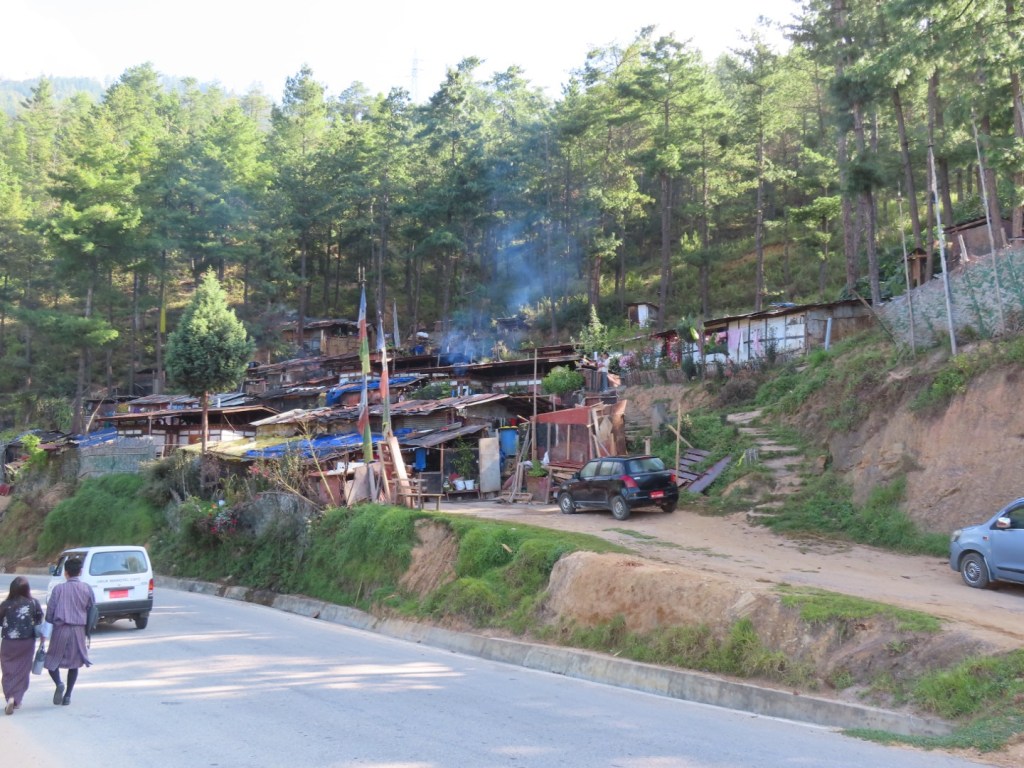
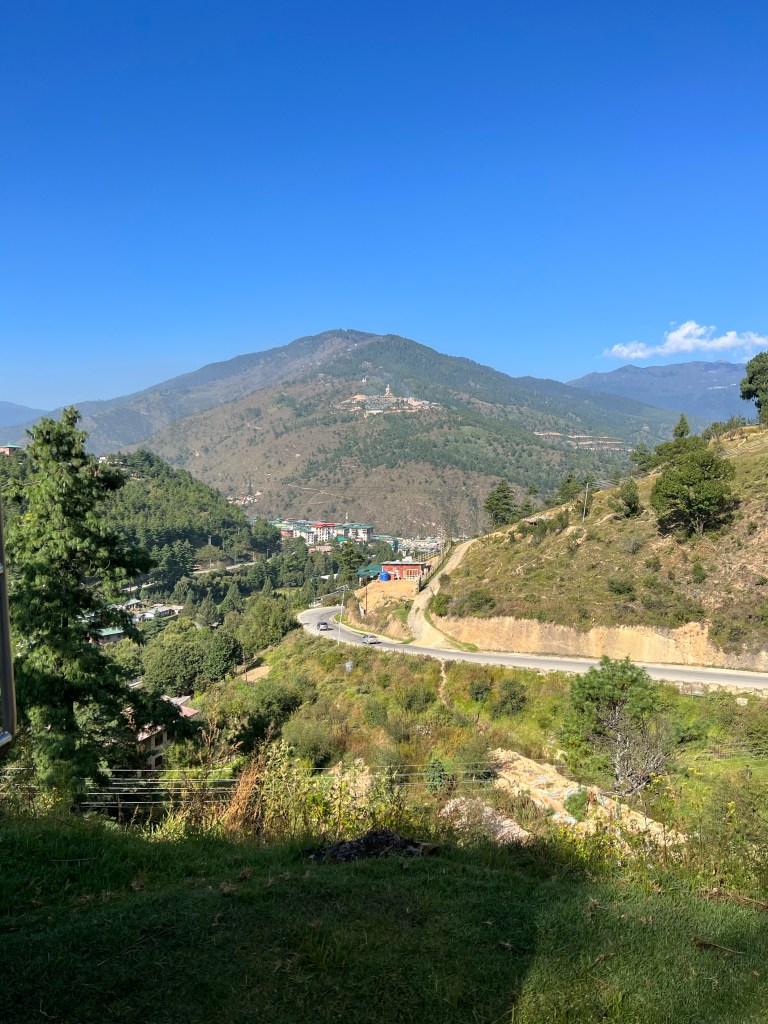
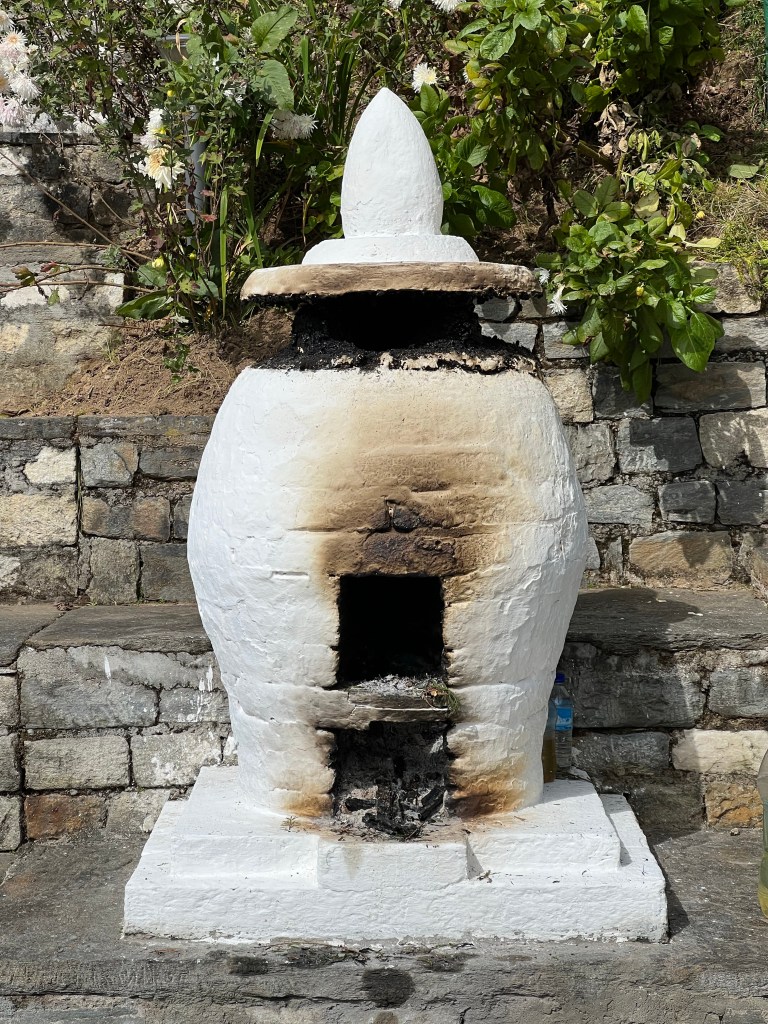
We stopped outside of Thimphu for a giant Buddha photo-op. The smoke is from cooking. Across the road was a migrant-labor camp.
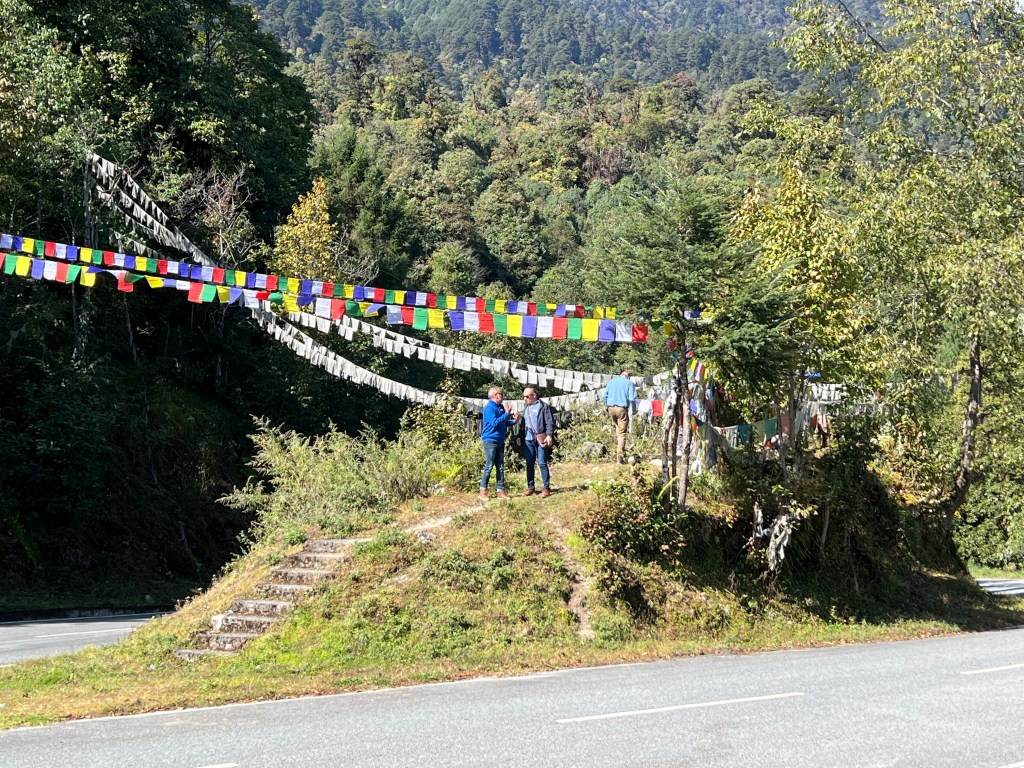
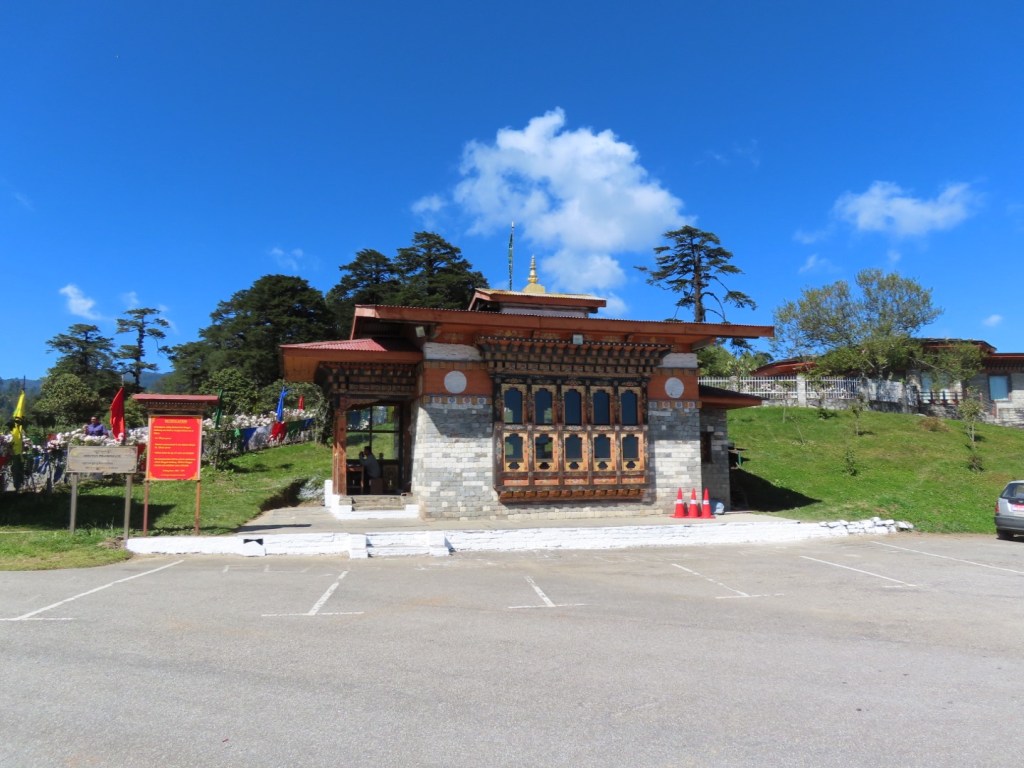
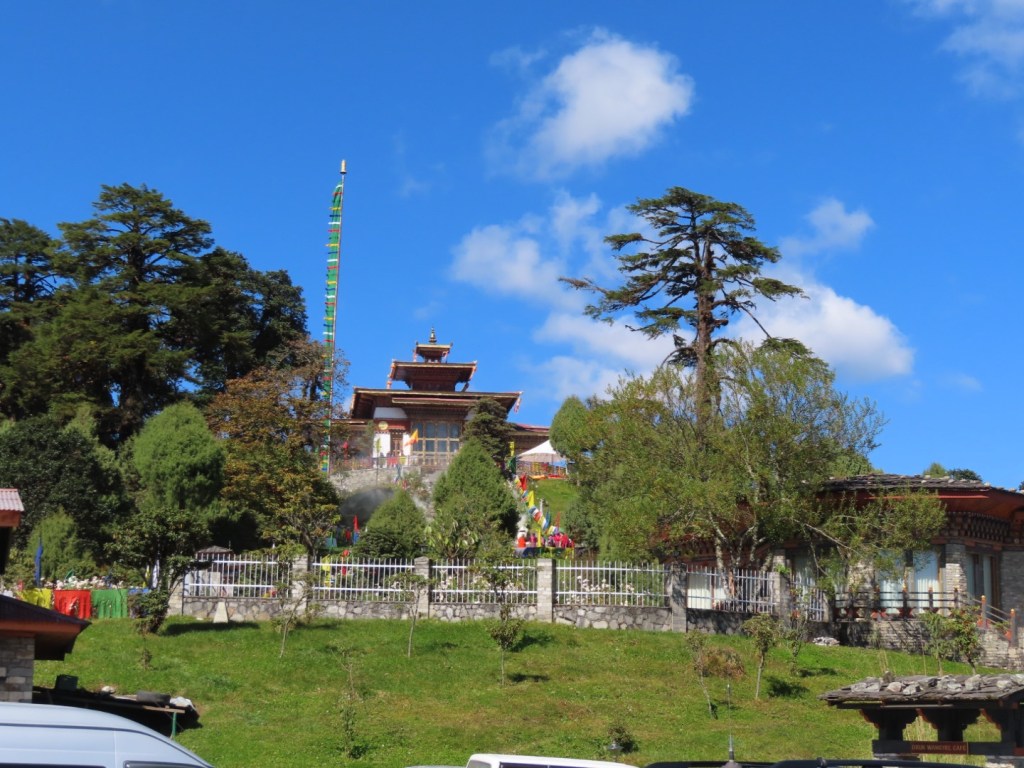
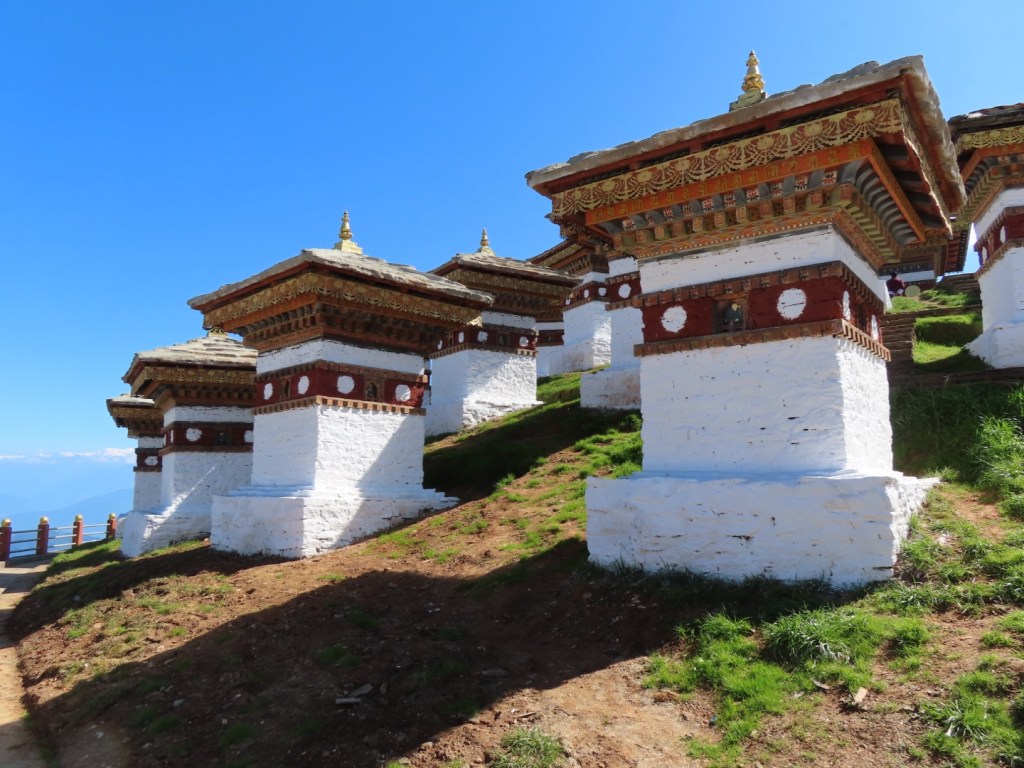
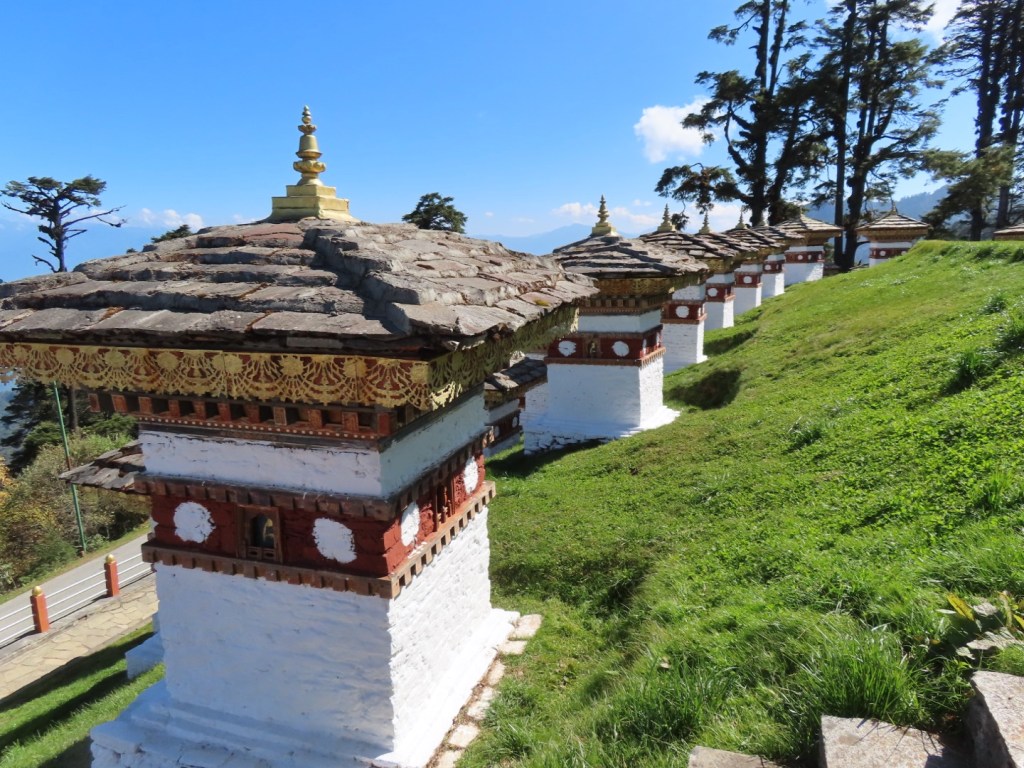
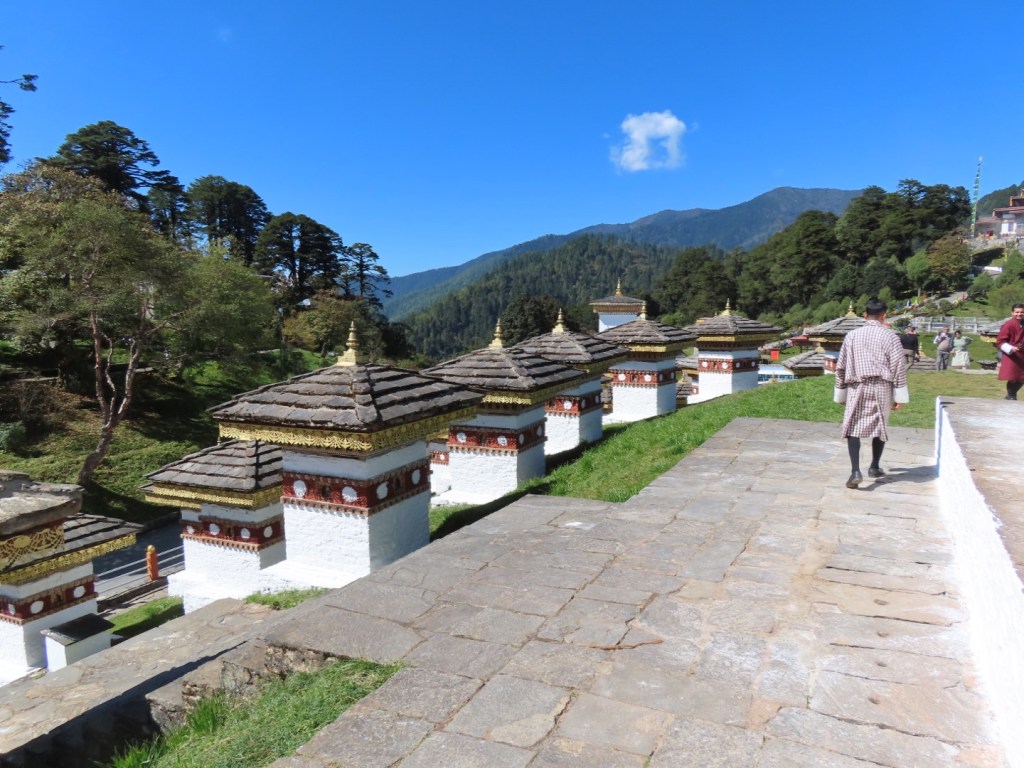
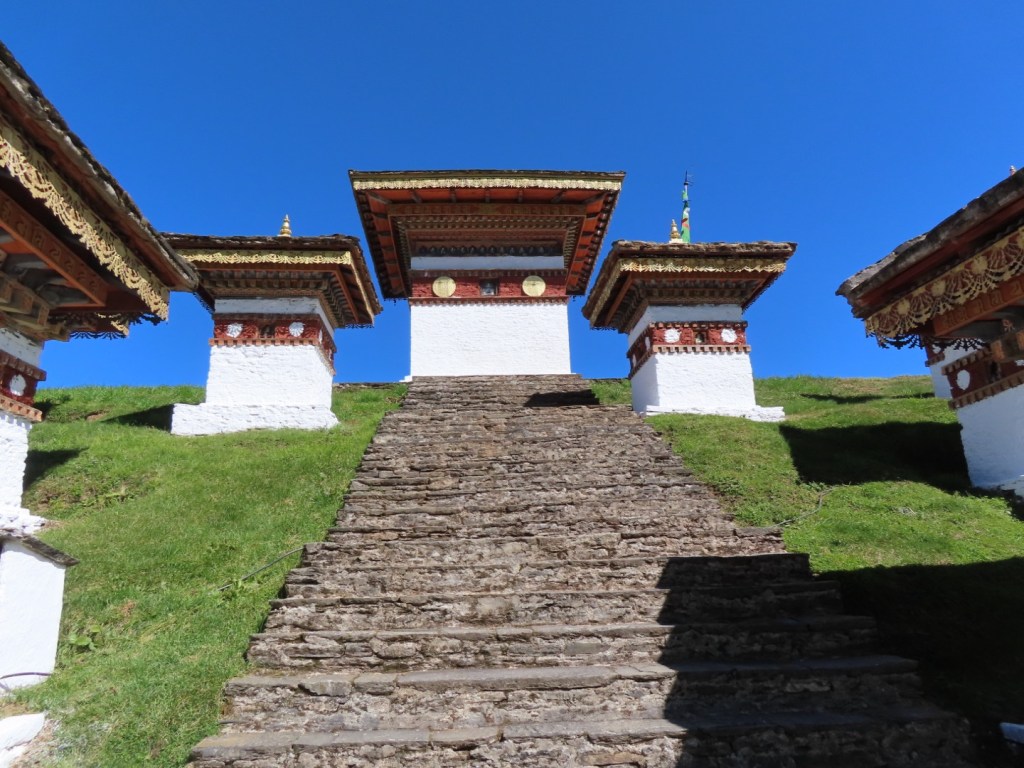
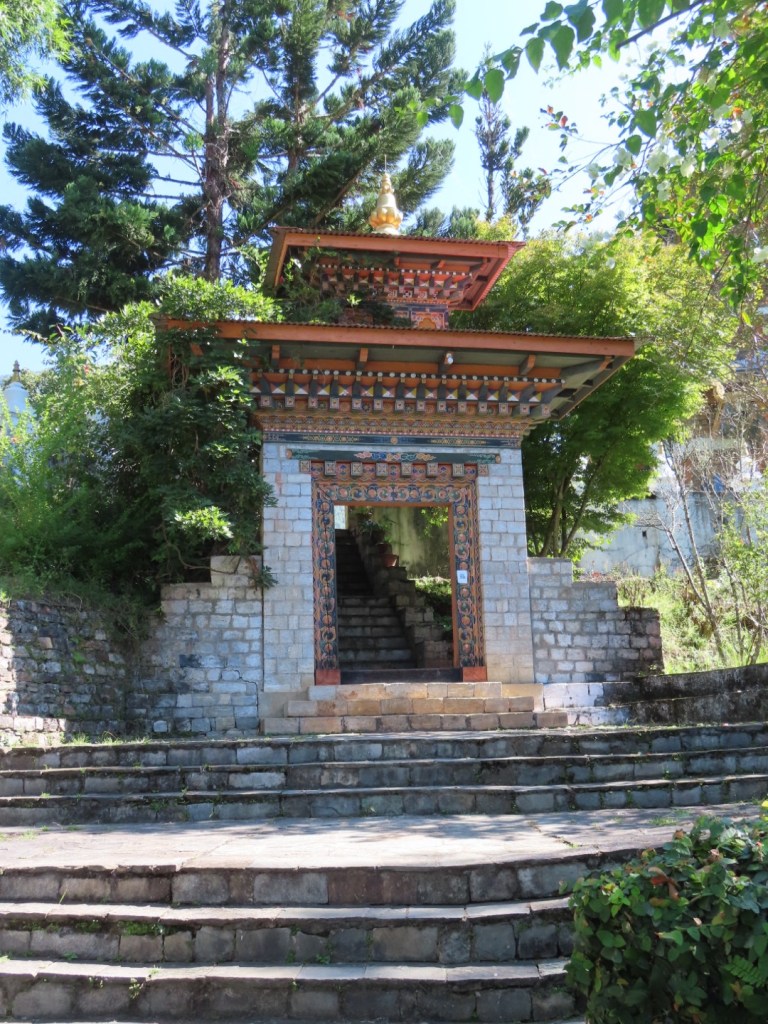
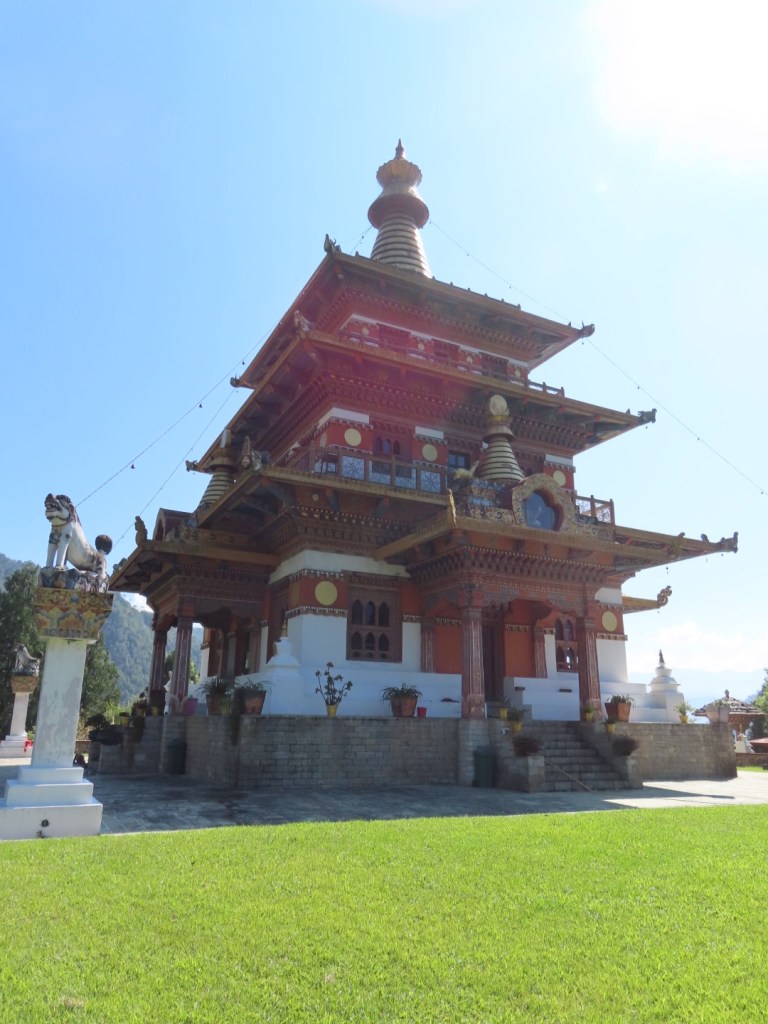
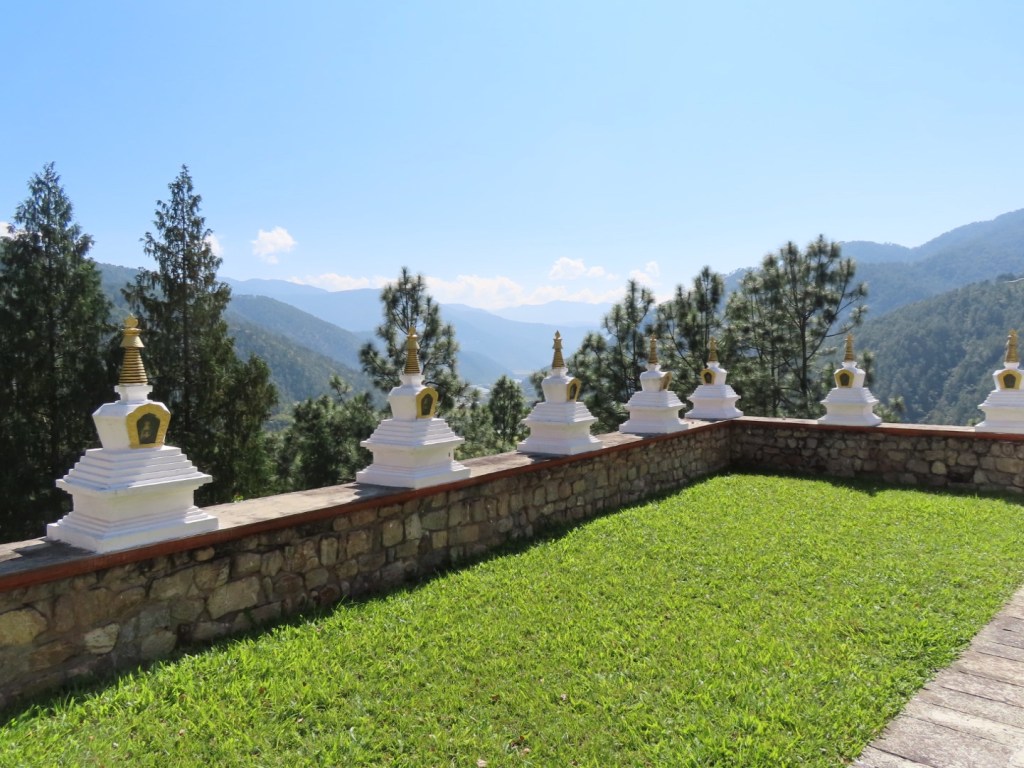
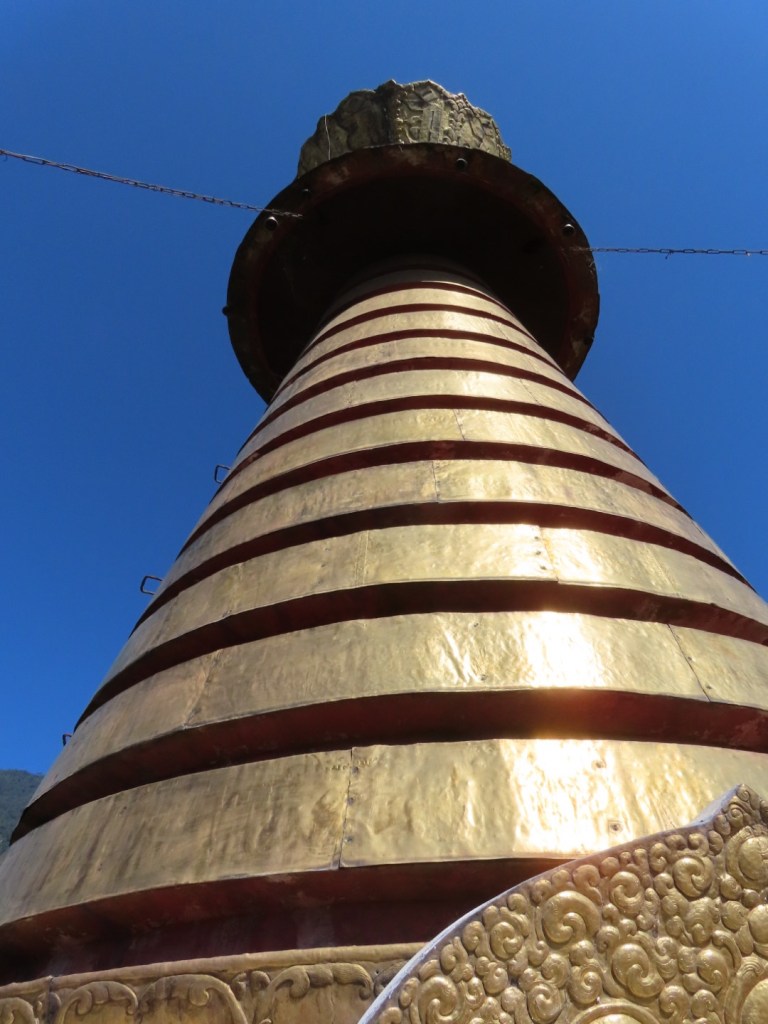
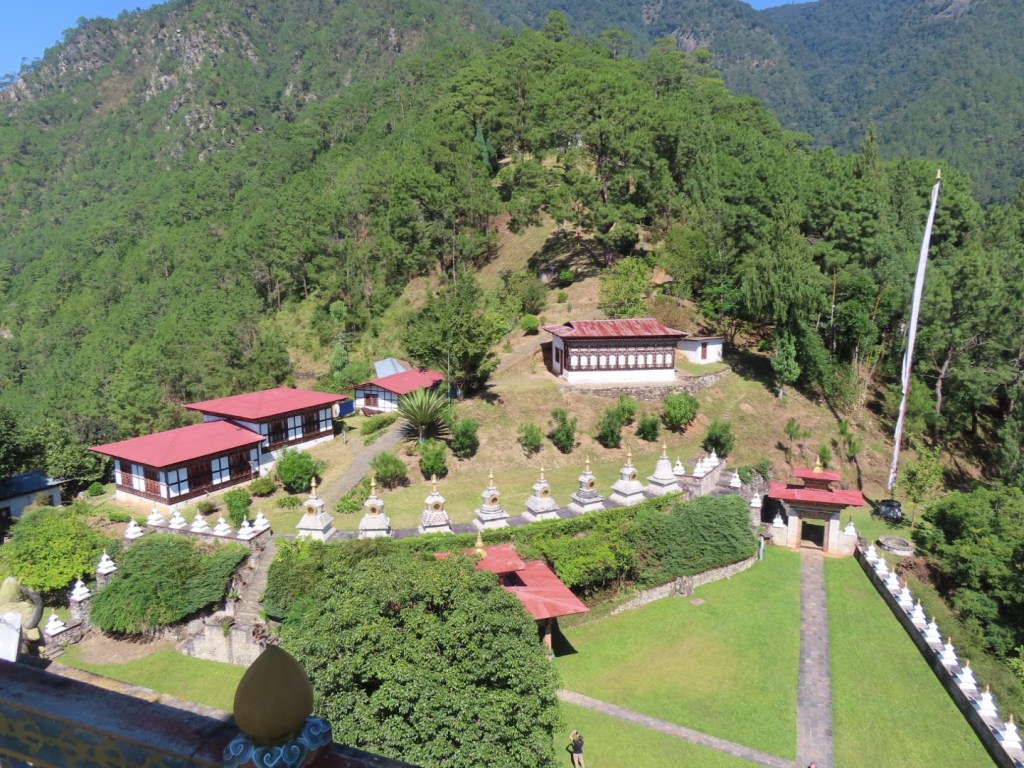
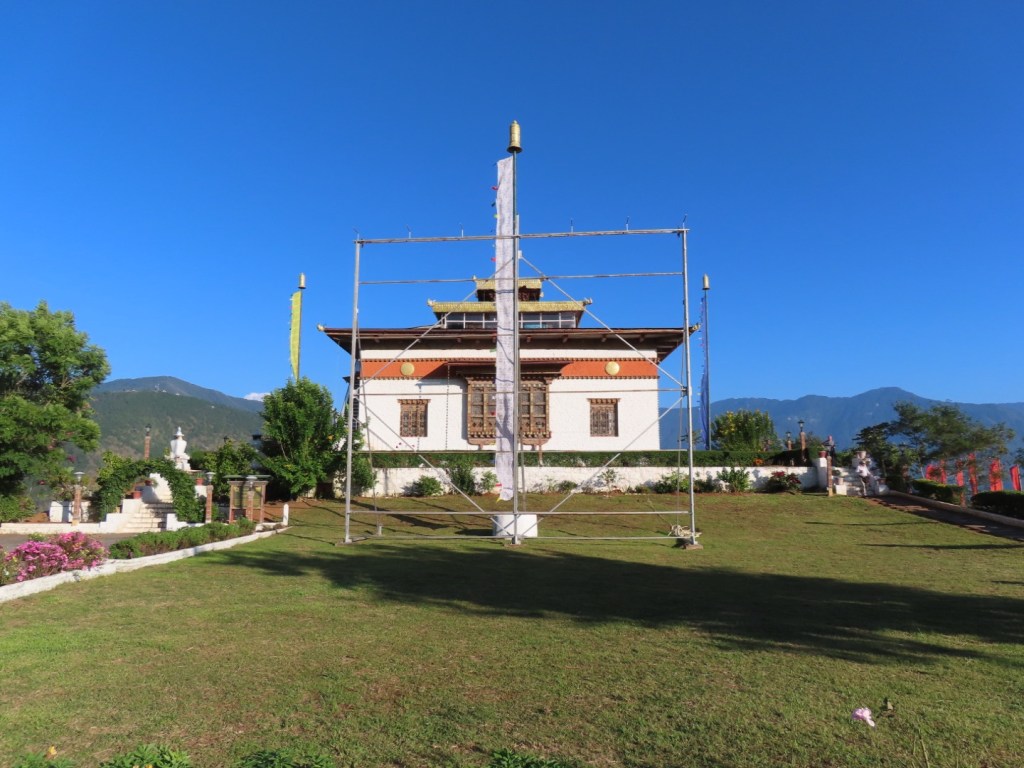
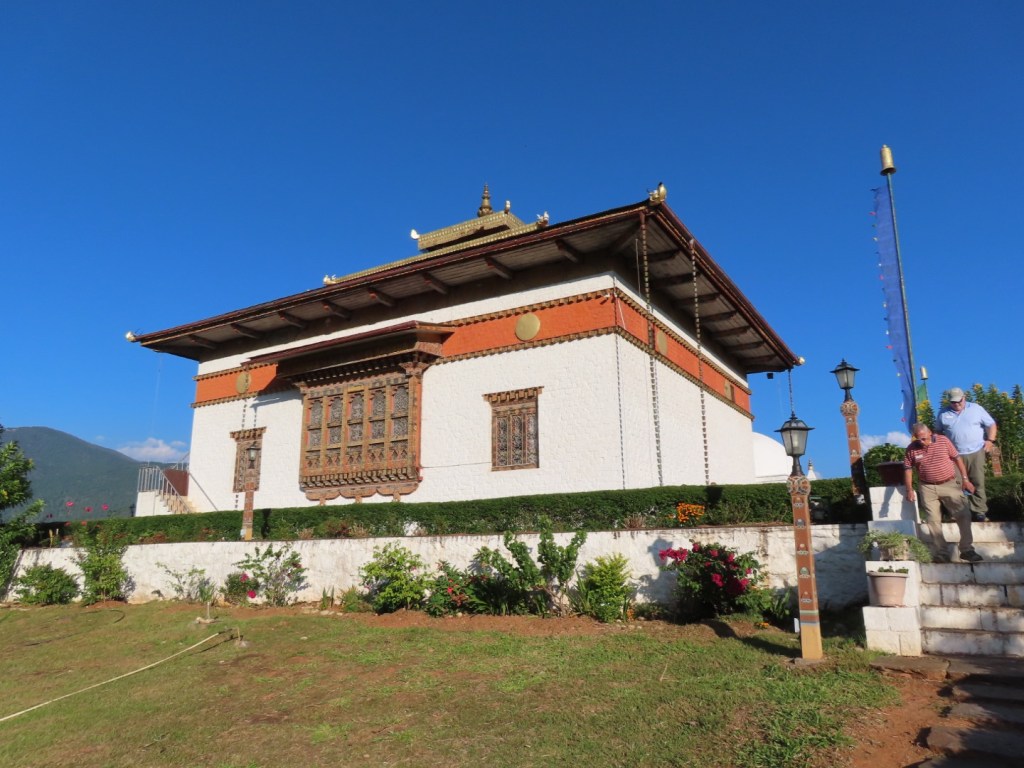
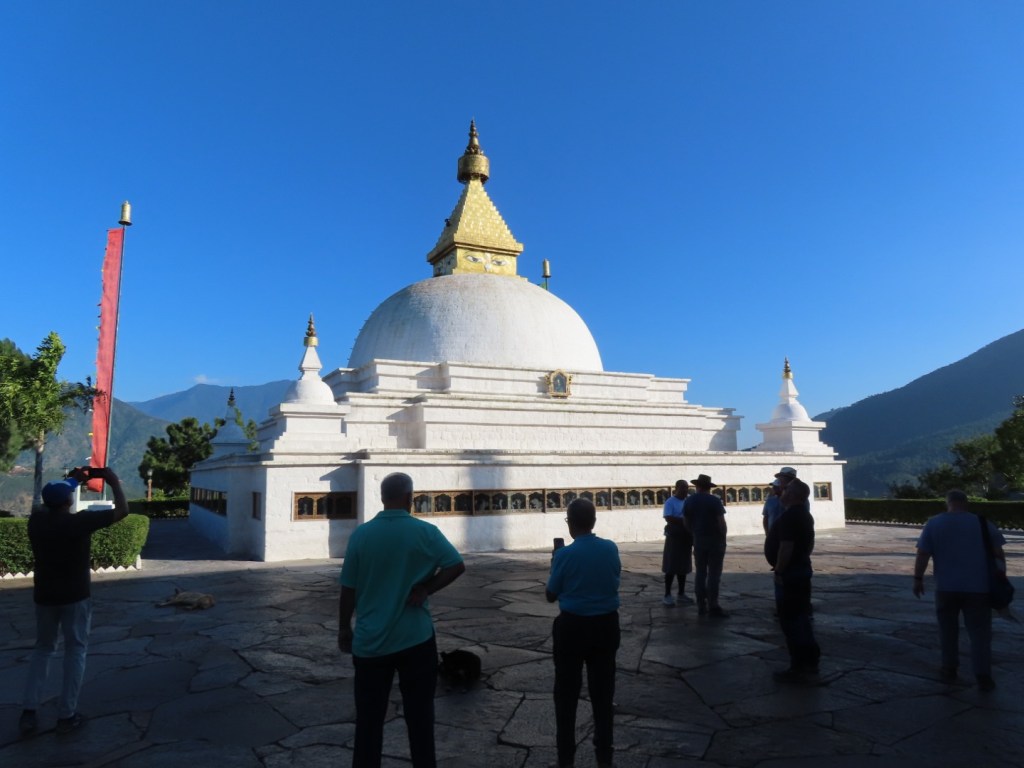
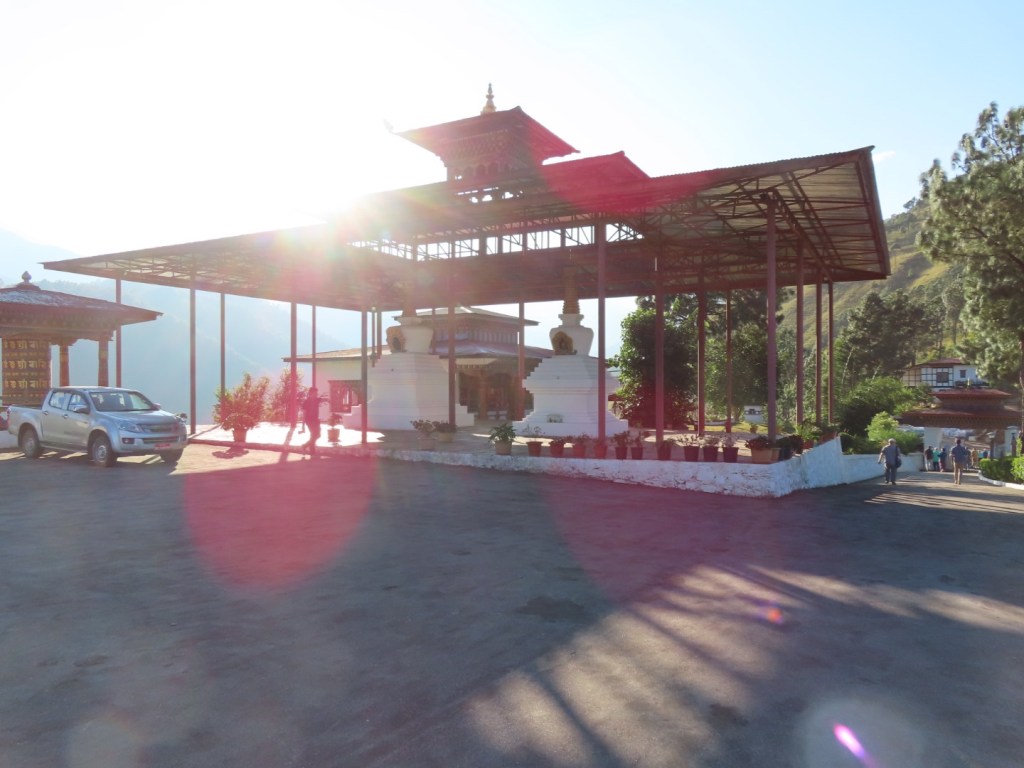
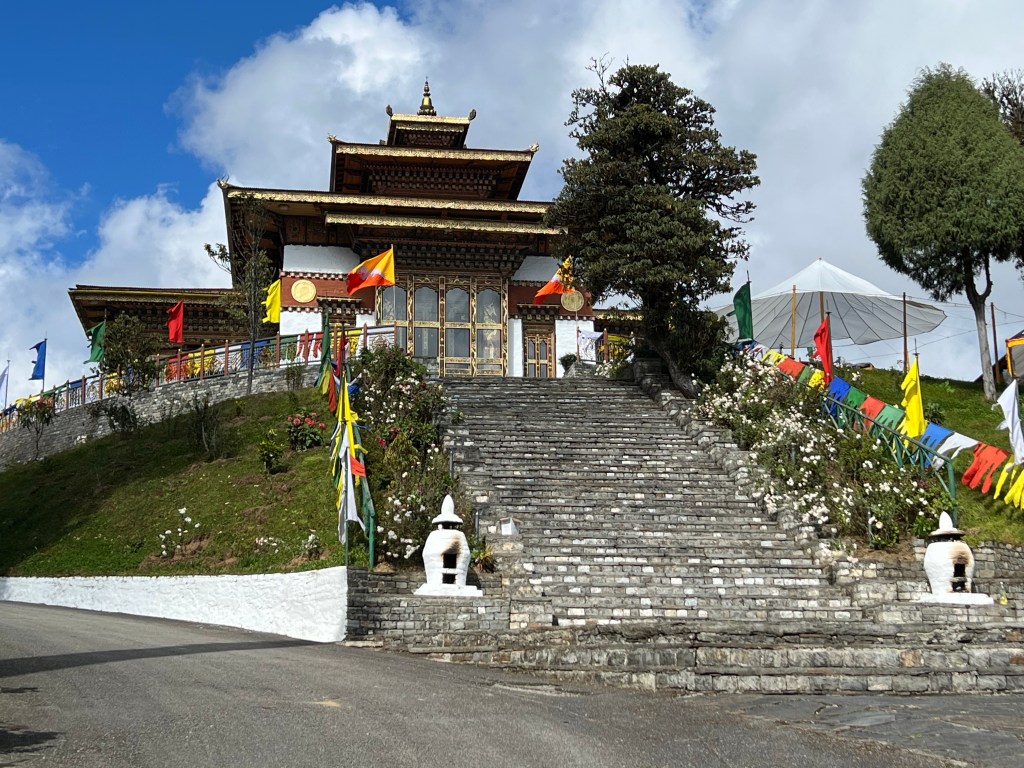
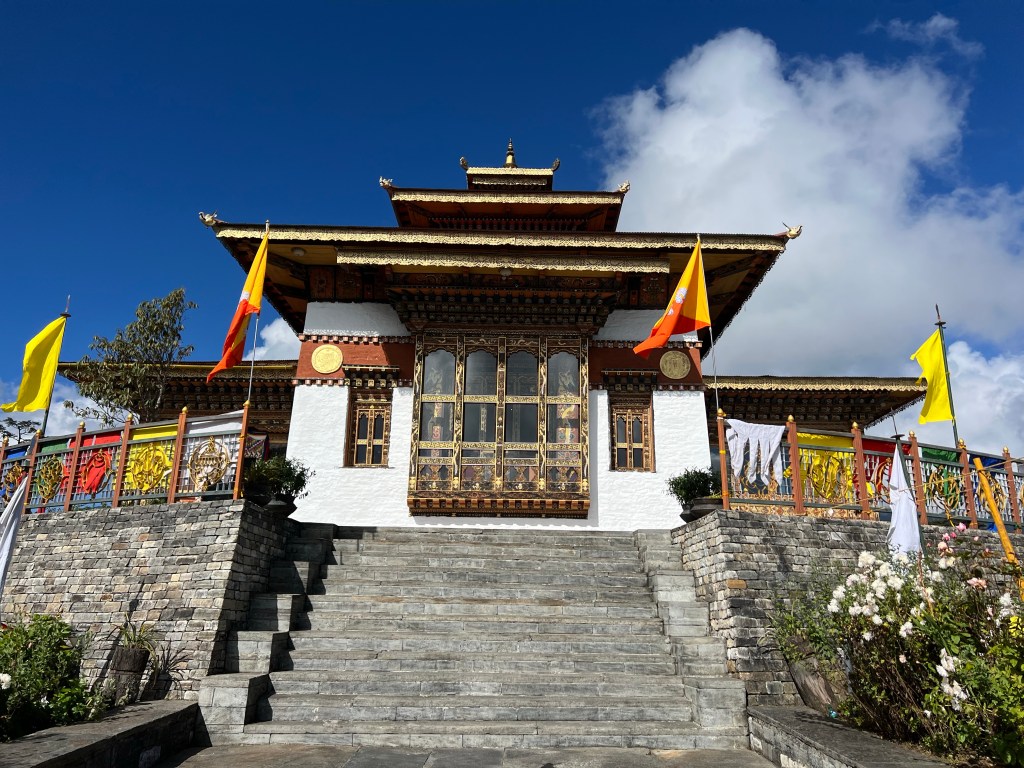
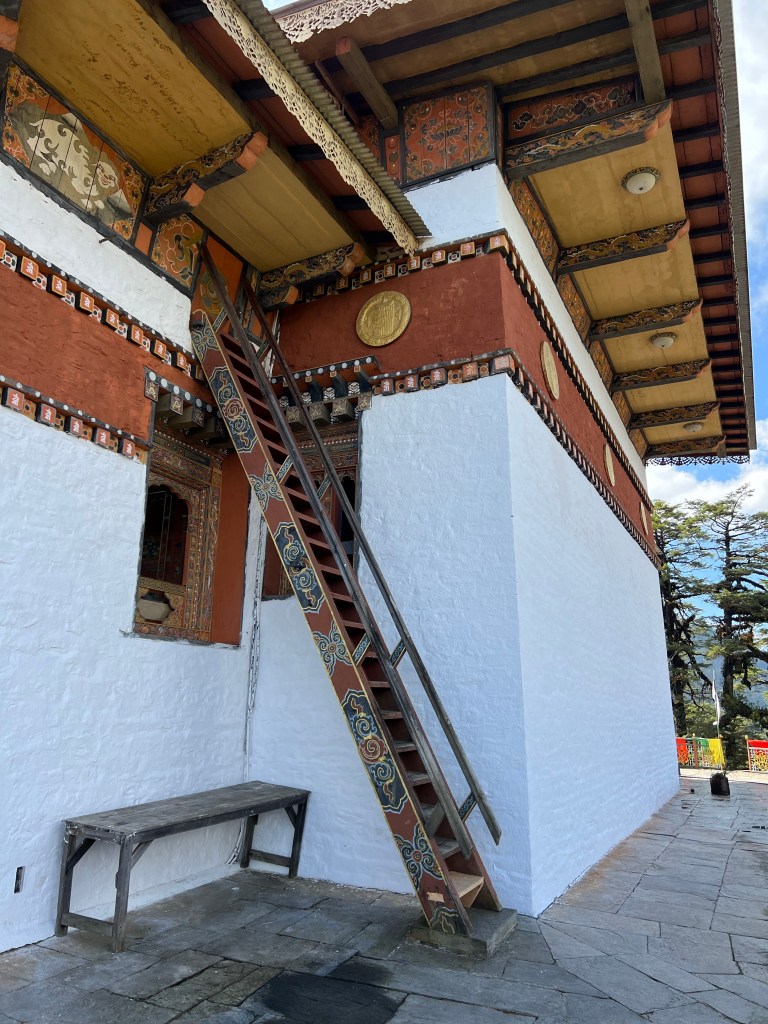
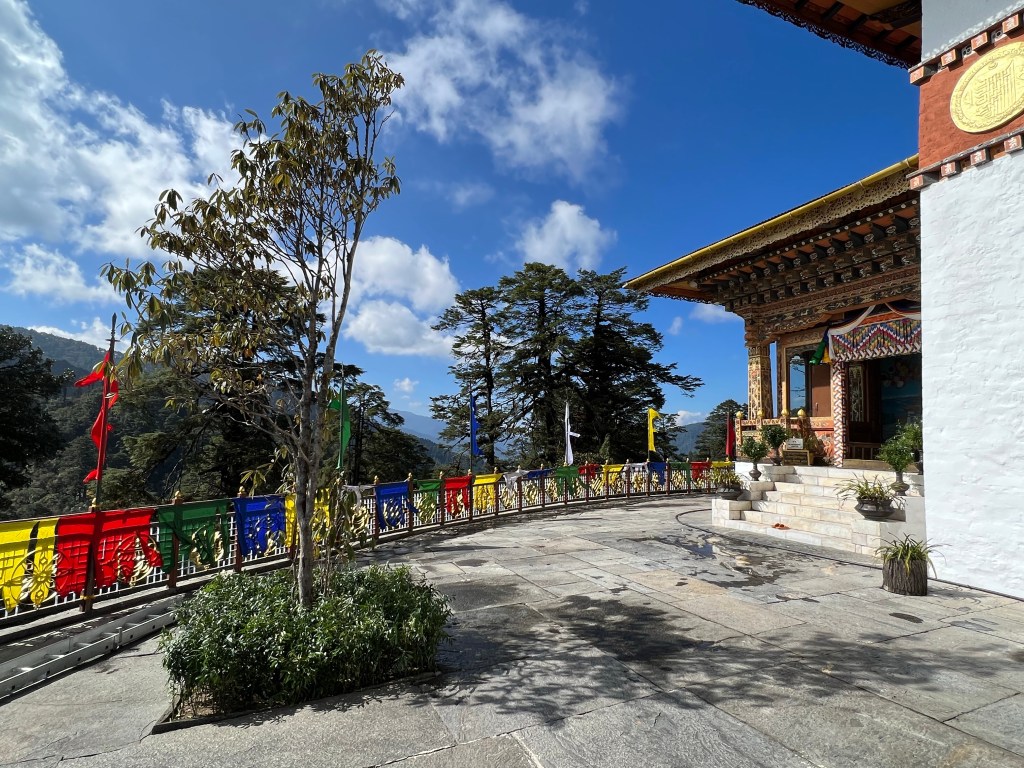
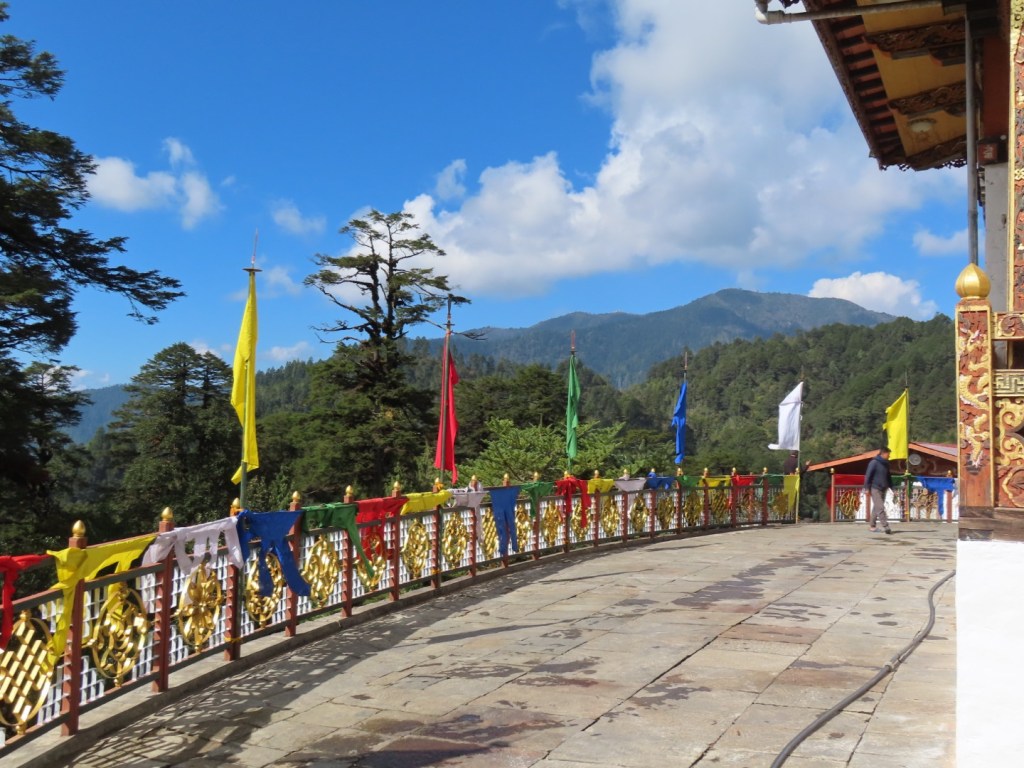
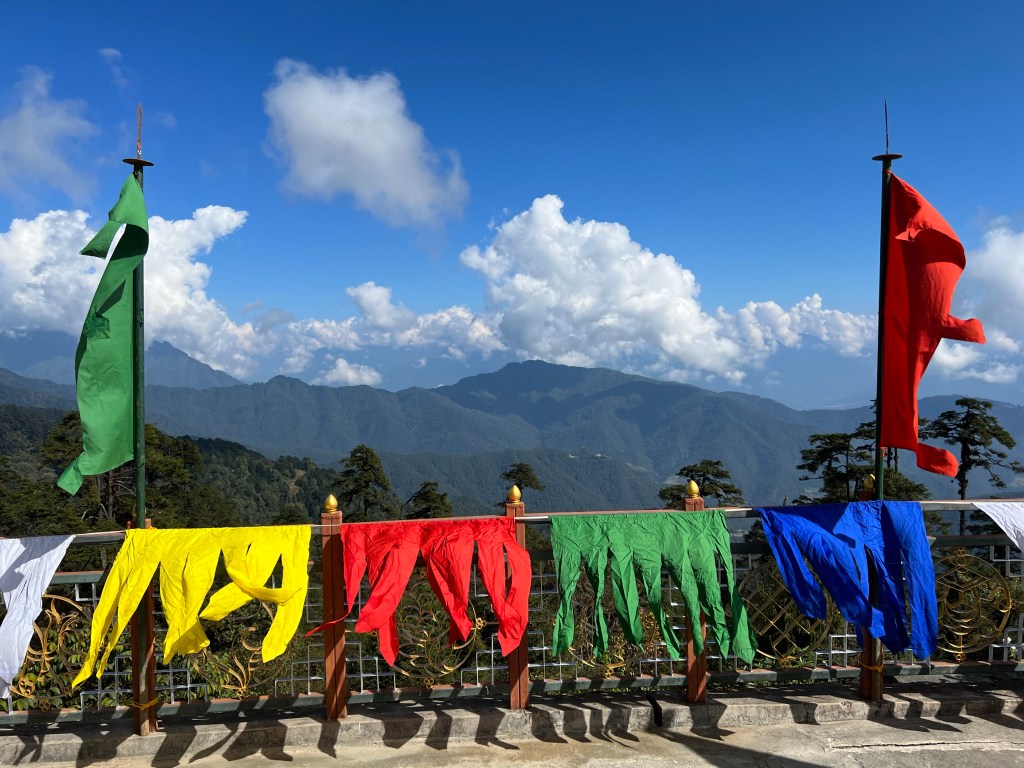
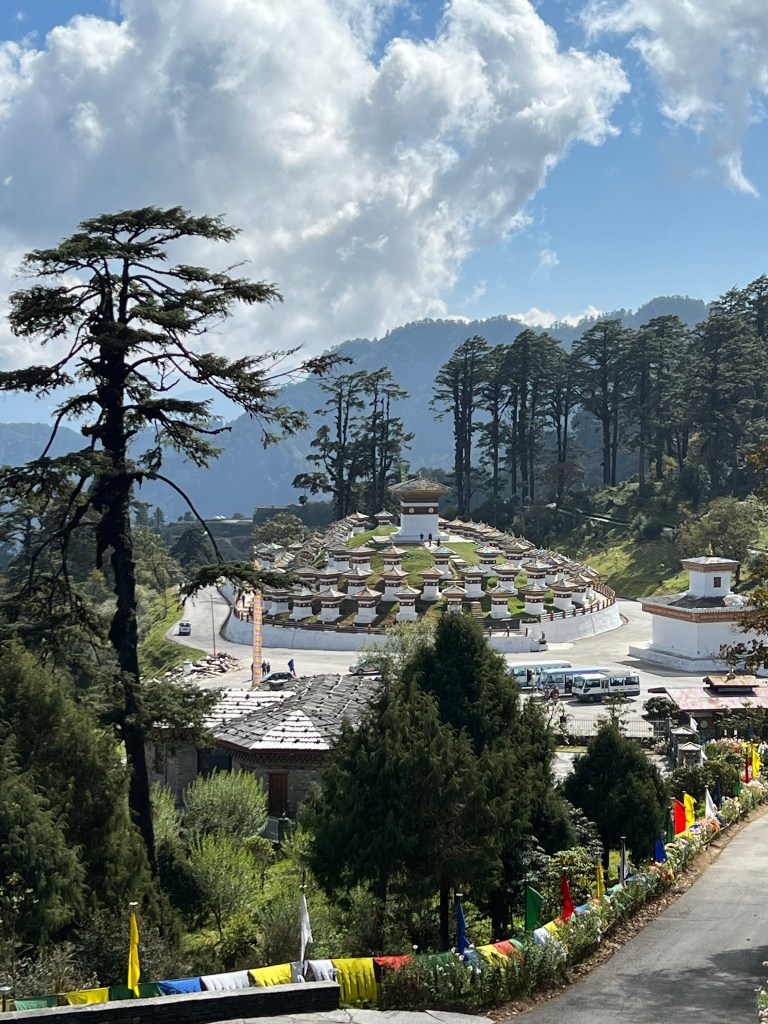
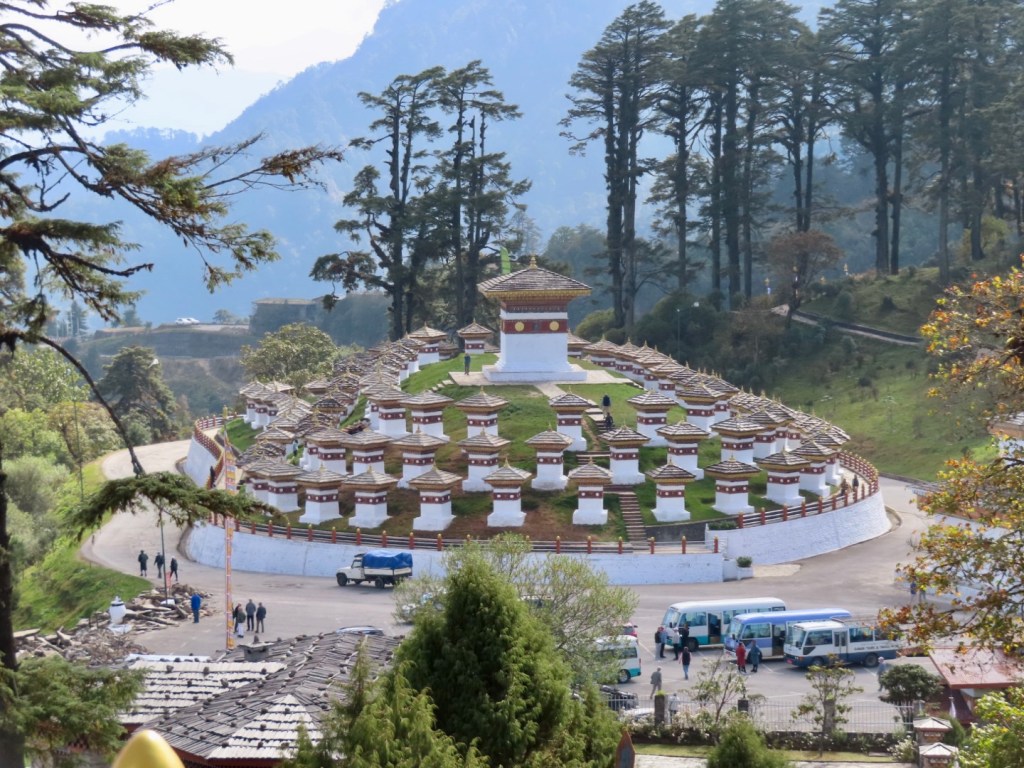
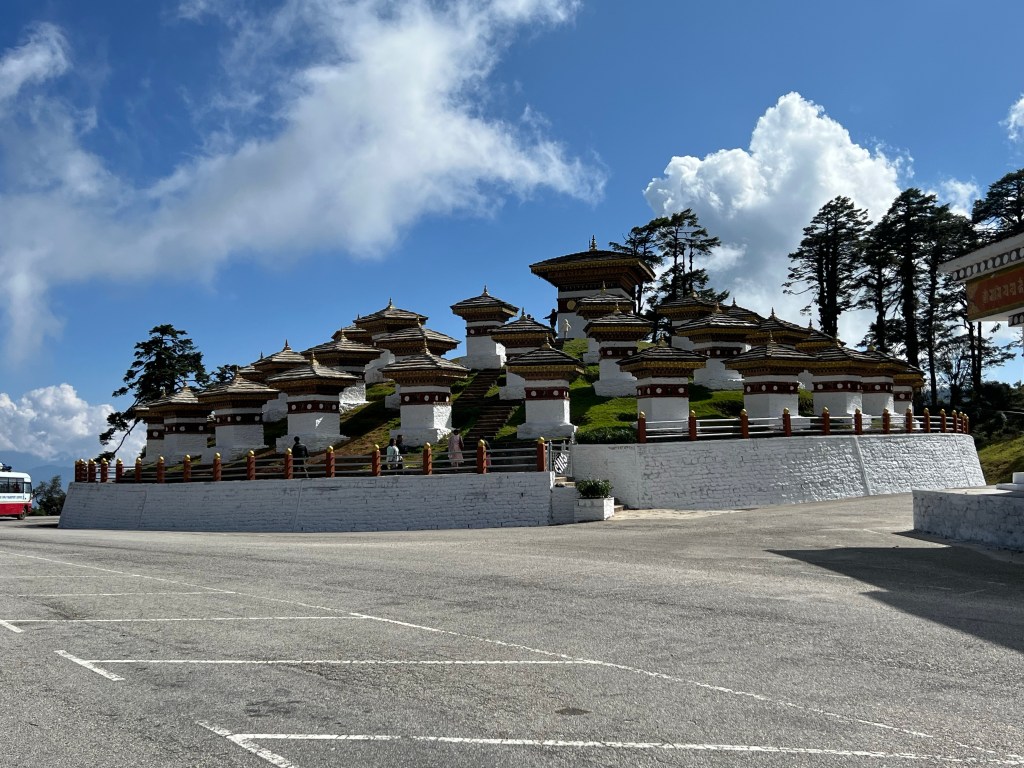
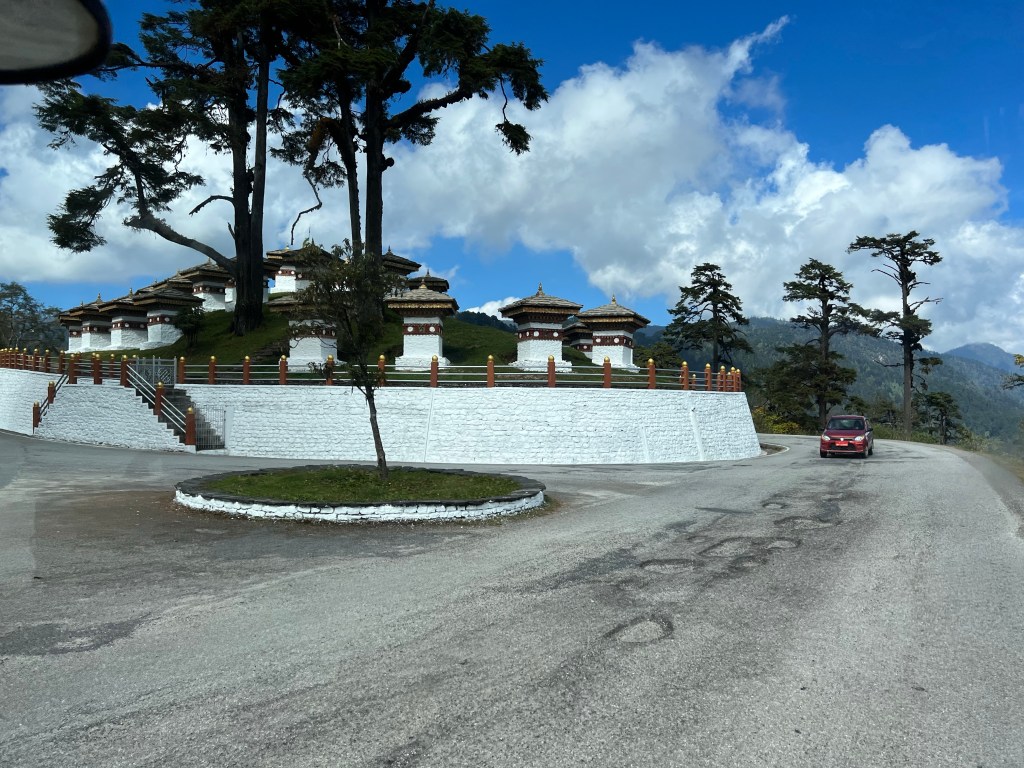
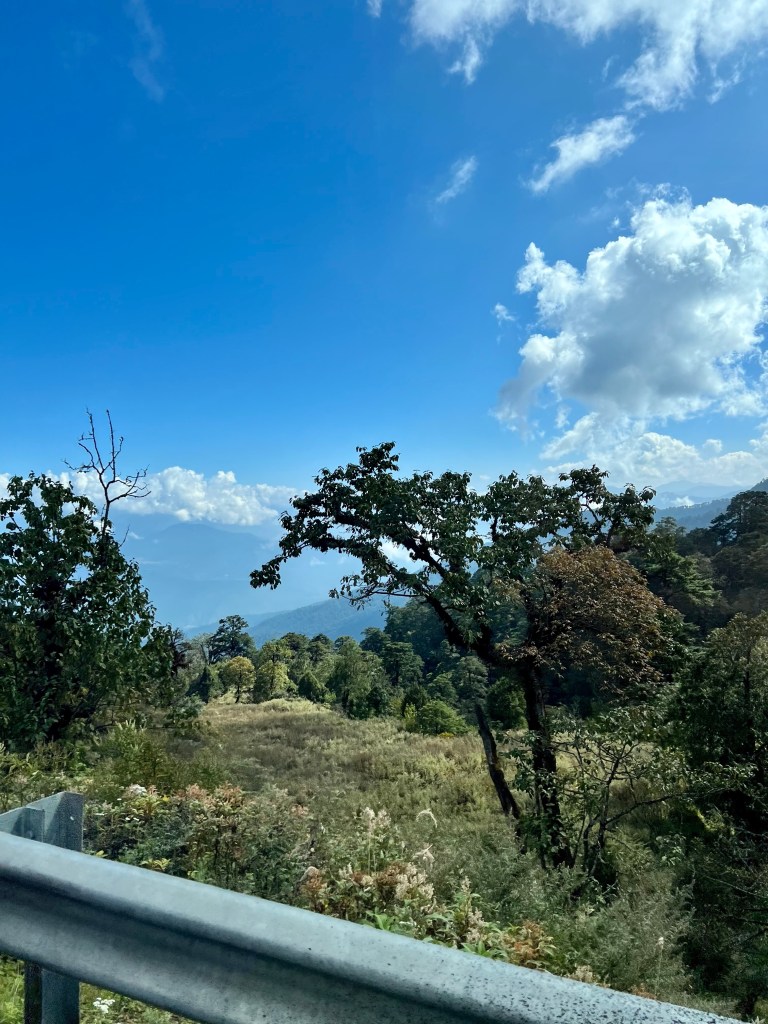
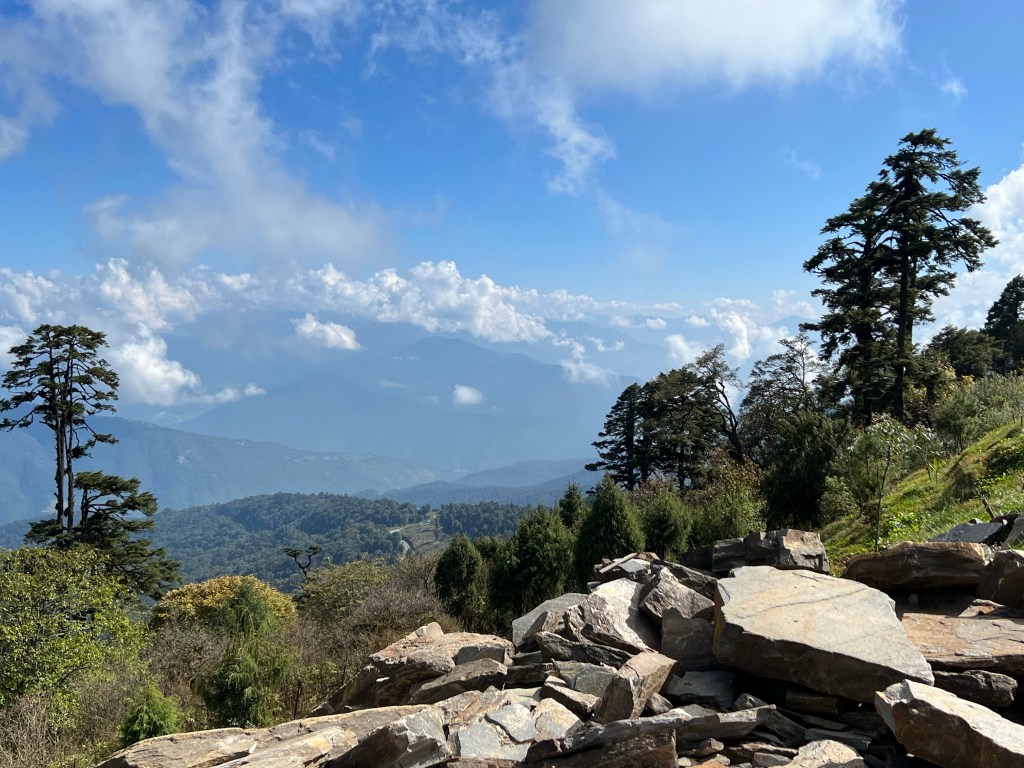
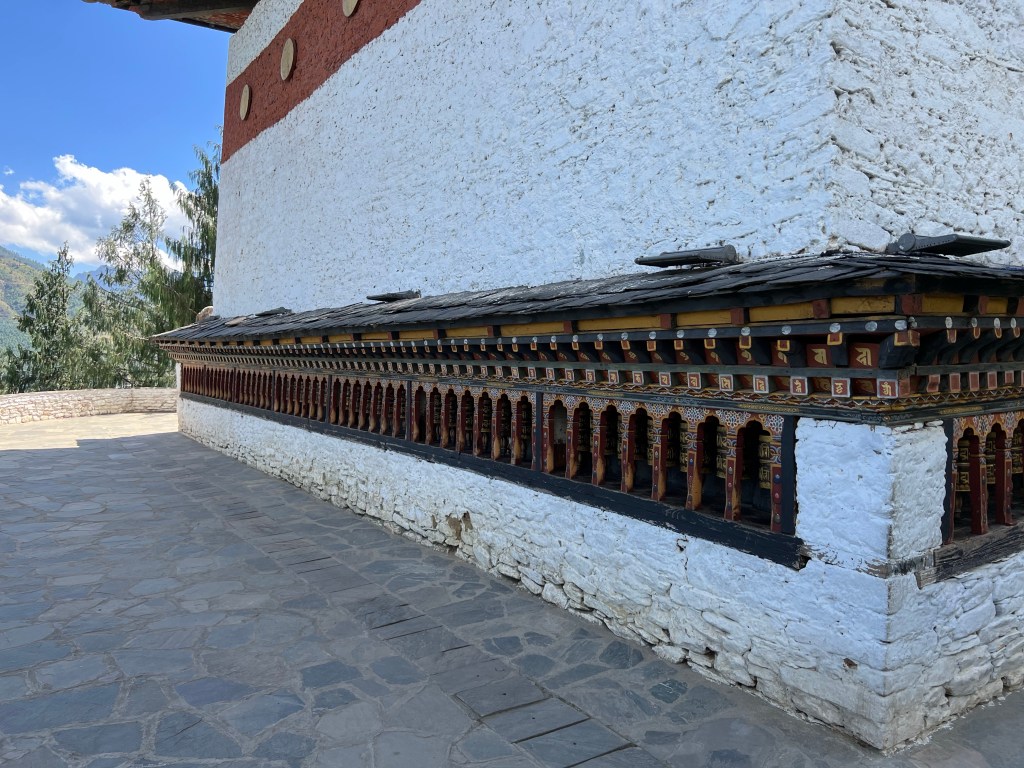
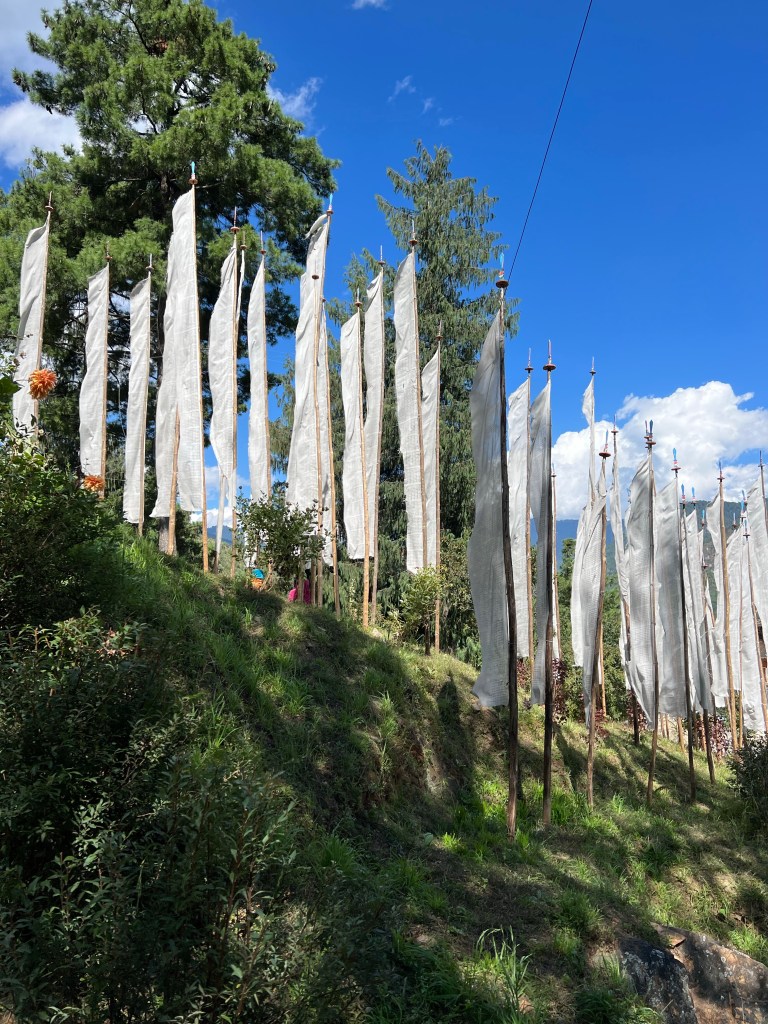
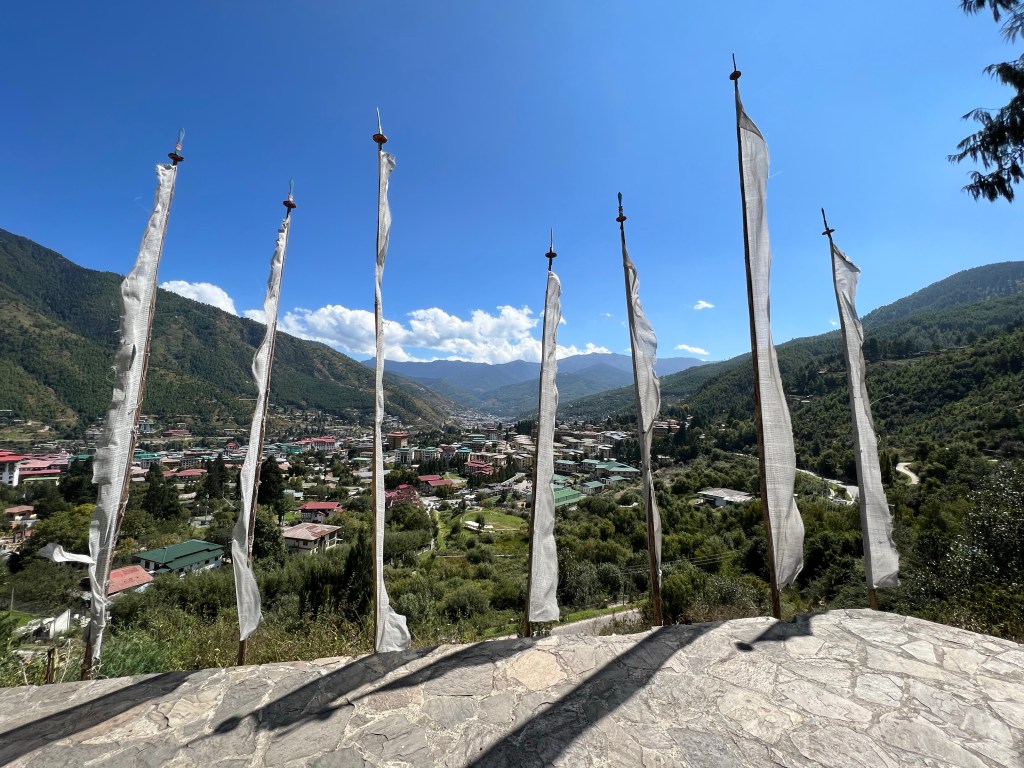
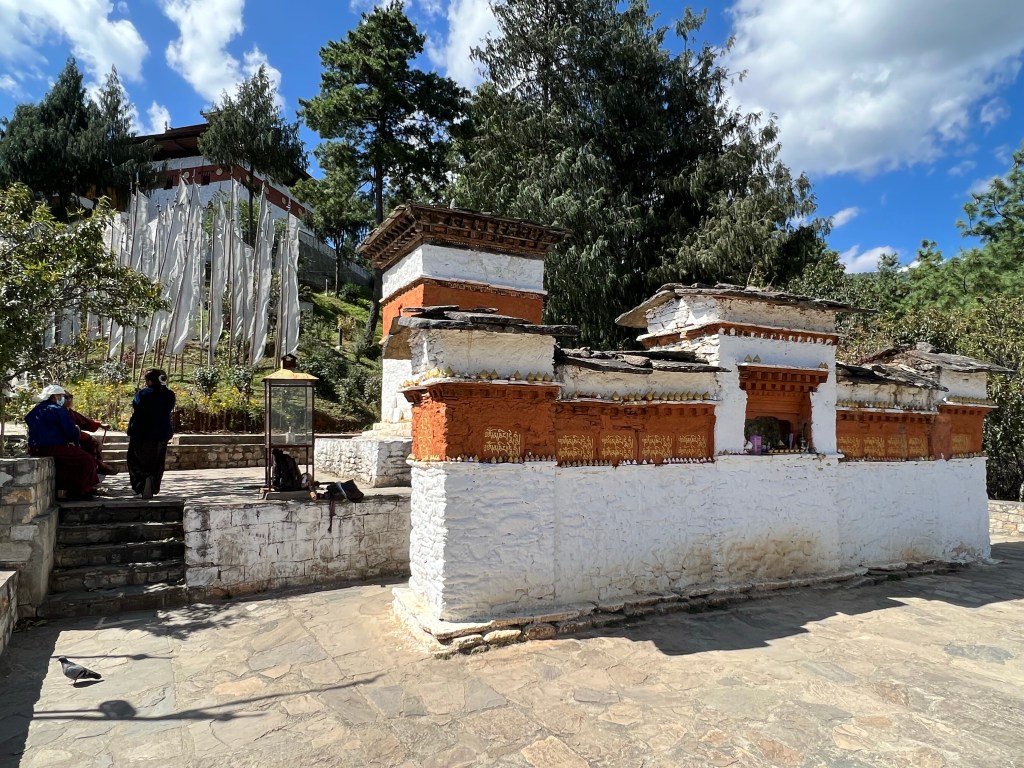
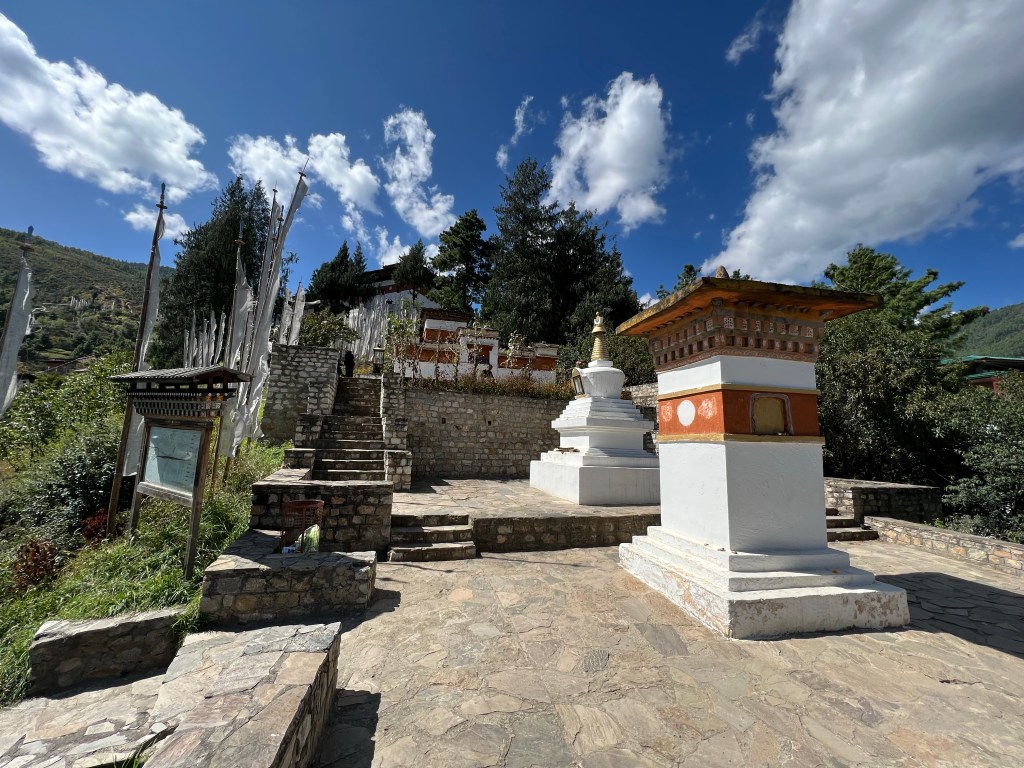
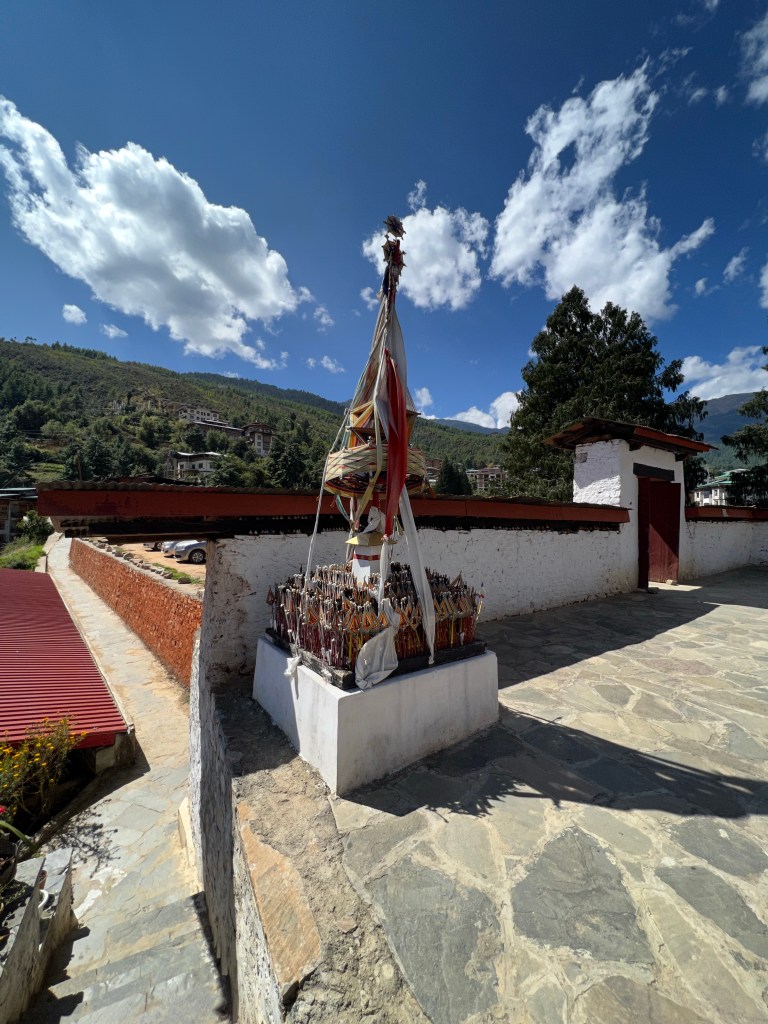
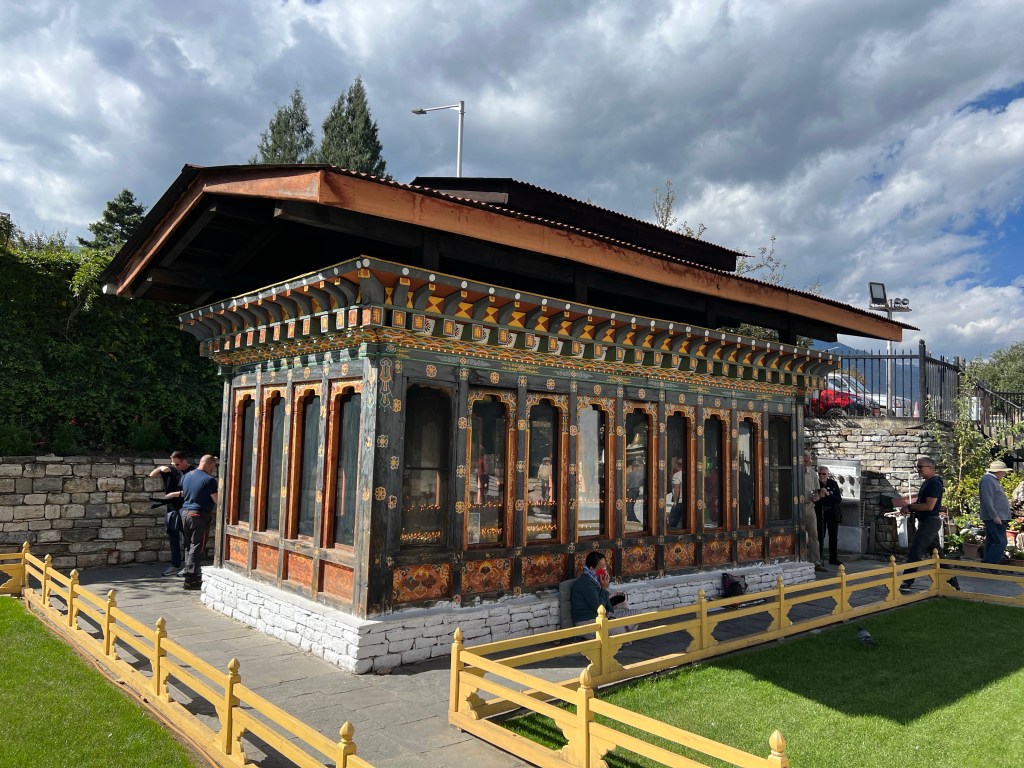
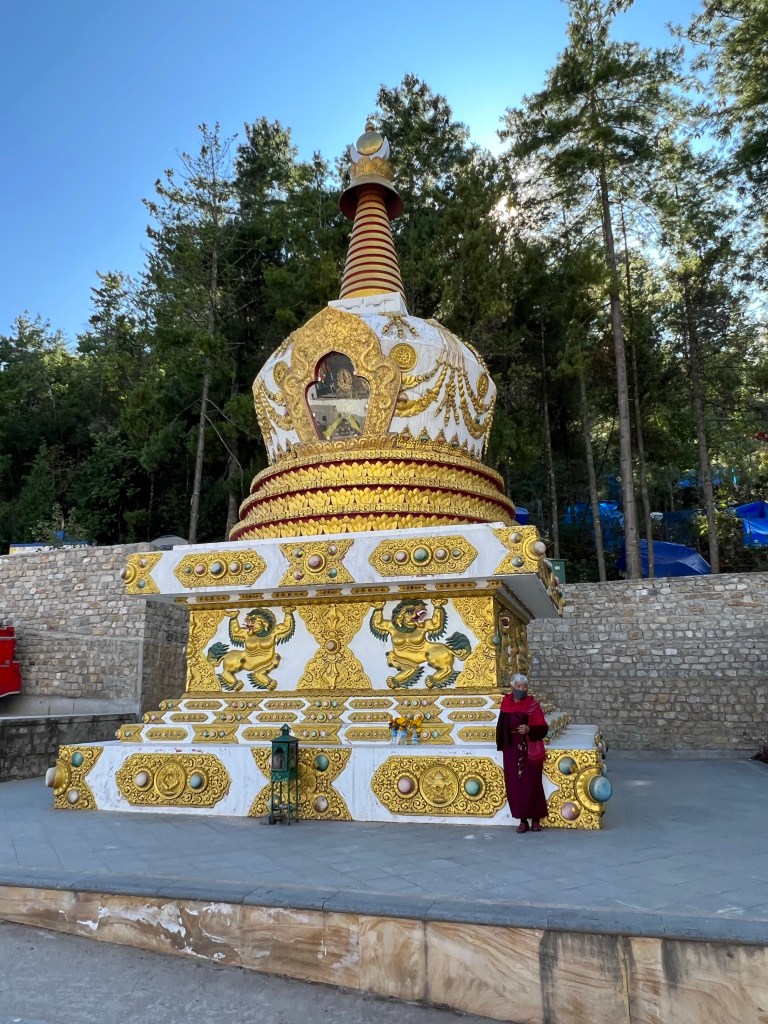
We stopped at Dochula Pass to visit the Druk Wangyal Lhakhang (temple), the Druk Wangyal Chortens (108 memorial stupas built by Ashi Dorji Wangmo Wangchuk, the eldest Queen Mother) and enjoy the view.
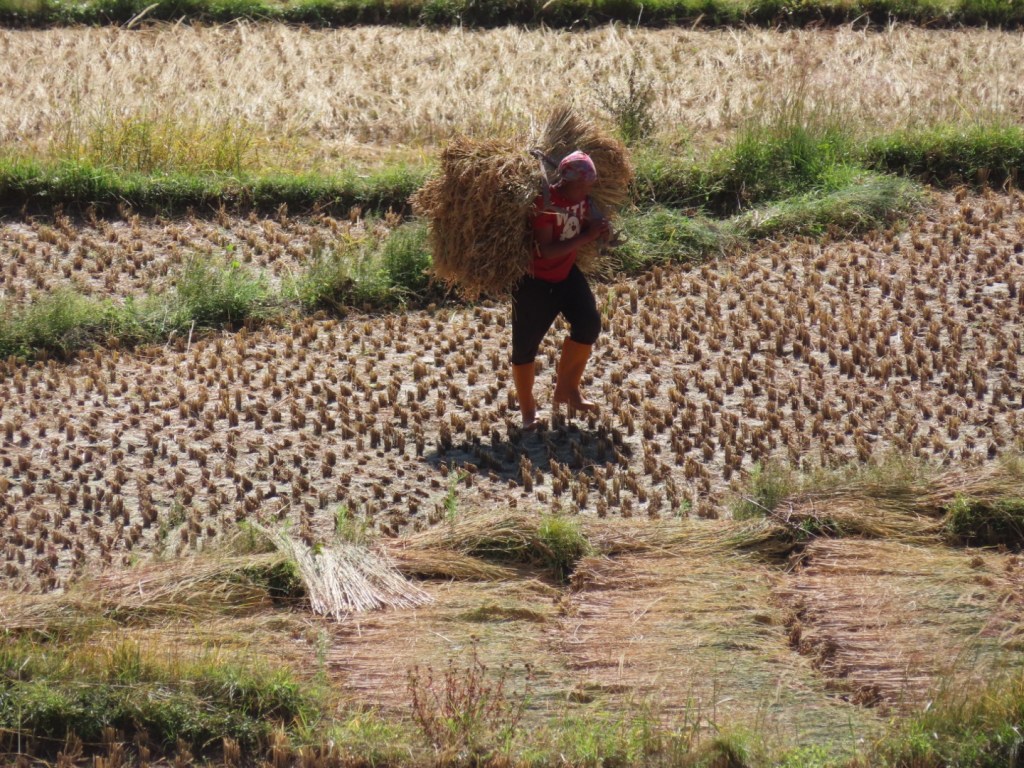
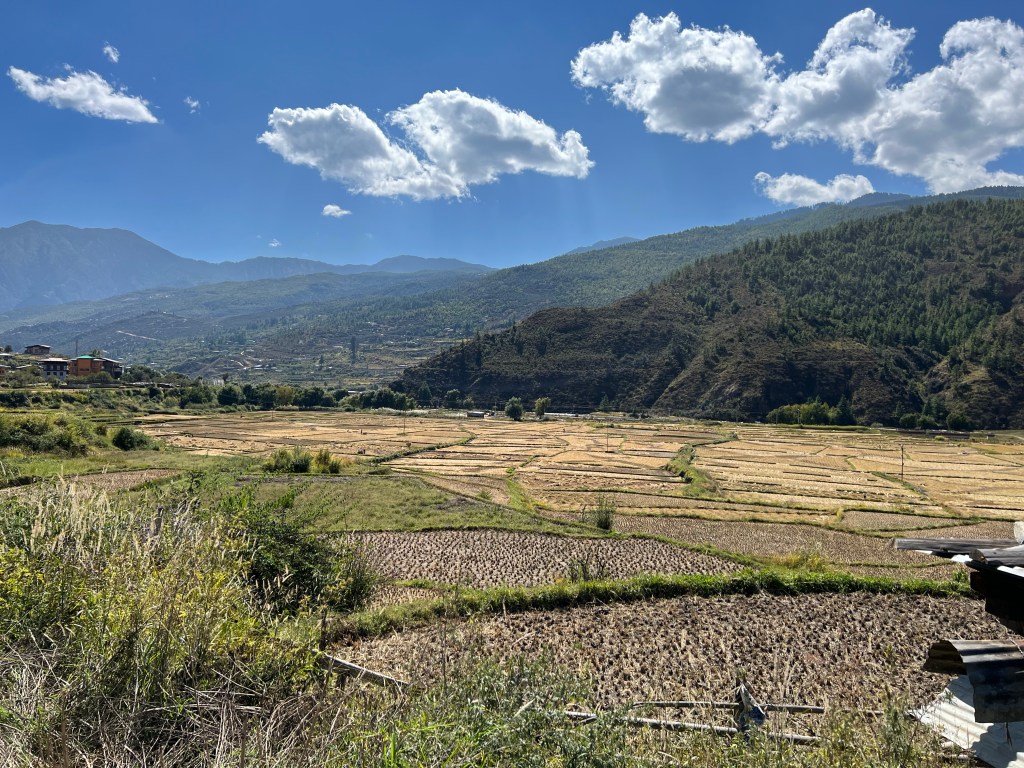
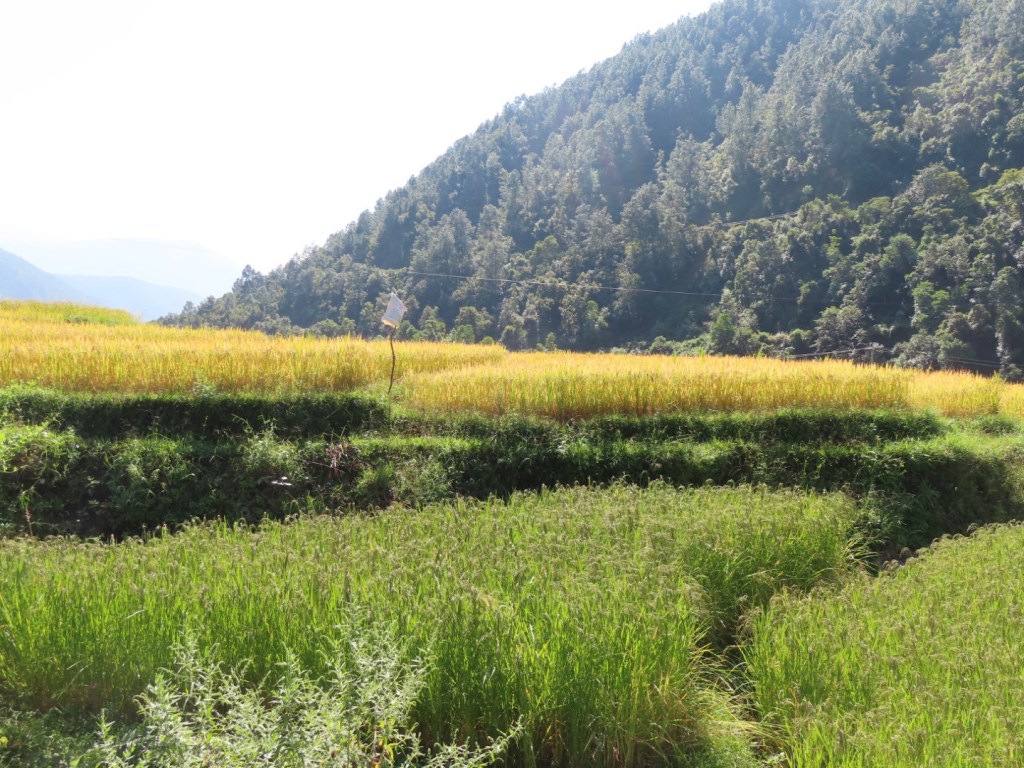
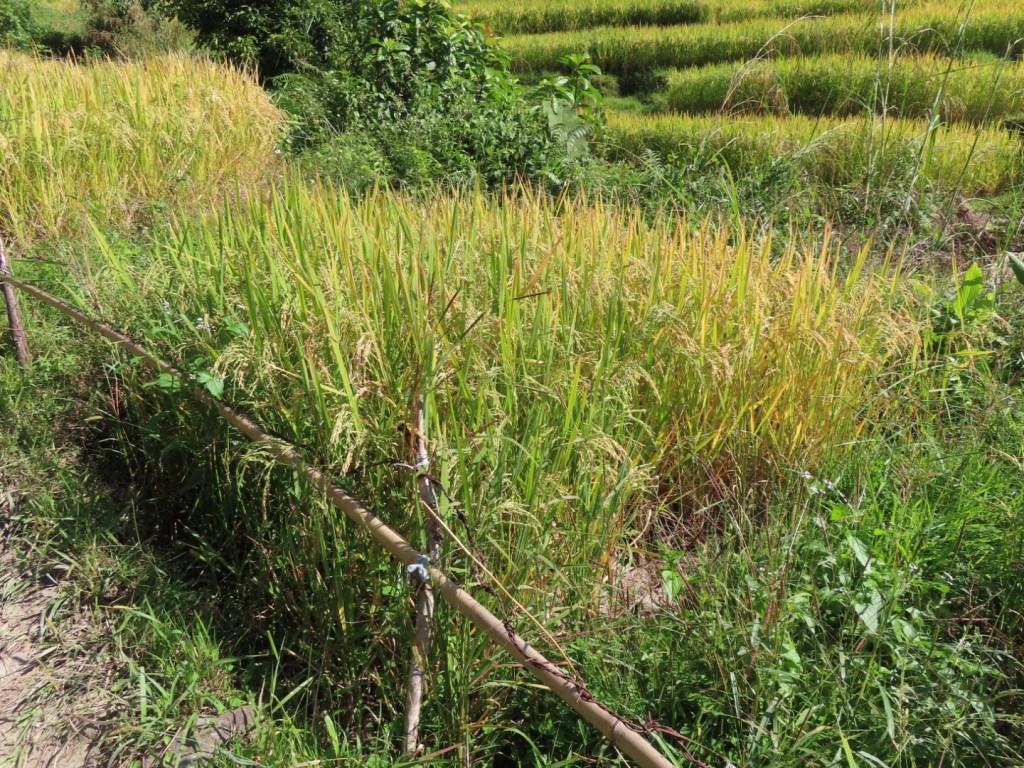
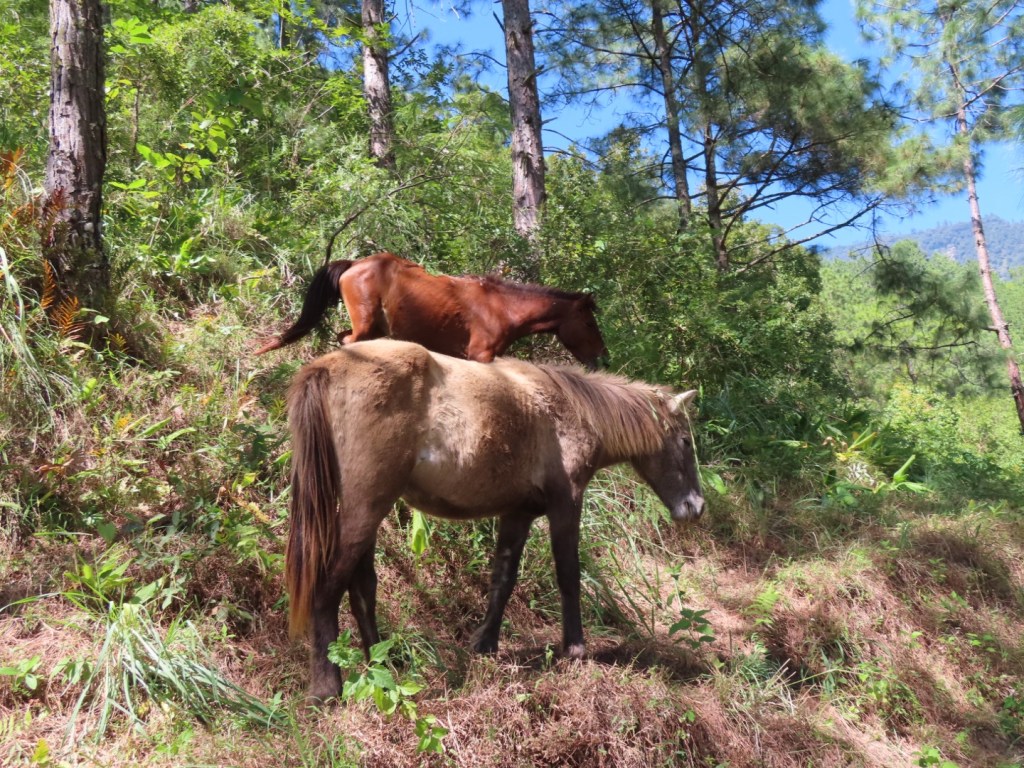
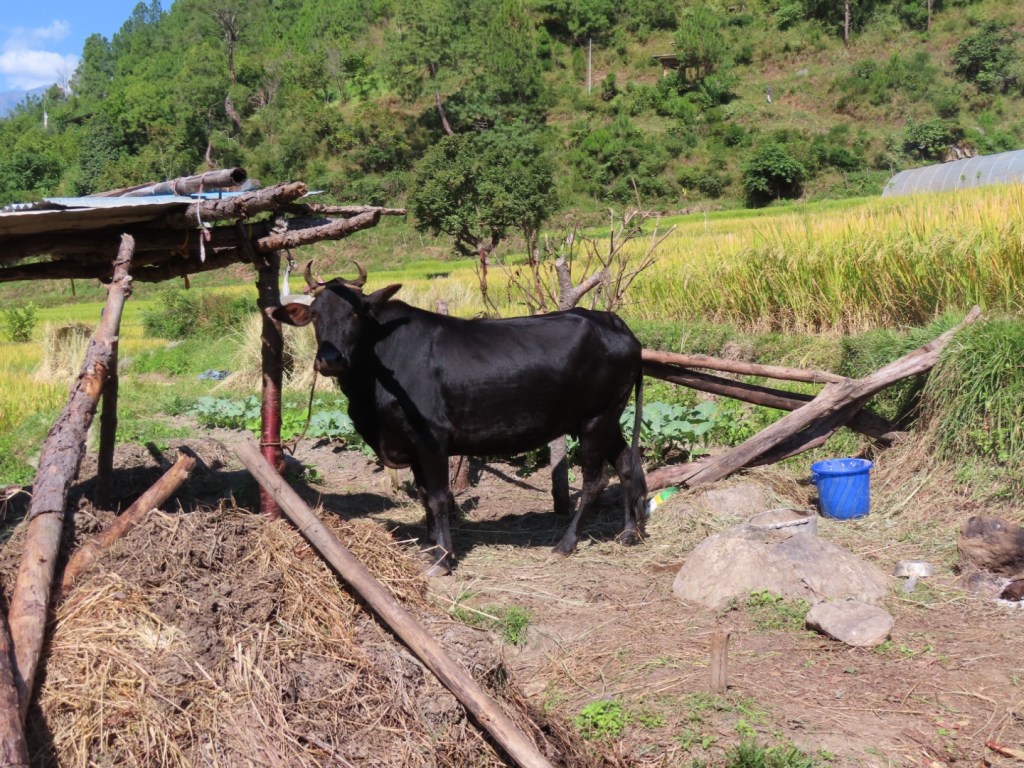
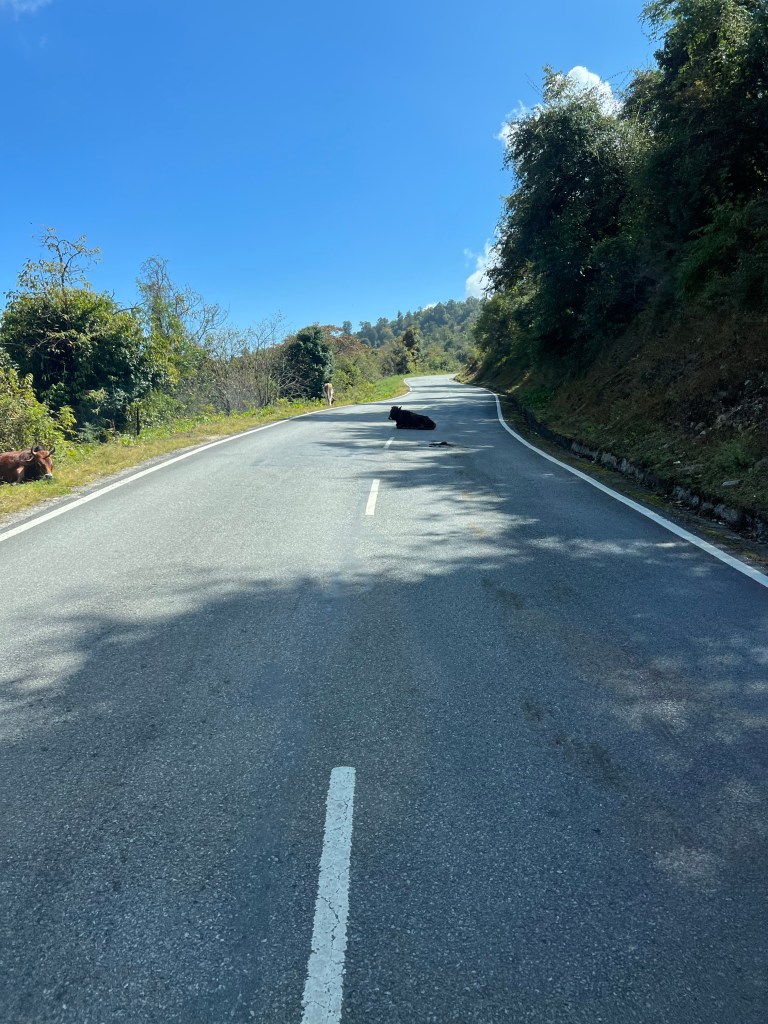
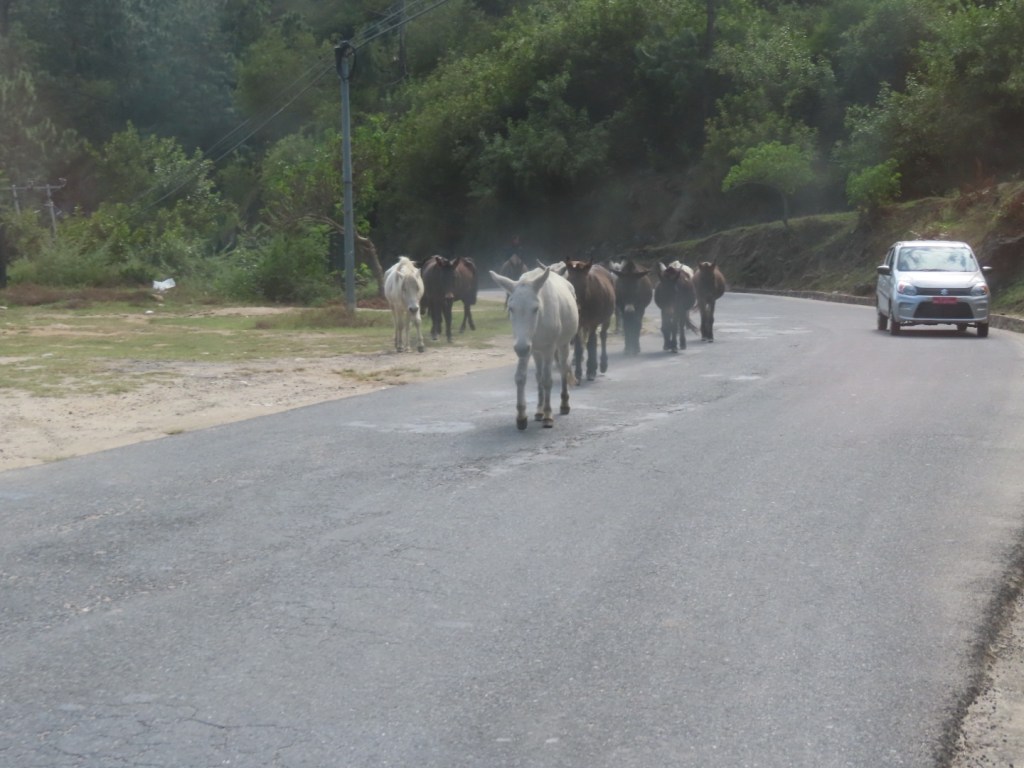
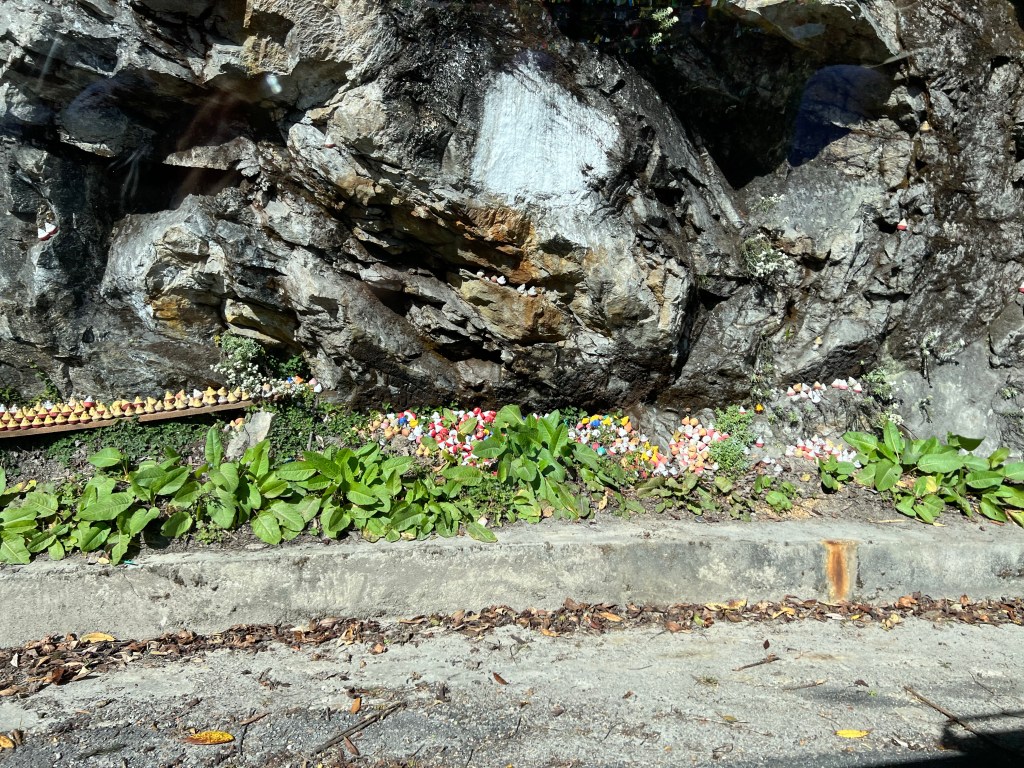
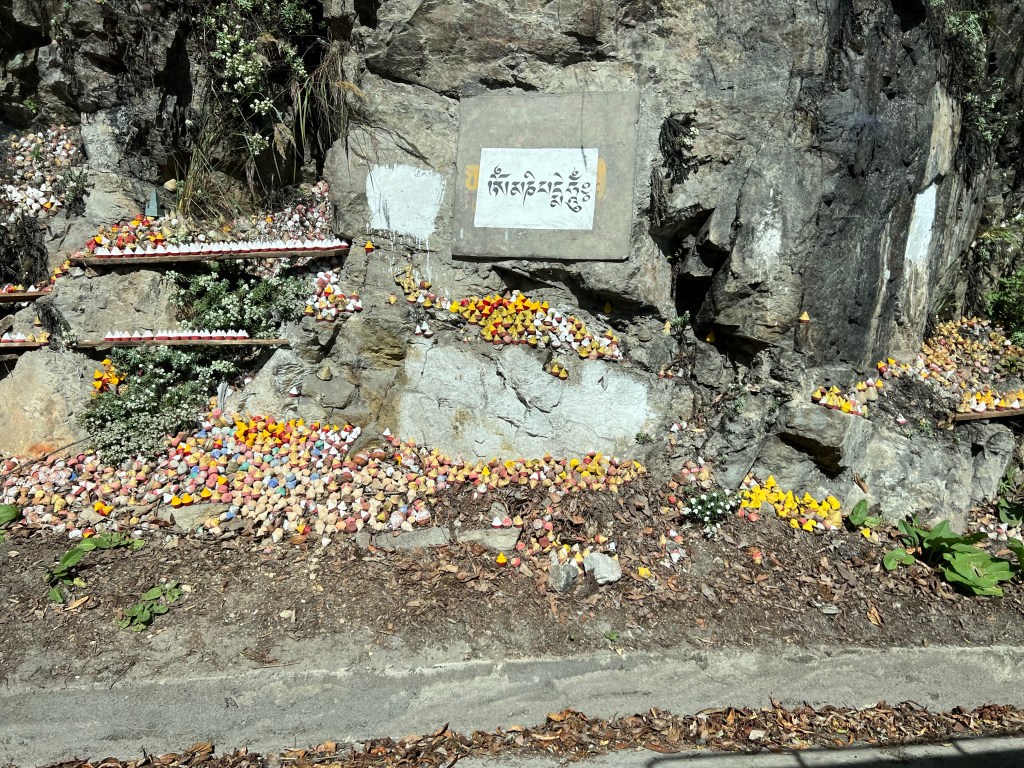
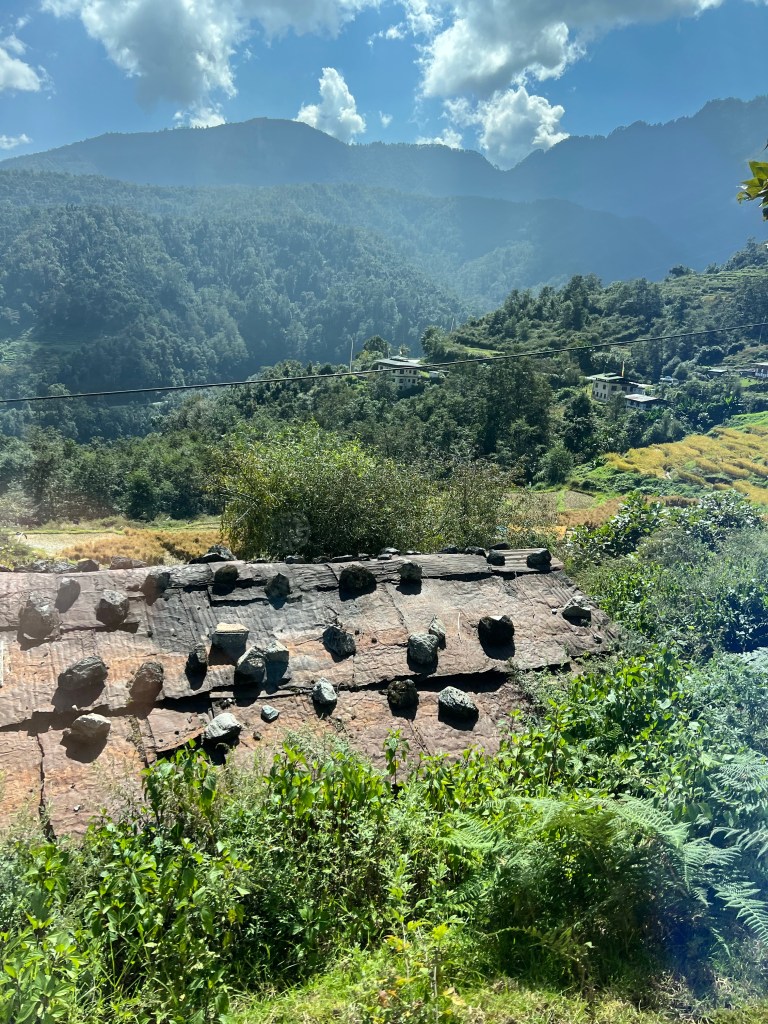
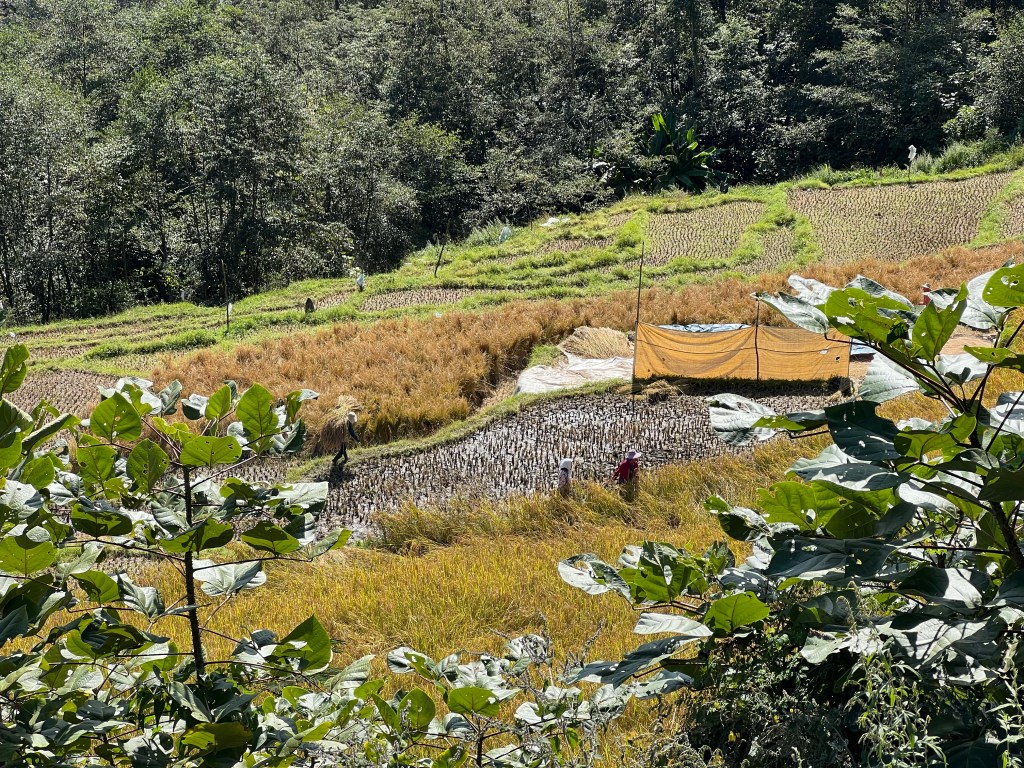
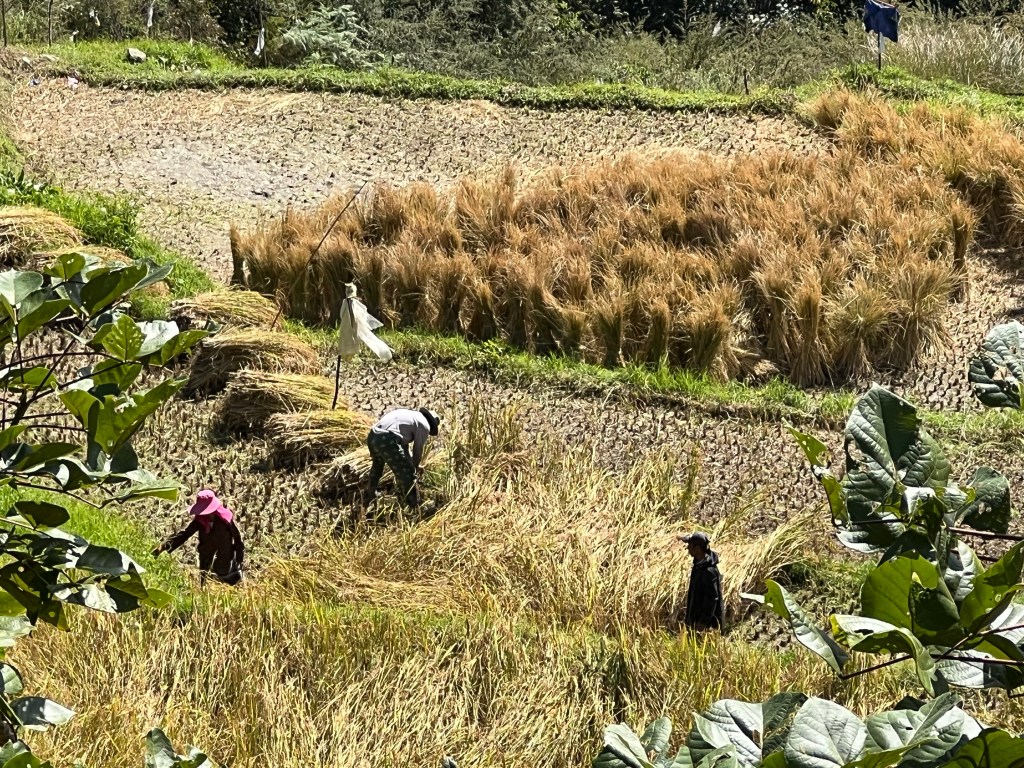
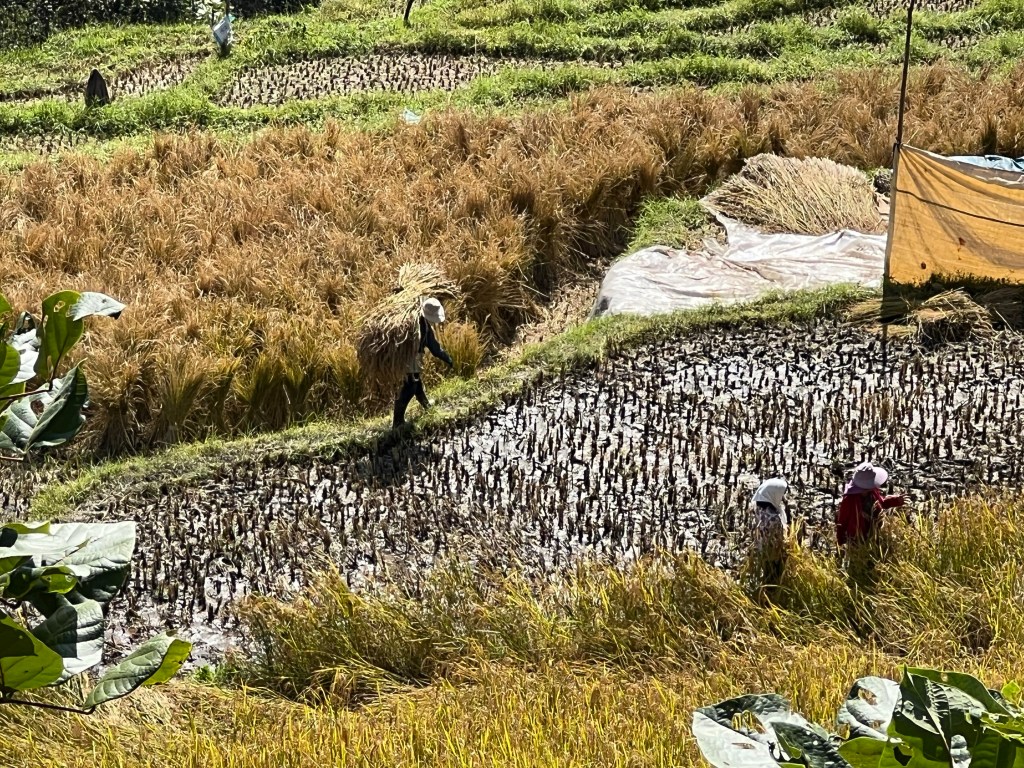
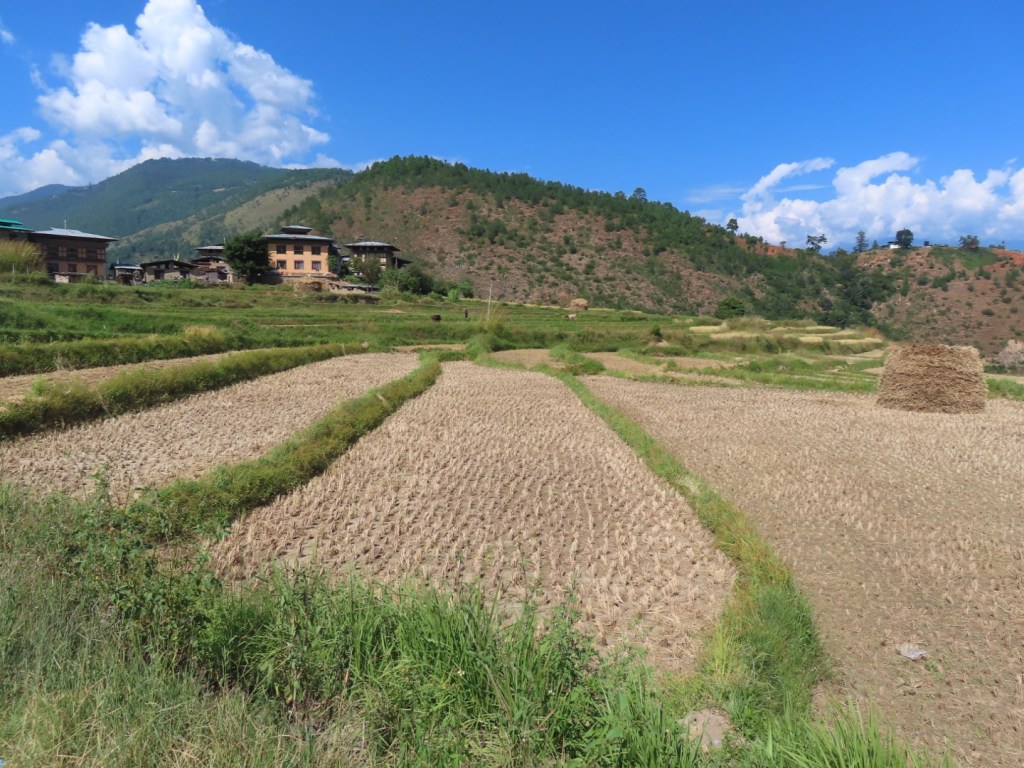
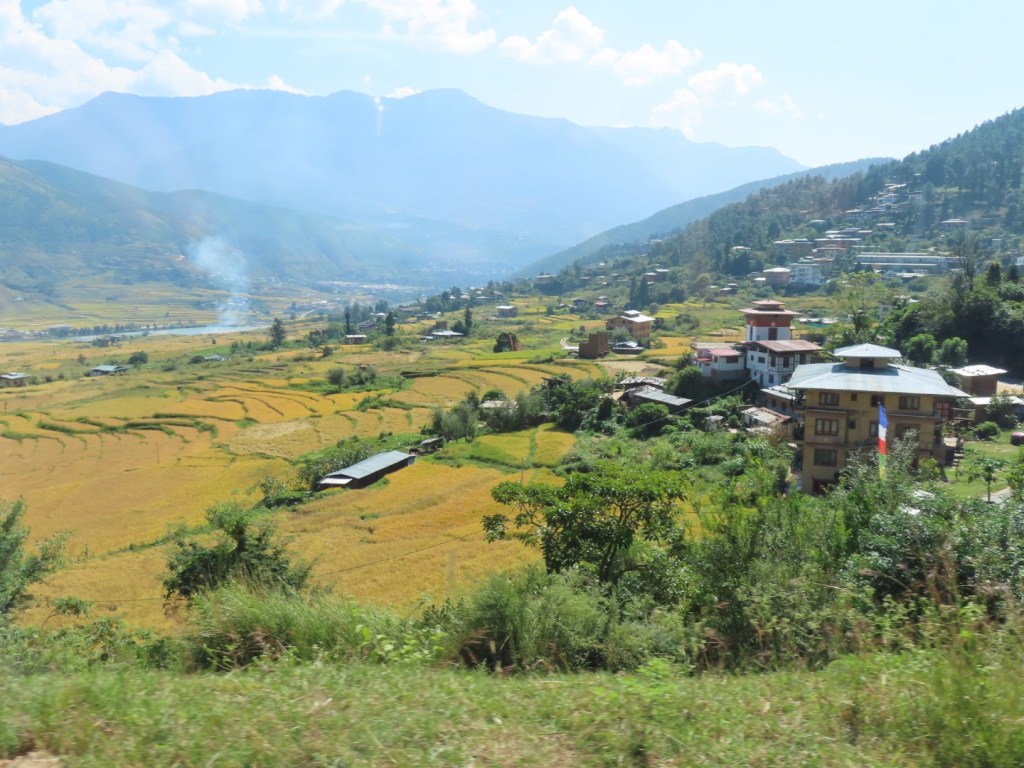
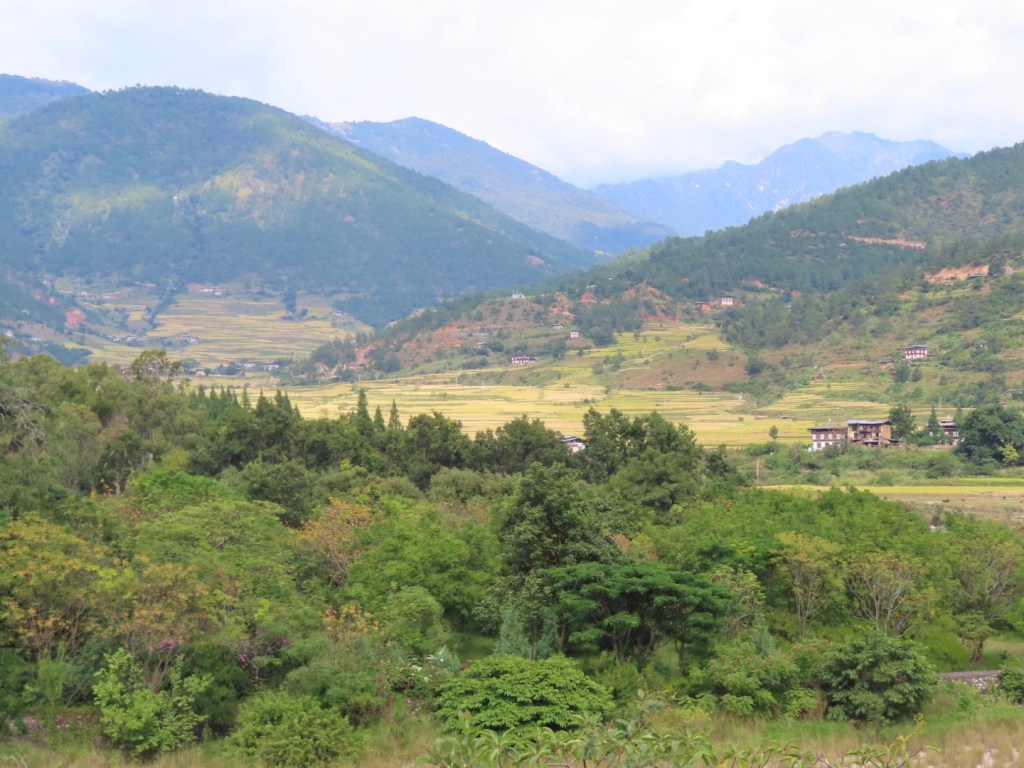
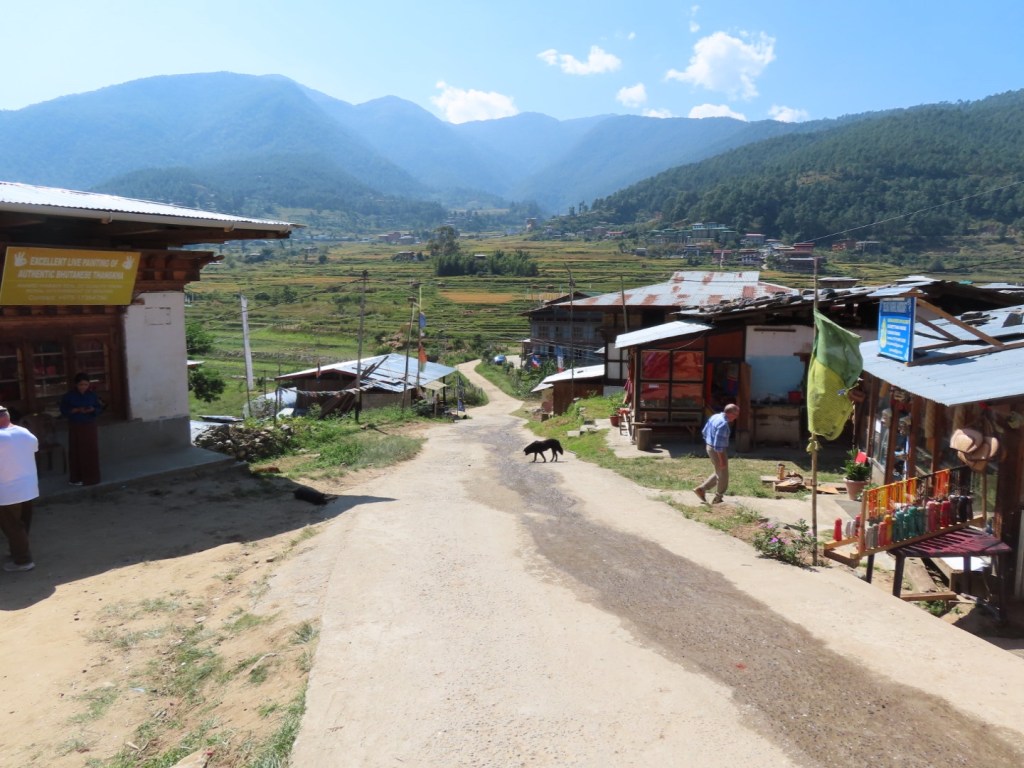
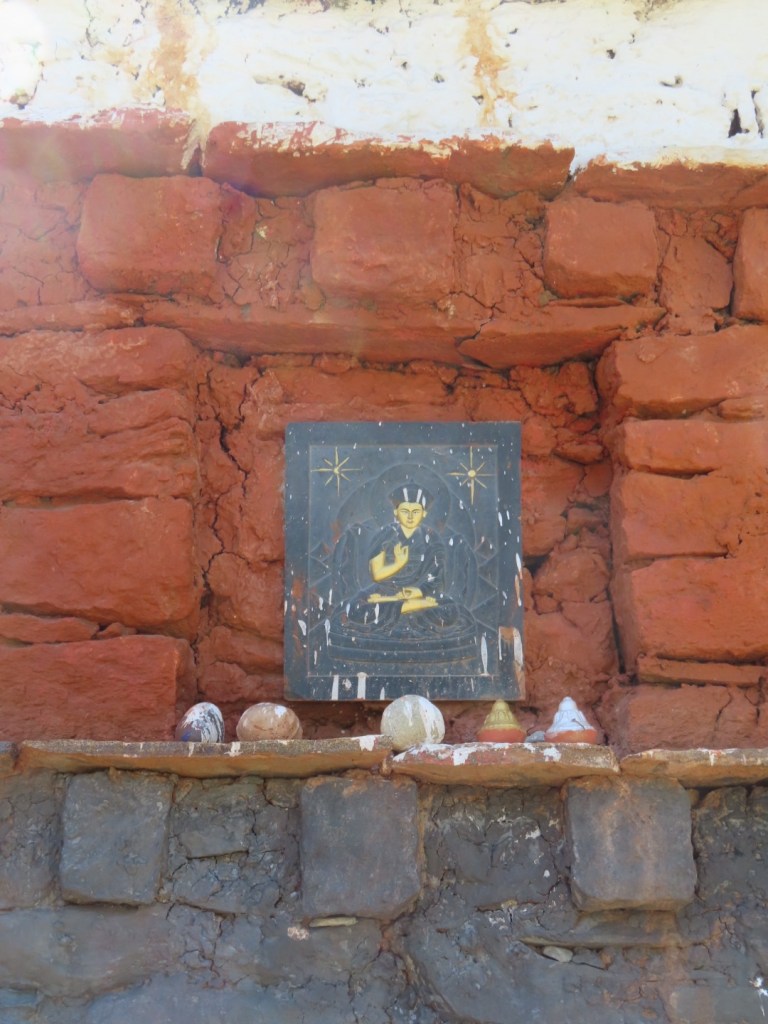
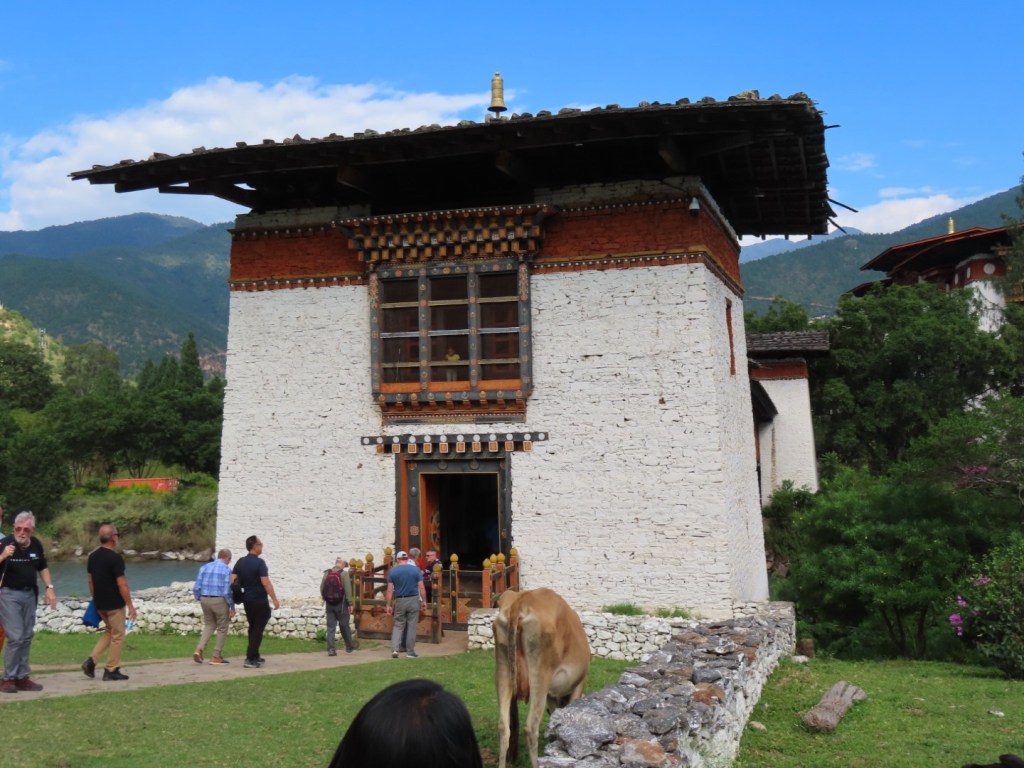
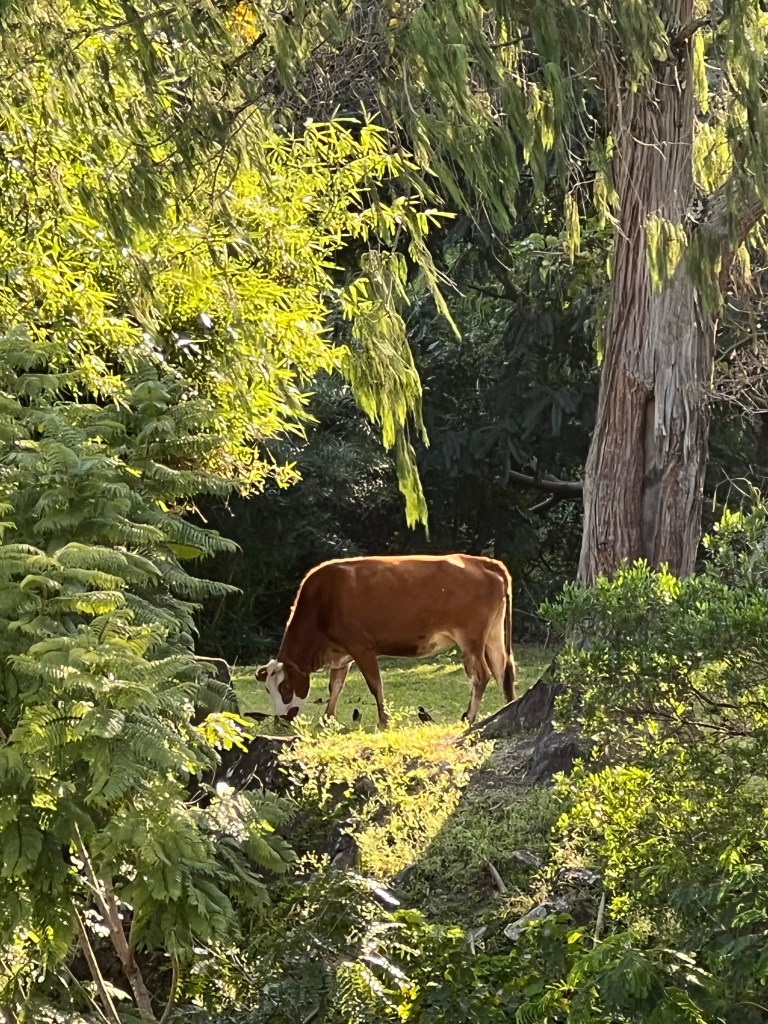
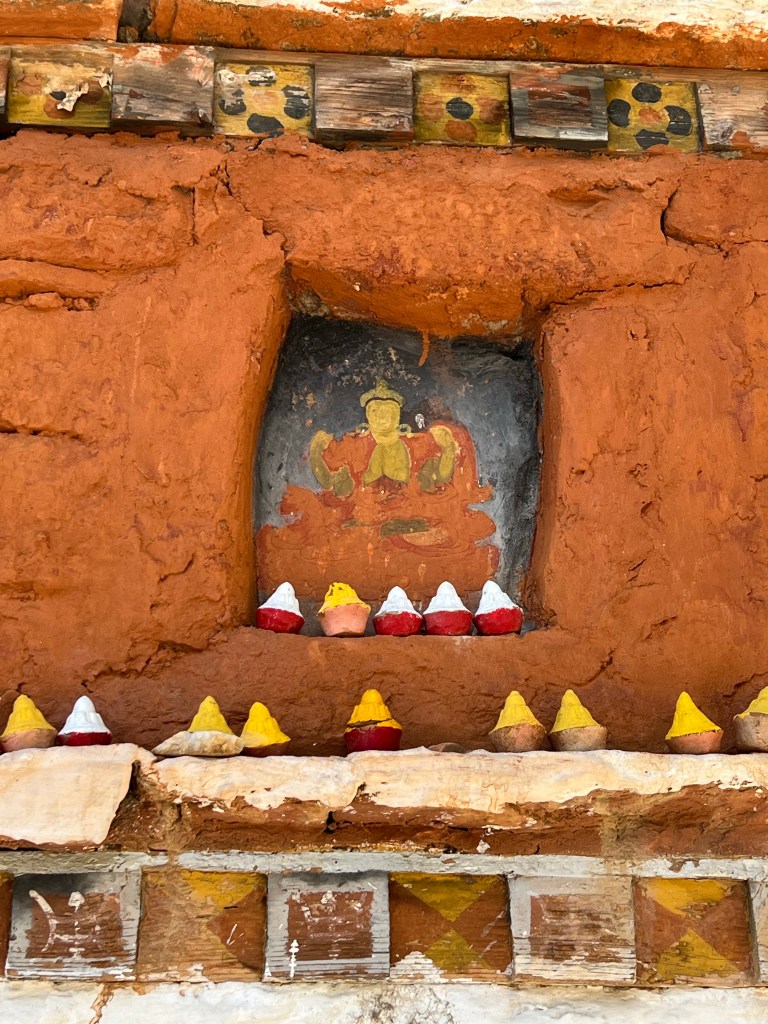
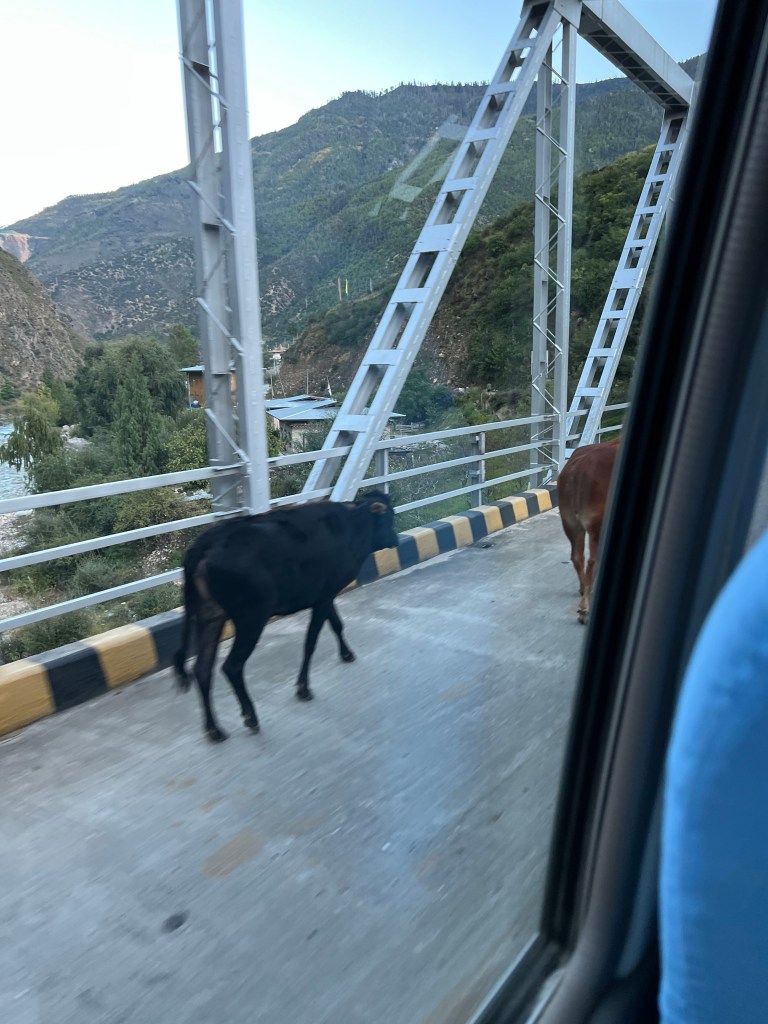
Sights along the way: a cow resting peacefully in the middle of the road, donkeys, Tsasa (miniature stupas) alongside the road, and rice fields.
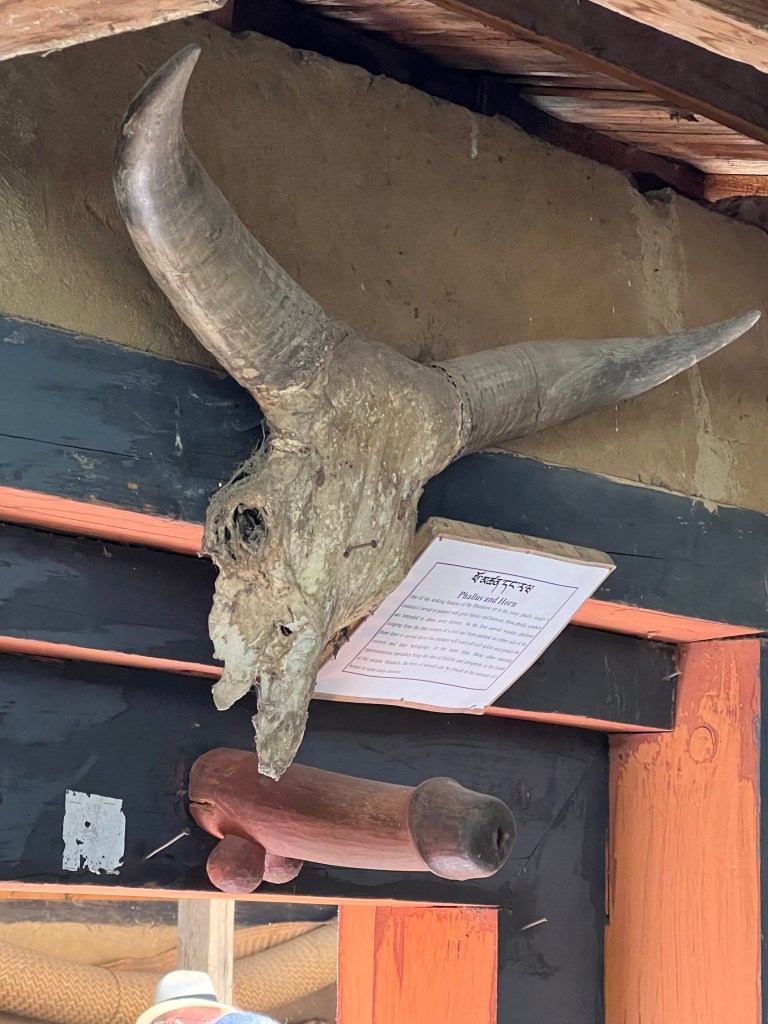
The last stop before lunch was at ChimiLhakhang, the fertility temple dedicated to famous Buddhist Lama Drukpa Kunley.
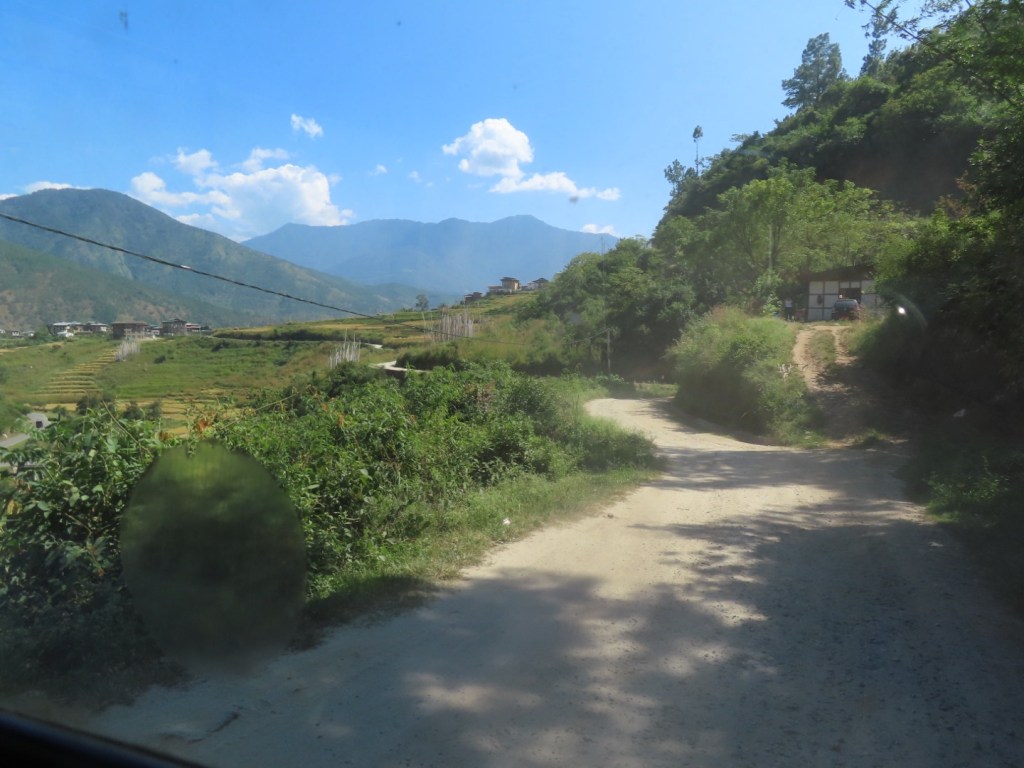
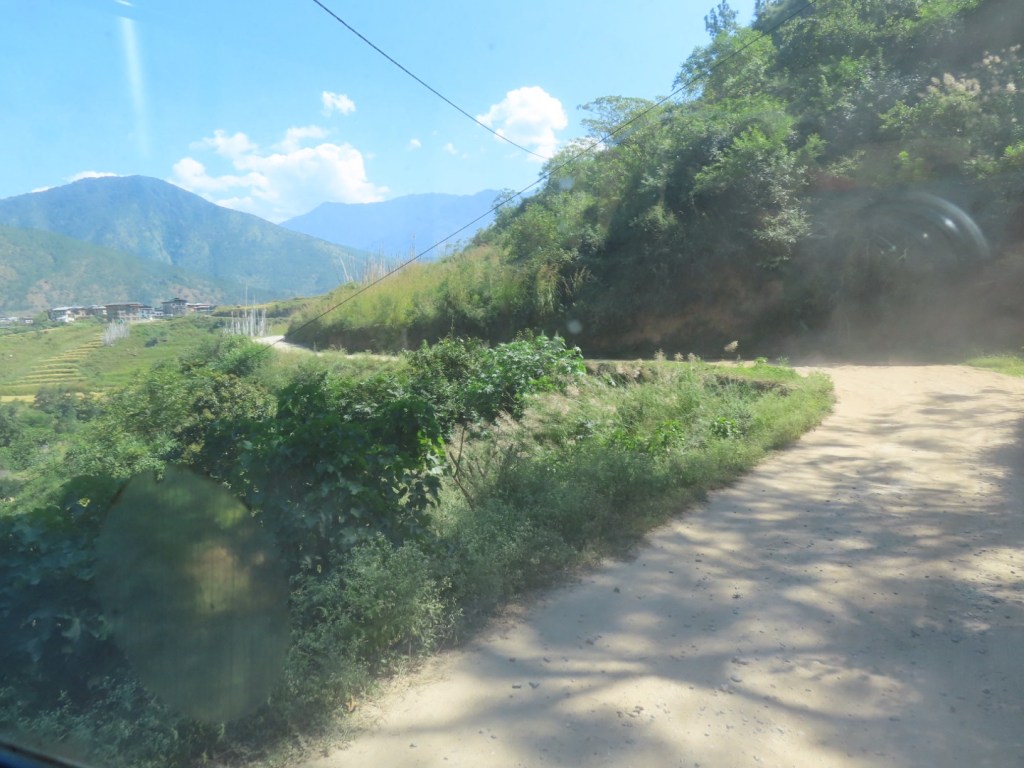
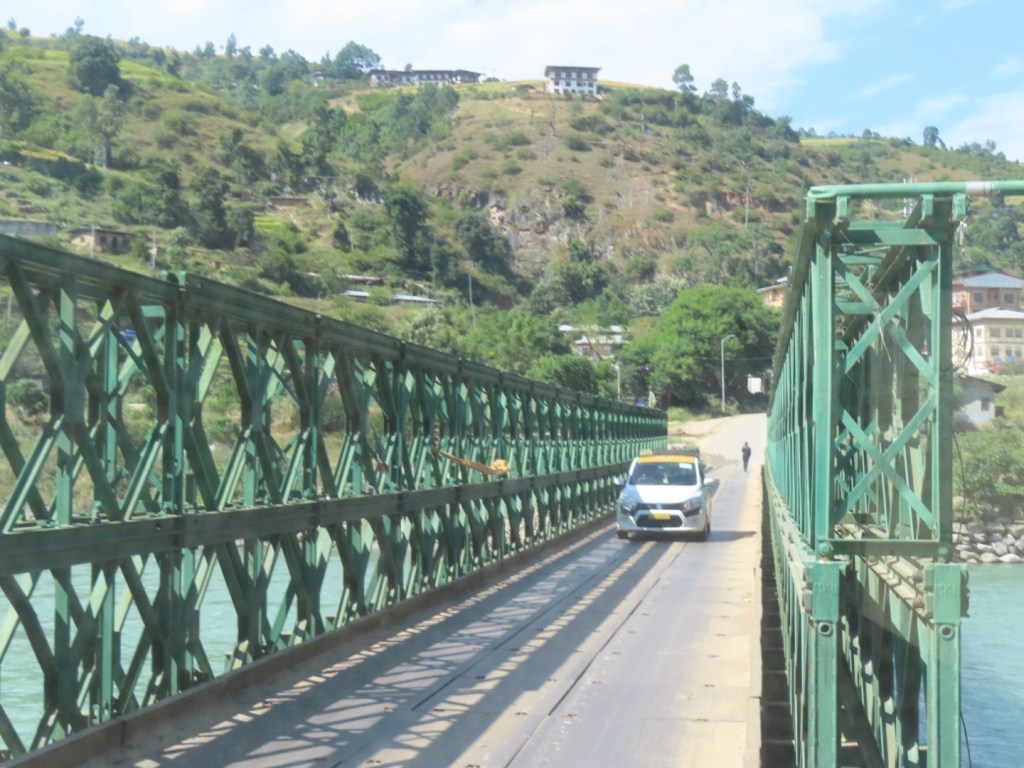
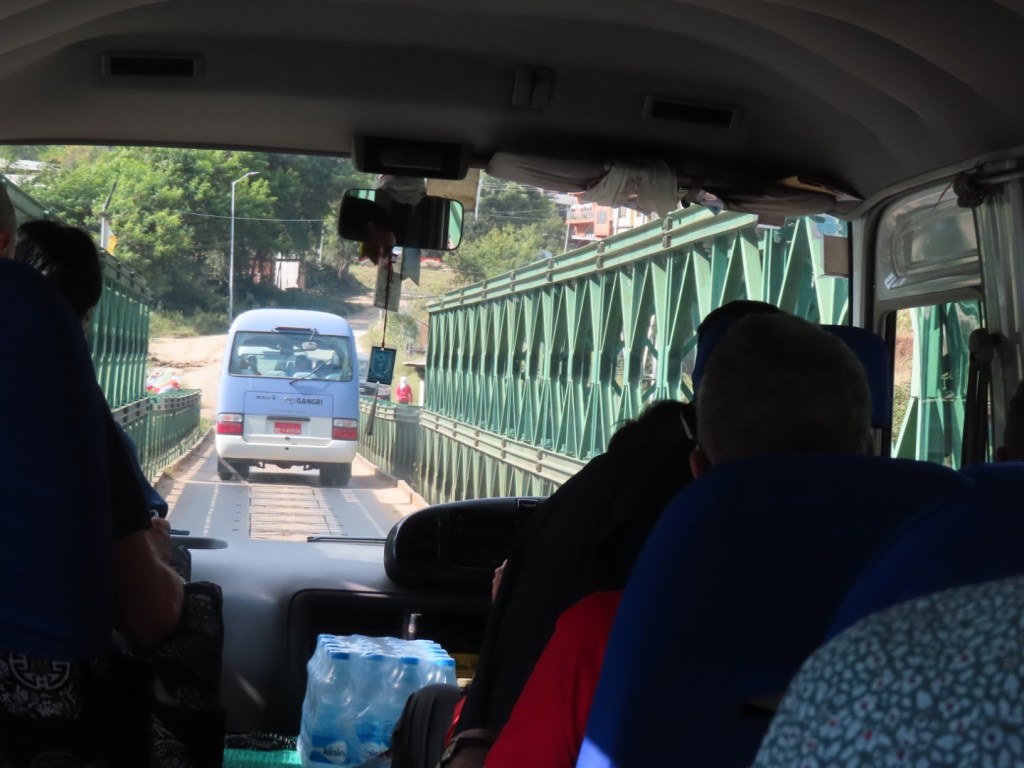
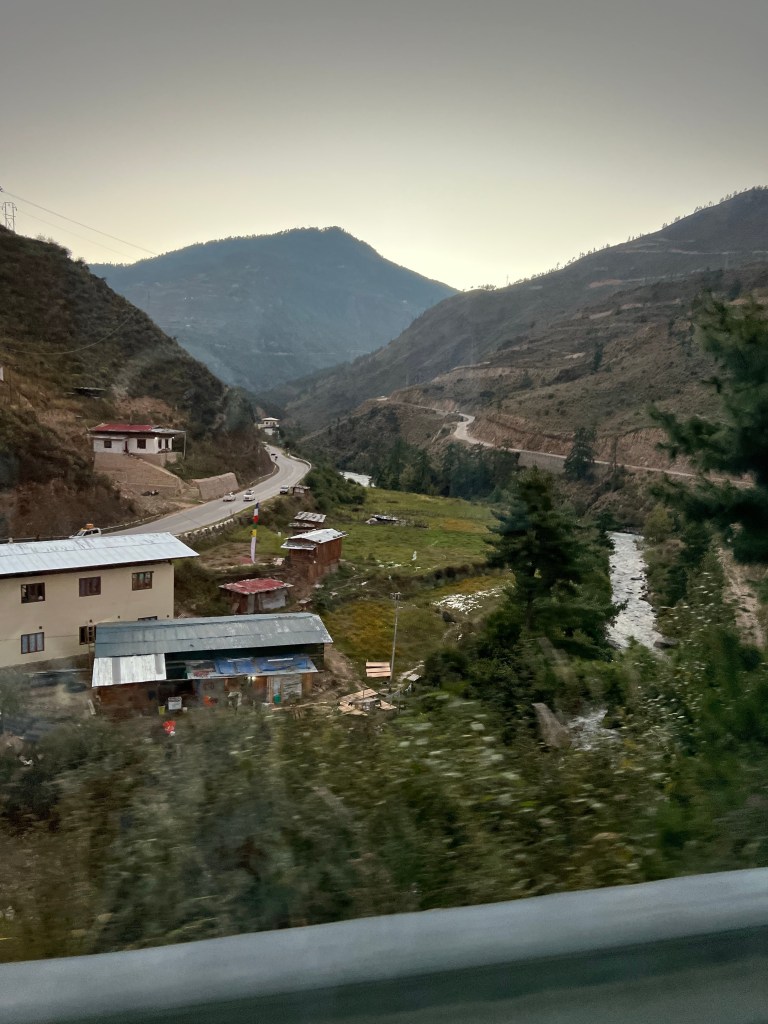
The road was one lane and unpaved but all three buses arrived safely.
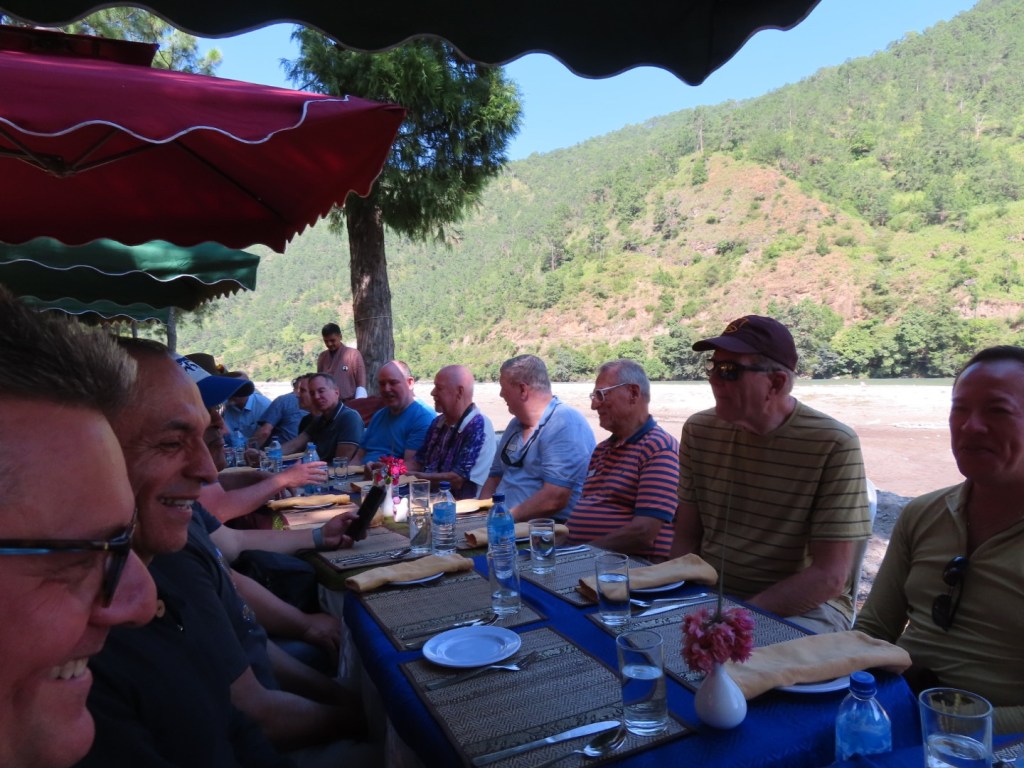
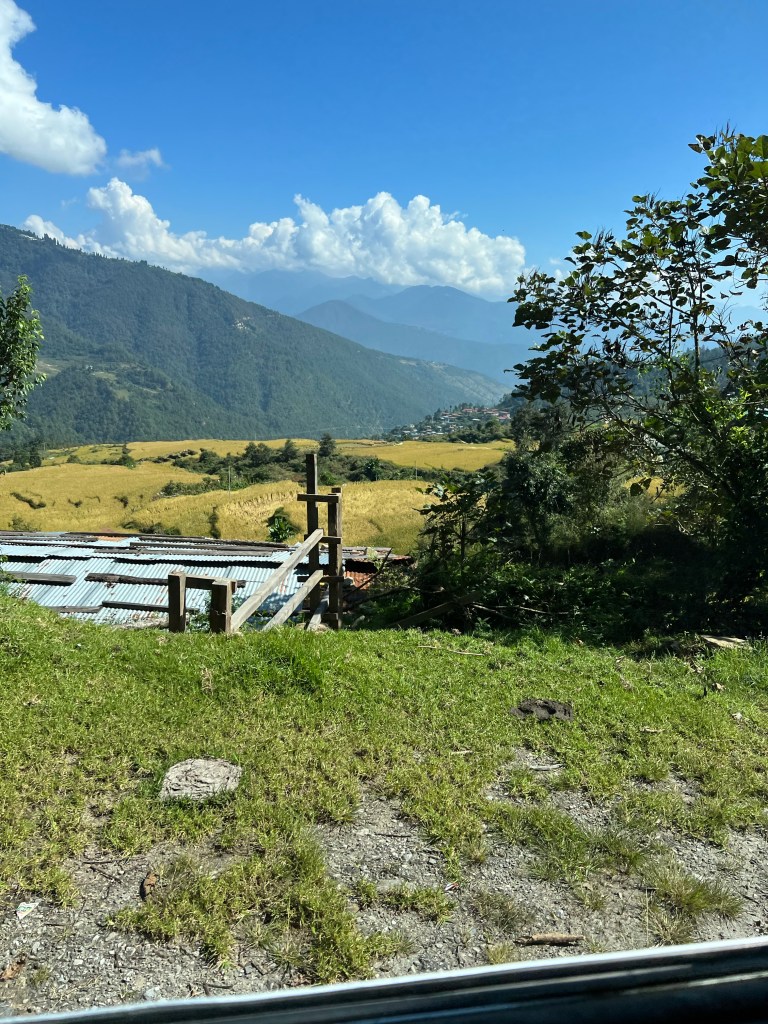
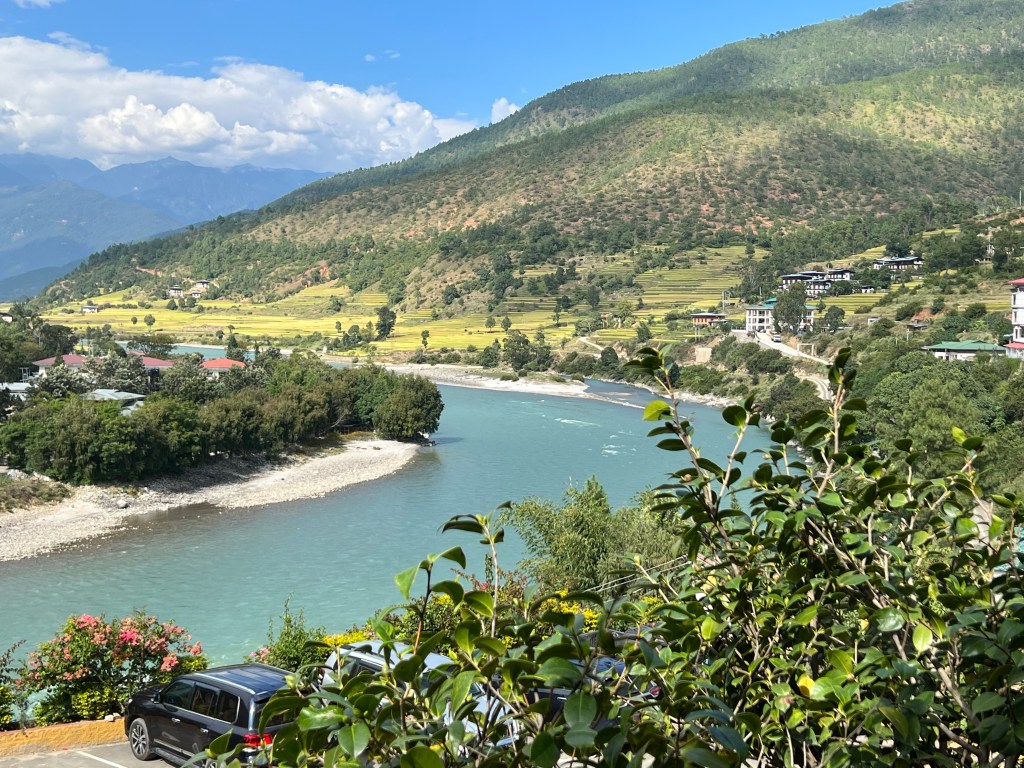
Lunch was across the river and up the mountain – good food and great views.
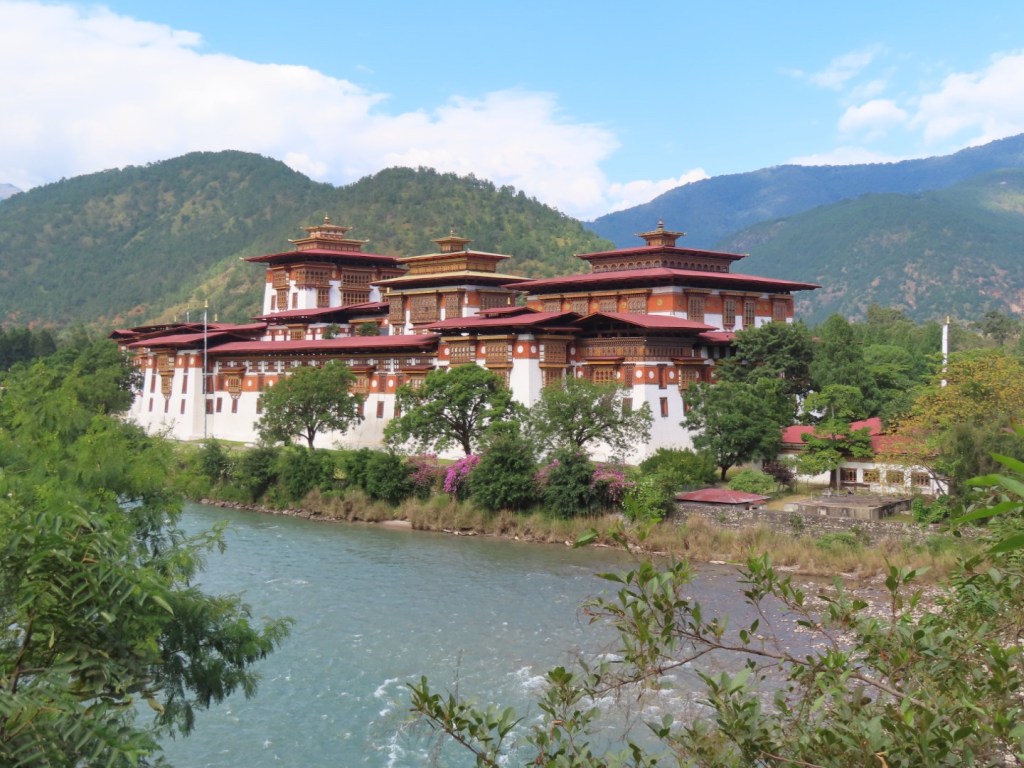
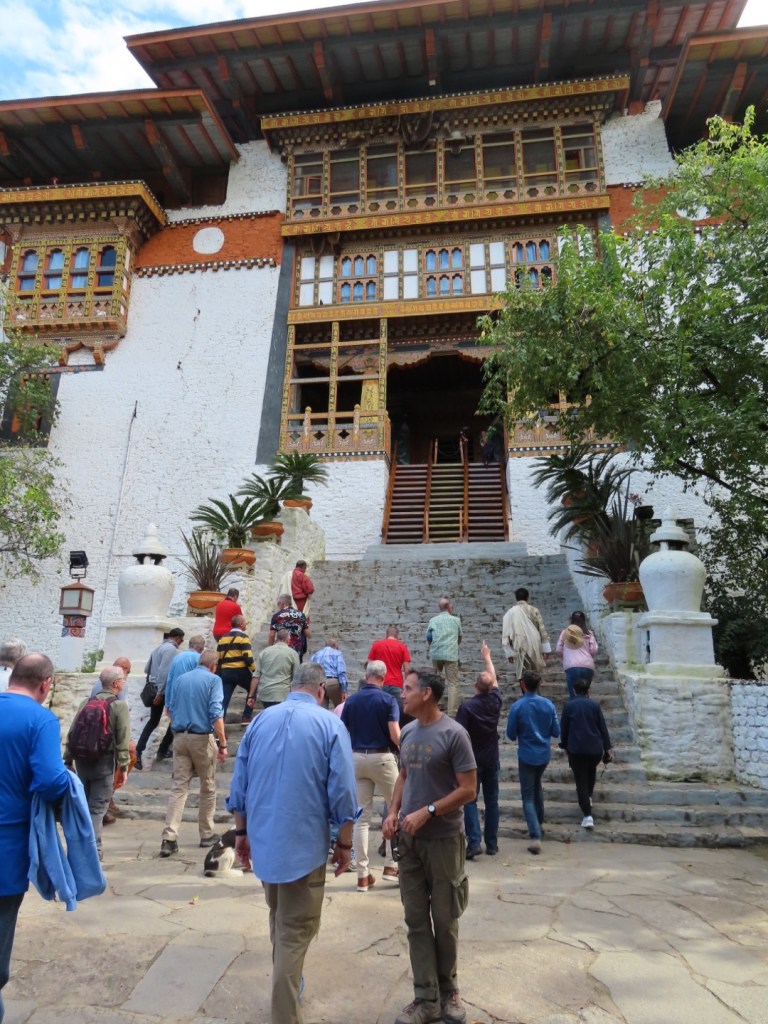
Our last stop of the day was at Punakha Dzong, a 15th century fortress standing on an island at the confluence of the Pho Chhu and Mo Chhu rivers.
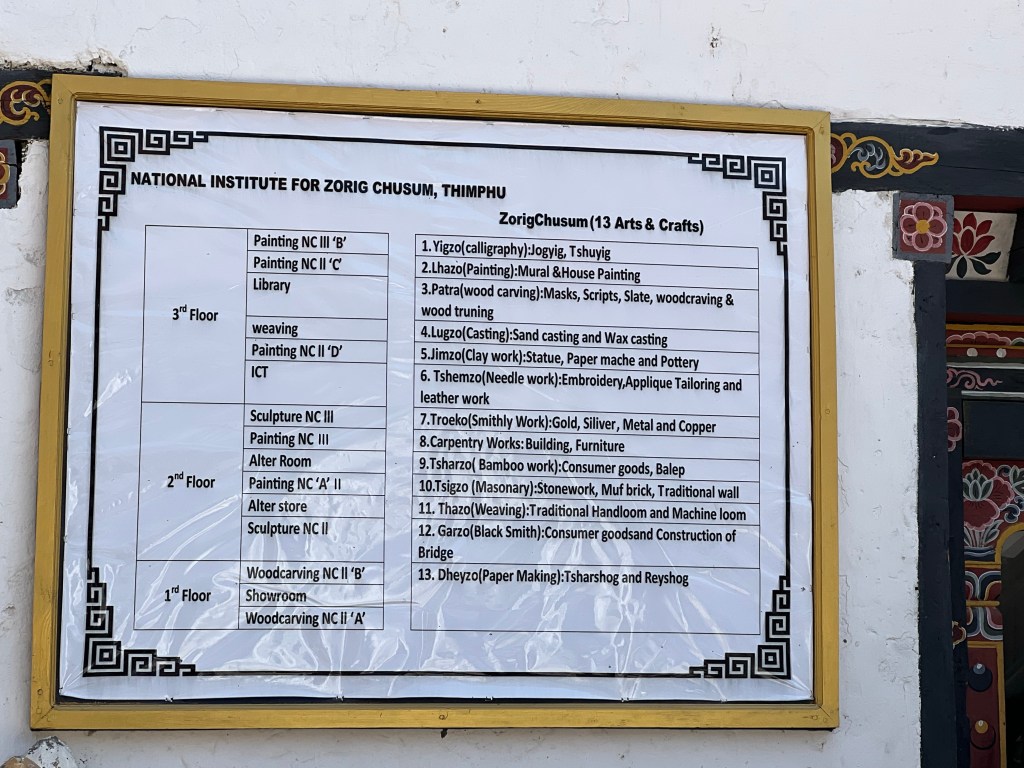
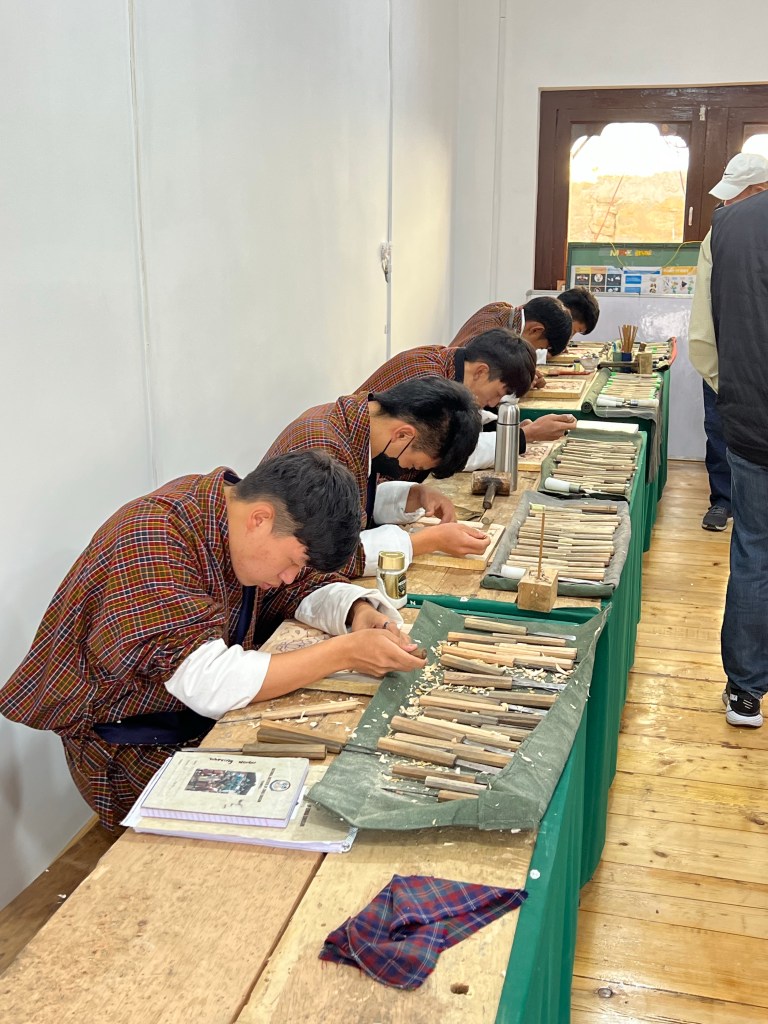
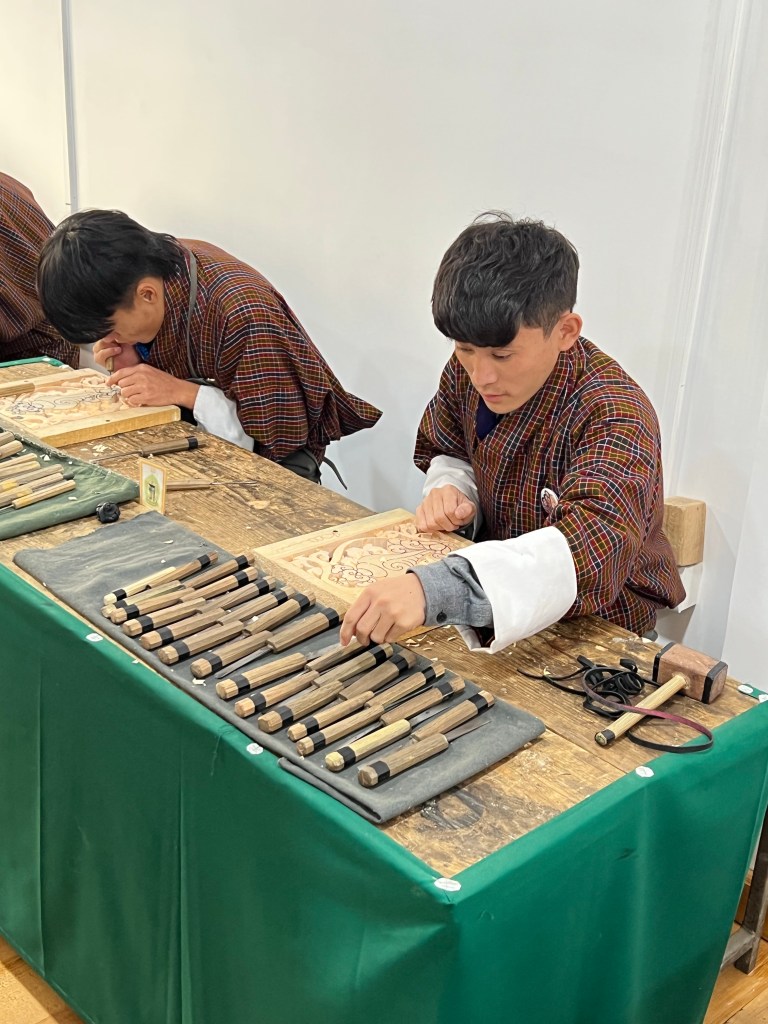
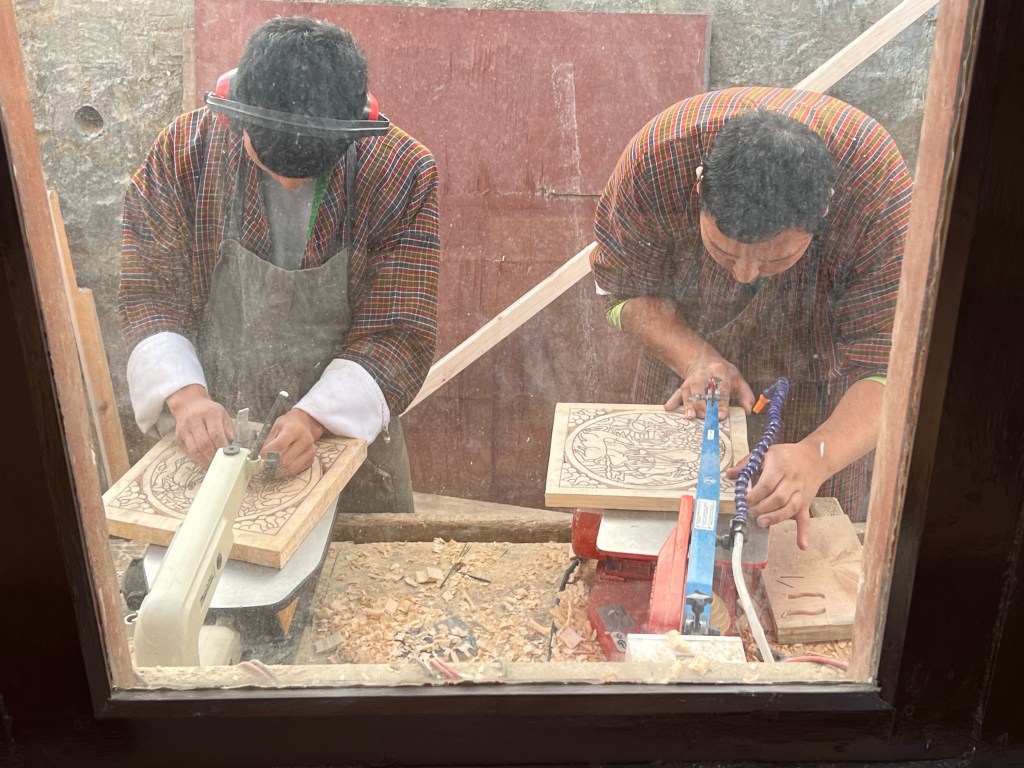
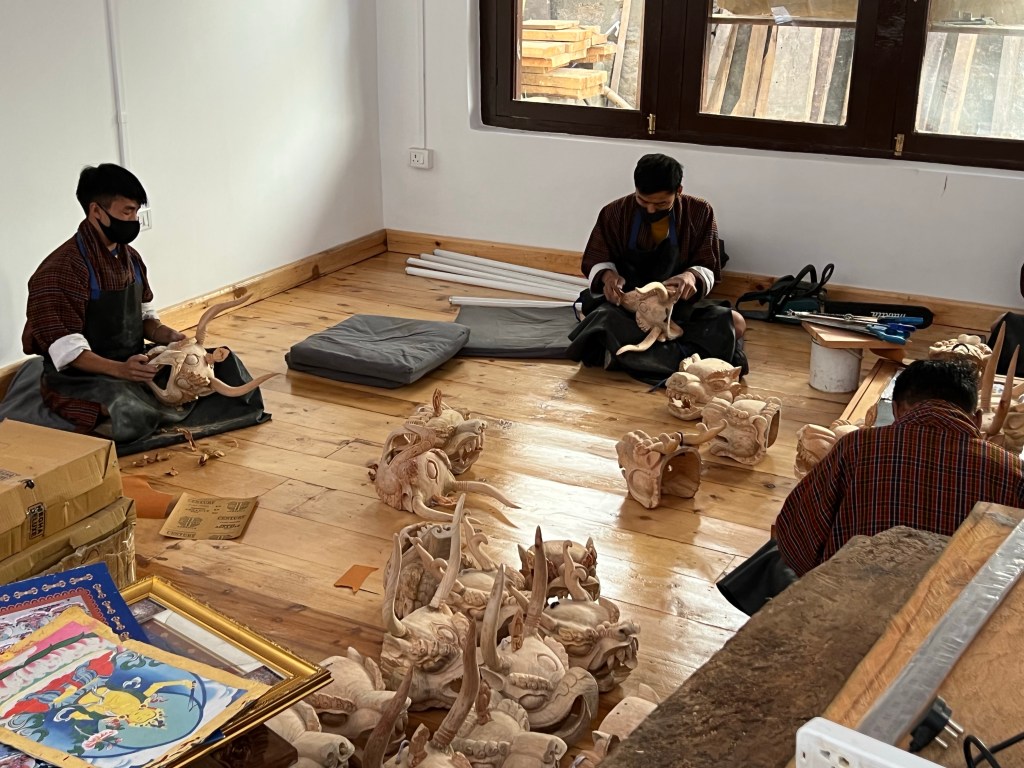
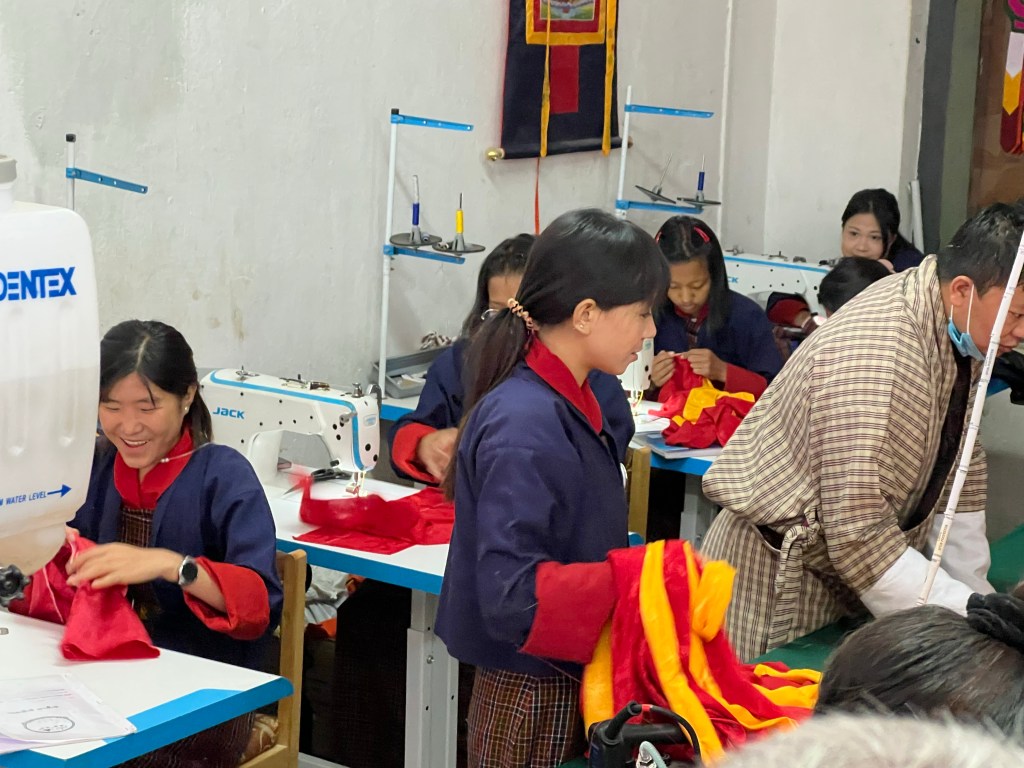
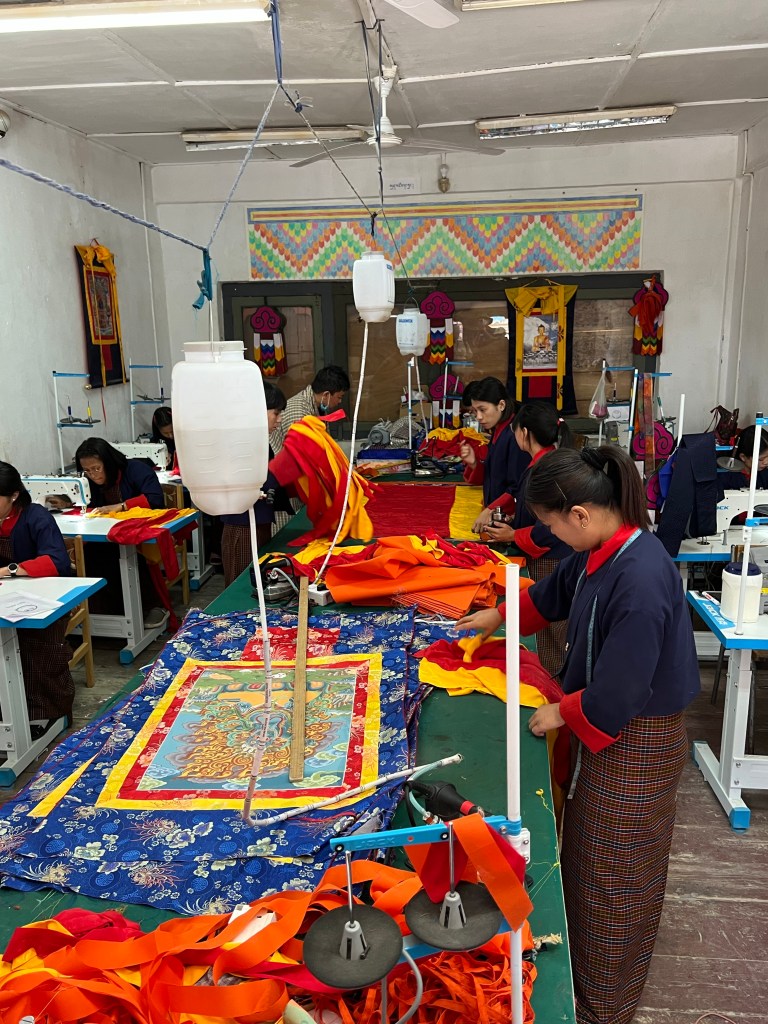
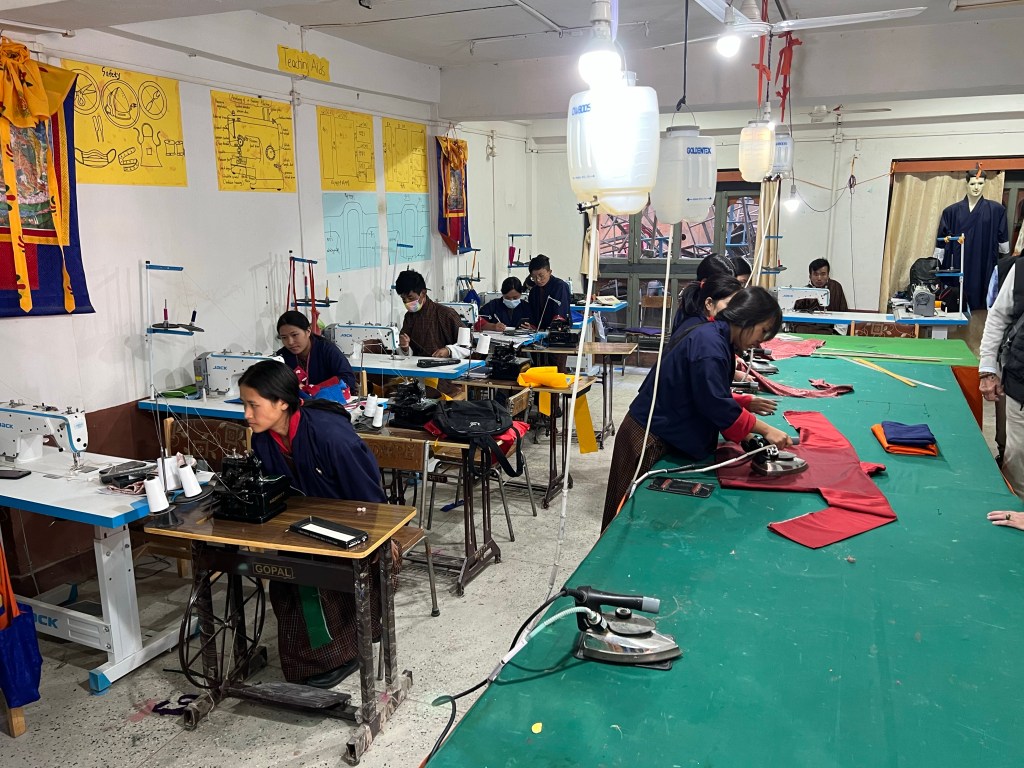
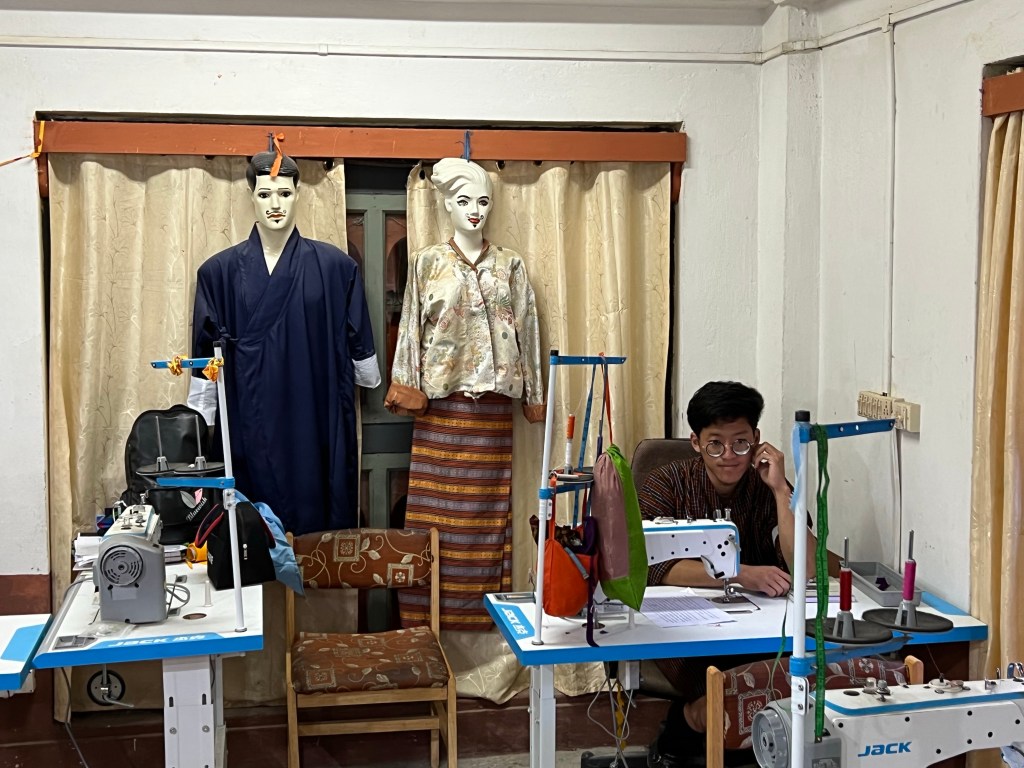
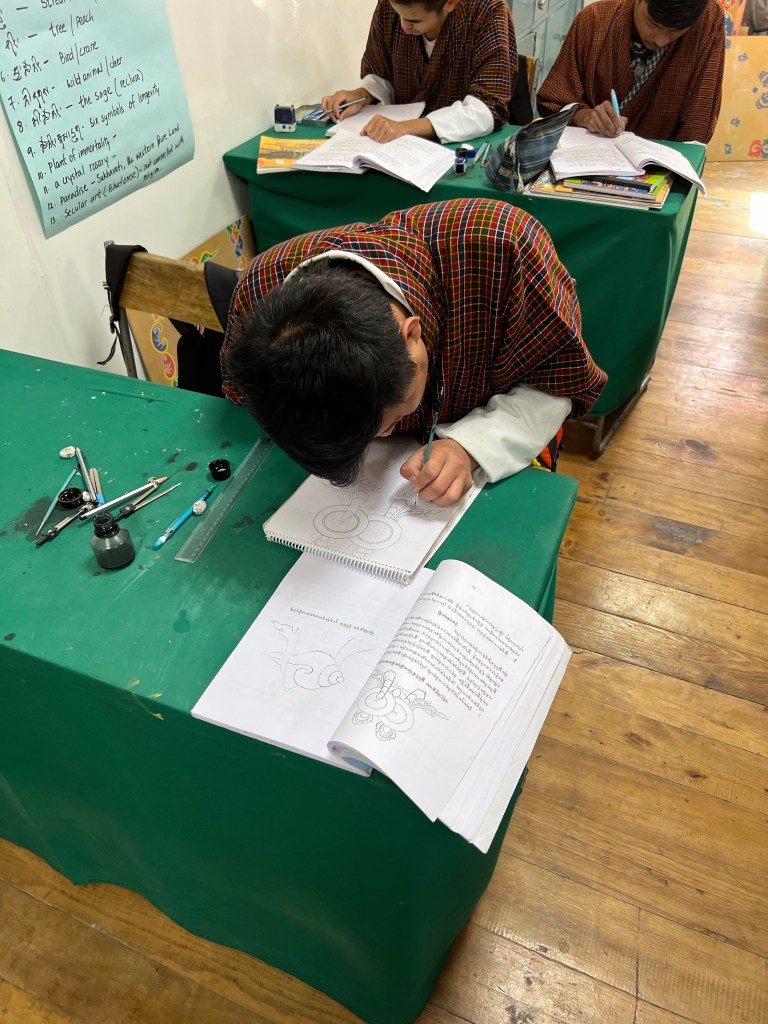
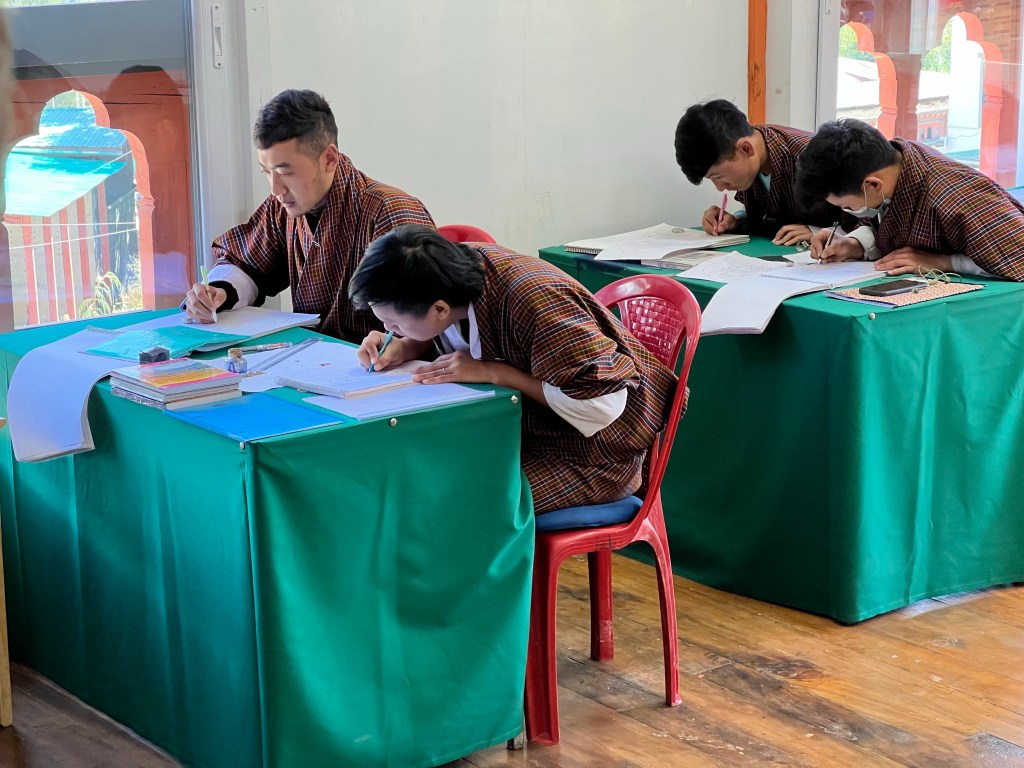
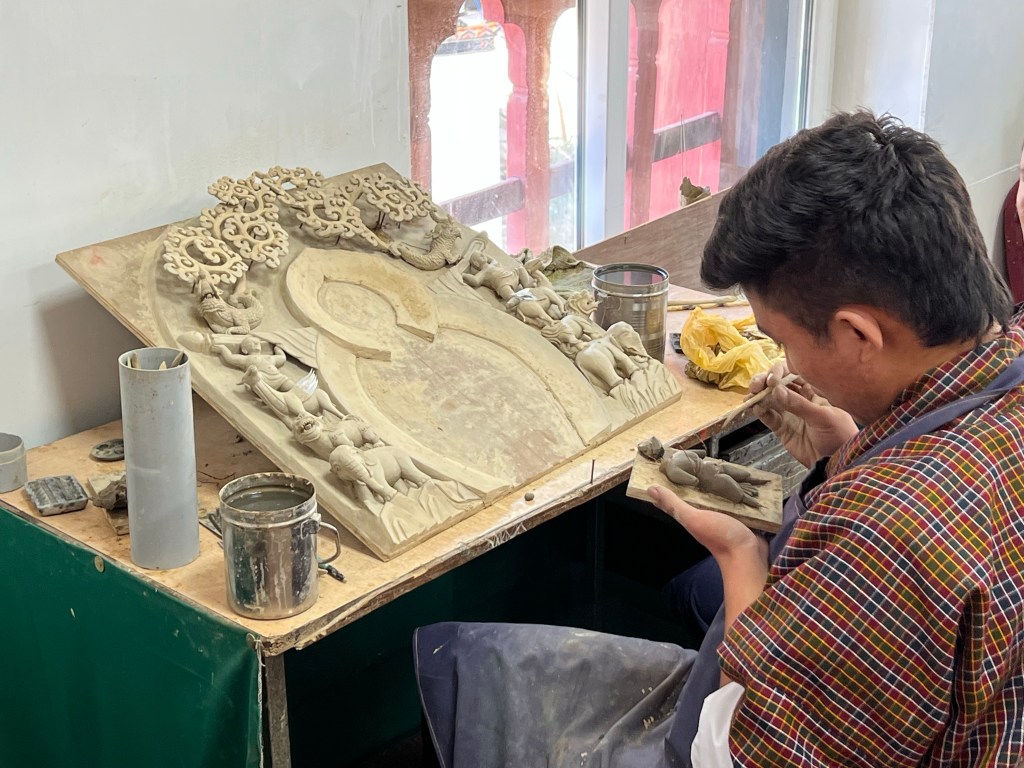
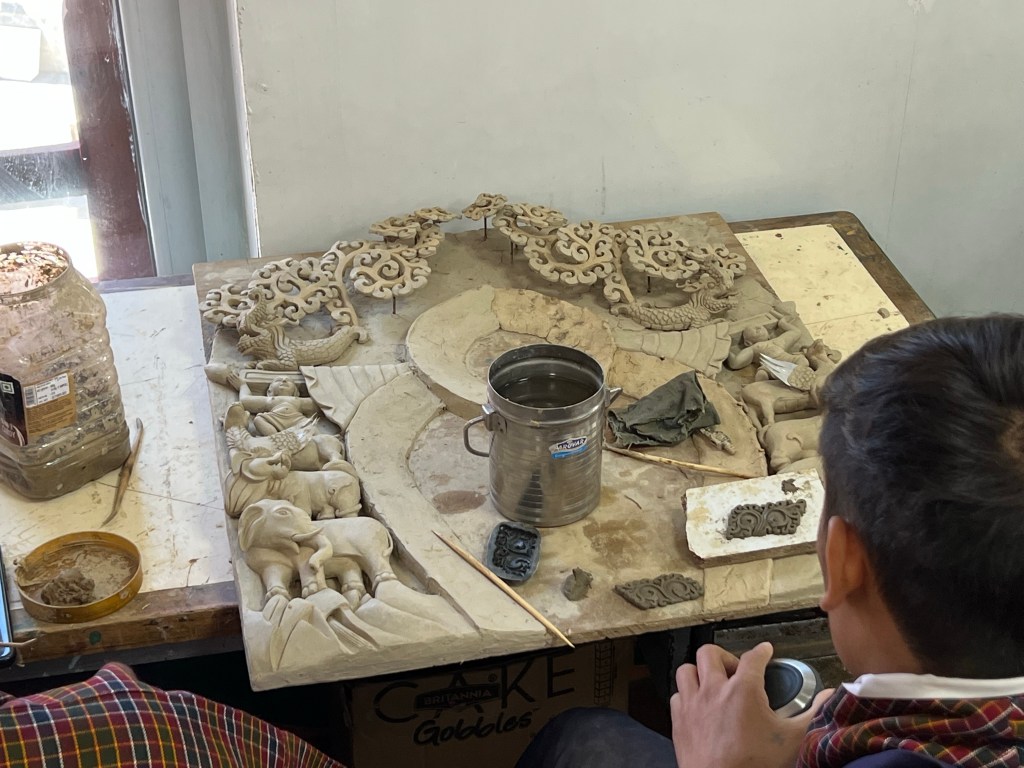
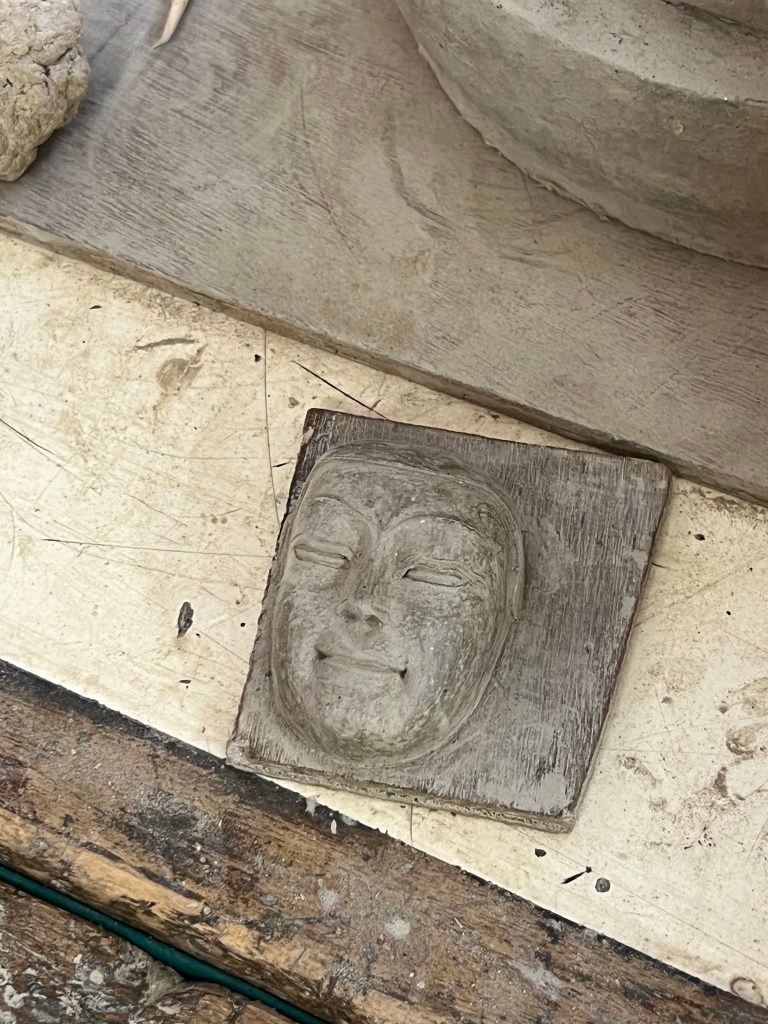
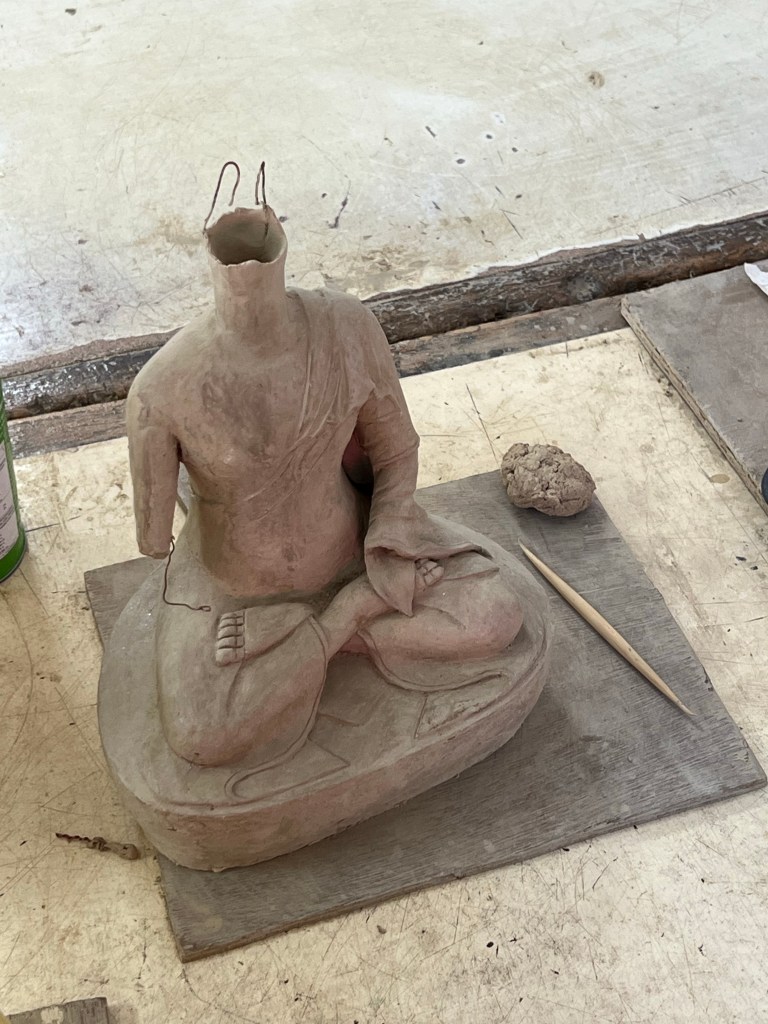
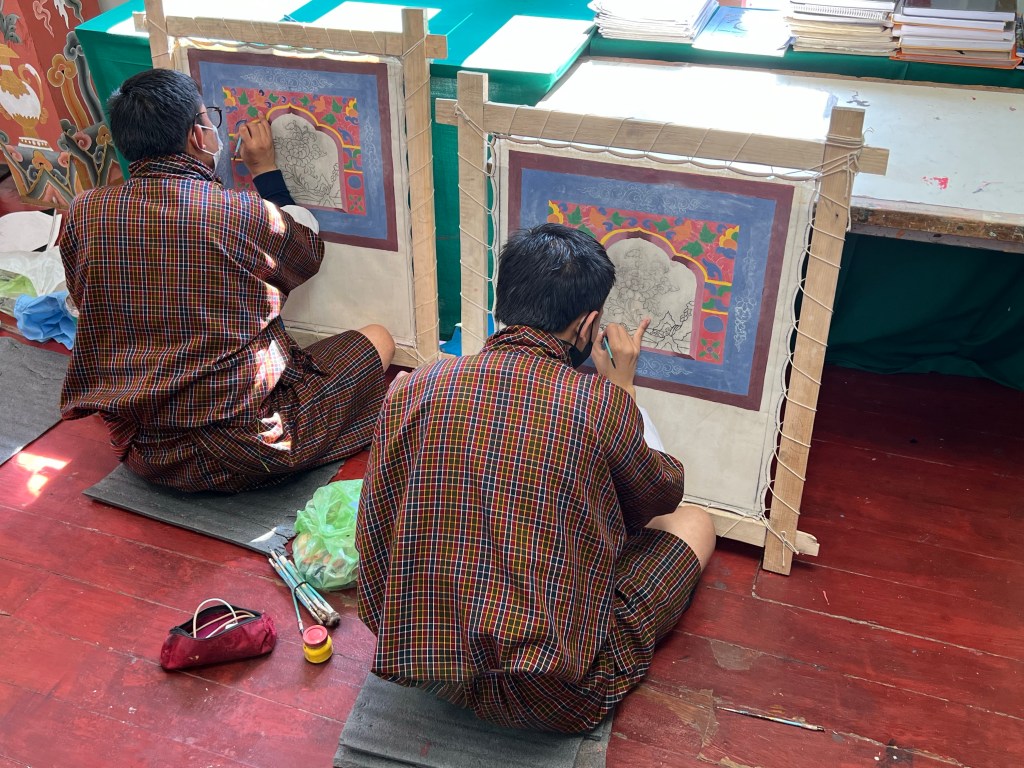
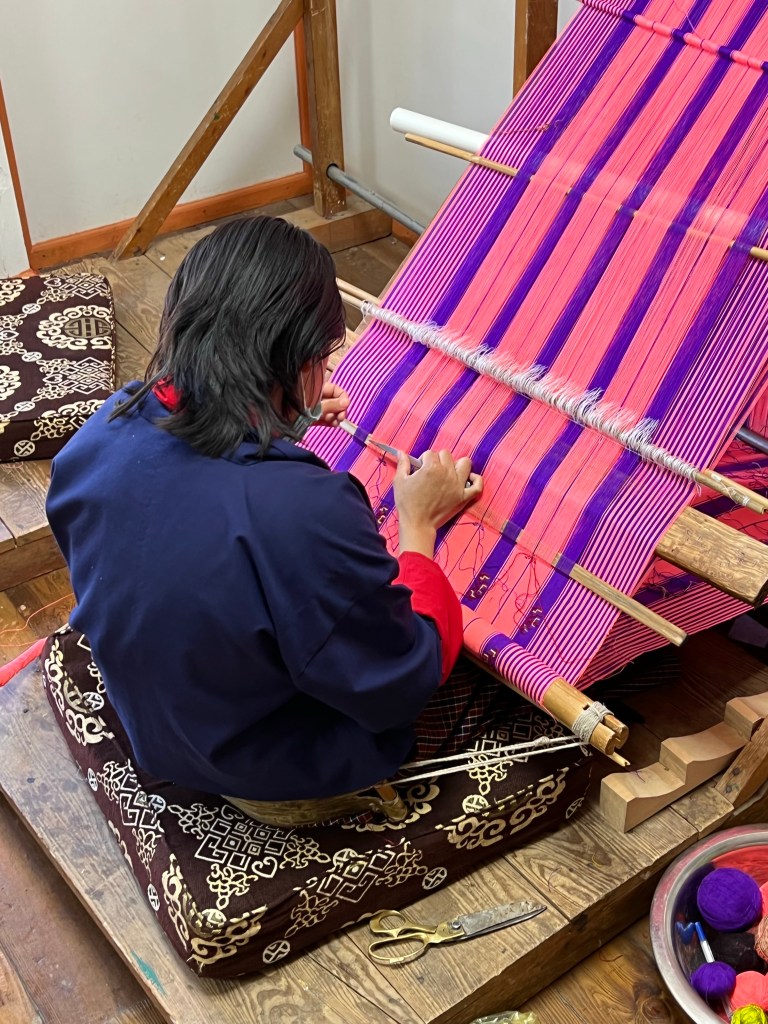
The we visited an Arts and Crafts school. Students choose to study one or two of the 13 disciplines taught here. It is a six year program with 90% dropout rate. Students are 7 years old and up.
Our next stop was Changangkha Lhakhang. Built in the 15th century, it is one of the oldest temples in Thimphu Valley.
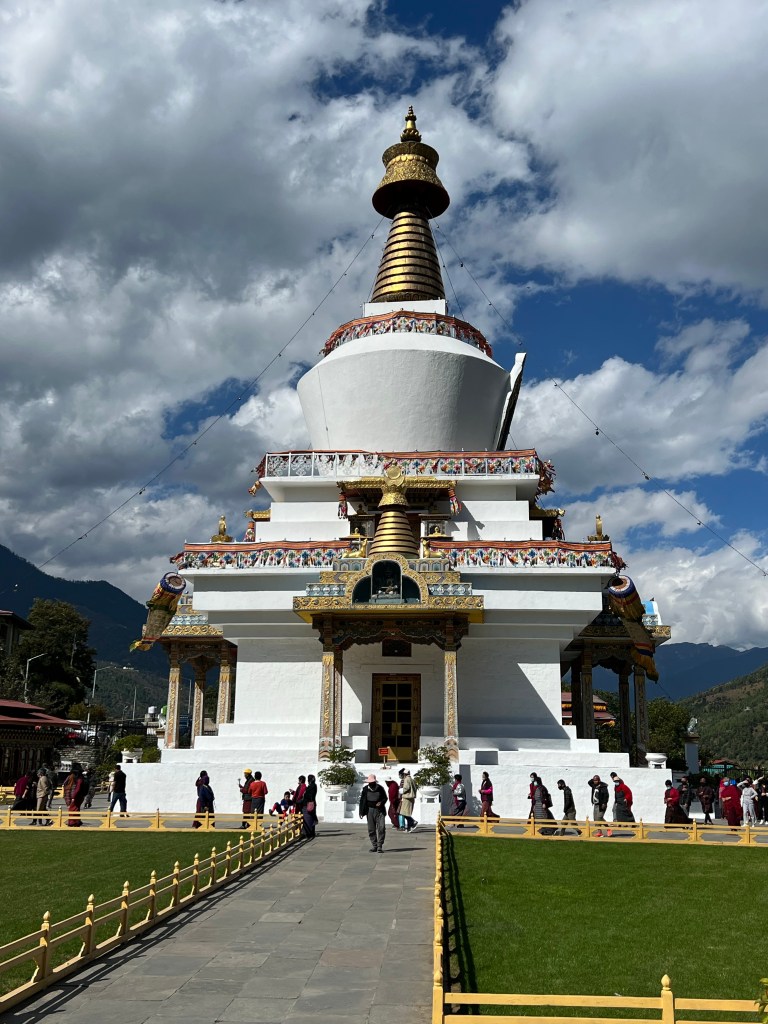
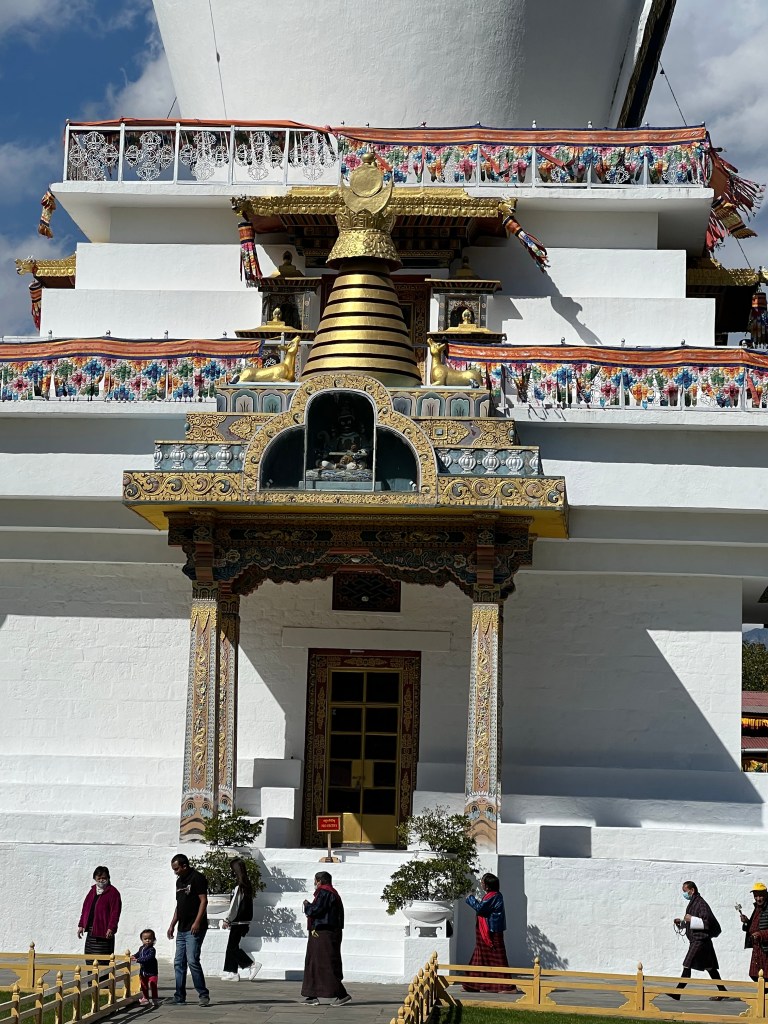
After lunch at a local restaurant we visited the Memorial Chhorten, built in 1974 in memory of the third king of Bhutan.
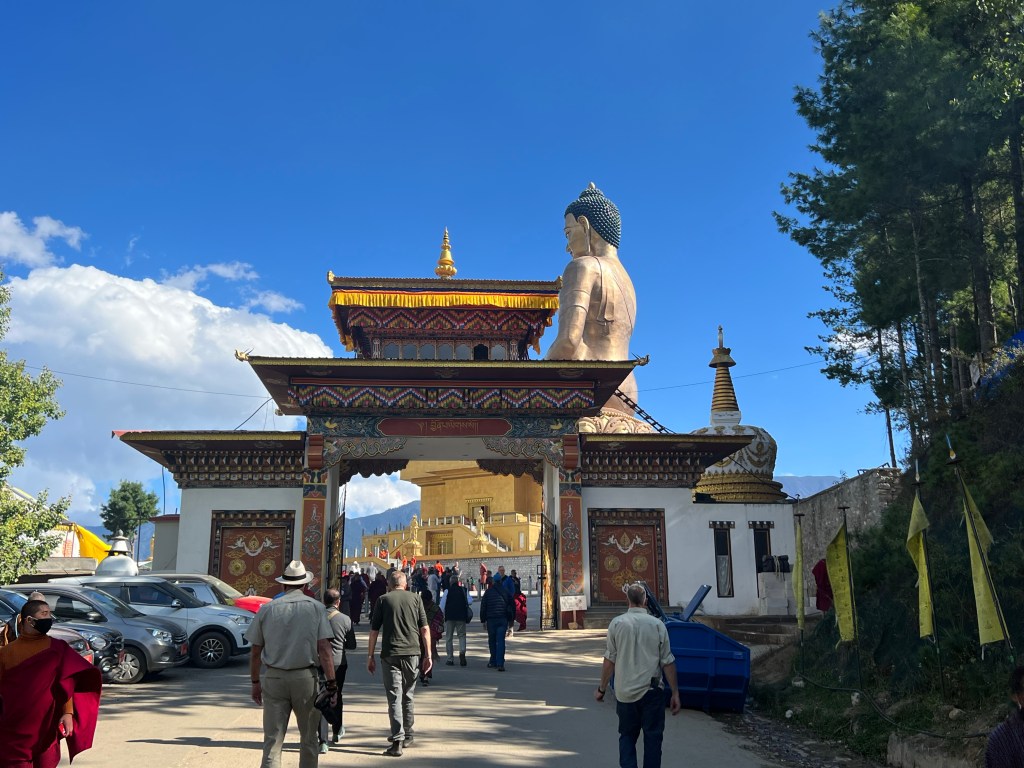
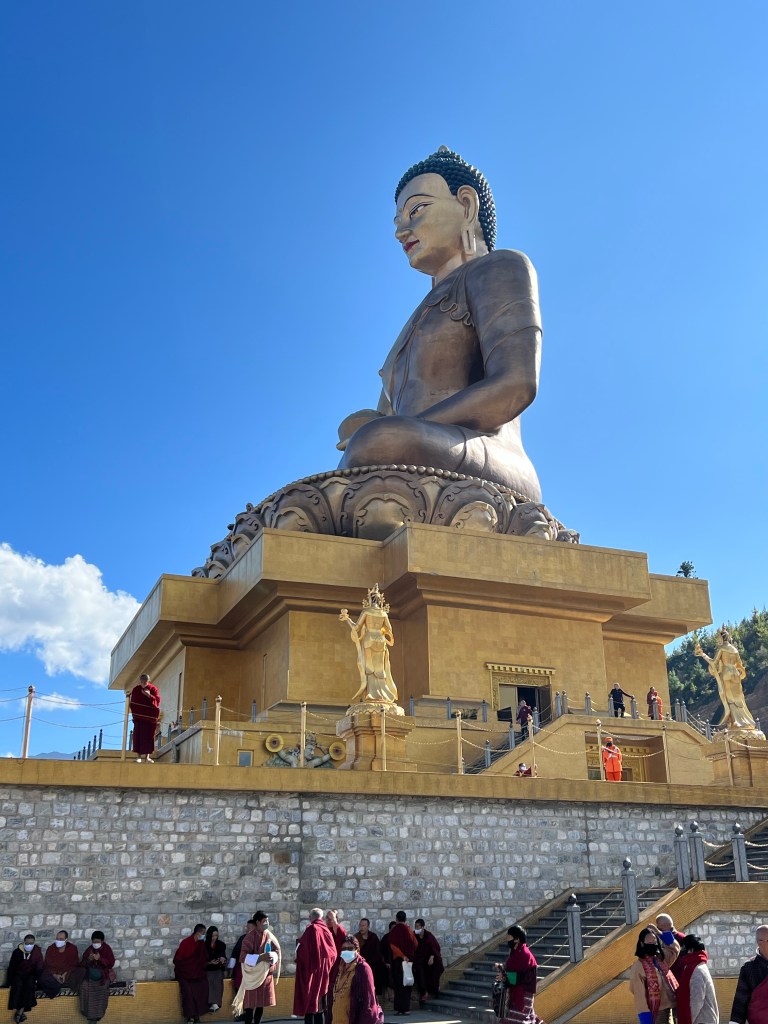
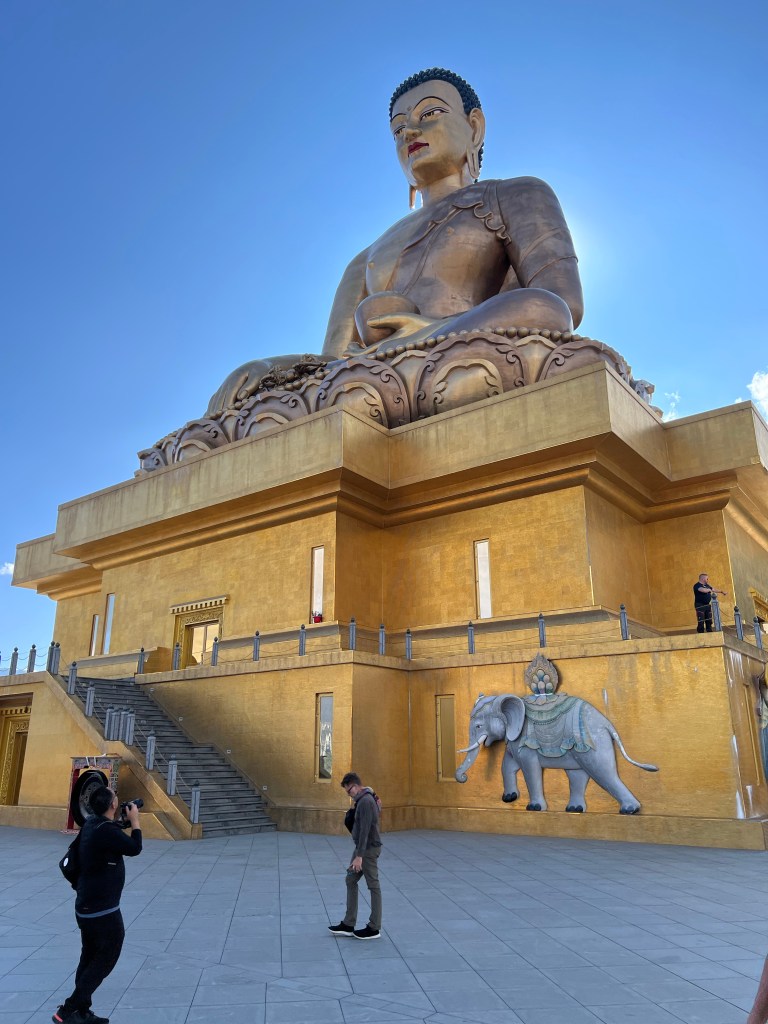
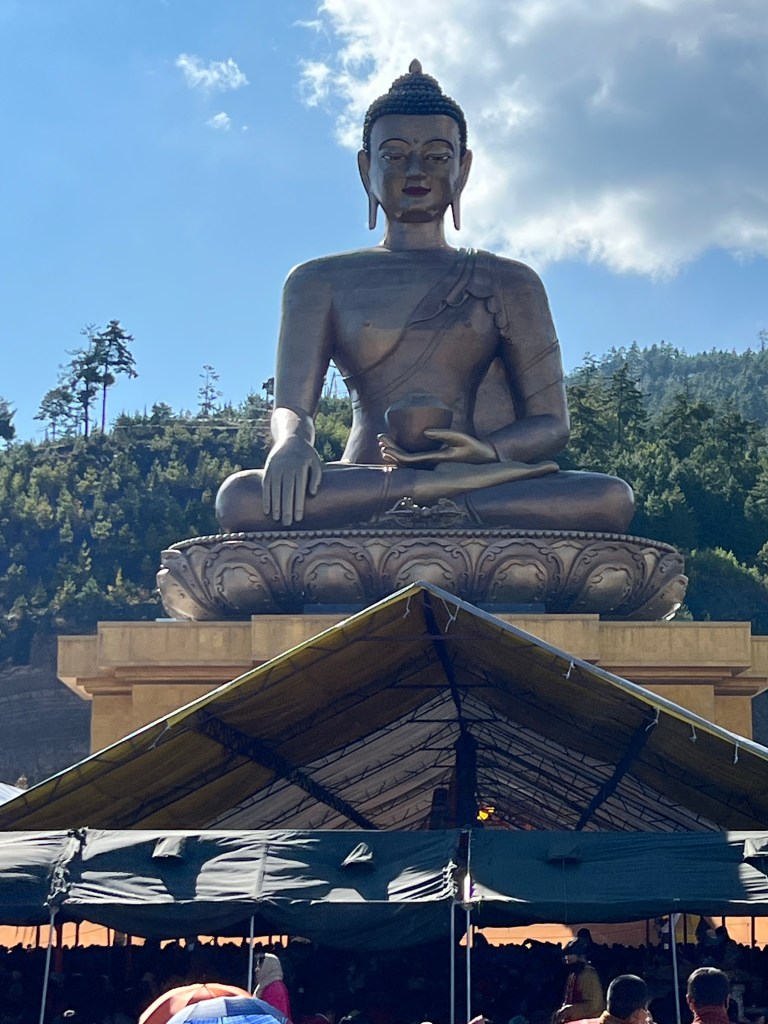
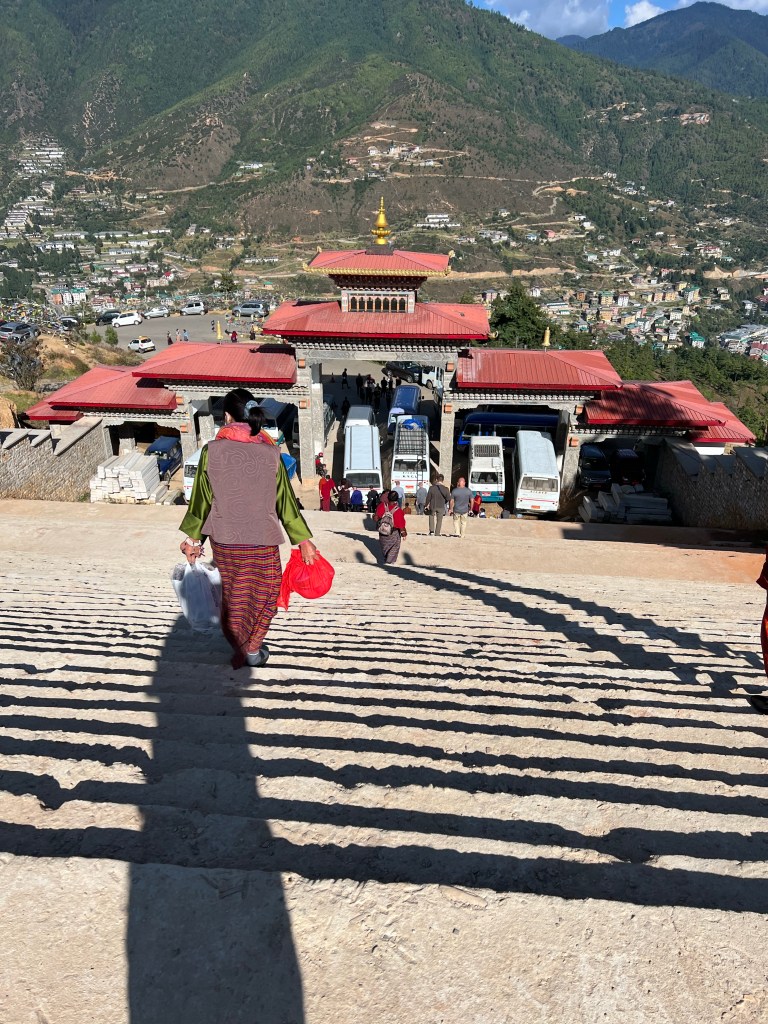
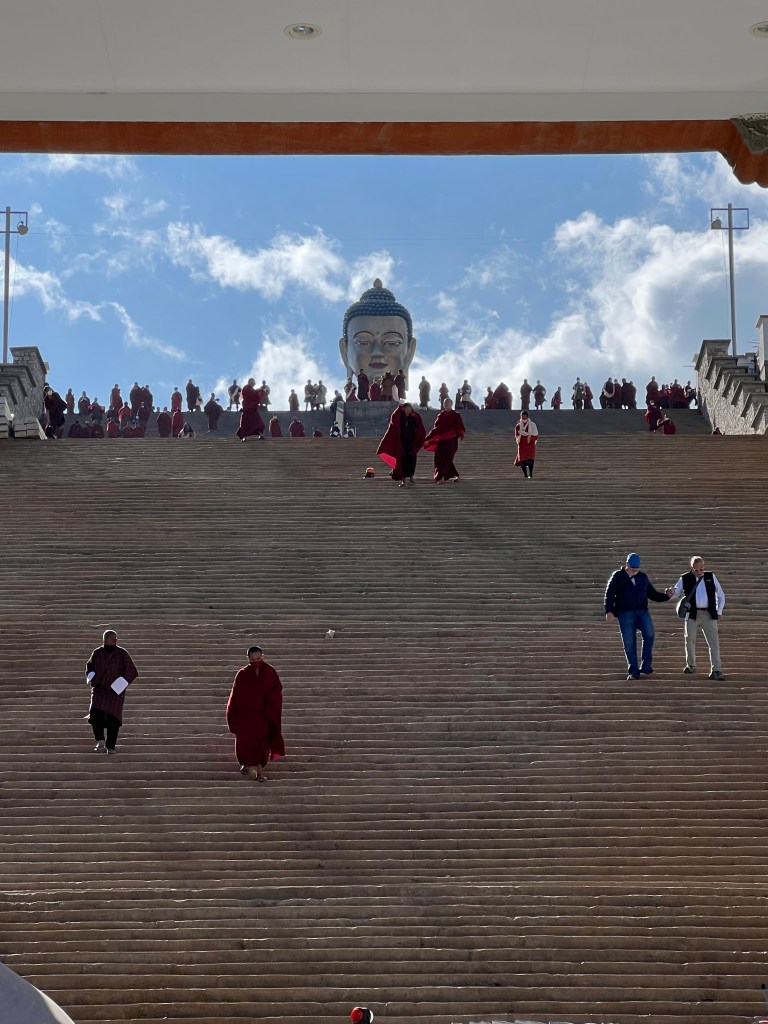
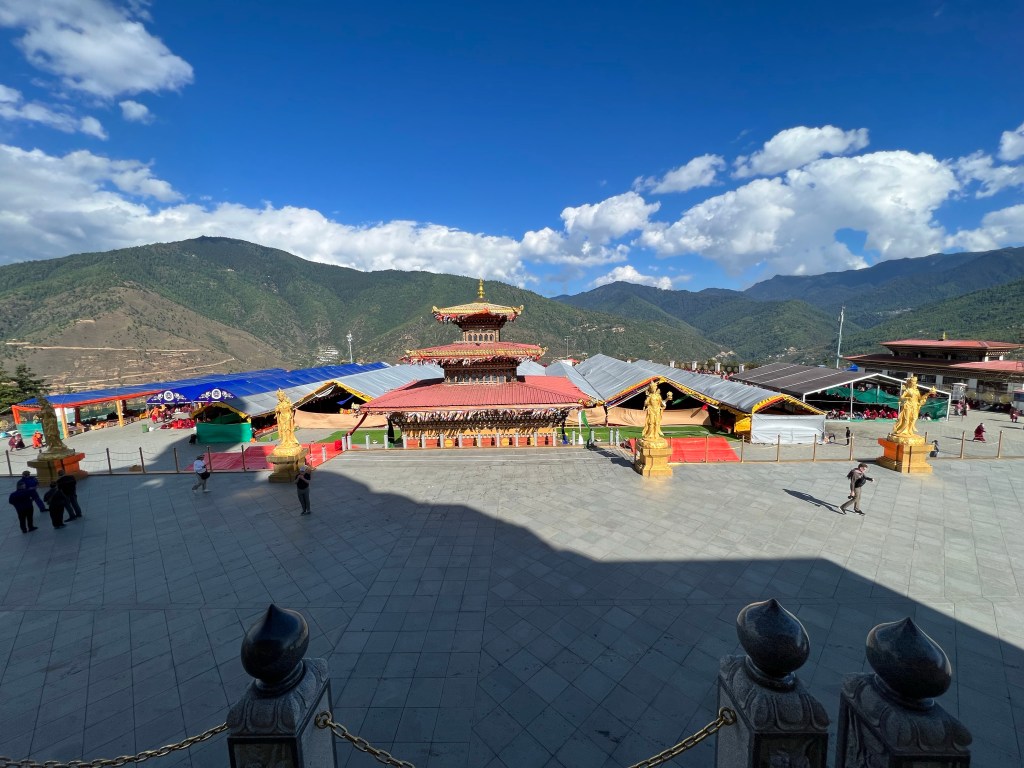
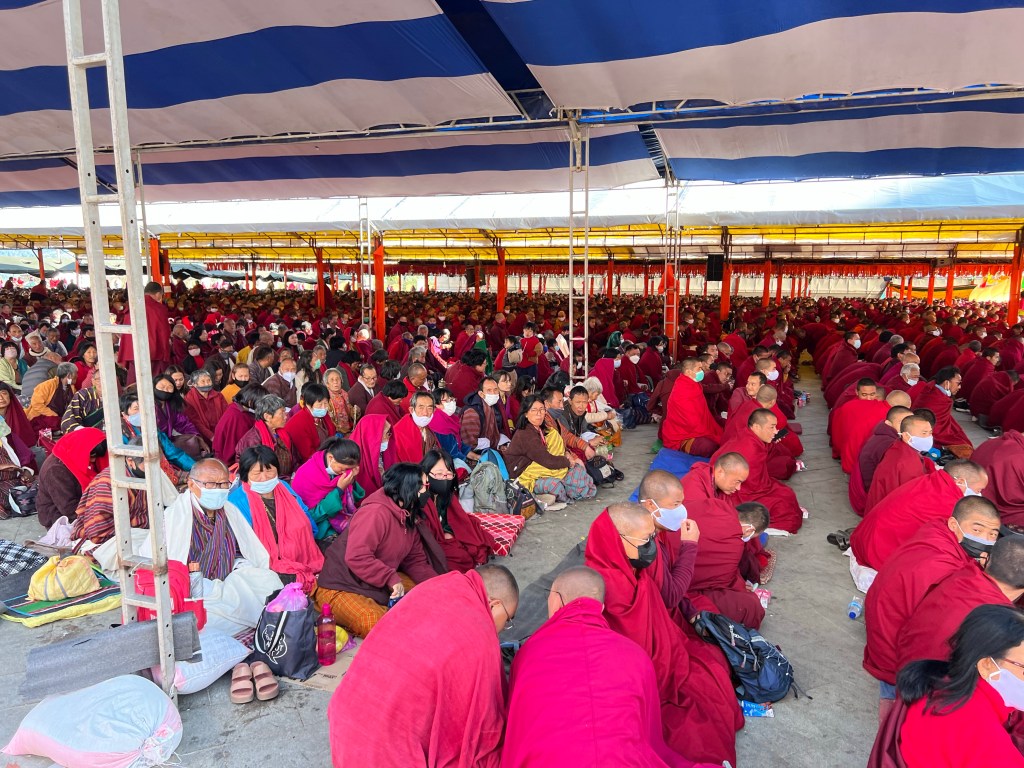
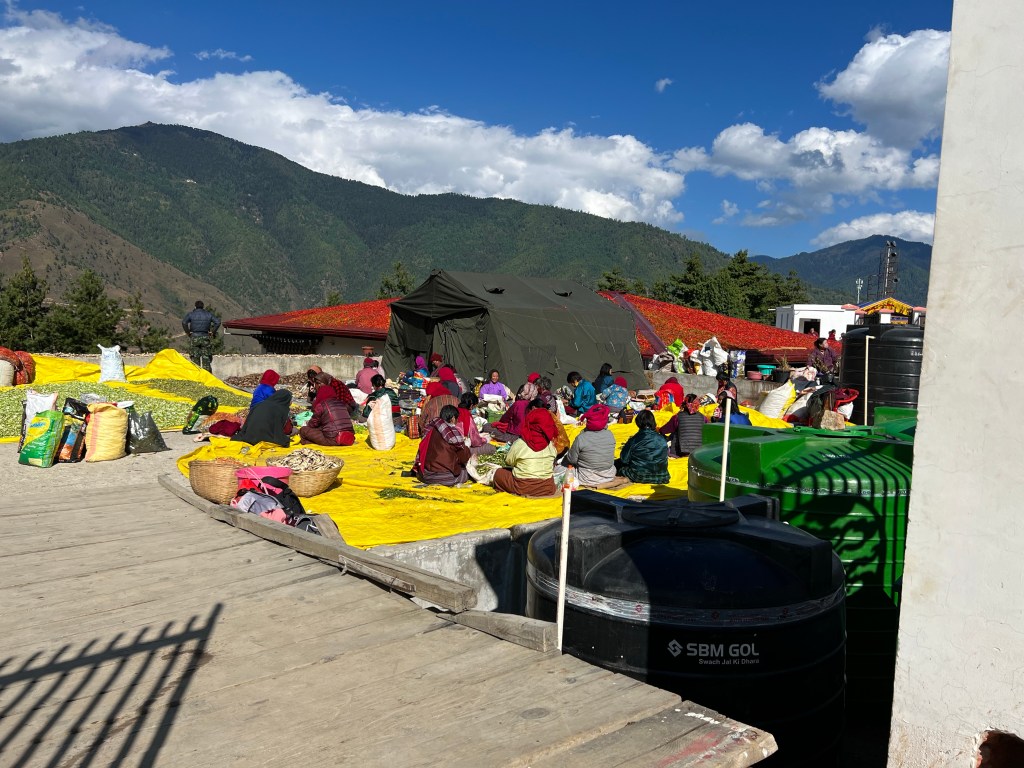
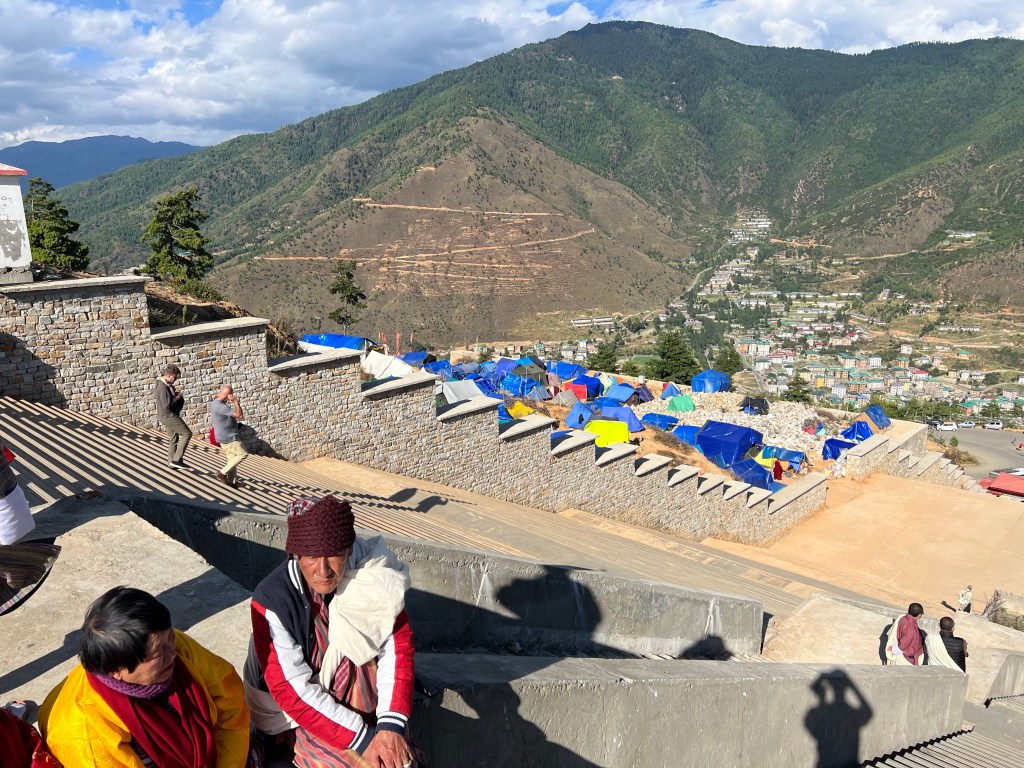
Then we rode the bus into the mountains to the giant (51.5m) Statue of Sakyamuni Buddha. There was a month-long festival in progress here. Hundreds of people seated under canopies and along the walls. There were lots of makeshift tents set up in the vicinity of the temple.
CanopiesAttendeesFood prep – lunch is providedCampsites
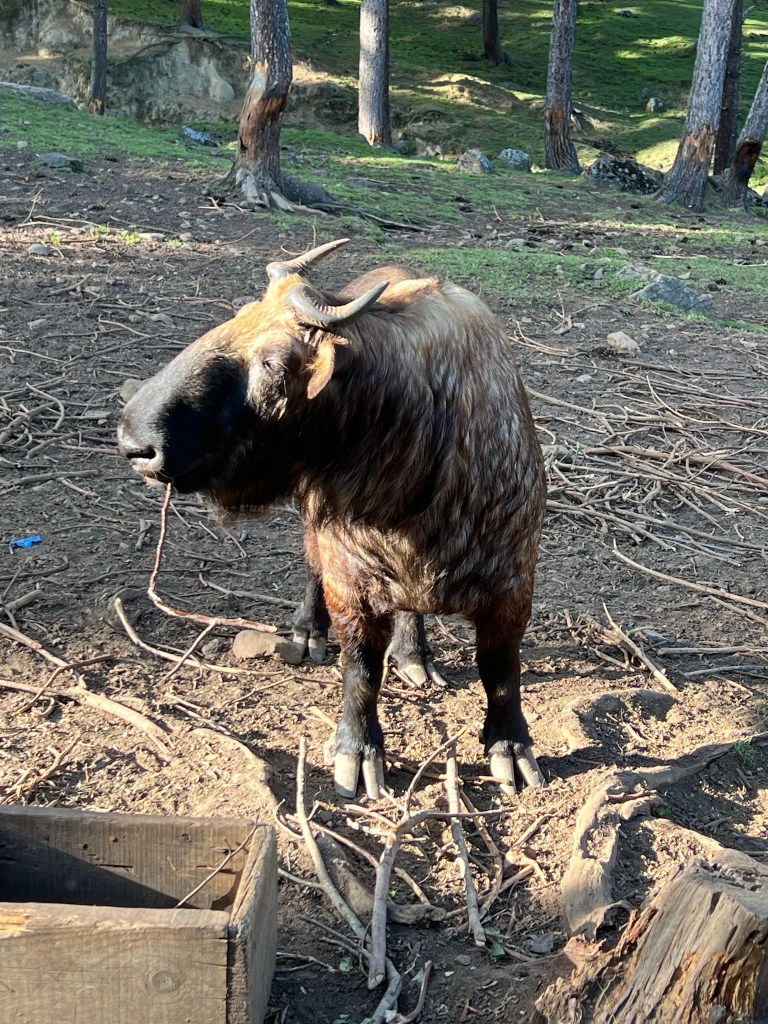
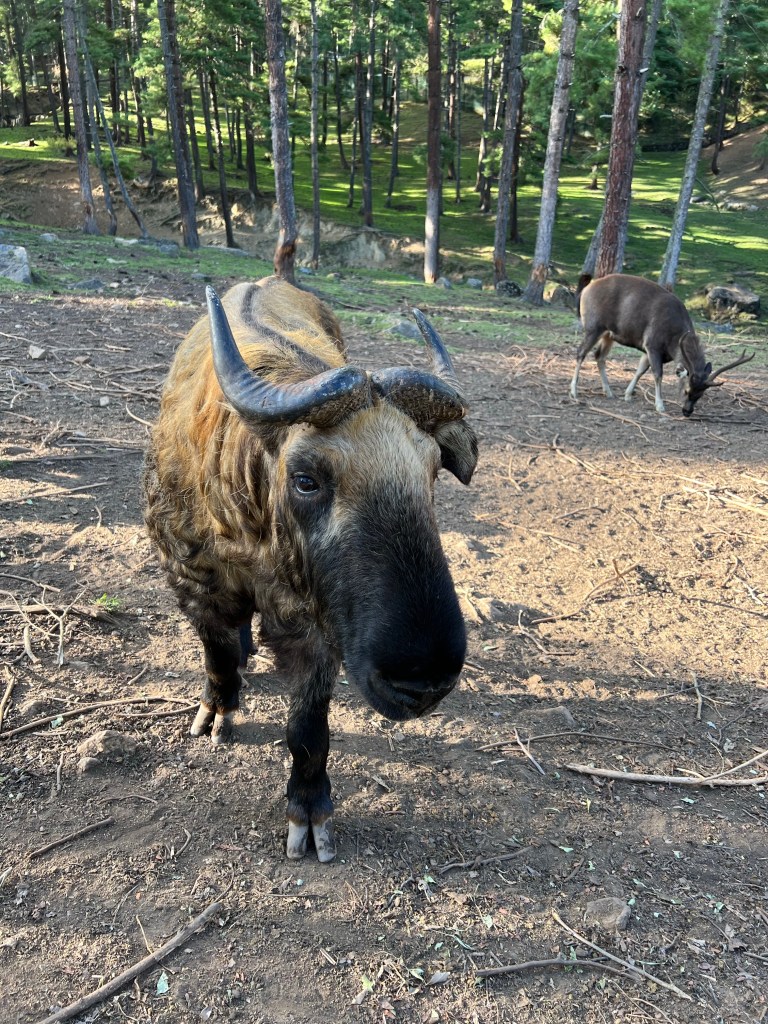
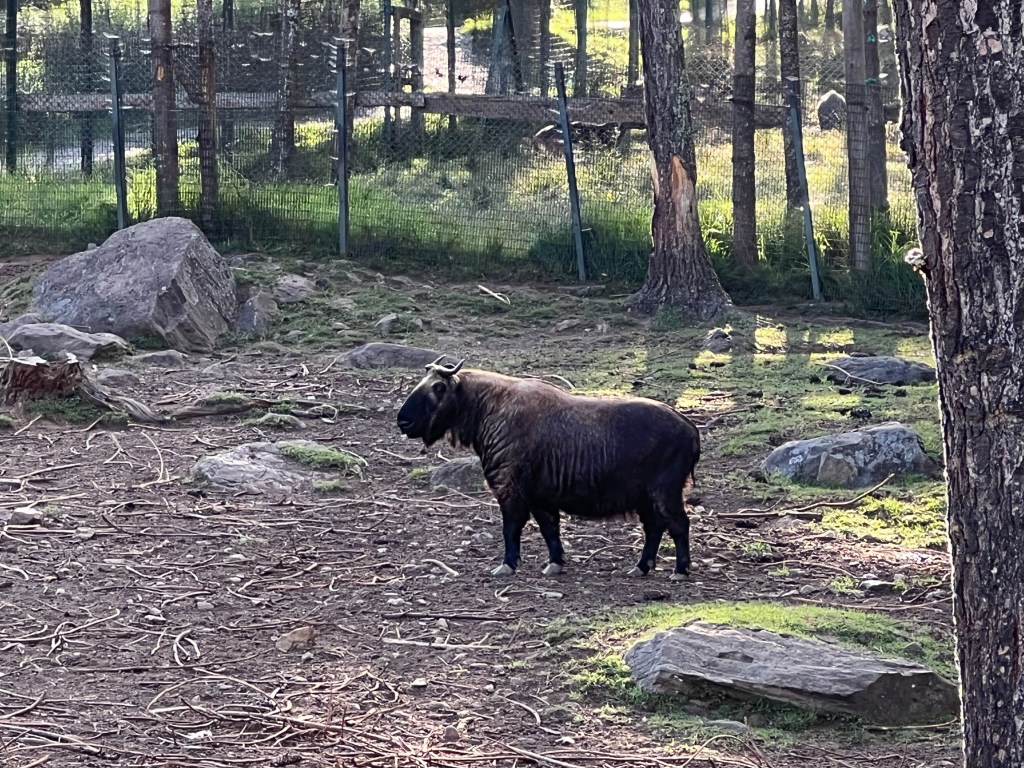
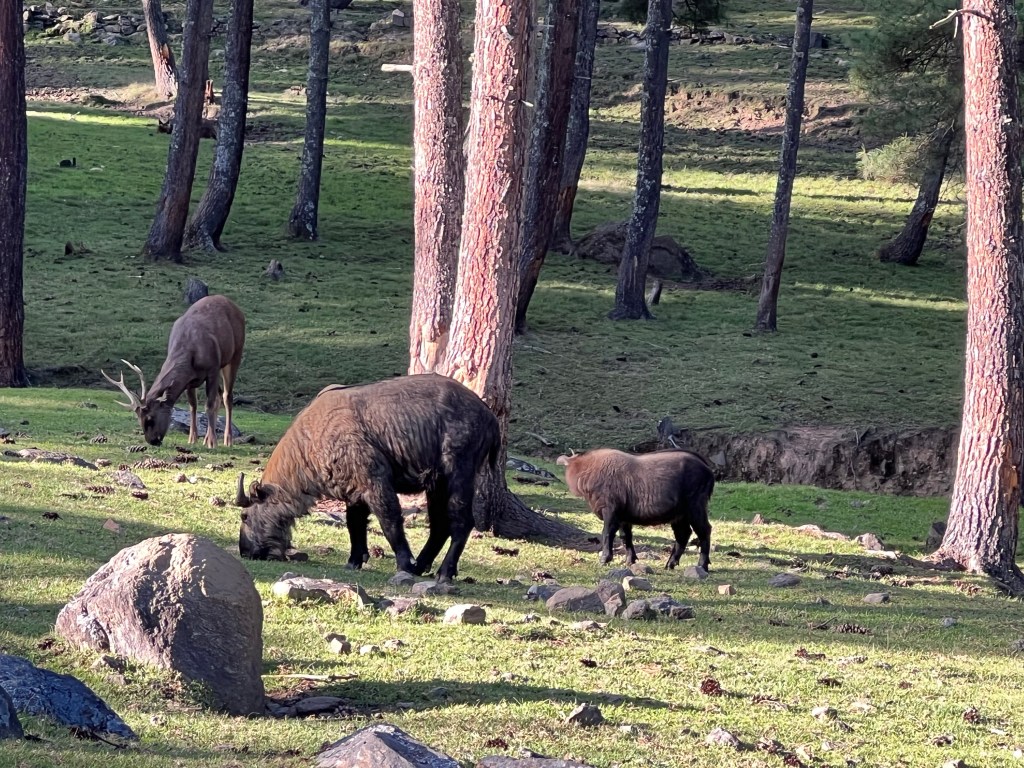
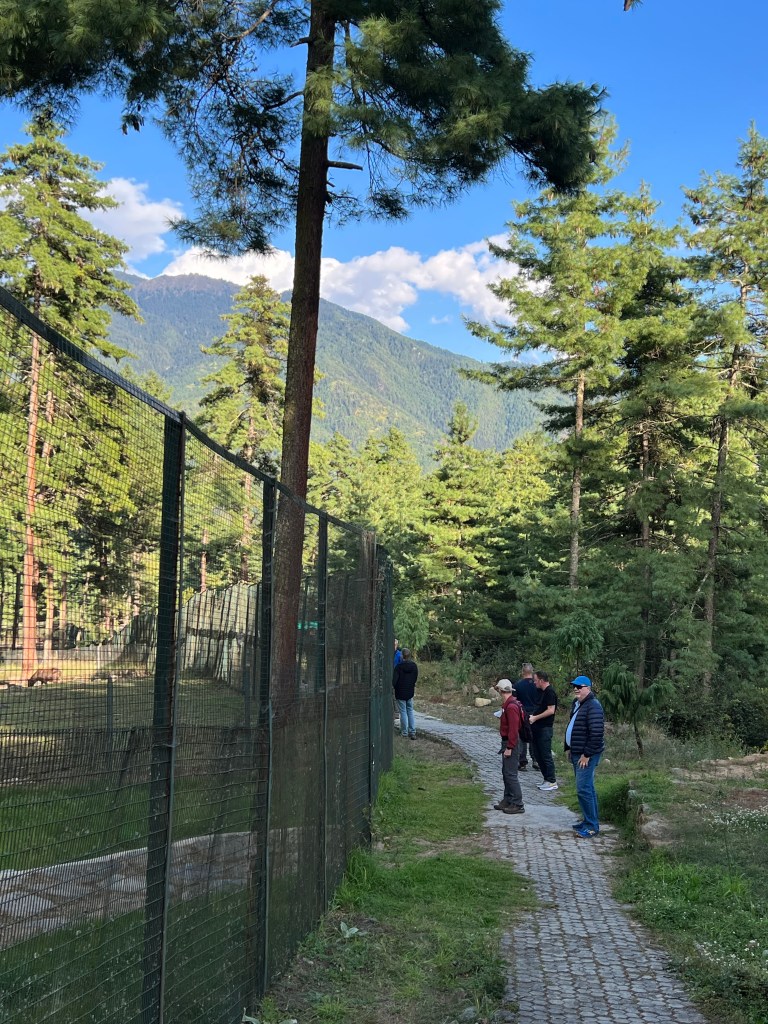
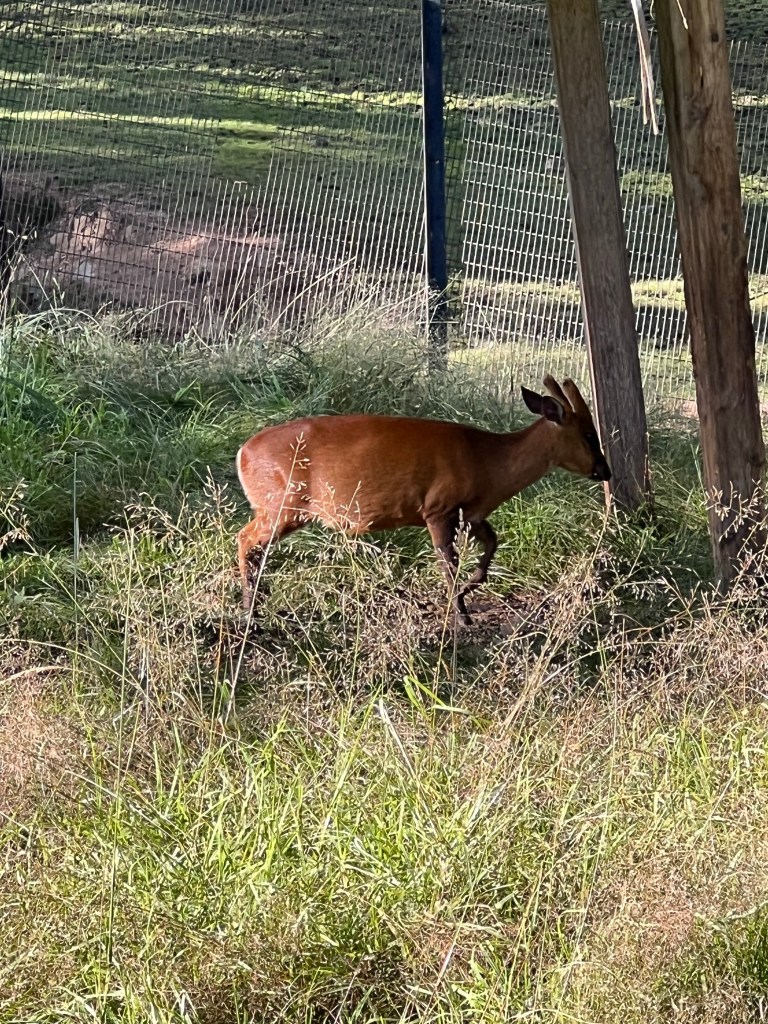
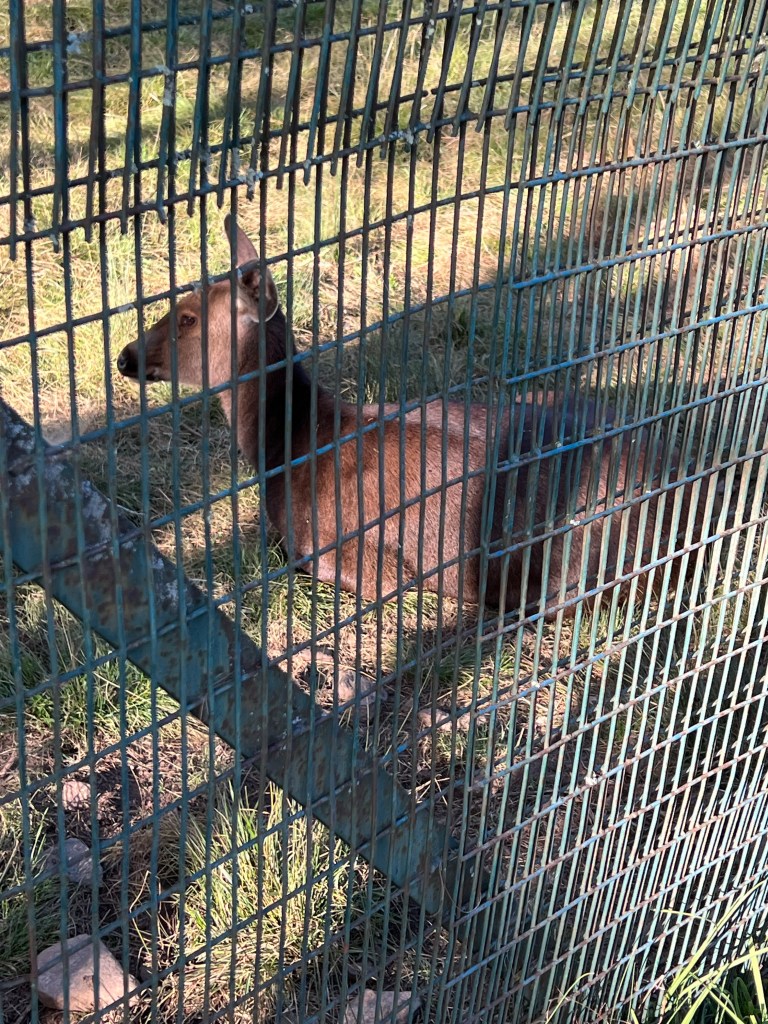
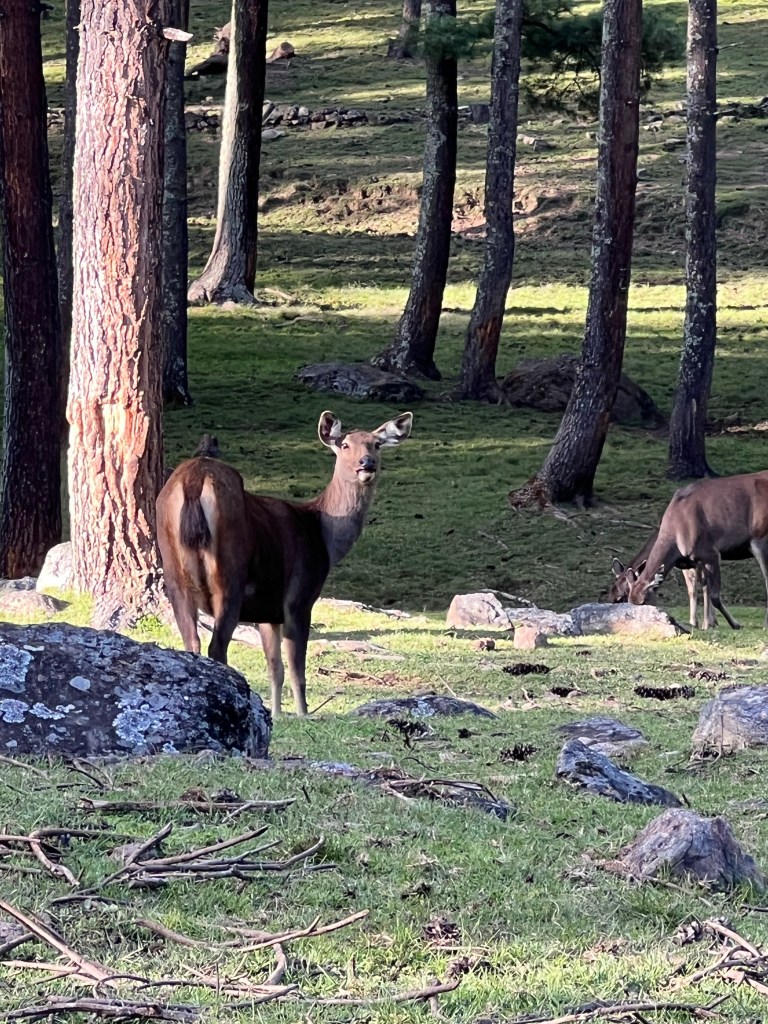
The last stop for the day was the Motithang Takin Preserve, home to several local breeds of animals including the Takin – the national animal of Bhutan.
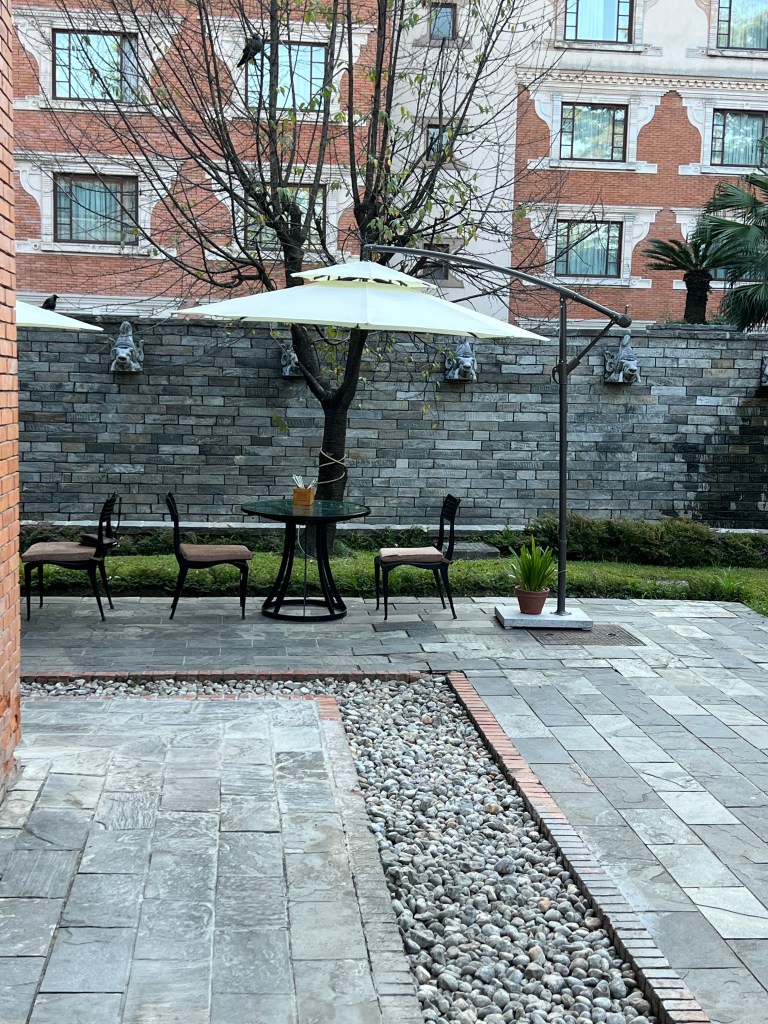
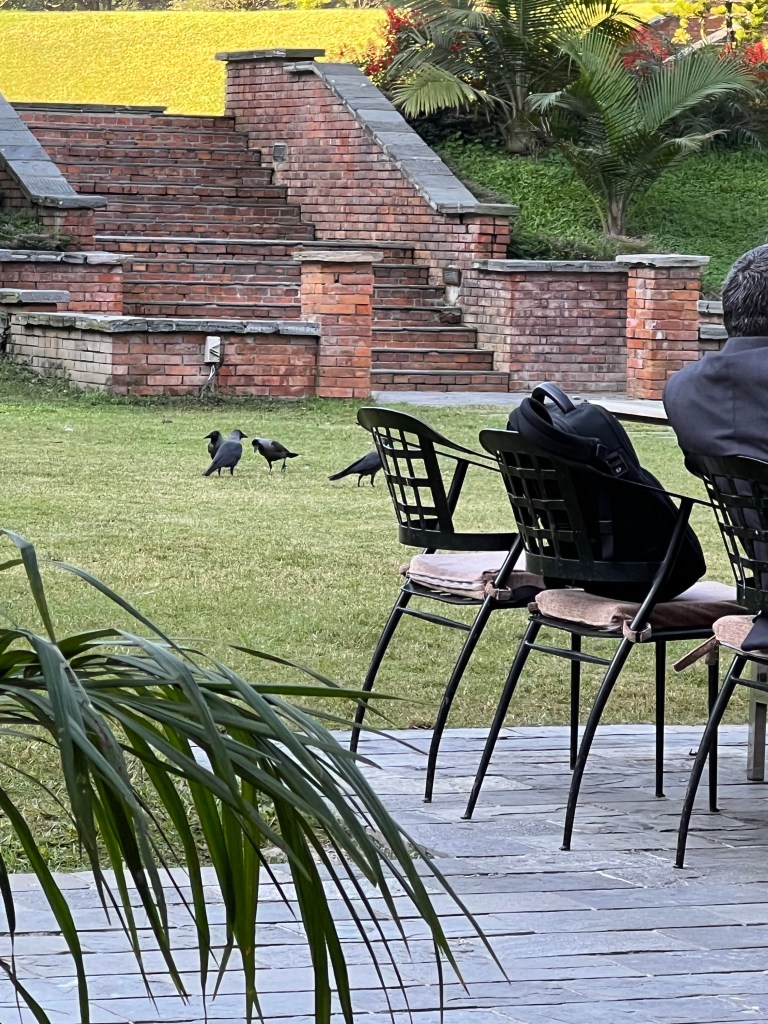
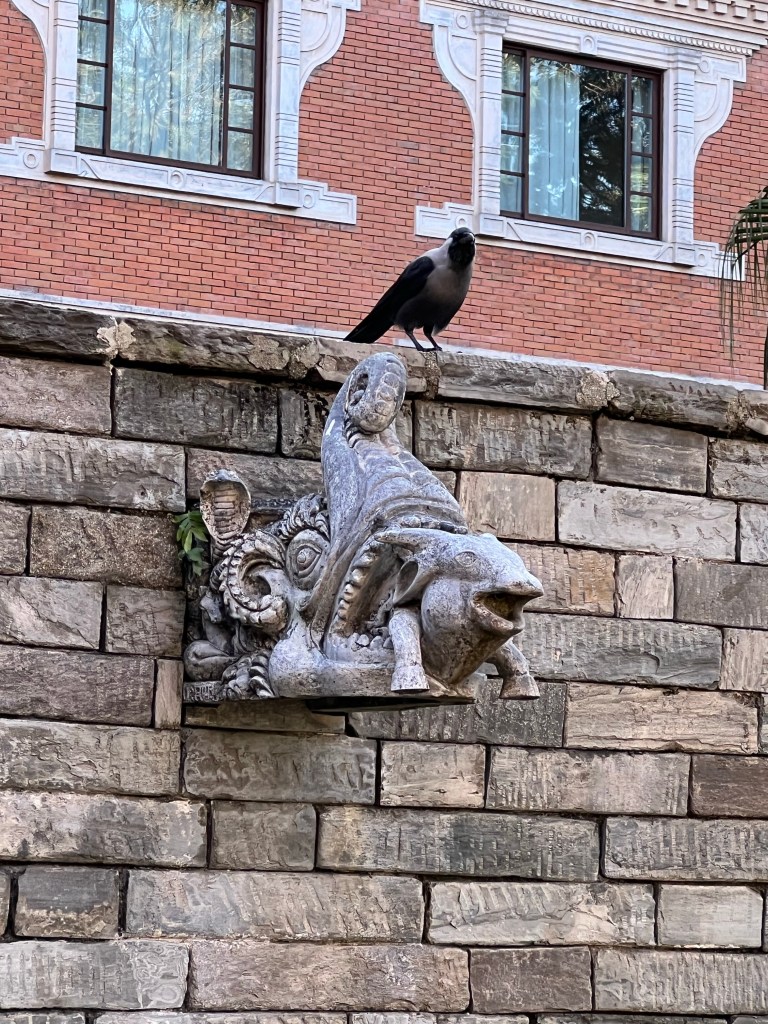
Clear skies this morning and breakfast at the hotel. If you leave your plate unattended, the crows might swoop down and help themselves.
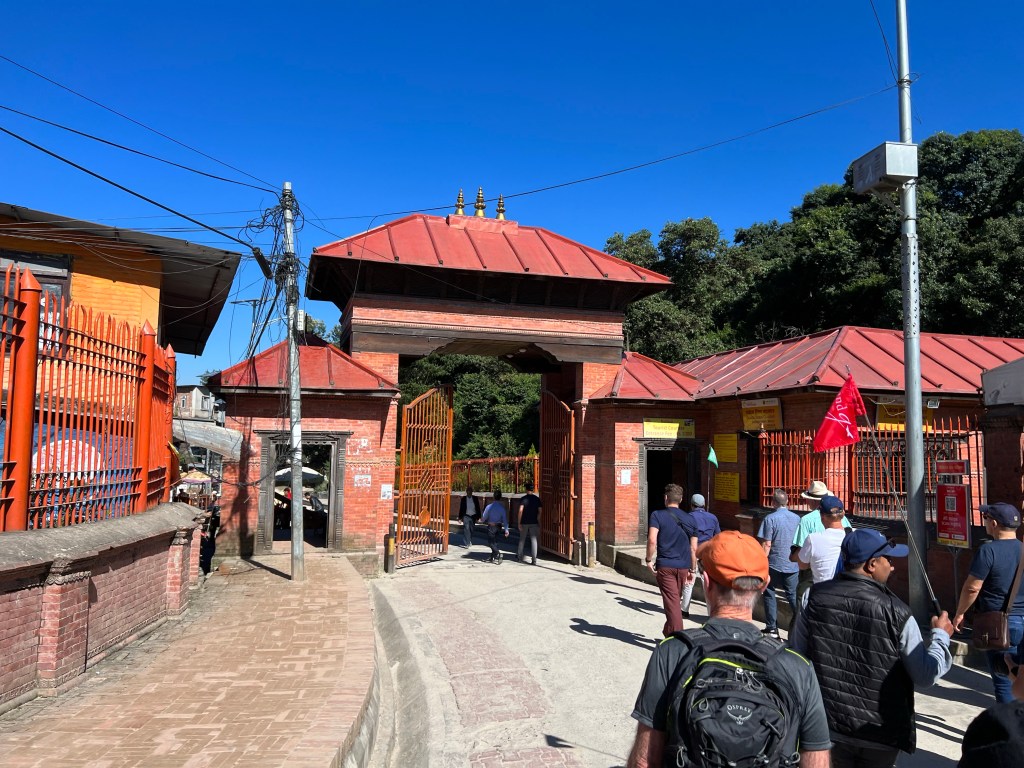
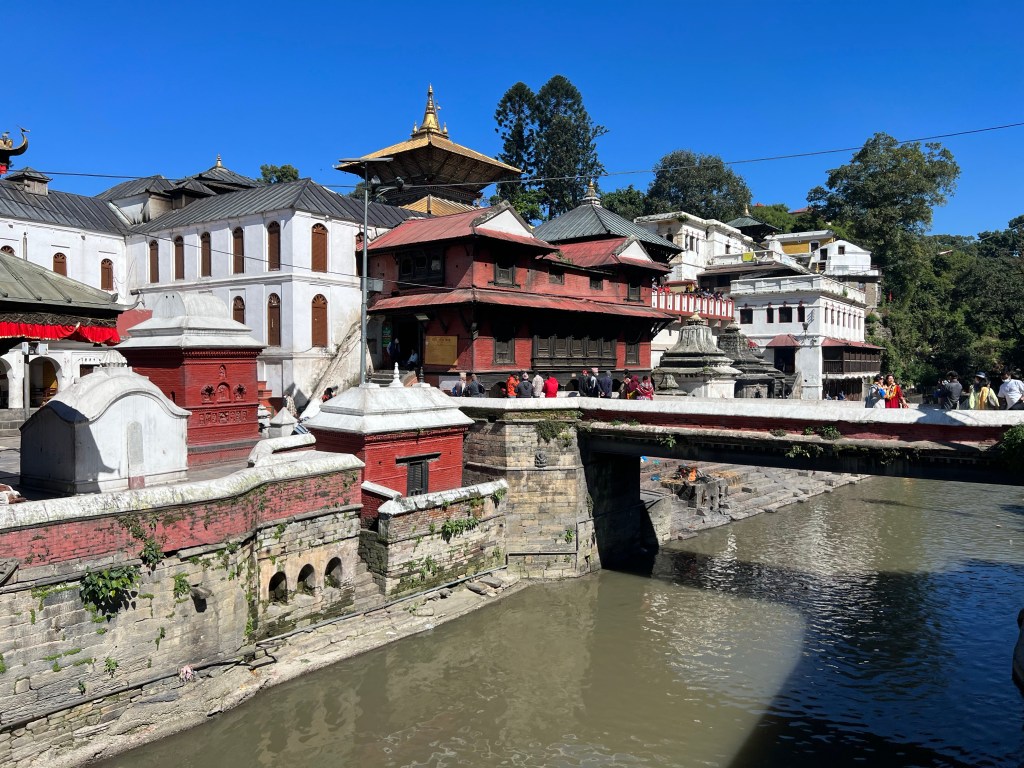
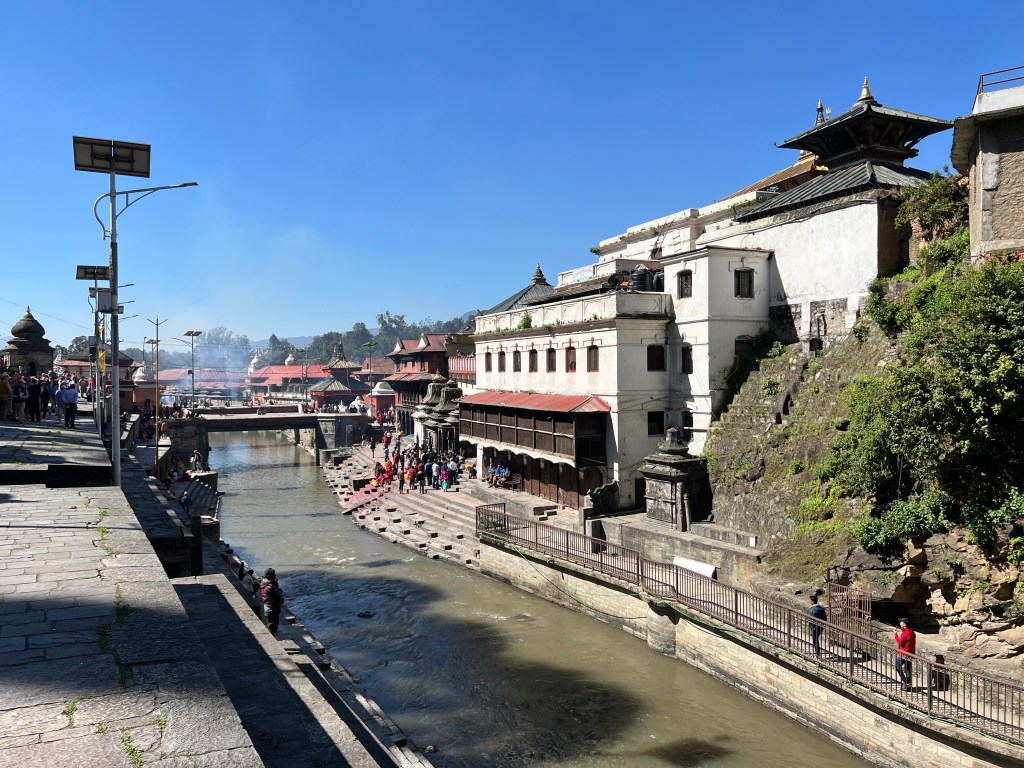
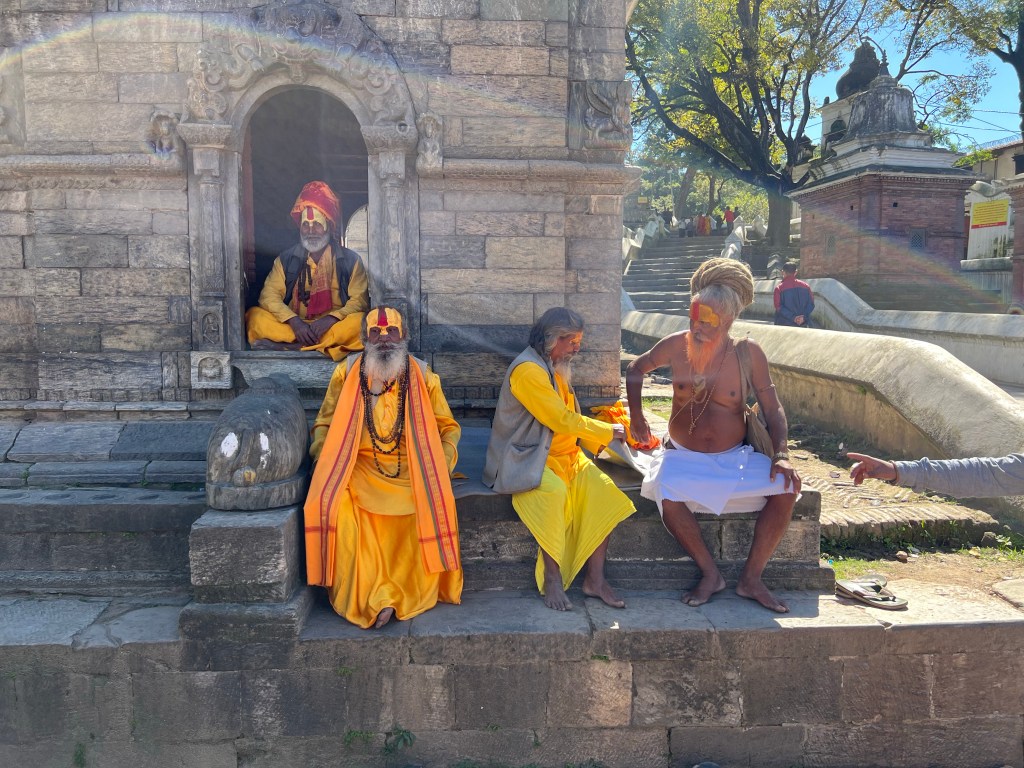
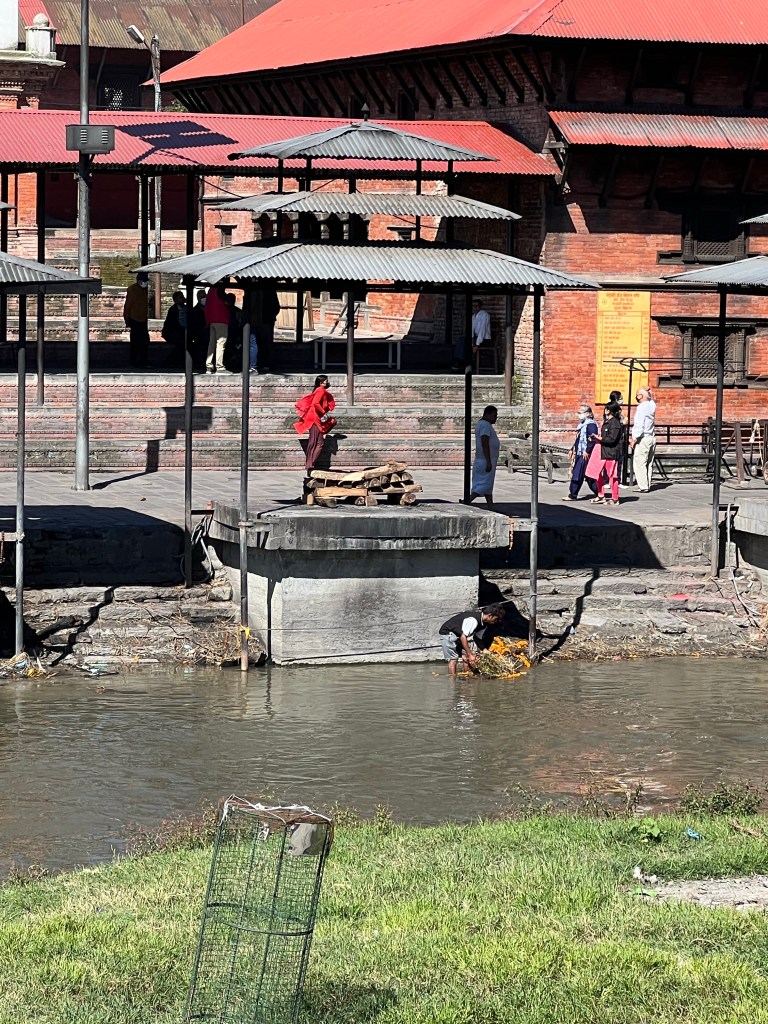
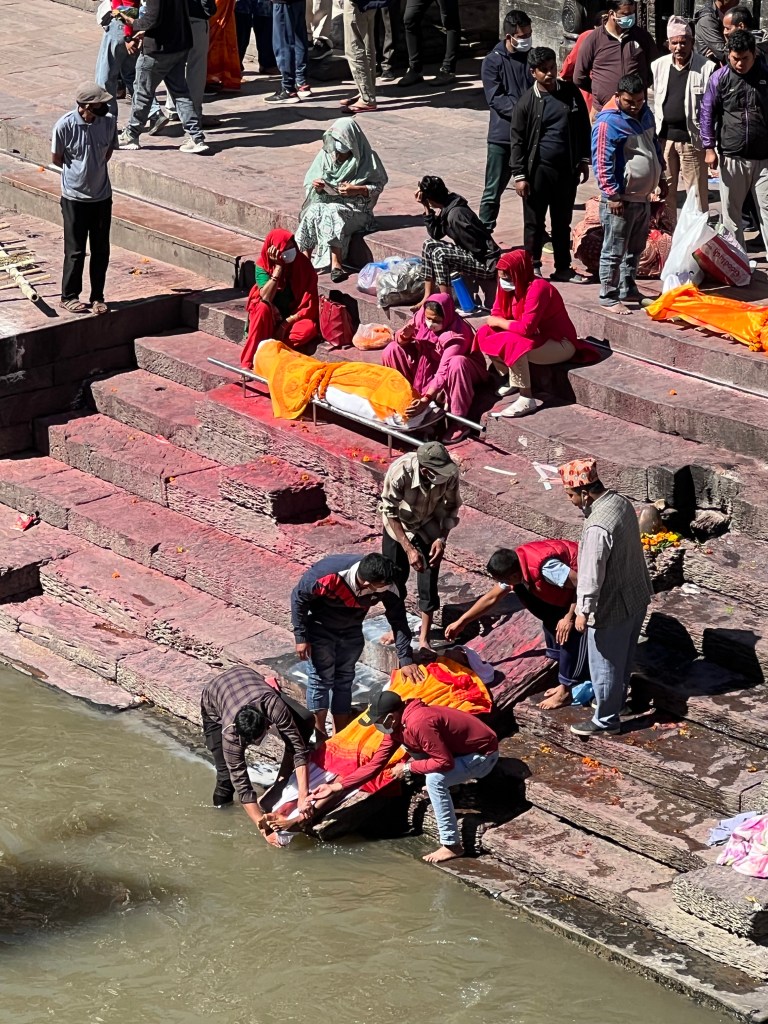
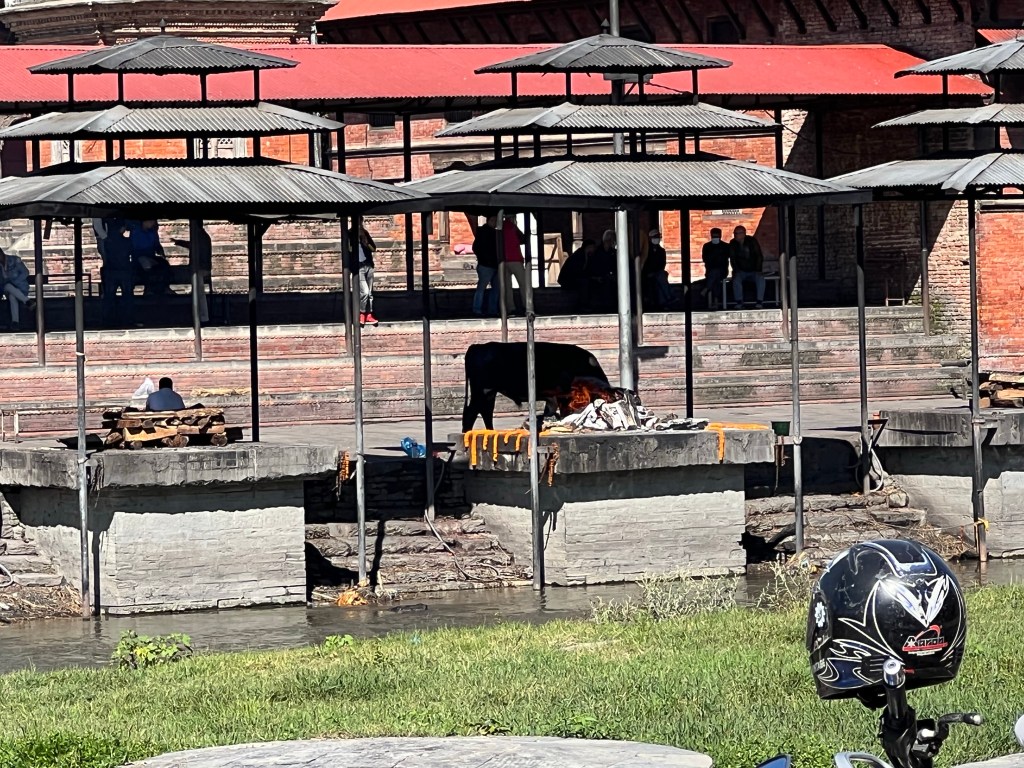
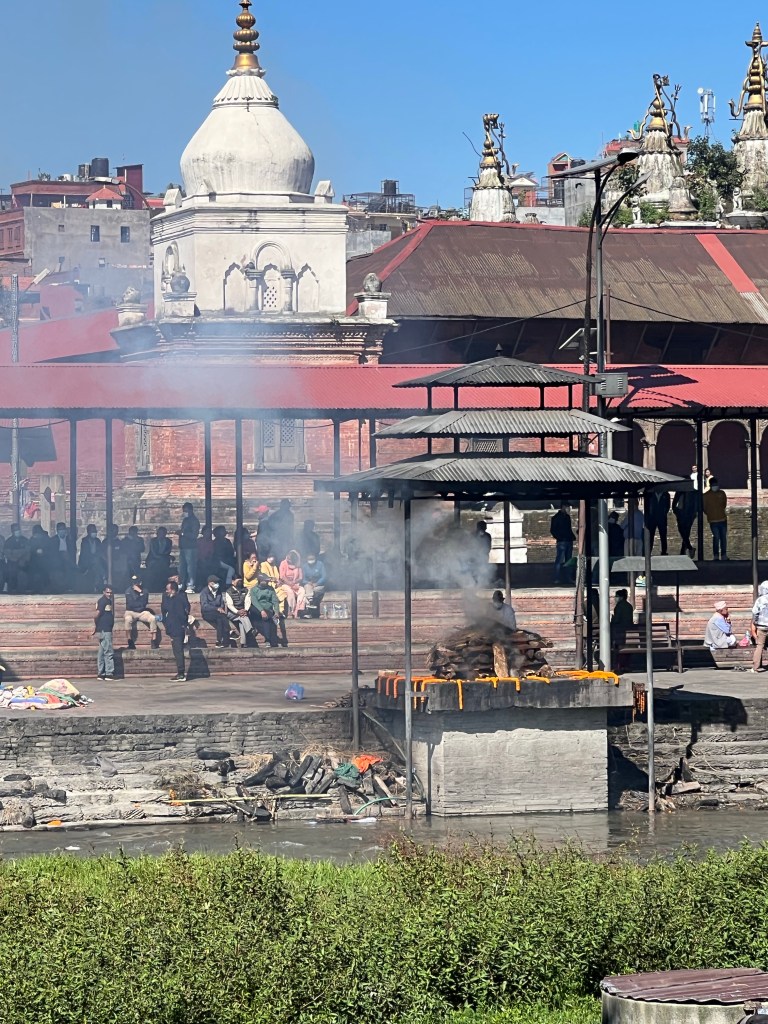
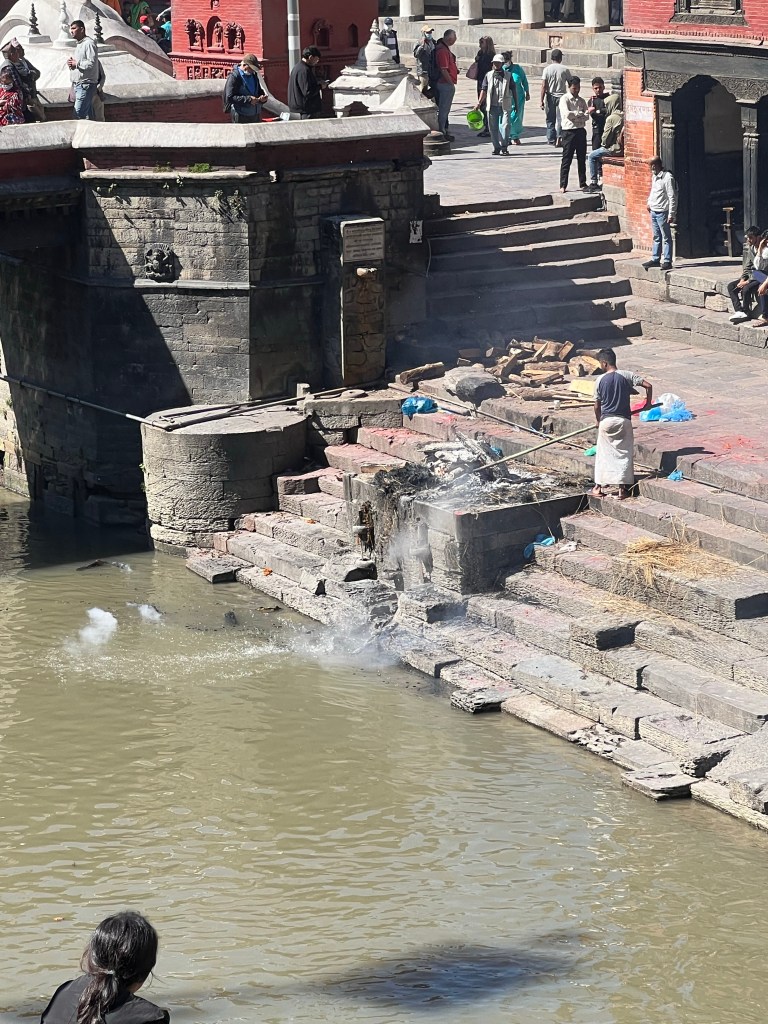
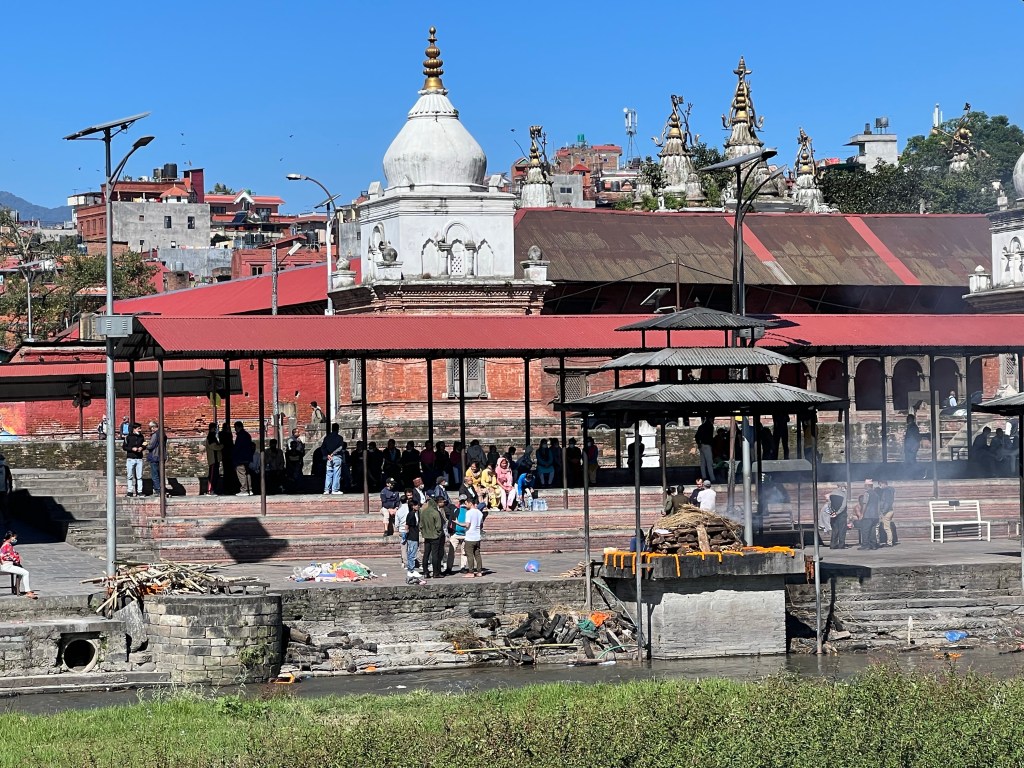
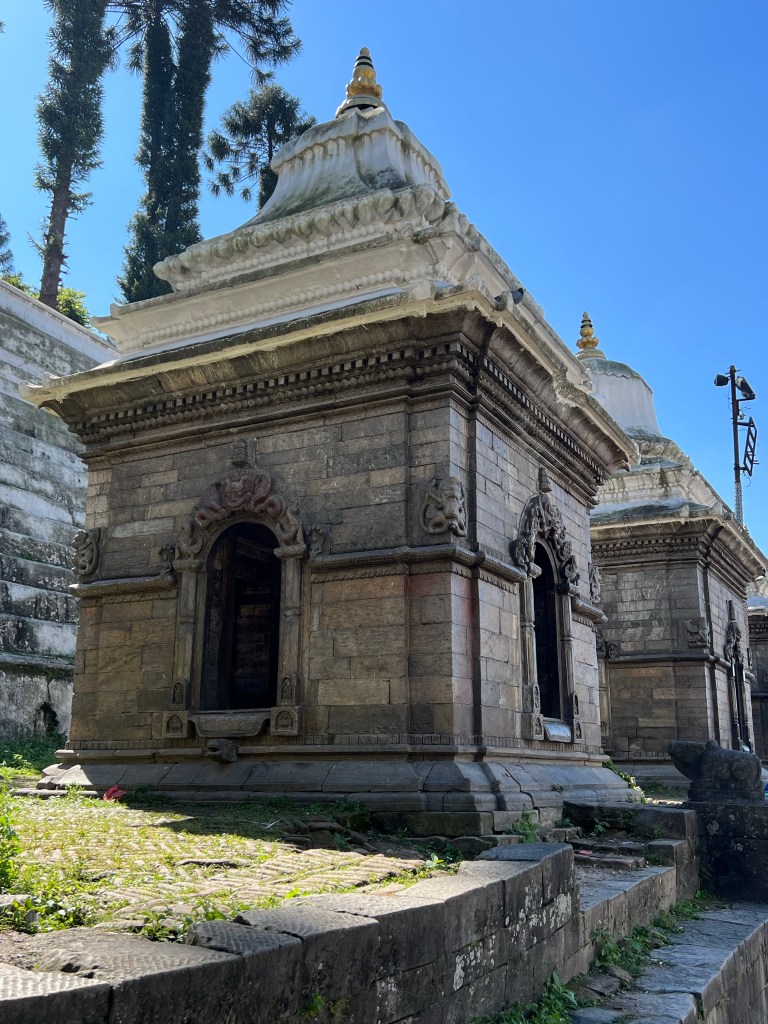
After breakfast we took a short bus ride to the Pashupatinath crematorium. The crematorium is on the banks of the Barmati river which flows into the Ganges.
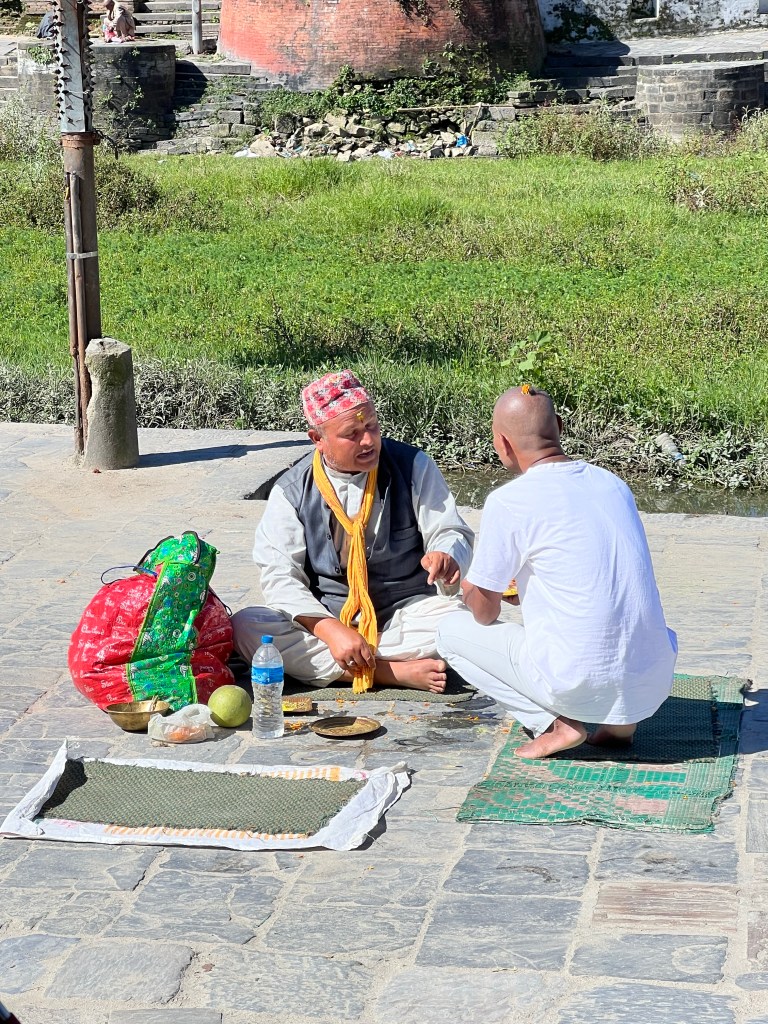
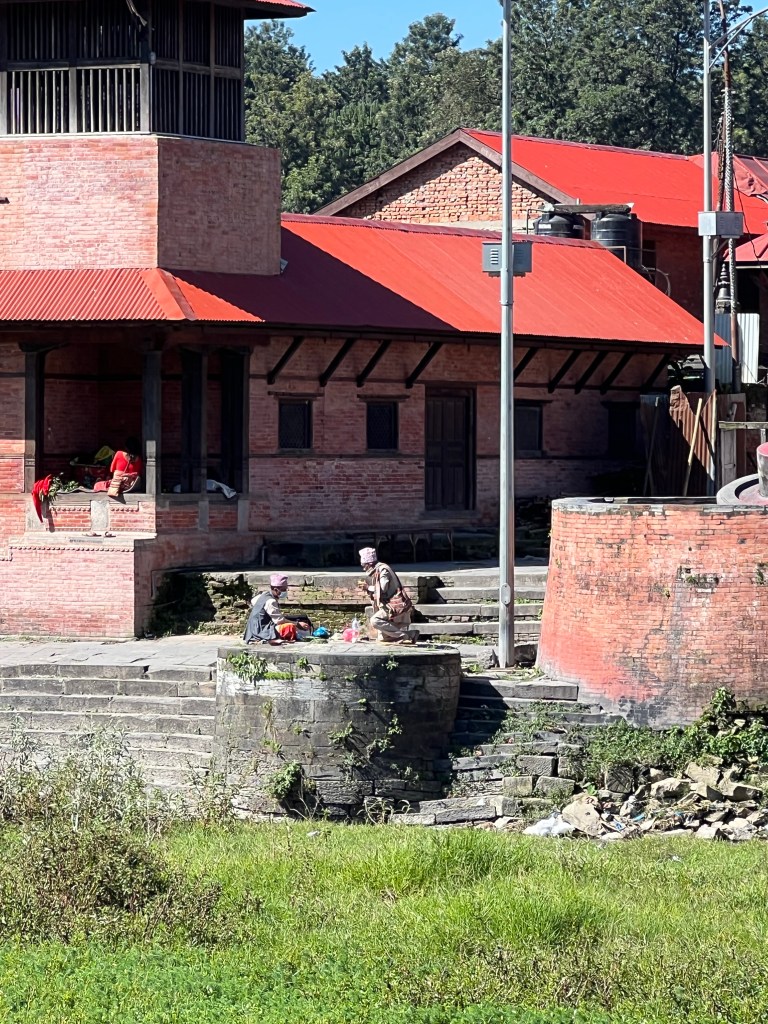
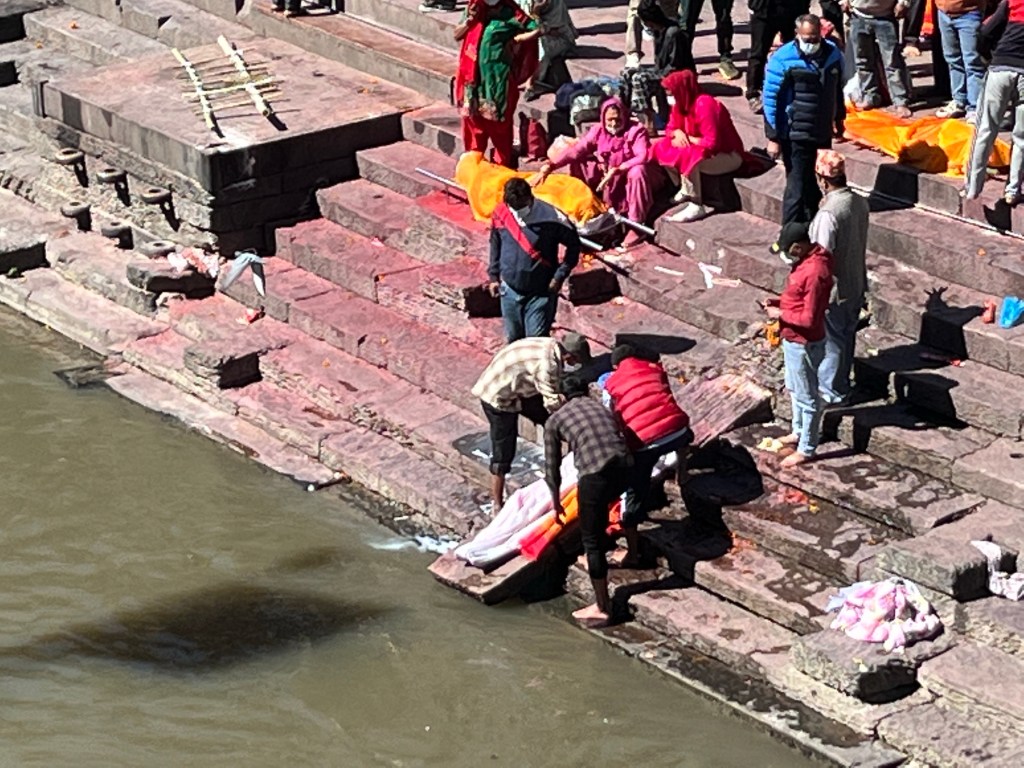
We saw Hindu priests performing ceremonies, Hindu Brahmin, a mourning ritual, a bathing ritual, and several cremations.
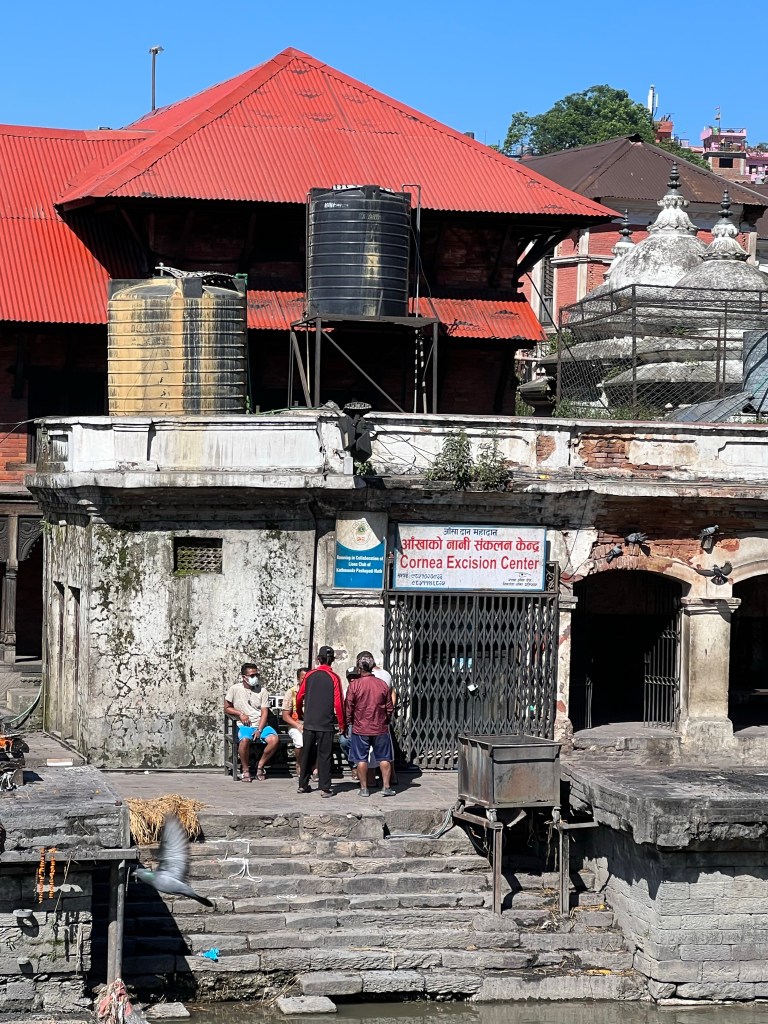
Cornea Excision CenterMourning ritual (in river)Cleaning ritualCleaning ritual
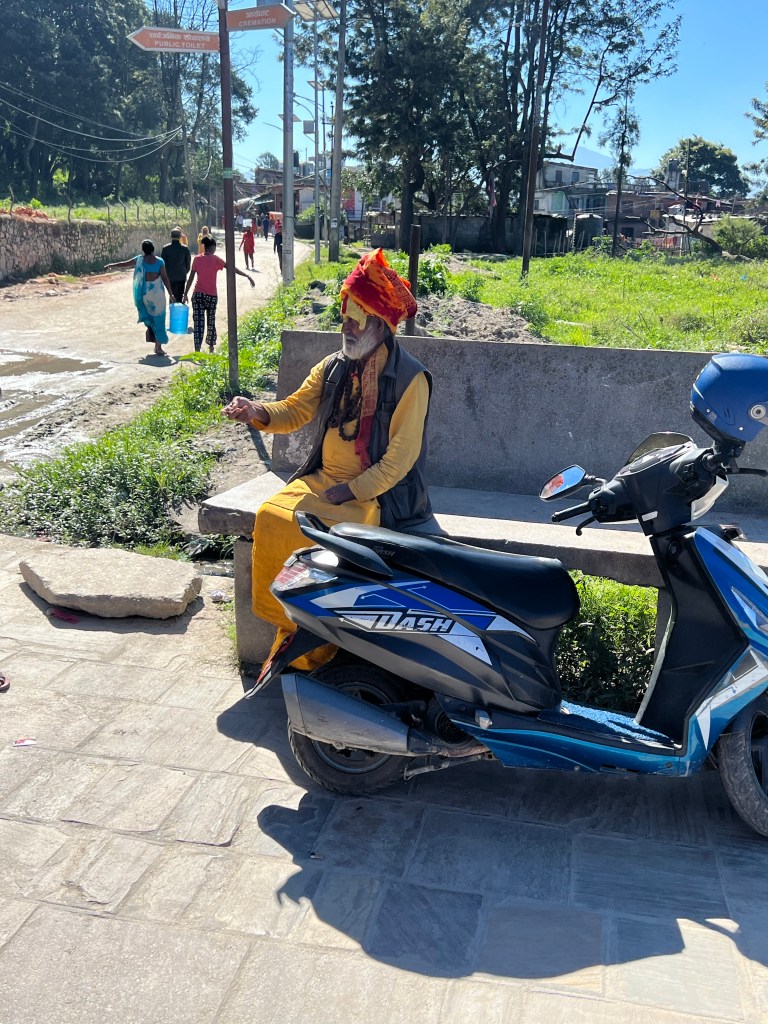
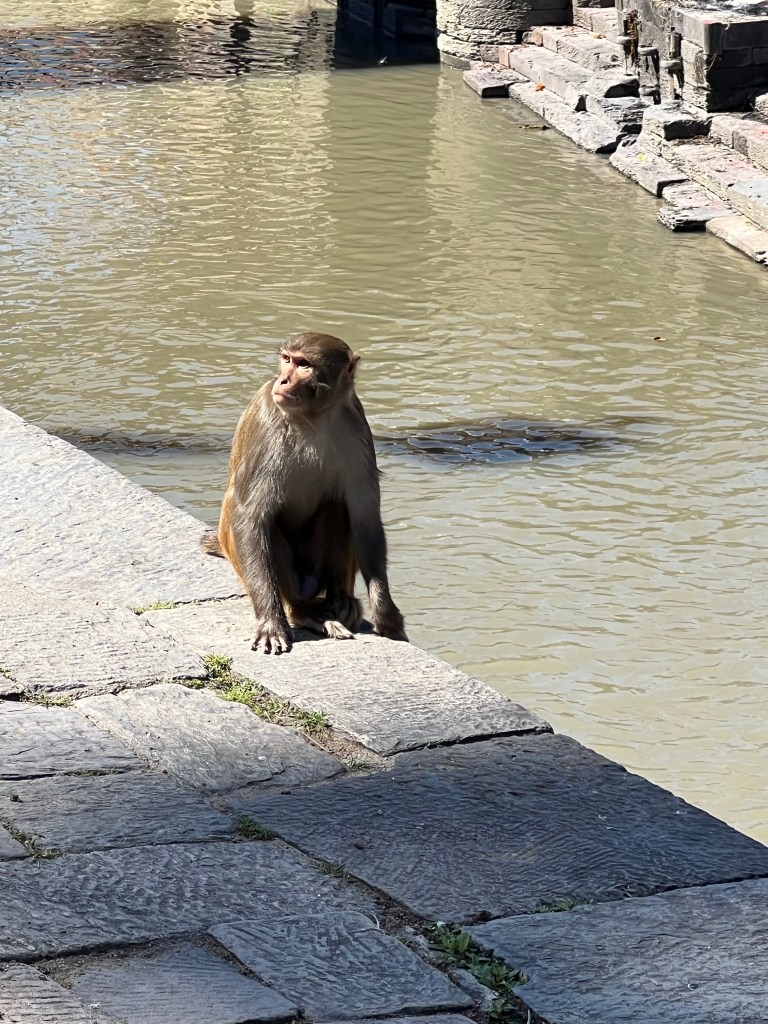
The vendors were there selling souvenirs and religious items. There were also cows, dogs and monkeys.
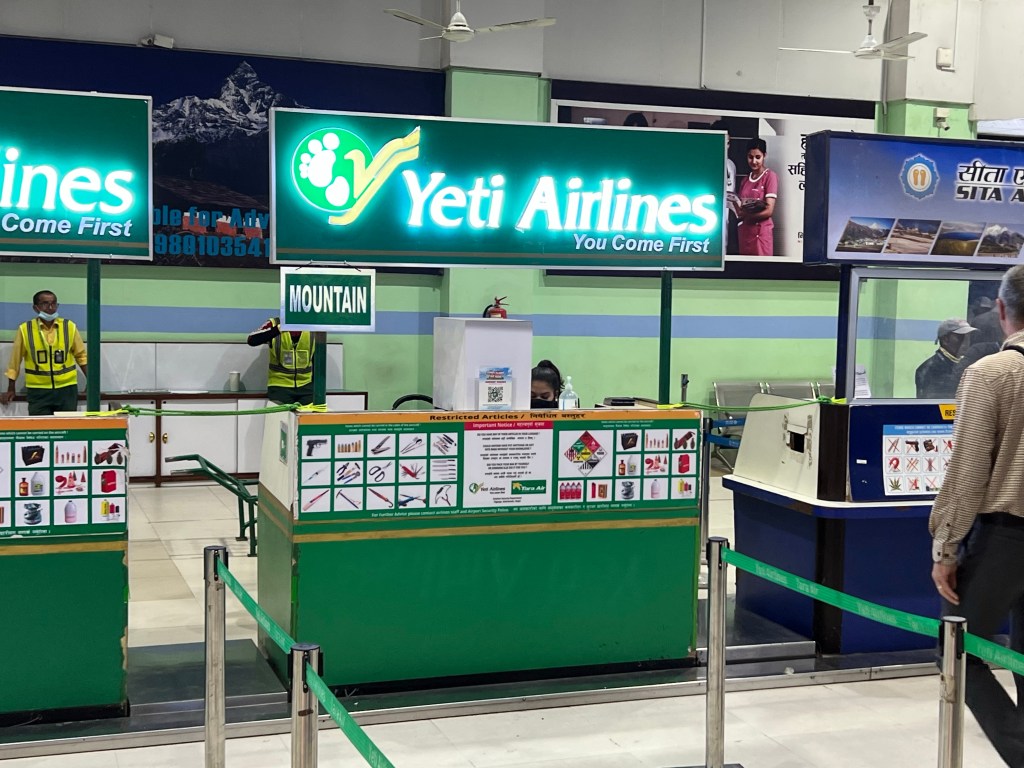
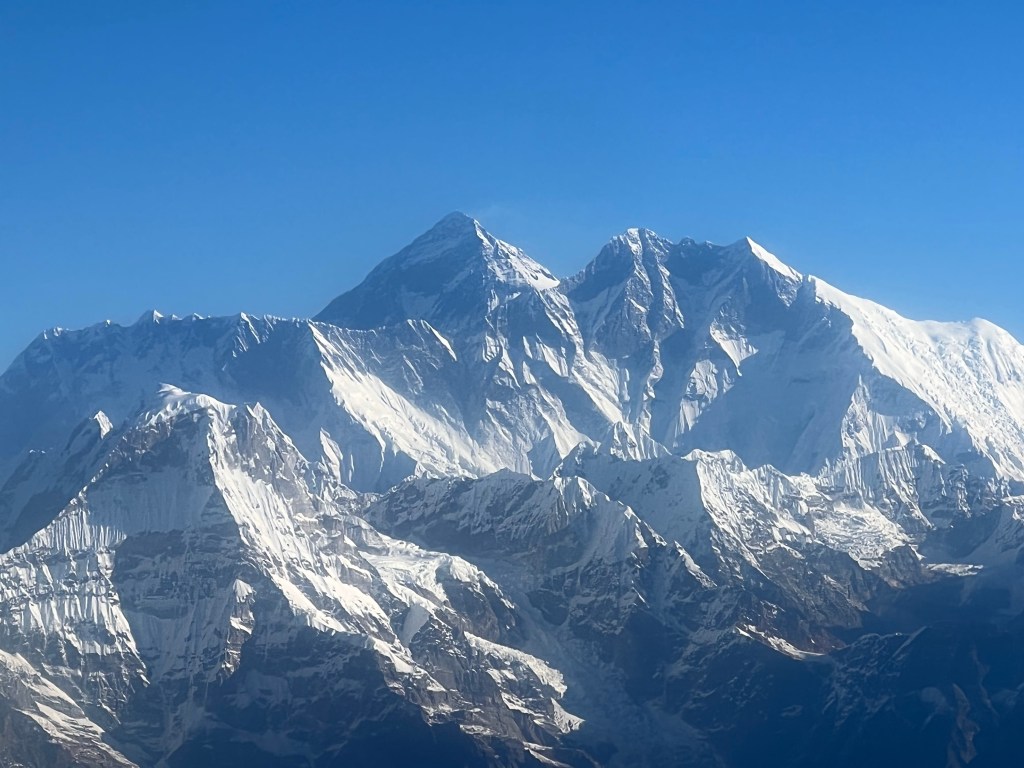
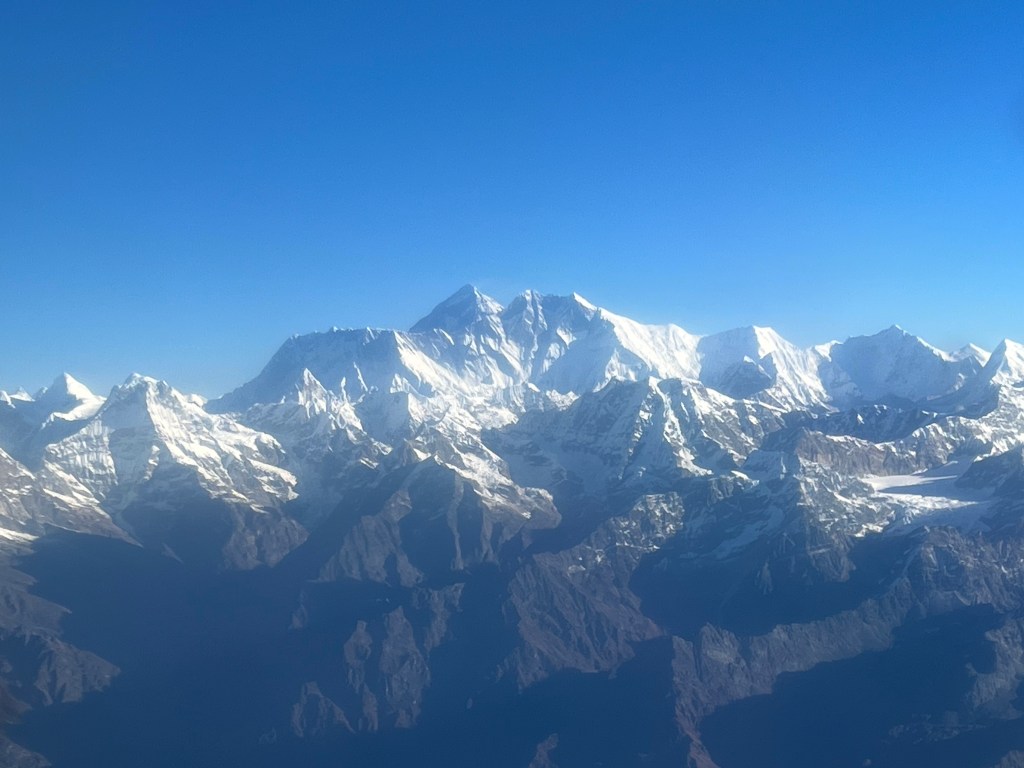
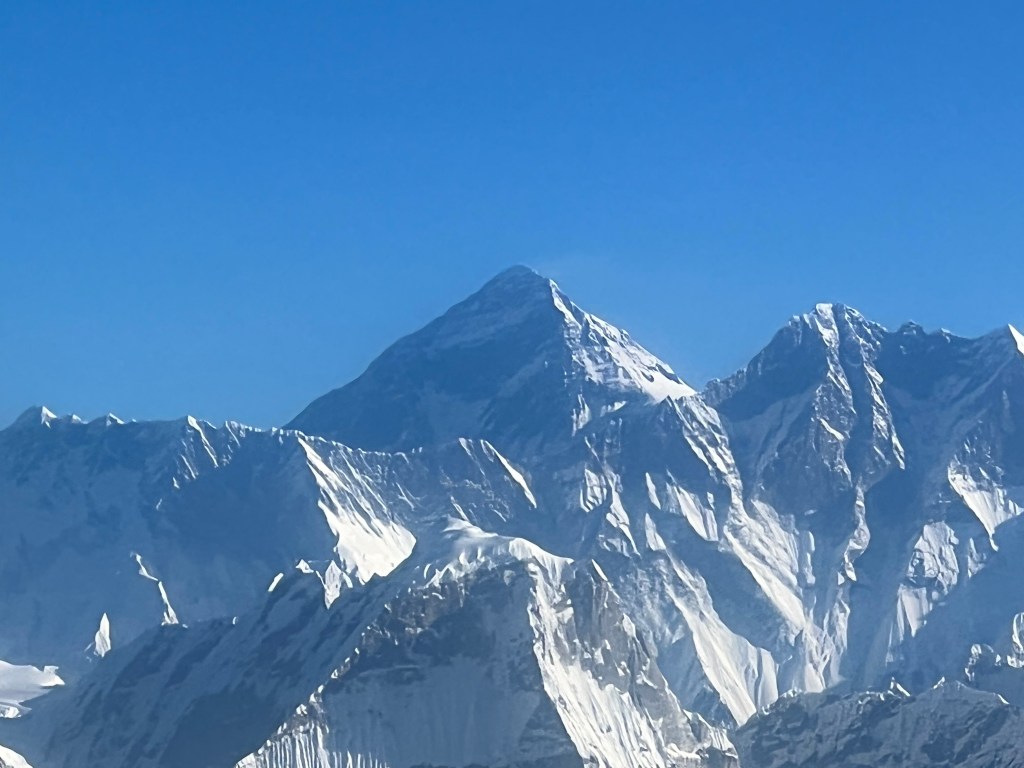
We left the hotel at 5:30 and drove to the Airport for our Mountain flight on Yeti Airlines.
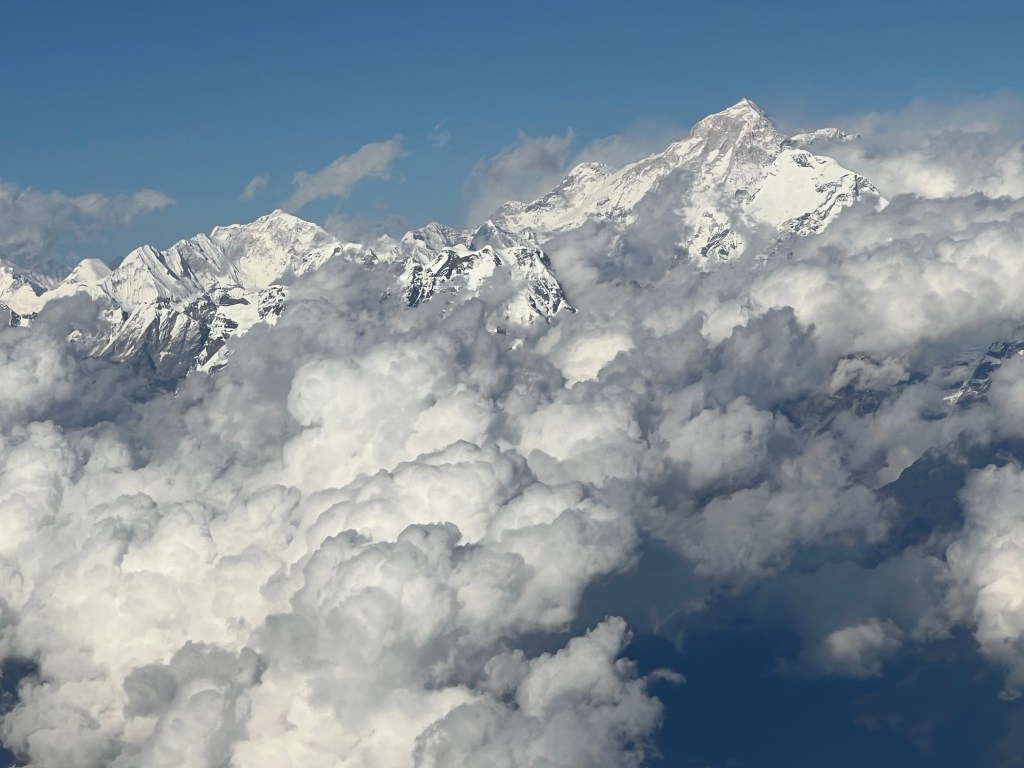
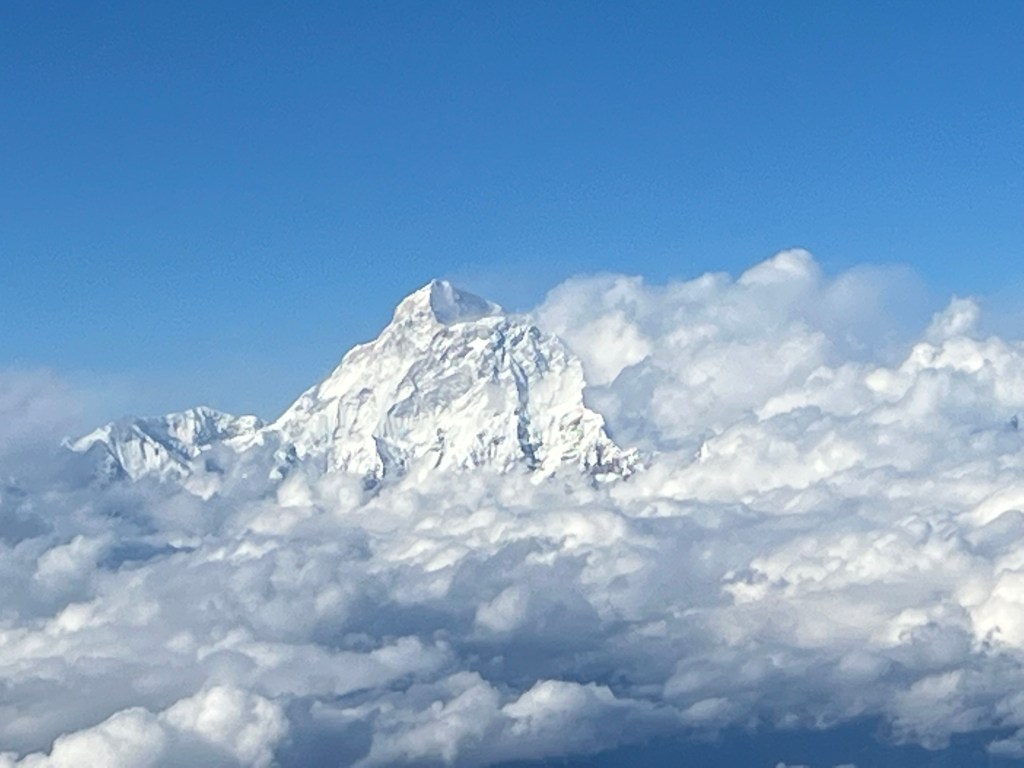
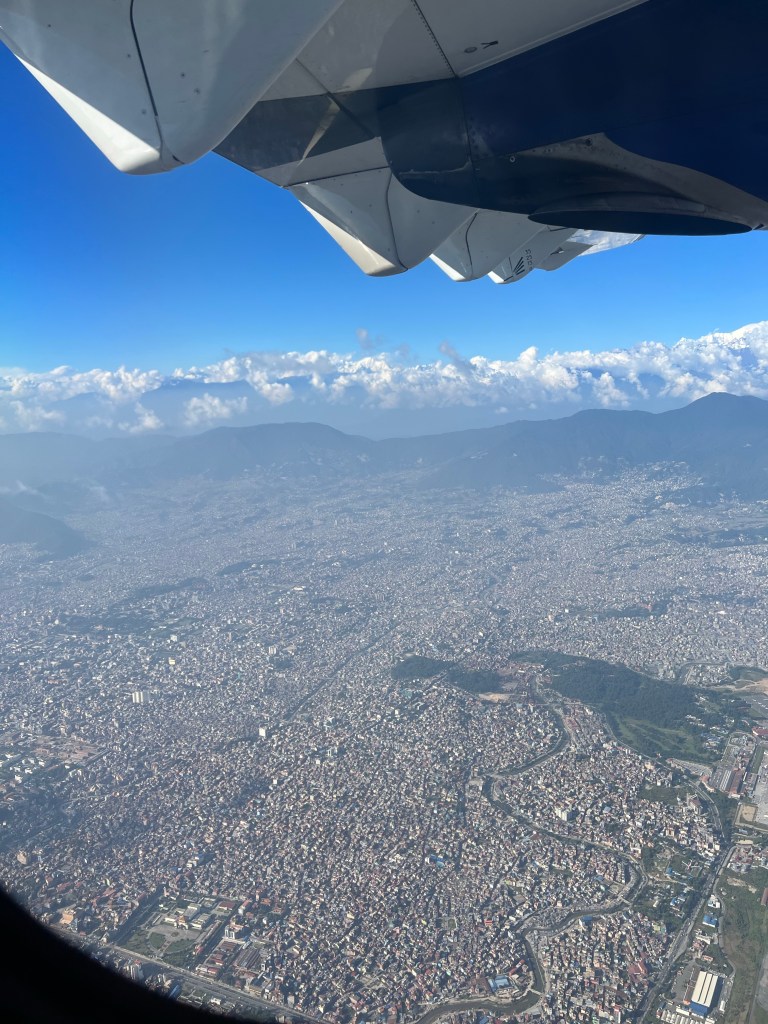
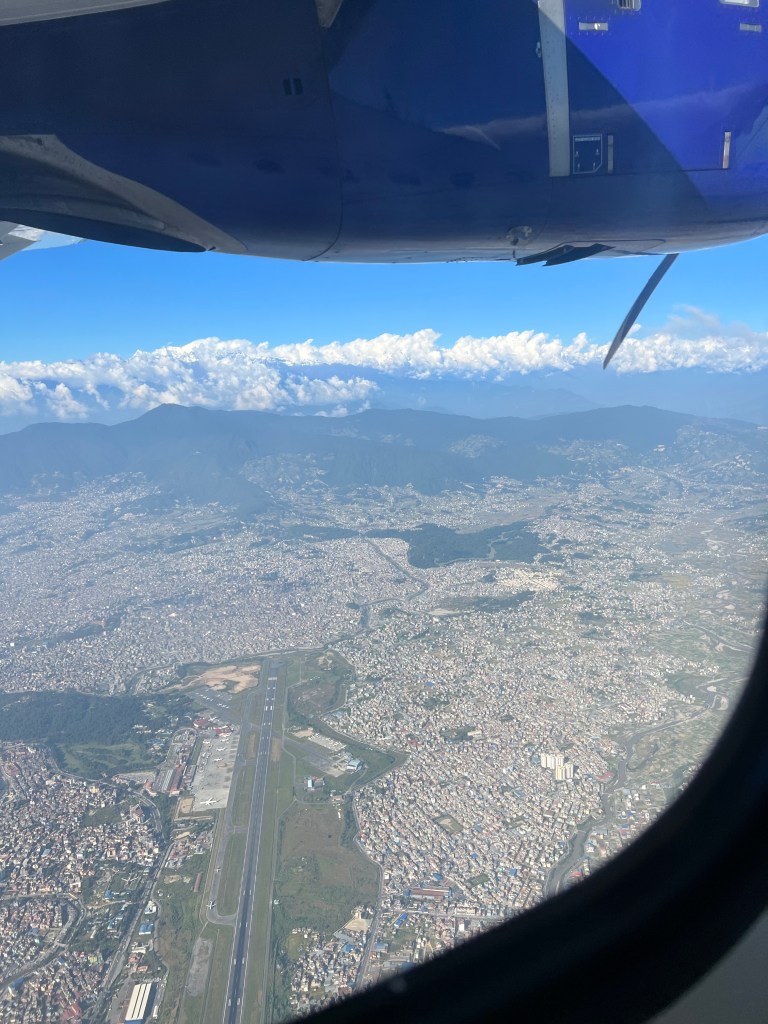
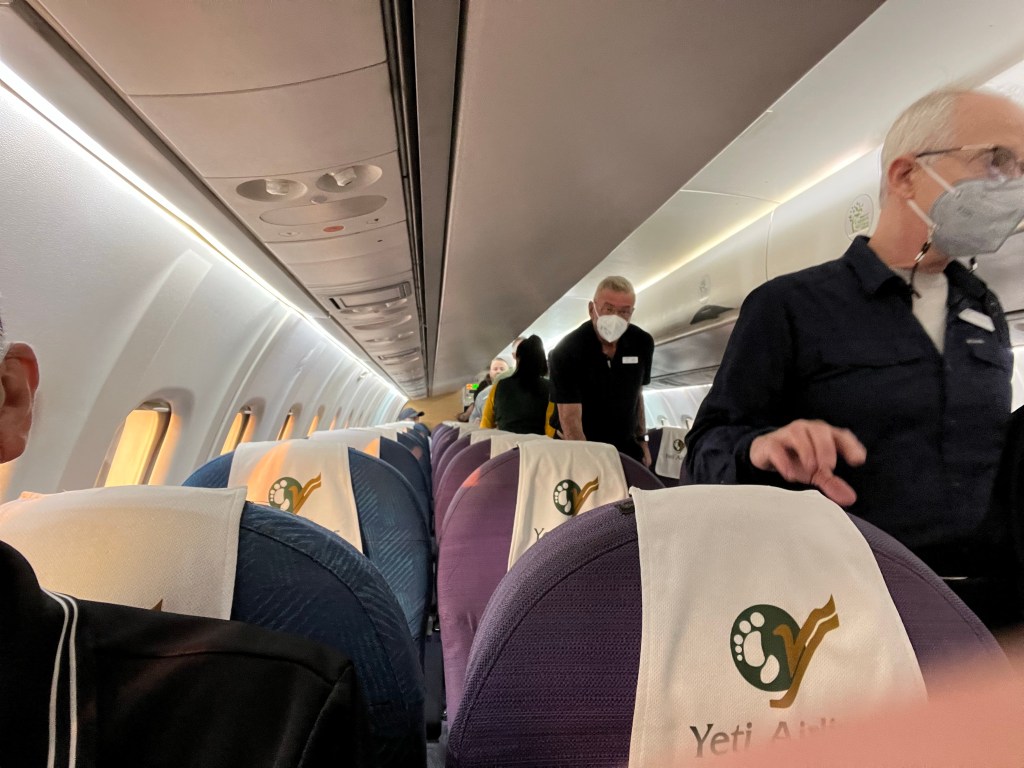
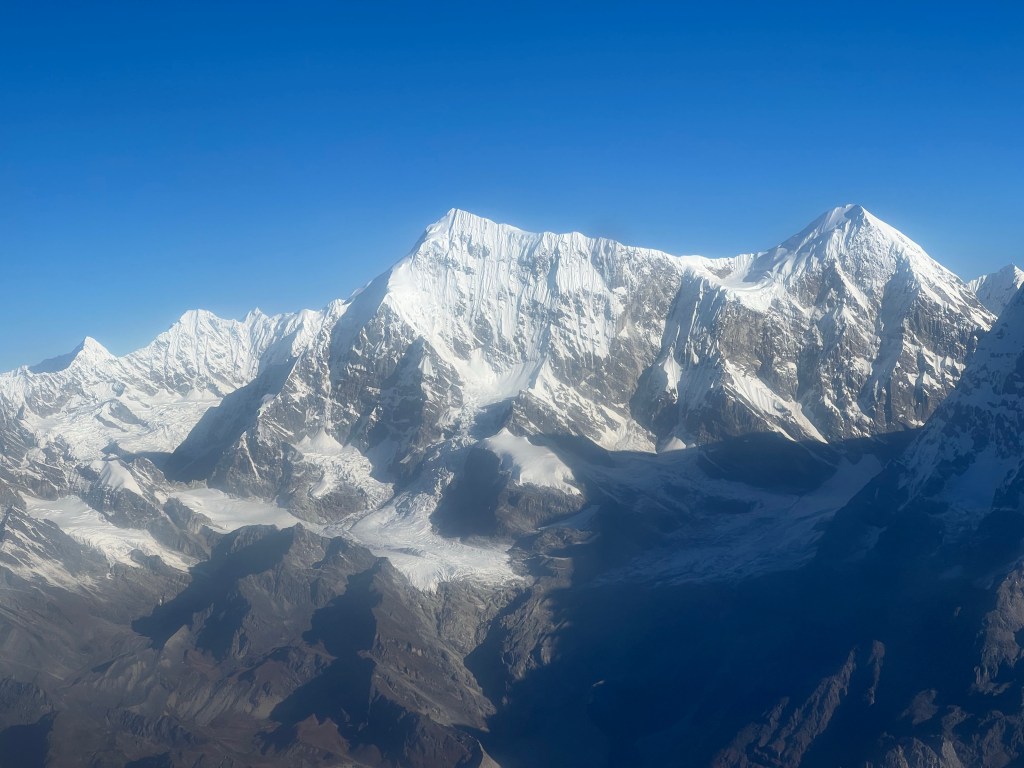
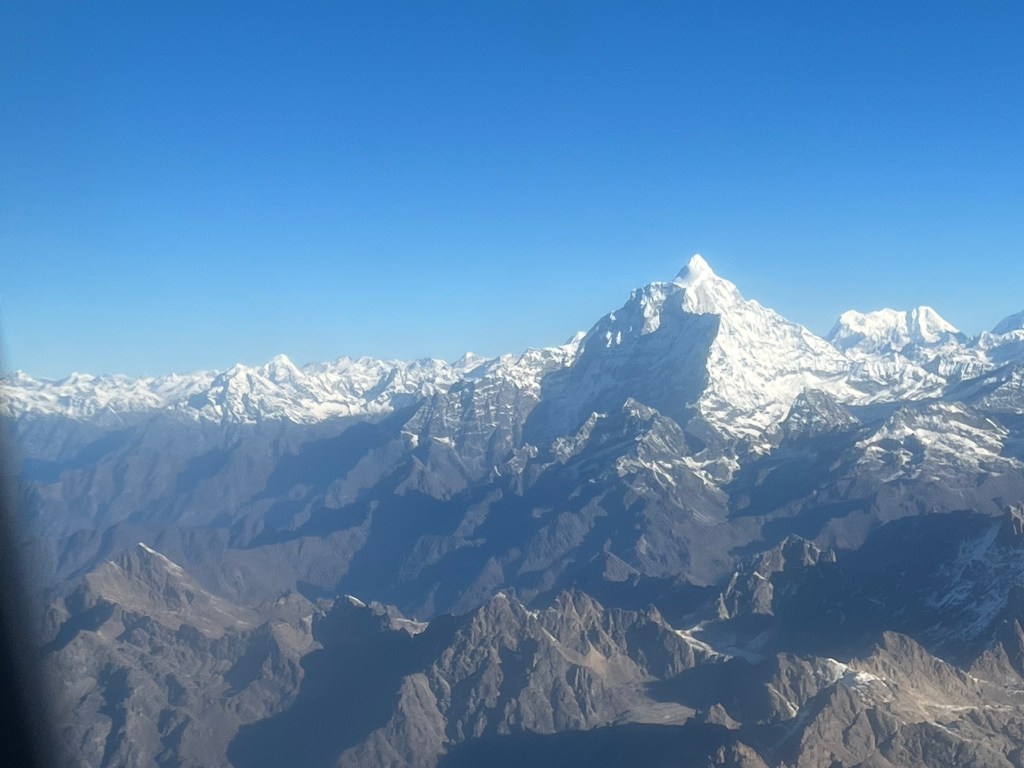
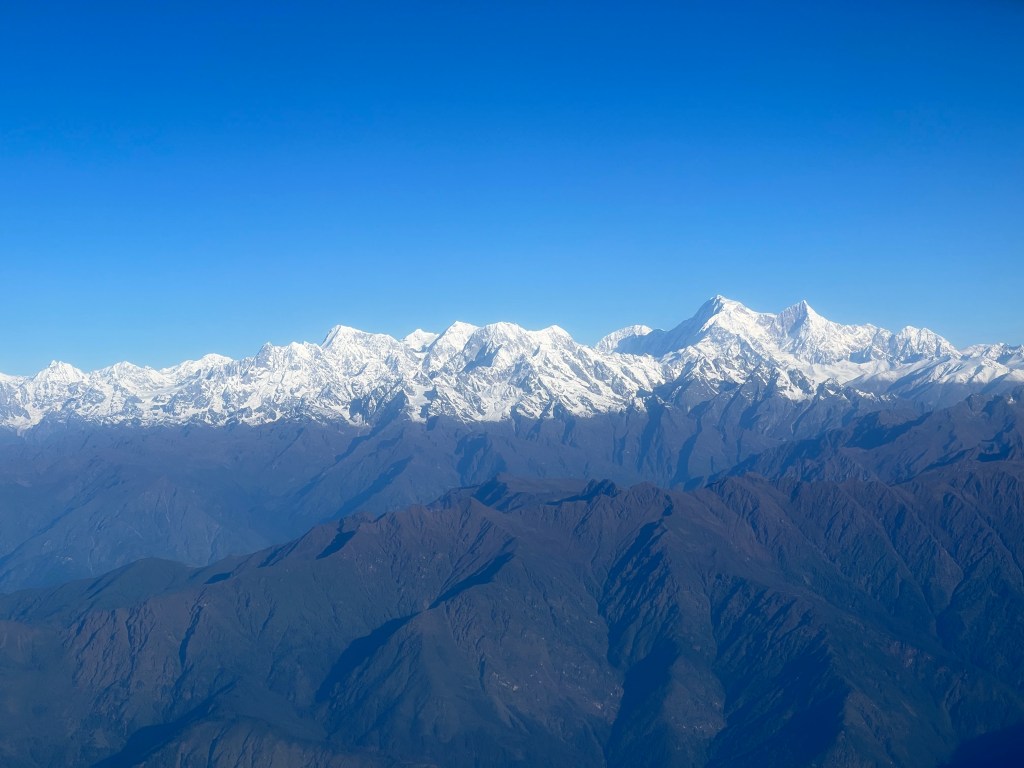
Everyone gets a window seat to view the Himalayas from the air.
Mt Everest
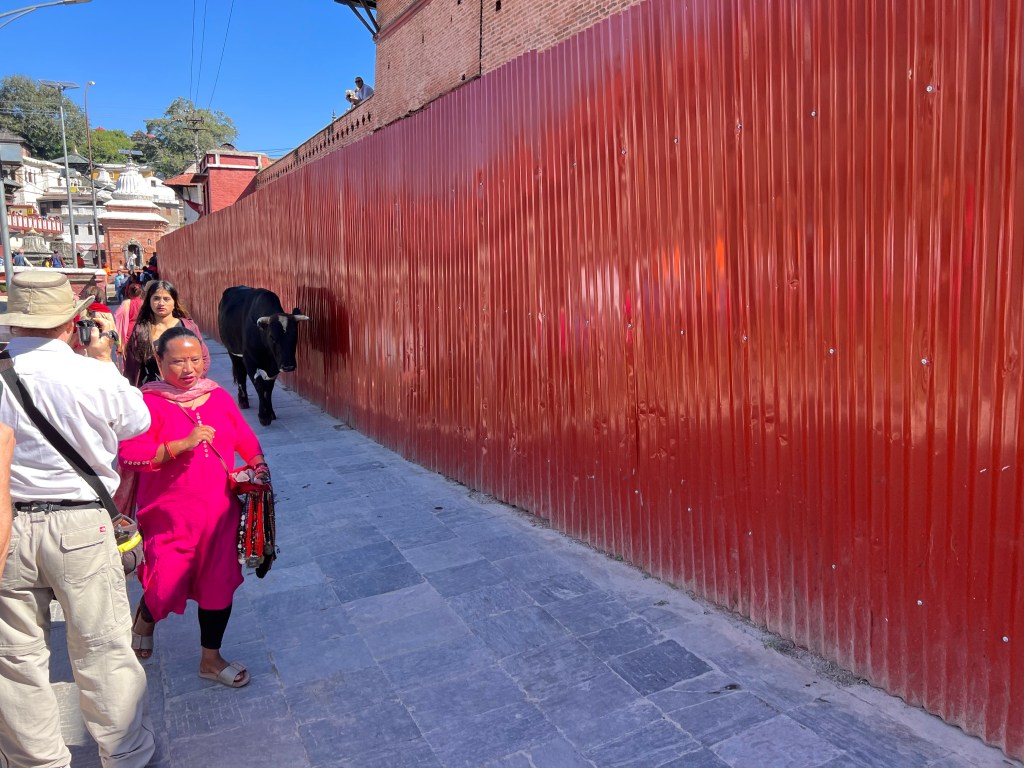
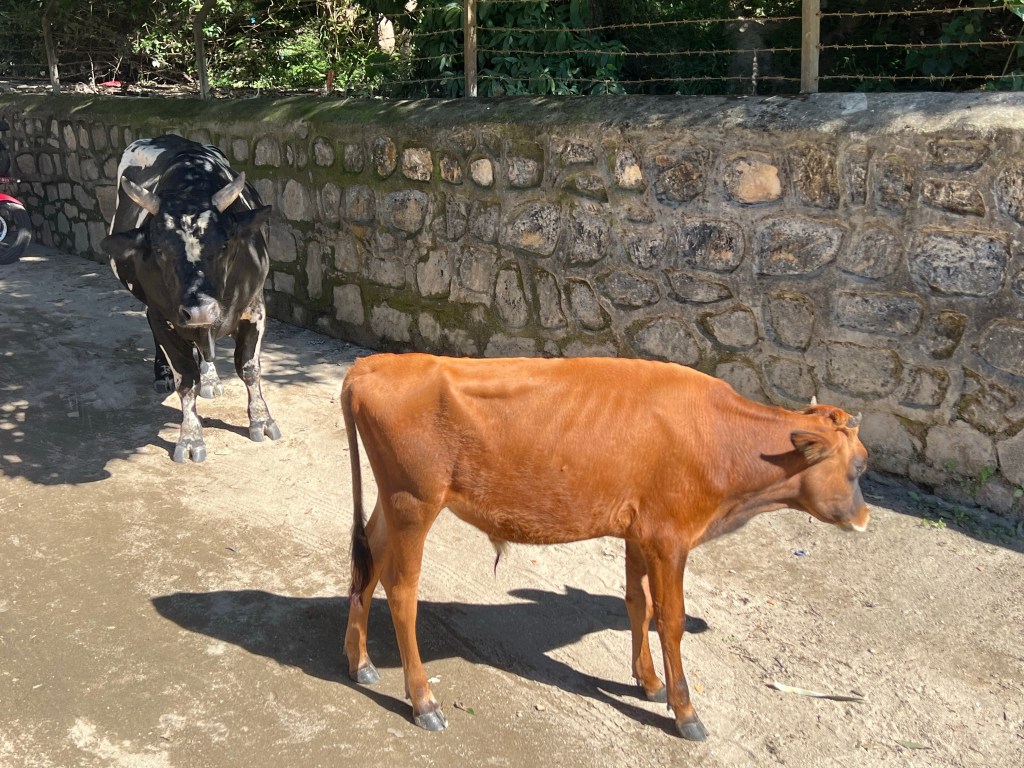
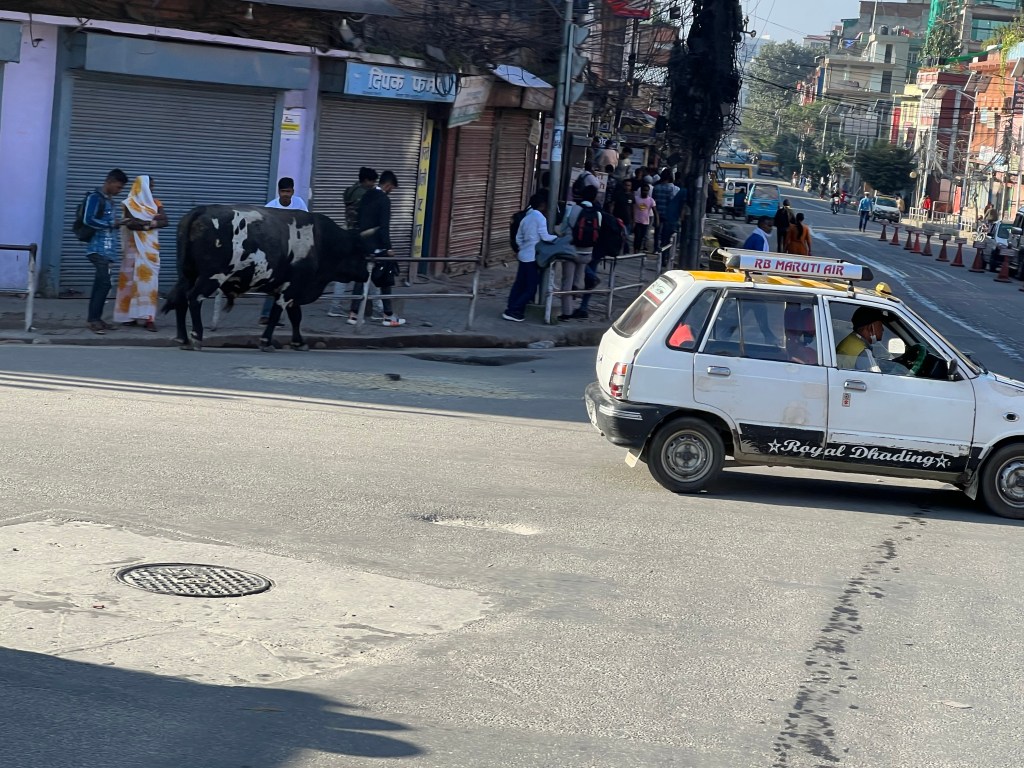
On the drive back to the hotel, we saw a cow on the street. Cows that don’t have ropes around their necks are not owned by anyone and are “temple” animals.
There are areas where the cows are normally housed, but occasionally one wanders off.
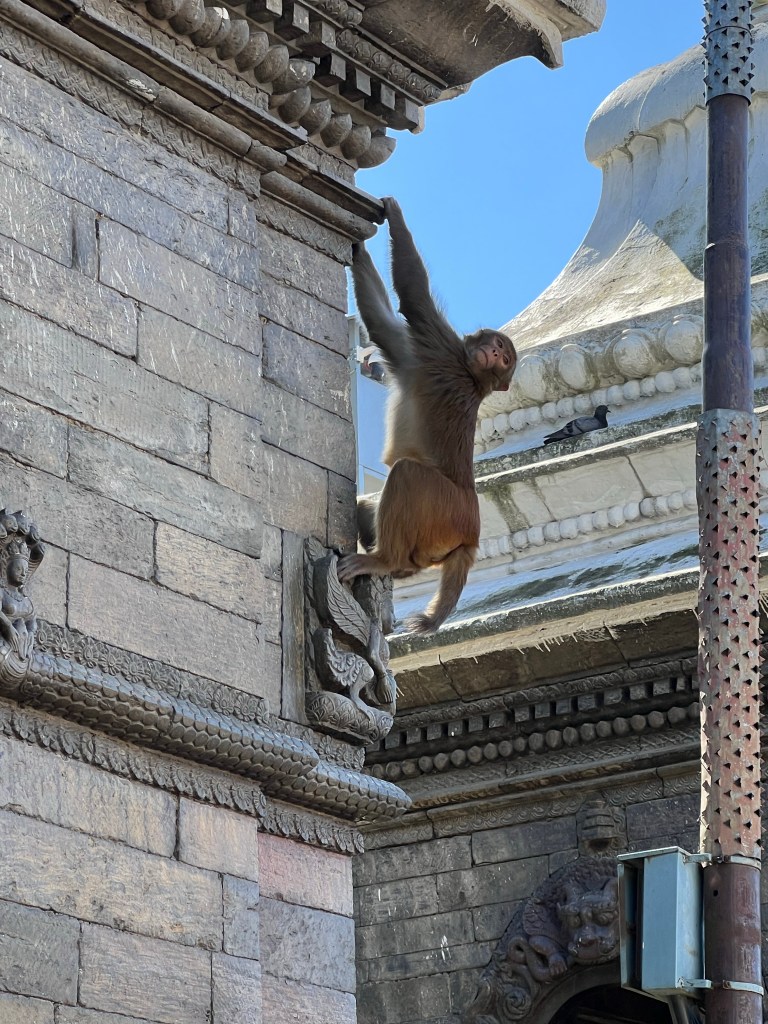
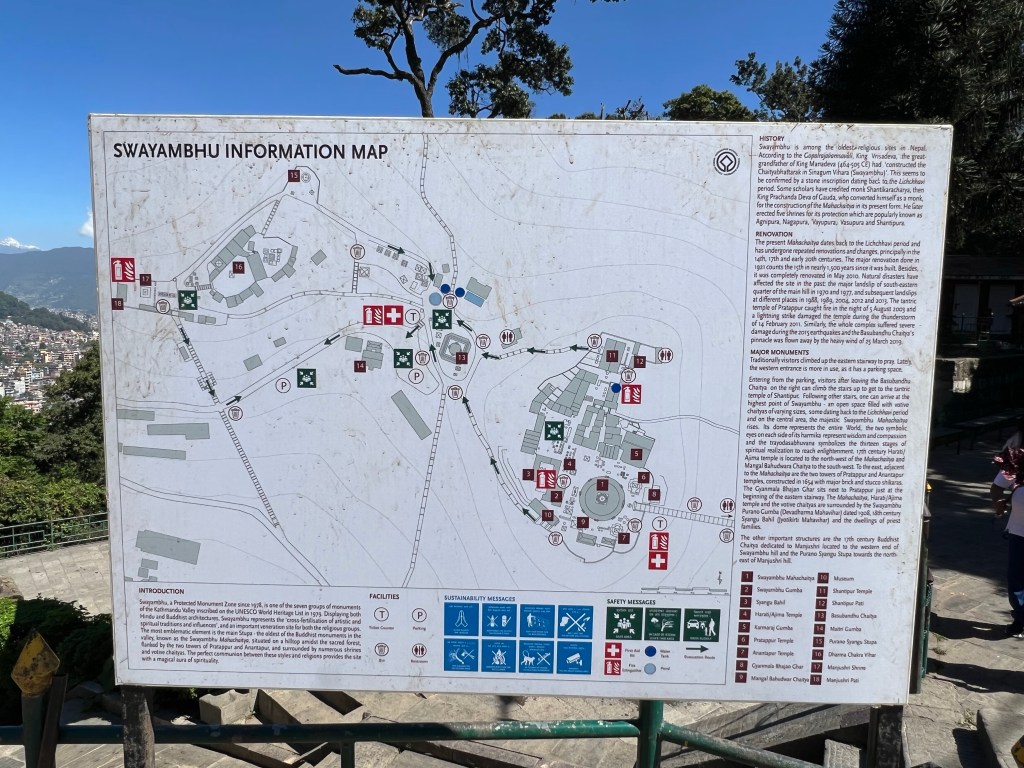
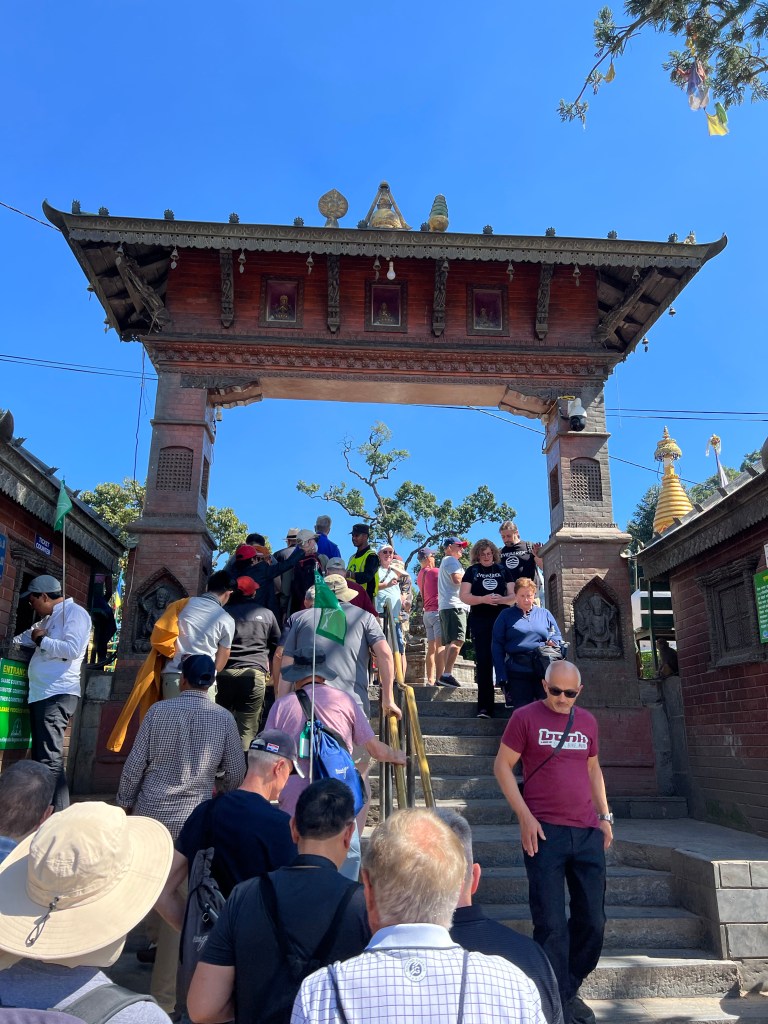
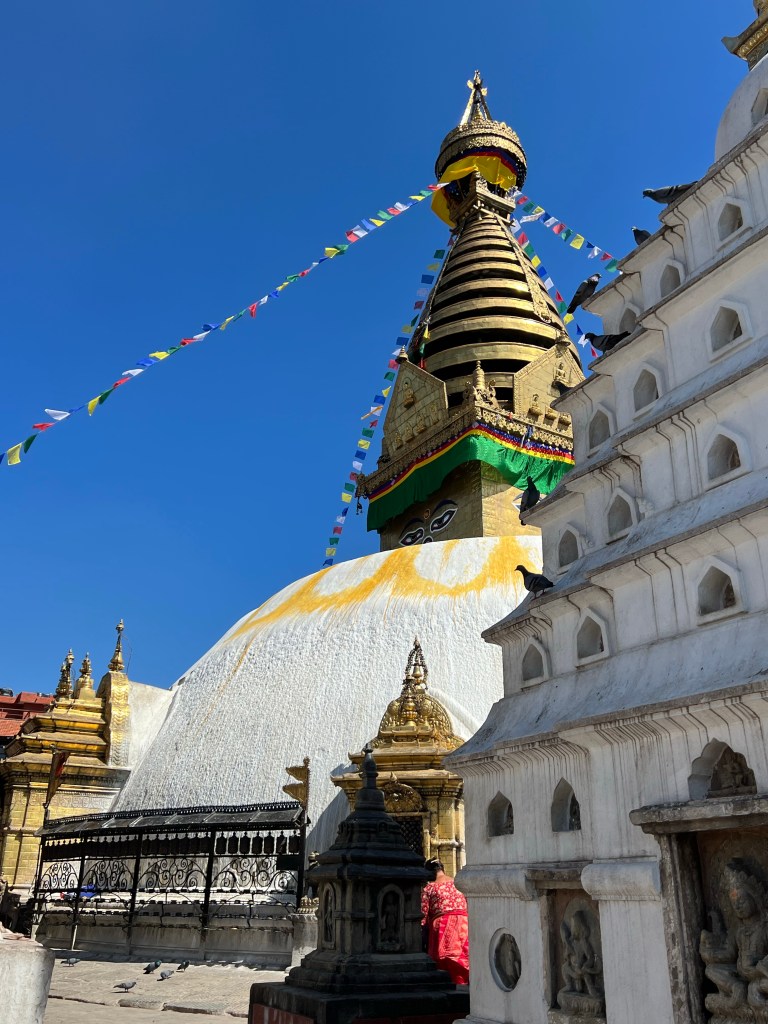
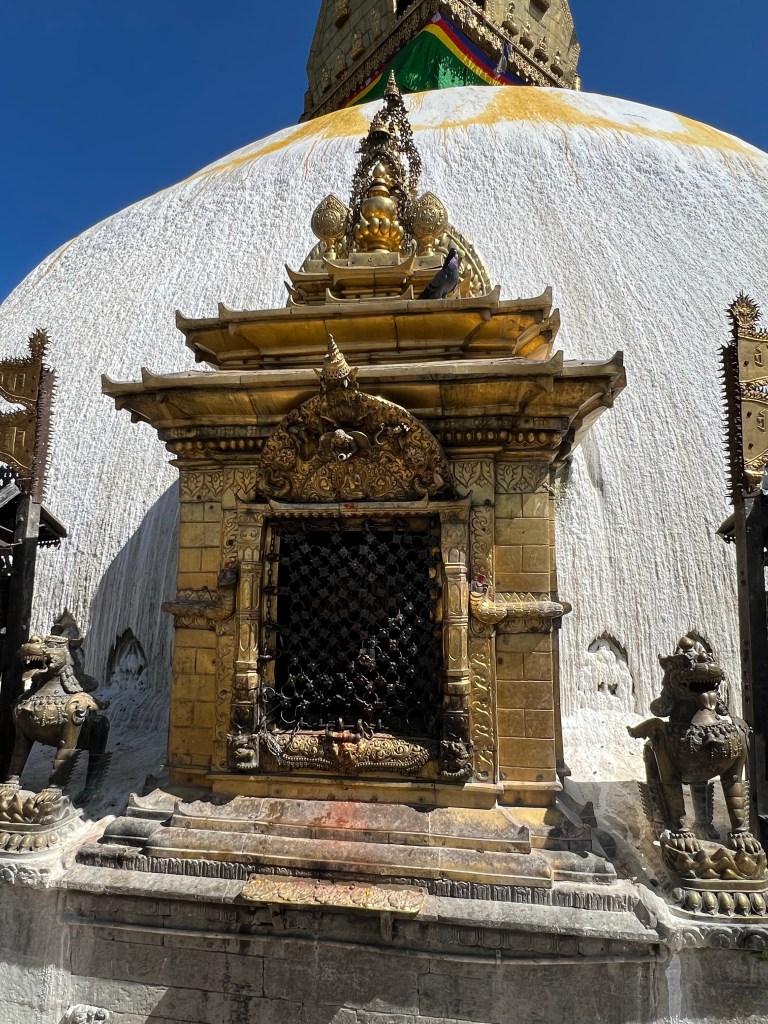
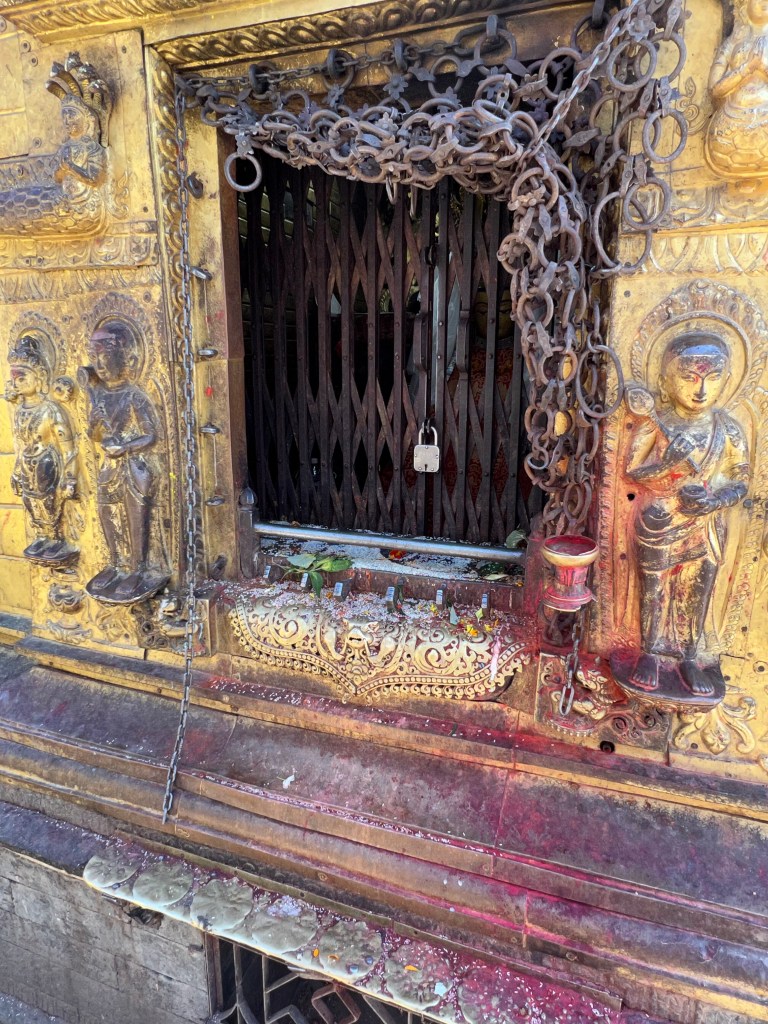
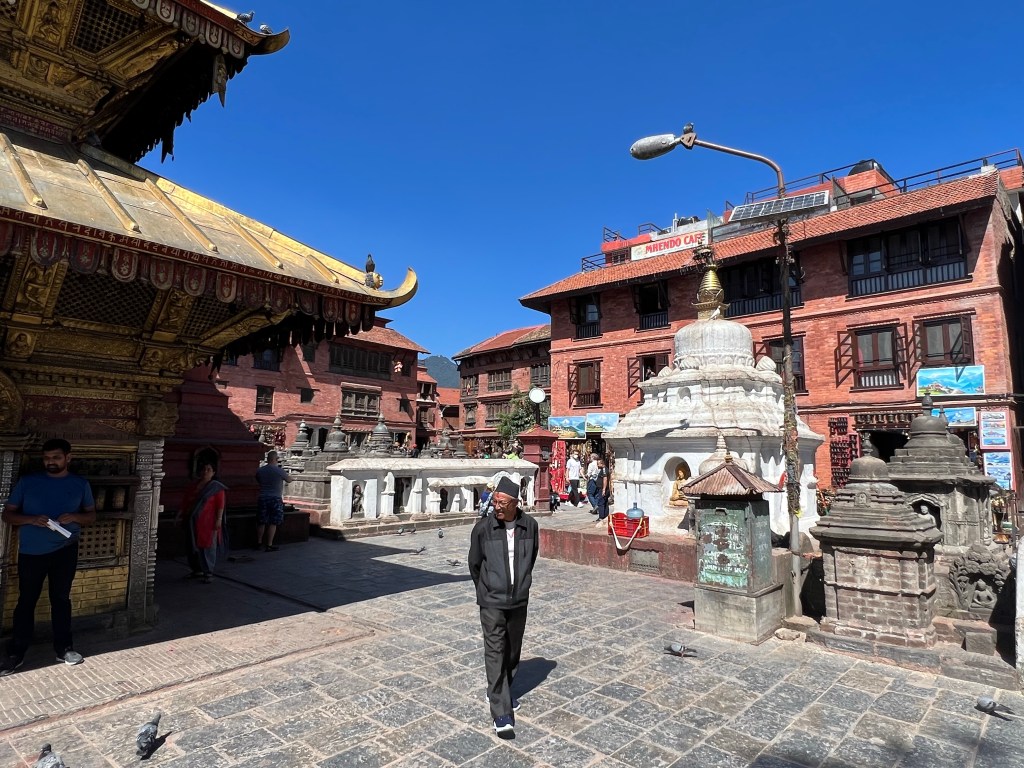
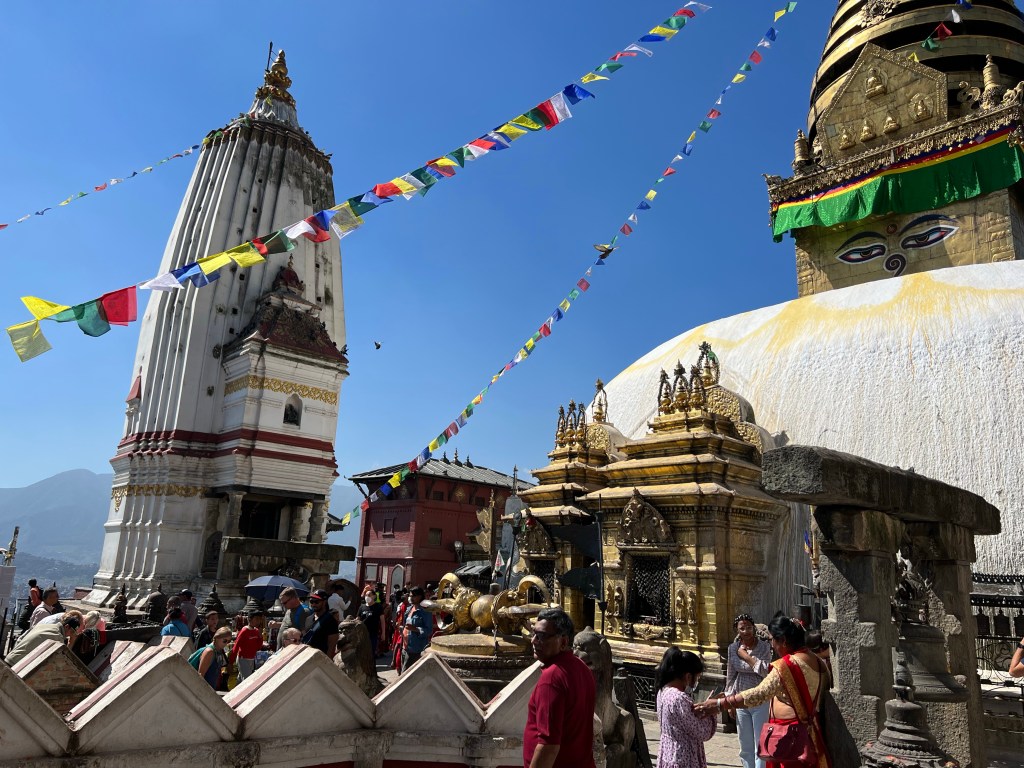
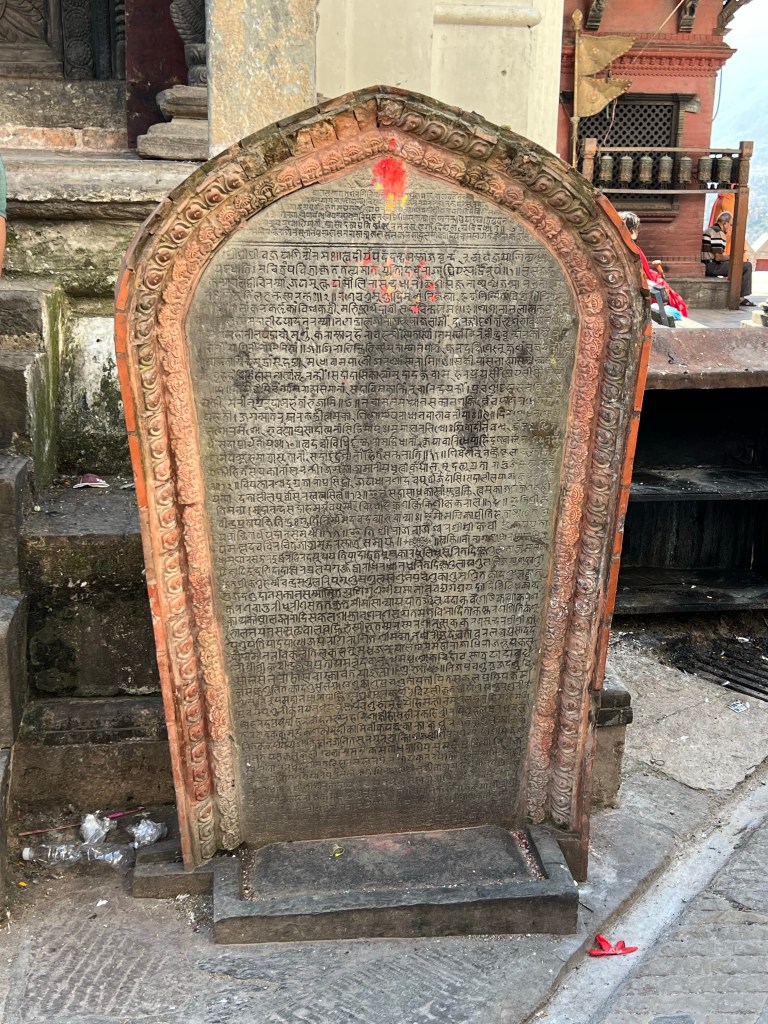
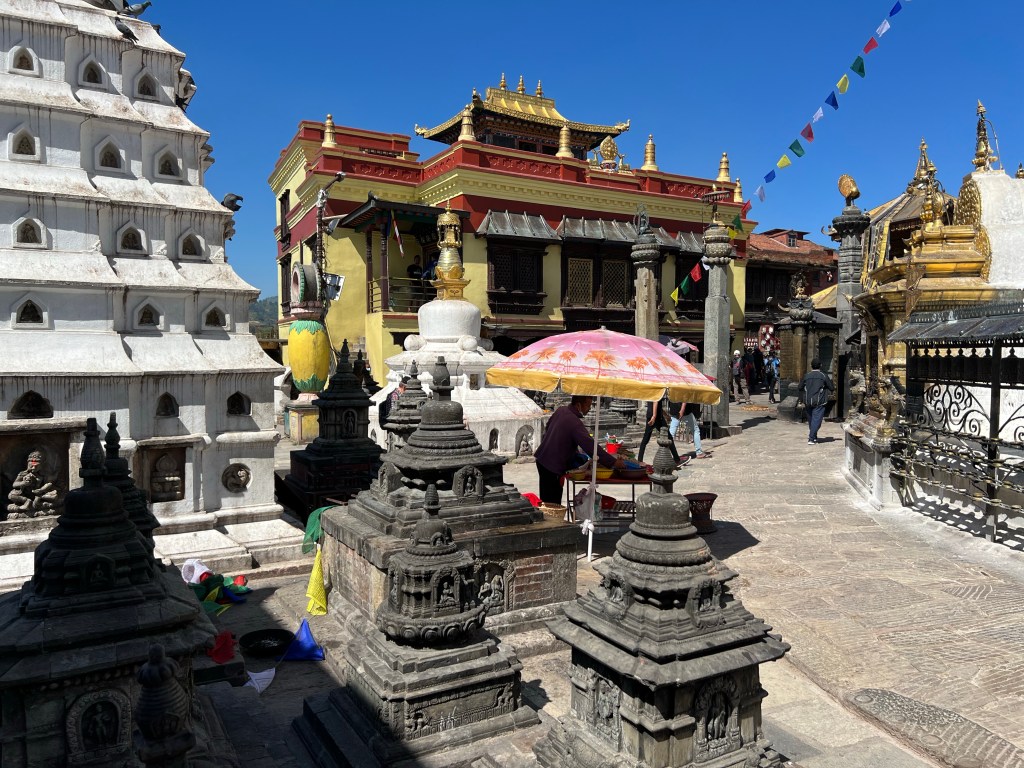
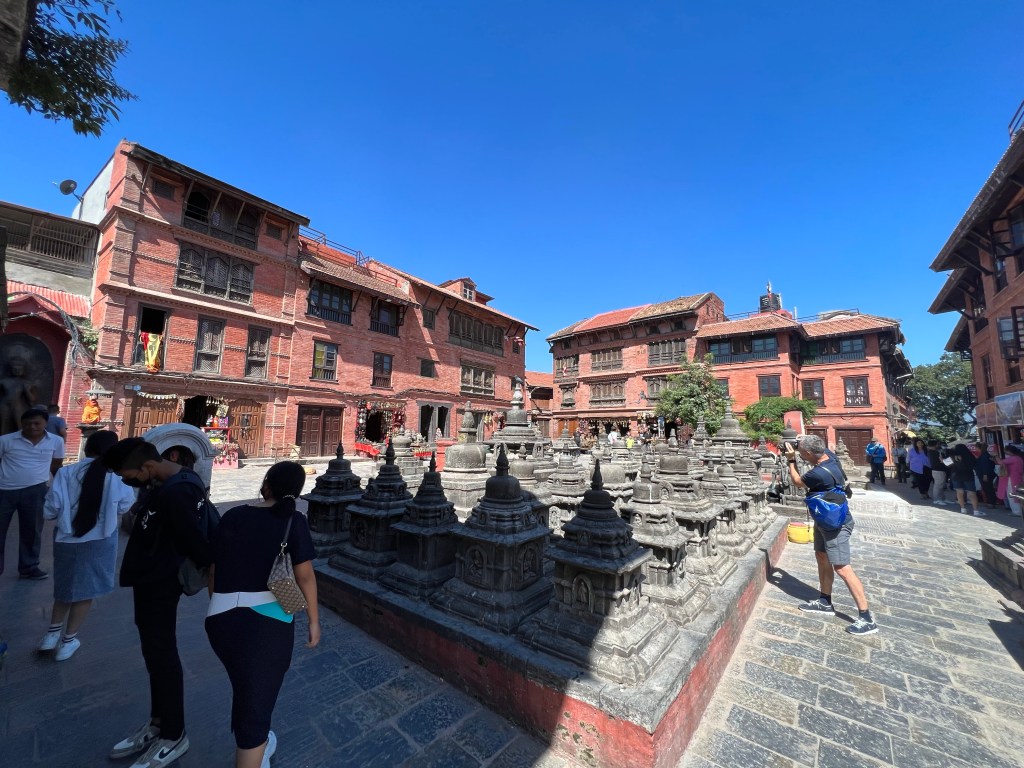
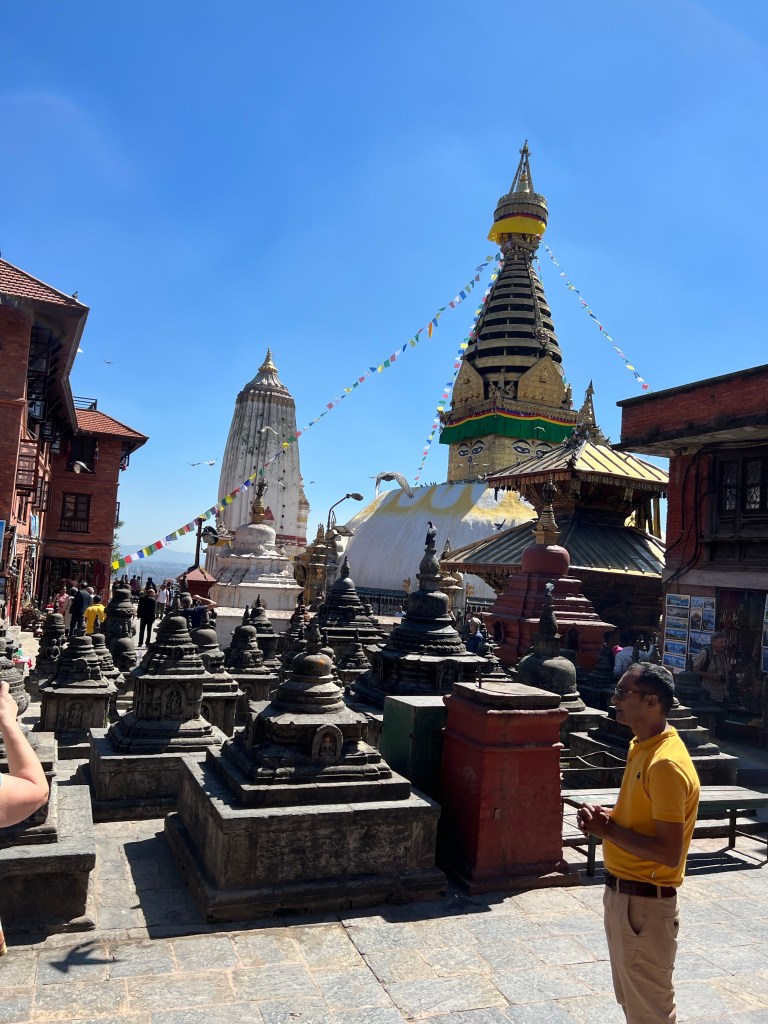
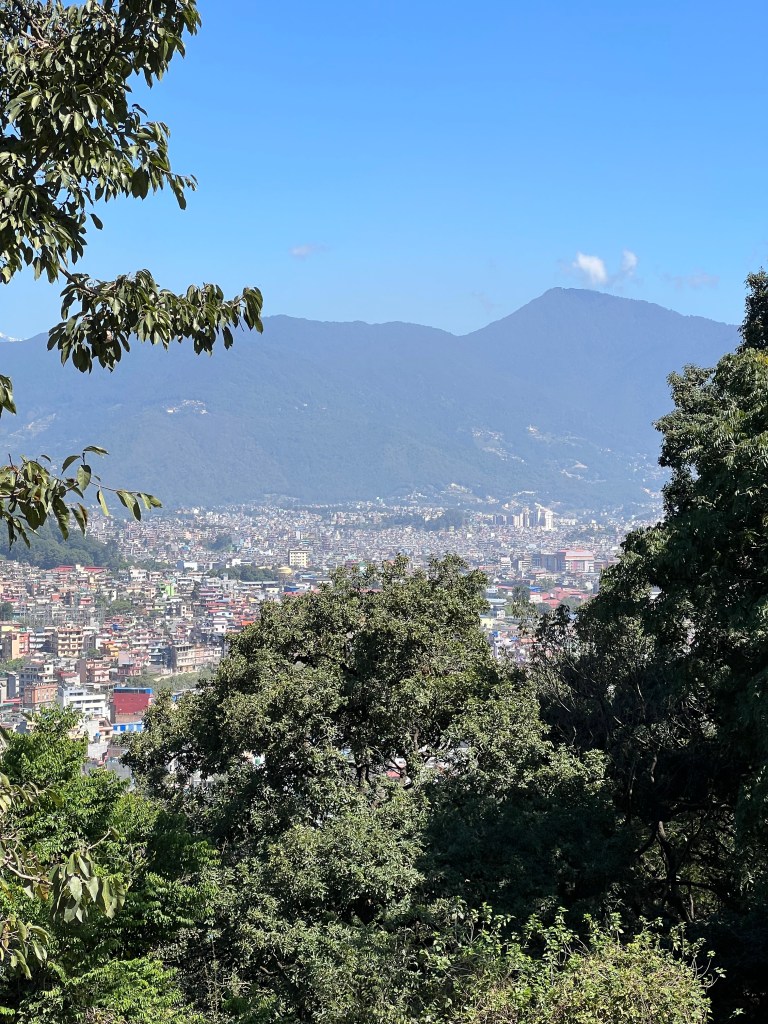
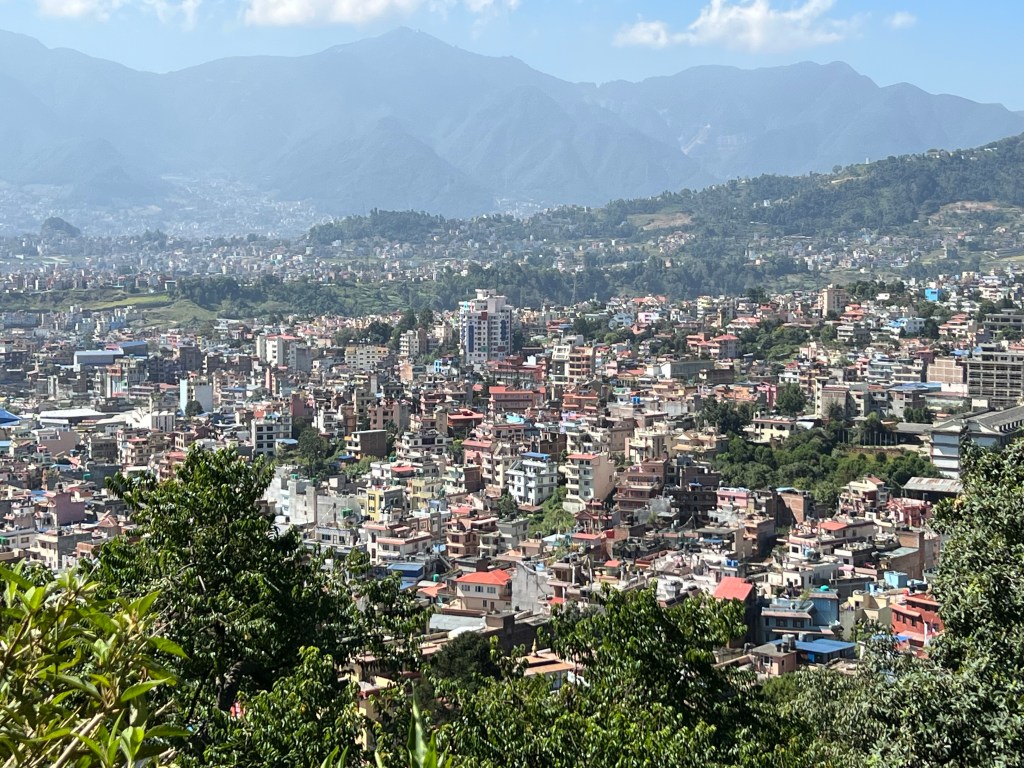
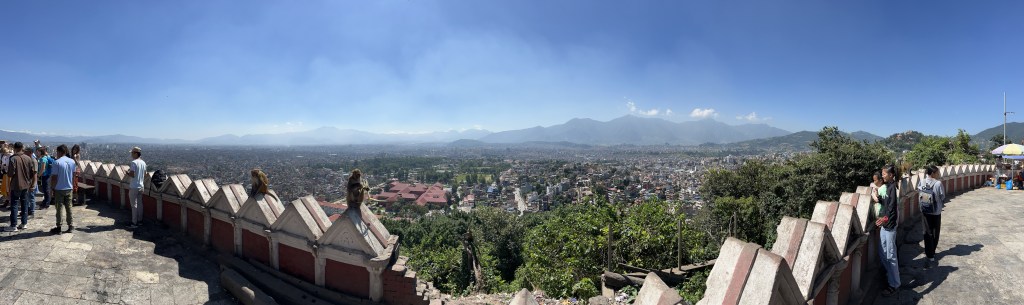
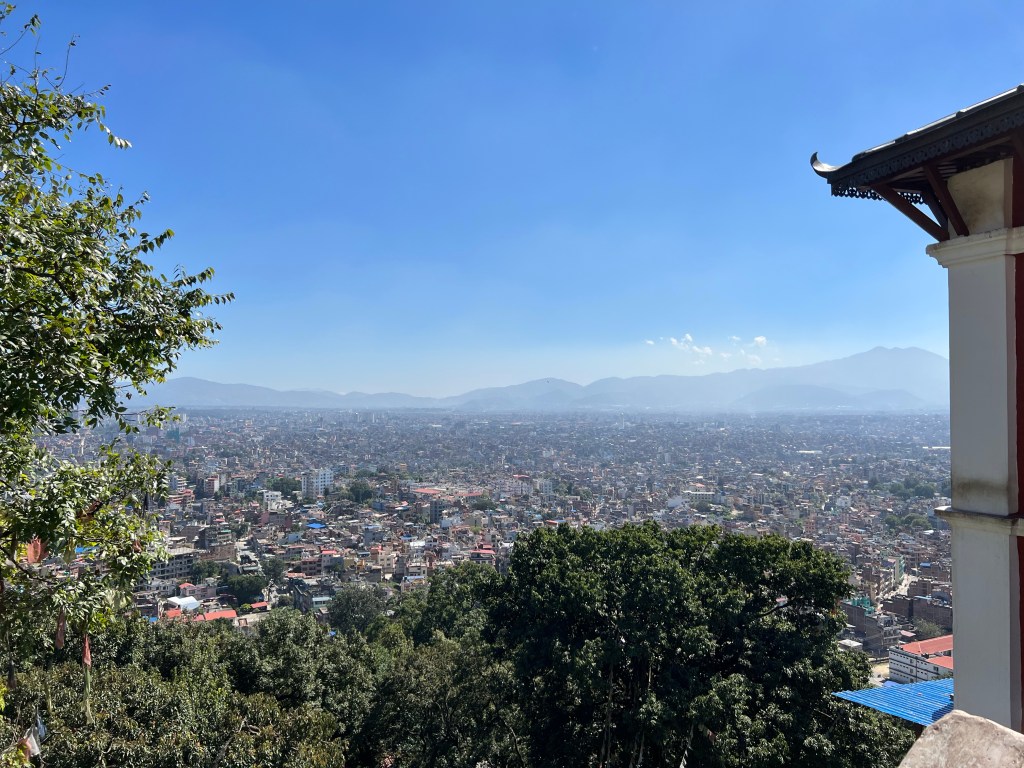
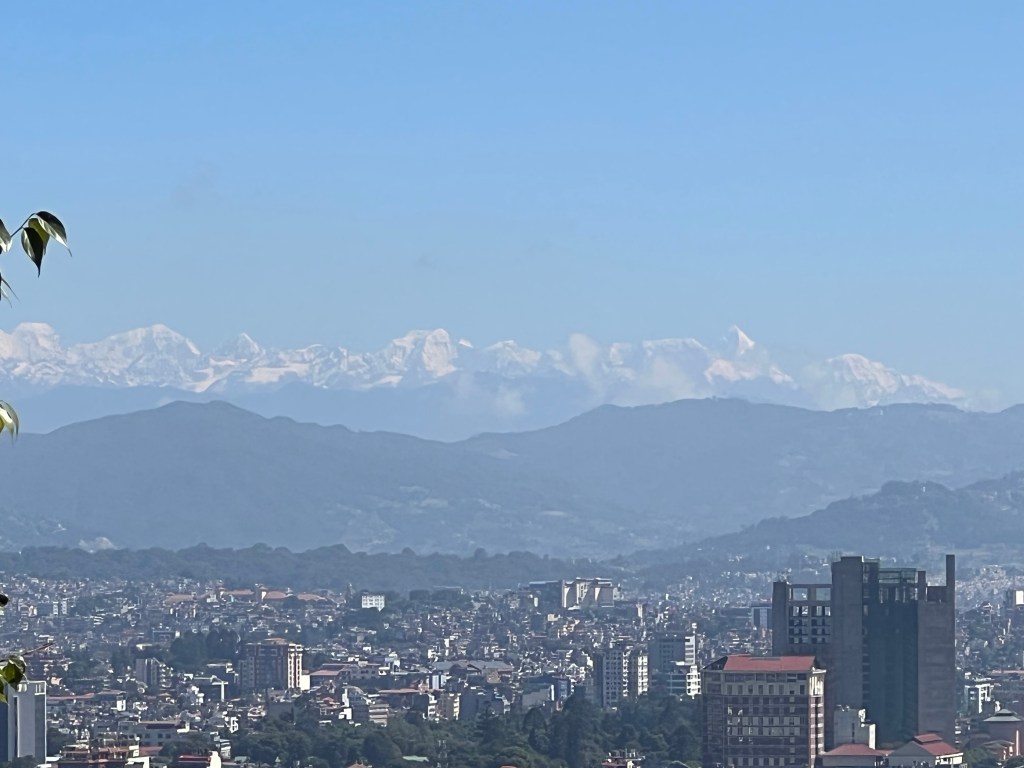
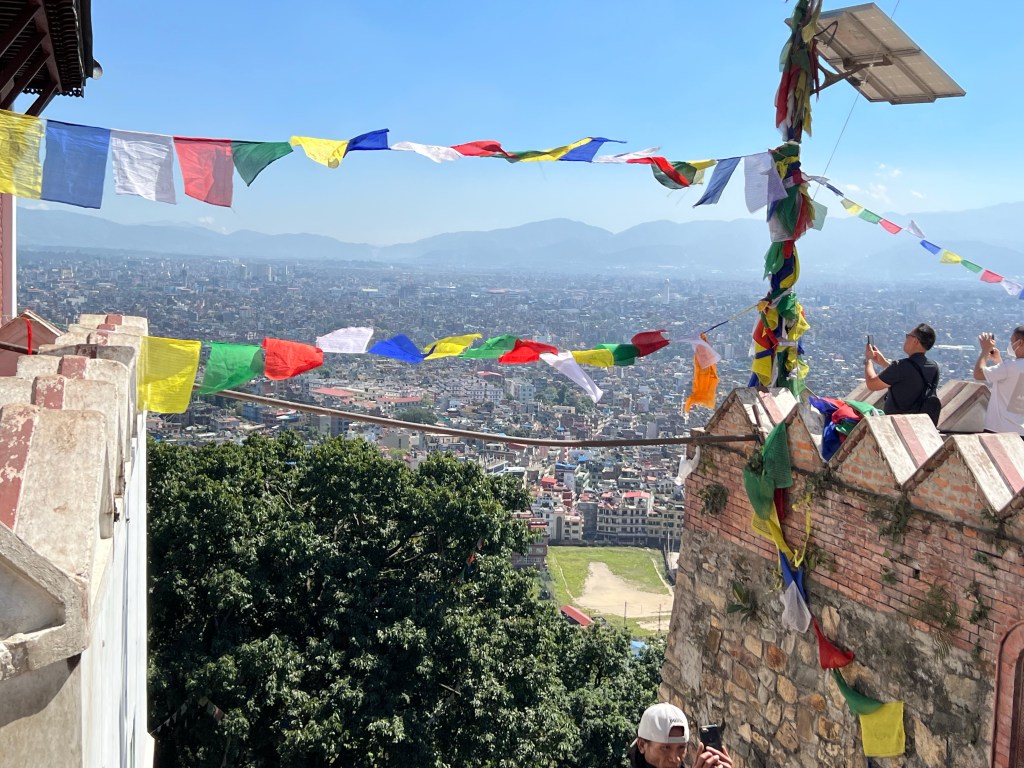
Swayambhu Stupa, also known as monkey temple, is on a hill and has panoramic views of the Kathmandu valley.
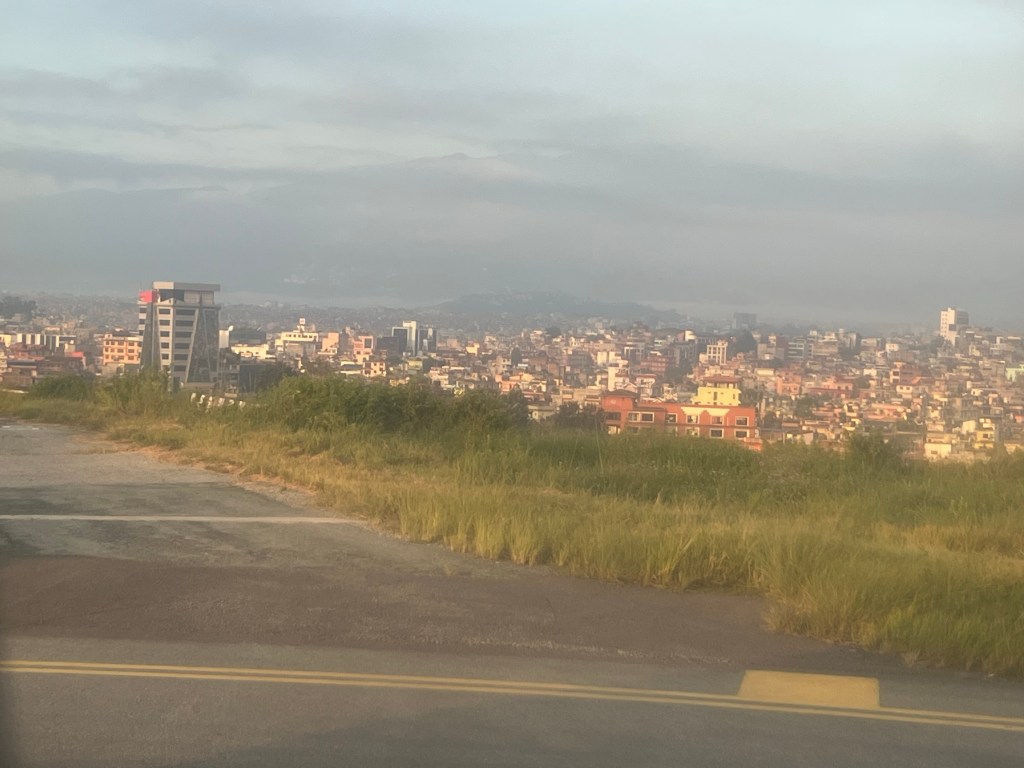
Views of Kathmandu Valley:
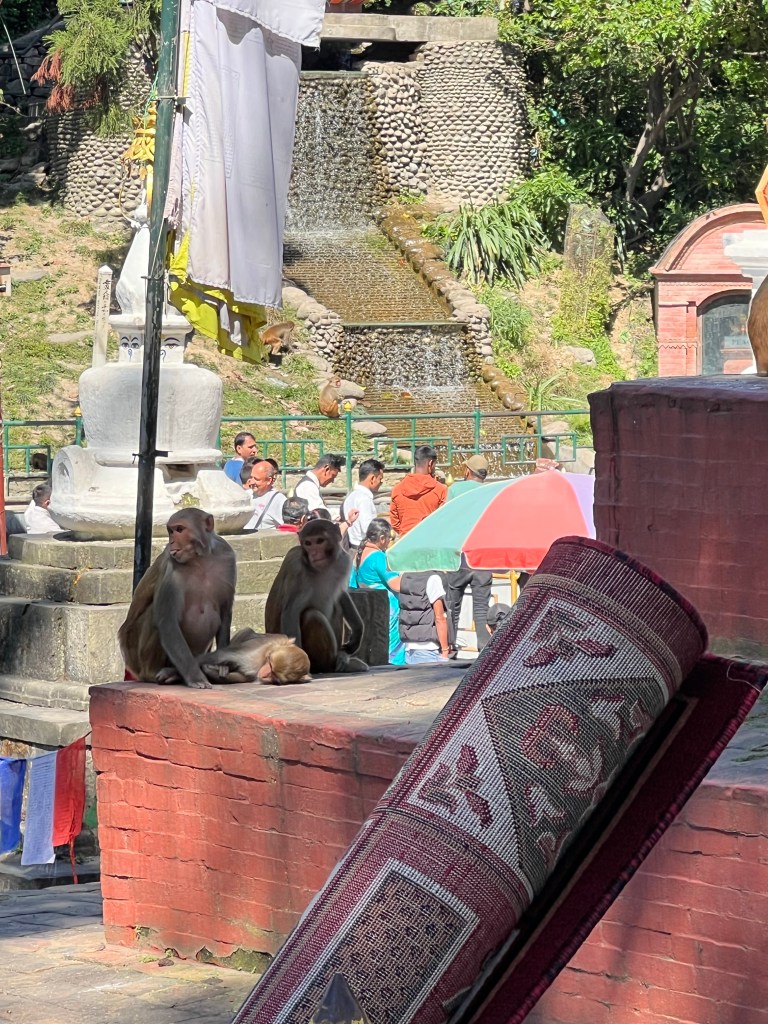
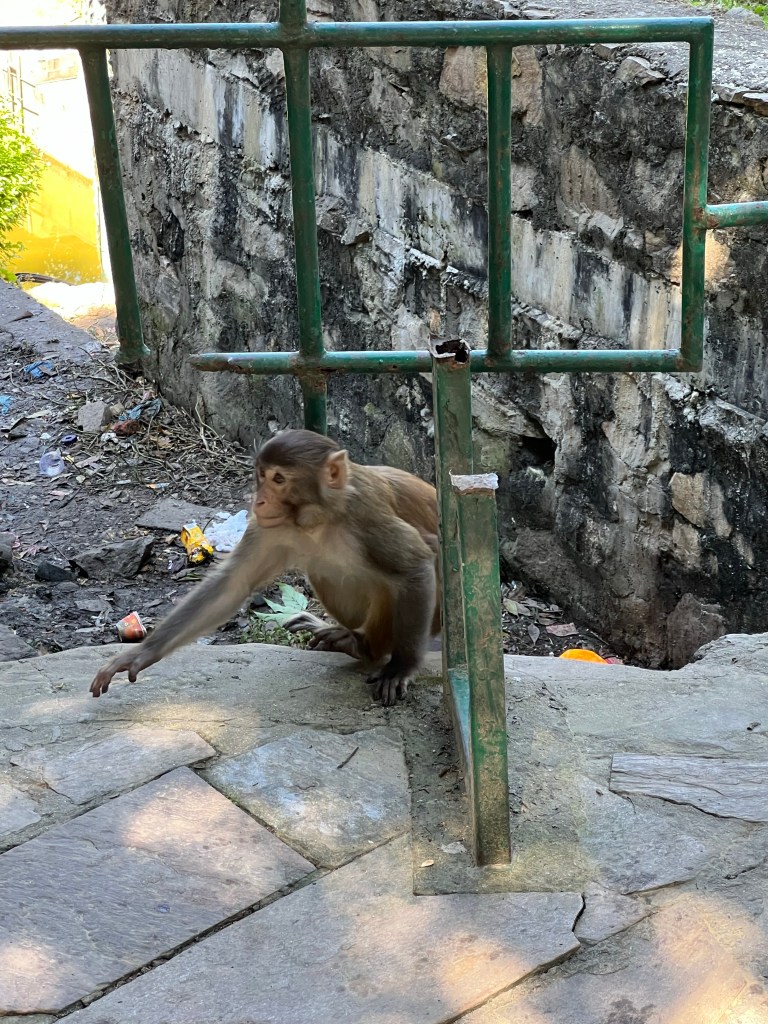
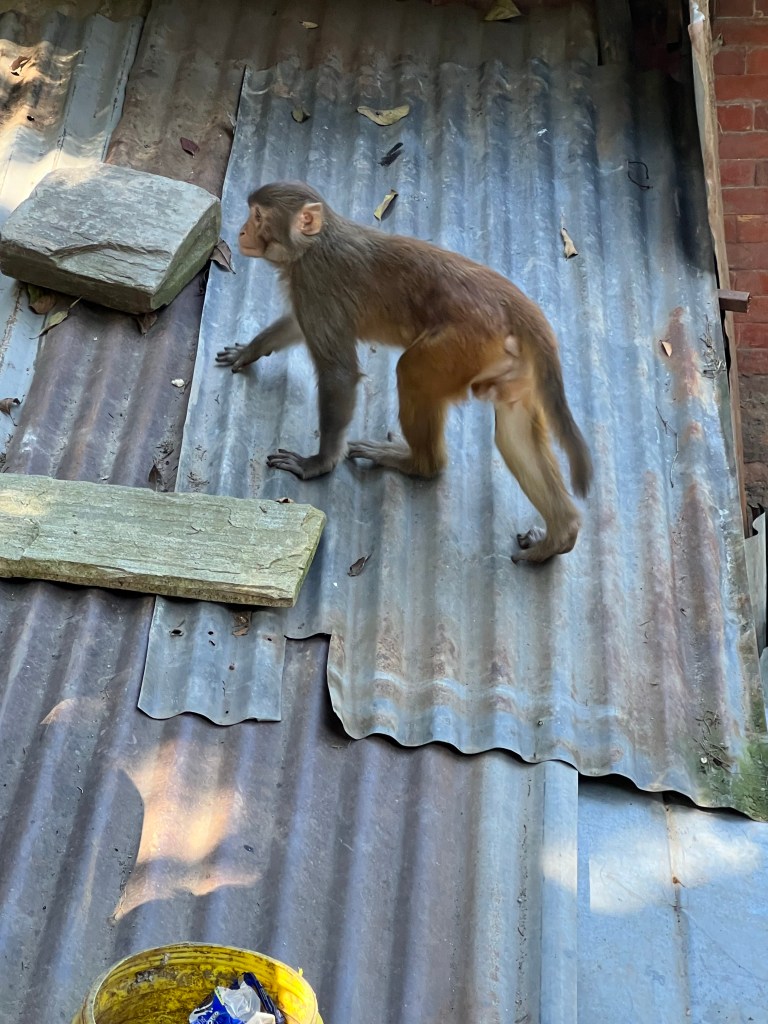
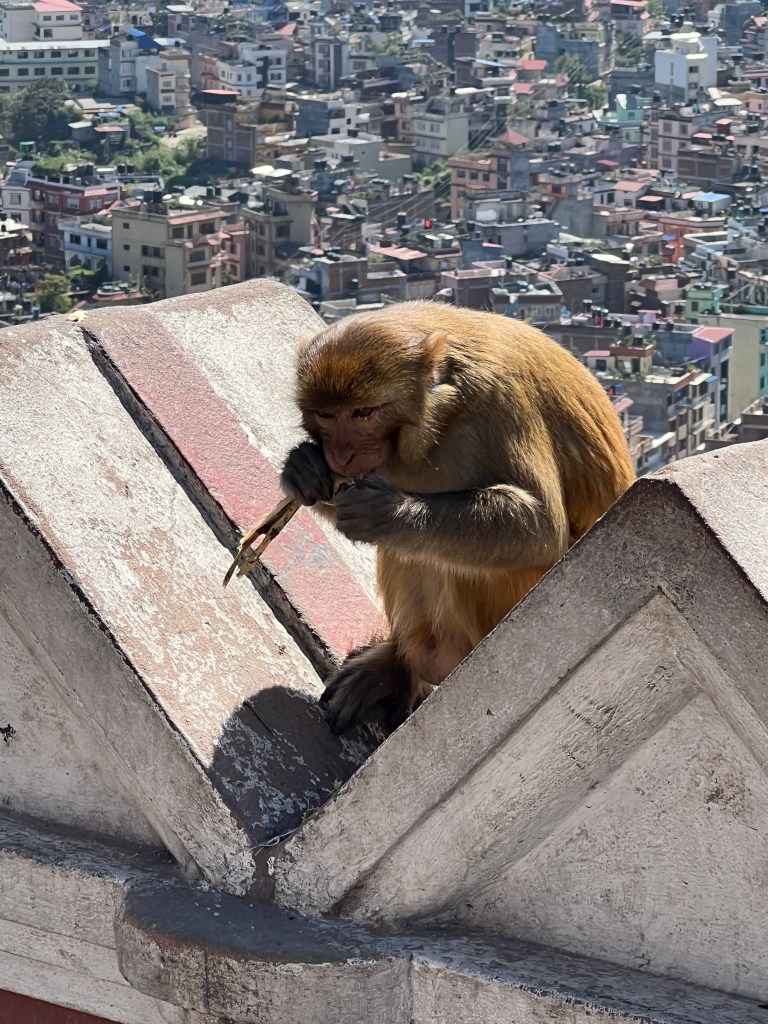
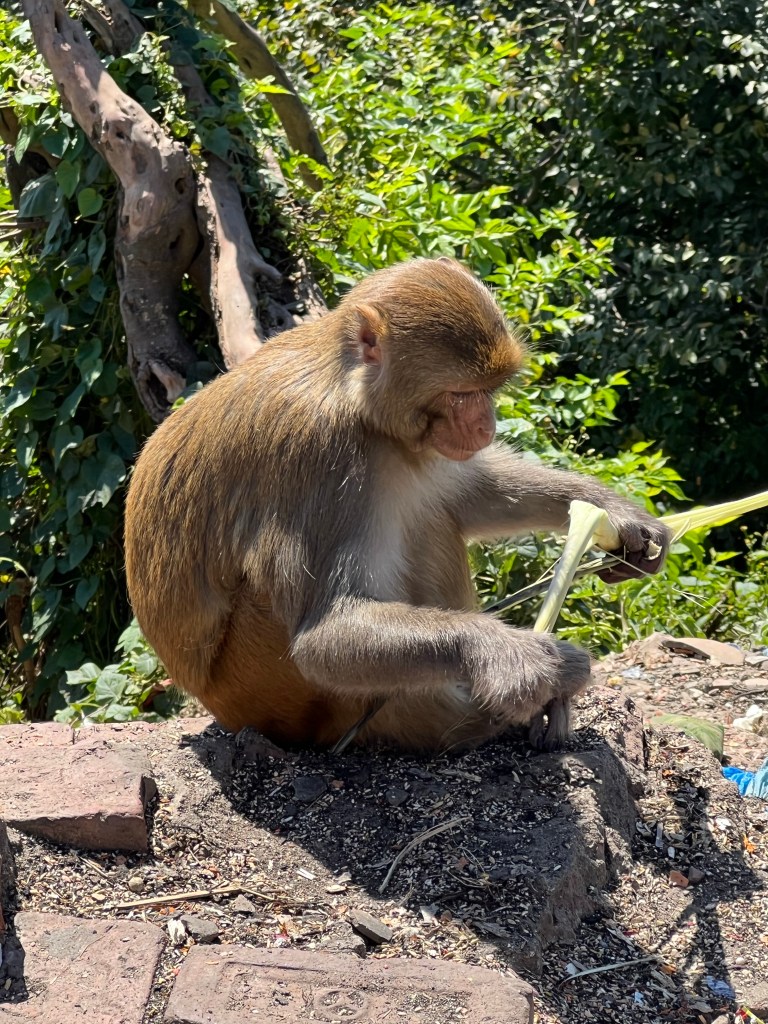
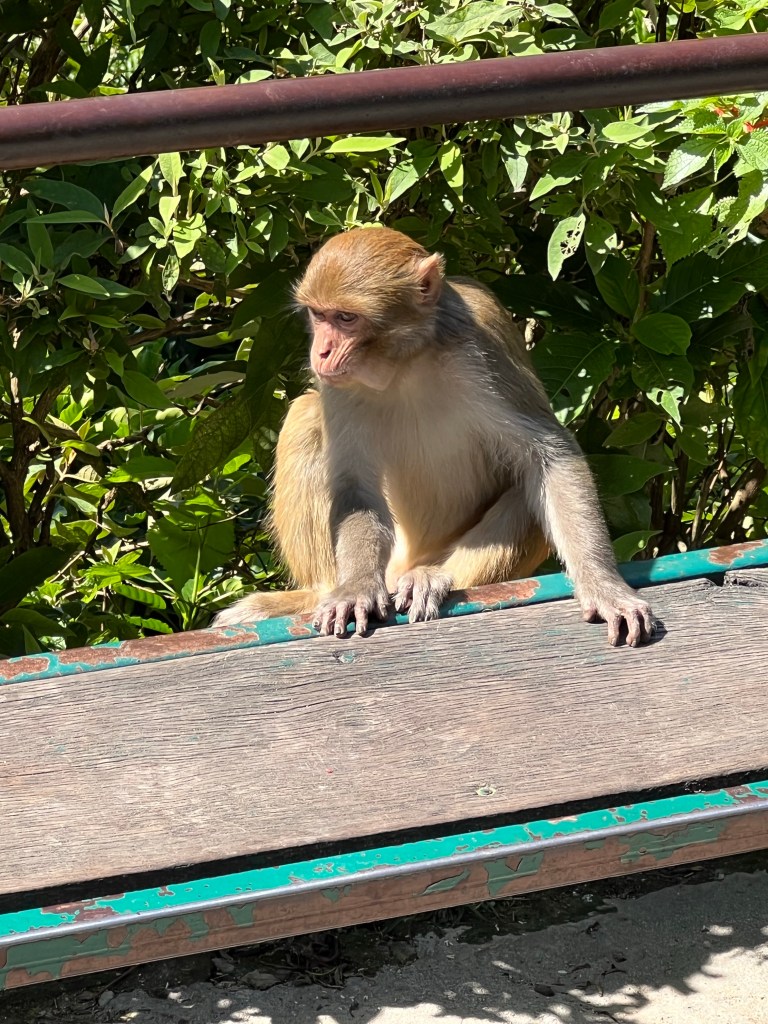
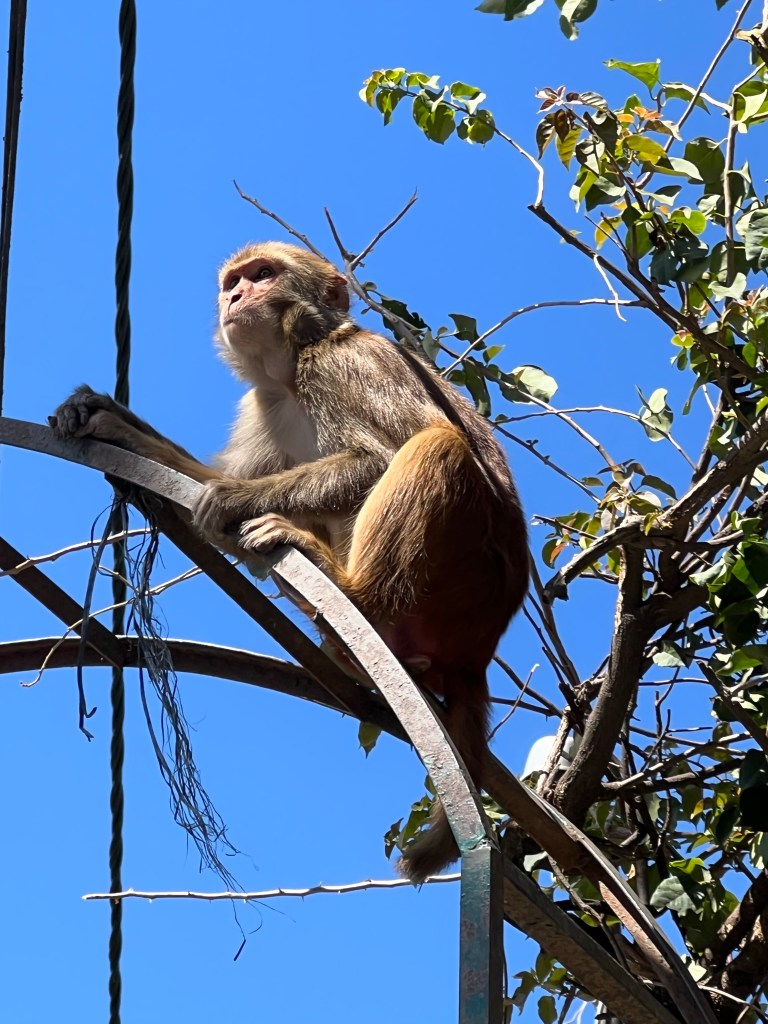
Rhesus macaque monkeys at the temple:
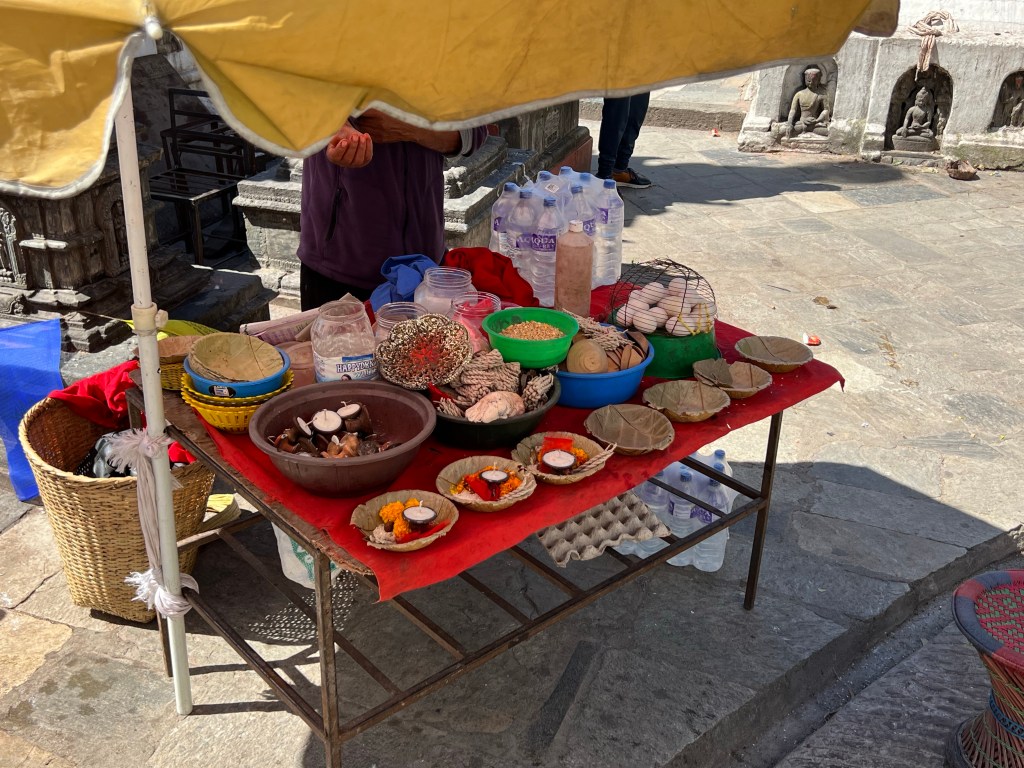
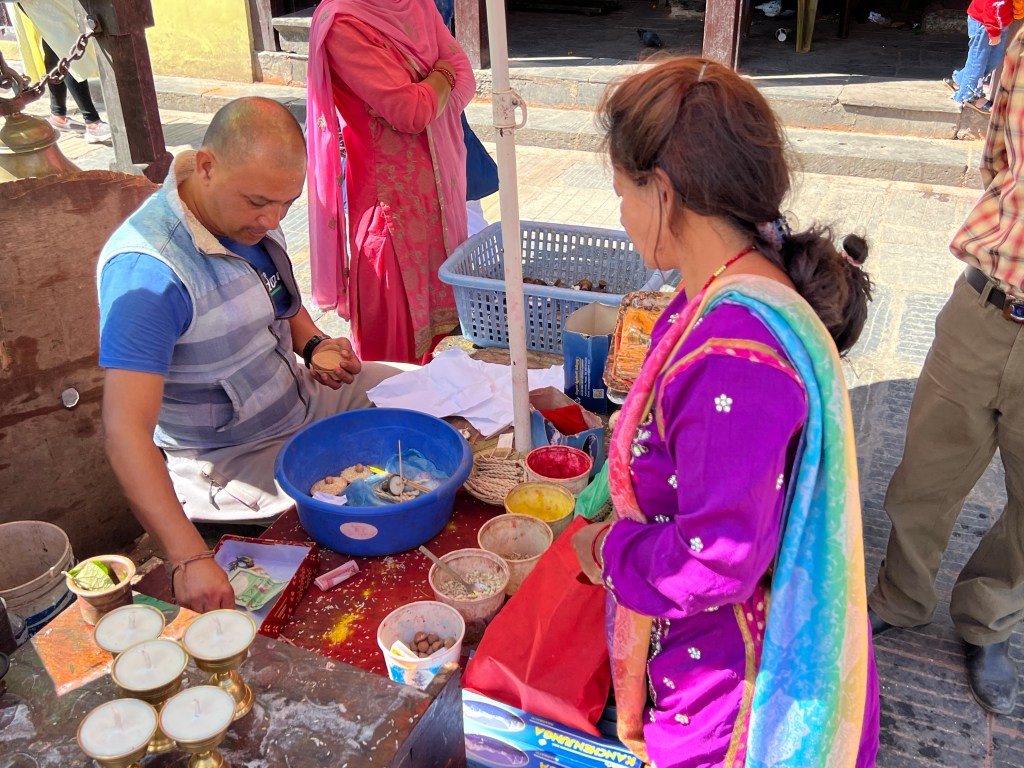
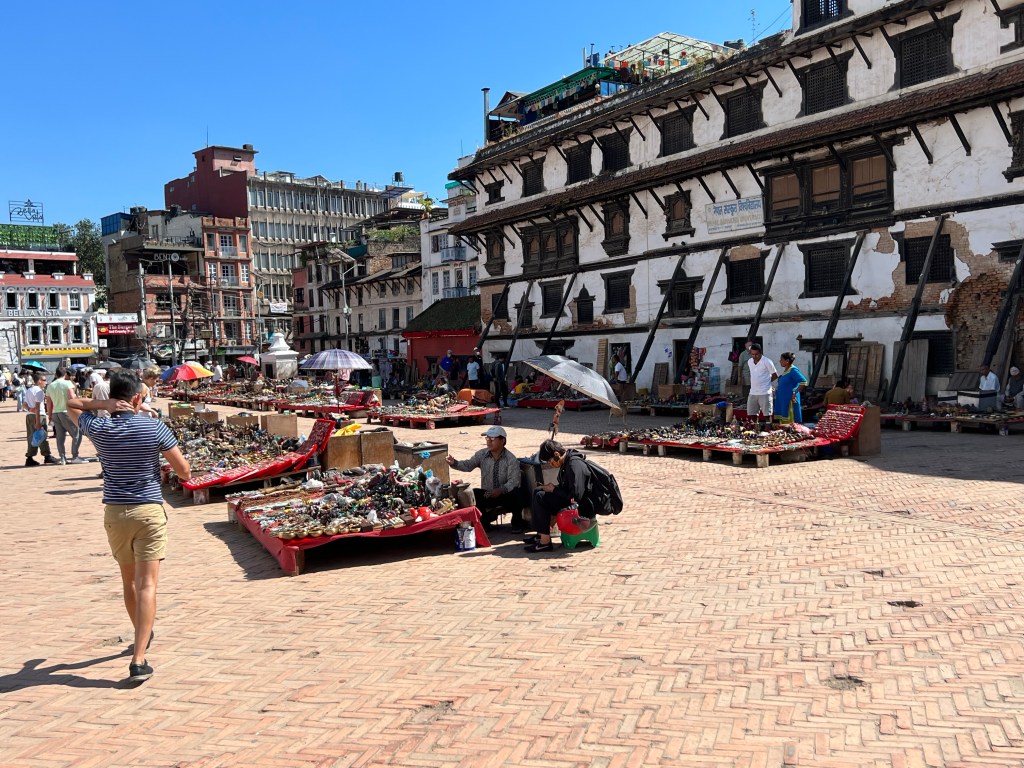
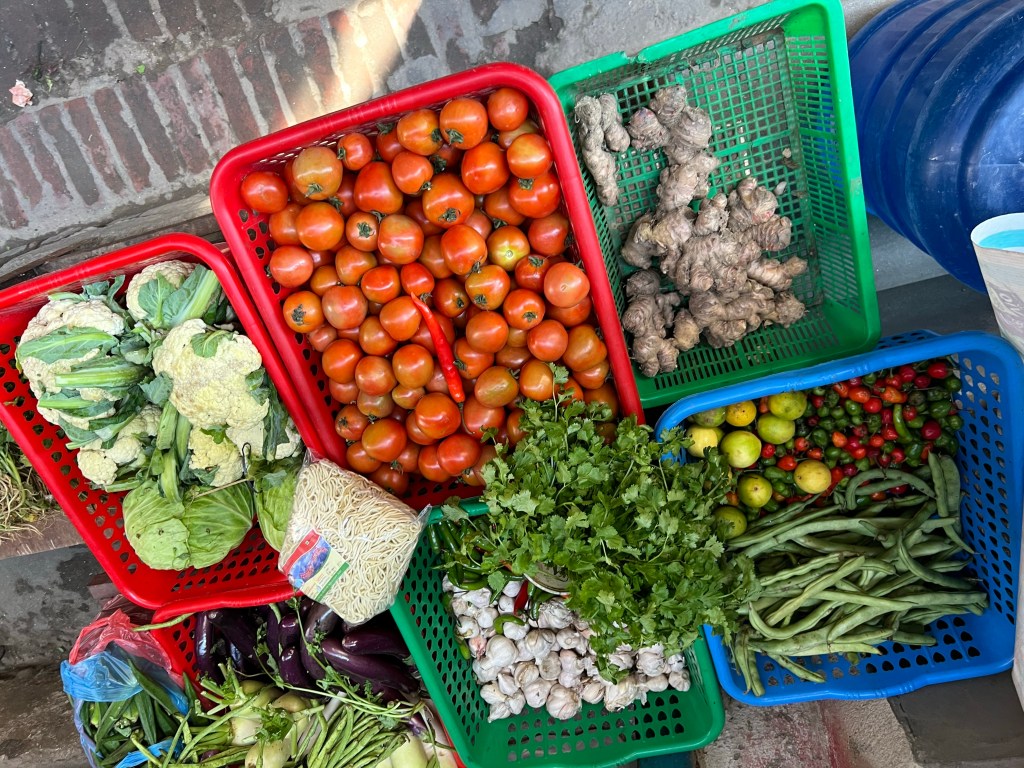
Vendors surround the temples selling souvenirs, art, food (for people or animals), clothes, and other items from tables or booths.
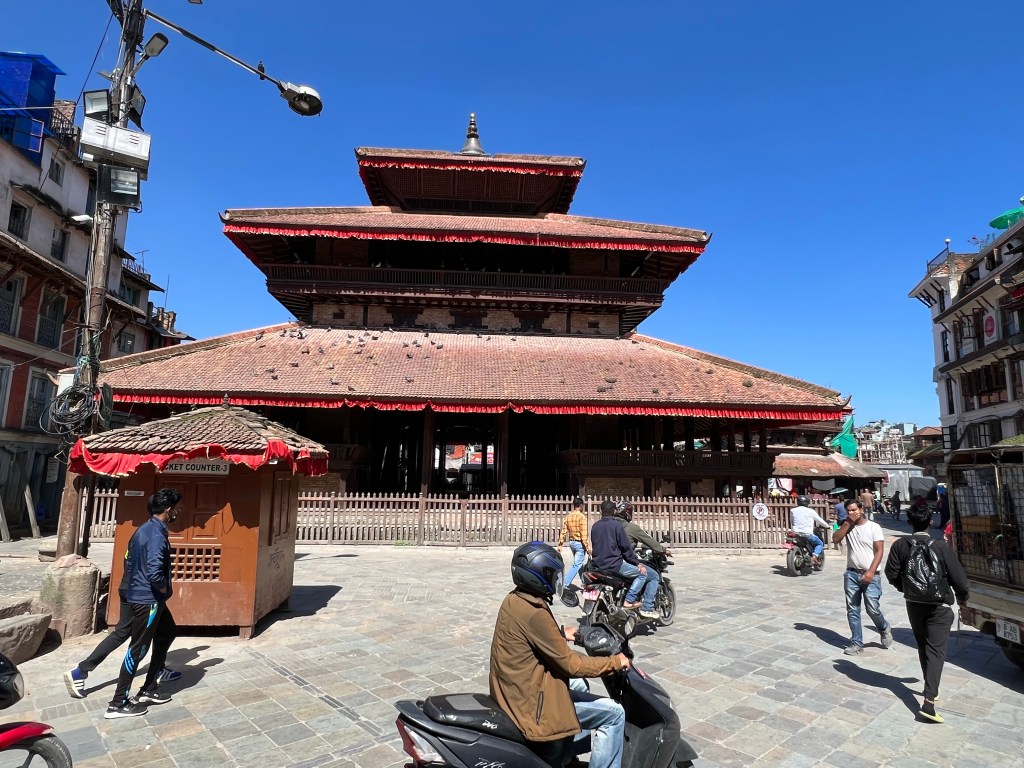
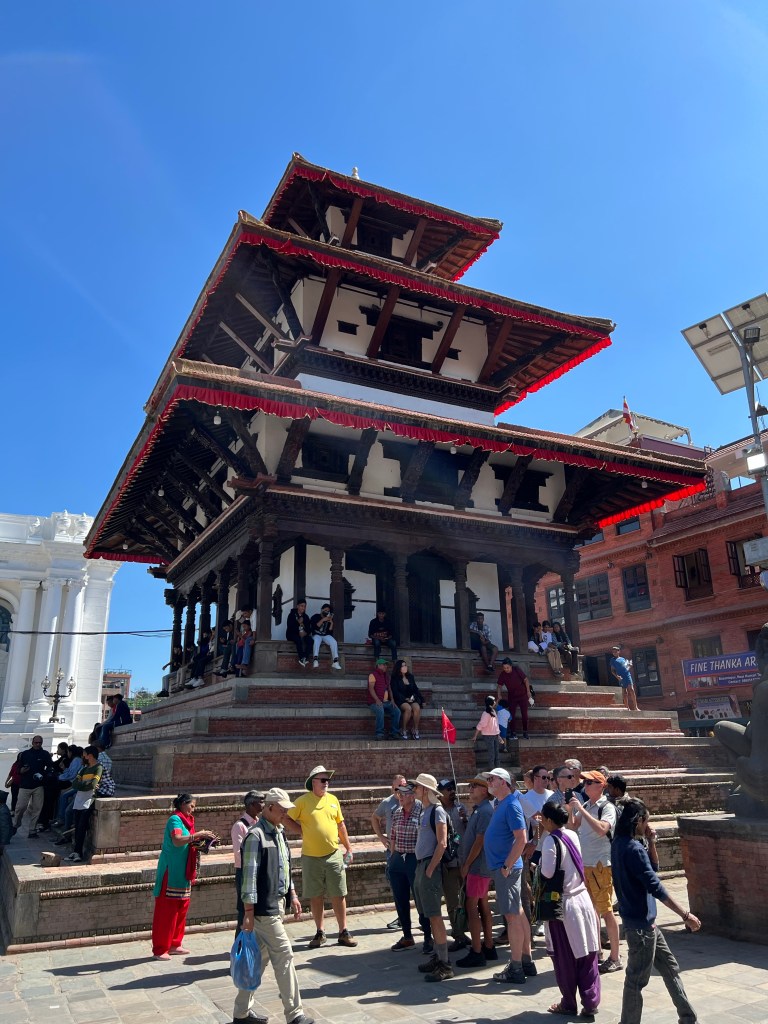
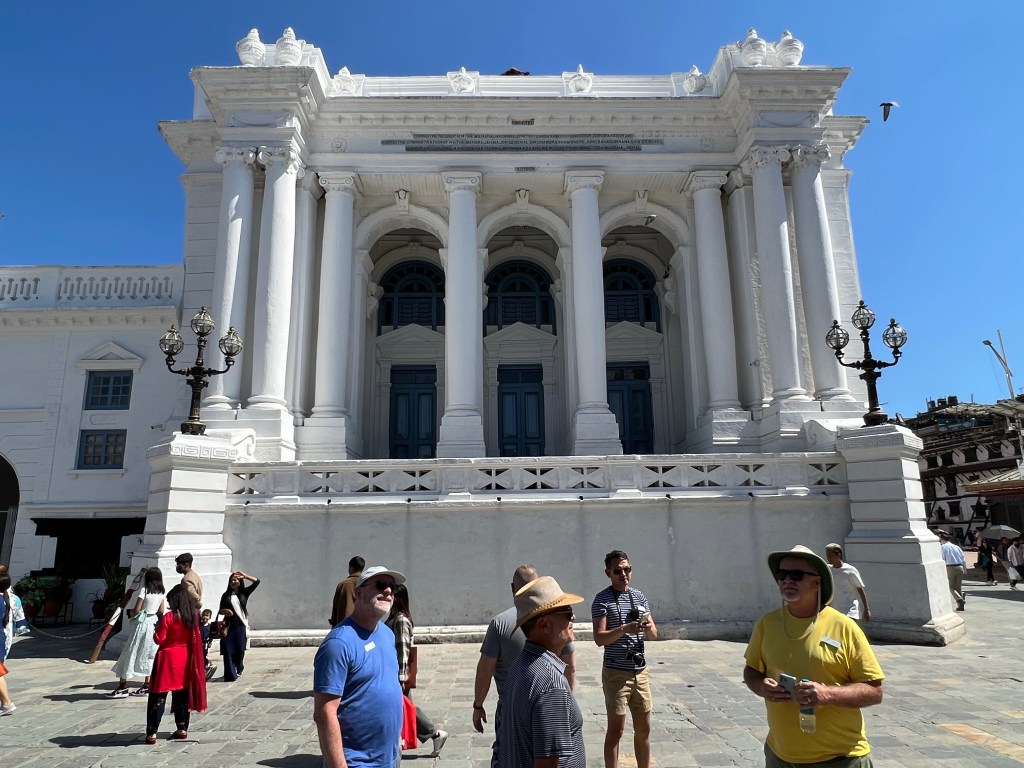
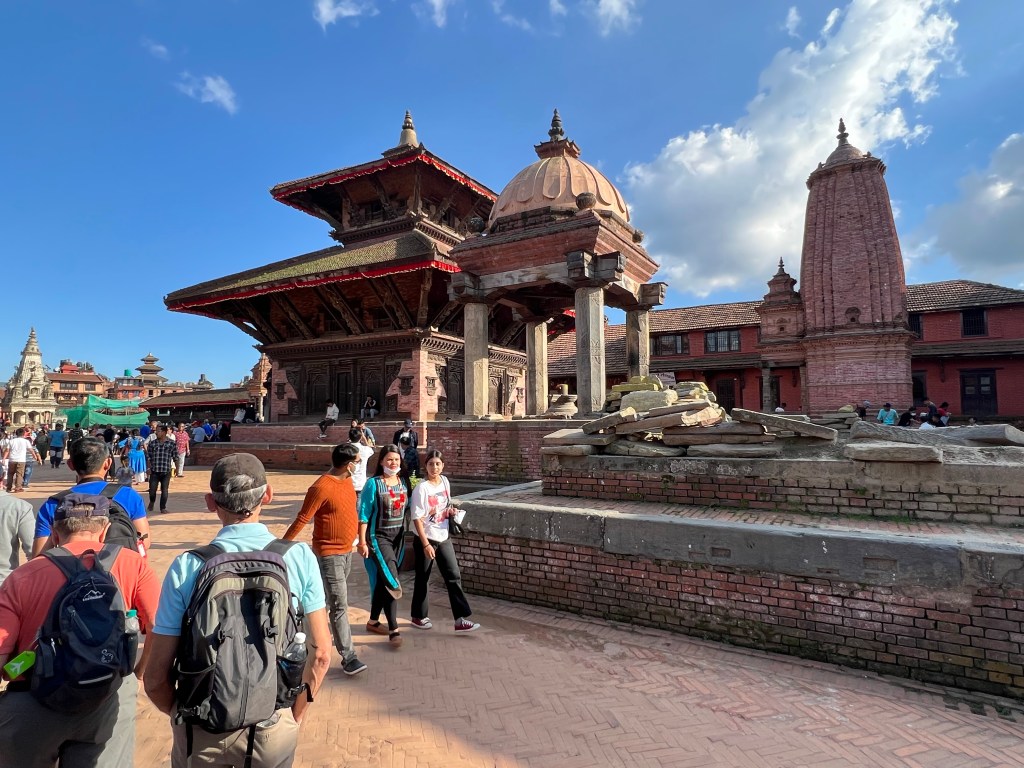
Kathmandu Durbar Square
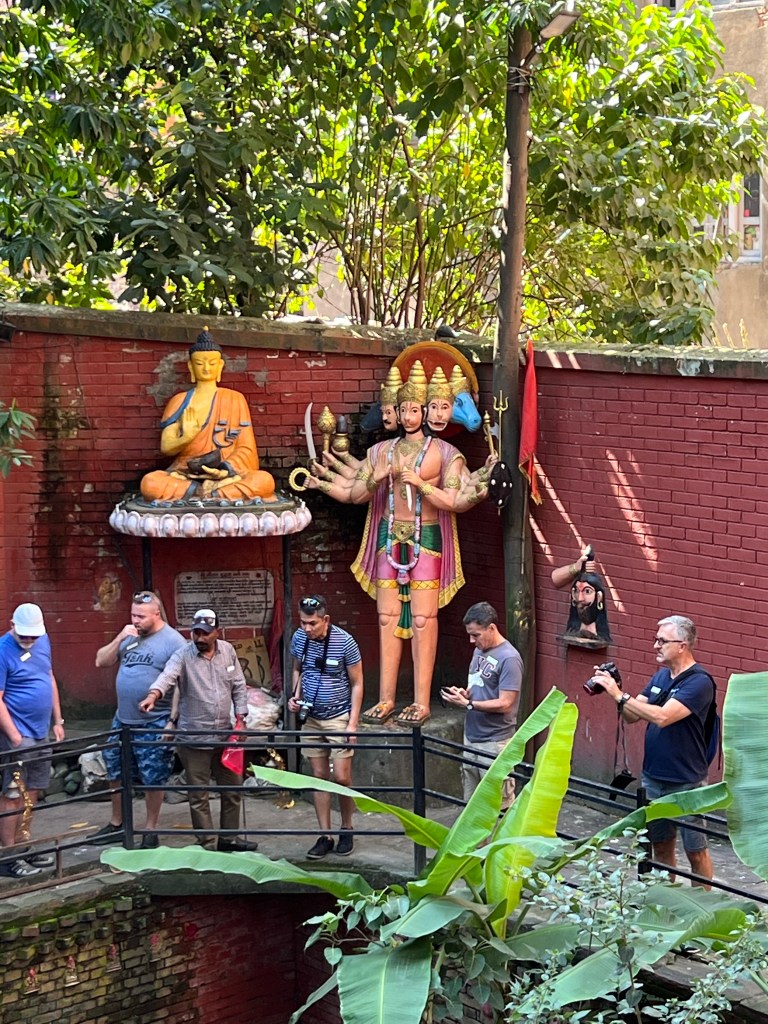
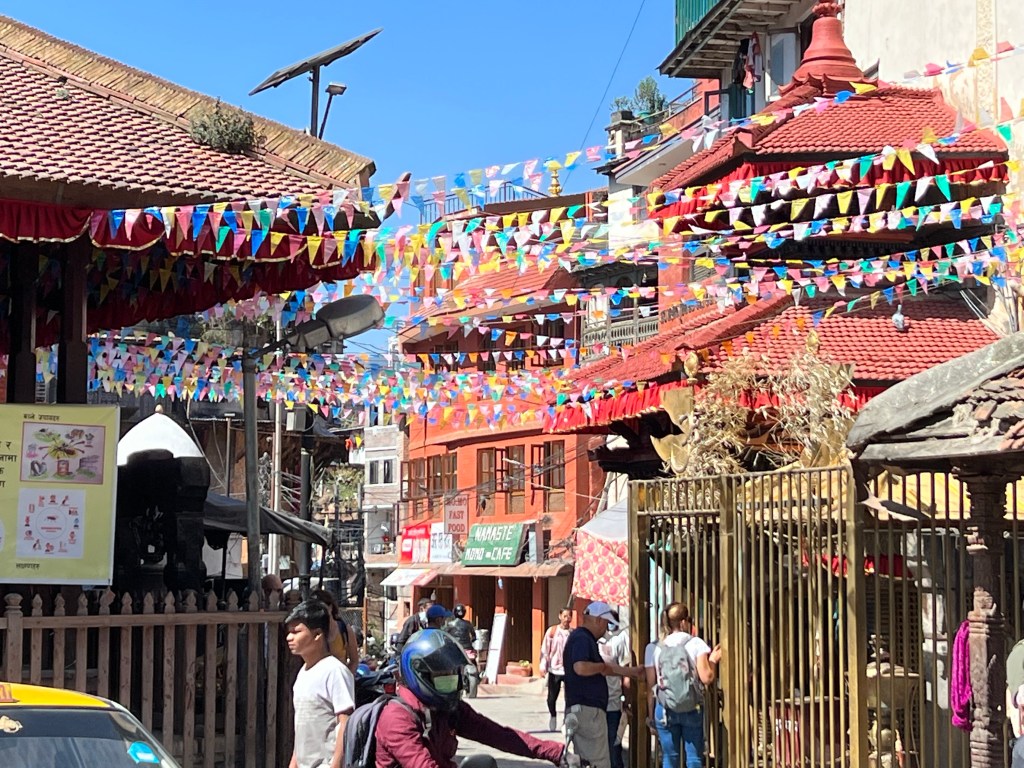
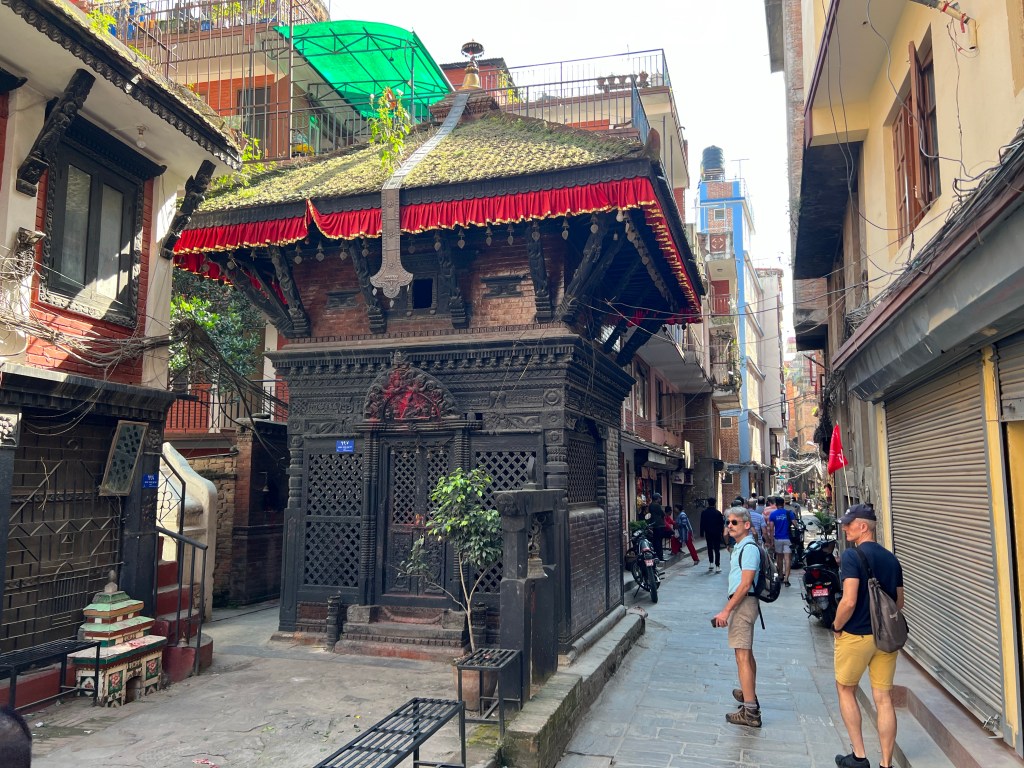
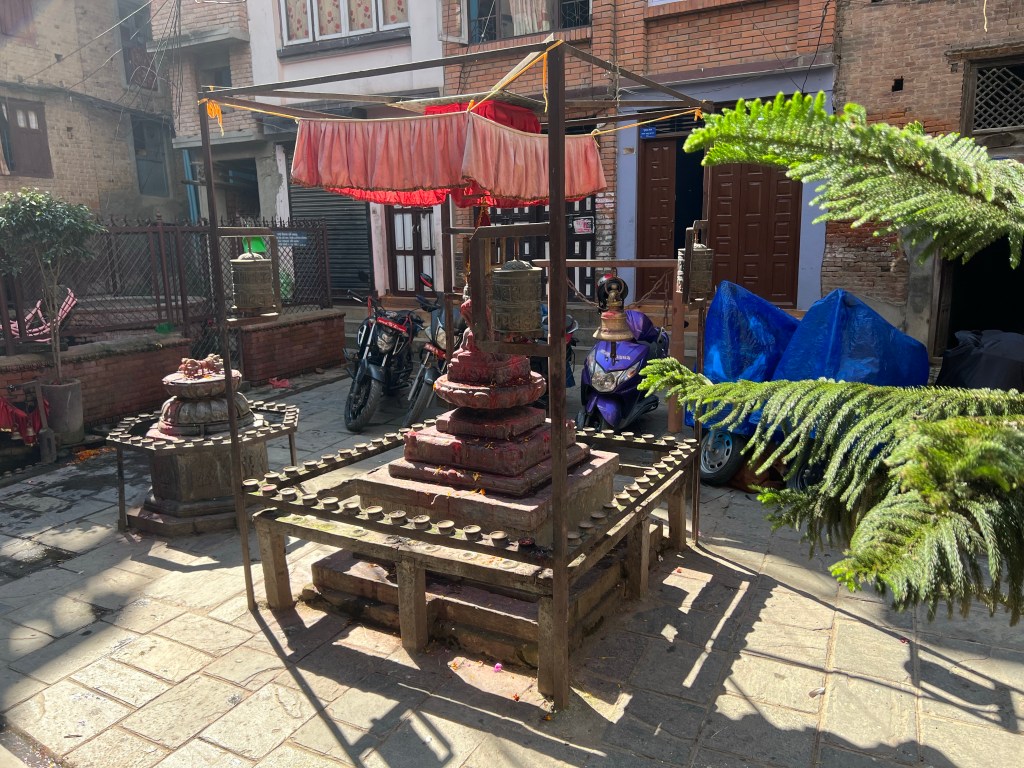
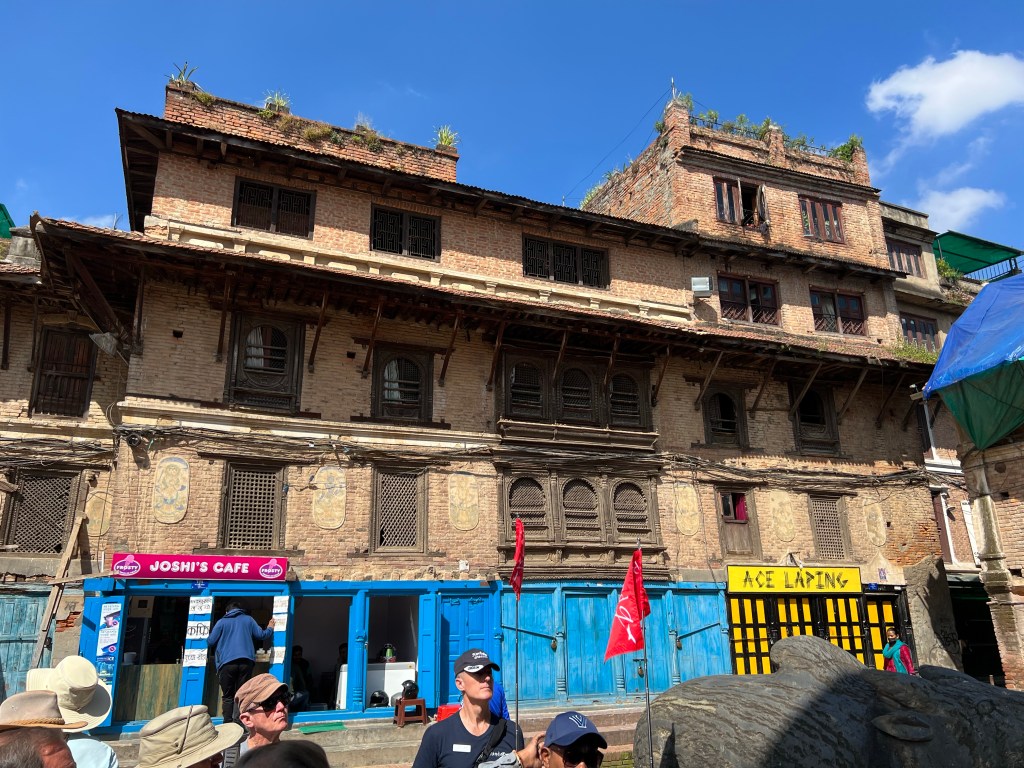
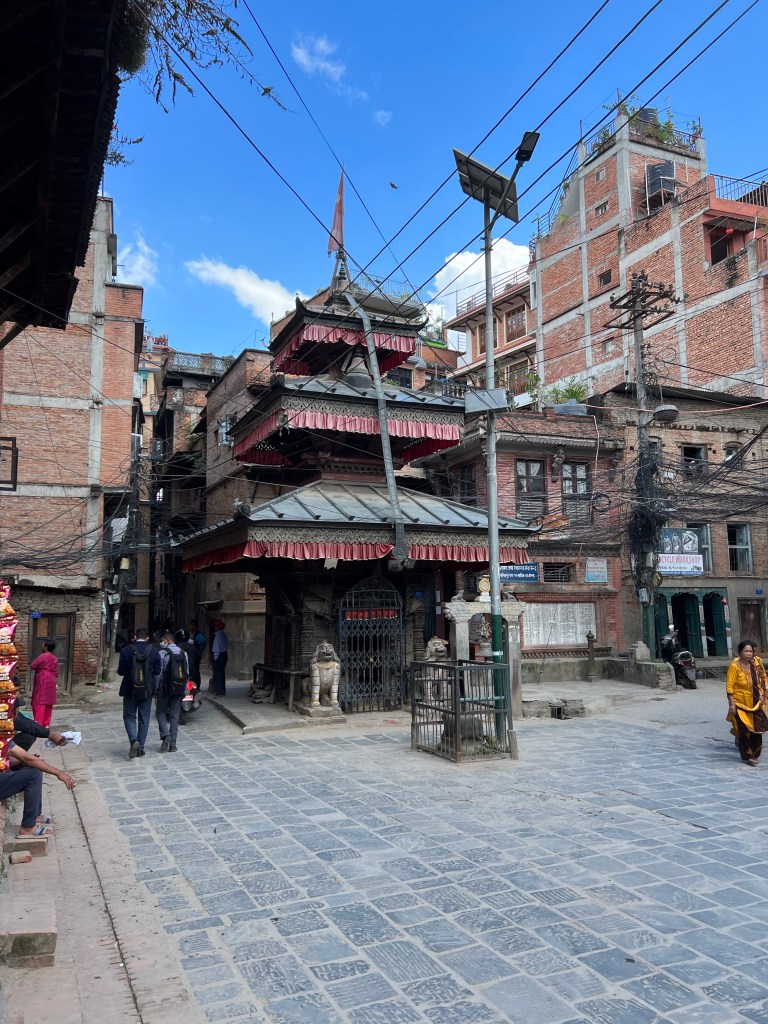
We visited a “community” temple on the walk to the square.
This temple near Durbar Square is where Kathmandu’s got its name. Kat (“temple”) and Mandu (“made of wood”).
After breakfast at the hotel, we boarded the bus for the ride to Patan City – the city of fine art.
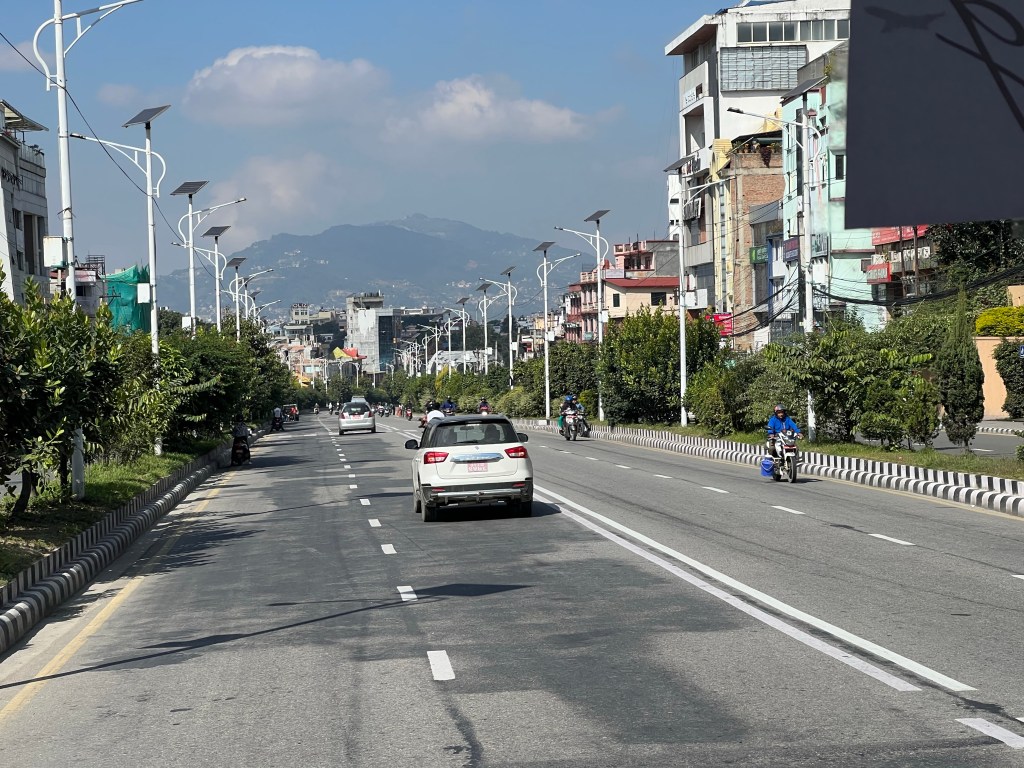
The Nepali workweek is Sunday to Friday. Today was Saturday and the morning traffic was very light.
Bagmati River
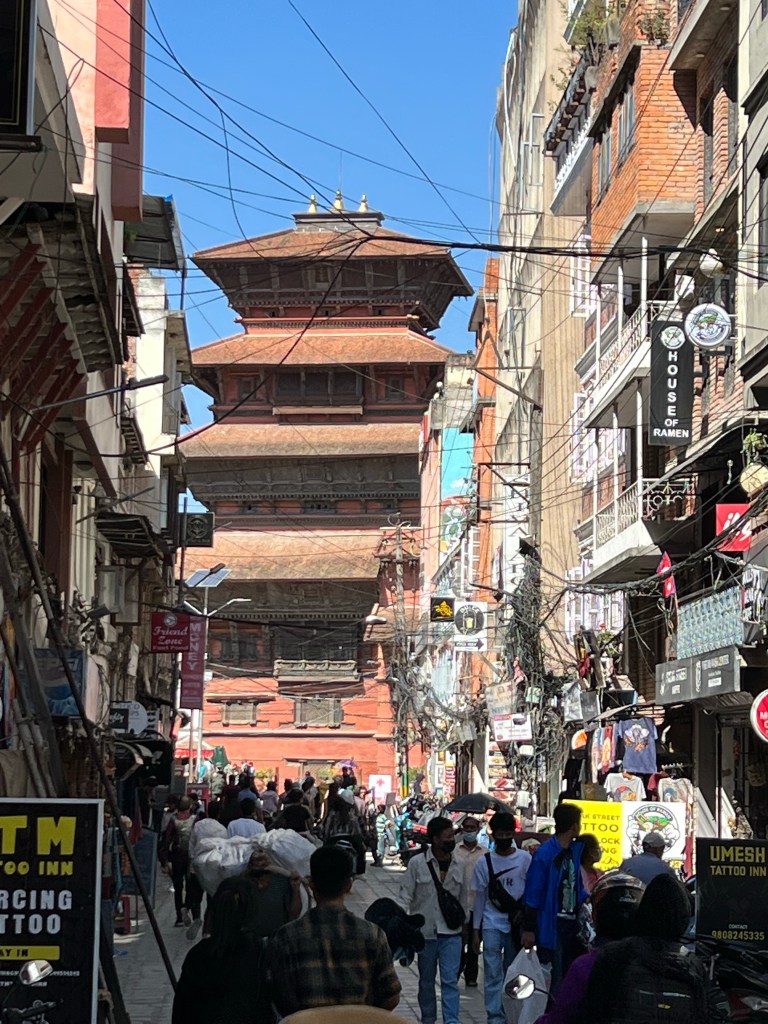
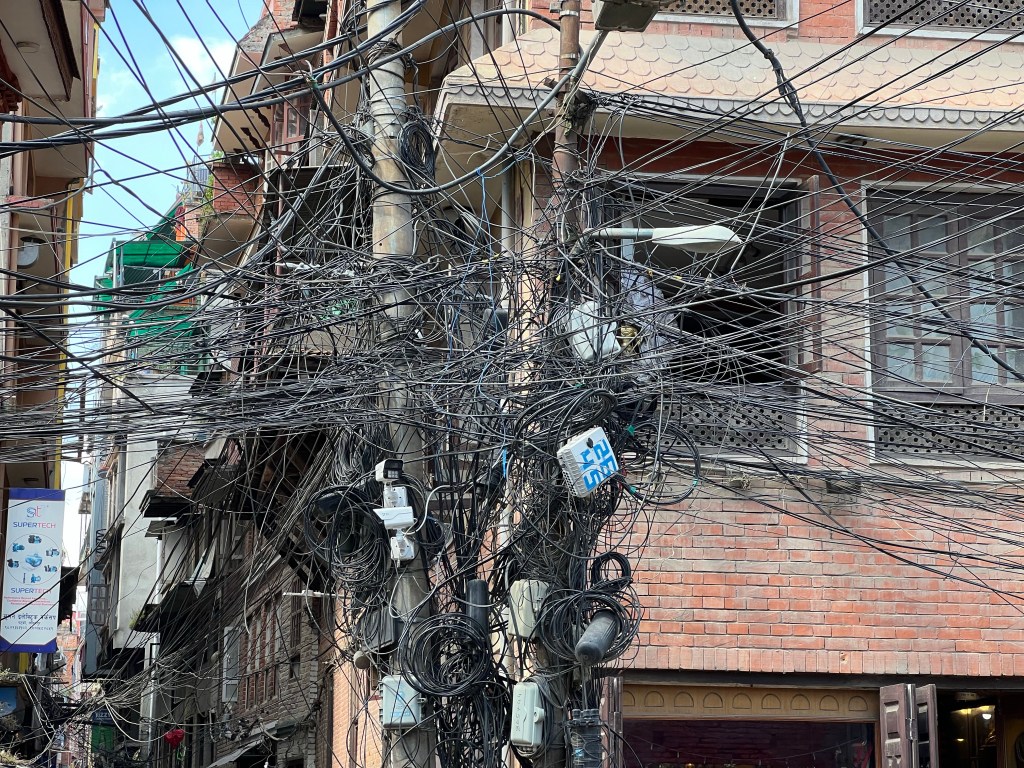
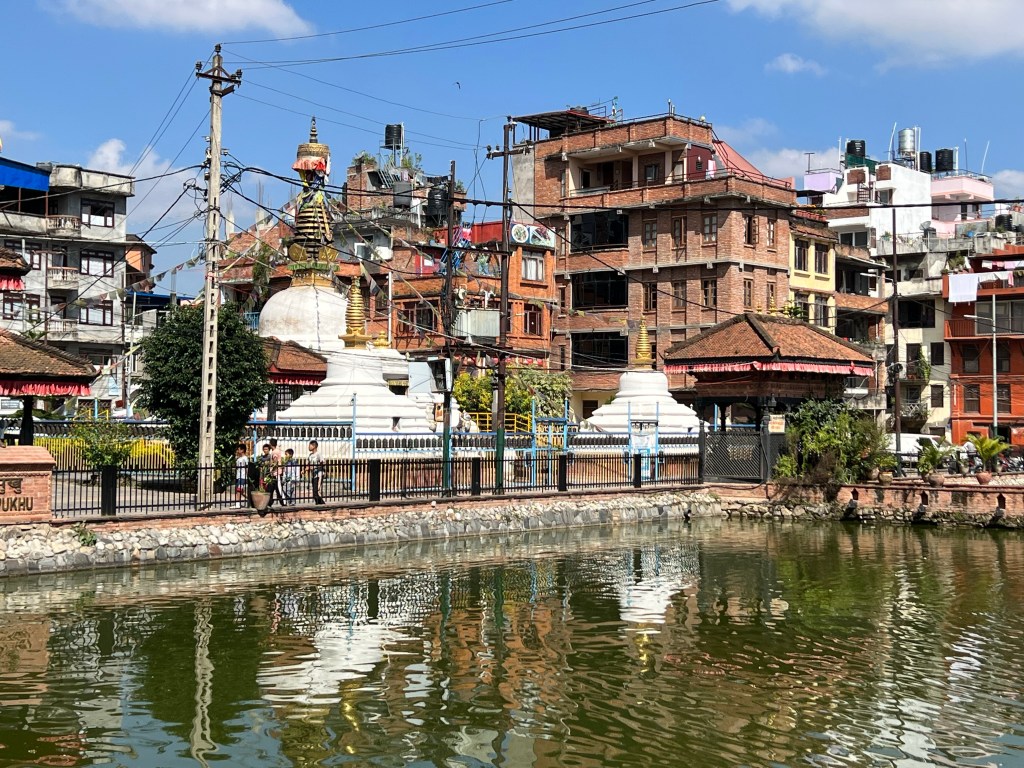
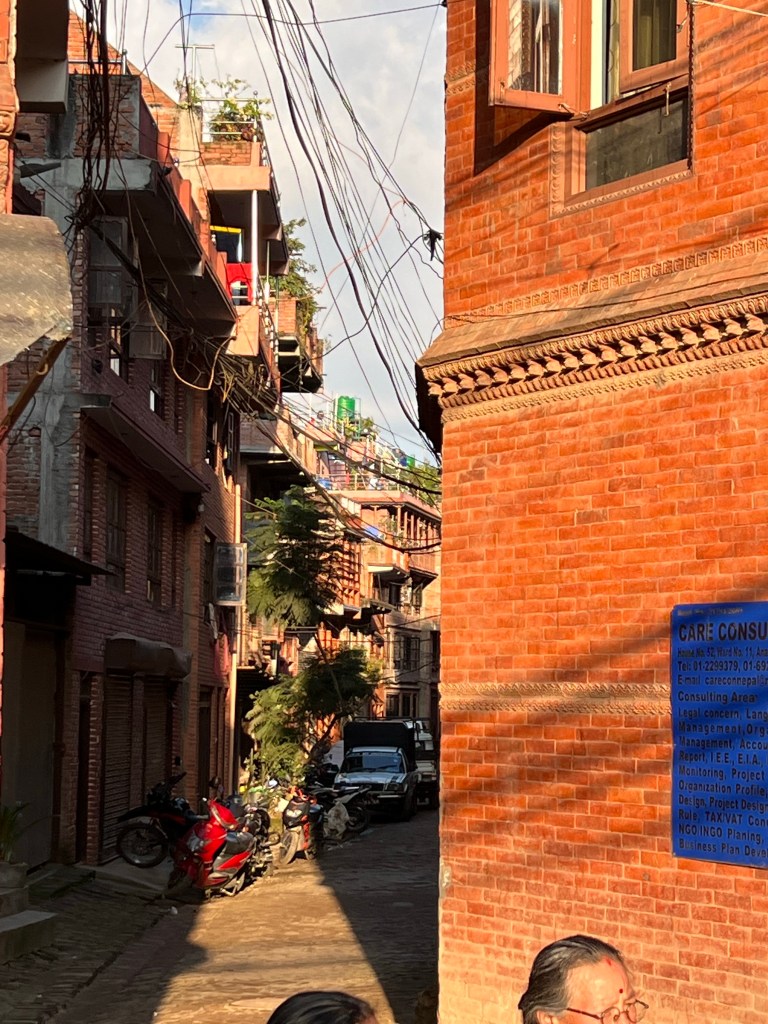
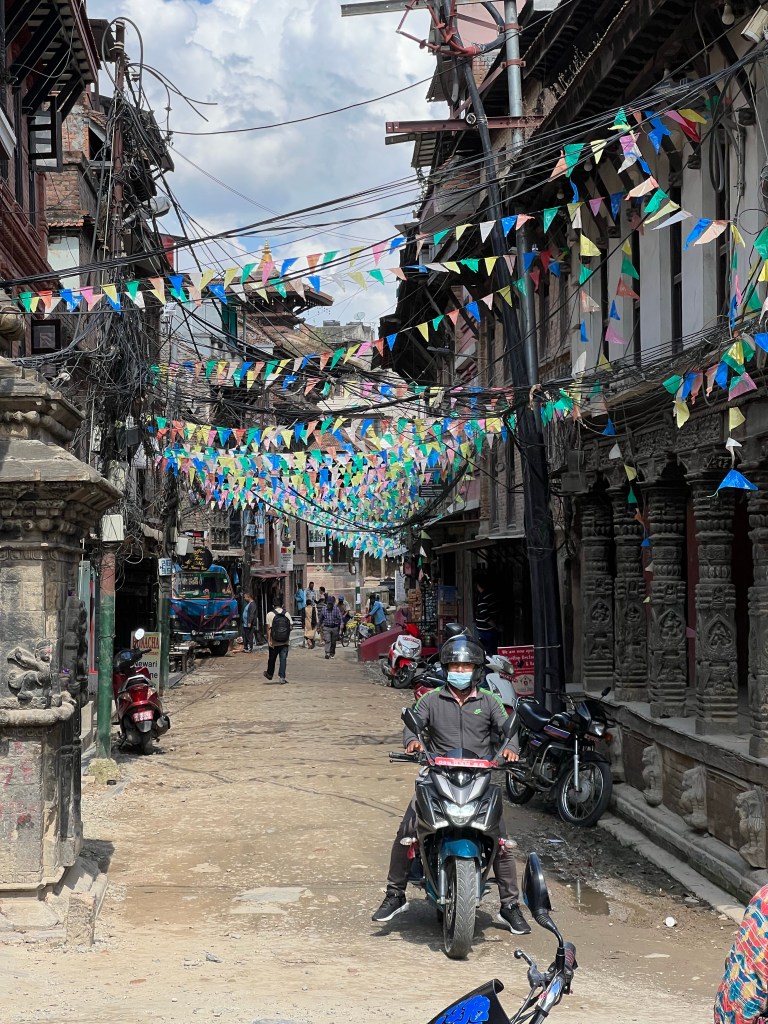
These are telephone lines, not power lines. When one goes bad, they simply run a new line without trying to identify the bad one.
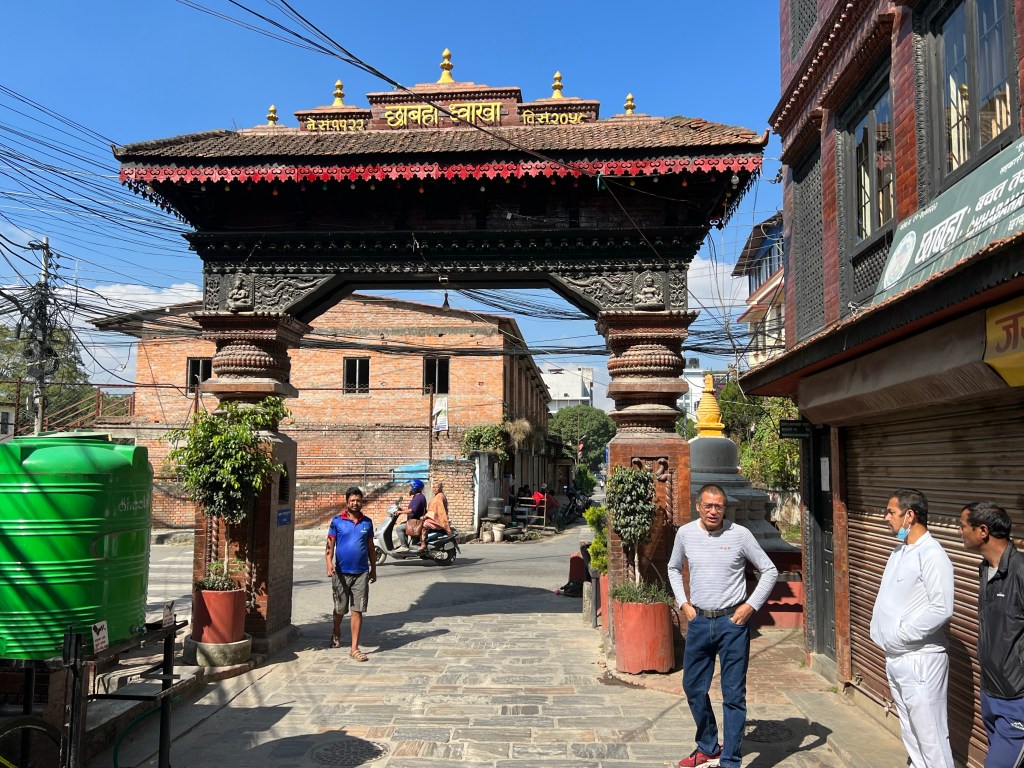
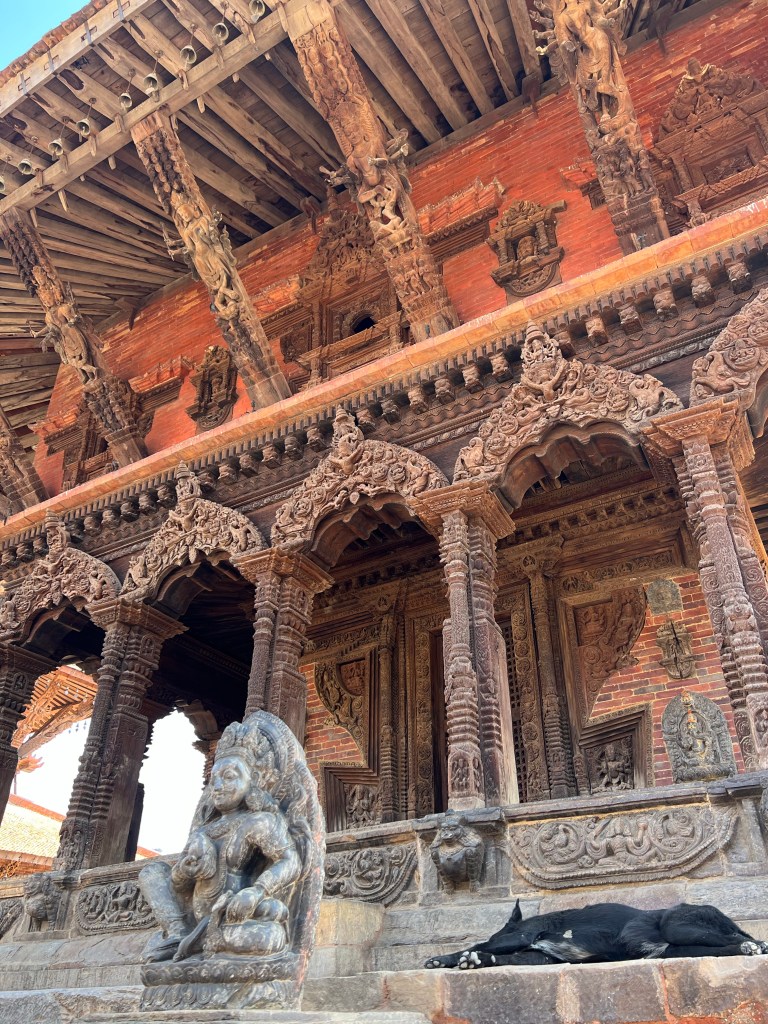
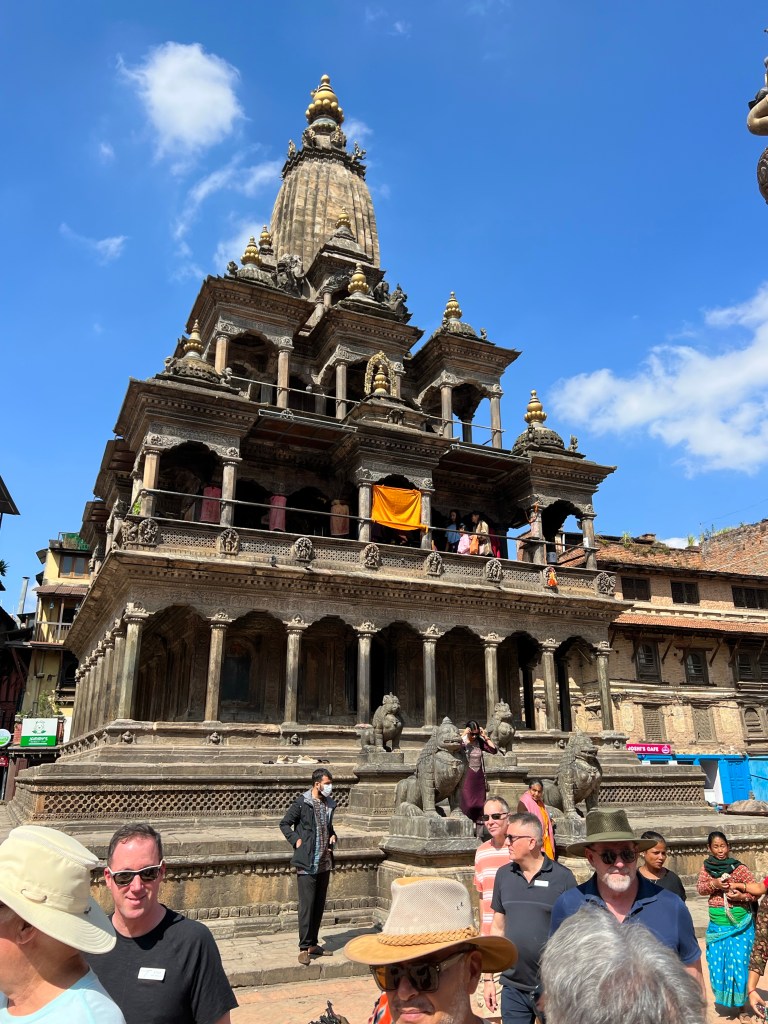
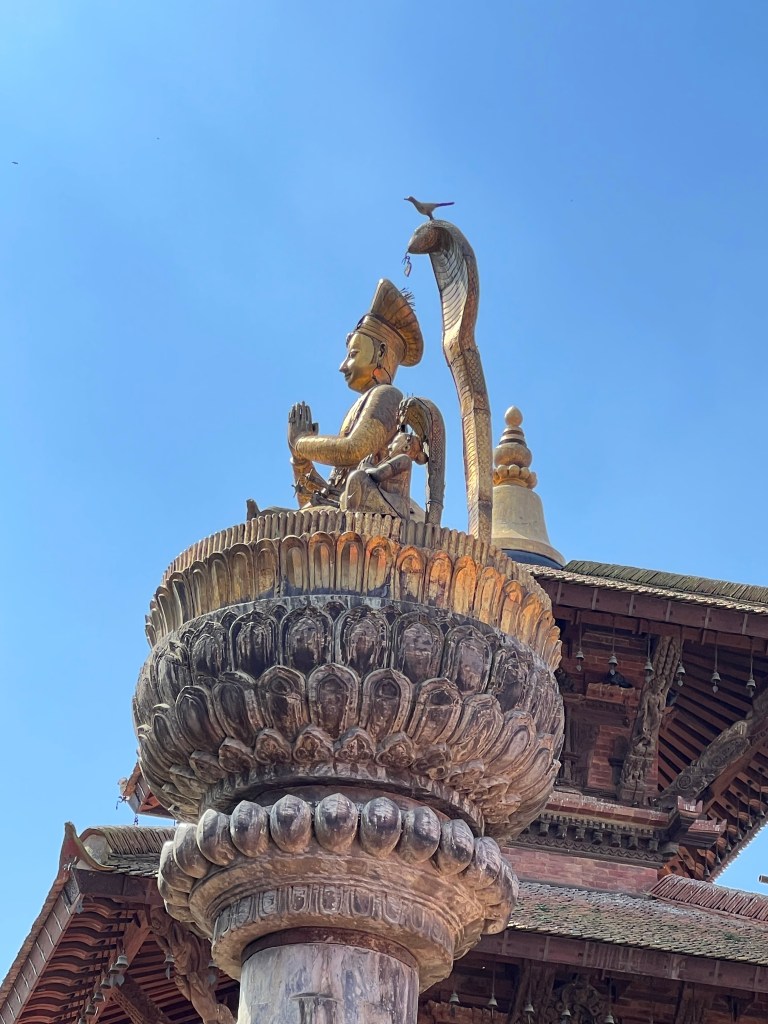
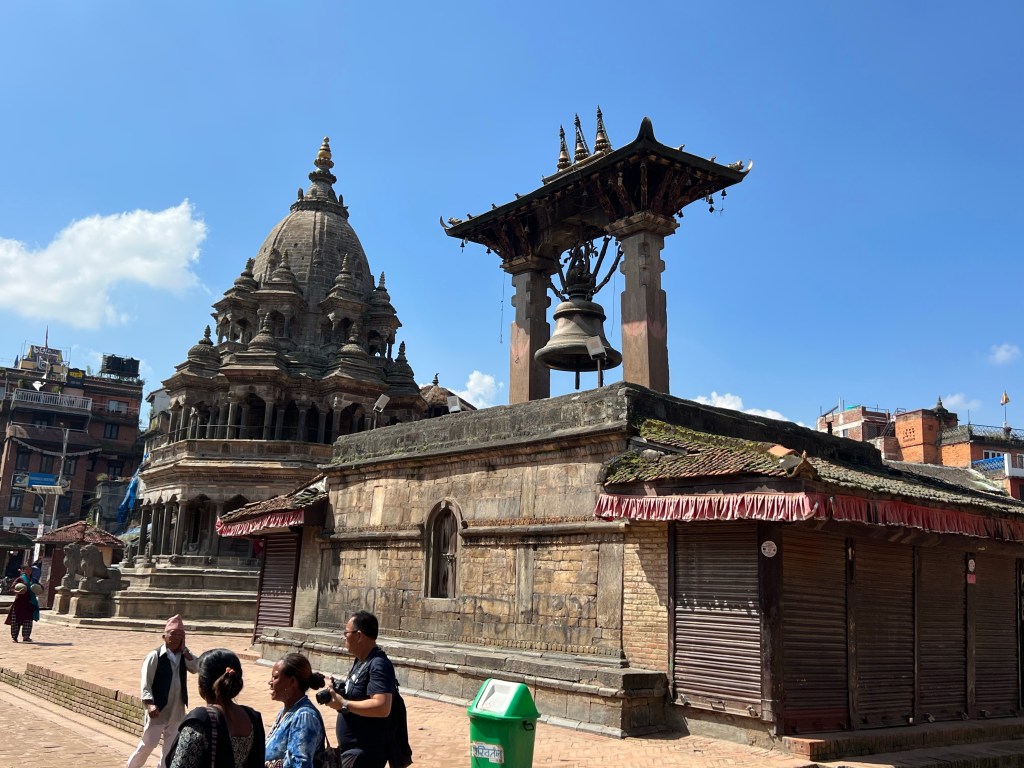
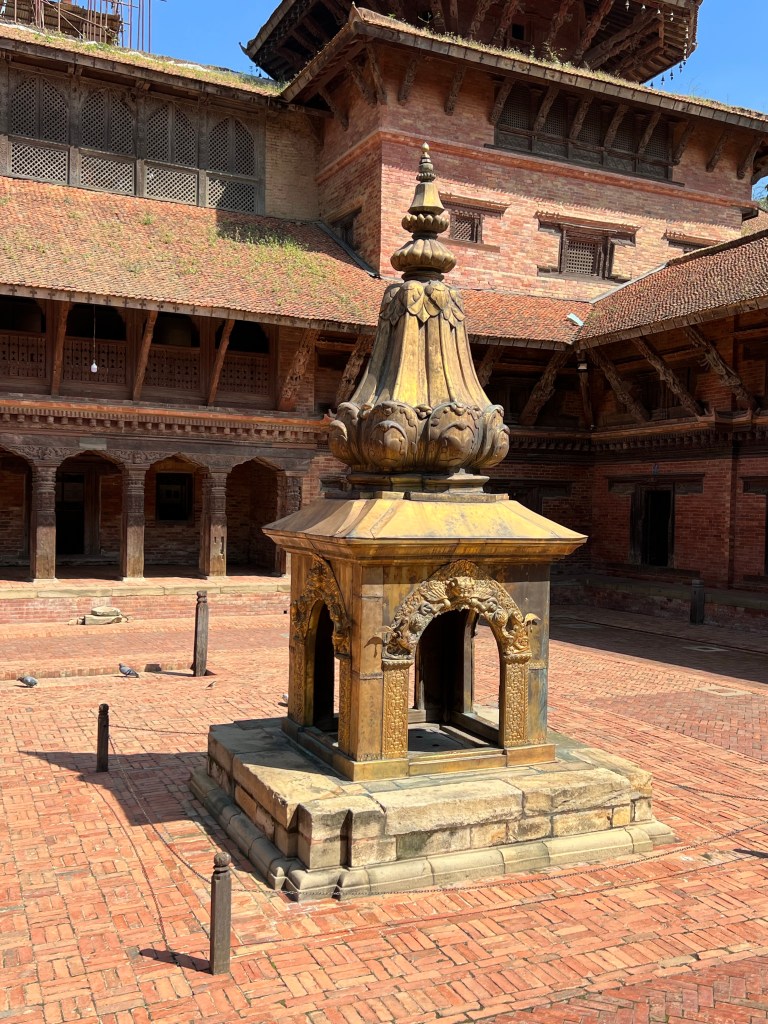
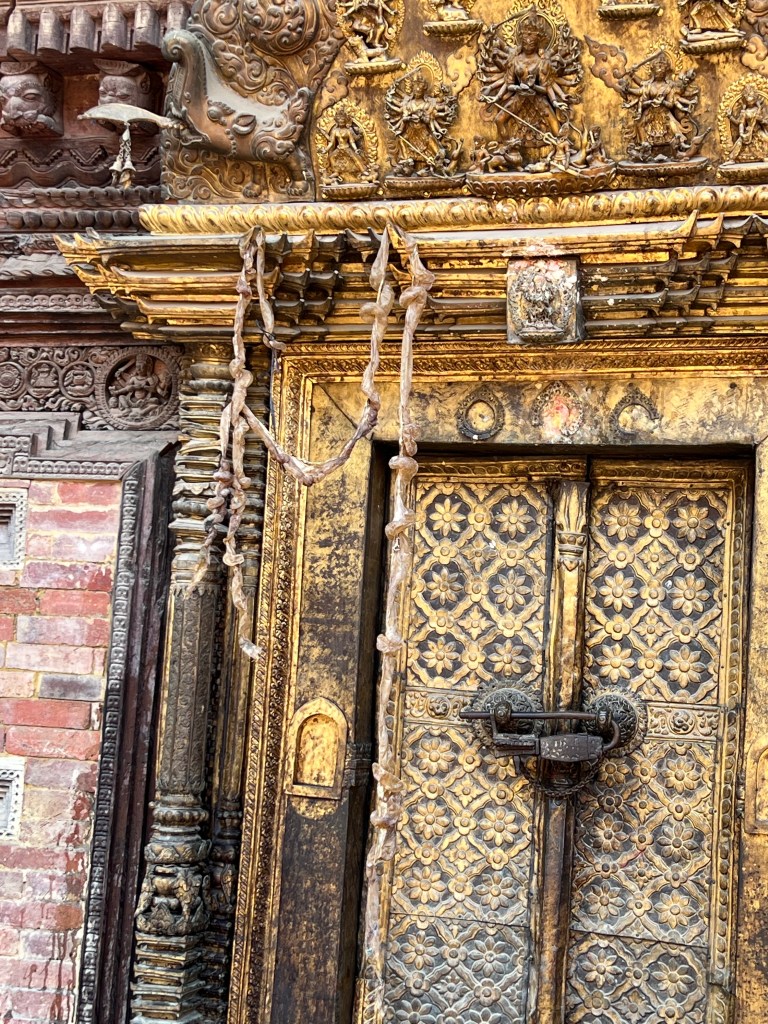
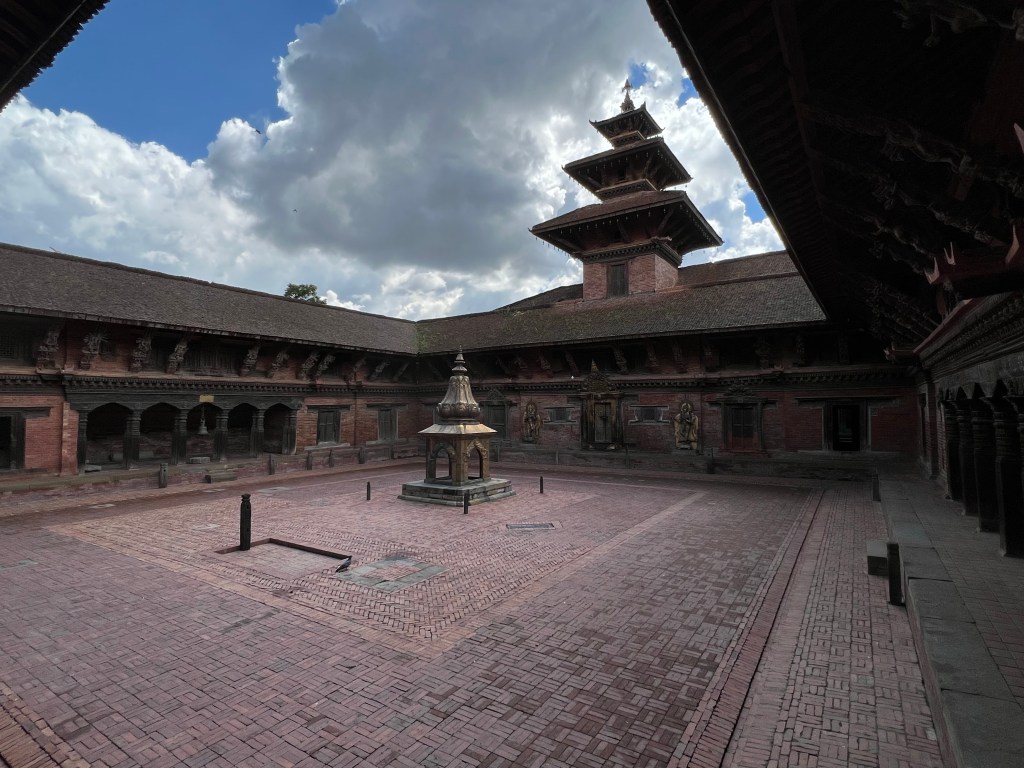
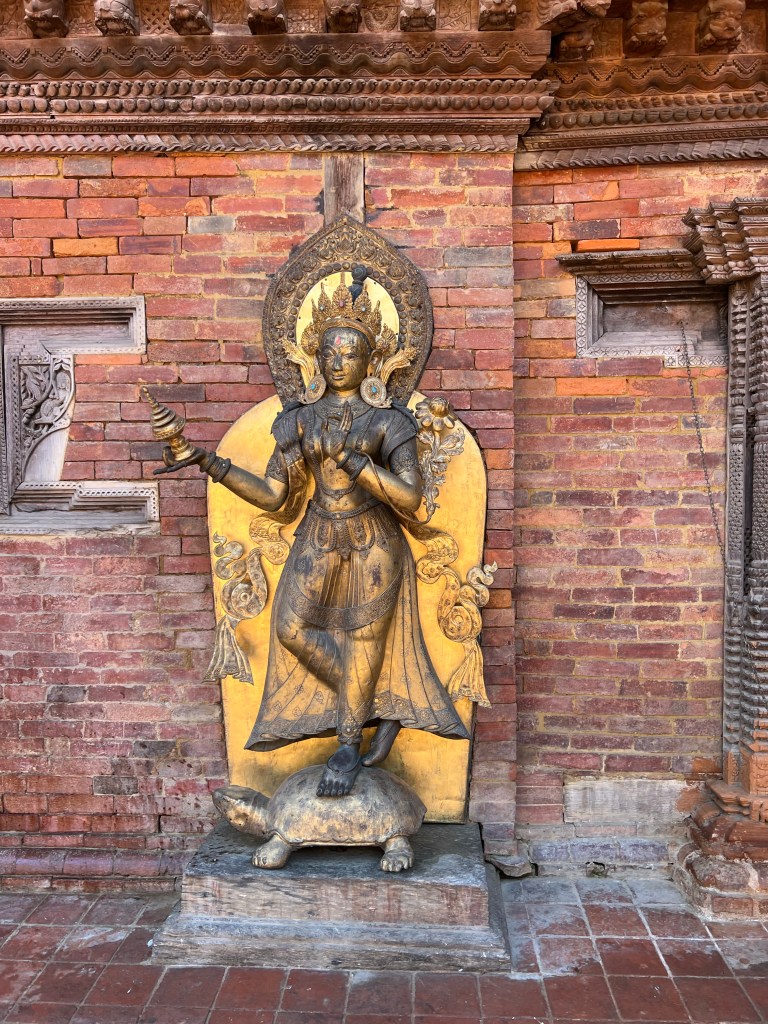
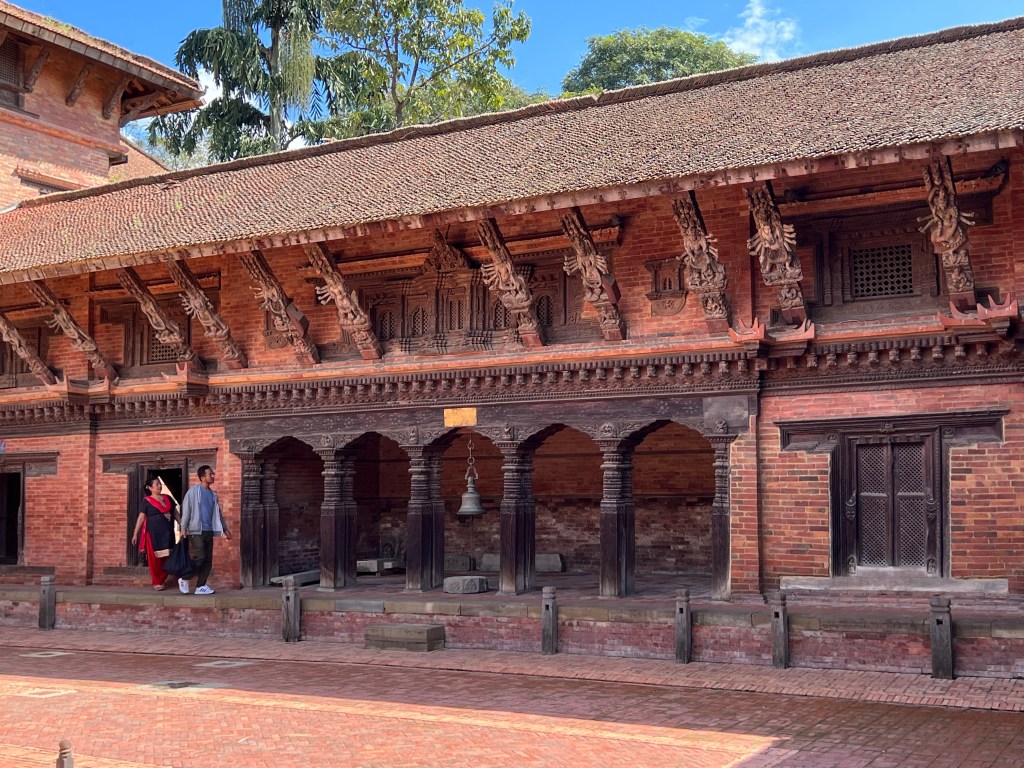
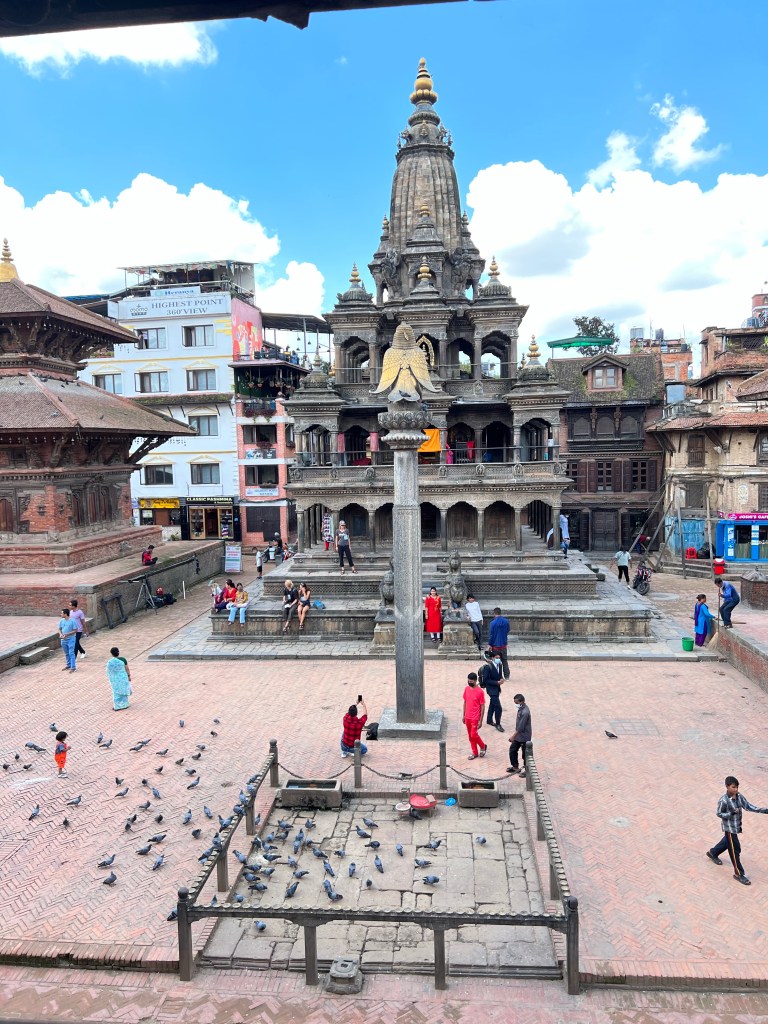
The tour guide took us through some side streets of Patan, into Durbar square, and through the palace.
Water Buffalo
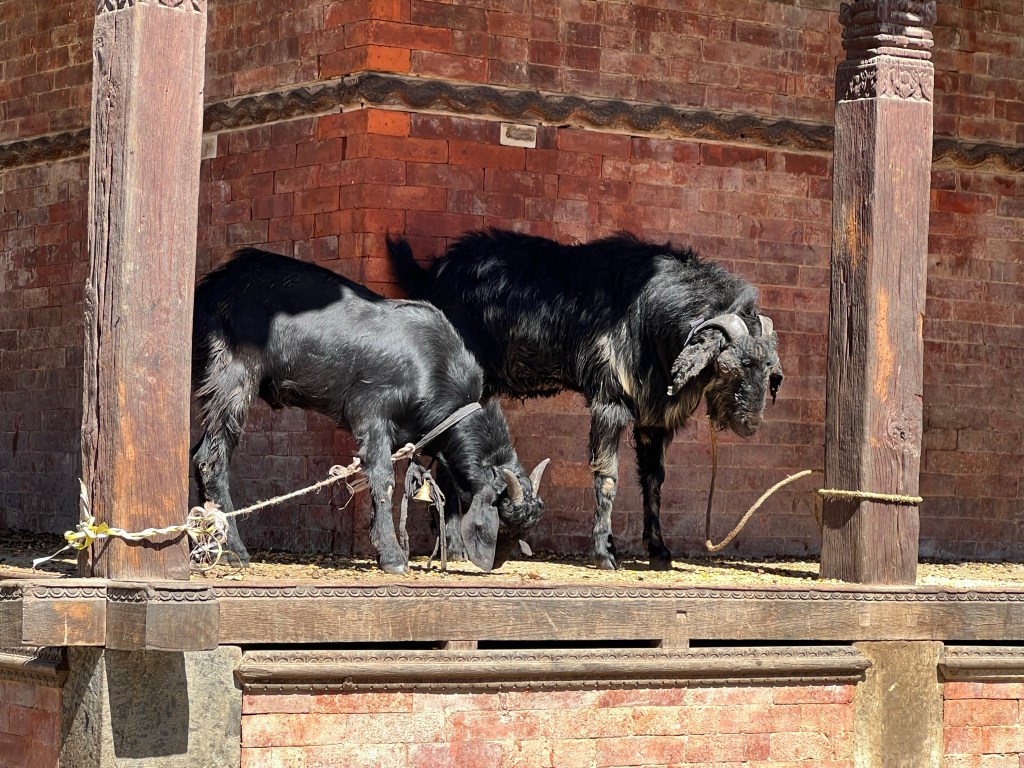
The pit with the post is where they perform animal sacrifices. The most common animals are: water buffalo (anger), goat (lust), sheep (stupidity), duck(ignorance), and chicken (cowardice).
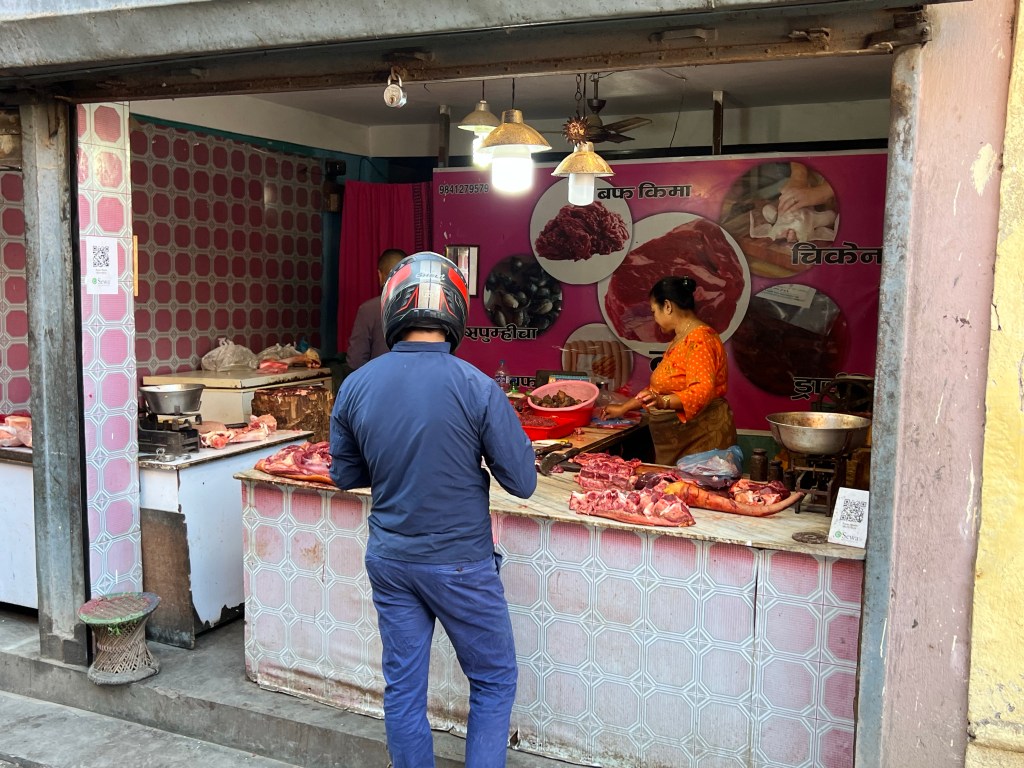
Water Buffalo intestines
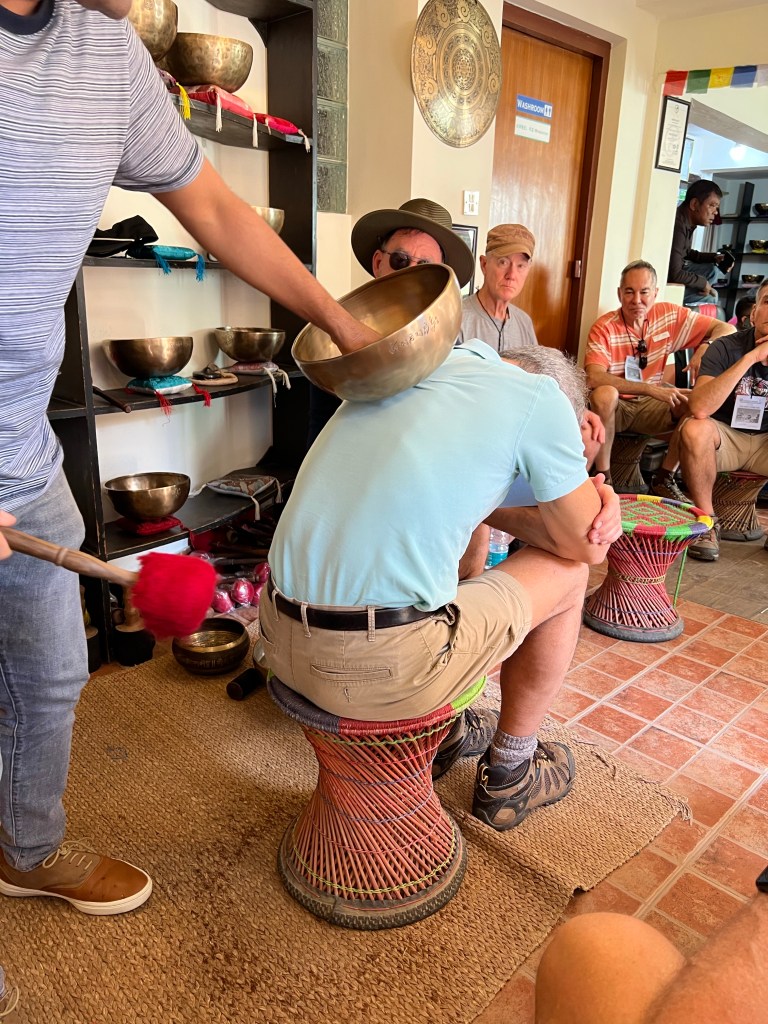
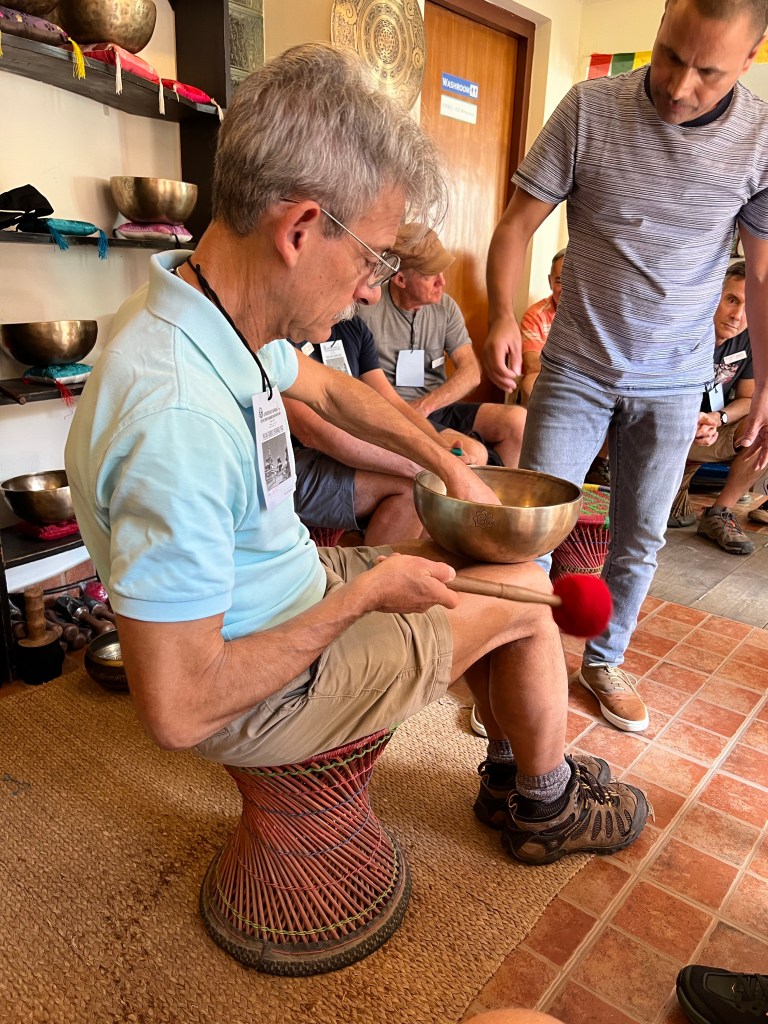
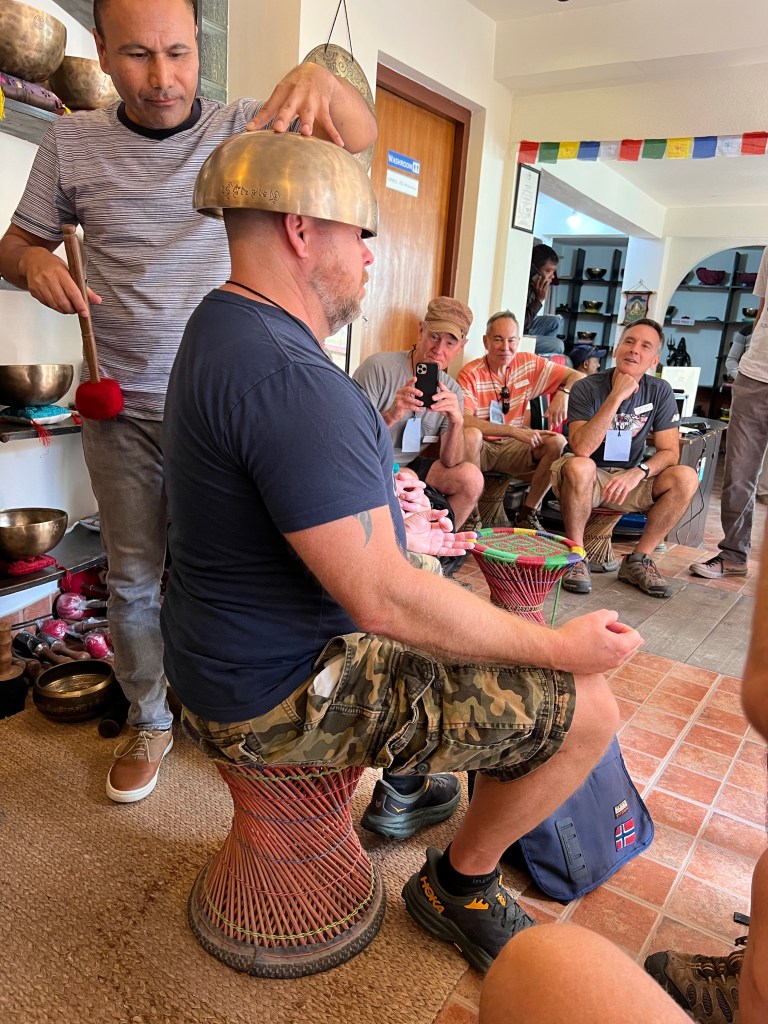
We stopped at a healing bowl shop for a demonstration. Then we headed for the bus to go to lunch.
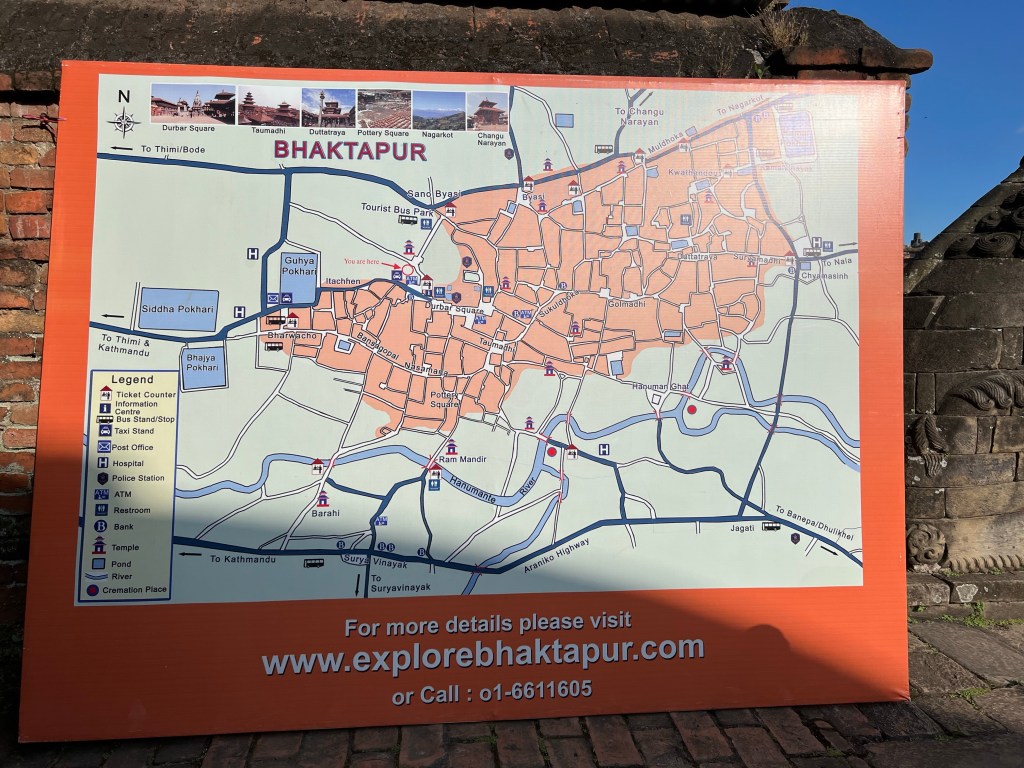
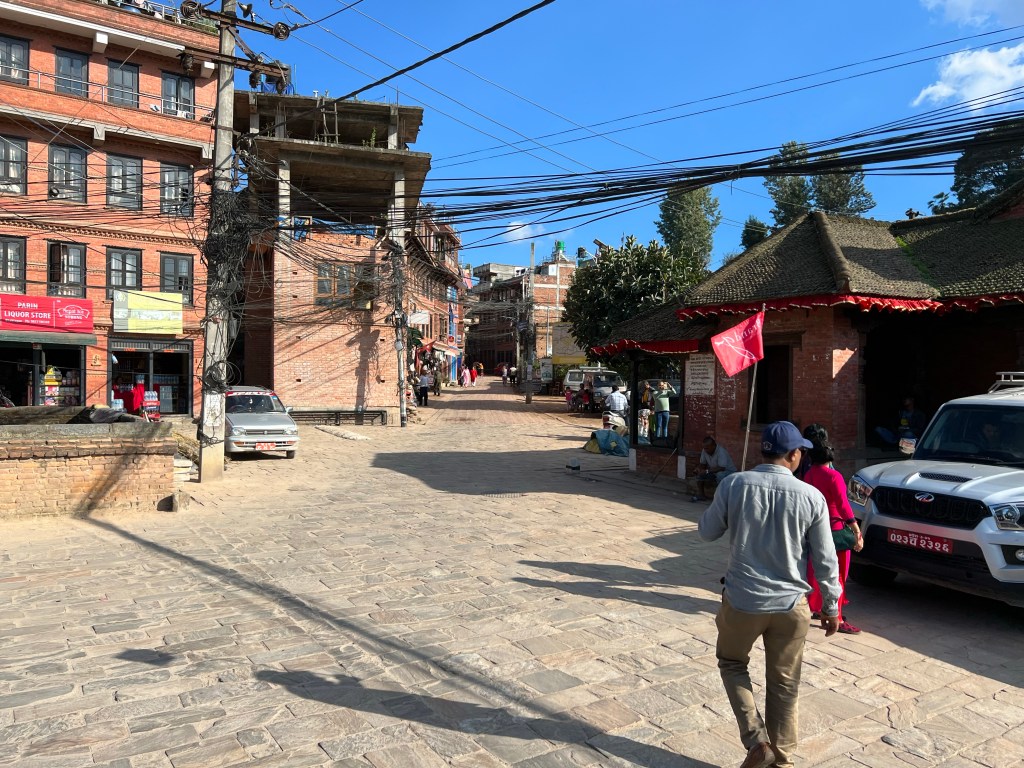
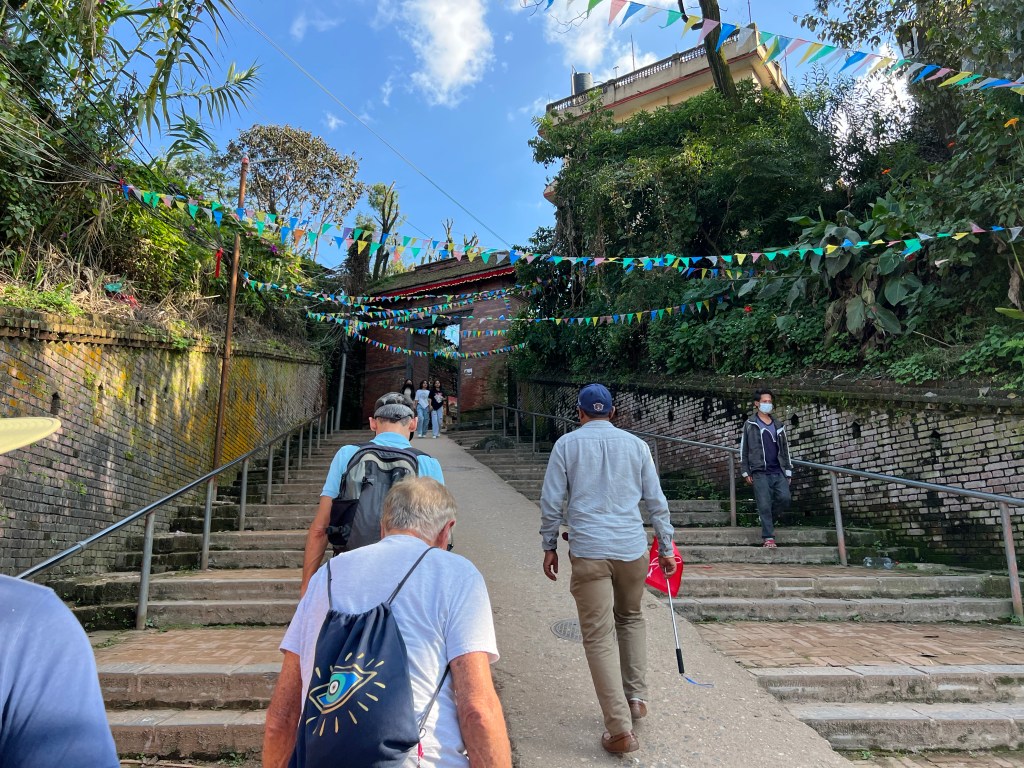
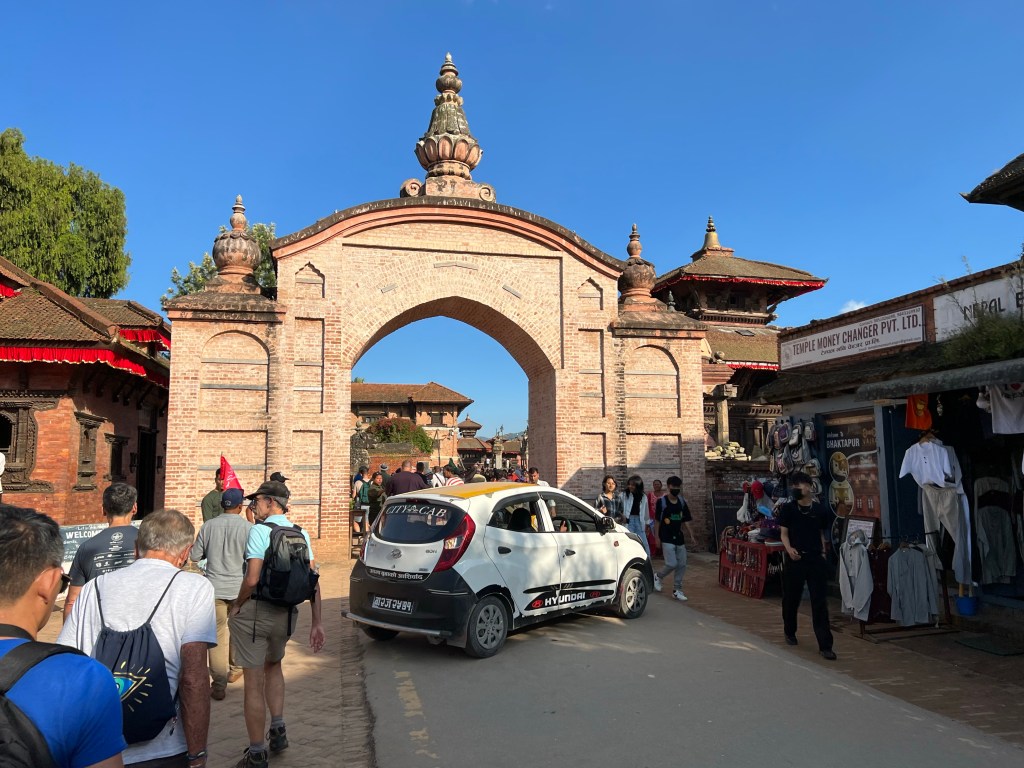
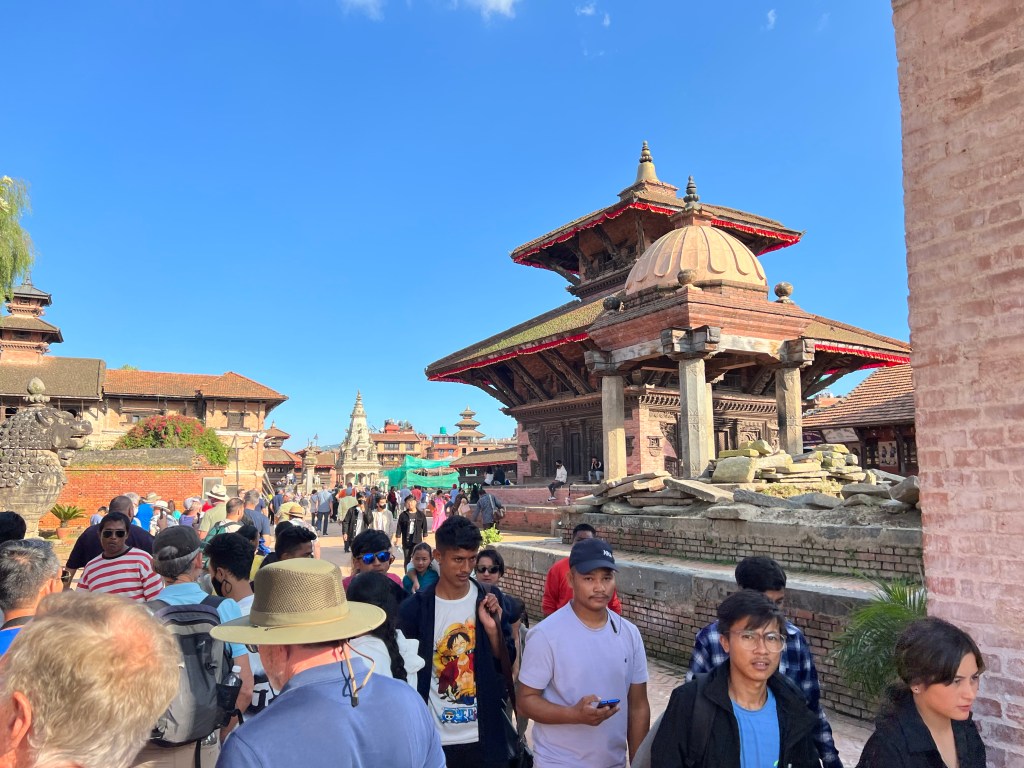
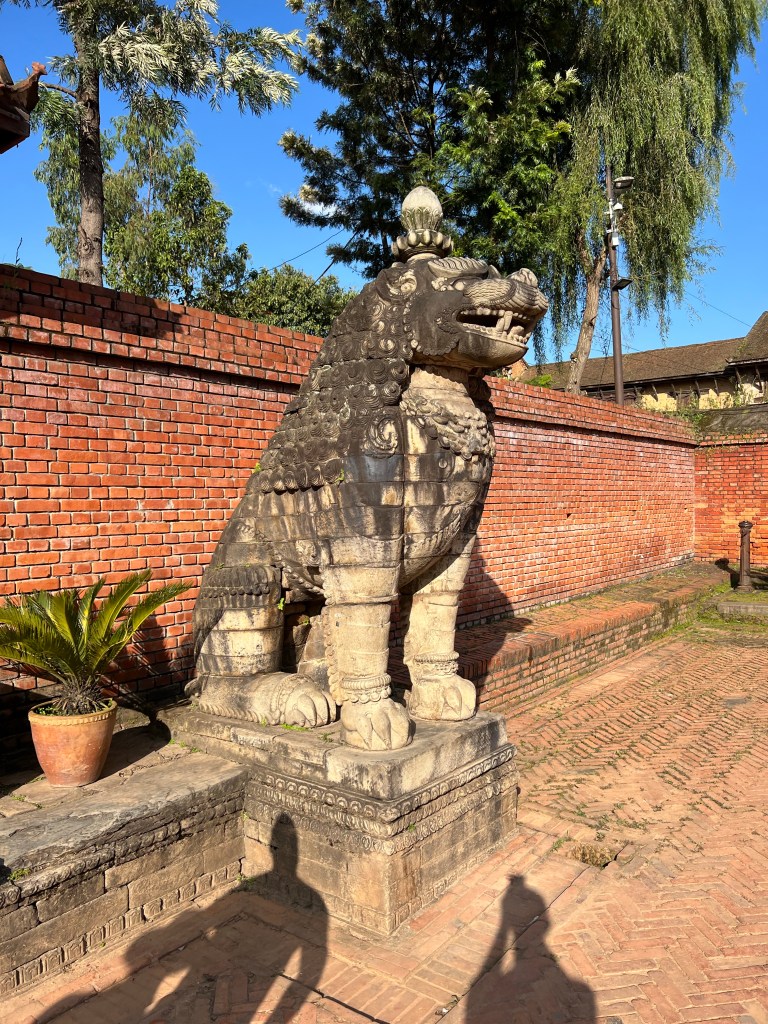
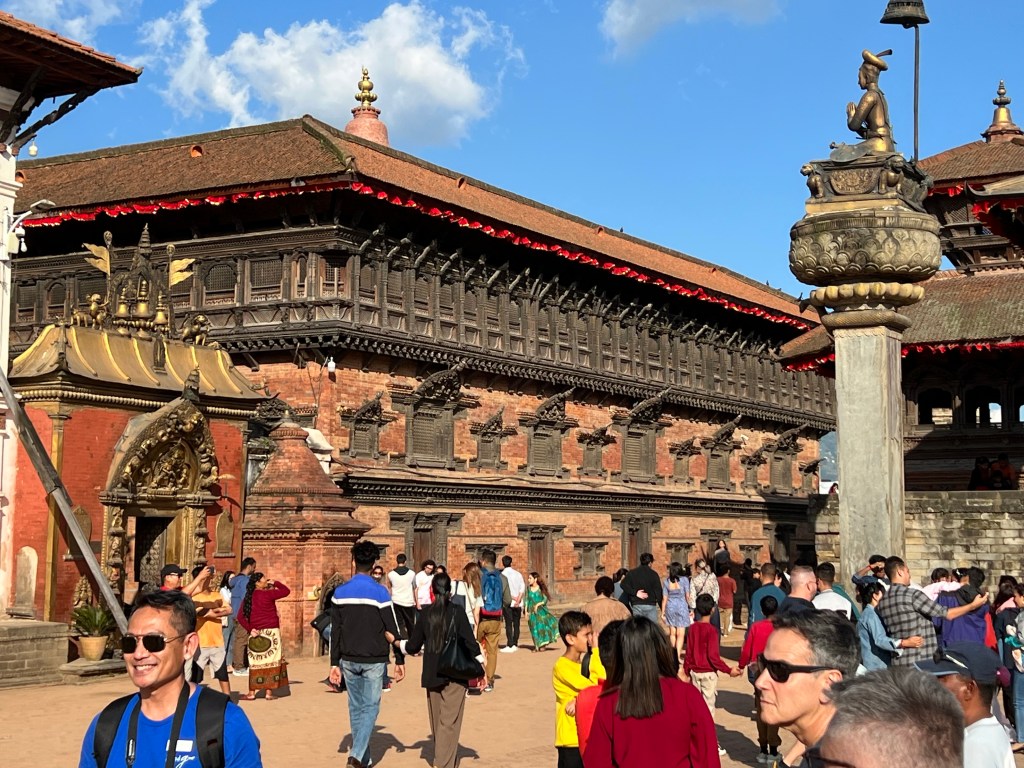
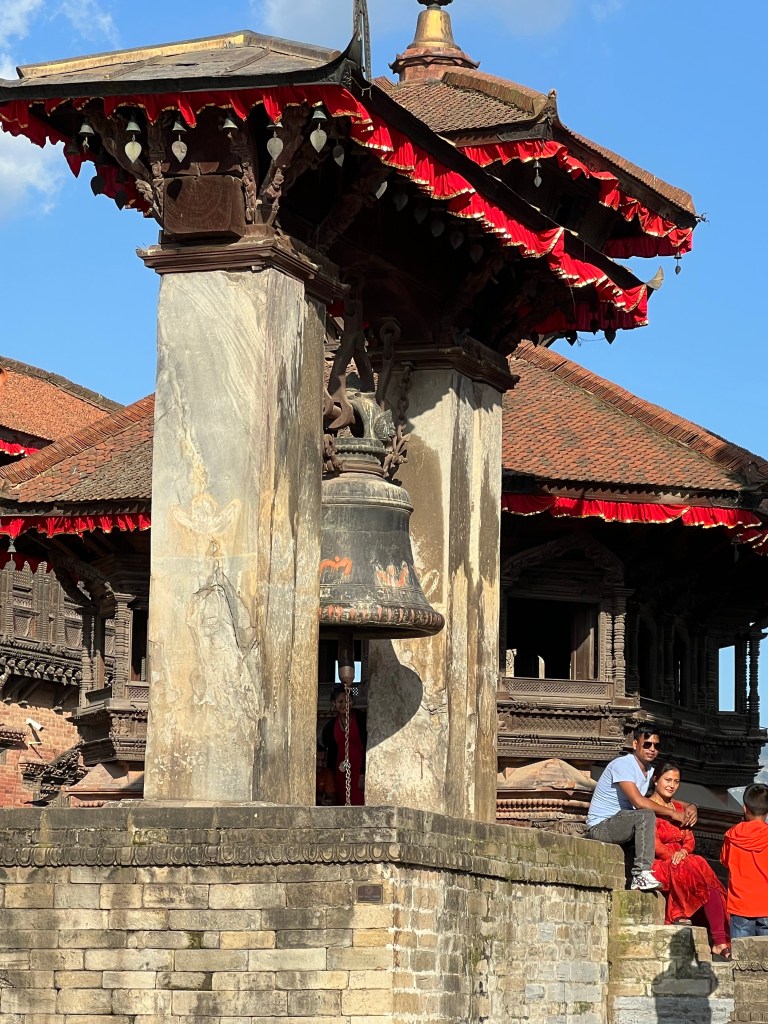
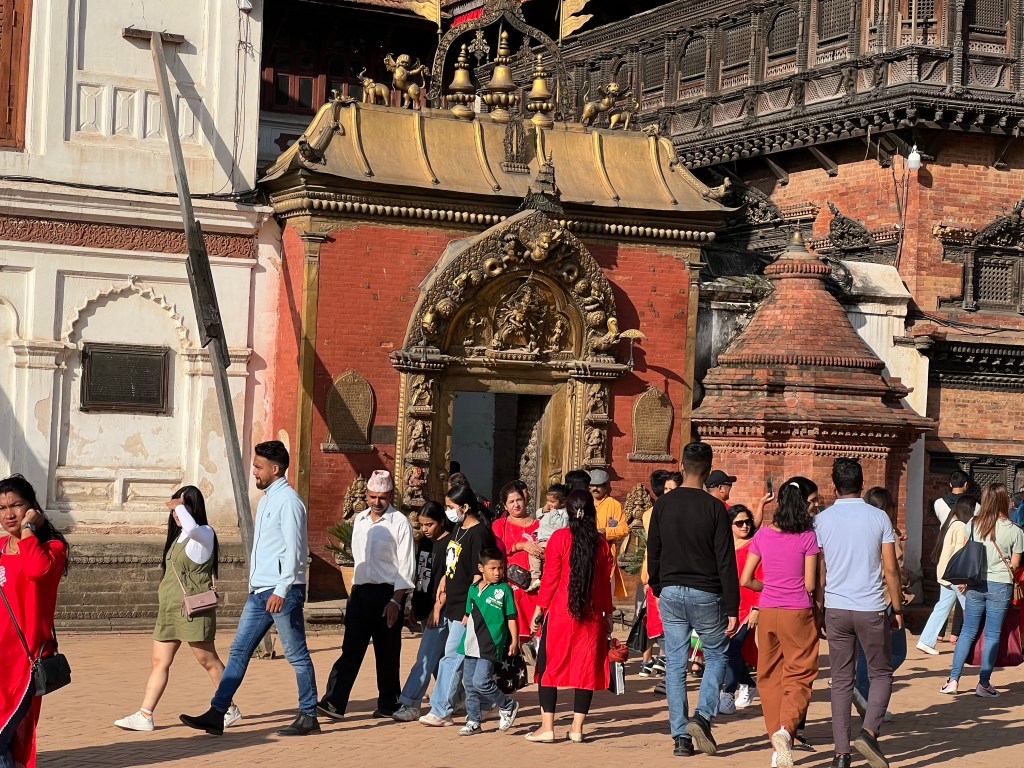
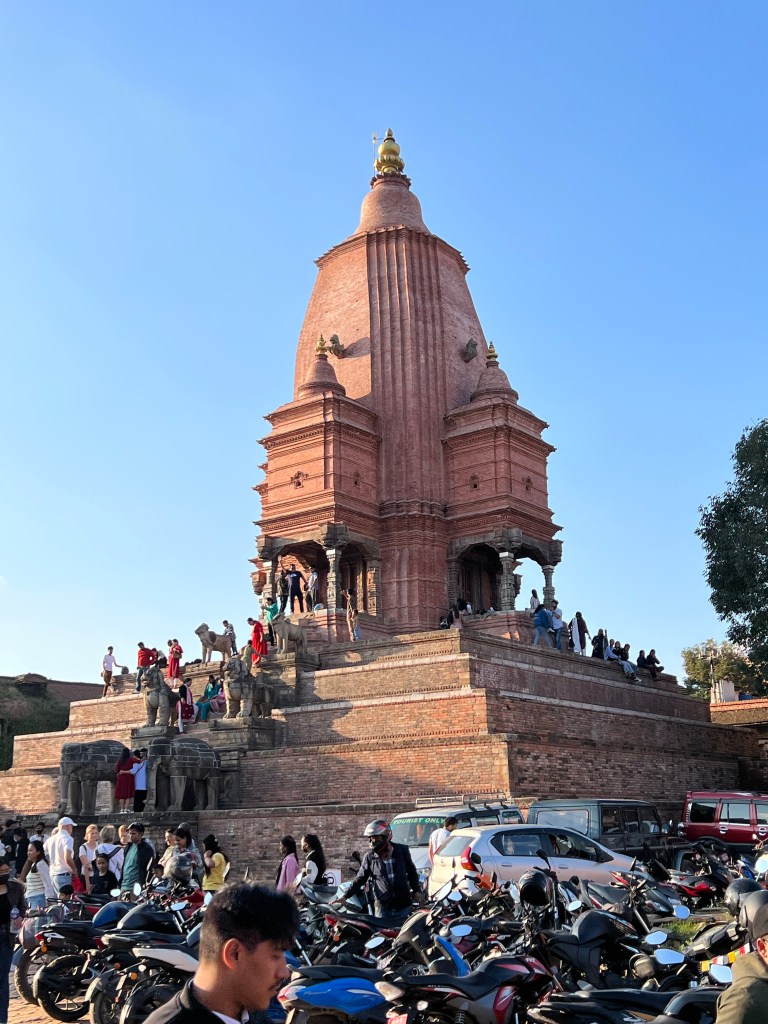
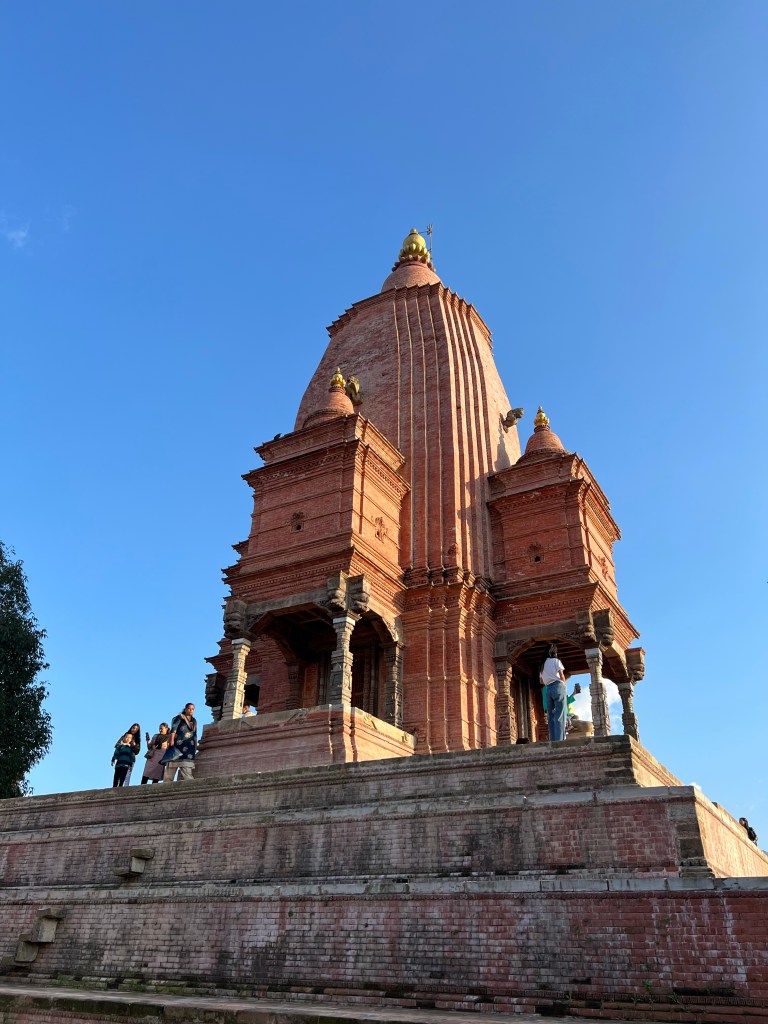
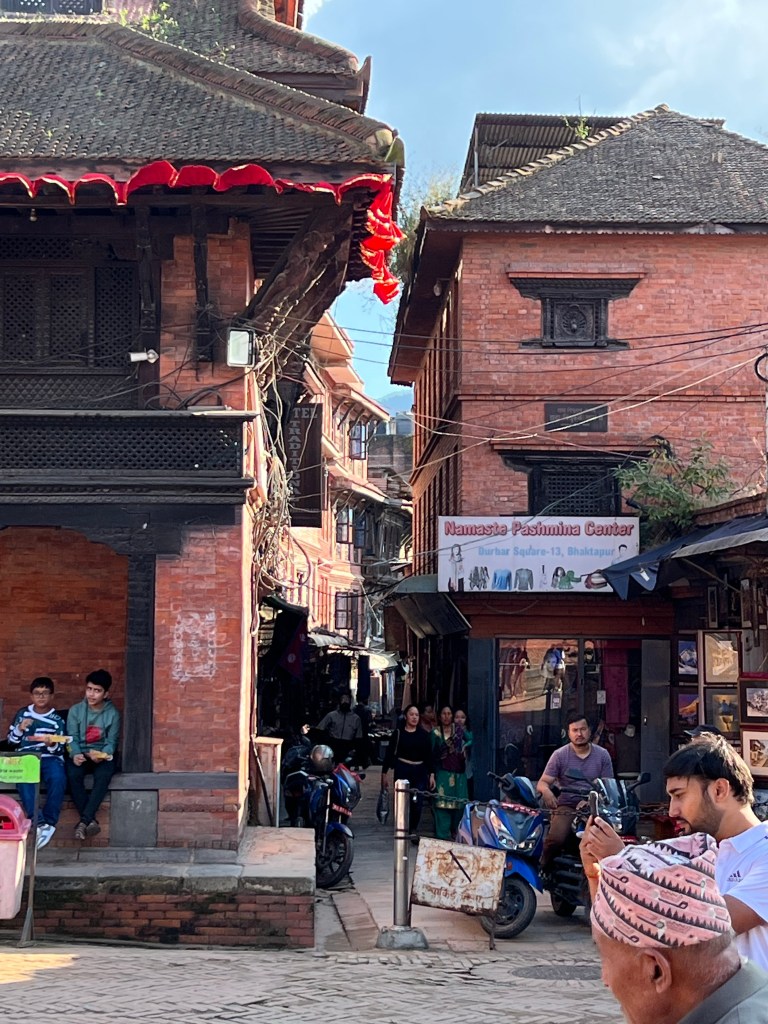
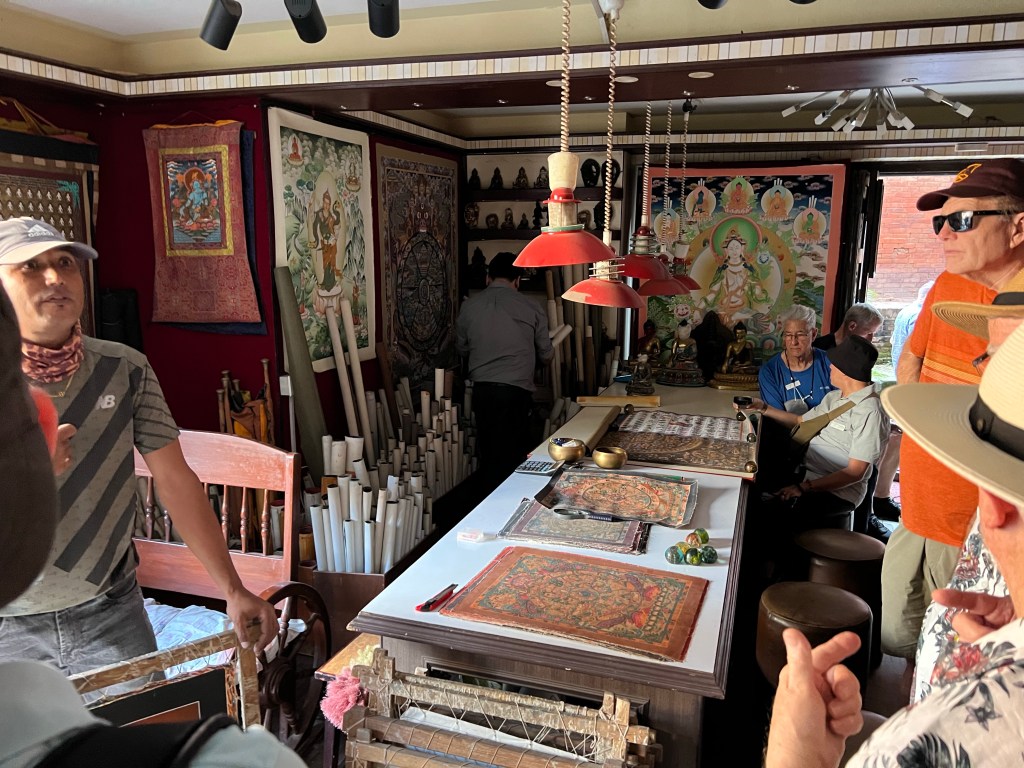
After lunch we took a tour of Bhaktpur. Highlights were the Durbar square, the five story temple and a Thanka painting school.
Golden GateFive-Story TemplePainting SchoolHomemade truck
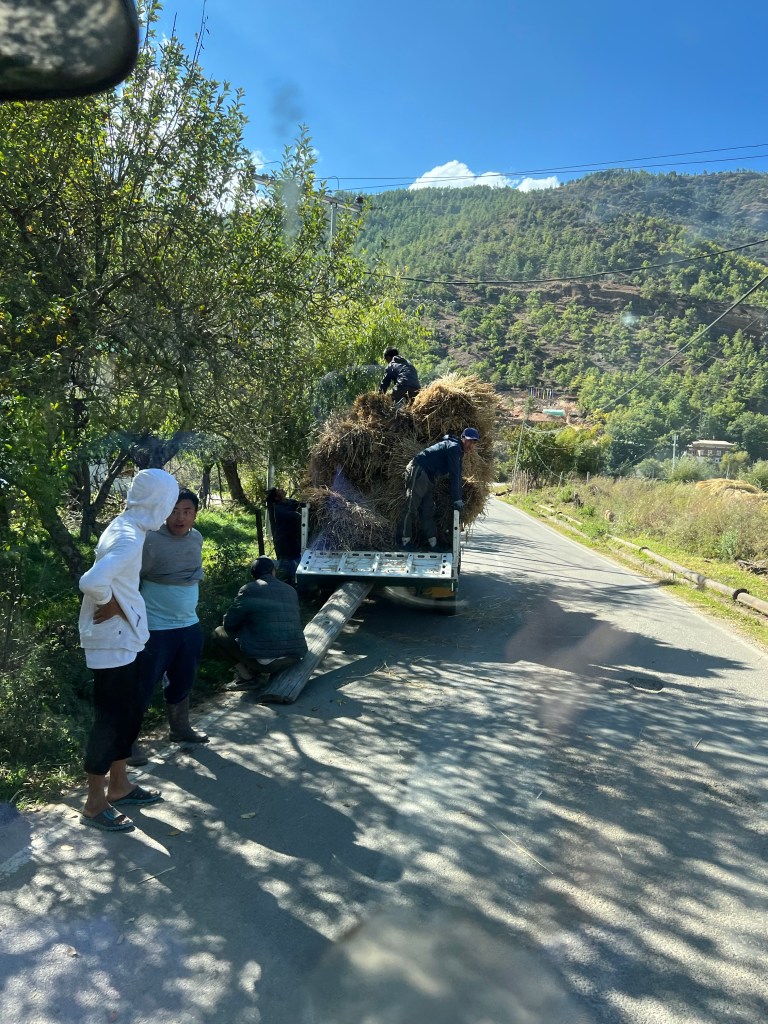
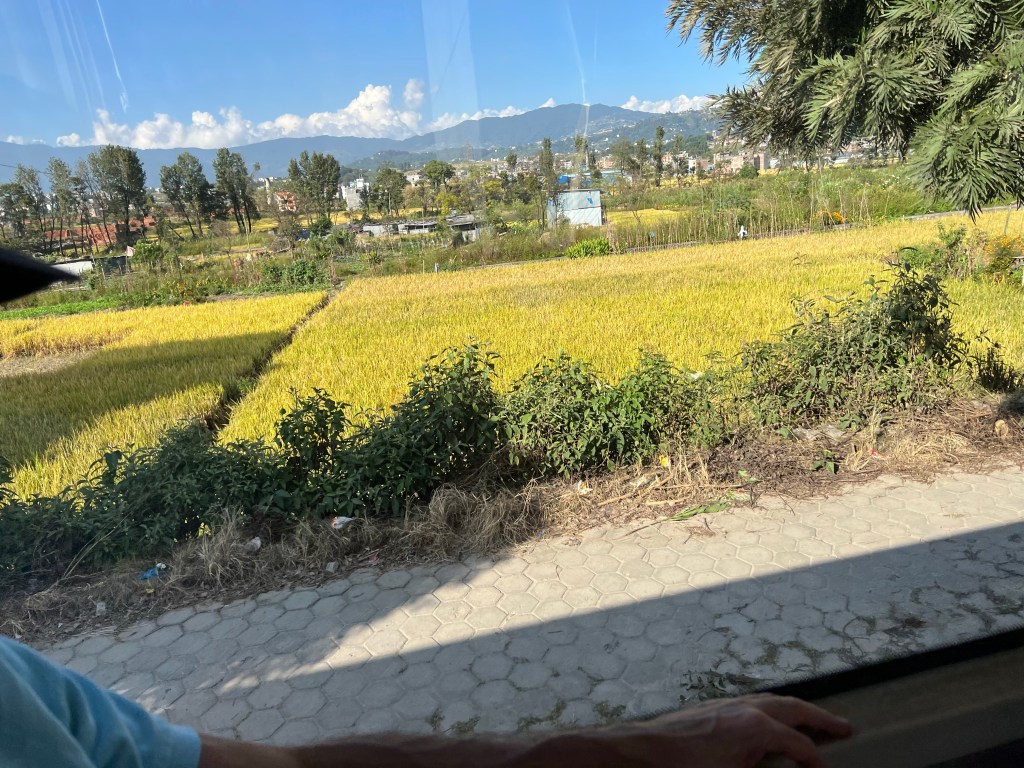
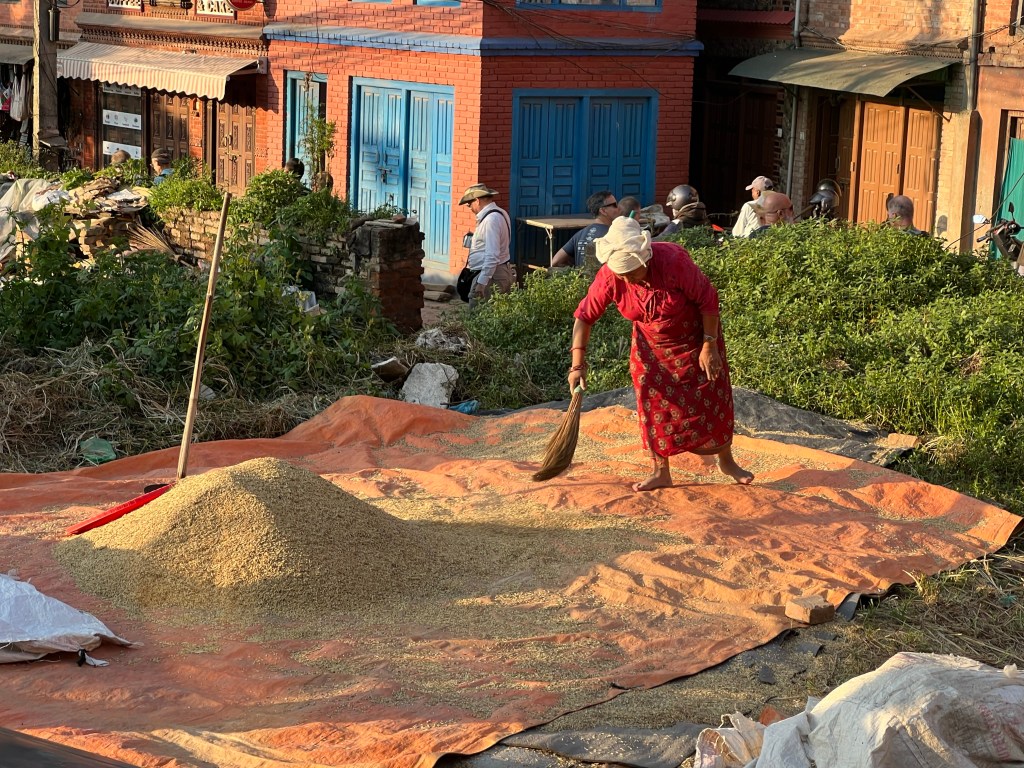
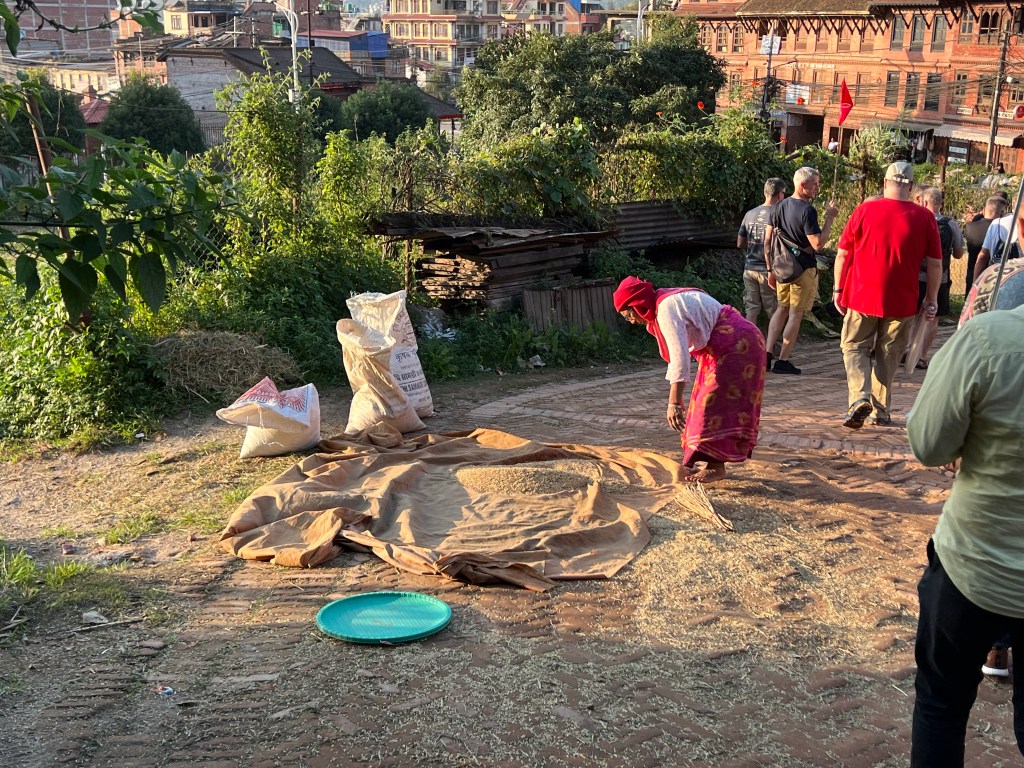
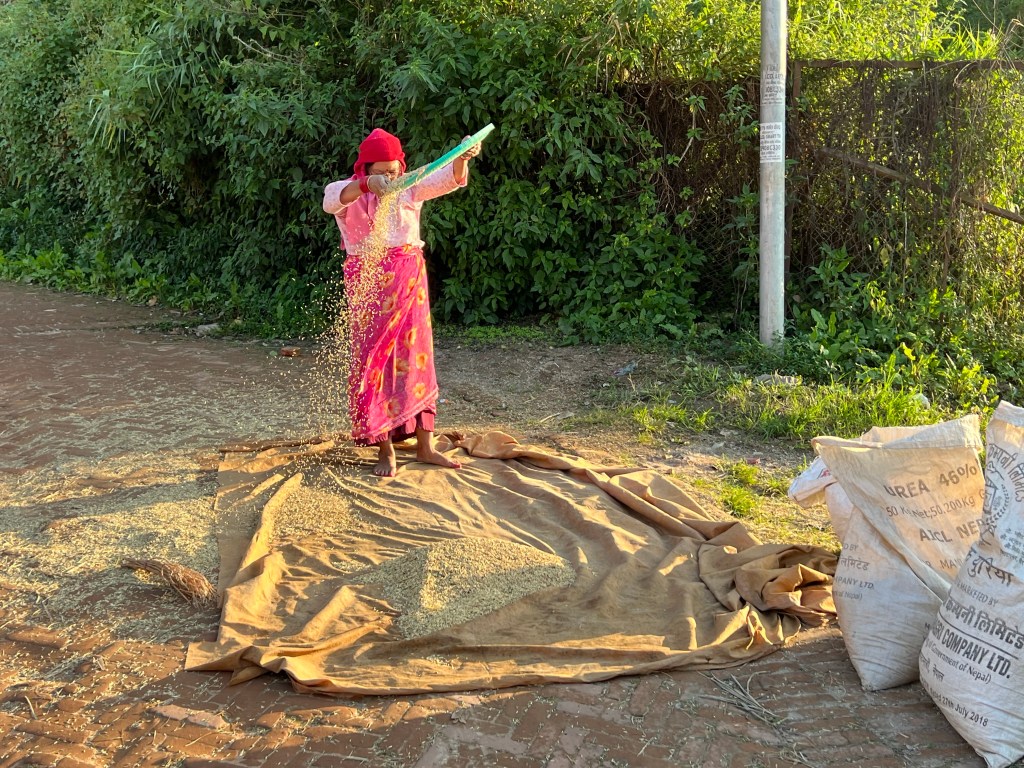
According to our guide, 70% of the population make a living from agriculture. We drove by rice fields on the way to Bhaktpur. On our walk back to the bus after our tour we saw women winnowing grain.
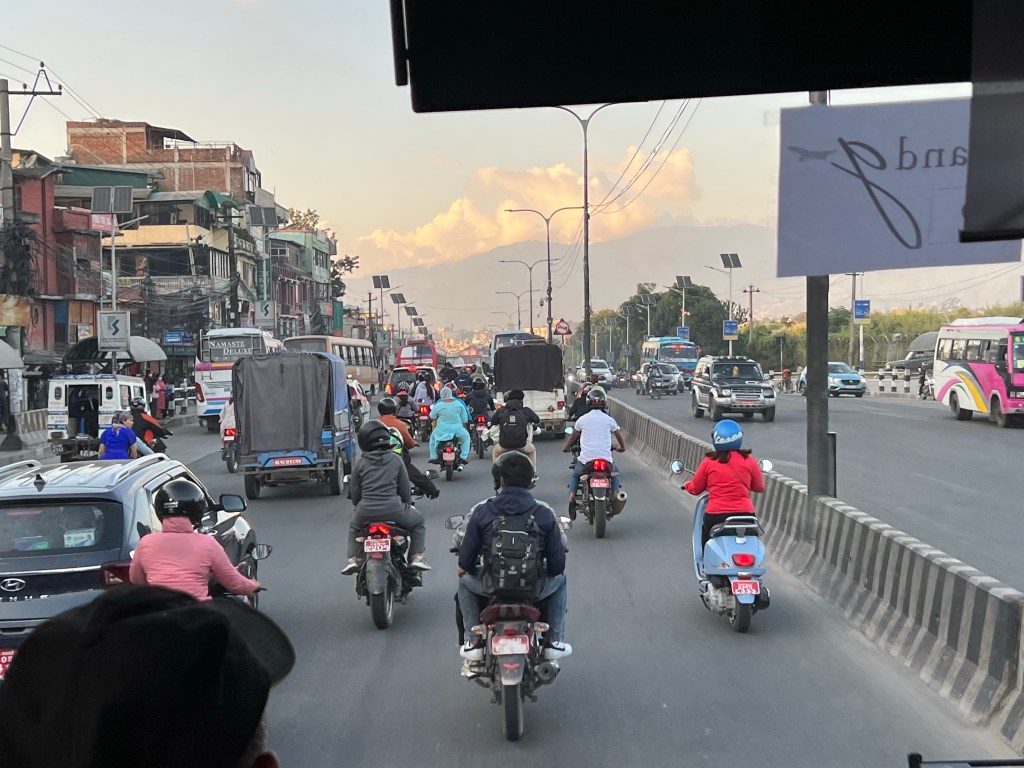
By late afternoon the traffic was more like what we had been used to. Tihar (the Festival of Lights) is approaching and people were lined up to catch buses back to their home villages.
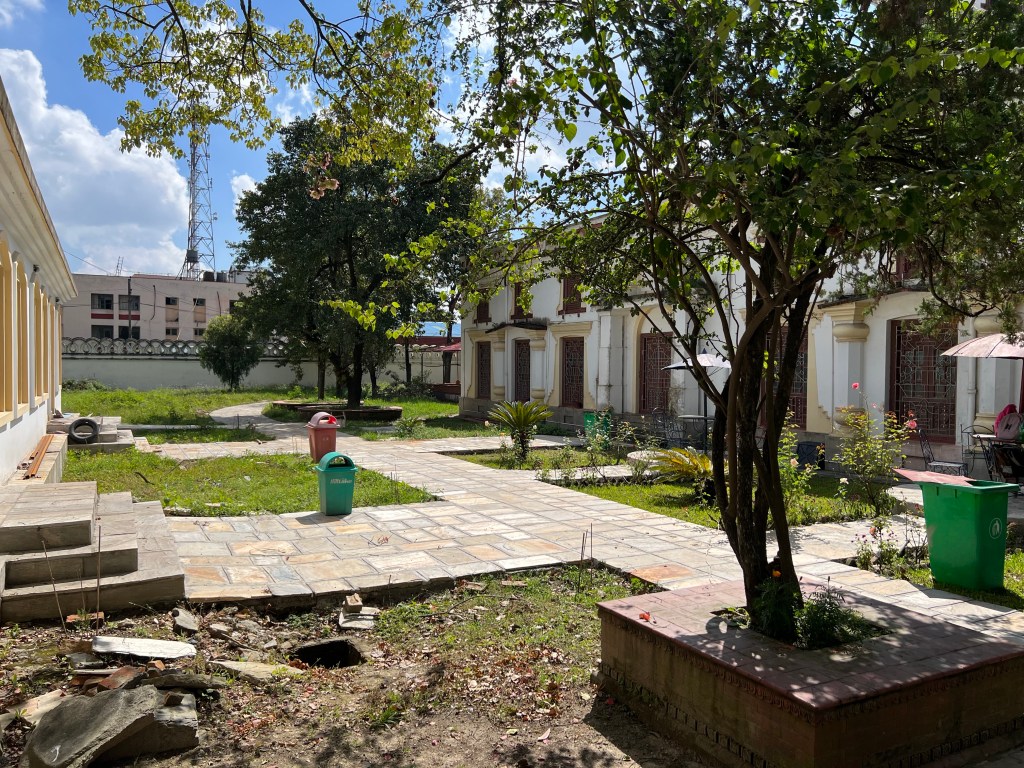
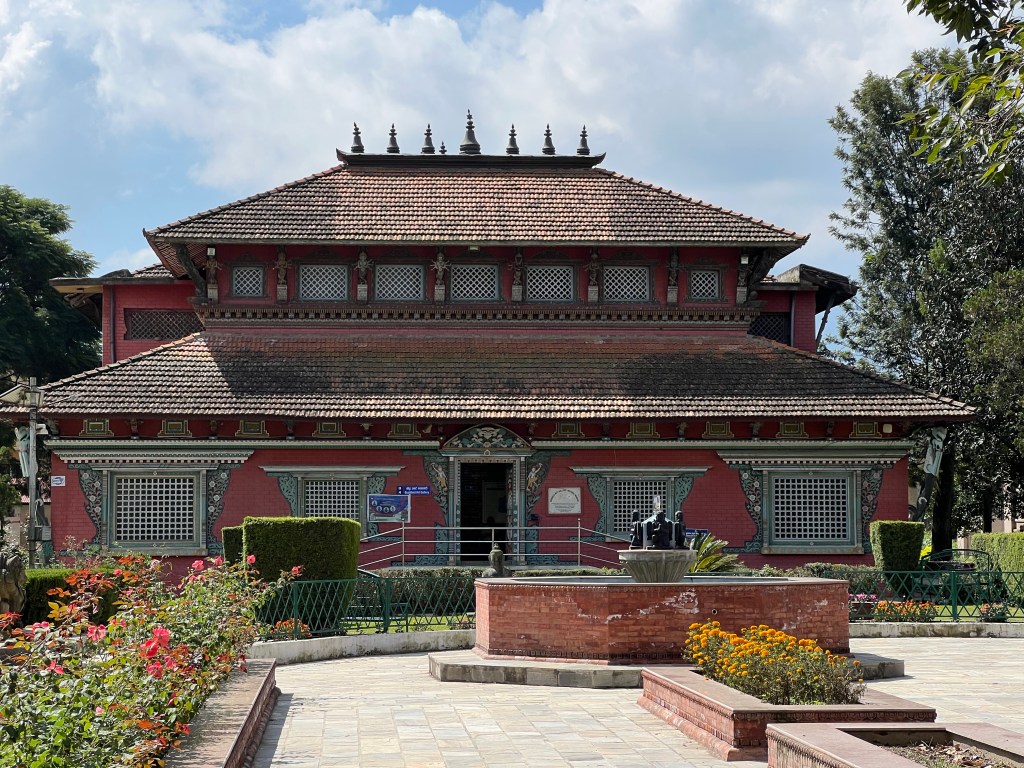
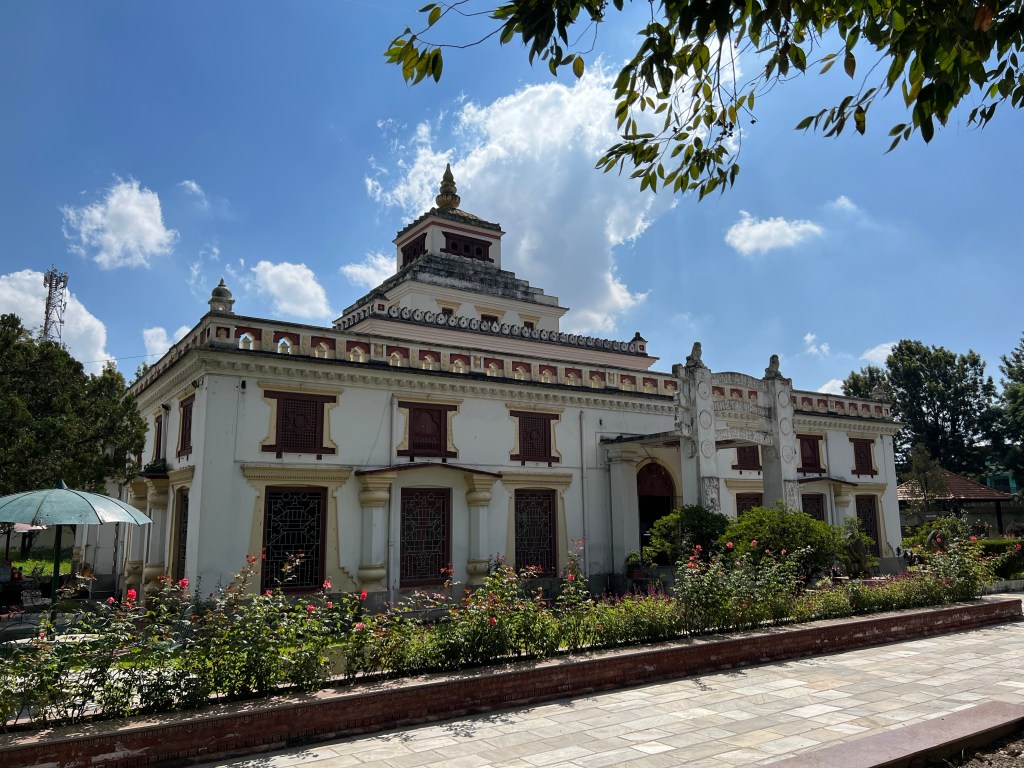
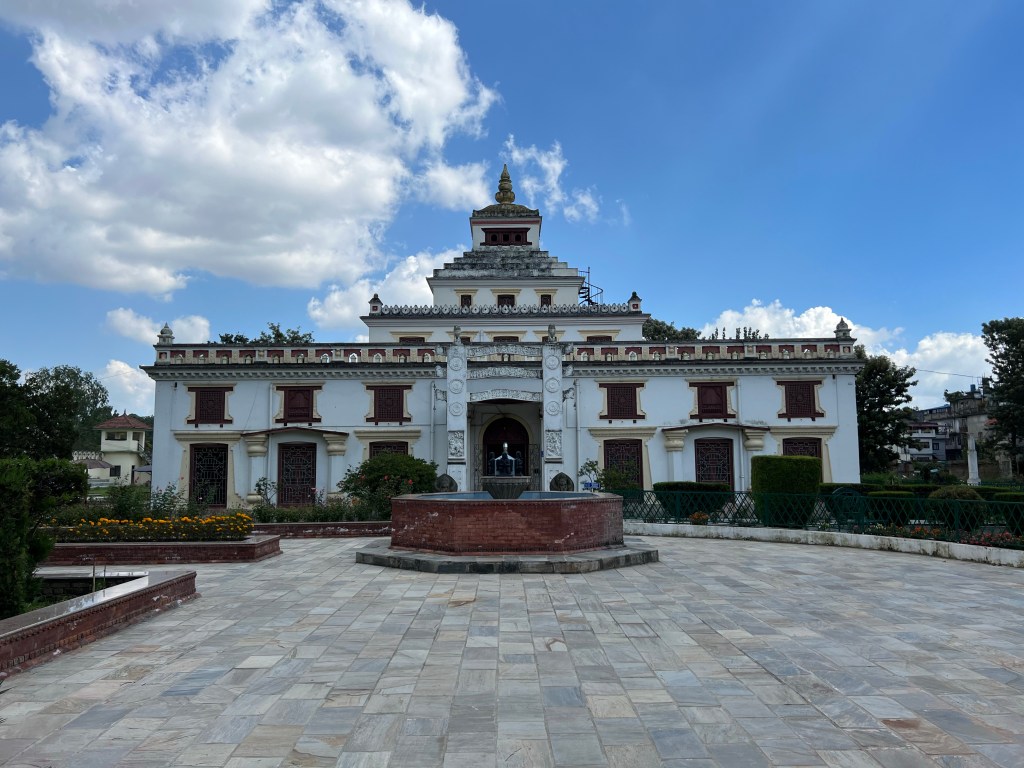
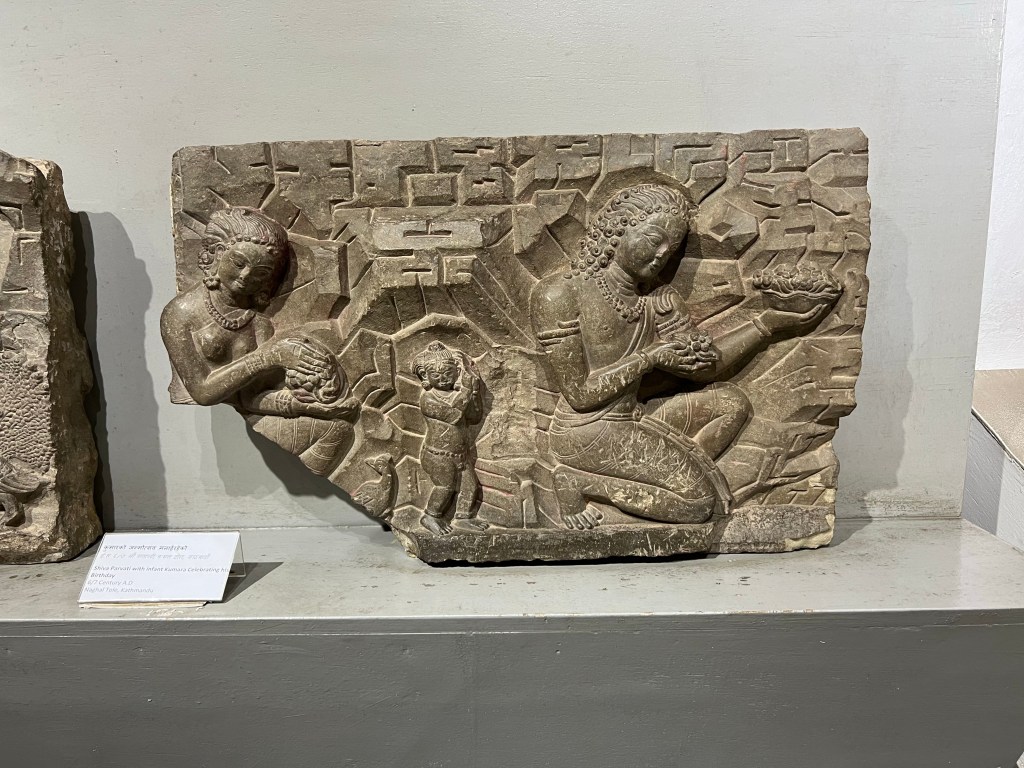
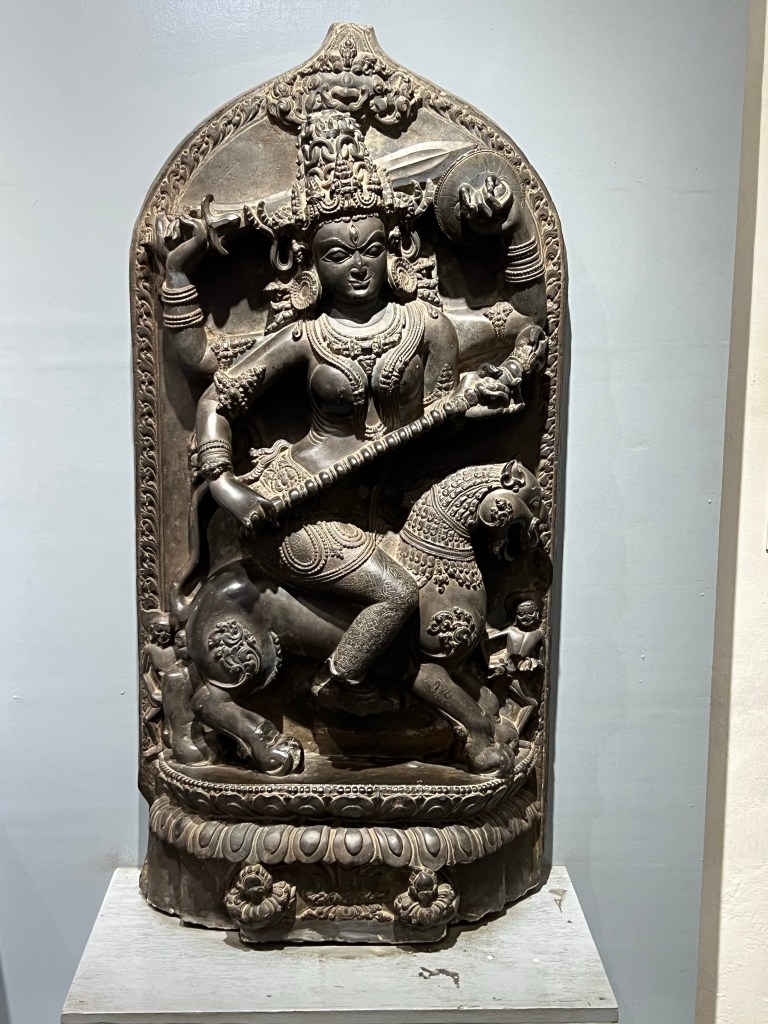
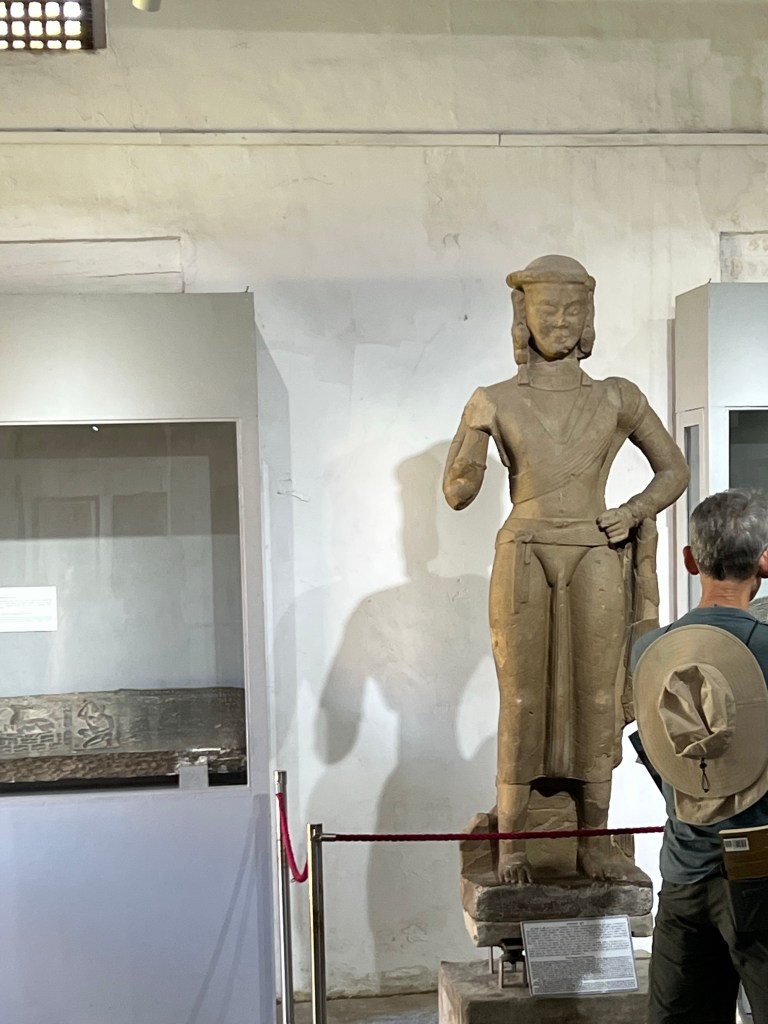
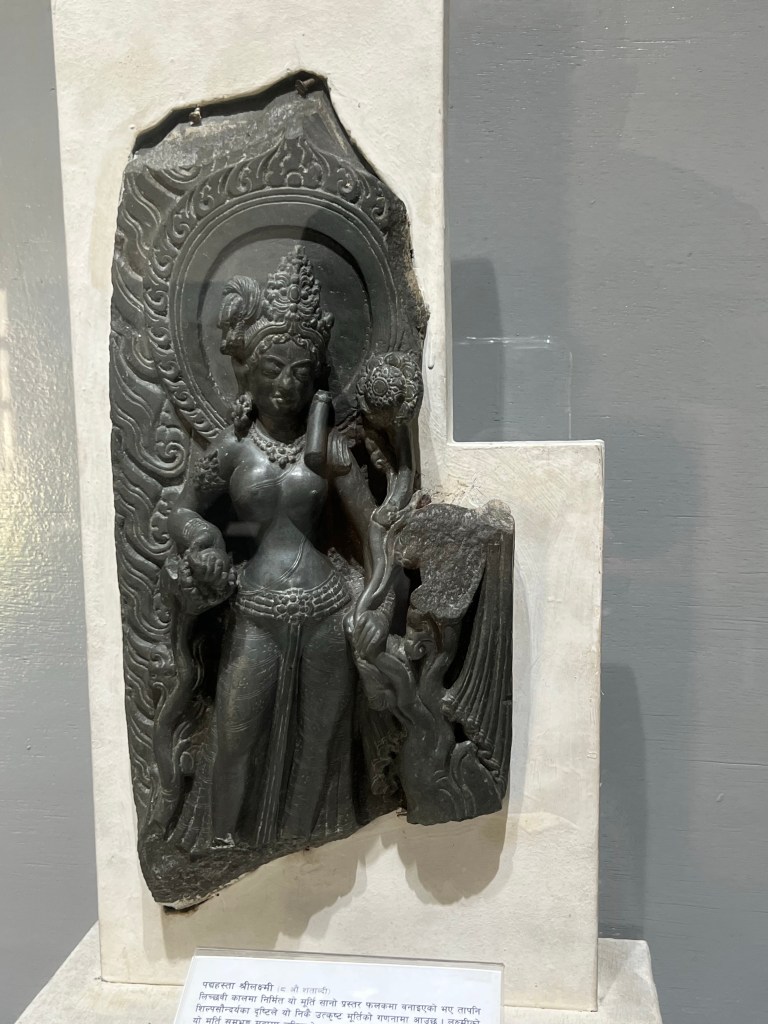
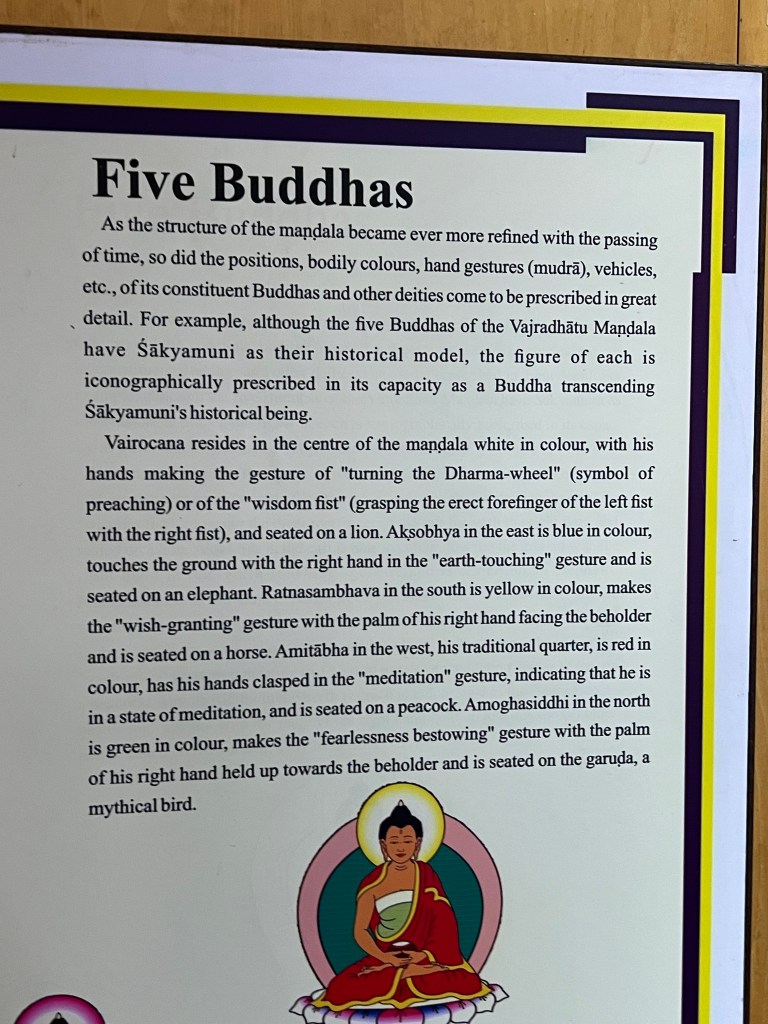
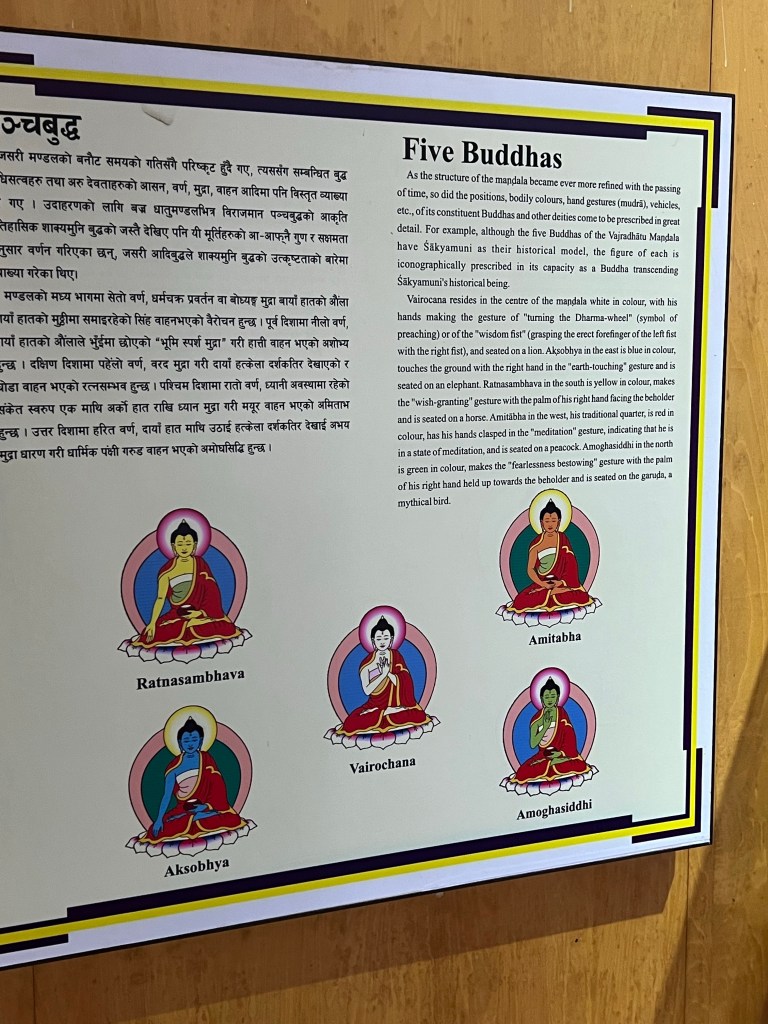
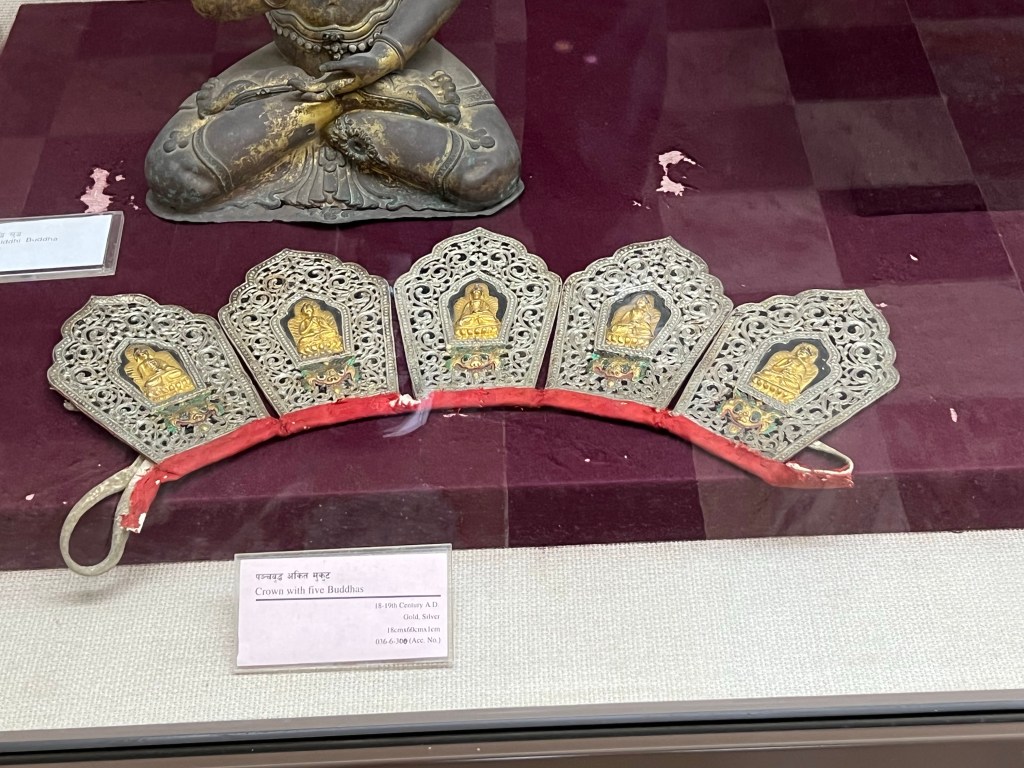
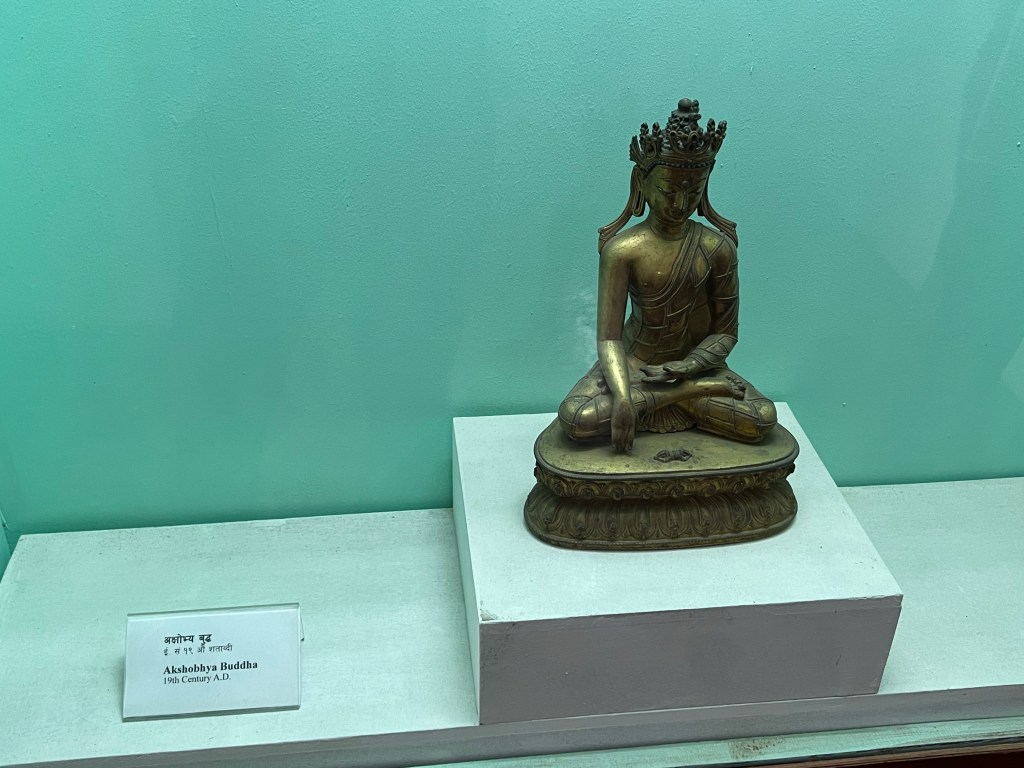
I met a fellow tourer at breakfast and he joined me on the trip to the National Museum – a complex of buildings originally constructed as an art museum.
The first building contained art from around the country.
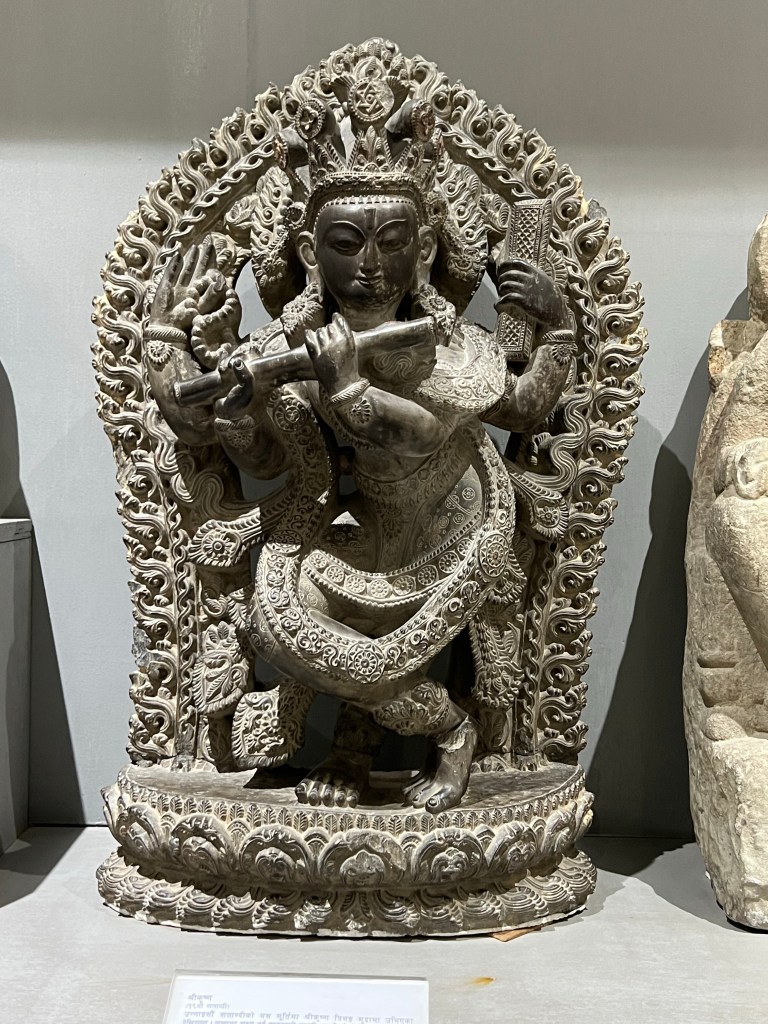
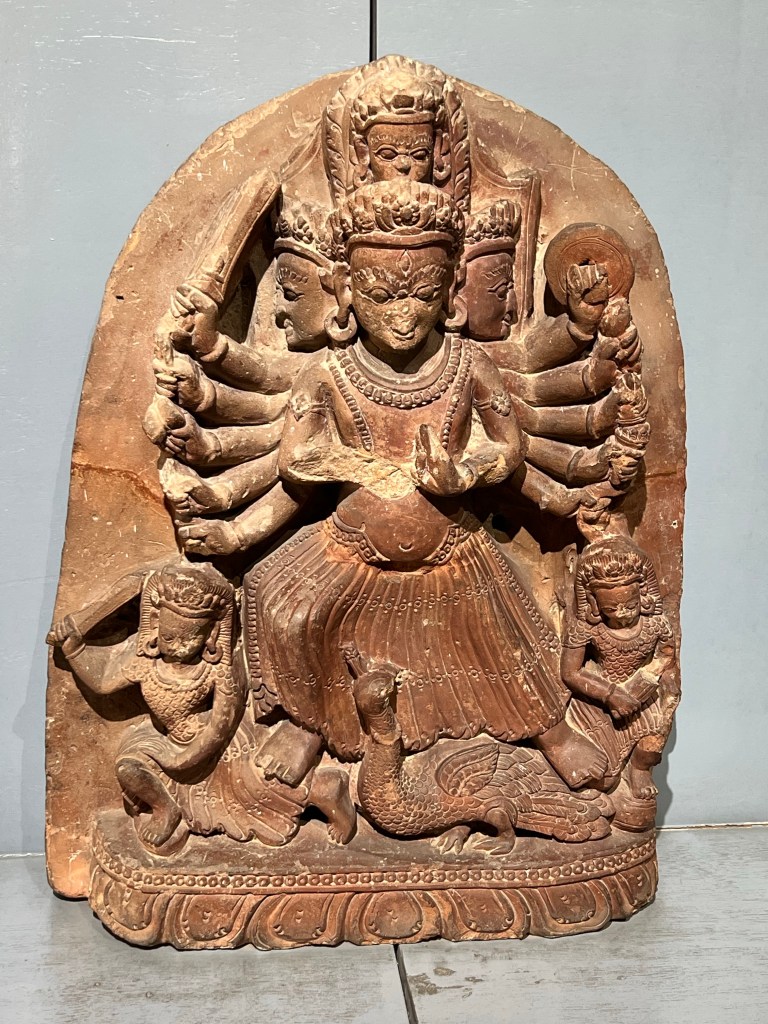
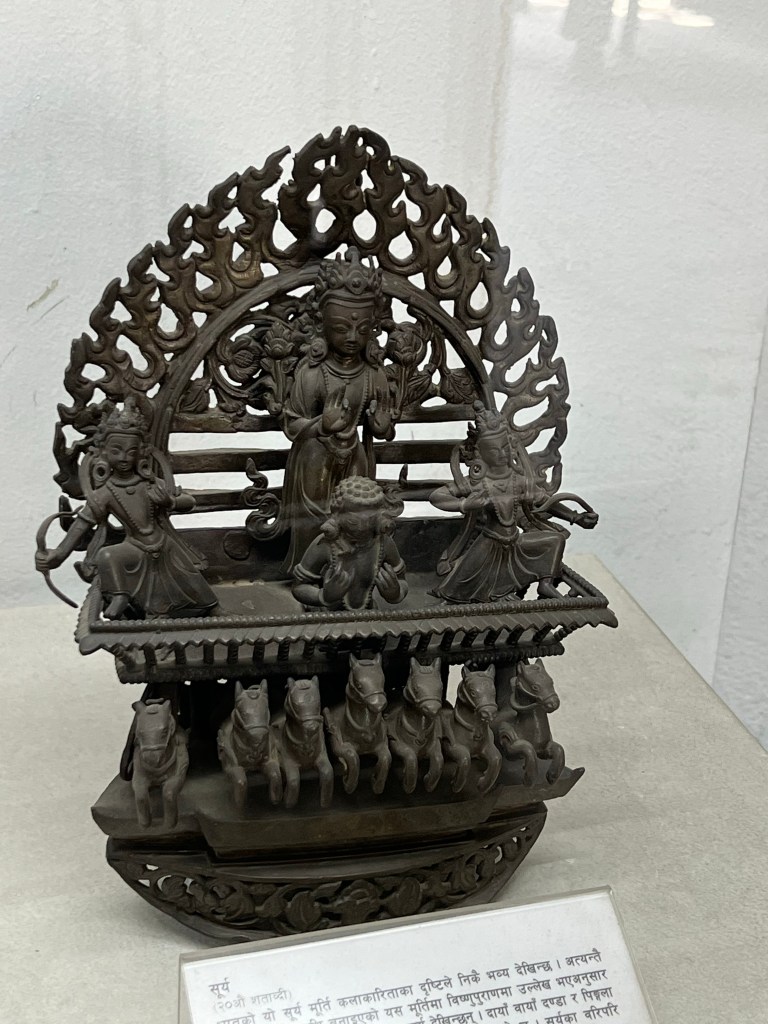
Early Hindu sculptures
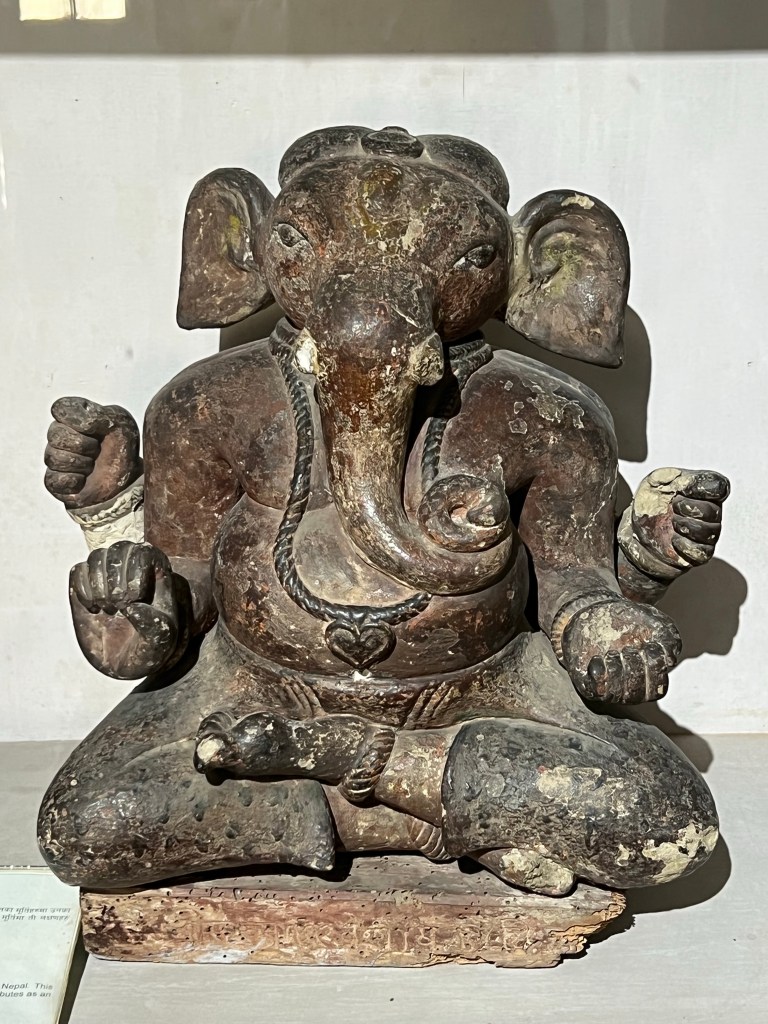
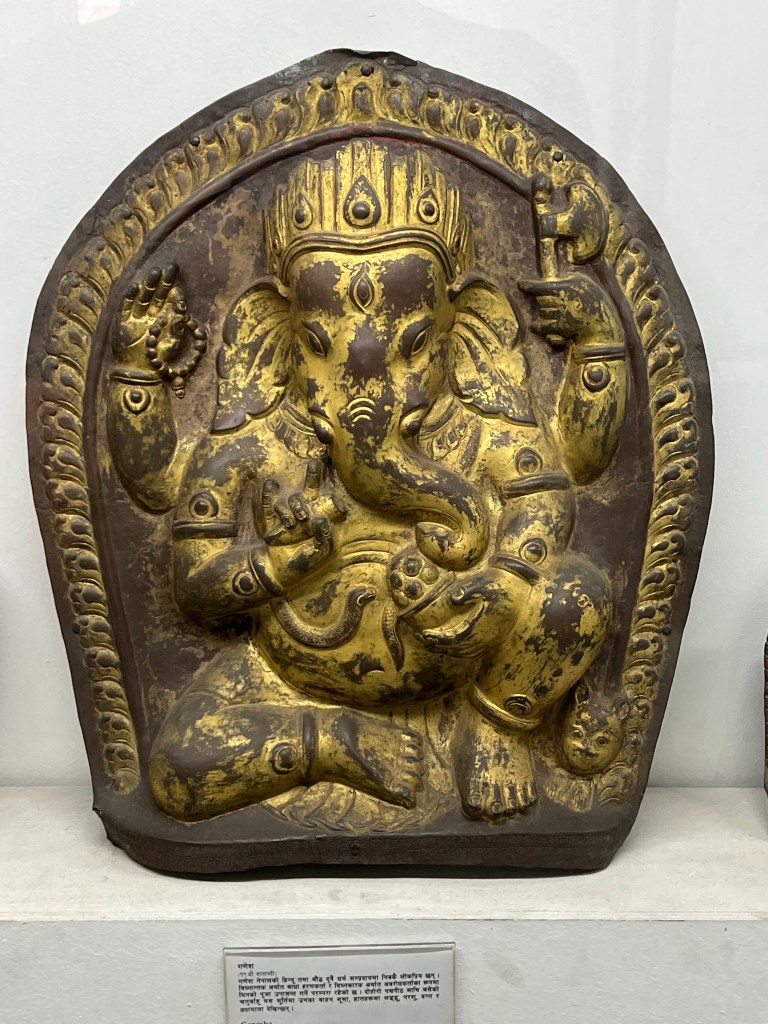
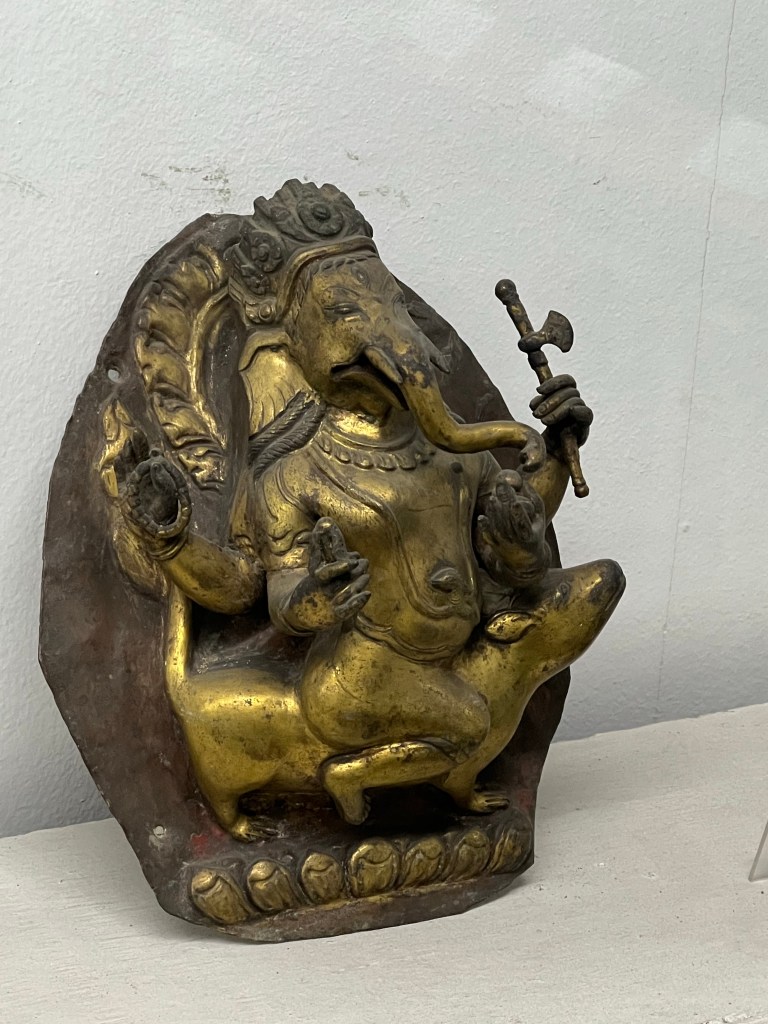
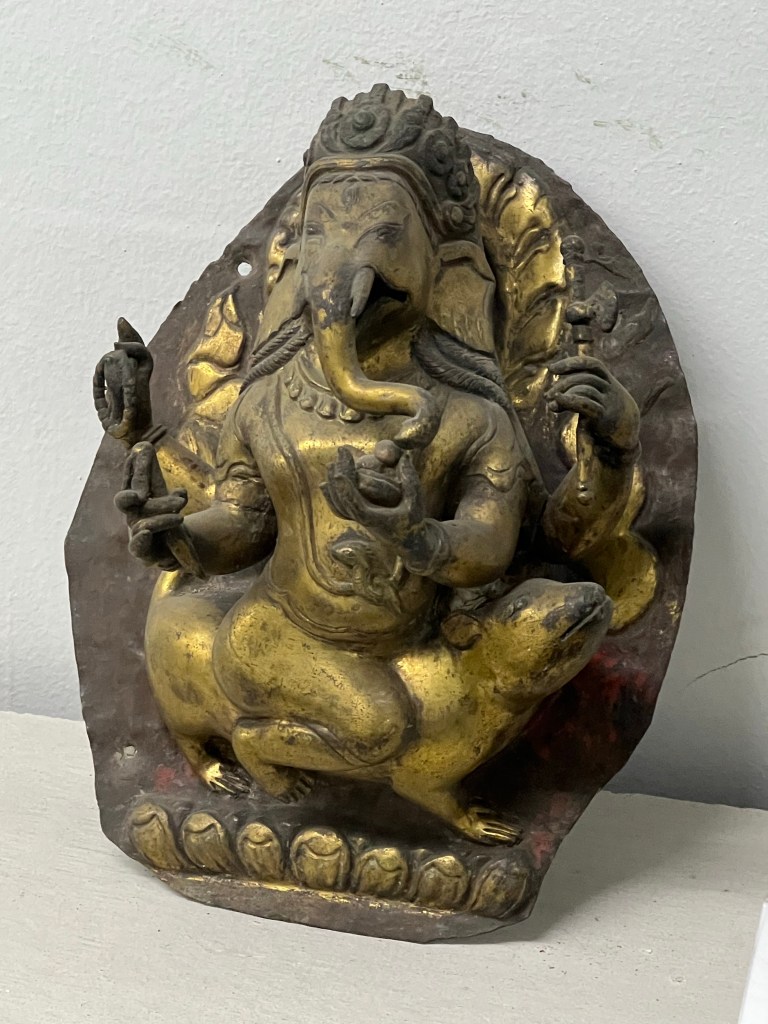
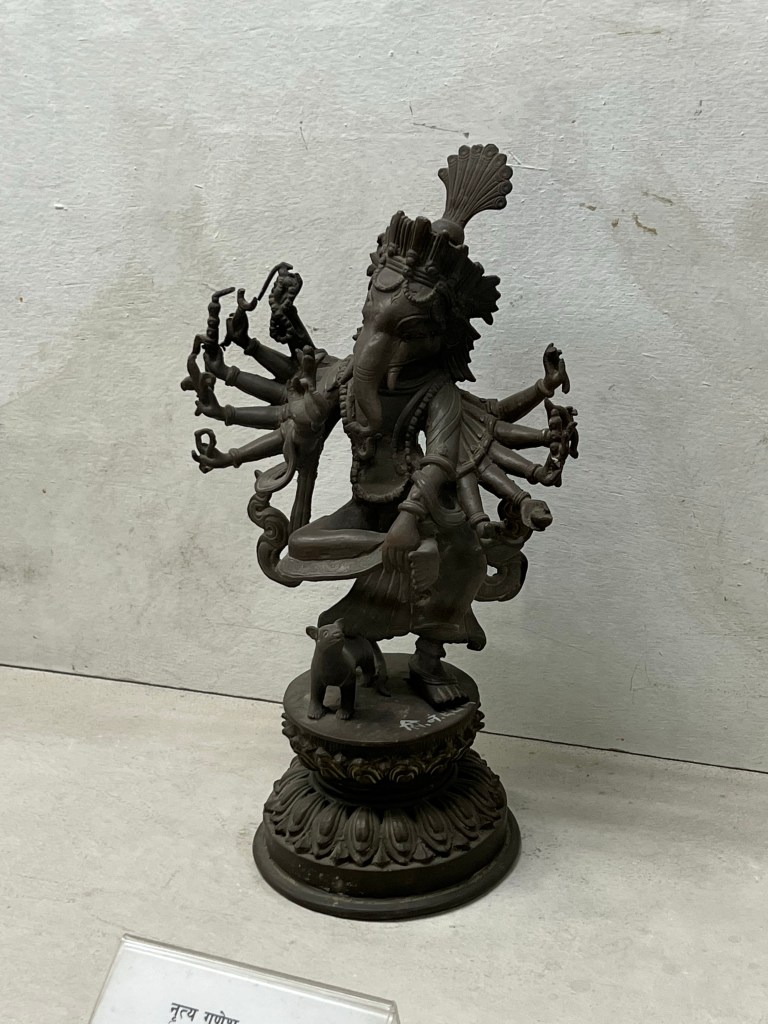
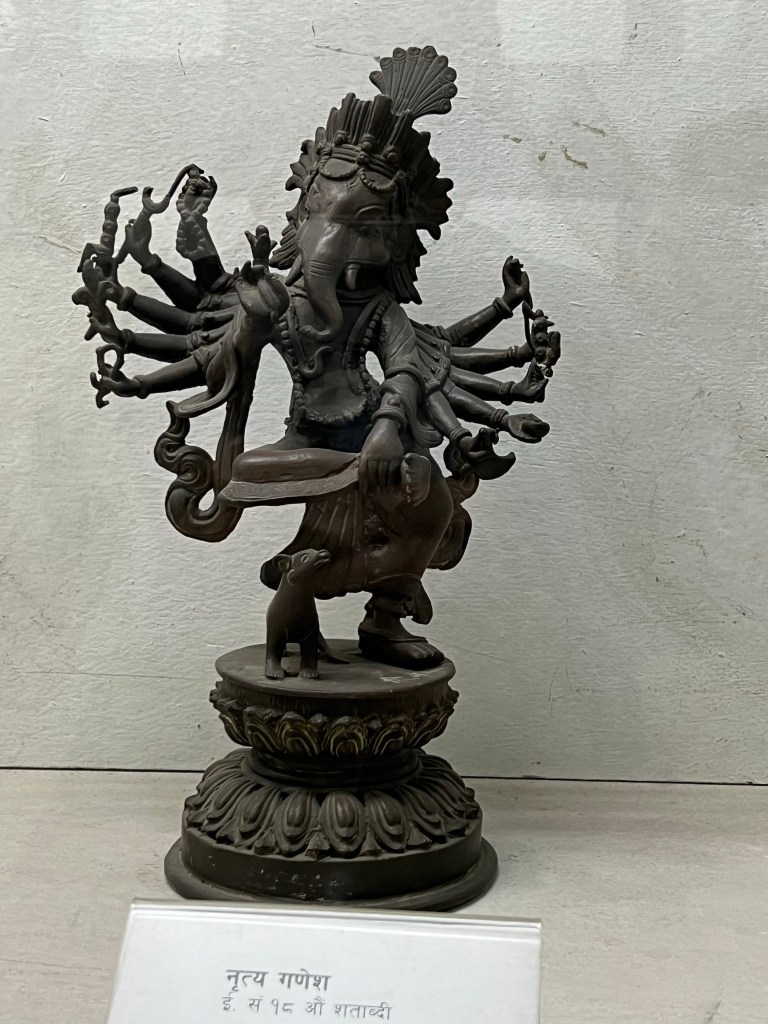
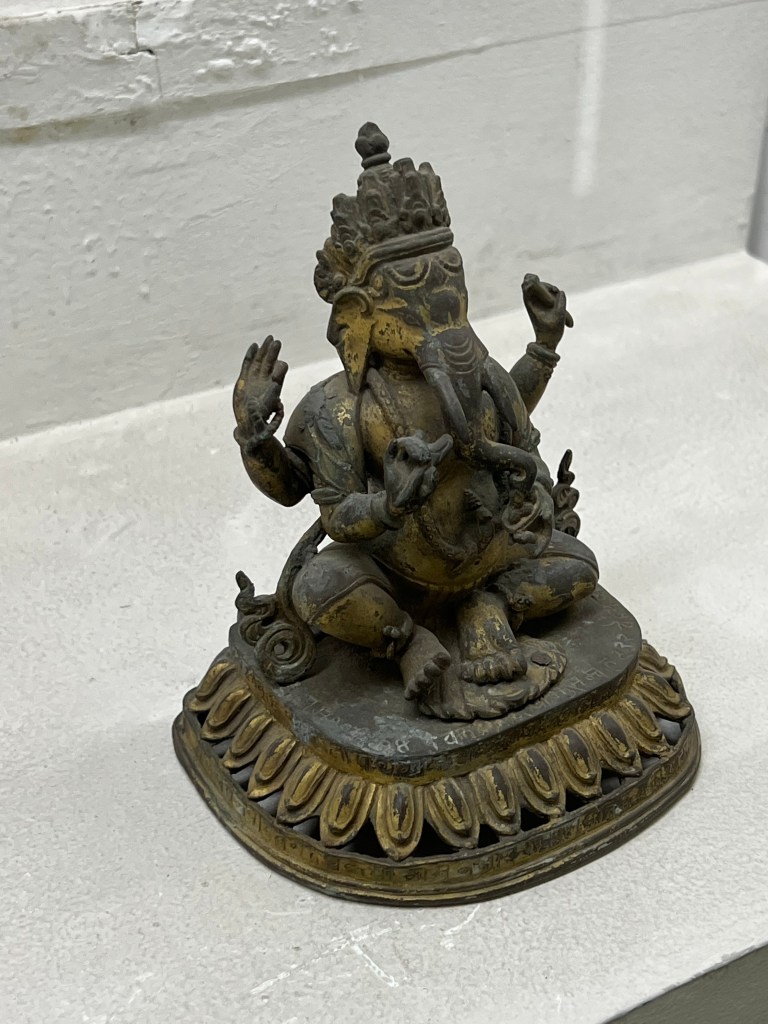
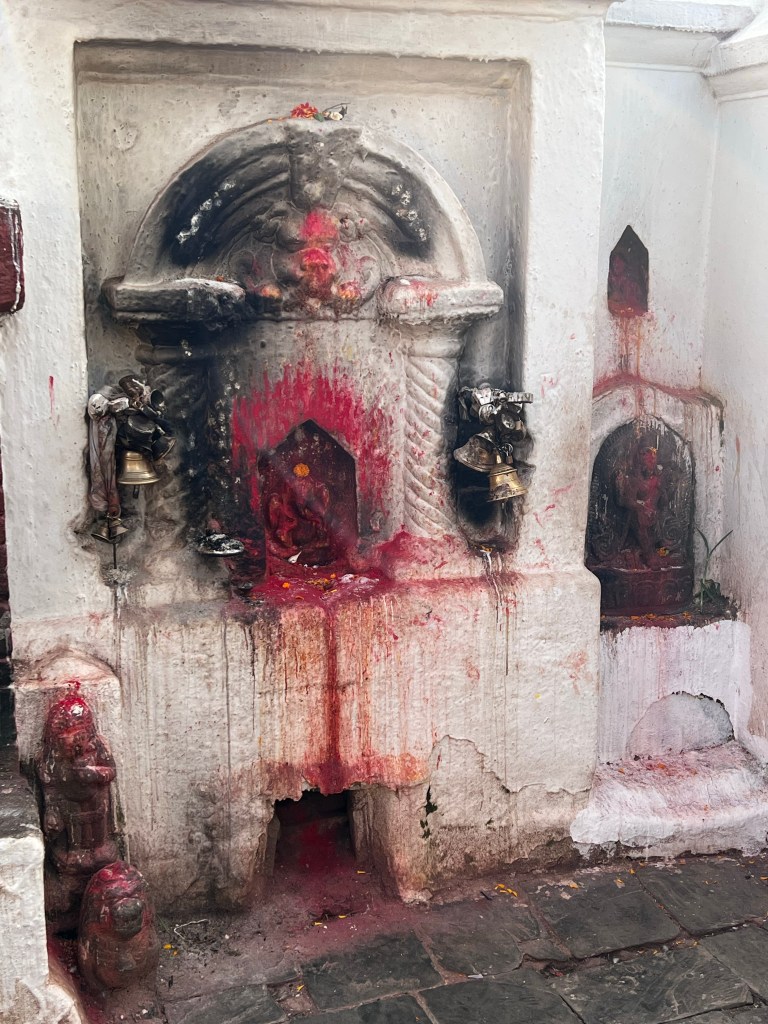
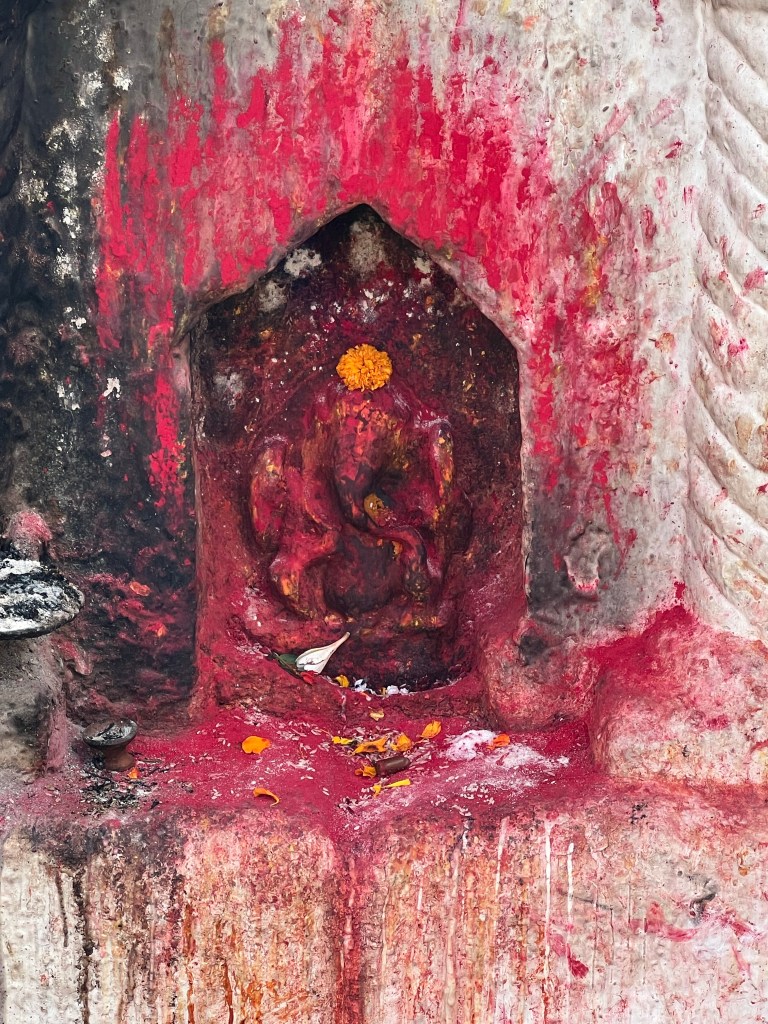
Ganesha – popular in Nepal
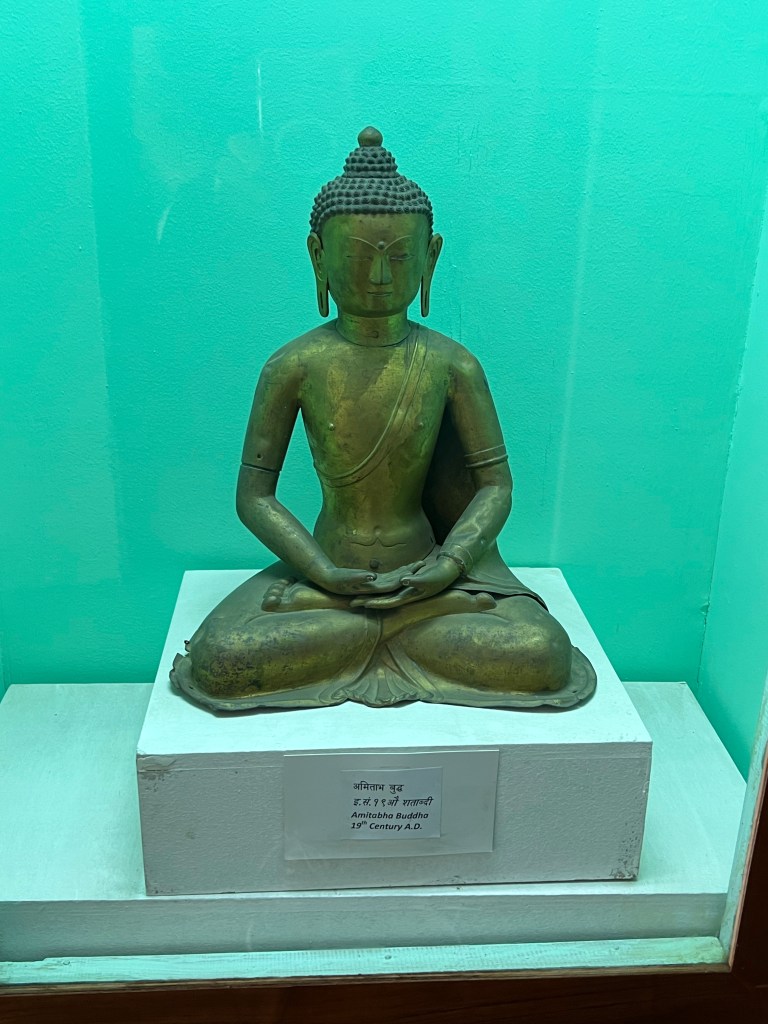
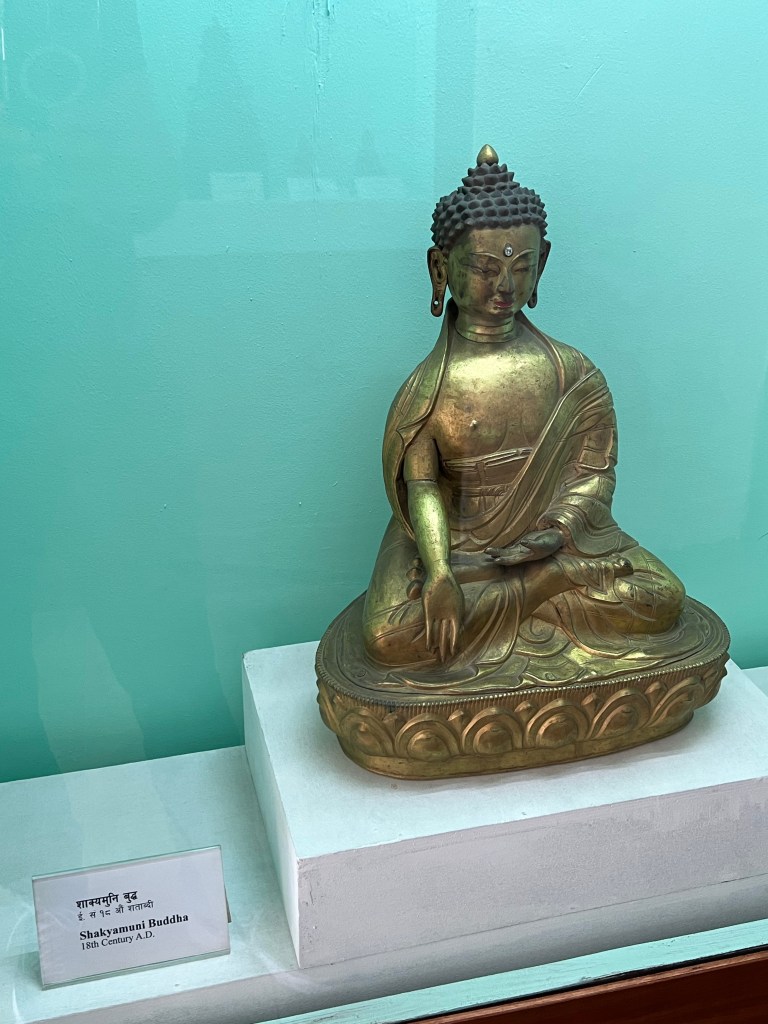
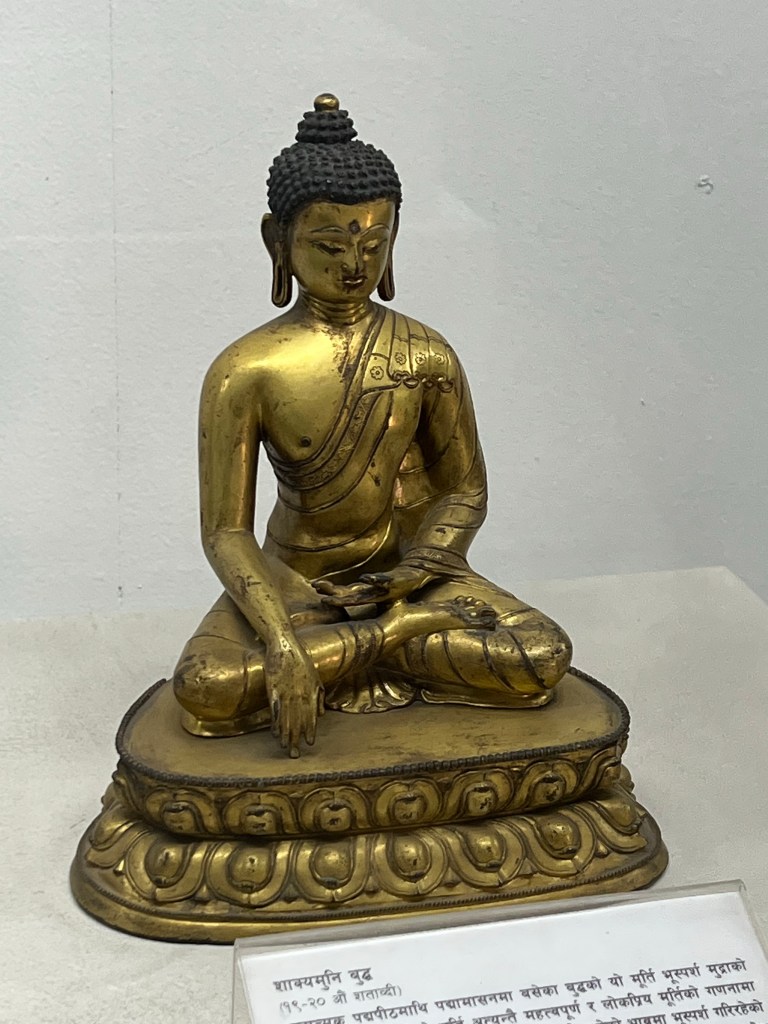
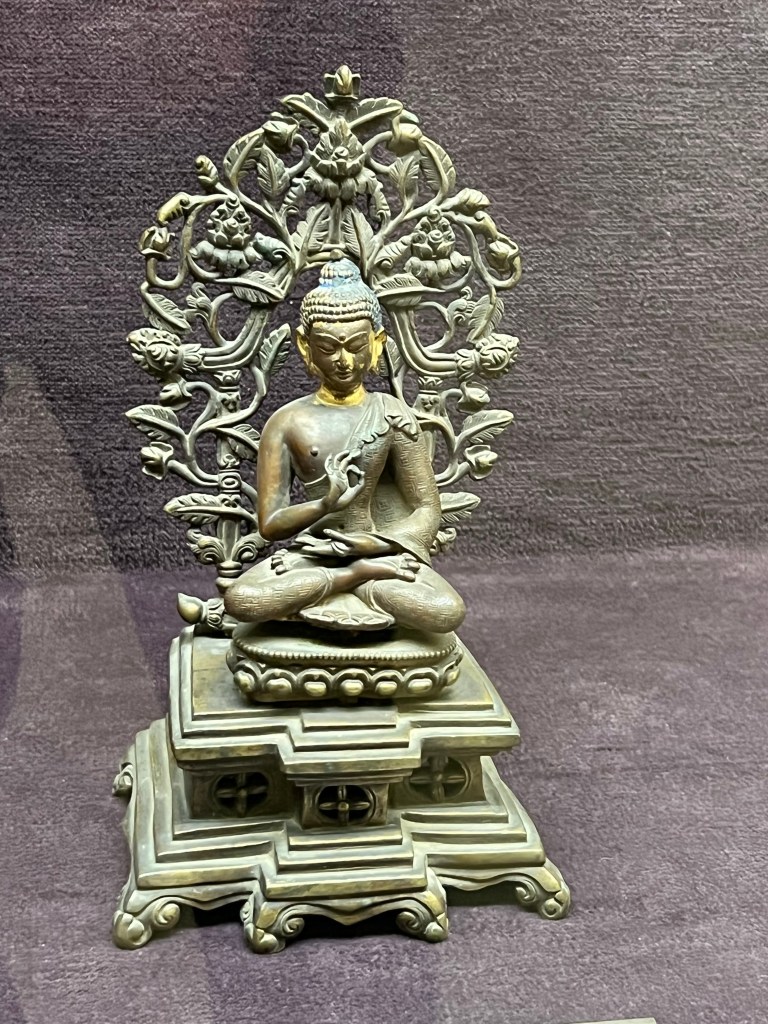
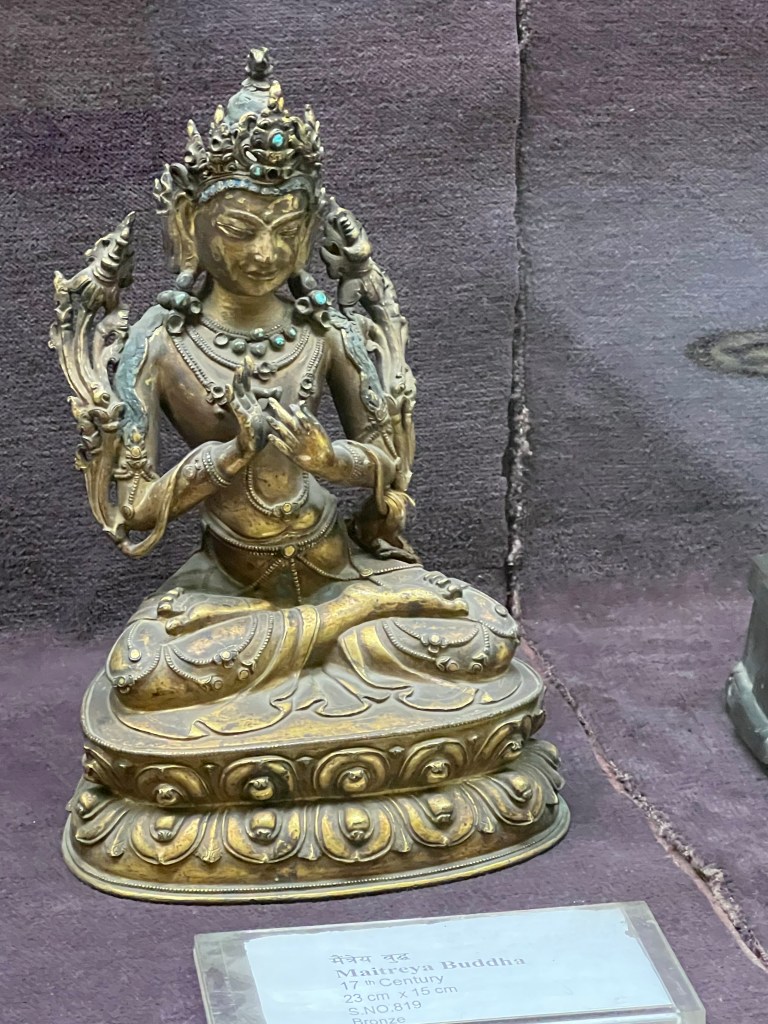
Buddha
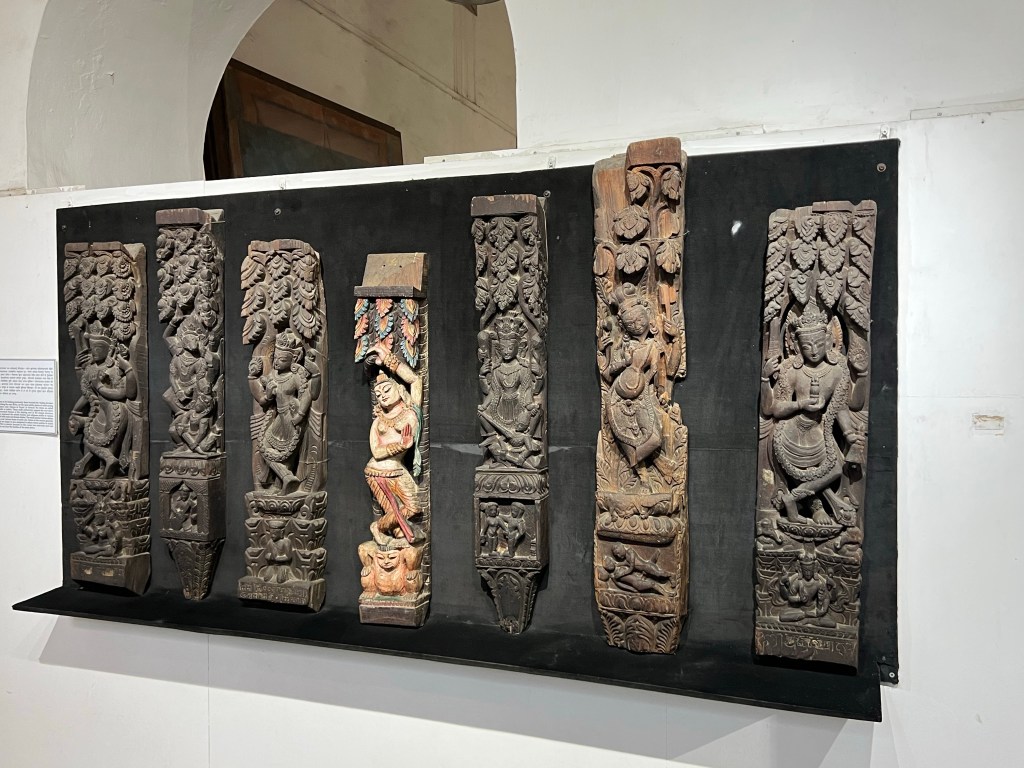
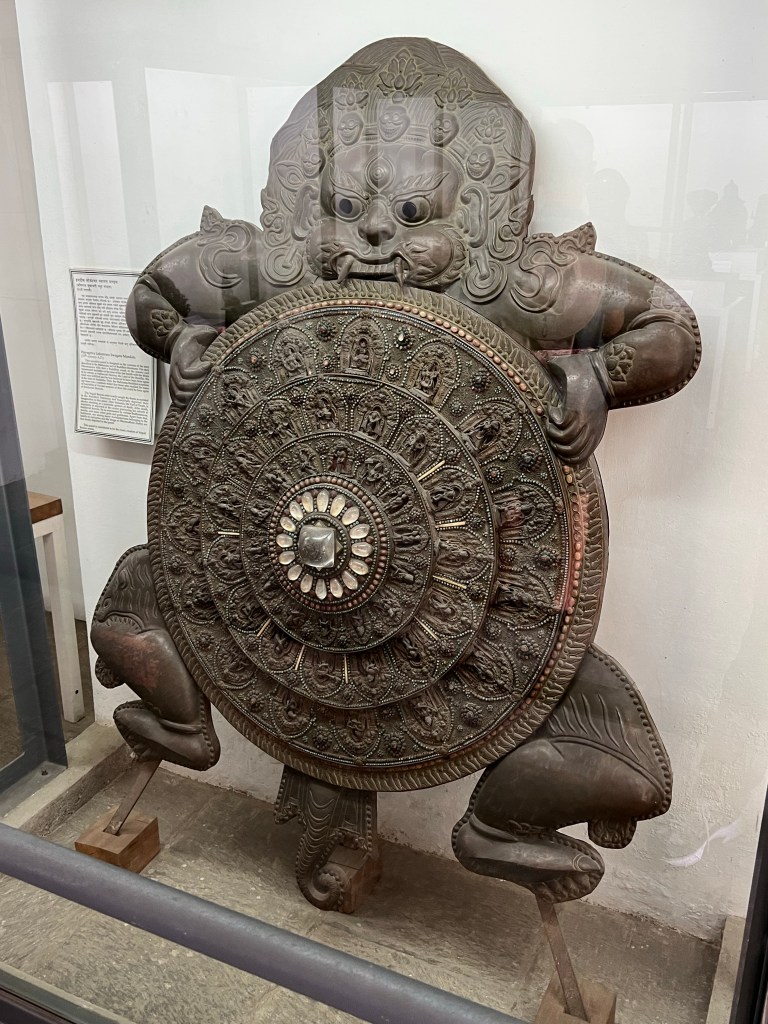
The second building was art from the Kathmandu Valley
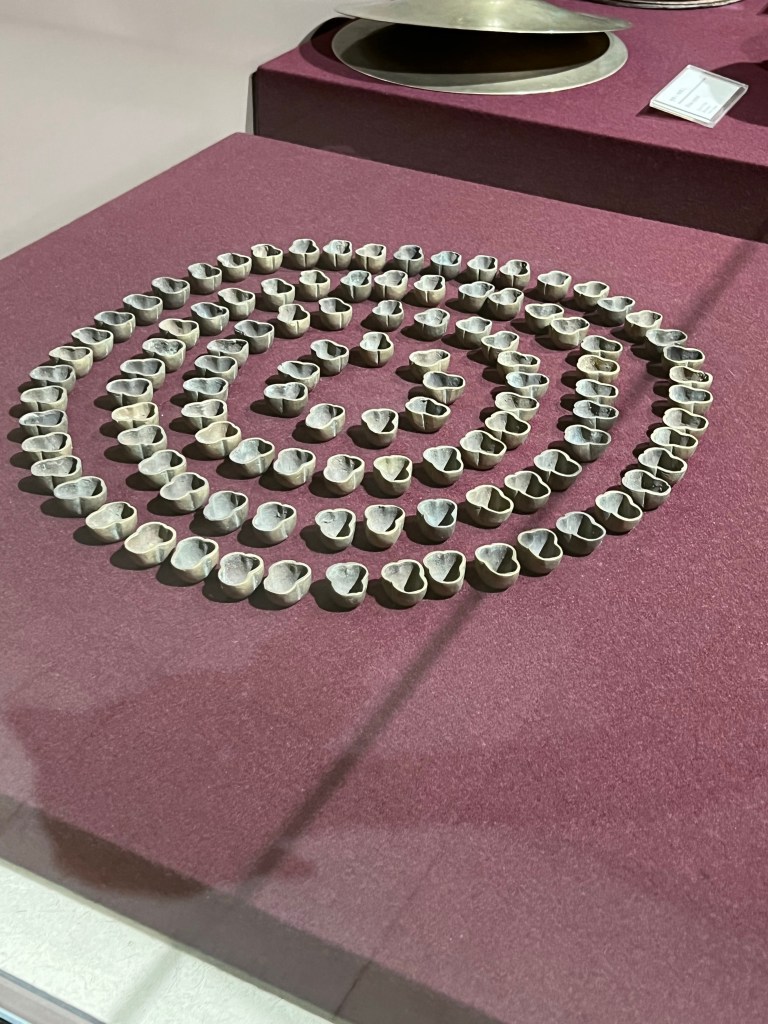
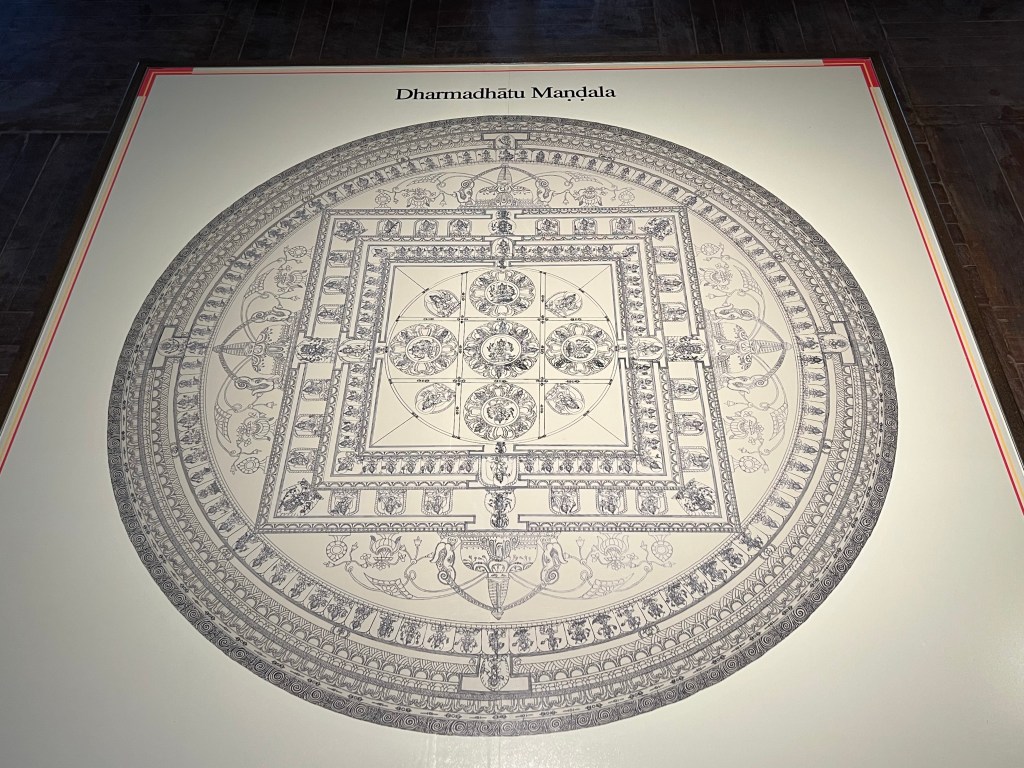
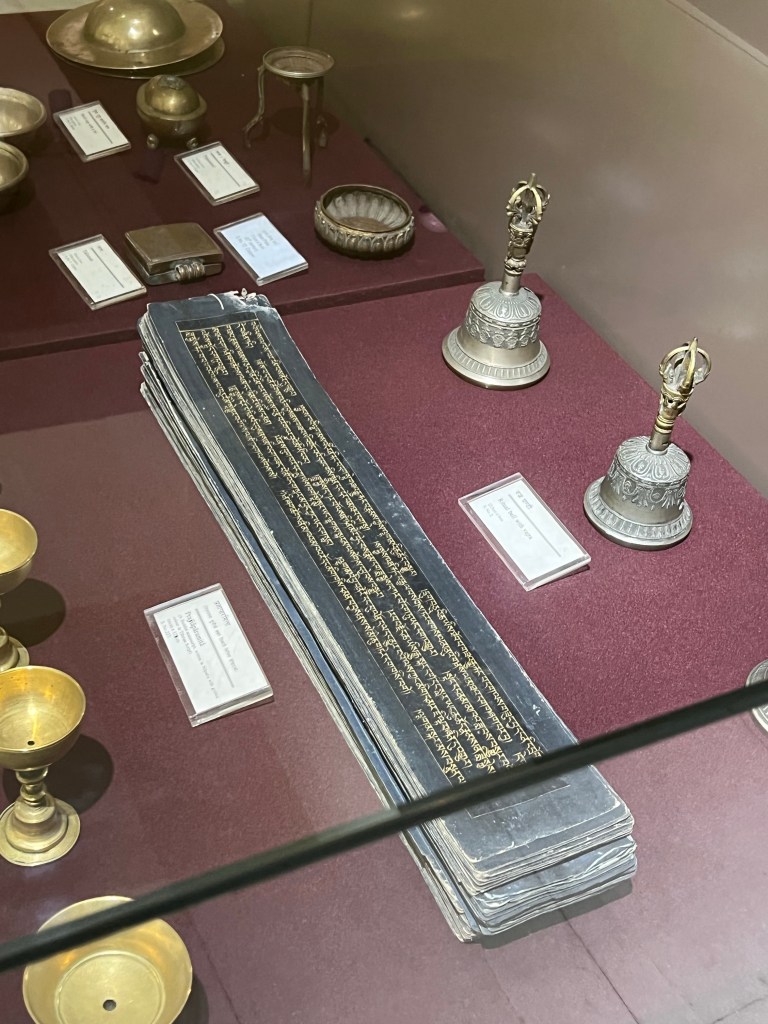
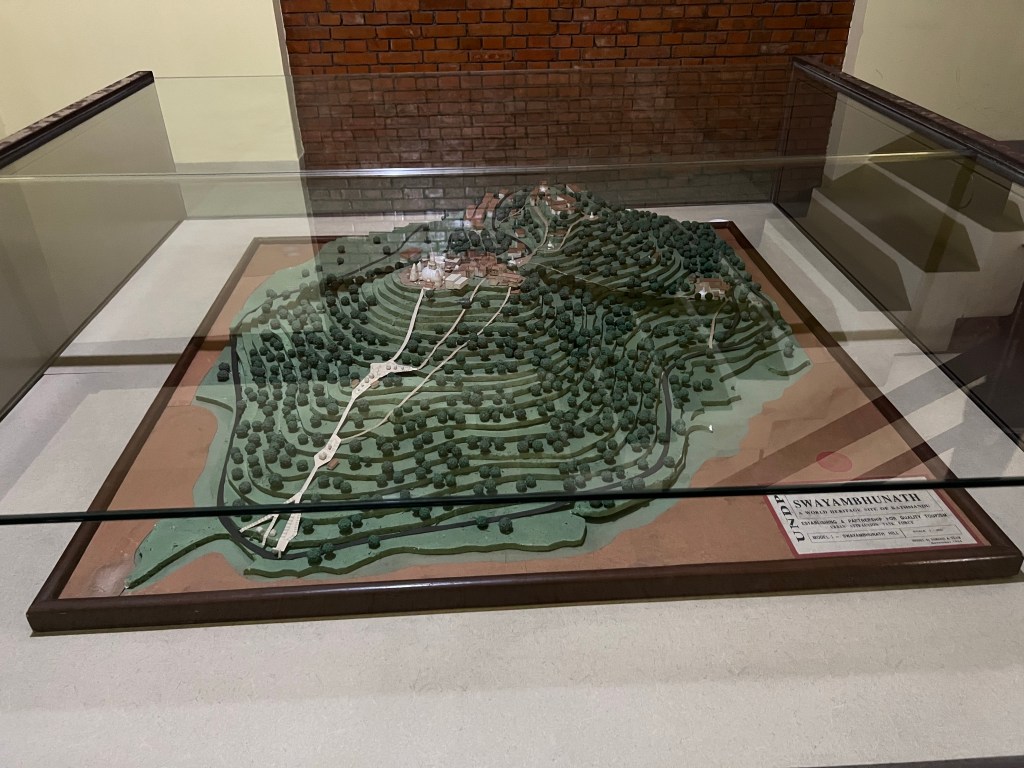
Skull shaped cupsMandalaManuscriptMonkey Temple model
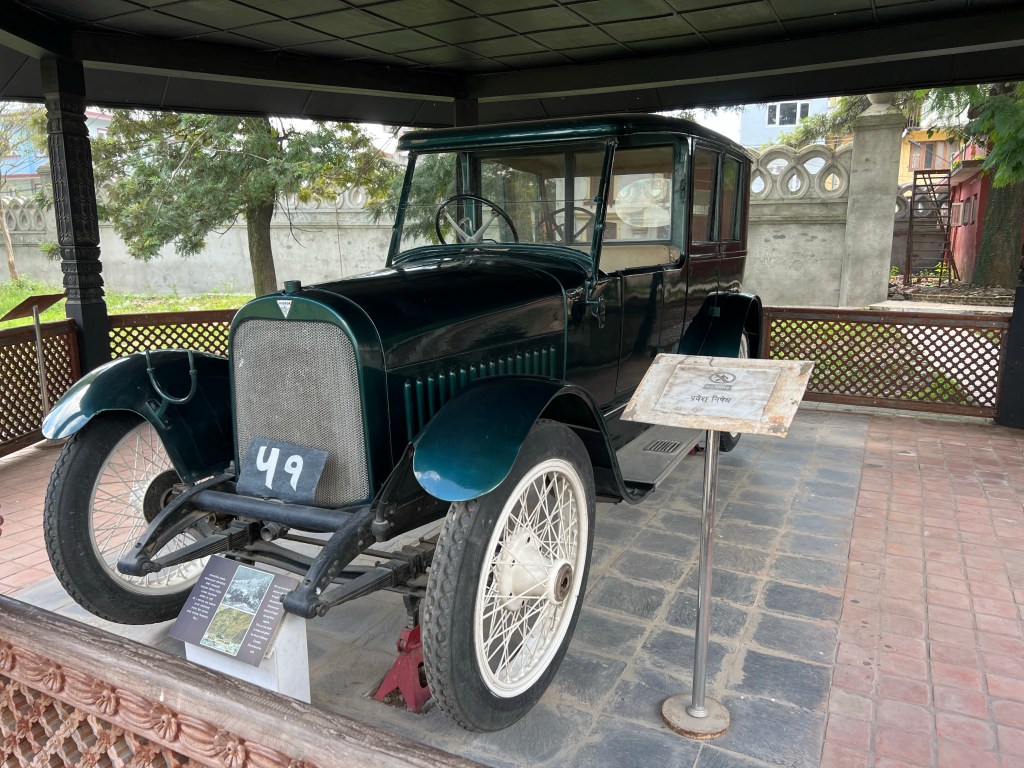
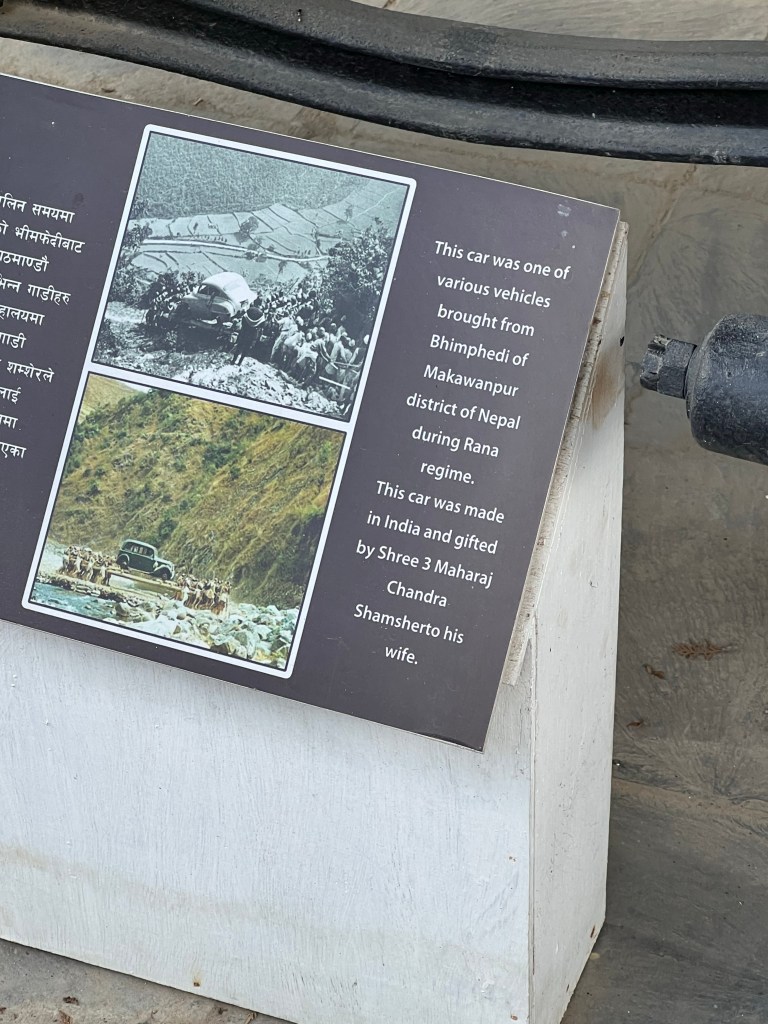
Two additional buildings house the Numismatic museum and the natural history museum. They even had an antique Hudson.
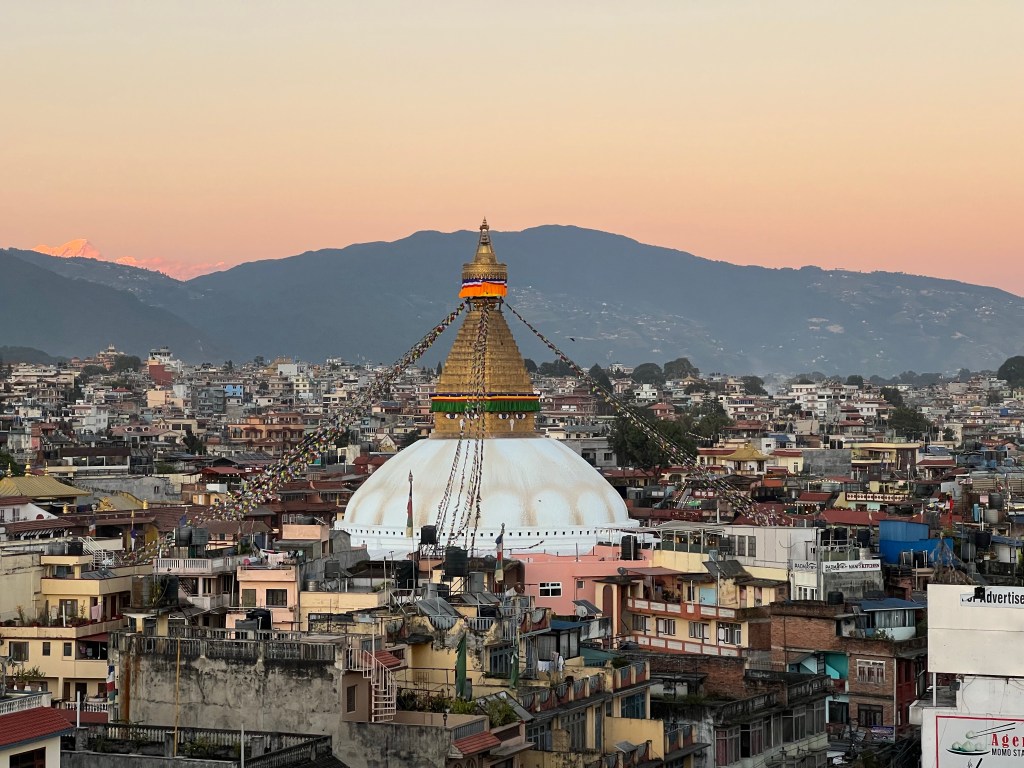
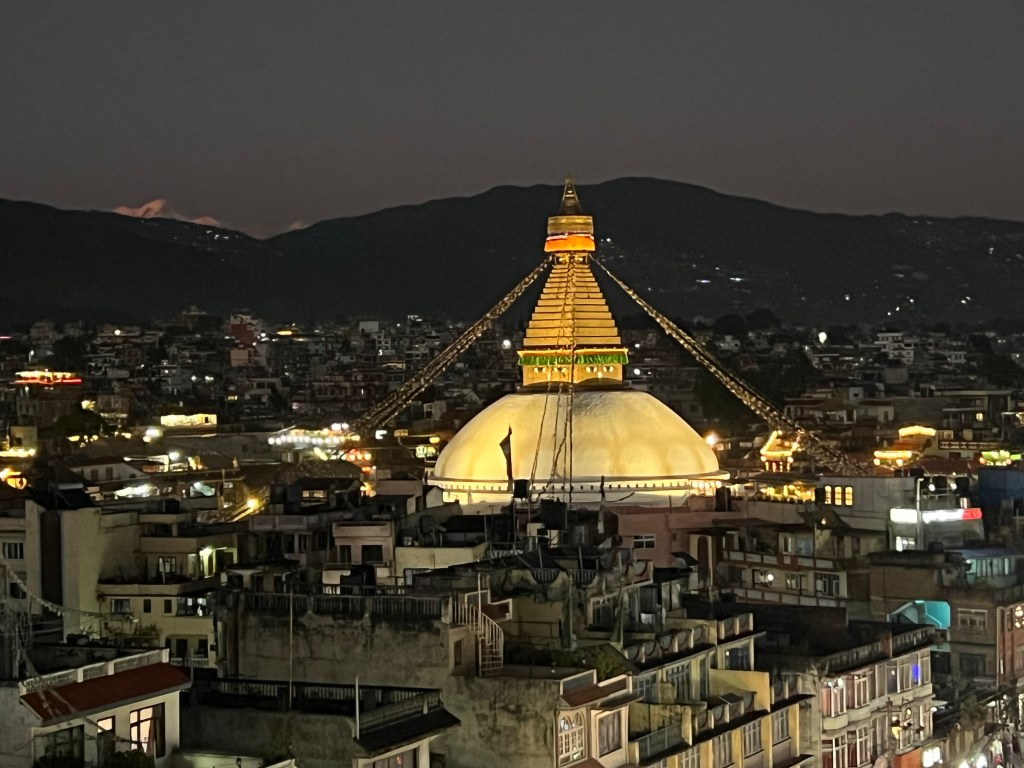
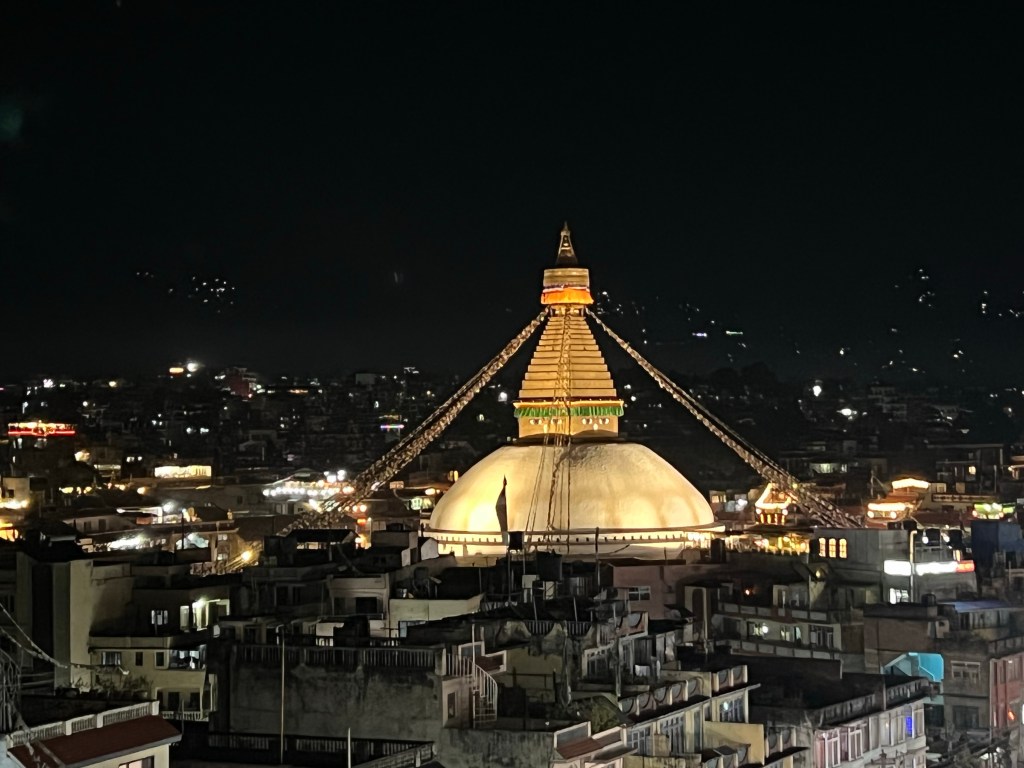
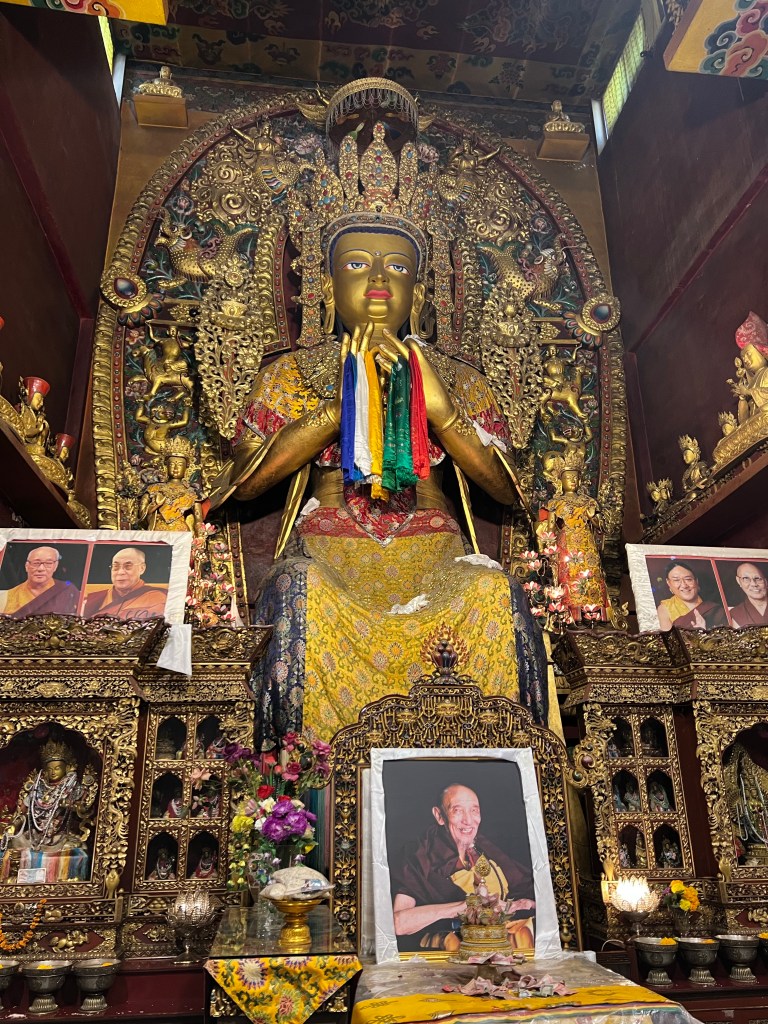
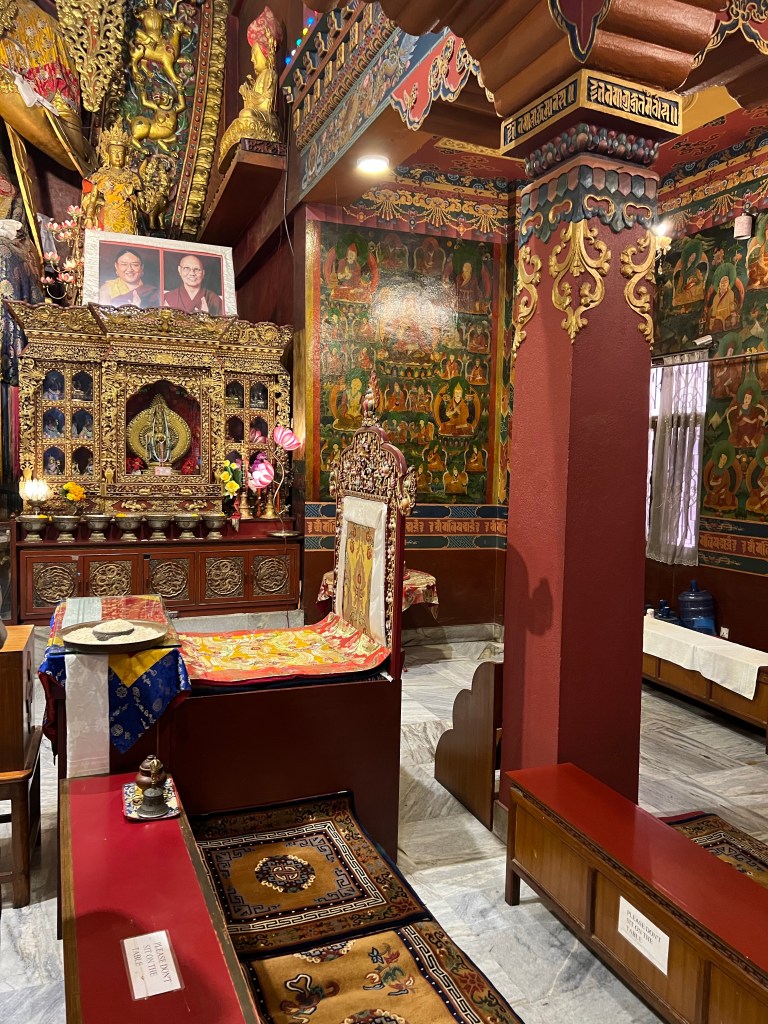
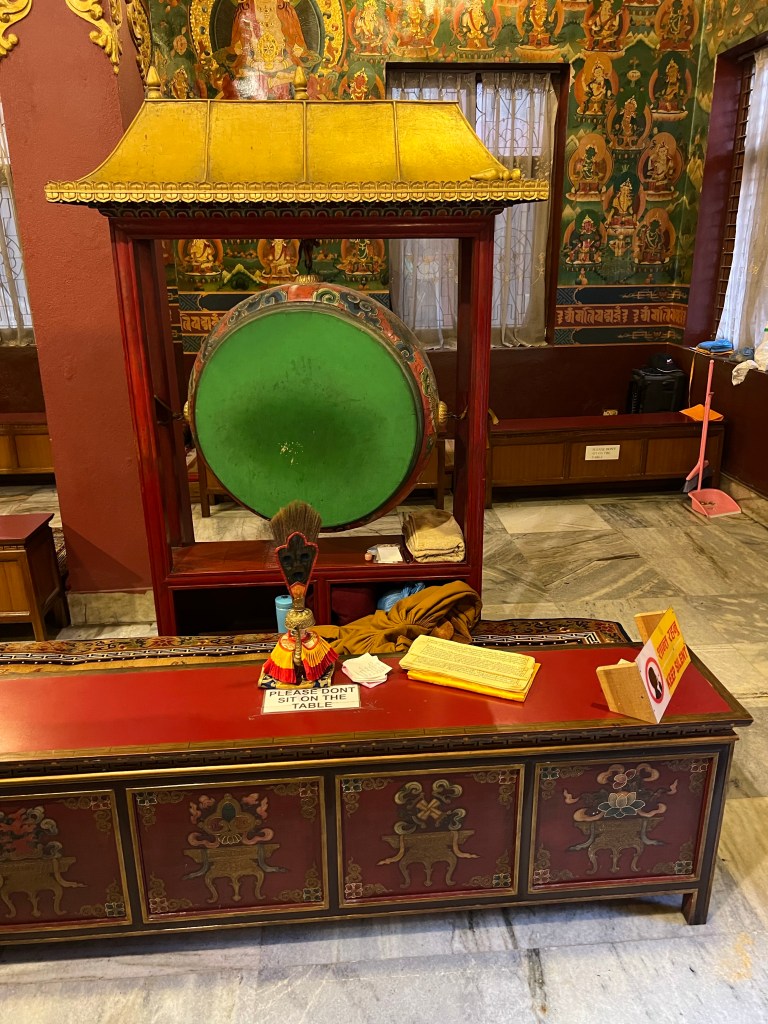
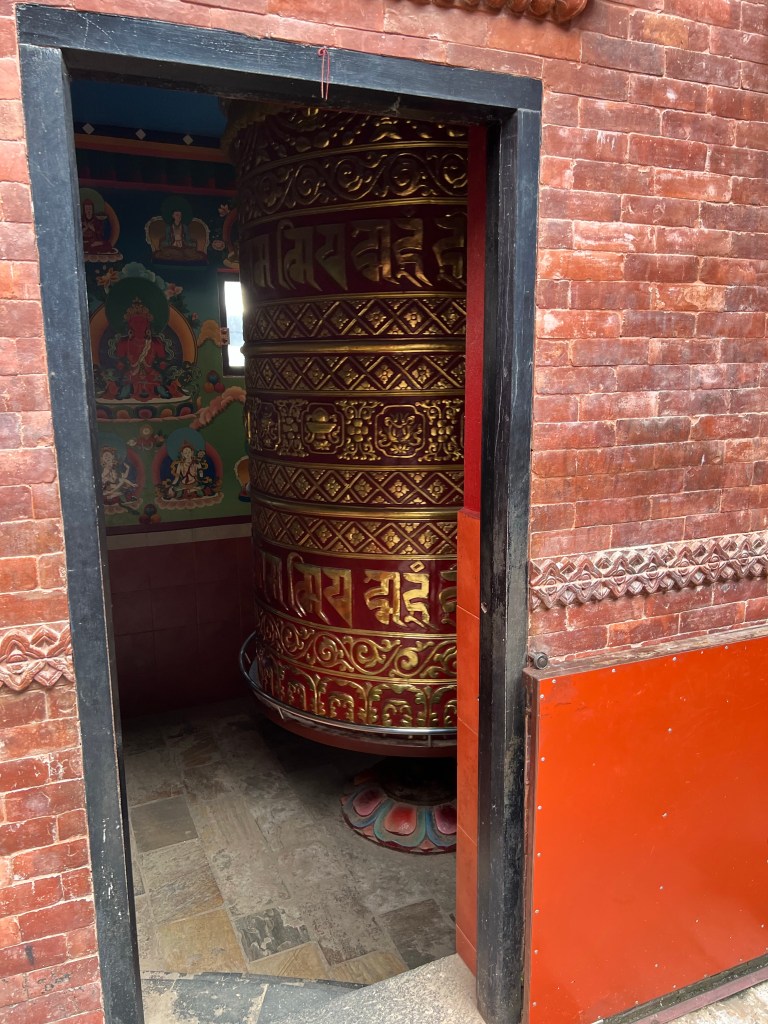
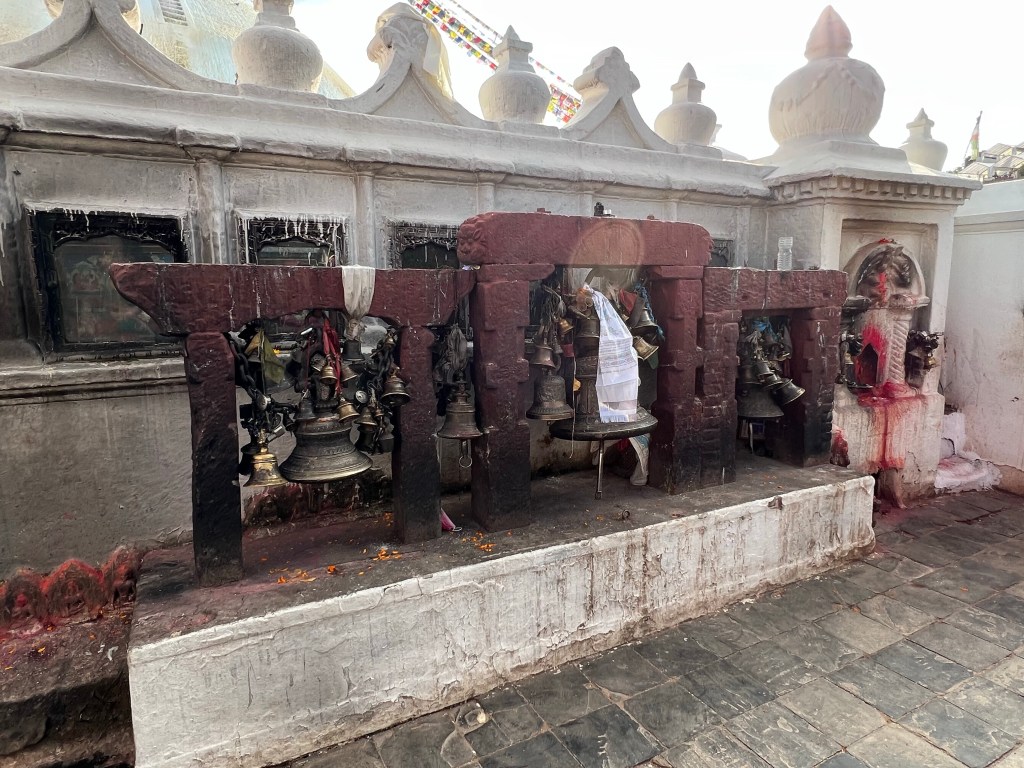
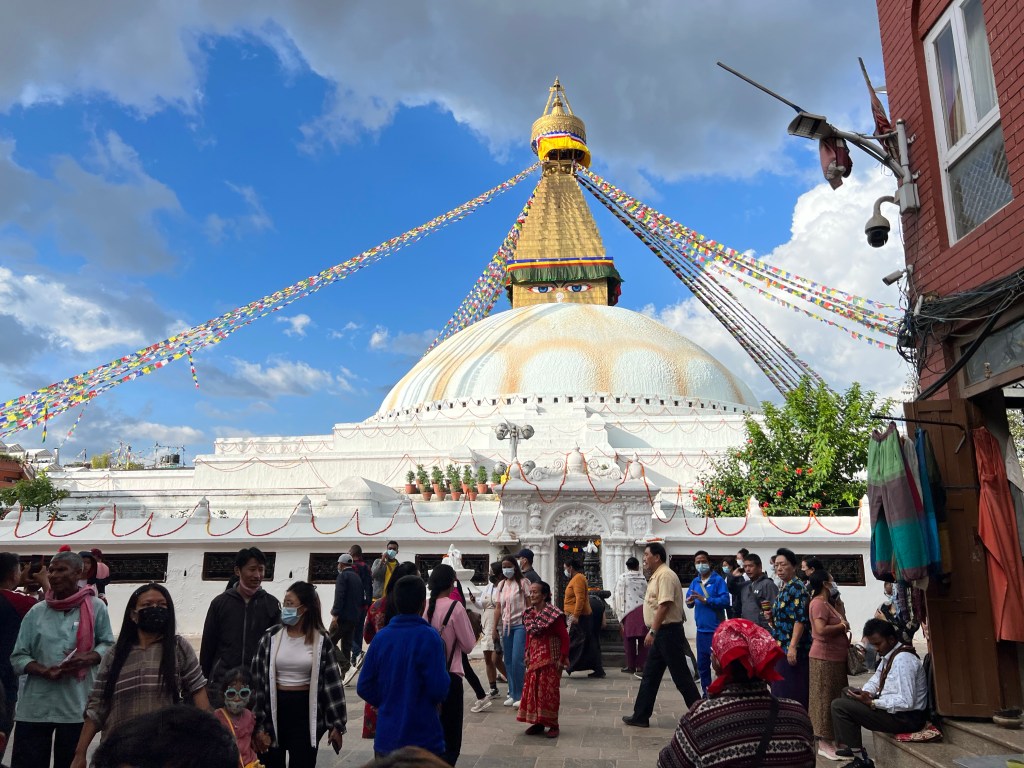
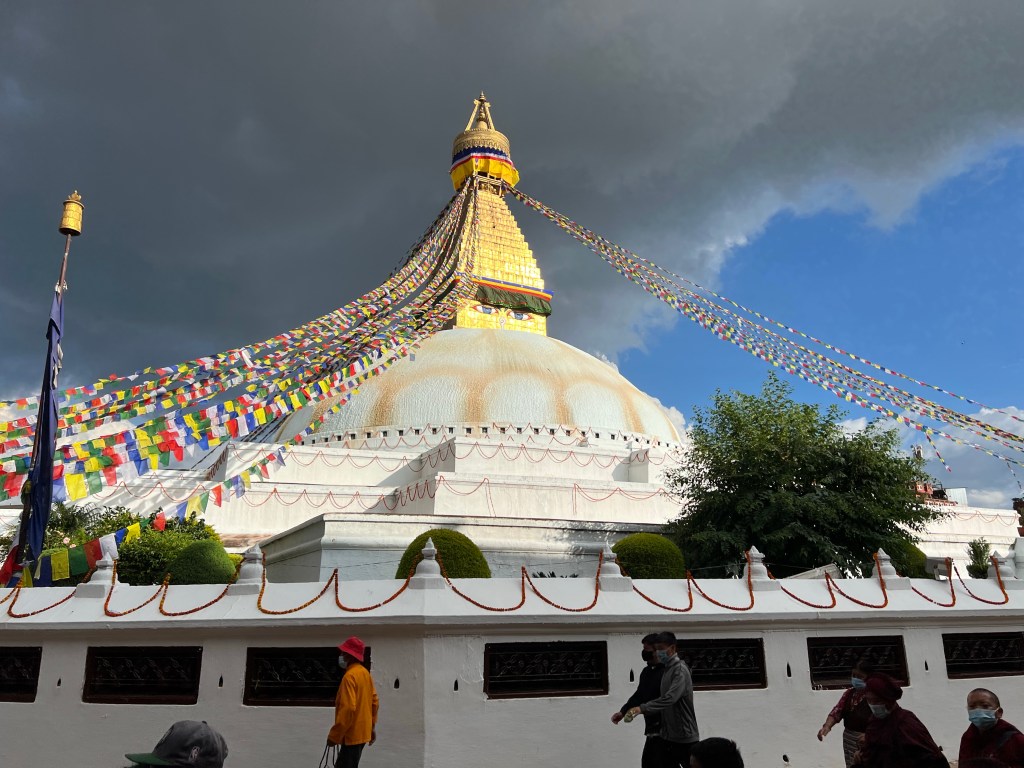
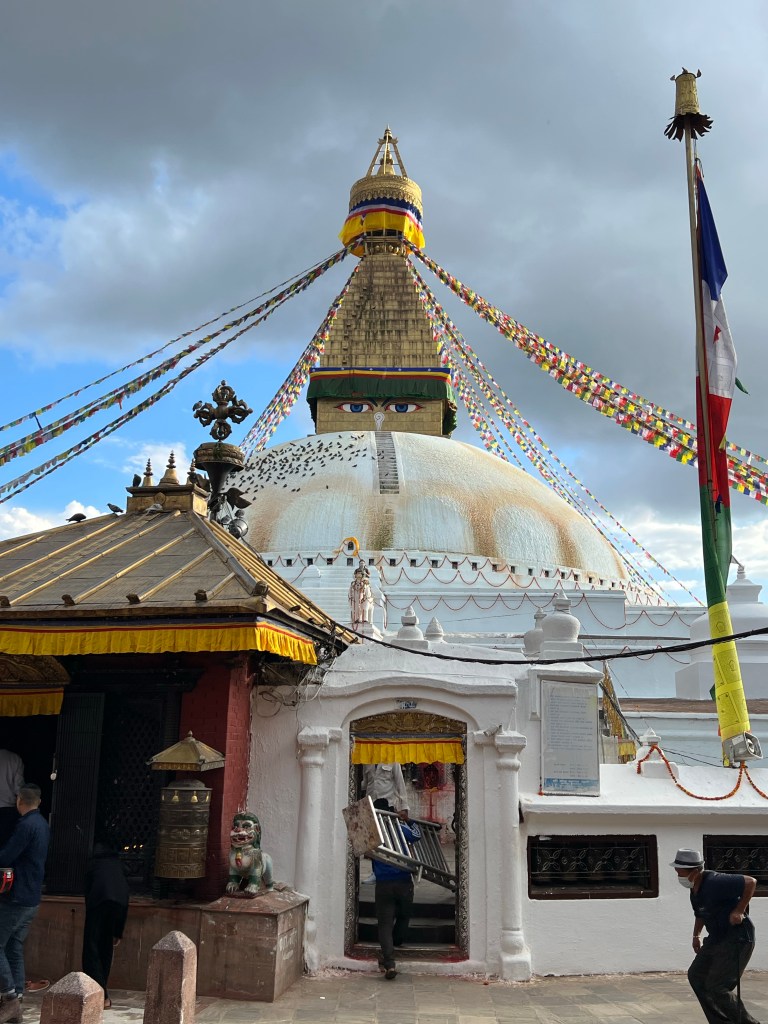
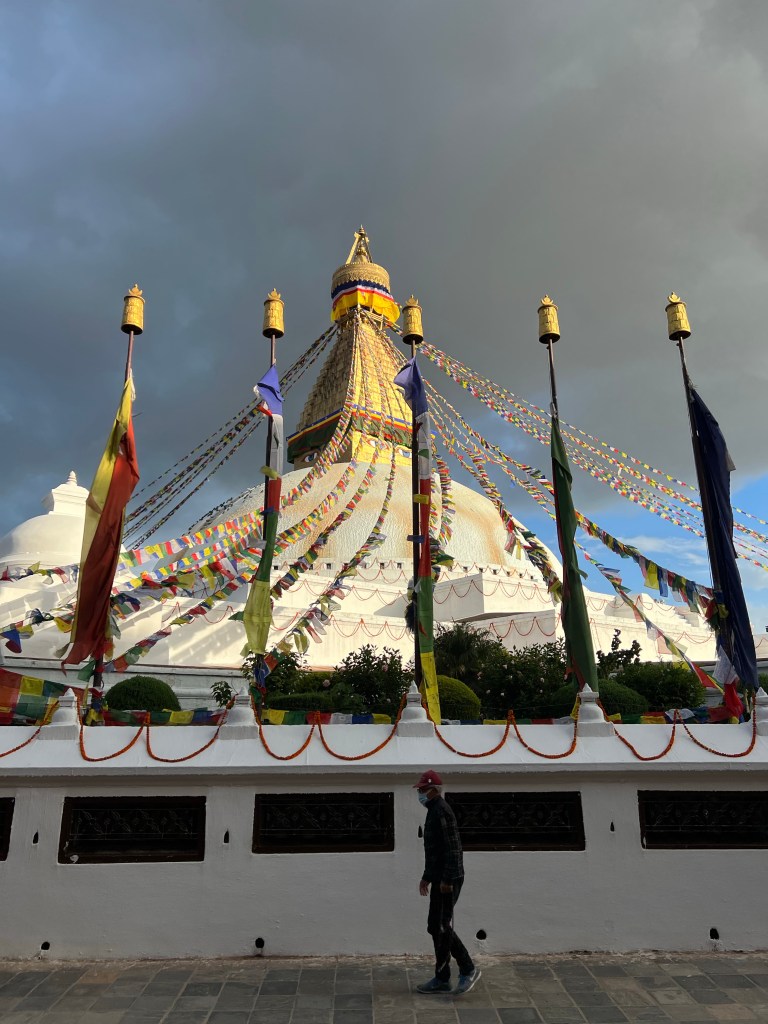
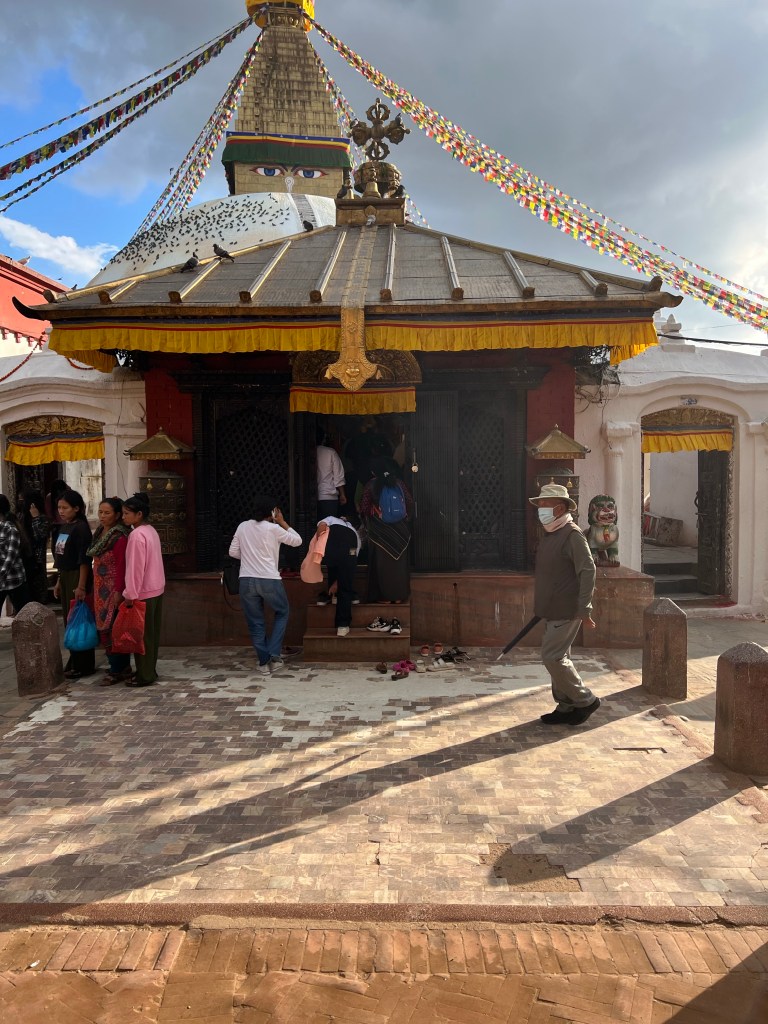
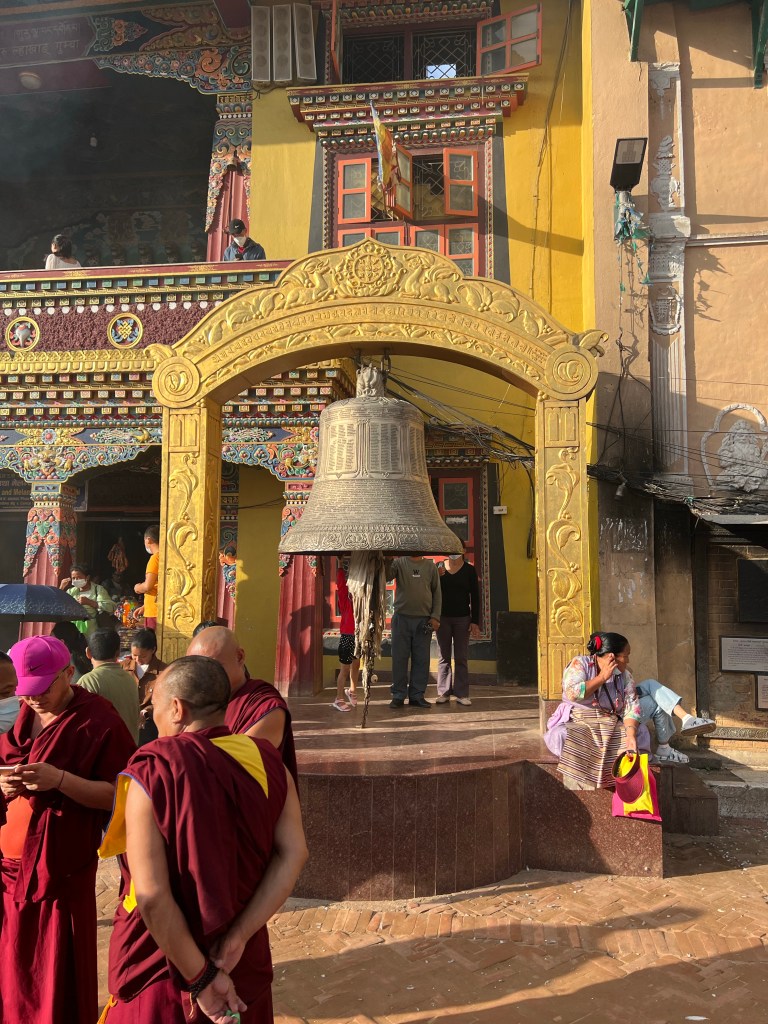
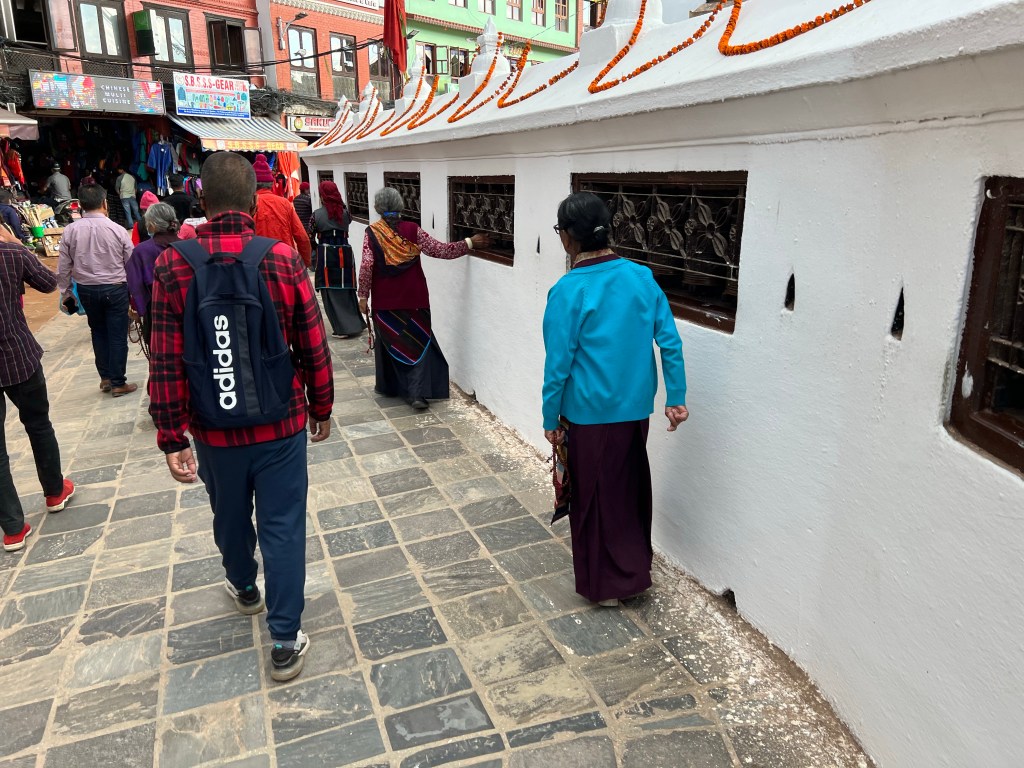
After lunch at a local cafe, we took a taxi to Boudha Stupa in search of postcards. We visited the monastery and parts of the temple we were allowed to enter before walking back to the hotel.
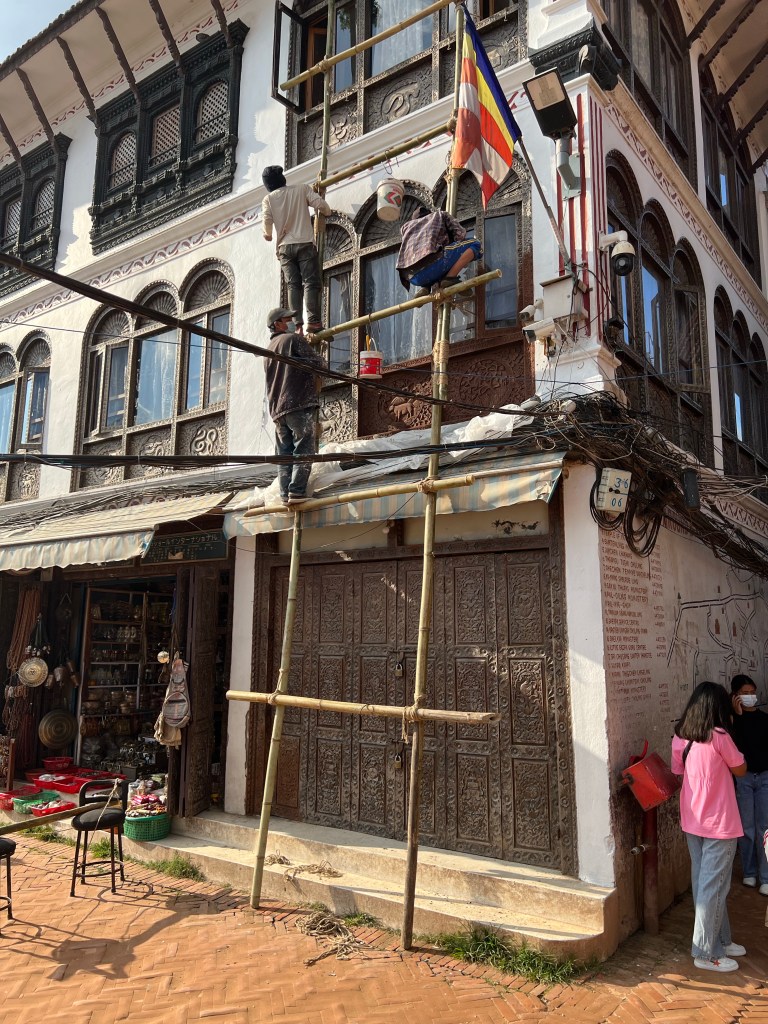
We were fairly certain that this did not meet OSHA standards
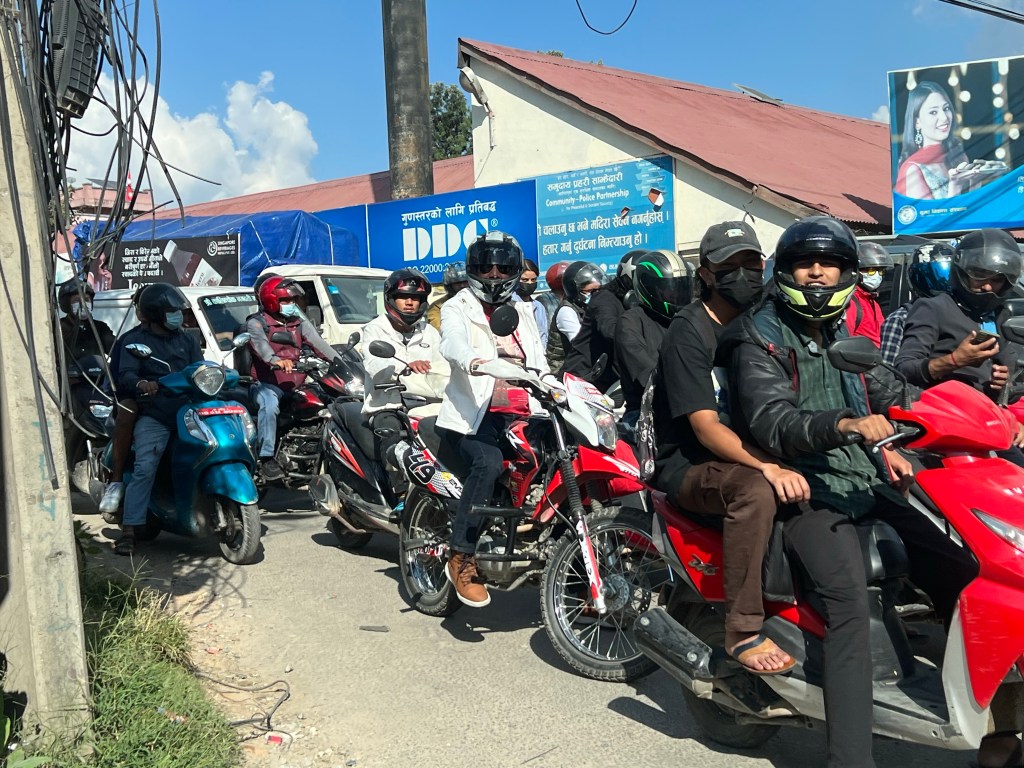
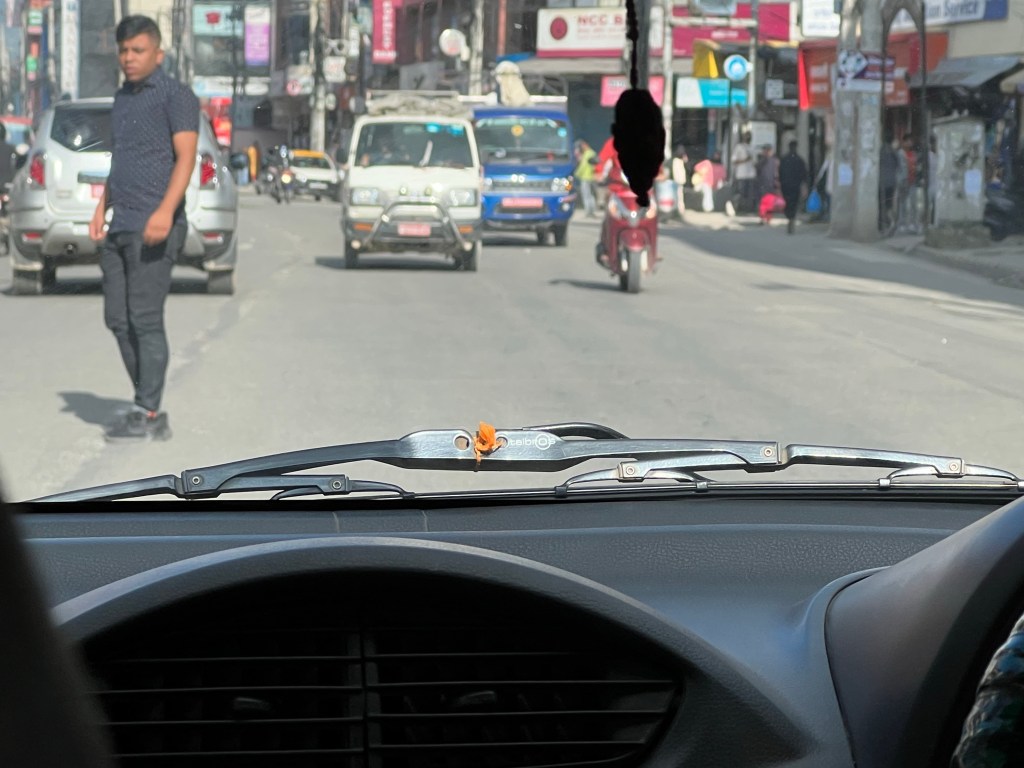
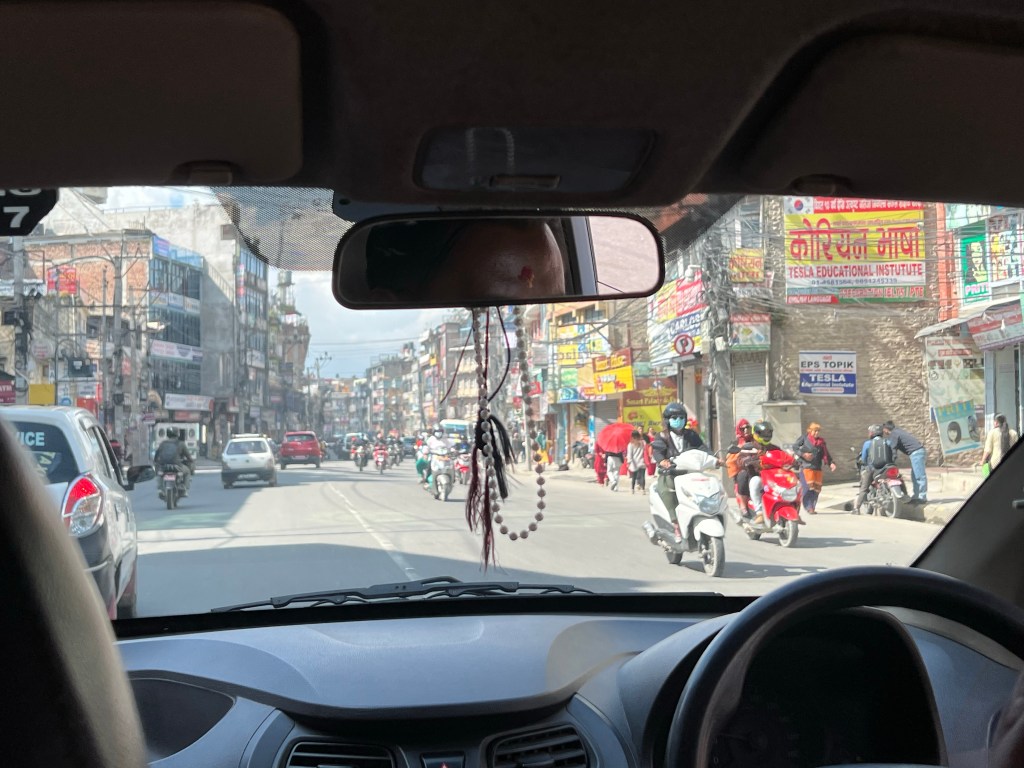
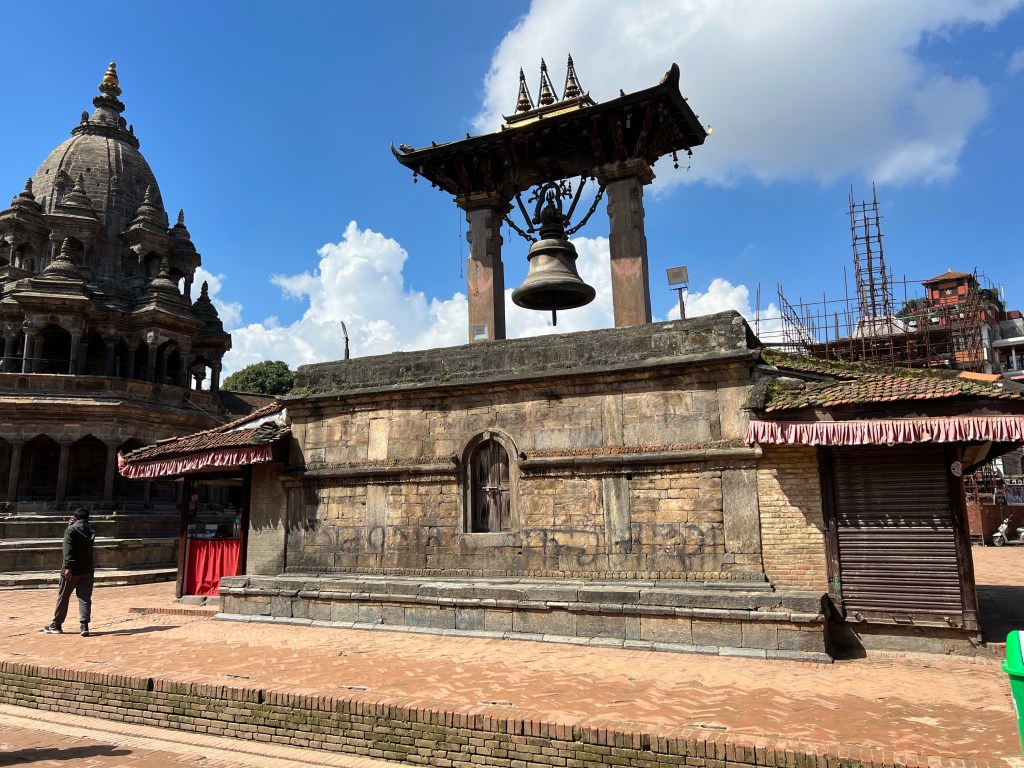
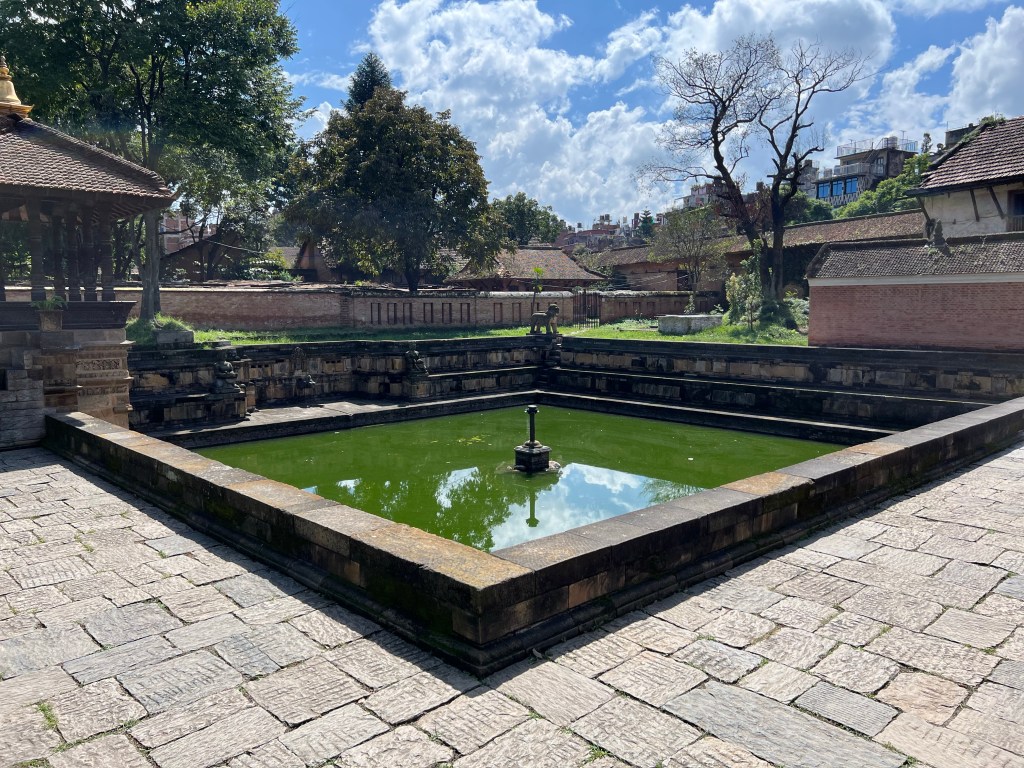
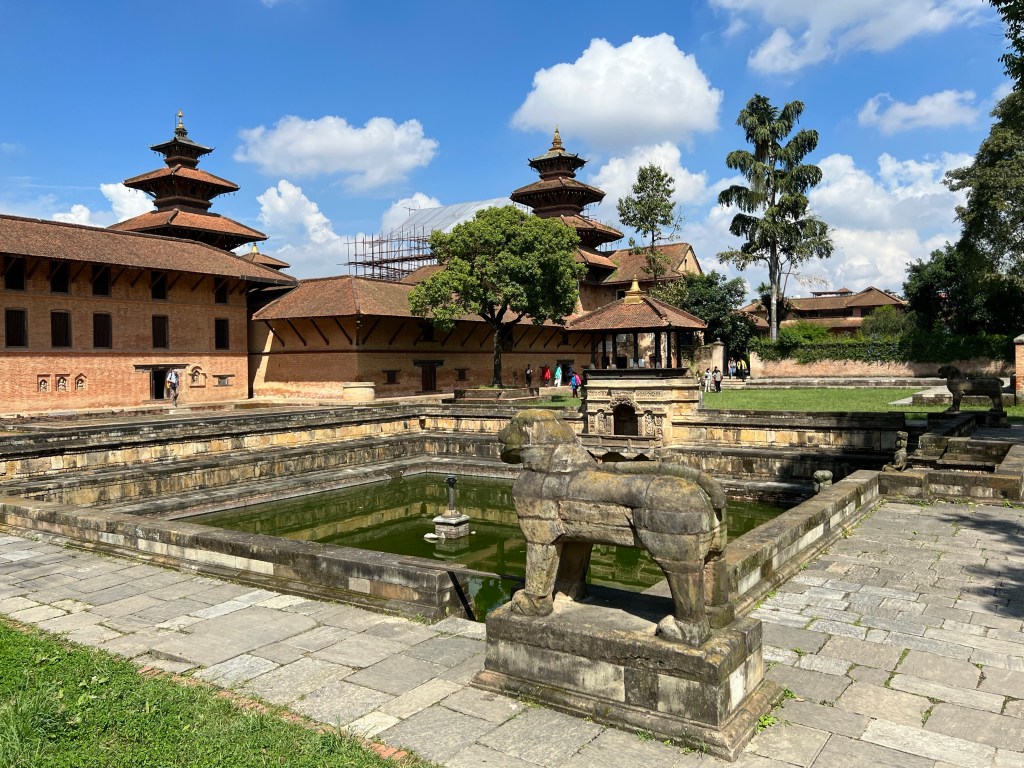
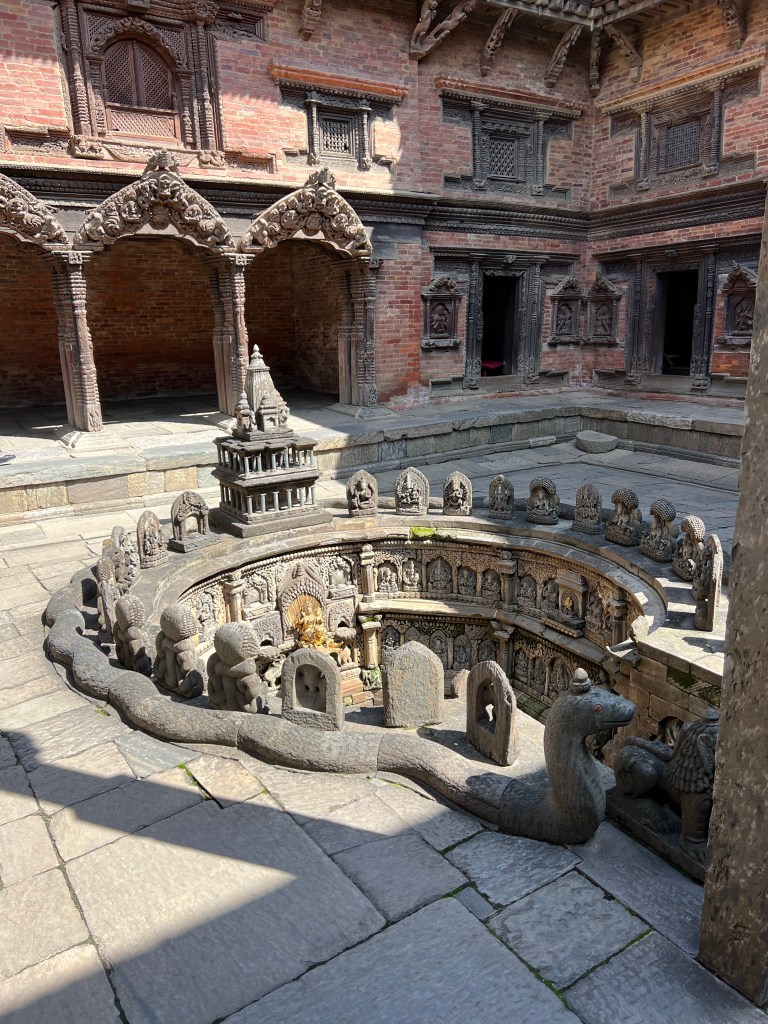
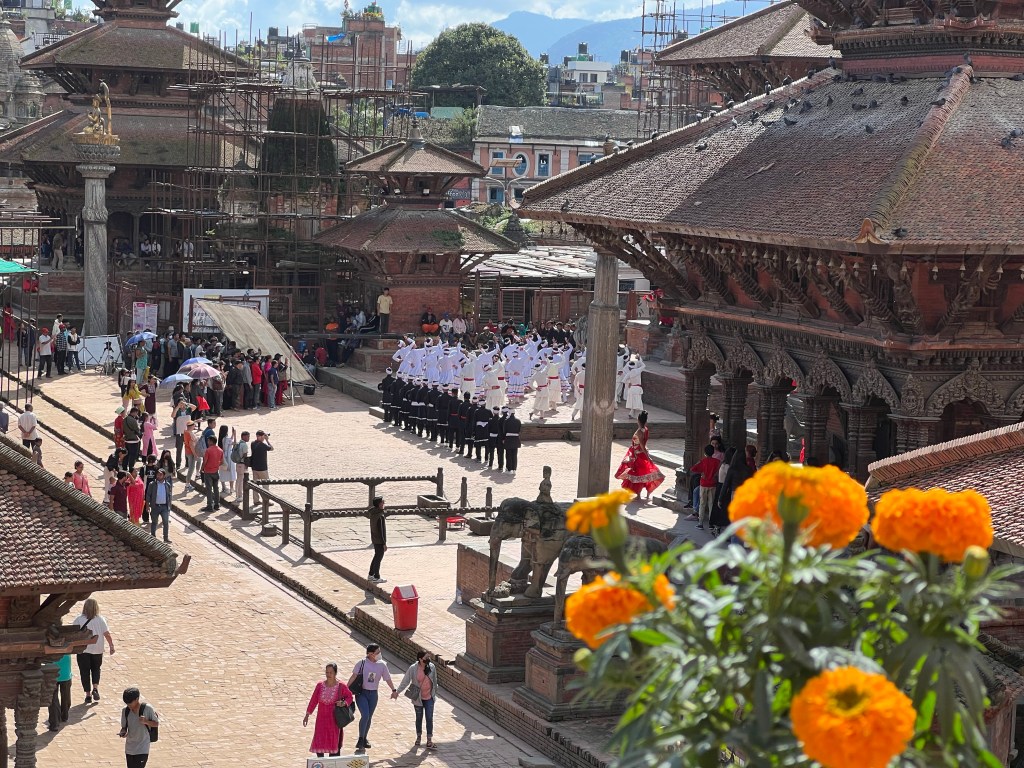
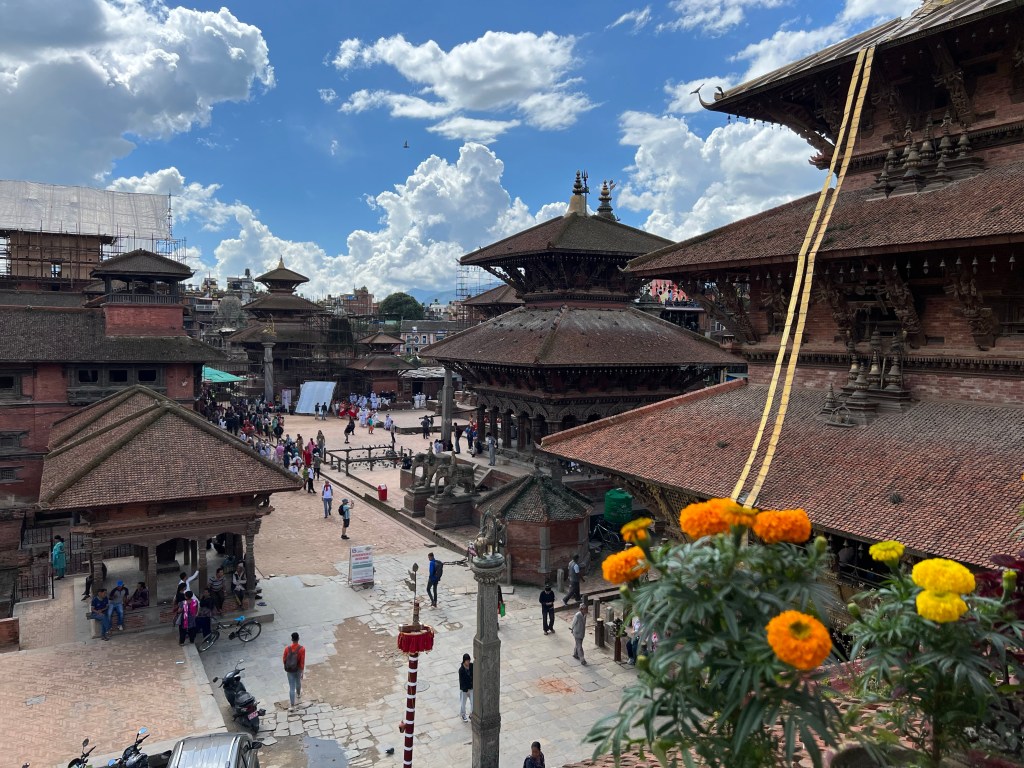
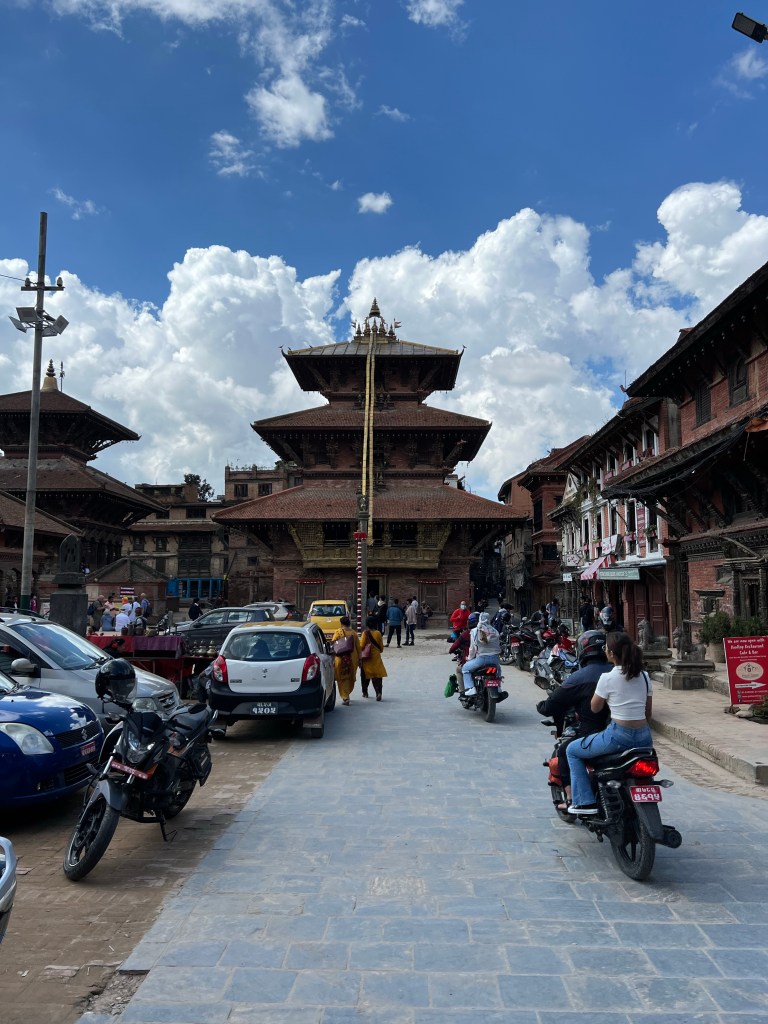
After breakfast I took a taxi to Patan City Durbar Square. The streets were filled with pedestrians, and every vehicle imaginable: bicycles, motorcycles, taxis, tuk tuks, buses, cars and trucks.
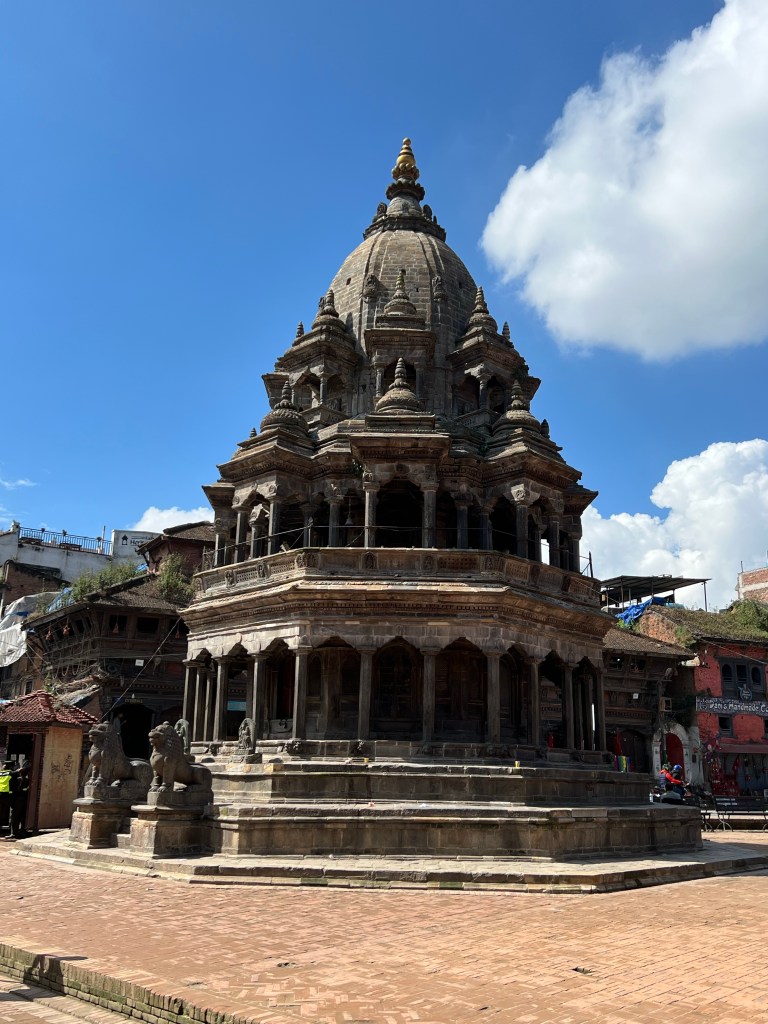
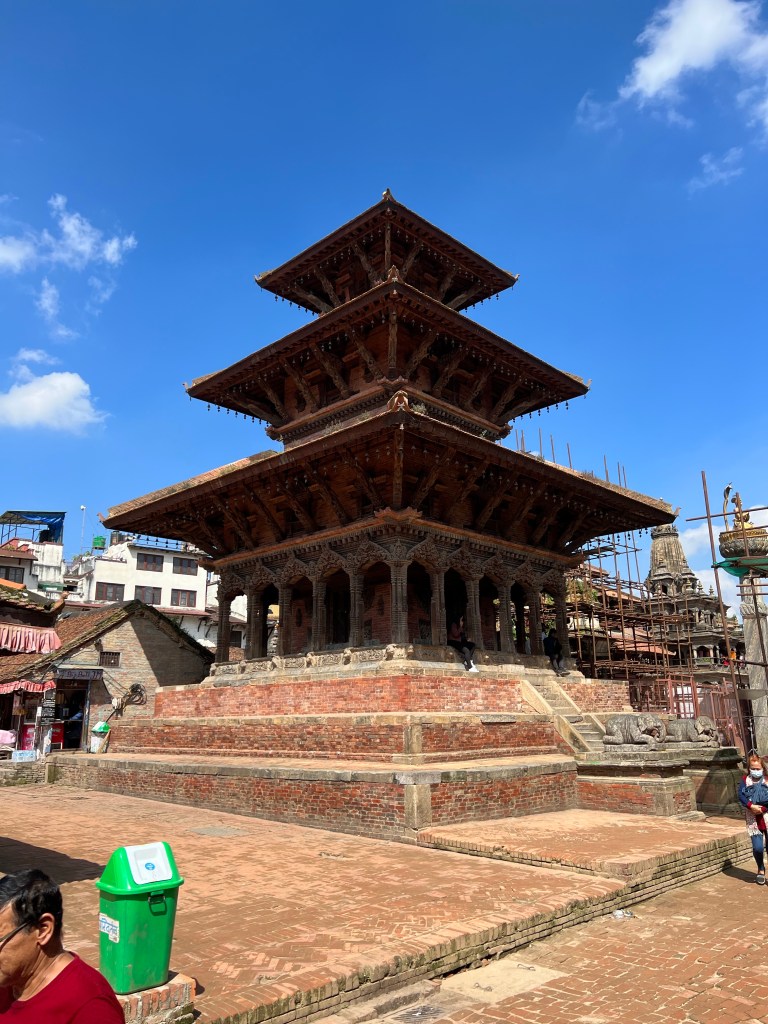
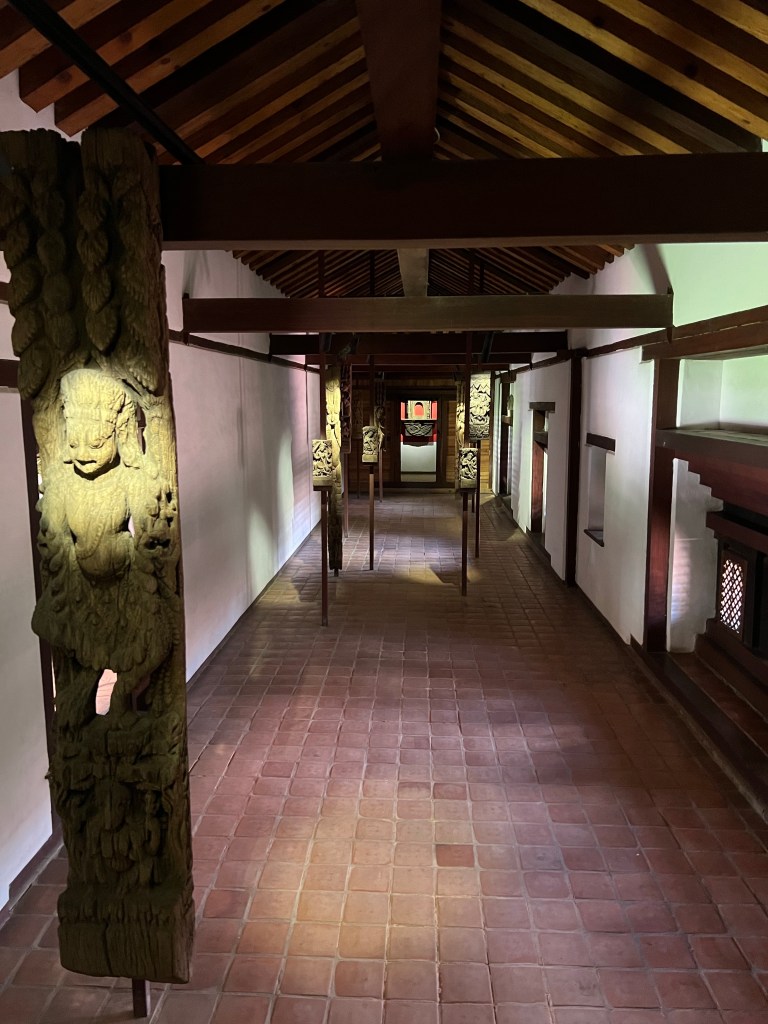
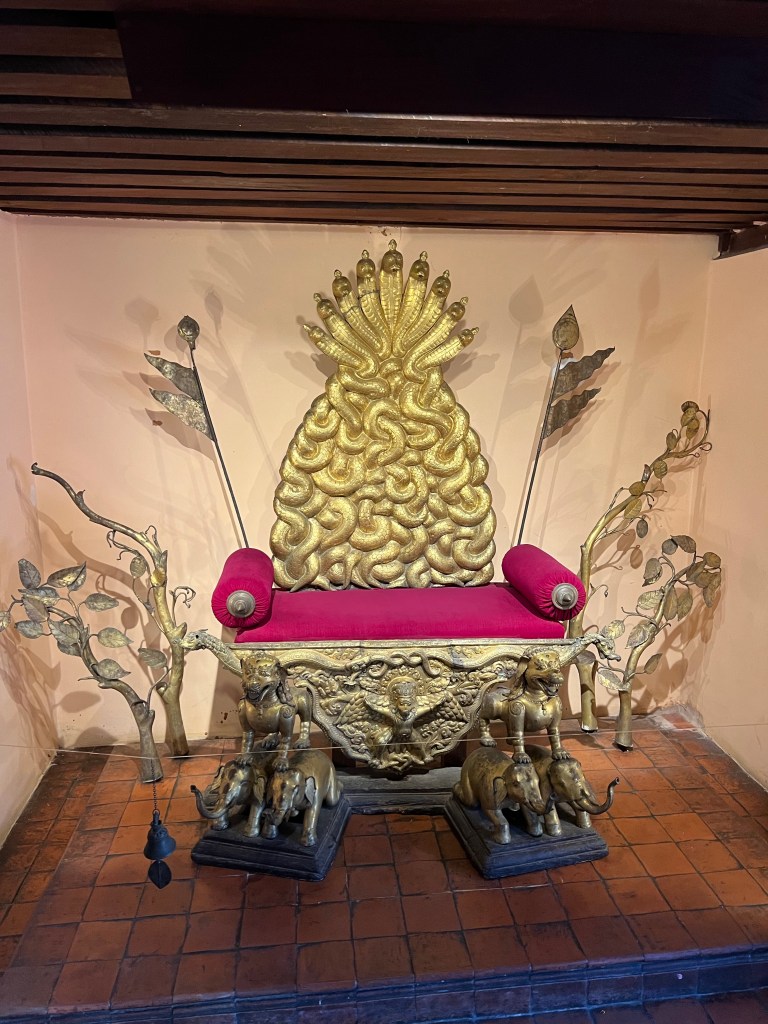
After a couple of hours of wandering through the palace, grounds, and museum, I had lunch at a rooftop restaurant.
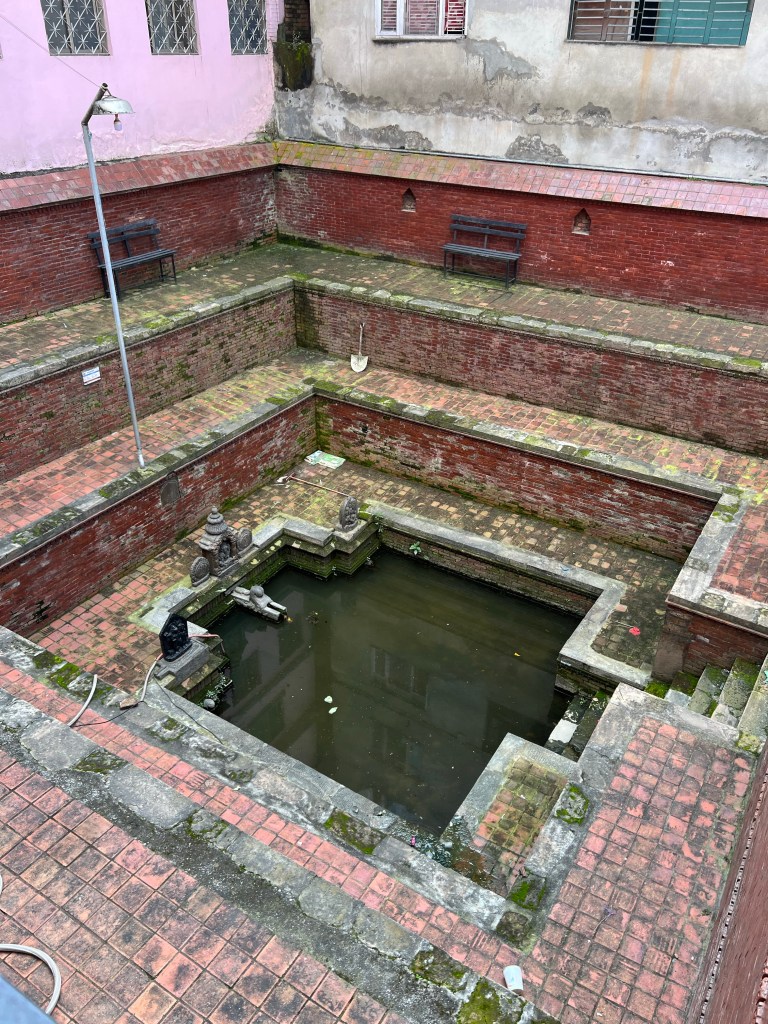
Then I walked several blocks of the surrounding neighborhood.
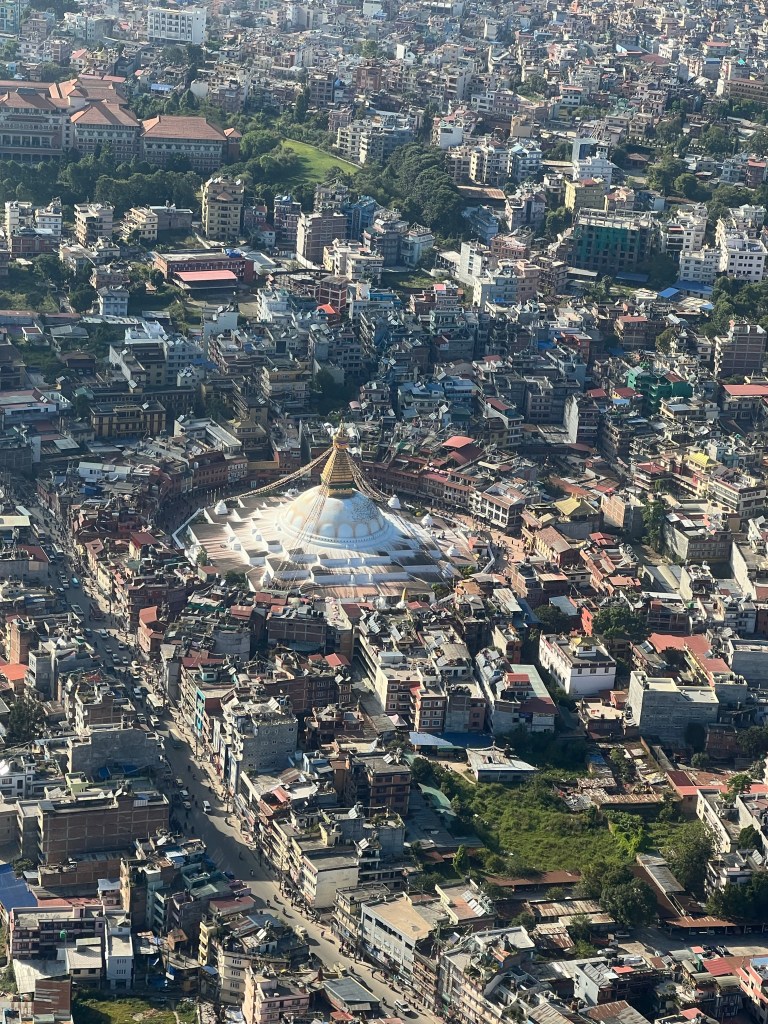
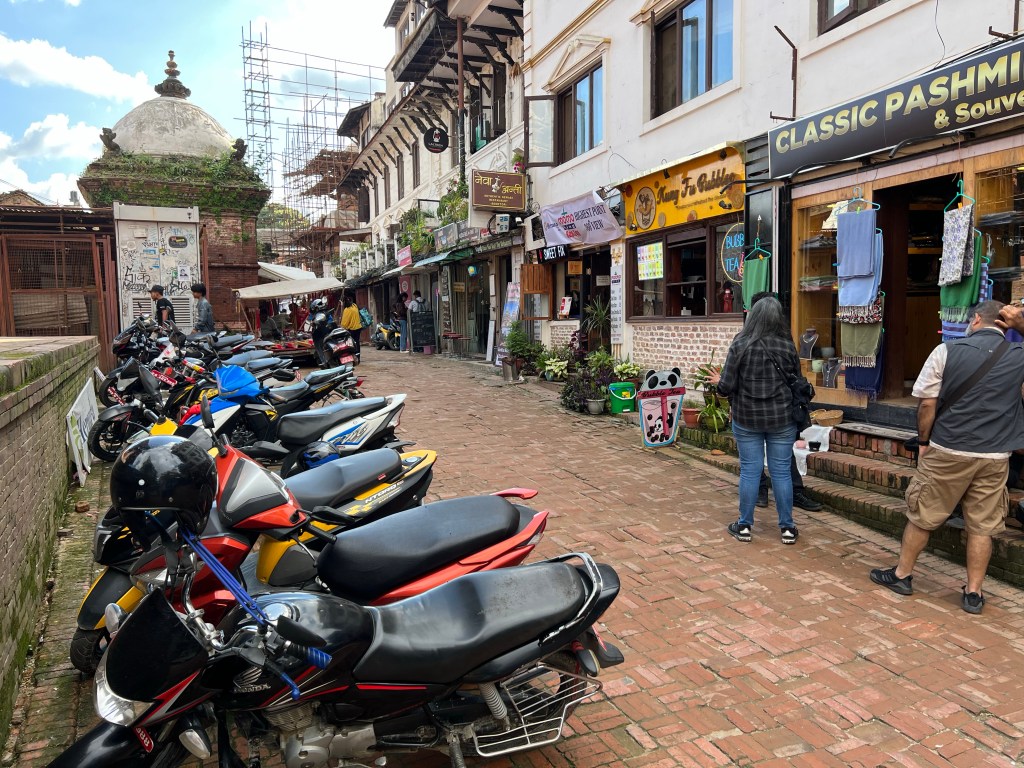
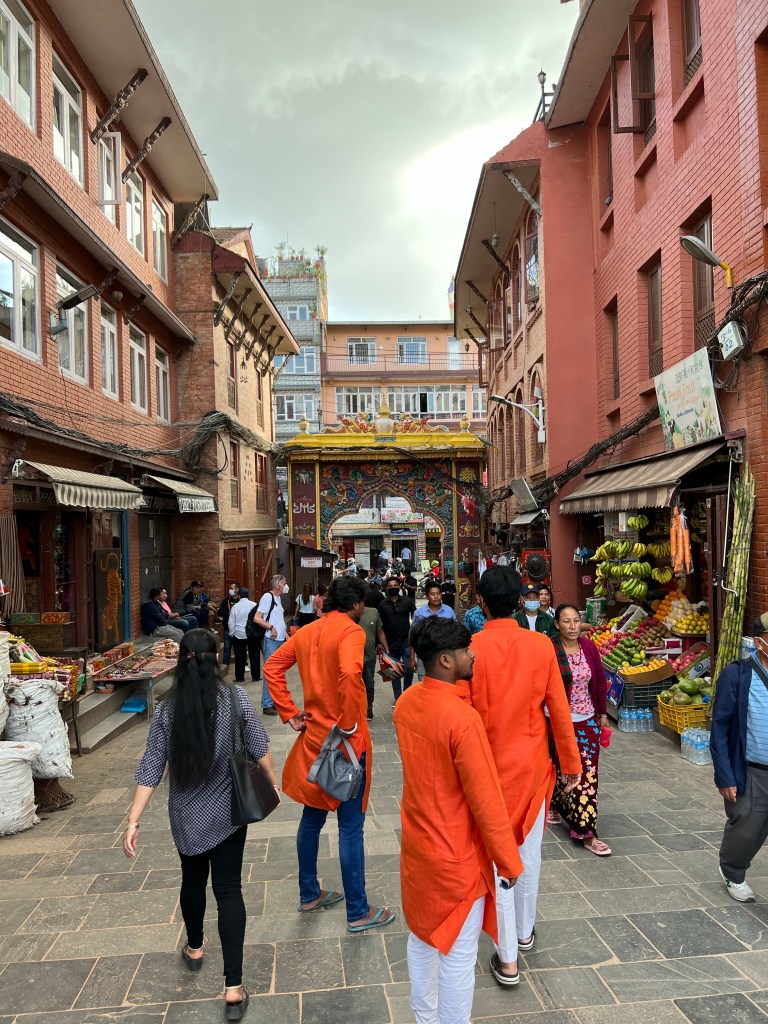
Next, I took a cab to Boudha Stupa and walked around there awhile. The stupa (temple) is surrounded by shops, restaurants, hotels, and street vendors.
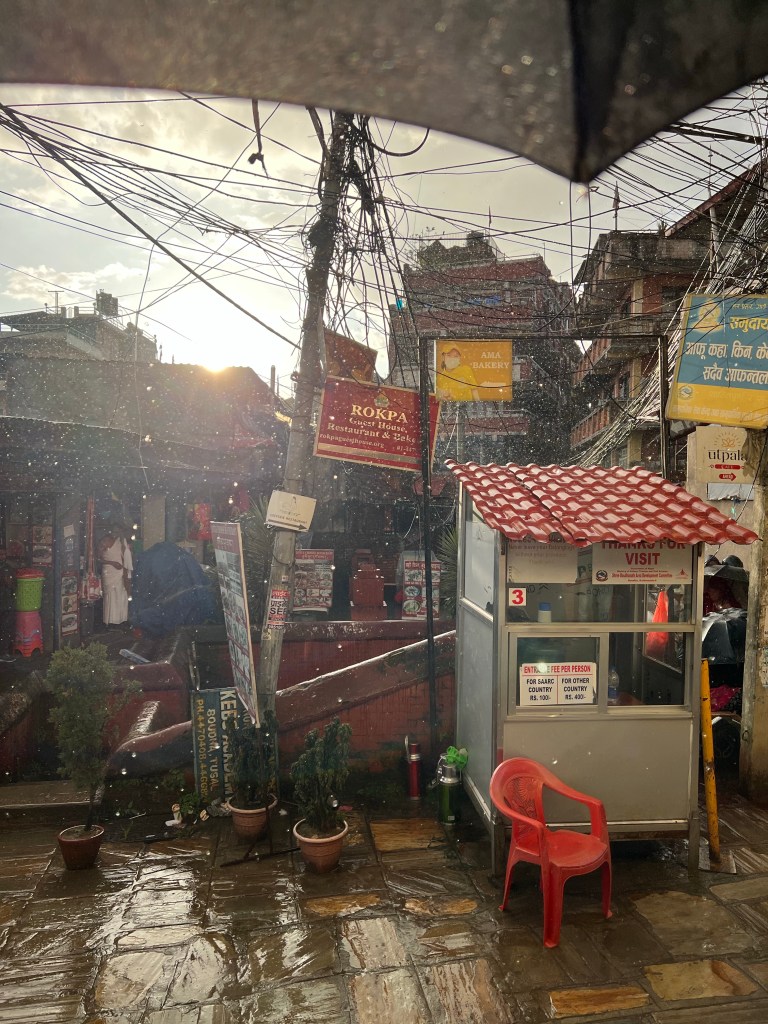
While I was there, it started to rain. I shared an awning with some locals until it let up enough to venture out with my umbrella. It was a 9 minute walk to the hotel or a 5 minute ride. On the walk back I stopped for dinner at the cafe by the museum next to my hotel.